
RIYADH — Vice President JD Vance told Fox News on Tuesday that the United States has “all the cards in the negotiation” and would remain in a “much stronger position” if the Iran talks collapsed. Hours earlier, the Wall Street Journal reported that President Trump had held multiple conversations with Defense Secretary Pete Hegseth and Joint Chiefs Chairman Gen. Dan Caine on “whether the U.S. should abandon negotiations and resume full-scale attacks on Iran.” Trump chose to continue. But the choice was reported as optional.
Washington has publicly pre-authorized the collapse of the memorandum of understanding it signed on June 17. Iran, for its part, is refusing to attend the technical talks scheduled for last Sunday, with its Foreign Ministry spokesman saying Tehran “will not have any negotiations at any level with the American side in the coming days.” The two negotiating parties have priced in the failure of their own negotiation. Saudi Arabia — which holds no seat in Doha, no seat in Geneva, and no seat in the Persian Gulf Strait Authority whose fee waiver expires on or around August 18 — has not.
Table of Contents
- What Did Vance Mean by “All the Cards”?
- The War-Options Briefing and the Word “Retrograde”
- Iran’s Position: Conditional Non-Participation
- Why Does August 18 Matter More Than August 16?
- The Fiscal Arithmetic Riyadh Has Not Discussed
- Can Yanbu Absorb Another Hormuz Closure?
- The Wang Yi Meeting and What It Was Not
- Who Pays the $300 Billion?
- The Minsk II Analogy Riyadh Should Fear
- What Riyadh Is Not Saying
- Frequently Asked Questions
What Did Vance Mean by “All the Cards”?
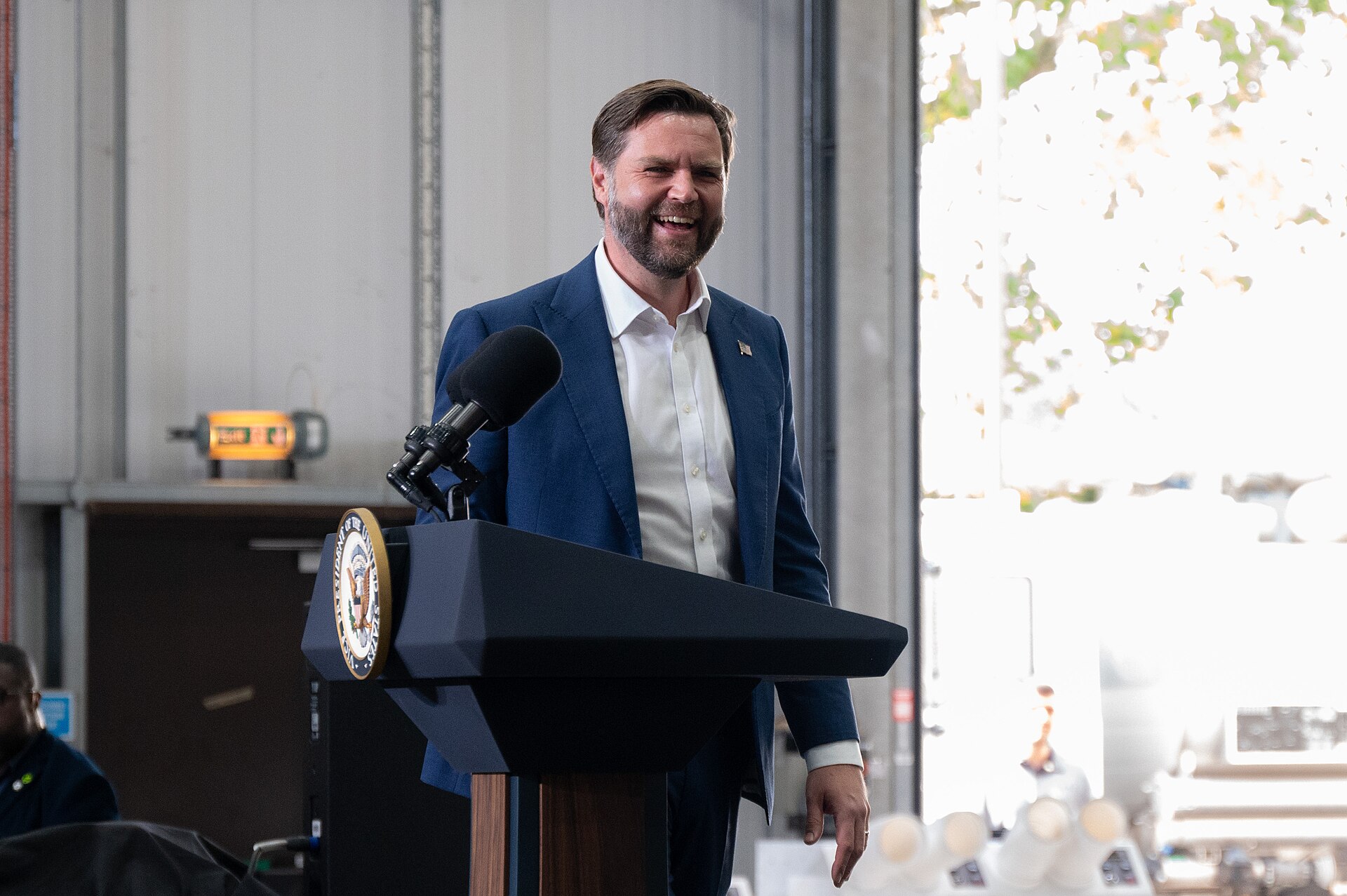
Vance’s Tuesday interview on Fox News contained three sentences that ought to be read together. The first: “We have all the cards in the negotiation.” The second: “We’ve accomplished the core mission, which is to ensure that the Iranians never have a nuclear weapon.” The third, and the one that matters most for Riyadh: “If the Iranians don’t behave, their nuclear program is still destroyed, their conventional military is still destroyed, and the United States is still in a much stronger position.”
The framing is one of indifference to outcome. The United States is fine if the MOU holds. The United States is fine if it collapses.
The Atlantic Council read Saudi Arabia’s position on the same MOU differently. “Riyadh wants a seat at the table, not just a cease-fire,” the think tank noted this month. “Its preferred outcome is a settlement comprehensive enough to curtail Iranian support for armed proxies and resolve the Strait of Hormuz question on a lasting basis.” Vance’s cards analogy contains no seat for Riyadh — the negotiation, in his framing, is bilateral and the outcome asymmetric.
The verifiability problem is that Vance’s “core mission achieved” claim rests on damage that no independent inspector has confirmed. The International Atomic Energy Agency has had no access to Iranian facilities since March. That is a blackout of roughly 121 days as of July 1. The 440.9 kg of uranium enriched to 60% U-235 that the IAEA last accounted for on June 10, 2025 remains unverified. If Vance is right, the mission is complete. If he is wrong, the mission is a slogan.
The Middle East briefing 3,000+ readers start their day with.
One email. Every weekday morning. Free.
The War-Options Briefing and the Word “Retrograde”
The Wall Street Journal’s reporting on Tuesday, relayed by CGTN, ANI and Political Wire, described “multiple conversations” between Trump, Hegseth and Caine on whether to abandon talks and “resume full-scale attacks on Iran.” Some officials, per the account, framed the option as “finishing the job.” Trump chose to continue negotiating. The disclosure of the alternative is the point.
Trump has publicly threatened Iran with elimination before — the May 11 Oval Office remarks describing the ceasefire as on “massive life support” with “approximately a 1% chance of living” and calling it “unbelievably weak” were not off-the-cuff. They were part of a pattern.
Hegseth’s Tuesday testimony before Senate and House Appropriations subcommittees closed the operational loop. “I take issue with the characterization that munitions are depleted,” he told senators. “We have plenty of what we need.” Then this: “We have a plan to escalate if necessary. We have a plan to retrograde if necessary.”
The word “retrograde” is military. It means a rearward movement — a controlled withdrawal from a theatre. For Gulf states hosting US forces, the fact that the Pentagon has a public plan to retrograde is not reassurance. It is disclosure of an exit option. That is the second card Vance did not mention.
| Party | Stated position on MOU collapse | Structural exposure if MOU collapses |
|---|---|---|
| United States (Vance, Trump, Hegseth) | “Great position” either way; escalate or retrograde plan ready | No domestic economic exposure to Hormuz; nuclear program claim already asserted |
| Iran (Baqaei, AoE, IRGC) | Non-participation until sanctions relief delivered; 62/88 clerics call reopening “strategic mistake” | Sanctions intact; asset unfreeze unverified; regime hardening under IRGC consolidation |
| Saudi Arabia | No public position on MOU collapse scenarios | PGSA fee activates Day 61; Brent $73 vs $108–111 breakeven; Aramco FCF at 0.85x dividend |
Iran’s Position: Conditional Non-Participation
Iranian Foreign Ministry spokesman Nasser Baqaei confirmed on Tuesday, per Al Jazeera, that Iran skipped Sunday’s technical talks and that “we will not have any negotiations at any level with the American side in the coming days.” Tehran’s leverage play is refusal, not engagement. That is coherent with the domestic pressure. On the same day, the Iran Focus and RFERL wire reports carried the Assembly of Experts’ rebuke of the June ceasefire — 62 of 88 members calling the Hormuz reopening a “strategic mistake,” with 63 of 88 classifying Trump and Netanyahu as “Mahdur al-Dam,” the theological term for those whose blood is lawful to shed.
President Pezeshkian’s response was to fly to Qom and claim the MOU had been signed “in full and continuous coordination with the supreme leader.” The clerical establishment is not accepting that claim. US intelligence, briefed to Fox News last week, described Iran’s regime as “weakened but more hard-line, with the IRGC security forces exerting greater control.” The Institute for the Study of War noted on June 12 that “persistent internal disagreements remain” within Iran’s leadership over the MOU.
Vance’s “great position” framing lands into that internal fight on the wrong side. Tasnim News Agency, which is affiliated with the IRGC, has described “any form of threat” from the US side as “a serious violation of the agreement.” Read in Tehran, Vance is not a negotiator making a bargaining move. He is a US official pre-declaring victory in a language that gives the IRGC ammunition against Pezeshkian. If Washington has already declared success, the argument runs, why should Iran make further concessions to a counterparty that treats the deal as decorative?
Pezeshkian’s June 29 claim that $6 billion of the roughly $12 billion in Iranian funds held in Qatar would be “released and returned to the country” was flatly denied by Secretary of State Marco Rubio. Neither side is telling its domestic audience the same story about what the MOU has delivered. That is not a negotiating dynamic. It is two governments narrating past each other.

Why Does August 18 Matter More Than August 16?
The Persian Gulf Strait Authority — founded May 5, 2026, forty-three days before the MOU was signed — imposes a transit fee of approximately $1 per barrel on vessels crossing the strait, waived for the first sixty days. Day 61 falls on or around August 18. The waiver expires by default. It requires no Iranian action to activate. It is the default state.
The 48-hour Vessel Information Declaration pre-clearance requirement — the operational document that AIS-dark vessels have to file with the PGSA — runs independently of the fee waiver. It does not expire. Saudi Arabia holds no PGSA seat. It cannot block, delay or renegotiate the Day 61 activation. It also cannot publicly instruct the four Bahri very large crude carriers loading at Ras Tanura — the same eight million barrels that were loaded but could not sail in late June — to pay a fee to the government that struck its territory in March.
The fiscal exposure is calculable. At Saudi Arabia’s pre-war Hormuz throughput of 7 to 7.5 million barrels per day, a $1/barrel fee is $7 million per day, $210 million per month at the lower bound. Even at the current 5% Hormuz utilisation — effectively zero tankers on July 1 — the fee applies to whatever volume the kingdom moves to restore. The PGSA is not the war. It is the invoice the war left behind.
The three-way trap is unchanged from late June. Pay the fee and Riyadh has legitimised, in principle, an Iranian tollbooth on a strait it does not accept Iran governs. Refuse to pay and Iranian authorities consider the transit unauthorised, with the freight consequences that follow. Escort the vessels and Saudi Arabia has requested the US military intervention that Vance’s “great position” language just told Riyadh it should not count on. The choice is Riyadh’s alone. The instrument was designed to bypass it.
The Fiscal Arithmetic Riyadh Has Not Discussed
The Ministry of Finance’s Q1 2026 fiscal report showed a deficit of SAR 125.7 billion ($33.5 billion) — roughly 76% of the full-year SAR 165 billion target consumed in ninety days. Goldman Sachs’s revised 2026 forecast for the kingdom sits at SAR 300–330 billion ($80–90 billion), roughly double the official plan and equivalent to 6–6.6% of GDP. The IMF’s April 2026 Regional Economic Outlook put Saudi Arabia’s fiscal breakeven oil price at $108–111 per barrel. Brent on June 30 was trading near $73. The gap is $35–38 per barrel, applied to every day the kingdom pumps.
Aramco’s Q1 numbers made the arithmetic explicit. Free cash flow of $18.6 billion against a $21.89 billion dividend obligation — a coverage ratio of 0.85x, the first sub-1x quarter since the pandemic. The July Arab Light OSP cut of $6 per barrel, which took the premium over Oman/Dubai to $9.50 from $15.50 in June (down from a May peak of $19.50), removes roughly $900 million per month in forgone revenue at 5 million barrels per day. The Public Investment Fund’s giga-projects were financed on assumptions that included neither a two-month Hormuz shutdown nor a $10-per-barrel OSP compression.
| Metric | Value | Reference / gap |
|---|---|---|
| Q1 2026 fiscal deficit | SAR 125.7B ($33.5B) | 76% of full-year SAR 165B plan in 90 days |
| Goldman revised 2026 deficit forecast | SAR 300–330B ($80–90B) | ~2x official plan; 6–6.6% of GDP |
| Brent (June 30) vs IMF breakeven | $73 vs $108–111 | $35–38/bbl gap on every barrel produced |
| Aramco Q1 FCF / dividend | $18.6B / $21.89B | 0.85x coverage; first sub-1x since pandemic |
| July Arab Light OSP cut | –$6/bbl to $9.50 premium | ~$900M/month forgone at 5Mbpd |
| PGSA fee (Day 61 activation) | ~$1/bbl | ~$210M/month at pre-war Hormuz volume |
The kingdom’s public fiscal narrative has not caught up with any of this. Ministry of Finance messaging remains anchored on Vision 2030 delivery. There has been no ministerial statement of contingency in the event the MOU fails and Iran re-closes the strait. That is not evidence of confidence. It is evidence that the alternative is fiscally unspeakable.
Can Yanbu Absorb Another Hormuz Closure?
The short answer is no. The East-West pipeline delivers Saudi crude from the Eastern Province to the Yanbu Red Sea corridor at an effective throughput of approximately 4 million barrels per day, against a pre-war Hormuz volume of 7 to 7.5 million barrels per day. The permanent gap is 3 to 3.5 million barrels per day. There is no engineering fix on a horizon that matters for the current negotiation.
Chatham House put the risk plainly: “Now that Hormuz has been closed once, there will always be the risk it could happen again, posing a long-term threat to Saudi Arabia’s trade flows and economic transformation plans.” That is the risk Vance’s “great position” language does nothing to reduce. Rajan Menon, a professor at City College of New York quoted by Newsweek this week, framed the US calculus more directly: “I can’t see how the US would come out ahead if the talks fail, because Iran would then most likely shut down the Strait of Hormuz again.” He is describing a scenario Vance treats as tolerable.
From the Arab Gulf states’ perspective, the Iran war is a disastrous turning point for the regional security order. US disengagement from the Gulf and the flow of financial and economic resources to Iran are likely to embolden Tehran further. Nonetheless, the Arab Gulf states have facilitated and supported the Iran-US ceasefire deal. For them, a bad deal is still preferable to war.Hasan Alhasan, Senior Fellow, IISS, “A Bad Peace,” June 2026
The problem the kingdom faces now is that the US party to the MOU has publicly declared it comfortable with the alternative Riyadh could not tolerate. The equilibrium held together by mutual dependence on de-escalation has one party — the party with the aircraft carriers — announcing it no longer depends on it.
The Wang Yi Meeting and What It Was Not
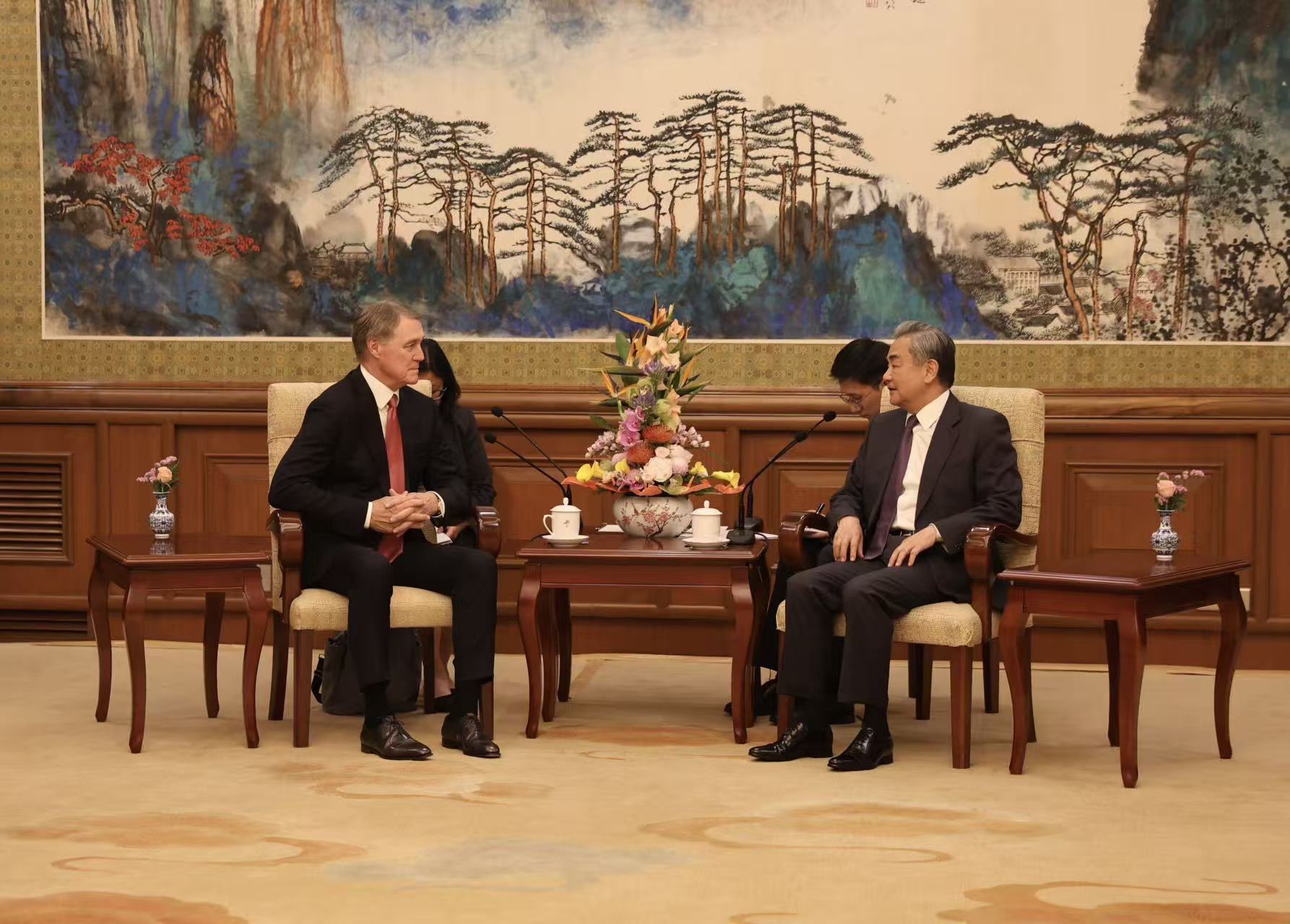
Prince Faisal bin Farhan met Chinese Foreign Minister Wang Yi on Tuesday. Wang’s public remarks, carried by China Daily Asia and the South China Morning Post, contained language that read as a direct if unnamed rebuke of Vance’s framing: “the priority is to safeguard and implement the memorandum of understanding, maintain the momentum of negotiations, and work for an early comprehensive agreement.” And then: “Talking is better than fighting, and dialogue is better than confrontation.”
Faisal’s response was warm. Saudi Arabia, he said, “appreciates the constructive role China has played in promoting the de-escalation of the situation in the Middle East.” The meeting continues a pattern of Saudi-China alignment during the negotiation phase, when Riyadh has been excluded from the tracks Washington is running. Beijing’s interest is transparent: MOU failure means Hormuz closure, which means Chinese energy supply disruption. Wang is offering the diplomatic partnership he wants Riyadh to see as an alternative to the Vance version of US commitment. The full texture of what Beijing offered — and what Riyadh withheld in return — is examined in Riyadh Pledged the Billion — Beijing Got the Visit, which documents how Saudi Arabia’s $1 billion Board of Peace pledge to Washington sits unpaid while Faisal extracted Hormuz concessions in Beijing.
What he is not offering is a security guarantee. China has no aircraft carrier group in the Gulf, no forward-deployed air wing, no equivalent to CENTCOM’s Al Udeid architecture. Beijing brokered the March 2023 Saudi-Iran normalisation. It did not defend Riyadh in March 2026 when the RSAF conducted its covert strikes on Iranian drone and missile launch sites. Wang’s “constructive role” is diplomatic. The one concrete Saudi hedge on the table is diplomatic partnership from a country that will not commit force. That is a partial hedge.
Who Pays the $300 Billion?
The MOU commits the US to work with “regional partners” on a minimum $300 billion Iranian reconstruction fund. The text does not name the partners. It does not need to. There is no alternative regional source of that capital other than the GCC states — the same states whose energy infrastructure, ports, air bases and civilian populations Iranian and IRGC-proxy fire targeted during the four months of the war.
Faisal, per an IISS account, brushed aside the financing “citing a lack of trust and the kingdom’s own development plans.” The lack of trust is public record. The kingdom’s own development plans — NEOM, the Line, Qiddiya, the giga-project portfolio — are running at fiscal pressure that Q1 already made visible. There is no Saudi $300 billion for Iranian reconstruction. There is no GCC $300 billion for Iranian reconstruction. The obligation exists in an MOU that one signatory has already declared it is fine to see collapse.
If the MOU holds, the reconstruction obligation is a live claim on Gulf treasuries. If the MOU collapses, Iran keeps the maximalist demand as a grievance for the next negotiation. The IISS assessment, in its “A Bad Peace” paper, was that the MOU “repeats the shortfalls of the 2015 JCPOA by failing to address their core security concerns” — no ballistic missiles clause, no UAV clause, no proxy restriction, despite Iran “firing thousands of projectiles at Arab Gulf states during the war.”
The Minsk II Analogy Riyadh Should Fear
The precedent Riyadh’s foreign ministry planners are working with, per two people familiar with the internal review, is JCPOA 2015. That is the wrong precedent. JCPOA failed slowly, through a US withdrawal three years later, with time for Gulf capitals to recalibrate. The closer analogy is Minsk II — the February 2015 framework that governed the Donbas conflict until Russia’s 2022 invasion made it moot.
Minsk II collapsed from accumulated impossibility. Its provisions were, per Brookings and the Beyond Intractability project, “too general and vague.” Ukraine was a party to Minsk II but bore the full consequence risk as the structurally constrained party. It could not veto Russian non-compliance. It could not compel European enforcement. It sat in the room and watched an instrument it needed decompose from the inside. Saudi Arabia’s position is analogous with one aggravating factor: it is not a party. It has no treaty right to invoke non-compliance, no seat in the Lake Lucerne monitoring group, and no clause it can point to that names its interests.
Chatham House’s read on the MOU legal status is worth quoting in full. The instrument, the think tank noted, “confirms that the US and Iran ‘have jointly agreed,’ which might suggest an informal legal agreement — one which rests on ‘good faith.’” Good faith in a bilateral framework where one party has publicly said it does not need the agreement to succeed is not a legal category. It is a courtesy.
What Riyadh Is Not Saying
The Saudi Ministry of Foreign Affairs has not publicly commented on Vance’s “all the cards” language. It has not commented on the Wall Street Journal war-options briefing. It has not commented on Hegseth’s “retrograde” testimony. It has not commented on the PGSA Day 61 activation. It has not announced a contingency fiscal plan for a re-closure of the strait. It has not clarified its position on the $300 billion reconstruction obligation. It has not said whether the Pakistani 8,000 to 13,000 troops at King Abdulaziz Air Base — deployed in April under the Strategic Mutual Defense Agreement, per Al Arabiya and Bloomberg — would be committed to Hormuz escort operations if the MOU fails. The material dimension of this silence is documented in the PAC-3 depletion and contractor-dependence analysis that explains why the shield Saudi Arabia fields may not outlast the troops that operate it. Meanwhile, the troops themselves are one pillar of Riyadh’s replacement for the GCC — a five-state axis with Qatar, Turkey, Pakistan, and Egypt whose full architecture and capability gaps are examined in that analysis.
The silence is coherent. Any Saudi comment on Vance’s framing implies acceptance of a US-Iran bilateral track that excludes Riyadh. Any comment on the PGSA implies acceptance of an Iranian tollbooth. Any comment on the $300 billion implies willingness to negotiate the number. Any comment on Pakistani deployment implies a security architecture whose operational particulars Riyadh does not control. In each case, saying nothing preserves optionality. What it does not preserve is fiscal cover, insurance capacity, or the assumption of US backing that the Vance interview just removed.
The P&I insurance market has already priced this ambiguity in. All twelve International Group P&I clubs issued 72-hour cancellation notices on March 5, 2026 for charterers’ liability war-risk extensions. The Joint War Committee entire Arabian Gulf Listed Area designation, per market participants, “historically takes years to unwind.” The DFC’s $20 billion Chubb-backed capacity explicitly excluded P&I coverage — leaving a $352 billion gap. If Vance’s language increases the probability of MOU failure by any measurable amount, that gap widens further.
The Atlantic Council framing describes a preference. Vance’s Tuesday interview describes a US position on that preference — one Riyadh does not have to accept, but has no visible mechanism to reject. The MOU Article 5 sovereignty clause that allowed Iran to reject demining operations without US challenge is the model. Riyadh is watching a bilateral instrument produce outcomes for its economy that it has no vote on, in a negotiation where the US party has announced it is comfortable with either the deal or its collapse.
The Doha channel that Faisal was not invited to has not been the answer. Beijing has not offered one. There is no third-country broker with the standing to insert a Saudi seat by force. The kingdom’s position, at MOU Day 14 of 60, is that its structural exposure is entirely legible and its structural voice is not.
Frequently Asked Questions
What does the MOU require Iran to do that it has not done?
The instrument does not require Iran to submit its ballistic missile program or UAV production to negotiation, and it contains no proxy restriction — the three items Gulf states raised as JCPOA gaps in 2015. Point 8 is the sole IAEA-access clause, and Iran’s Foreign Ministry deputy Kazem Gharibabadi said on June 30 that inspector return would only occur “within framework of a final agreement and as a result of practical action by the other side to end all sanctions.” That effectively conditions inspection on the outcome of the negotiation itself, not on entry into it.
Is there an MOU enforcement mechanism if either side violates it?
No. The 14-point text contains no named arbitrator, no dispute-resolution body, and no snapback provision equivalent to UNSC Resolution 2231 in the JCPOA. Article 12 references an enforcement structure but does not create one. The Lake Lucerne monitoring group, agreed as an oversight body, has no emergency protocol. Chatham House characterised the MOU as an instrument that “rests on ‘good faith’” — meaning it has no legal recourse in the event of unilateral breach.
What is the PGSA Vessel Information Declaration requirement?
The Persian Gulf Strait Authority requires a 48-hour pre-transit declaration from any vessel intending to cross the strait, including vessel identity, cargo manifest, insurance particulars, and destination. It applies to AIS-dark vessels operating without transponder data. The requirement runs independently of the fee waiver and does not expire on Day 61. Saudi vessels using Ras Tanura loading facilities face compliance exposure even in the fee-waived window.
How does the Turkey position affect Saudi security architecture?
Turkey has confirmed it will not join the Strategic Mutual Defense Agreement between Saudi Arabia and Pakistan, which remains bilateral. Ankara’s April 2026 Antalya security consultations with Riyadh, per Turkish and Saudi wire coverage, were framed as maritime and counter-terror cooperation rather than a mutual defense guarantee. Saudi Arabia’s non-Gulf partners with formal defense commitments are limited to Pakistan, whose 8,000–13,000 troops and 16 aircraft at King Abdulaziz Air Base are the sole external force posture in the kingdom.
What is the Lake Lucerne monitoring group and what authority does it have?
The Lake Lucerne monitoring group was established as the MOU’s oversight body, but the instrument does not grant it binding authority or define its membership beyond the two signatory parties. It has no emergency protocol — meaning there is no mechanism for convening it urgently in the event of a violation, as occurred in late June when both sides accused each other of breach simultaneously. It cannot compel compliance, issue binding rulings, or refer disputes to a third party. Saudi Arabia holds no seat in the group. Neither do any other GCC states. The monitoring architecture for the agreement governing the world’s most critical oil chokepoint has no Gulf voice in it.