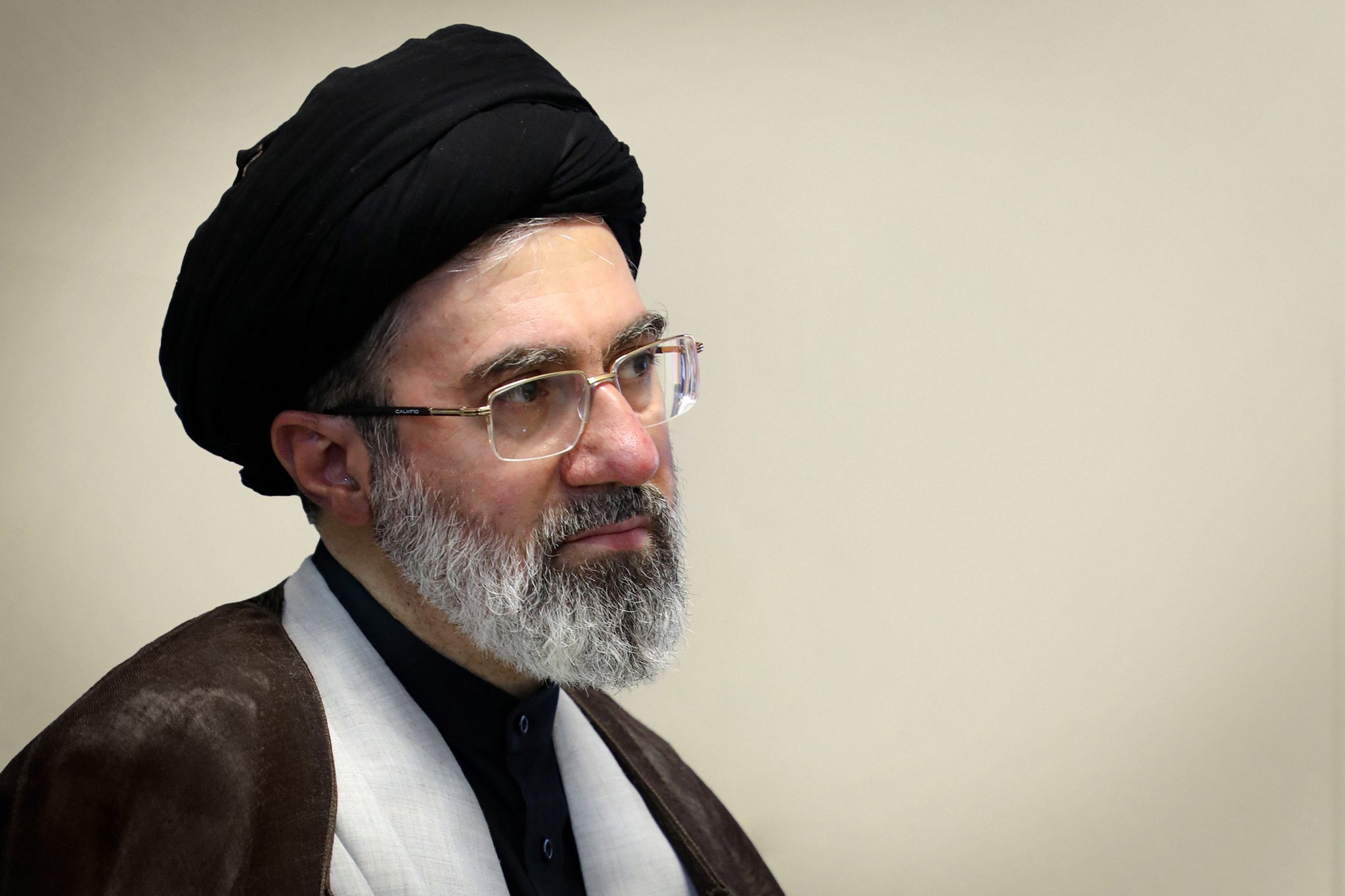

TEHRAN — Mojtaba Khamenei, Iran’s Supreme Leader, will not attend the funeral of his father, Ayatollah Ali Khamenei, after Iranian security services told him they “cannot provide security for him,” according to Ayatollah Hakim Elahi, the Supreme Leader’s representative in India, speaking to Indian media on July 3. Mojtaba has not appeared in public — not in photographs, video, or audio — since he was inaugurated sixteen weeks ago, and every communication attributed to him has been delivered as a written statement read by state television anchors.
The disclosure converts Iran’s succession crisis from a political question into an operational one for every party negotiating with Tehran. Under Article 176 of Iran’s constitution, all decisions by the Supreme National Security Council require confirmation from the Supreme Leader before taking legal effect — and there is no constitutional bypass mechanism. The Doha talks between Washington and Tehran are formally paused from July 4 to 9 for the funeral period, the Persian Gulf Security Arrangement auto-activates at $5.5 million per day on August 18 if the MOU lapses, and Saudi Arabia — which has not recognised Mojtaba as Supreme Leader — is the party most exposed if it does.
Table of Contents
What Do We Know About Mojtaba’s Condition?
Almost nothing that can be independently verified. Mojtaba was wounded in the February 28 US-Israeli airstrike that killed his father and his mother, Zahra Haddad Adel. CNN reported on March 11 that he sustained a fractured foot, a bruised left eye, and facial lacerations — injuries consistent with surviving an airstrike but not, on their face, debilitating enough to explain sixteen weeks of total invisibility.
Subsequent reporting pushed the picture considerably darker. The New York Times, via The Hill, reported that one leg underwent three separate operations and that amputation was formally considered by Iranian physicians — a claim corroborated by Kurdistan24. Ynet News reported he was awaiting a prosthetic leg and that burns to his face and lips made speech difficult, which would explain why a man who holds the most powerful office in the Islamic Republic has not spoken a single verifiable word since assuming it.
Iran’s counter-narrative is thinner. An aide told The National on May 10 that Mojtaba’s injuries amounted to “an ankle issue, a healed back injury and a small crack behind his ear from an explosion.” The gap between that account and what Western outlets have reported is not a matter of competing interpretations — one version describes a leader recovering from minor wounds, the other a man who may never address his country in person. The full governance consequences of that gap — 120 days of absence, the Office of the Supreme Leader’s “full health” claim issued on May 8, and what it means for MOU ratification authority — are examined in the companion analysis on Mojtaba Khamenei’s health and the succession verification gap.
Security doesn’t allow him to come… it is very dangerous and we cannot provide security for him. Friends who met him say he wants to come out and meet people, but security does not allow him.
The HOS Daily BriefThe Middle East briefing 3,000+ readers start their day with.
One email. Every weekday morning. Free.
Ayatollah Hakim Elahi, Supreme Leader’s representative in India, to BusinessToday.in and Tribune India, July 3, 2026
Hakim Elahi’s disclosure is the most recent account from inside Mojtaba’s circle, and its framing is deliberate — it attributes his absence from the funeral to Israeli threats rather than physical incapacity. Israel’s Defence Minister Israel Katz publicly stated that Mojtaba is “marked for death,” providing the official threat context that Tehran’s security apparatus is citing. But the security explanation has a structural gap: it accounts for why Mojtaba is not in public spaces, but not for why he has failed to appear in a single recorded video, a voice message, or even a verified photograph in sixteen weeks.
Mojtaba has issued exactly one substantive communication since March 8 — a written statement read on IRIB on June 18, in which he said he had “a different view in principle” on the MOU but approved it after receiving assurances from President Pezeshkian and the SNSC, according to Al Jazeera, the Washington Examiner, and The Hill. A leader who cannot attend his own father’s burial, cannot record a condolence video, and cannot be photographed sitting upright is a leader whose capacity to govern rests on trust in the authenticity of written statements that no outside party can verify.
Who Is Actually Authorising Iran’s Commitments?
The constitutional mechanics are unambiguous. Article 176 of Iran’s constitution stipulates that all SNSC decisions require confirmation from the Supreme Leader before they carry legal force — a requirement documented by the United Against Nuclear Iran (UANI) constitutional analysis and the text of the constitution itself. There is no deputy mechanism, no delegation clause, and no emergency workaround. As House of Saud has previously reported, the question of who holds ratification authority on Day 61 when the MOU expires already carried substantial uncertainty — Mojtaba’s functional invisibility compounds it.
Mojtaba’s June 18 written statement attempted to address this gap directly. He granted authority to Pezeshkian “as the head of the Supreme National Security Council,” with explicit conditions that Iran’s rights and the interests of the “Resistance Front” would be safeguarded, according to ANI and Tribune India. In the same statement, carried by IRIB, he declared that “future negotiations will not mean acceptance of the enemy’s position.” A separate written statement circulating in July, reported by the Times of Israel, stated that Iran would protect its “nuclear and missile capabilities” as a national asset.
The verification problem is acute. CBS News, sourcing unnamed Iranian officials, reported that Mojtaba is “directing Tehran’s negotiations with Washington.” But the claim arrives unaccompanied by any independently verifiable evidence — no video conference footage, no voice recording, no confirmed in-person meeting with any foreign official. Hard-line Iranian newspapers insist the talks proceeded “under the personal oversight” of Mojtaba and Quds Force commander Qaani, a framing that serves domestic legitimisation rather than external verification of command capacity.
For Saudi Arabia, which has not recognised Mojtaba as Supreme Leader, the question is not theological but contractual. If the PGSA auto-activates on August 18 at $5.5 million per day, Riyadh’s counterparty is a man whose consciousness, coherence, and command authority have not been verified by any party outside the IRGC’s innermost circle — a circle controlled by one individual.
The Gatekeeper: Ahmad Vahidi
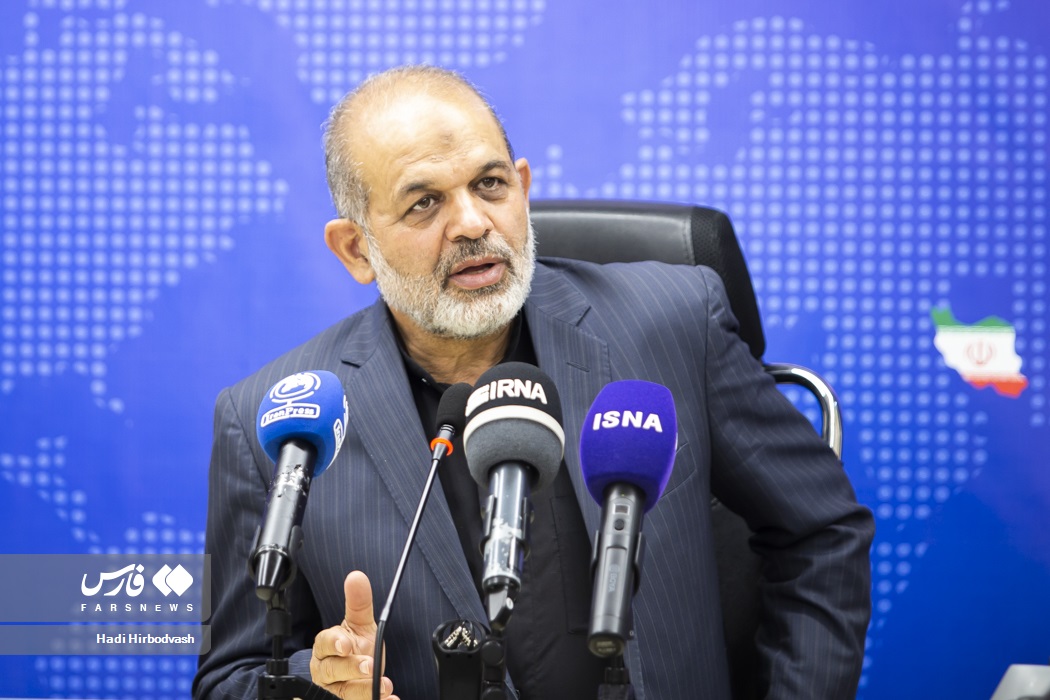
If Mojtaba is invisible, the man controlling access to him is not. Ahmad Vahidi — IRGC commander, first commander of the Quds Force in 1988, and Interpol-wanted for the 1994 Buenos Aires bombing that killed eighty-five people — has emerged as the single most consequential figure in Iran’s post-succession power structure. He replaced successive IRGC commanders killed in US-Israeli strikes and now occupies a position with no formal title but extraordinary practical authority: he is, by multiple accounts, the only person who sees Mojtaba face-to-face.
Vahidi may now be even more influential than Ghalibaf or even Mojtaba Khamenei… he is the only one who meets the new supreme leader face-to-face.
INSS analyst (Israel’s Institute for National Security Studies), quoted by Al Arabiya and Euronews, May 21, 2026
That assessment was published six weeks ago, and nothing since has contradicted it. The Institute for the Study of War reported on April 21 that Vahidi disagreed with Ghalibaf on whether Iran should participate in negotiations at all — a disagreement that places the man with sole physical access to the Supreme Leader on the opposite side of the diplomatic table from the man who signed the MOU. Foreign Policy reported on June 30 that the balance of institutional power has shifted decisively toward the IRGC since Ali Khamenei’s assassination, and Vahidi’s gatekeeper role is where that shift becomes concrete.
Vahidi made a rare public appearance at Ali Khamenei’s private funeral casket ceremony — a farewell restricted to the innermost circle — sitting beside the coffin, according to Outlook India. It was his first confirmed sighting in months. His position means he controls what information reaches Mojtaba, what decisions are presented for Supreme Leader confirmation, and — if the Western injury assessments are closer to the truth than Tehran’s official line — whether those confirmations are genuinely issued or manufactured on behalf of a leader who cannot produce them independently.
The Funeral Riyadh Will Not Attend — and Mojtaba Will Not Either
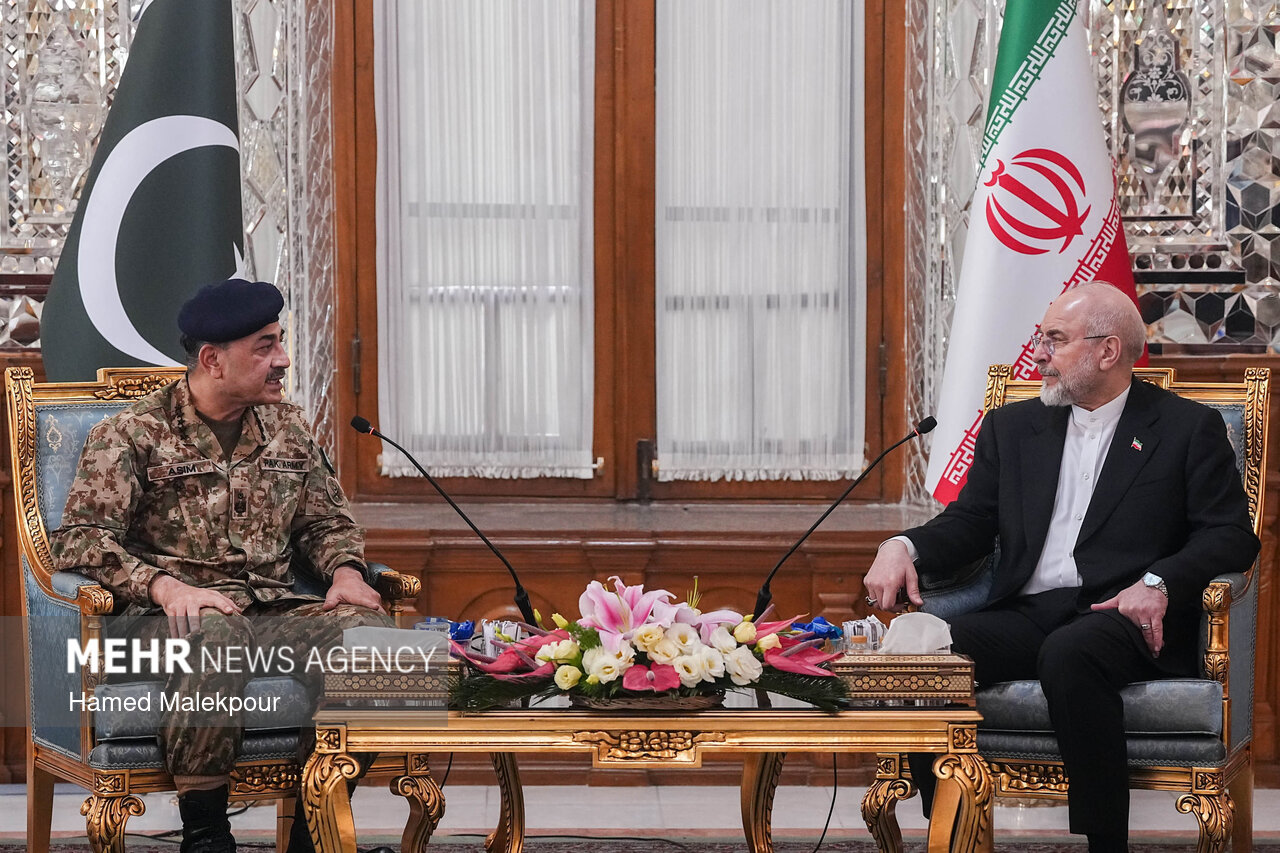
More than one hundred countries have confirmed delegations to Ali Khamenei’s funeral ceremonies, running July 4 through 9, according to Al Jazeera and Euronews. Russia is sending Dmitry Medvedev. Pakistan’s Prime Minister Shehbaz Sharif is confirmed — a weighted presence given that Islamabad is under consideration as the next venue for US-Iran talks and Sharif is travelling with Army Chief General Munir and Foreign Minister Dar. Turkey’s Vice President Cevdet Yilmaz, along with delegations from Tajikistan, Armenia, and Georgia, will attend.
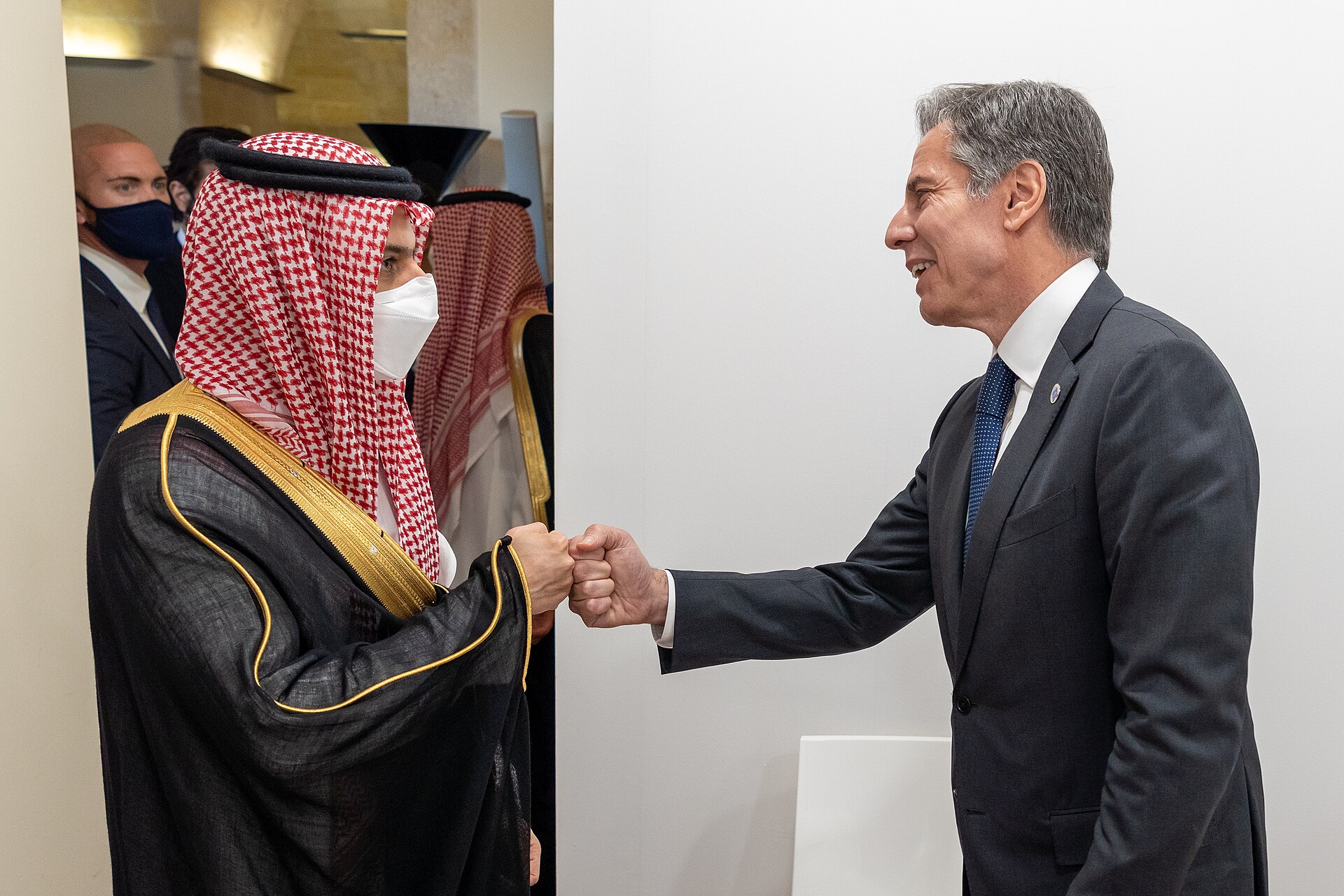
No GCC state has confirmed attendance. As House of Saud has previously reported, Saudi Arabia’s absence is consistent with its broader posture toward the succession — Riyadh has not recognised Mojtaba, has not issued condolences for Ali Khamenei’s death, and expelled its military attaché from Tehran in March 2026. The last senior Saudi official in Tehran was Foreign Minister Faisal bin Farhan, who attended Ebrahim Raisi’s funeral in May 2024, and no diplomatic recalibration has occurred since. Saudi Deputy FM Waleed El-Khereiji did appear, hours after this article was published — analysis of the rank signal Riyadh sent to Tehran is here.
But the more consequential absence is Mojtaba’s own. A Supreme Leader who cannot attend his father’s state funeral — the most consequential state ceremony in the Islamic Republic since the 1989 death of Ruhollah Khomeini — is a Supreme Leader whose authority rests entirely on documents that no independent party can authenticate. Ghalibaf, who leads Iran’s public-facing diplomacy, had at least twenty minutes of a state television interview defending the MOU cut by IRIB censors, according to Iran International and NCRI reporting from early July. The state media architecture is fractured on the diplomatic track, and the man nominally above it will not be present at the event designed to project institutional continuity.
What Does the Doha Pause Mean for the MOU?
The formal pause in US-Iran talks from July 4 to 9 creates a five-day window in which the MOU’s Phase 2 clock keeps running — Day 16 of 60 as of July 3 — with no scheduled negotiating sessions. The PGSA fee suspension expires on August 18, forty-six days out, and if the MOU lapses without a successor agreement, the arrangement auto-activates at $5.5 million per day. Saudi Arabia’s estimated exposure across the remaining period is $253 million — a sum accumulating while the counterparty who constitutionally authorises Iran’s position has not been independently verified as functional.
The pause carries no protection under the MOU itself. As House of Saud has previously reported, the agreement contains no snapback mechanism, no public-record requirement, no joint communiqué obligation, and no named arbiter under Article 12’s enforcement provisions — which remain a structural void sixteen days into the agreement. Ghalibaf warned on July 3 via ISNA that “if the US and Zionist regime fail to fulfil commitments, Iran will resume proportionate actions,” framing the funeral pause not as diplomatic courtesy but as a window in which alleged violations can accumulate without formal response.
The Assembly of Experts has already signalled its view of the entire diplomatic track. Sixty-two of eighty-eight members — 70.5 per cent — called the Hormuz reopening a “strategic mistake” and classified Trump and Netanyahu as “Mahdur al-Dam,” a religious designation meaning their blood may be shed. The AoE secretariat rebuked the statement as “unprecedented,” but the underlying arithmetic has not changed: a supermajority of the body that elected Mojtaba sixteen weeks ago opposes the deal he conditionally approved via a written statement whose authorship only the IRGC’s gatekeeper can confirm.
Background
Ali Khamenei served as Supreme Leader of Iran for thirty-six years before his assassination in a joint US-Israeli airstrike on February 28, 2026. His wife, Zahra Haddad Adel, was killed in the same strike, and his son Mojtaba was wounded. An Interim Leadership Council — Ayatollah Arafi, Chief Justice Mohseni-Eje’i, Speaker Ghalibaf, and President Pezeshkian — held authority from March 1 under Article 111 until the Assembly of Experts convened and elected Mojtaba on March 8, requiring at least fifty-nine of eighty-eight votes.
Mojtaba lacks the rank of Grand Ayatollah, a traditional but not constitutionally mandated qualification for the office. The Assembly of Experts bypassed the expectation by determining he met the criteria of a qualified jurist under alternative religious interpretations. The MOU — formally the Islamabad Memorandum — was signed between June 14 and 18, with Ghalibaf leading the Iranian delegation from Tehran via Geneva and Pezeshkian countersigning as SNSC chairman. Mojtaba’s conditional written approval, his sole substantive public communication as Supreme Leader, arrived on June 18.
Frequently Asked Questions
Has any foreign government confirmed meeting Mojtaba Khamenei in person since March 8?
No foreign government, international organisation, or independent media outlet has confirmed a face-to-face meeting with Mojtaba since his inauguration. The only individual publicly identified as meeting him in person is IRGC Commander Ahmad Vahidi, according to an INSS analyst quoted by Al Arabiya on May 21. Pakistani officials who visited Tehran — including Army Chief General Munir during the July funeral delegation — have not publicly confirmed a direct audience with Mojtaba, despite Islamabad’s role as a mediating party in the US-Iran channel.
Could the Assembly of Experts remove Mojtaba if he is incapacitated?
Constitutionally, yes. Article 111 grants the Assembly of Experts the authority to dismiss the Supreme Leader if he is unable to fulfil his duties, and the same body used its authority under Article 111 to appoint the Interim Leadership Council between February 28 and March 8. However, initiating removal proceedings would require the Assembly to acknowledge that the man they elected by supermajority sixteen weeks ago is unable to govern — a politically devastating admission that would validate the Western and Israeli intelligence assessments Tehran has spent months denying.
What happens to MOU decisions if Mojtaba’s confirmations cannot be verified?
The MOU contains no verification mechanism for Supreme Leader confirmations. Article 176 requires his approval for SNSC decisions to take legal force, but the MOU itself — an international memorandum, not a domestic statute — includes no clause addressing counterparty incapacity or authentication requirements. There is no precedent in Iranian constitutional history for a Supreme Leader governing exclusively through unverifiable written statements, and legal analyses by A&O Shearman and Gibson Dunn have already identified the absence of enforcement mechanisms as a structural weakness of the agreement — a weakness that Mojtaba’s condition amplifies from theoretical to immediate.
Is Iran’s government functioning in Mojtaba’s absence from public life?
Government operations continue, but the internal power structure has visibly shifted. Foreign Policy reported on June 30 that institutional authority has migrated toward the IRGC since the assassination, a trend that Vahidi’s gatekeeper role both reflects and reinforces. Ghalibaf operates as the public face of Iranian diplomacy but had portions of his own television defence of the MOU censored by state broadcasters, indicating that his latitude is constrained by forces he does not fully control. Pezeshkian holds the SNSC chairmanship but derives his negotiating authority entirely from Mojtaba’s June 18 written delegation — a delegation whose authenticity rests on state media attribution, not independent verification.
Why does Pakistan’s attendance at the funeral matter?
Prime Minister Shehbaz Sharif’s presence in Tehran for the funeral carries weight because Islamabad is “under consideration” as the next venue for US-Iran negotiations, according to diplomatic reporting cited by House of Saud. Sharif is travelling with Army Chief General Munir and Foreign Minister Ishaq Dar — a three-person delegation signalling that Pakistan’s military and diplomatic establishments are jointly invested in the mediator role. Dar briefed Saudi Foreign Minister Faisal on the second Doha round, positioning Islamabad as the only capital maintaining active communication with both Tehran and Riyadh while the funeral pause suspends direct US-Iran contact through July 9.
That succession vacuum did not go uncontested. Iran’s Paydari hardliners used the funeral pause as uncontested framing time, mounting the Paydari faction’s constitutional challenge to the MOU — arguing that the Doha agreement required Majlis ratification under Article 77 and that Pezeshkian exceeded his executive authority. Reuters sources surfaced July 5 confirming Mojtaba Khamenei’s physical incapacitation — facial disfigurement and leg injuries that prevented him from attending his father’s funeral even after he asked to do so. His absence also left the conditional MOU approval Mojtaba issued on June 18 as the only mandate Iran carries into the Islamabad round — with no authority in Tehran empowered to declare it satisfied.