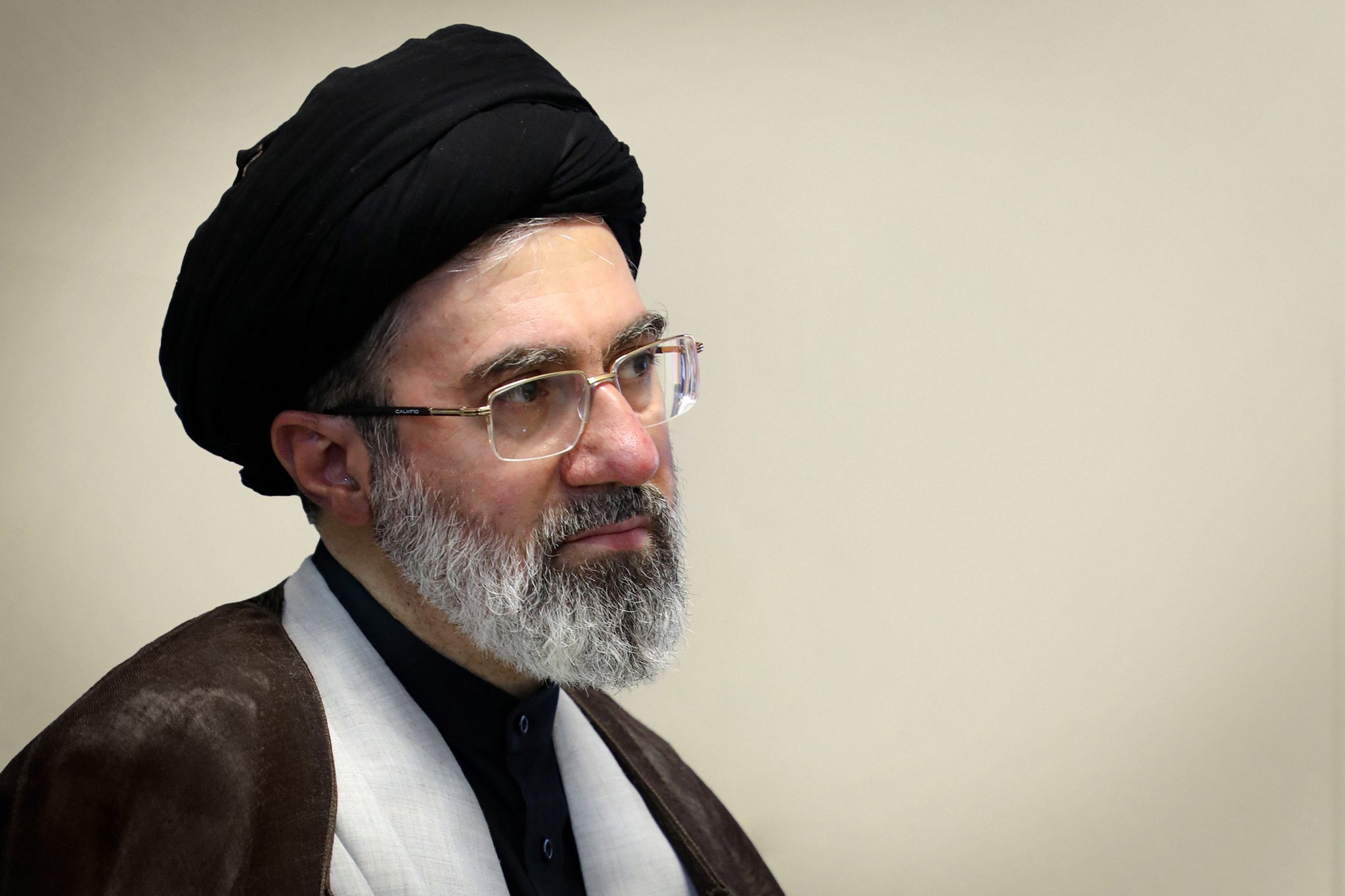
TEHRAN — Iranian Parliament Speaker Mohammad Bagher Ghalibaf warned on July 3 that Iran will “resume proportionate actions” if the United States and Israel fail to meet their obligations under the Islamabad Memorandum of Understanding, issuing the threat during a diplomatic pause that leaves the ceasefire without active mediation until July 9.
Ghalibaf made the statement during a meeting with Belarusian lawmaker Igor Sergeyenko in Tehran, according to ISNA. “We strongly demand full implementation of the agreements, and if the US and the Zionist regime fail to fulfil their commitments, Iran will resume proportionate actions,” Ghalibaf said, as reported by the Times of Israel liveblog. The warning landed on Day 16 of the MOU’s 60-day Phase 2 window — with talks suspended for the Khamenei funeral proceedings and no enforcement body standing between the threat and its execution.
Table of Contents
Ghalibaf’s ‘Proportionate Actions’ Warning
On July 1, in a televised interview reported by ANI and the Tribune India, Ghalibaf said: “We consider the events that are taking place in the Persian Gulf these nights to be a violation of the understanding to end the war, and we will definitely react to it.” He specified the breach he was flagging — Article 1, the MOU’s opening clause. “In Article 1 of the memorandum, the US is committed and guarantees that the war in Lebanon will end, no military operations will be carried out,” Ghalibaf said. Israel, he added, had continued military operations in Lebanon since the MOU was signed, calling them “a direct attempt to complicate implementation” and “desperate” sabotage of the accord.
By July 3, the language had hardened from “react” to “resume proportionate actions.” The word choice carried a specific resonance. On June 26, CENTCOM described its own strikes on Iranian missile sites as “a proportional response to unjustified Iranian aggression,” according to Global Security reporting on July 2. Ghalibaf’s adoption of the same framing — “proportionate actions” — appeared to assert an equivalent self-defence claim under the MOU’s own terms.
Ghalibaf also characterised the MOU itself as “a document of defeat for America and the Zionist regime,” according to Republic World on July 1. That framing served a domestic audience. According to the Critical Threats Project on July 1, Ghalibaf’s public posture was designed to build intra-regime support for the MOU against the anti-negotiation camp in the Majlis, preserving the negotiating track while satisfying hardliners who viewed any engagement with Washington as capitulation.
The dual function — threatening escalation abroad while defending diplomacy at home — is the same structure Ghalibaf deployed across five MOU articles earlier in the week. As HOS reported on July 3, Ghalibaf had assembled a five-article veto framework (Articles 1, 4, 5, 10, and 11) that conditions nearly every Phase 2 obligation on prior US performance. The July 3 warning to Sergeyenko was the operational expression of that structure.
The Middle East briefing 3,000+ readers start their day with.
One email. Every weekday morning. Free.
Why Can’t the US Deliver on Article 1?
Article 1 of the MOU reads: “The United States of America and the Islamic Republic of Iran and their allies in the current war are signing this MOU to declare the immediate and permanent termination of military operations on all fronts, including in Lebanon,” according to the text published by Arab Center DC and Foreign Policy on June 17.
The clause binds “their allies.” Israel is not a signatory.
The structural problem is not ambiguity but impossibility. The US committed to an outcome — the end of military operations in Lebanon — that requires Israeli compliance. Washington cannot compel that compliance by treaty, executive order, or diplomatic request with any certainty. Israeli operations in Lebanon have continued since the MOU was signed on June 17, as Ghalibaf noted in his July 1 statement and as the Soufan Center confirmed on the same day.
The Soufan Center identified Lebanon as the “most potent threat to the fledgling U.S.-Iran peace process,” noting that the MOU’s opening clause on Lebanon constituted the agreement’s primary vulnerability. The analysis did not attribute blame — it identified a design flaw. The US signed a commitment it cannot enforce against a party that did not sign.
Iran’s negotiators appear to understand the bind and have chosen to exploit it rather than accept it as a mitigating factor. At Doha round 2 on July 2, Iranian officials focused the session entirely on Article 1 Lebanon violations and the unfreezing of funds, according to Al Jazeera. The nuclear programme — ostensibly the MOU’s core subject — did not come up.
Iran’s deputy foreign minister used the newly established violation-communication channel to formally raise the Article 1 breach, according to Middle East Eye’s live blog. It was Iran’s first use of the channel, and the subject was Lebanon — not Hormuz, not inspectors, not enrichment.
Article 12’s Missing Enforcement Body
Article 12 of the MOU states: “The United States of America and the Islamic Republic of Iran agree that an executive mechanism will be established to monitor the successful implementation of this MOU and the future compliance of the final deal,” according to the text reviewed by Chatham House in June 2026.
Chatham House’s June 2026 assessment found “little agreement and there seems little prospect the gaps in the MoU can be filled over the next 60 days. Much is left impossibly vague… Twelve days into Phase 2, no such mechanism exists. No arbitrators have been named. No enforcement body has been constituted.” That was four days ago. Sixteen days in, nothing has changed.
The absence matters because Ghalibaf’s threat operates in a vacuum. When Iran declares a US violation — as it did with Article 1 — no body exists to adjudicate the claim. No mechanism exists to determine whether the violation occurred, whether the response is proportionate, or whether the MOU remains in force after the response. The Lake Lucerne monitoring group, the only adjacent structure, has no emergency protocol and no enforcement authority.
The result is a ceasefire governed by self-certification. Each party determines for itself whether the other has complied, whether a breach has occurred, and what response is warranted. Iran has already demonstrated how this works in practice — on June 25–27, both sides claimed the other broke the MOU first, and the dispute was resolved not by Article 12’s promised mechanism but by a phone call brokered by Qatar’s Emir Tamim. The counterparty authority question runs deeper: Iran’s Supreme Leader Mojtaba Khamenei has not appeared in public since March and will not attend his father’s funeral, leaving the MOU’s domestic authority chain opaque at the moment Ghalibaf is issuing its most explicit threat.
CSIS wrote in a 2026 analysis: “Even if this latest escalation unravels the MOU, Tehran appears willing to risk a return to full-on conflict rather than acquiesce to mounting pressure that the strait reopen unconditionally.”
What Happens During the July 4–9 Pause?
Talks are suspended from July 4 to July 9 for the Khamenei funeral proceedings. Both sides agreed to “regroup as soon as possible after the conclusion of the funeral processions,” according to CBS News and the Times of Israel liveblog. No venue has been confirmed for round 3. Qatar’s mediators said the parties had “made progress” at Doha and agreed to reconvene.
The pause is not a protected window. The MOU contains no provision suspending its terms during diplomatic recesses. Article 5’s 60-day clock — which started approximately June 17 — continues to run. Day 16 fell on July 3. The pause will consume Days 17 through 22. When talks resume, 38 days will remain before the Persian Gulf Shipping Authority’s fee waiver expires on August 18.
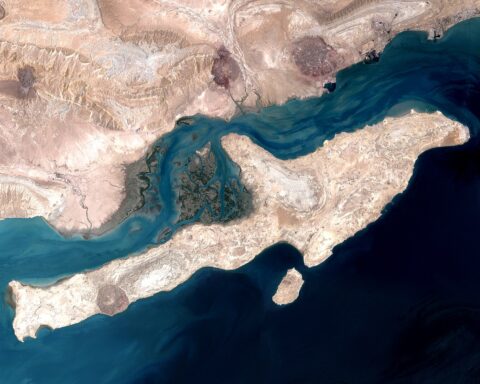
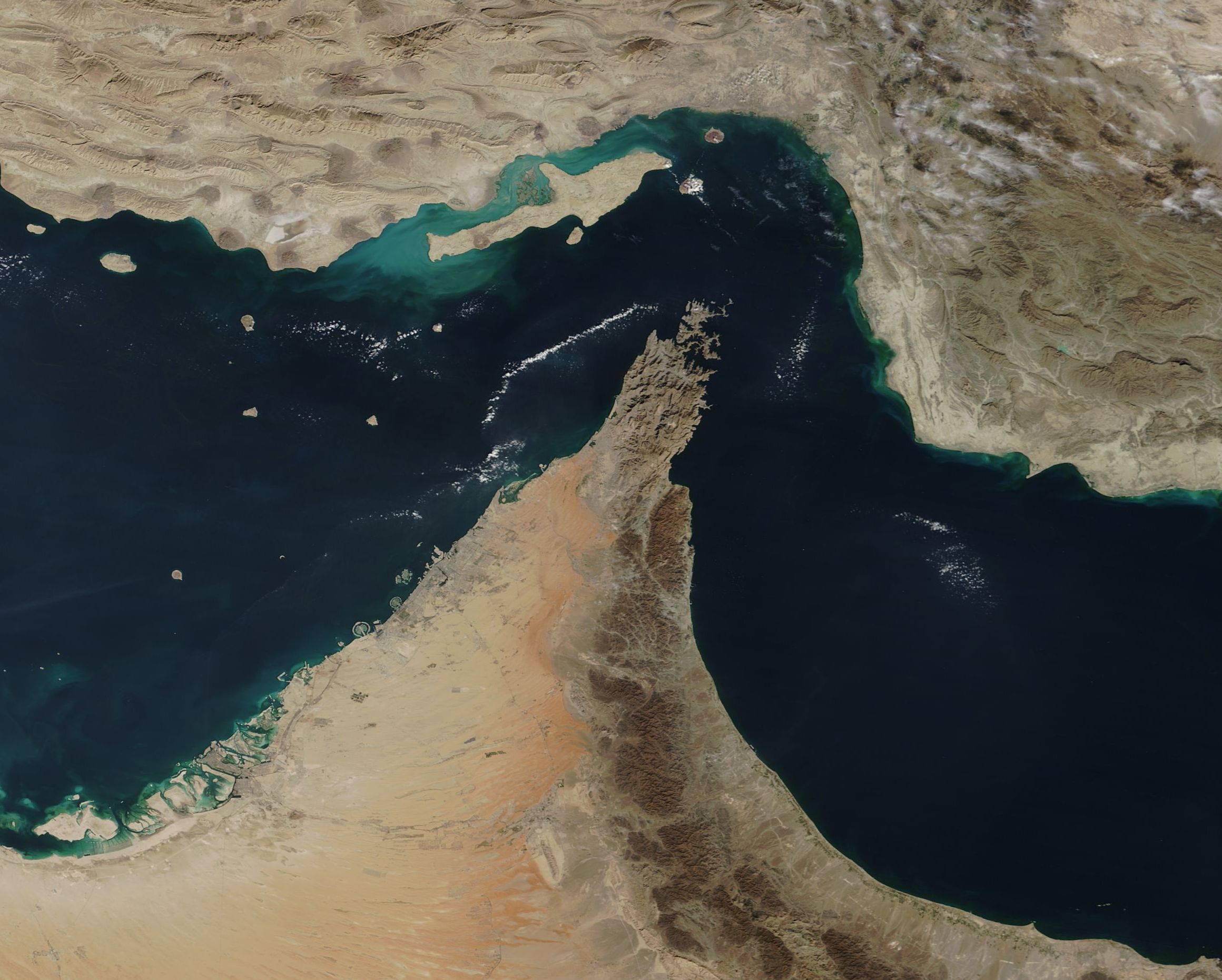
The PGSA, constituted on May 5 and sanctioned by OFAC on May 27, charges approximately $1 per barrel on vessels transiting the 5-nautical-mile corridor between Qeshm and Larak islands. Article 5 of the MOU waives those fees for 60 days “only” — the word is explicit in the text, as confirmed by the Islamabad Memorandum’s published version. On August 18, the fees auto-activate at an estimated $5.5 million per day. No extension mechanism exists in the MOU text.
Ghalibaf’s warning lands during this unmediated interval. Between July 4 and July 9, there will be no active diplomatic channel, no scheduled round, no mediator in the room, and no enforcement body to receive or adjudicate a violation claim. If Iran determines that continued Israeli operations in Lebanon constitute an Article 1 breach during the pause — as Ghalibaf has already stated they do — the response framework is entirely internal.
The IRGC retains the operational authority it demonstrated on June 27 and June 28. On June 28, according to Al Jazeera, the IRGC declared: “The only authorised routes for crossing the Strait of Hormuz are the routes announced by the Islamic Republic of Iran. Vessel traffic outside these routes is highly dangerous and prohibited.” That declaration has not been rescinded.
By July 4, the funeral window was producing a different kind of constraint on Ghalibaf’s negotiating room — as on-camera oath-taking at the Grand Mosalla hardened the public positions he would have to carry into Doha round three.
On July 5, the constraint sharpened further: the ceremony’s official emcee — selected by the IRGC-managed program committee — declared from the podium that killing Trump was a religious duty. The funeral incitement backdrop to Ghalibaf’s “proportionate actions” warning is the context in which that threat must now be read.
Doha Round 2 and the Violation Channel
The July 2 Doha round produced two structural outputs and zero substantive agreements. Working groups were formed. A violation-communication channel was established. Hormuz fees remained unresolved. Frozen assets remained frozen. The nuclear programme was not discussed, according to Al Jazeera’s July 2 reporting.
Iran’s first use of the violation channel — flagging Article 1’s Lebanon breach — established the channel’s function before any rules for its operation were agreed. The channel now exists as a notification system, not an adjudication mechanism. Iran can file complaints. The channel provides no required response timeline, no burden of proof, and no remedy.
Ghalibaf has claimed Iran will retrieve $12 billion of its $24 billion in frozen financial assets during Phase 2, according to Critical Threats on July 1. At Doha, Iranian officials pushed for the release of a $3 billion first tranche from the $6 billion Qatar pool — the same funds frozen after the October 7, 2023, Hamas attack, originally released as part of the Biden-era prisoner swap. The US denied that any agreement on funds had been reached. Qatar remained silent on the specific figure.
Iran’s stated expectations — $12 billion in asset recovery, Lebanon ceasefire enforcement, Hormuz sovereignty recognition — have no counterpart in the Doha session’s actual outputs: working groups, a complaint channel, and a funeral recess.
The June 25–27 Precedent
Ghalibaf’s warning is credible in part because Iran has already acted on it once.
On June 25, the M/V Ever Lovely was struck in the Strait of Hormuz. On June 26, CENTCOM hit Iranian missile sites in what it described as “a proportional response to unjustified Iranian aggression,” according to Global Security. On June 27, the IRGC struck the Ali Al Salem and Juffair bases. Iran characterised its own June 27 strikes as “defensive retaliation” under Articles 1 and 5 of the MOU — not a new breach but a response to a US breach, according to the Eastern Herald on July 2.
The sequence survived. Qatar’s Emir Tamim brokered a phone call. An oral stand-down was agreed — no written document, no amendment to the MOU, no binding violation threshold established. Both parties’ interpretations of who breached first remained intact. The 60-day clock kept running, as HOS has reported.
The sequence established that the MOU can absorb kinetic exchanges without formally collapsing. It also confirmed that the framework for interpreting those exchanges is entirely self-serving — each side claims self-defence, and no body exists to rule otherwise. The resolution mechanism was ad hoc: a single phone call from a Gulf emir, not the institutional architecture Article 12 promised.
That architecture remains unavailable during the July 4–9 pause. Emir Tamim brokered the June 25–27 de-escalation during active talks. Between July 4 and July 9, no talks are scheduled, and the mediator’s attention will be directed toward the Khamenei funeral proceedings, which Qatar has confirmed it will attend.
Background
The Islamabad Memorandum of Understanding was signed on approximately June 17, 2026, establishing a 60-day Phase 2 framework for US-Iran negotiations. The MOU followed the Phase 1 ceasefire — itself the product of Pakistani mediation — and was intended to provide a structured path toward a final agreement on Iran’s nuclear programme, Hormuz transit, and regional security.
The MOU’s 14 articles cover military cessation (Article 1), nuclear-related commitments, Hormuz passage (Article 5), IAEA access, and enforcement (Article 12). The agreement was negotiated between US and Iranian officials with Qatari and Omani mediation. Saudi Arabia holds no seat at the table. Israel is not a signatory.
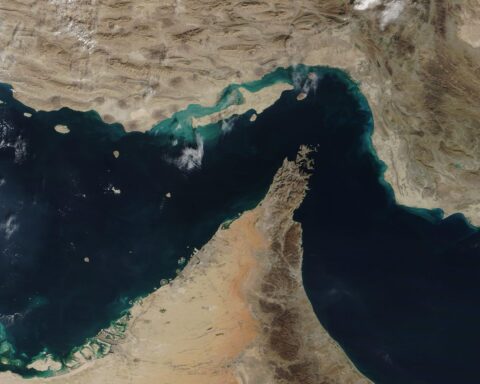
The Persian Gulf Shipping Authority, established May 5, 2026, is Iran’s institutional mechanism for controlling Hormuz transit. The MOU’s Article 5 suspends PGSA fees for 60 days; they auto-activate on August 18. The PGSA was sanctioned by OFAC on May 27, making payment legally hazardous for entities touching the US financial system. Twenty-five percent of global seaborne oil trade transited Hormuz in 2025, according to the IEA.
Saudi Arabia’s air defence posture has deteriorated during the MOU period — approximately 400 PAC-3 MSE interceptors remain, against a $9 billion replenishment order that cannot deliver before mid-2027, according to HOS coverage. That gap is now being directly targeted: on July 3, Houthi military spokesman Saree threatened a comprehensive response against Saudi airports and Aramco facilities, exploiting the same depleted air defence posture that Ghalibaf’s broader escalation framework has left exposed.
FAQ
Has the Iranian Majlis voted to ratify the MOU?
A ratification vote was scheduled for July 2–3, 2026. As of July 3, no confirmed outcome has been reported in available sources. The absence of breaking news reporting a rejection suggests the vote either passed or was deferred — possibly to avoid a public rupture during the Khamenei funeral period. Ghalibaf, as Speaker, controls the Majlis agenda and the timing of any floor vote. His public posture — defending the MOU’s terms while threatening action over noncompliance — is consistent with a strategy of keeping ratification in reserve as leverage rather than forcing a definitive vote.
What is the Lake Lucerne monitoring group, and can it intervene during the pause?
The Lake Lucerne monitoring group is the only multilateral structure adjacent to the MOU. It was convened as an informal observation body but has no emergency protocol, no enforcement authority, and no mandate to adjudicate violations. It cannot convene on short notice, issue binding rulings, or authorise responses. During the July 4–9 pause, the Lake Lucerne group has no scheduled activity and no mechanism to fill the gap left by Article 12’s unimplemented enforcement body.
How does the PGSA differ from the Hormuz tolls Iran imposed before the MOU?
The PGSA is a permanent institution, not a wartime measure. Constituted on May 5, 2026, it has a legal framework, a fee schedule (approximately $1 per barrel), a defined corridor (the 5-nautical-mile passage between Qeshm and Larak islands), and — since the OFAC designation on May 27 — a sanctions profile that makes payment legally hazardous for any entity touching the US financial system. The MOU’s Article 5 suspends PGSA fees for 60 days but does not dissolve the institution. On August 18, the PGSA resumes fee collection automatically. Iran’s position, articulated by Ghalibaf and supported by UNCLOS Article 26(2), is that the fees are lawful “service charges” for maintaining navigational safety — a characterisation Secretary Rubio called “a game of semantics” that “will never be acceptable” at the Doha round 2 talks.
What is Iran’s legal basis for claiming Hormuz sovereignty?
Iran cites UNCLOS Article 26(2), which permits coastal states to levy charges on foreign vessels for “specific services rendered.” Tehran characterises the PGSA fee as a service charge for navigational safety and environmental monitoring — not a toll or tax, which would violate UNCLOS transit passage provisions. Ghalibaf argued on July 1, according to Critical Threats, that the MOU text itself supports Iranian sovereignty claims over the strait. The US and most maritime legal scholars reject the characterisation, arguing that Hormuz qualifies as an international strait under UNCLOS Part III, where transit passage rights are non-suspendable and no fees may be levied beyond charges for specific services actually rendered. The dispute has not been submitted to any international tribunal.
Could Saudi Arabia independently enforce the MOU if the US withdraws?
Not with its current capabilities. With 86 percent of its PAC-3 inventory depleted and 2,300 US maintenance personnel potentially departing, Saudi Arabia cannot independently operate its integrated air defence system. The Link-16 battle management system that coordinates PAC-3 and THAAD batteries requires US personnel. The $9 billion PAC-3 MSE order placed in January 2026 will not deliver until mid-2027 at the earliest. Saudi Arabia also has zero seats at the MOU negotiations — it is neither a signatory nor a mediator. Riyadh’s exposure to the MOU’s success or failure is total; its influence over either outcome is near zero.