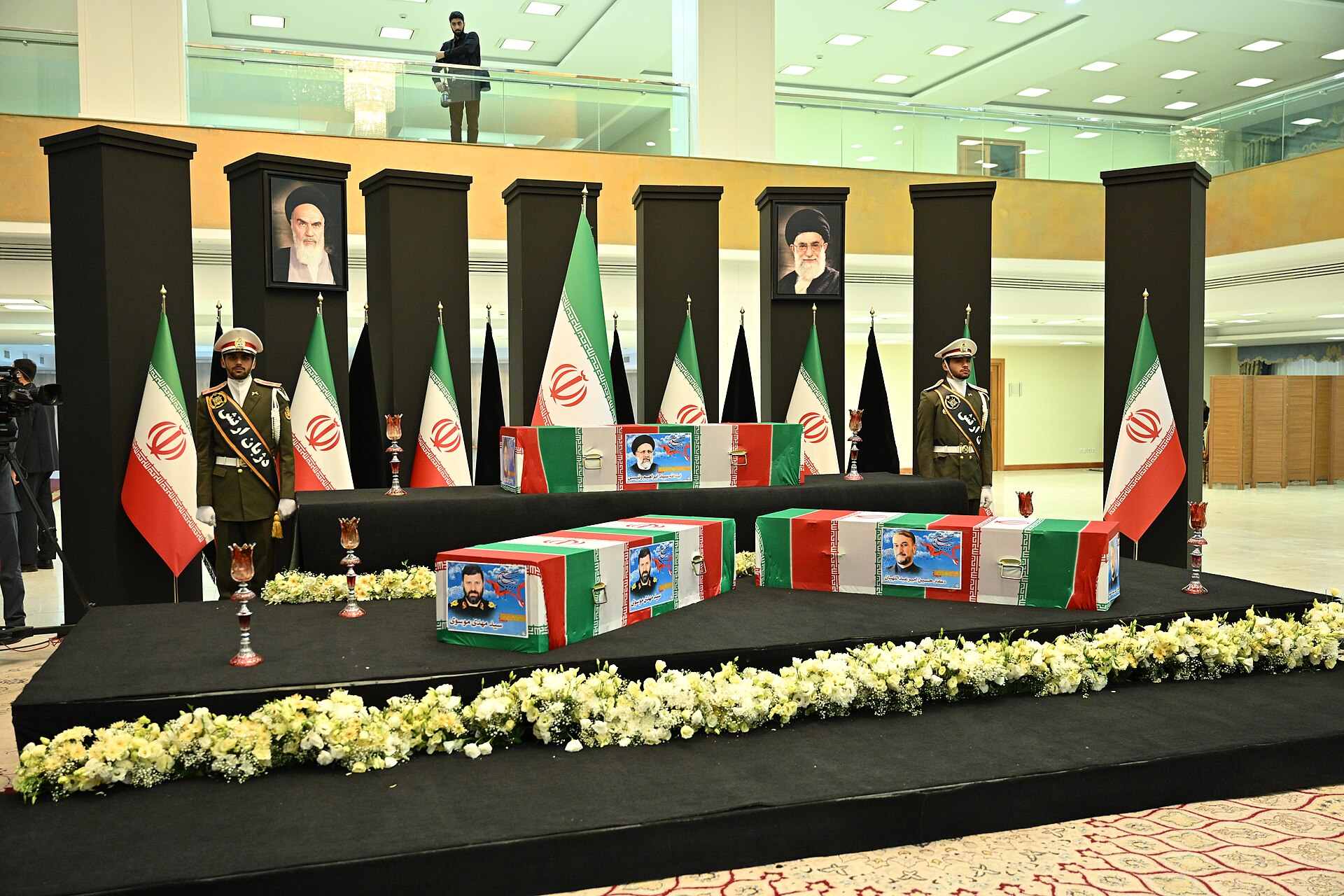
TEHRAN — Saudi Deputy Foreign Minister Waleed El-Khereiji appeared at the funeral of Supreme Leader Ali Khamenei in Tehran on July 3, 2026, leading a delegation that Iranian state publications described as “not officially expected” (ZeroHedge/Reuters). The appearance came less than twenty-four hours after published reporting concluded that Riyadh had chosen not to attend — no confirmed condolence message, no announced delegation, no name on any attendee list released by Tehran.
The reversal matters less than the rank attached to it. When President Ebrahim Raisi died in a helicopter crash in May 2024, Saudi Arabia sent its full foreign minister, Prince Faisal bin Farhan Al Saud — his second visit to Tehran since the 2023 Beijing Agreement (Al Arabiya). When Supreme Leader Khamenei was laid to rest twenty-six months later, Riyadh sent Faisal’s deputy. Raisi held the second-highest constitutional rank in the Islamic Republic. Khamenei held the first.
Table of Contents
The Man Riyadh Chose
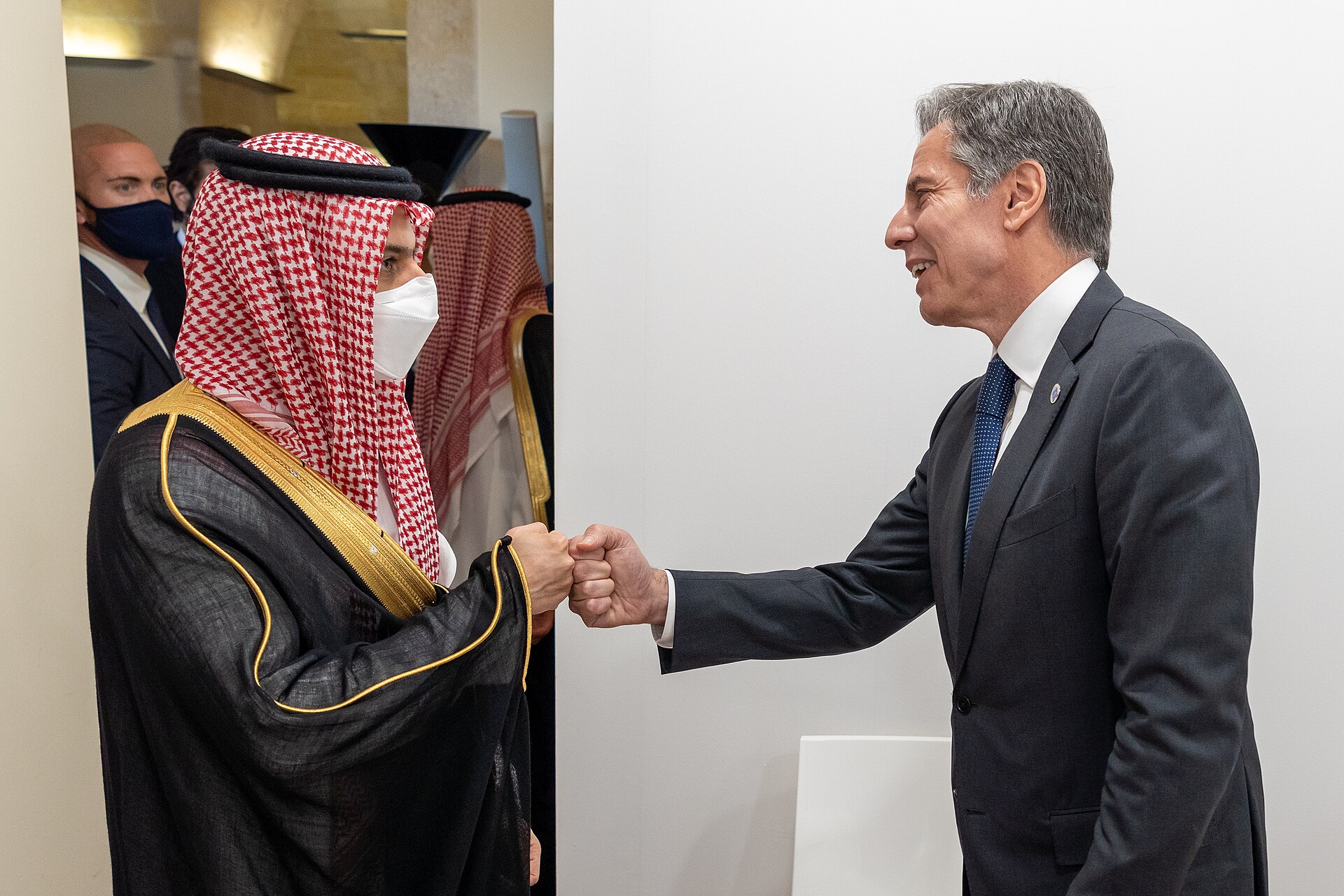
Waleed bin Abdulkarim El-Khereiji, born September 14, 1958, has served as Saudi Arabia’s Deputy Minister of Foreign Affairs since July 15, 2020 (Wikipedia). Before that appointment, he spent three years as Saudi Ambassador to Turkey — from April 2017 to July 2020 — a posting that covered the Khashoggi crisis and the first phase of the Saudi-Turkish diplomatic recalibration that would eventually feed into the Quintet framework. He is not a junior envoy dispatched to fill a protocol seat. He is the second-ranking official in the Saudi Ministry of Foreign Affairs, and the man who has managed Riyadh’s institutional Iran file since at least late 2025.
The Ankara posting carries its own relevance to that file. Turkey under Erdoğan maintained working diplomatic relations with Tehran throughout the period when Saudi-Iranian ties were frozen — embassies closed from January 2016 to June 2023. An ambassador to Ankara between 2017 and 2020 would have observed, at close range, how a regional power manages simultaneous engagement with Tehran and Washington without subordinating one relationship to the other. Turkey sent Vice President Cevdet Yılmaz to the Khamenei funeral — its own calibrated downgrade from the foreign minister level it had sent for Raisi.
El-Khereiji’s Tehran file predates the funeral by seven months. On December 9–10, 2025, El-Khereiji chaired the Saudi delegation to the Third Meeting of the China-Iran-Saudi Arabia Trilateral Joint Committee in Tehran. Iranian Deputy Foreign Minister Majid Takht-Ravanchi and Chinese Vice Foreign Minister Miao Deyu co-chaired (PRC Ministry of Foreign Affairs, December 10, 2025). The trilateral — a working mechanism of the March 2023 Beijing Agreement that restored Saudi-Iranian diplomatic relations — produced tangible, operational outcomes: a record of 85,000 Iranian pilgrims performing Hajj and 210,000 performing Umrah during the 2025 season, according to the joint press release issued at the session’s conclusion.
The December visit drew minimal coverage outside PRC state media. El-Khereiji’s name appeared on no front pages. The discussions involved consular logistics, pilgrimage coordination, and the implementation of bilateral agreements that had survived the broader deterioration in Saudi-Iranian relations. The meeting was operational — the kind of mid-level institutional maintenance that sustains diplomatic channels without producing headlines.
The Middle East briefing 3,000+ readers start their day with.
One email. Every weekday morning. Free.
Between the December trilateral and the July funeral, no other Saudi official of comparable or higher rank visited Tehran. The last senior Saudi presence in the city before El-Khereiji’s December trip was FM Faisal at the Raisi funeral in May 2024 — a gap of approximately nineteen months. El-Khereiji is the only Saudi official to have appeared in Tehran twice in the past fourteen months, and both appearances were under the umbrella of the Beijing Agreement that China brokered in March 2023.
Why a Deputy and Not the Foreign Minister?
Saudi Arabia sent Deputy FM El-Khereiji instead of FM Faisal bin Farhan because the rank communicates presence without endorsement. Between the two funerals, Iran struck Saudi territory with ballistic missiles, Riyadh expelled five Iranian diplomats, and Faisal described bilateral trust as “shattered” and potentially “irreparable.”
The Raisi funeral of May 2024 took place in a different diplomatic atmosphere. FM Faisal attended alongside UAE Foreign Minister Abdullah bin Zayed and Bahrain Foreign Minister Abdullatif bin Rashid Al-Zayani. As the Business Standard noted at the time, “few other occasions could have brought the foreign ministers of Saudi Arabia, the UAE and Bahrain into close quarters with the leaders of Hamas and Hezbollah.” The Beijing Agreement was fourteen months old. Saudi and Iranian embassies had been open for a year, with ambassadors exchanged simultaneously in September 2023 (Atlantic Council). The framework that Beijing designed to prevent exactly the kind of confrontation that followed was, at that point, still holding.
What followed dismantled it. US and Israeli strikes on Iran’s nuclear facilities killed Supreme Leader Khamenei on February 28, 2026. Iran retaliated with strikes on Gulf infrastructure — including a ballistic missile intercepted over Riyadh, drones over the Eastern Province, and a direct attack on Yanbu port — that crossed every Saudi red line the Beijing Agreement had been designed to manage. On March 22, 2026, Riyadh declared Iran’s military attaché, his assistant, and three other embassy staff members personae non gratae and gave them twenty-four hours to leave the country (Al Jazeera, Arab News, Saudi SPA).
“What little trust there was before has completely been shattered.”
— FM Prince Faisal bin Farhan Al Saud, on Saudi-Iranian relations following the 2026 war
Faisal added that trust “may be irreparable without an immediate halt to attacks.” Those words sit in the public record. Sending him to the funeral of the leader whose assassination triggered the strikes that triggered the Saudi expulsion of Iranian diplomats would have placed that language directly against the image of the Kingdom’s top diplomat mourning in Tehran. A deputy foreign minister carries no such contradiction — because a deputy foreign minister made no such statement.
The choice also has a historical precedent it quietly reverses. When Ayatollah Ruhollah Khomeini died in June 1989, Saudi Arabia sent nobody. Diplomatic relations had been severed since the 1987 Mecca incident, in which over 400 pilgrims — most of them Iranian — were killed during clashes with Saudi security forces. The 2026 attendance, however calibrated in rank, represents a decision the Kingdom did not make the last time a Supreme Leader was buried.
| Funeral | Date | Iranian Official | Iranian Constitutional Rank | Saudi Representative | Saudi Diplomatic Rank |
|---|---|---|---|---|---|
| Raisi funeral | May 2024 | President Raisi | #2 | FM Faisal bin Farhan | Foreign Minister |
| Khamenei funeral | July 2026 | Supreme Leader Khamenei | #1 | Waleed El-Khereiji | Deputy Foreign Minister |
Iran’s constitutionally highest-ranking official received a lower-ranked Saudi diplomat than Iran’s second-highest-ranking official had received twenty-six months earlier. No competing coverage of the funeral — from the Times of Israel, Al Jazeera, ZeroHedge, or Euronews — has examined that inversion or its diplomatic implications.
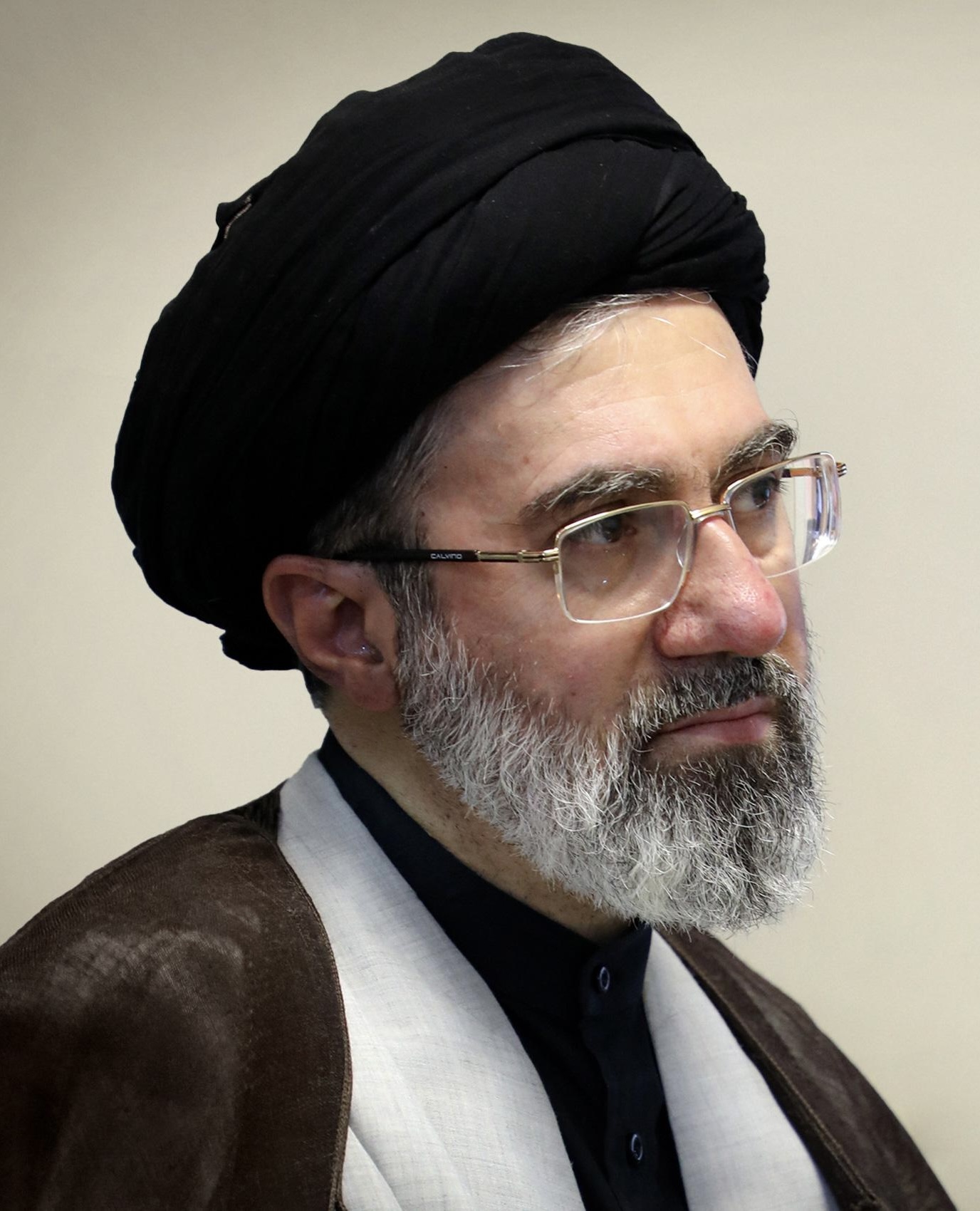
What Does El-Khereiji’s Presence Signal to Mojtaba?
El-Khereiji’s attendance acknowledges Mojtaba Khamenei’s succession without recognizing his legitimacy at the ministerial level. A foreign minister visit would have aligned Saudi Arabia with Pakistan’s head-of-government delegation. A deputy foreign minister visit aligns Riyadh with China, which sent NPC Vice Chairman He Wei — the same sub-ministerial tier.
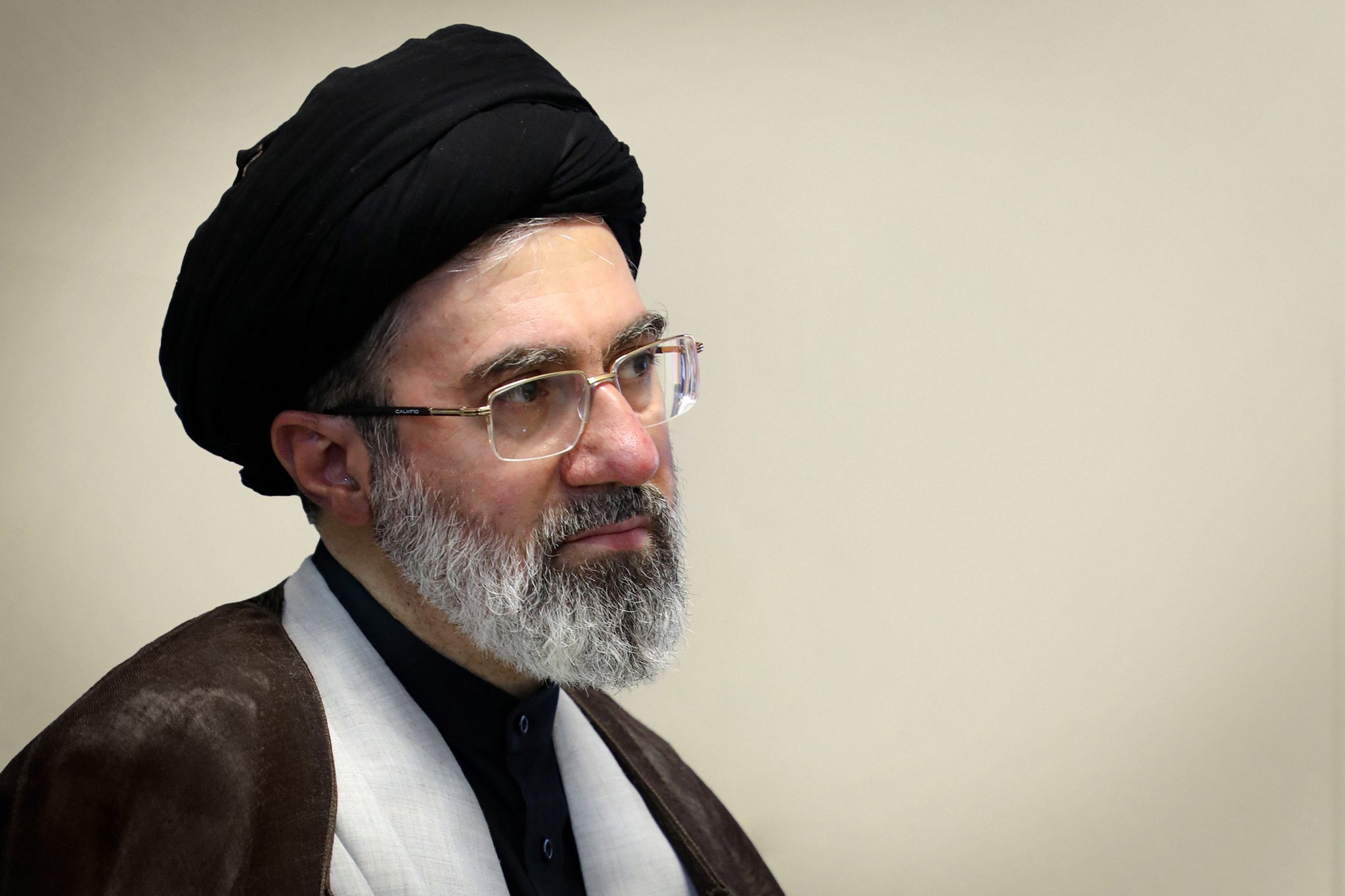
Mojtaba Khamenei, the late Supreme Leader’s son, has made zero verifiable public appearances since his appointment on March 8, 2026 (Euronews, Al Arabiya). Russia’s ambassador to Iran confirmed on March 31 that Mojtaba was in the country but “avoiding public appearances for understandable reasons” (Al Arabiya). His appointment was driven by IRGC commanders who applied “repeated contacts and psychological and political pressure” on Assembly of Experts members, with former IRGC intelligence chief Hossein Taeb serving as his primary internal sponsor (Wikipedia, Soufan Center). WBUR’s On Point described him as “his father on steroids.” The man El-Khereiji was implicitly addressing has not been seen in public since he took office.
A full foreign minister in Tehran for the burial would have placed Riyadh in the endorsement tier — alongside Pakistan, which sent PM Shehbaz Sharif and Army Chief General Asim Munir, and Iraq, which sent its president and parliamentary speaker. Those are delegations that carry the weight of state recognition. El-Khereiji’s rank places Saudi Arabia instead in the same lane as China’s He Wei — present at the ceremony, occupying the sub-ministerial tier, participating in the mourning without endorsing the mourner’s successor. The Raisi funeral precedent makes the distinction legible: Riyadh chose the higher tier for the lower-ranked Iranian official, and the lower tier for the higher-ranked one.
Tehran has not protested the rank differential. Iranian state media — IRNA and Al Jazeera feeds based on Iranian sources — reported El-Khereiji’s appearance factually, noted the delegation “wasn’t officially expected,” and published no commentary on the downgrade from the Raisi funeral precedent. For a succession that lacks Grand Ayatollah credentials and was installed under IRGC pressure, any Saudi presence at any protocol grade serves the legitimacy narrative. The protest would have been absence, not rank. President Pezeshkian framed the funeral as “an enduring display of national unity and loyalty to the lofty ideals of the Islamic system” (CBS News).
Did Beijing and Riyadh Choose the Same Lane?
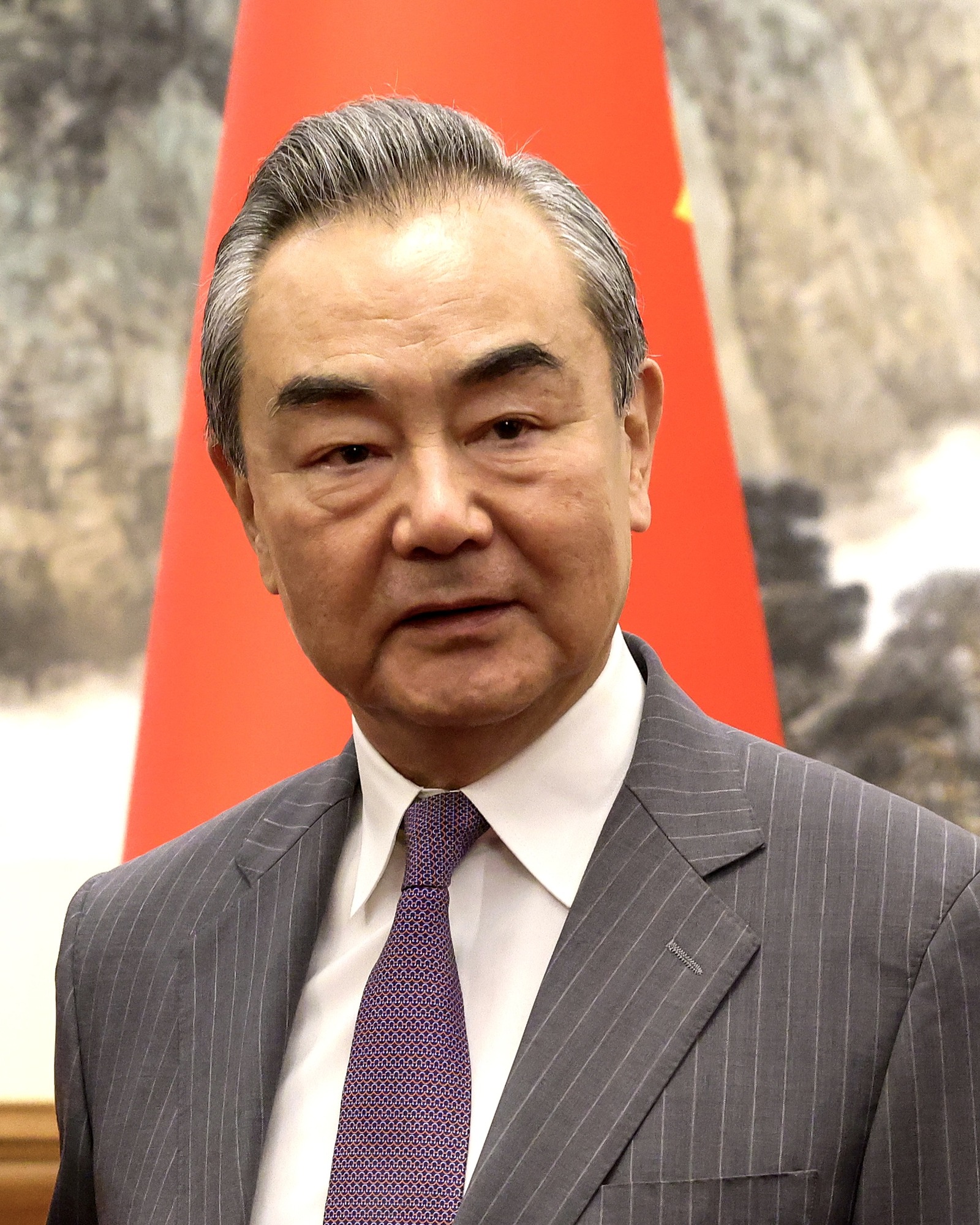
Beijing and Riyadh both selected sub-ministerial representatives for the Khamenei funeral. China sent NPC Vice Chairman He Wei; Saudi Arabia sent Deputy FM El-Khereiji. The parallel matters because China brokered the 2023 Saudi-Iran rapprochement and co-convenes the trilateral committee that El-Khereiji chairs for the Saudi side.
He Wei’s rank — NPC Vice Chairman — is roughly equivalent to El-Khereiji’s in diplomatic protocol terms (HNGN, July 2, 2026). Neither country sent a foreign minister. Neither sent a head of state or head of government. Both chose the same tier: institutional presence calibrated below the level that would signal political endorsement of Mojtaba’s succession. The choice cannot be read in isolation from the 2023 Beijing Agreement, because that agreement is the reason Saudi-Iranian diplomatic contact exists in its current form. Wang Yi, China’s foreign minister, described it in March 2024 as setting “a new example of political settlement of hotspot issues” (PRC Ministry of Foreign Affairs). El-Khereiji chaired the Saudi side of the December 2025 trilateral alongside Wang Yi’s deputy, Miao Deyu — a meeting Beijing co-convened under the same framework.
The parallel in funeral attendance preserves the trilateral geometry that the December meeting established: Saudi and Chinese officials of comparable sub-ministerial rank, present in Tehran, maintaining the infrastructure of a relationship they have jointly managed since 2023. Pakistan, by contrast, sent its prime minister and army chief — the highest-ranking delegation among countries that maintain active diplomatic relations with both Tehran and Washington. Turkey sent Vice President Cevdet Yılmaz, one tier below head of government. The graduated ranking — Pakistan at the top, Turkey in the middle, Saudi Arabia and China at the bottom among major attendees — is visible in the attendance ledger without any country having publicly coordinated it.
The same week El-Khereiji appeared in Tehran, FM Faisal returned from Beijing carrying explicit Hormuz freedom-of-navigation language that China had denied Tehran in its own bilateral channel. The joint statement from Faisal’s Beijing visit committed China to freedom of navigation in the Strait of Hormuz — a commitment absent from any Beijing-Tehran communiqué issued during or after the war. Beijing sent He Wei to the funeral and gave Faisal the Hormuz language in the same seventy-two-hour window.
The Two-Track Doctrine
A pattern has consolidated across eighteen months of Saudi-Iranian contact. FM Faisal bin Farhan carries the hard public language — “shattered trust,” expelled diplomats, the Beijing FON demands — and faces Washington, the Quintet partners, and Saudi domestic constituencies. Deputy FM El-Khereiji does the maintenance work that the Faisal track cannot afford to be seen doing: the December 2025 trilateral in Tehran, the July 2026 funeral appearance, the institutional continuity of the Beijing Agreement framework.
The two tracks serve different audiences on different timelines. Faisal’s rhetoric reassures Washington that Riyadh has not drifted toward accommodation with Tehran. It also carries the weight of the Quintet security architecture — formalized on July 1, 2026, two days before the funeral — which lists “containing Iran” as one of two stated objectives alongside opposing Israeli territorial expansion (Foreign Policy). The IISS assessed in May 2026 that the Quintet had “evolved beyond ad hoc crisis response into a recognisable security architecture,” while noting the absence of any “charter, secretariat, or enforcement” mechanism. El-Khereiji’s appearances reassure Beijing that the 2023 framework it brokered remains a functioning diplomatic channel and not a historical artifact of a pre-war order.
Most foreign ministries maintain this distinction between the political tier — the minister’s public statements and high-profile travel — and the operational tier, where deputy- and director-level officials keep bilateral mechanics running through quiet contact. What distinguishes the Saudi version is the degree of divergence between the two tracks. Faisal’s language approaches the register of diplomatic rupture: “irreparable” absent an immediate halt to attacks. El-Khereiji’s itinerary approaches the register of routine bilateral management: Tehran in December for a trilateral committee, Tehran again in July for a funeral appearance. The two men occupy the same ministry, report to the same foreign minister — Faisal is El-Khereiji’s direct superior — and address the same bilateral file.
The Atlantic Council noted in 2024 that “Tehran and Riyadh have taken steps to ensure that their dialogue continues without the March 2023 diplomatic deal becoming another victim of the Gaza war.” The war that came was not from Gaza but from the US-Israeli strikes on Iran’s nuclear program that killed Khamenei on February 28, 2026. The channel that continued operating after the strikes — producing the December trilateral’s joint press release eleven weeks before them, and the funeral attendance four months after — was the El-Khereiji channel. The Faisal channel produced the March expulsion, the “shattered trust” statement, and the Quintet’s stated goal of containment.
Who Else Came — and Who Didn’t?
Three of six GCC states — Saudi Arabia, Qatar, and Oman — sent confirmed delegations to the Khamenei funeral (The Hill, Al Jazeera, July 3, 2026). The UAE, Bahrain, and Kuwait did not confirm attendance. No GCC head of state and no GCC foreign minister attended, against a Raisi funeral where three GCC foreign ministers were present (Business Standard).
The UAE absence is consistent with a broader pattern. Abu Dhabi has been excluded from the Quintet framework, which Riyadh built around Abu Dhabi’s empty chair. The planned Arab-Iran summit in Riyadh — designed in part to reintegrate broader Gulf participation — remains unscheduled as of July 3, with UAE attendance uncertain. The GCC’s funeral footprint has gone from three foreign ministers in 2024 to three delegations without a single foreign minister in 2026.
Among Quintet members, the rank disparity was wide. Pakistan sent PM Shehbaz Sharif and Army Chief General Asim Munir — the highest-ranking delegation among all attending countries that maintain diplomatic relations with both Tehran and Washington. Pakistan’s FM Dar briefed Saudi FM Faisal on the Doha round while Sharif and Munir flew to Tehran, running the diplomatic mediation and the funeral mourning as parallel operations. Turkey sent Vice President Cevdet Yılmaz — one full tier below head of government. Saudi Arabia, the Quintet’s lead state and the architect of its containment mandate, sent its deputy foreign minister — the lowest confirmed rank among the three Quintet members whose delegations have been identified. While Sharif was in Tehran’s dignitaries’ section, Pakistan’s UN Ambassador was condemning Iranian strikes on GCC states at a Security Council emergency session — a split-screen that encapsulates Pakistan’s simultaneous UNSC condemnation and Tehran funeral attendance.
| Country | Representative | Rank | Quintet Member |
|---|---|---|---|
| Pakistan | PM Sharif + Army Chief Munir | Head of Government | Yes |
| Iraq | President + Parliamentary Speaker | Head of State | No |
| Armenia | PM Nikol Pashinyan | Head of Government | No |
| Turkey | VP Cevdet Yılmaz | Vice President | Yes |
| China | NPC Vice Chairman He Wei | Sub-ministerial | No |
| Saudi Arabia | Deputy FM El-Khereiji | Deputy Foreign Minister | Yes (Lead) |
| India | Pabitra Margherita | Minister of State | No |
| Qatar | Delegation confirmed | Not specified | Yes |
| Oman | Delegation confirmed | Not specified | No |
| Russia | Senior delegation | Not specified | No |
Egypt’s attendance — the fifth Quintet member — has not been confirmed in initial reporting. Qatar sent a delegation whose composition and rank have not been specified in available sources. Among non-Quintet attendees, Russia sent a senior delegation, India sent Minister of State Pabitra Margherita, Iraq sent its president and parliamentary speaker, Afghanistan’s Taliban government sent representatives, and Armenian PM Nikol Pashinyan attended in person (Euronews, Al Jazeera).
Western nations were entirely absent — a contrast not only with the Raisi funeral but with the pattern of Iranian succession events more broadly. Iran invited more than one hundred countries to the ceremony. The main public procession, scheduled for July 6, was expected to draw fifteen to twenty million mourners. Saudi Arabia’s presence at the dignitaries’ ceremony, however calibrated in rank, placed Riyadh on the same side of the attendance ledger as Moscow, Beijing, and Islamabad — and on the opposite side from Washington, London, and Paris.
Three Days in July
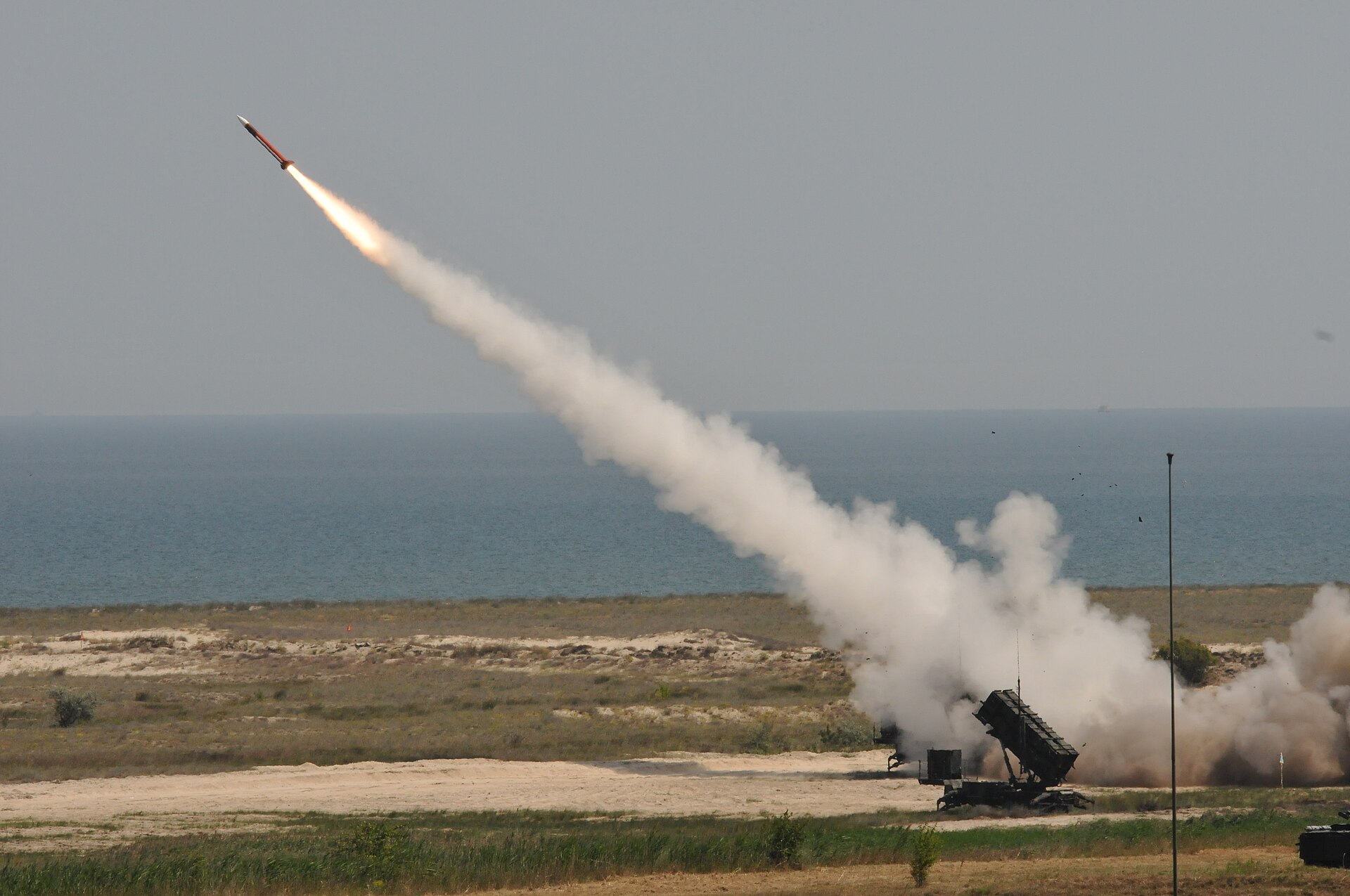
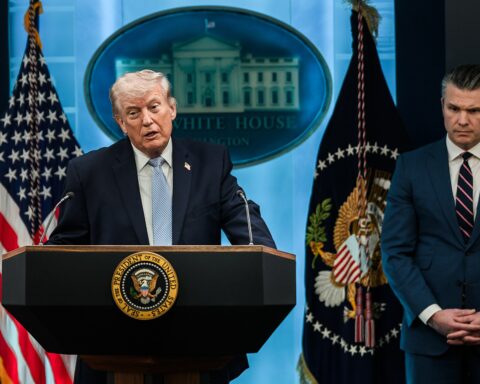
Between July 1 and July 3, 2026, Saudi Arabia executed four distinct diplomatic actions pointing in four different directions. On July 1, FM Faisal returned from Beijing carrying explicit Hormuz freedom-of-navigation language — a commitment China had extended to Riyadh and withheld from Tehran. The same day, the Saudi-led Quintet formalized with two stated goals: containing Iran and opposing Israeli territorial expansion (Foreign Policy). Also on July 1, Saudi Arabia refused to provide US bases or airspace for Operation Project Freedom Hormuz; the White House responded by threatening to delay Patriot interceptor deliveries (Times of Israel).
On July 3, El-Khereiji appeared in Tehran. The man who chaired the December 2025 trilateral — convened under the agreement that Beijing brokered and that Faisal’s public language has described as shattered — sat in the dignitaries’ section at the funeral of the Supreme Leader whose forces struck Saudi territory four months earlier. ZeroHedge characterized the Saudi appearance as “perhaps a symbolic sign of a thawing of sorts between Gulf GCC states and Iran, at a moment the extended ceasefire continues to hold.”
Saudi Arabia’s PGSA exposure stands at approximately $253 million — forty-six remaining days under the MOU multiplied by $5.5 million per day, with the fee suspension expiring on August 18, 2026. The planned Arab-Iran summit in Riyadh remains unscheduled as of July 3. UAE attendance at any such summit is uncertain. The fourth session of the China-Iran-Saudi Arabia Trilateral Joint Committee — the body El-Khereiji chairs for the Saudi side — has not been announced.
Frequently Asked Questions
Has Saudi Arabia formally recognized Mojtaba Khamenei as Supreme Leader?
No formal recognition has been issued. El-Khereiji’s funeral attendance constitutes a procedural acknowledgment of the succession — Riyadh sent a representative to the predecessor’s burial — but falls short of the diplomatic recognition that a foreign minister visit or an exchange of official correspondence would convey. Saudi Arabia has not addressed Mojtaba by title in any public statement. The Kingdom’s last formal engagement with the office of the Supreme Leader was through the Beijing Agreement framework, signed with Khamenei Senior’s government in March 2023.
Is the Saudi embassy in Tehran still open after the March 2026 expulsion?
Yes. The March 22, 2026 expulsion targeted Iran’s military attaché and four staff members based in Riyadh — not the broader diplomatic mission in either capital. Saudi Arabia’s embassy in Tehran and Iran’s embassy in Riyadh remain operational. Both were reopened between June and August 2023 following the Beijing Agreement, with ambassadors exchanged simultaneously in September 2023 (Atlantic Council). The expulsion removed military-affiliated personnel while preserving the civilian diplomatic channel that El-Khereiji’s December trilateral operated through.
Why did Iran not protest the rank downgrade from the Raisi funeral?
Tehran’s strategic incentive runs in the opposite direction. Mojtaba Khamenei’s succession is contested domestically — sixty-two of eighty-eight Assembly of Experts members have called the Hormuz reopening a “strategic mistake,” a statement interpreted by multiple analysts as an implicit rebuke of the new leadership. In that context, any international presence at the funeral serves the legitimacy project regardless of protocol grade. A public protest of Saudi Arabia’s rank selection would have drawn attention to the downgrade and risked discouraging future calibrated attendance from other states weighing similar diplomatic signals.
What is the next scheduled diplomatic contact between Saudi Arabia and Iran?
No bilateral meeting has been publicly scheduled. The Doha talks between Iran and the United States — in which Saudi Arabia holds zero seats — paused July 4–9 for the funeral mourning period. The planned Arab-Iran summit in Riyadh has no announced date. An analysis of the structural obstacles facing Riyadh’s planned Gulf-Iran summit finds that Saudi Arabia cannot yet name a confirmed Iranian participant with authority to bind the state — a problem that precedes scheduling. The China-Iran-Saudi Arabia Trilateral Joint Committee’s fourth session has not been scheduled. The MOU’s sixty-day clock reaches Day 46 on August 2, with the PGSA fee suspension expiring on August 18 — the next hard deadline in the Saudi-Iranian diplomatic calendar.
Did any GCC state send a foreign minister to the Khamenei funeral?
No confirmed GCC foreign minister attended. Saudi Arabia sent Deputy FM El-Khereiji. Qatar and Oman sent delegations whose composition and rank have not been specified in available reporting. The UAE, Bahrain, and Kuwait have not confirmed any attendance. This marks a departure from the Raisi funeral of May 2024, where three GCC foreign ministers — Saudi Arabia’s Faisal bin Farhan, the UAE’s Abdullah bin Zayed, and Bahrain’s Abdullatif Al-Zayani — attended together in what the Business Standard described as a rare convergence of Gulf and Iranian-aligned leaders in the same venue.
A subsequent analysis of what El-Khereiji’s attendance communicates about Saudi diplomatic posture — as distinct from his presence — argues that the rank inversion is structural rather than situational: El-Khereiji Carried the Condolences Faisal Did Not Deliver.