RIYADH — Yemen’s Houthi forces claimed on Friday, November 13, that they struck King Khalid International Airport in Riyadh and two pumping stations on Saudi Arabia’s East-West oil pipeline in a single sortie of three drones — the latest in a pattern of paired attacks on the kingdom’s aviation and energy infrastructure. The Saudi-led coalition, which had publicly confirmed intercepting seven projectiles over the previous 48 hours, had not responded to the Friday claims as of Saturday morning. The silence leaves open a question the coalition’s own recent candour makes harder to dismiss: whether its air defences, stretched by a tempo of near-daily Houthi launches, missed these three.
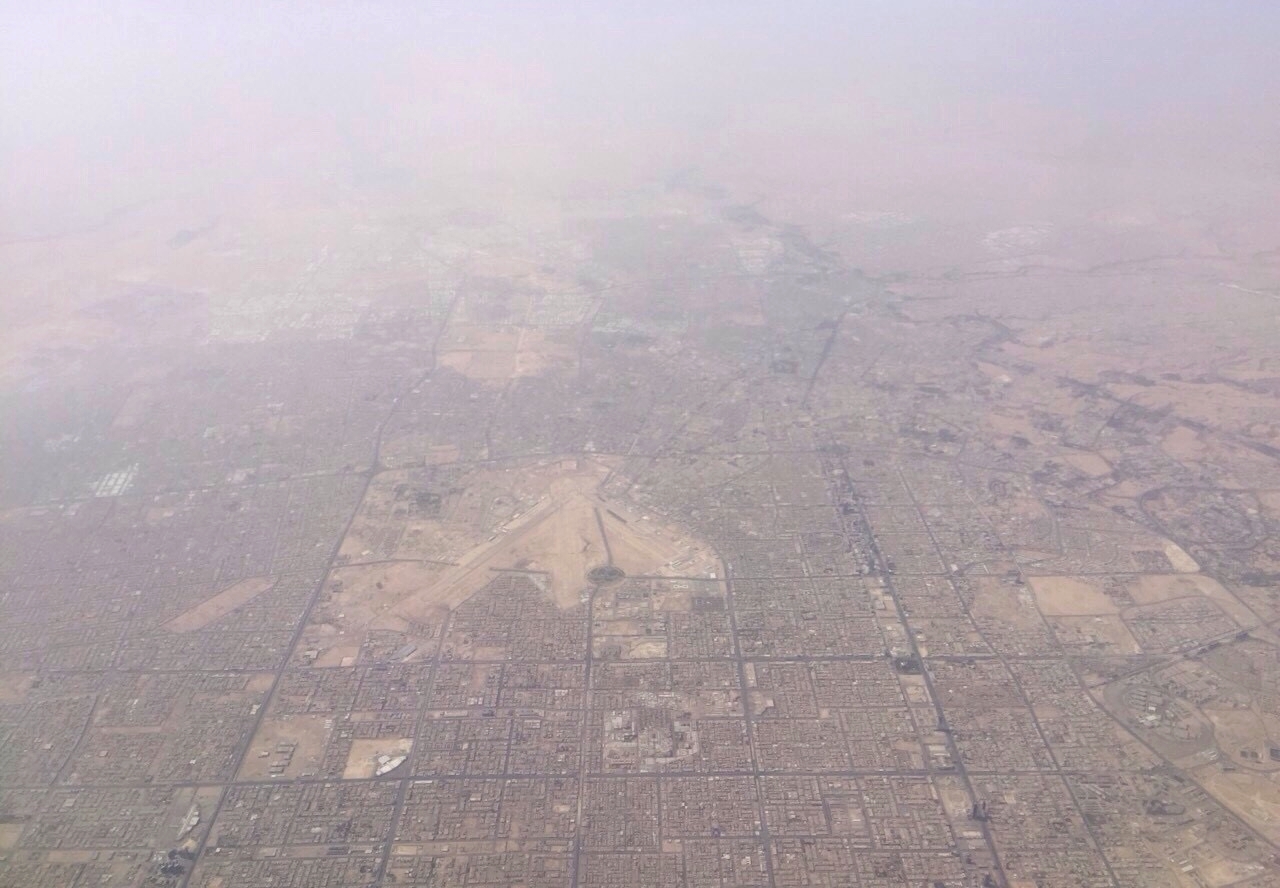
Houthi military spokesperson Yahya Sarea posted on the social media platform X that “our armed forces carried out two special military operations,” the first targeting KKIA and the second sending two drones at Pumping Station No. 3, east of Riyadh, according to Al Masirah TV and Siasat Daily citing IANS. Sarea claimed both operations “achieved their objectives” but offered no damage evidence or weapon specifications. Separately, the same statement claimed ballistic missiles struck Saudi troop gatherings in Al-Tuwal, Jazan province, “killing or wounding dozens, including Sudanese nationals,” and extended further claims to Al-Jawf, Lahj province, and the Ras Abas military base in Aden, according to Xinhua.
The House of Saud Daily Briefing
Saudi Arabia's news in 3 minutes, every morning. Free. See today's issue
The dual-target structure — airport and pipeline in one announcement — repeats a pattern from two days earlier, when the Houthis claimed three cruise missiles at KKIA and a drone at Pumping Station No. 11 near Yanbu on November 11, according to Xinhua. That the coalition confirmed those November 11 intercepts within hours but said nothing about the Friday claims by Saturday morning is itself a data point, though not a conclusion.
Table of Contents
- What the Houthis Claimed on November 13
- The Coalition’s 48-Hour Intercept Record Before the Friday Claim
- Why Does the Houthi Strategy Pair the Airport With the Pipeline?
- What Is KKIA’s Operational Status After Two Months of Strikes?
- How Much Oil Moves Through the East-West Pipeline?
- The Human Cost at KKIA: September to November
- What Does the Coalition’s Silence on the Friday Claim Mean?
- Multi-Front Pressure: From Riyadh to Aden
- The Air War’s Trajectory
- Frequently Asked Questions
What the Houthis Claimed on November 13
Sarea’s Friday statement, published through Al Masirah TV and posted on X, described two coordinated operations. The first sent a single drone at KKIA. The second deployed two drones against Pumping Station No. 3 on the East-West pipeline, located east of the Saudi capital, according to Xinhua reporting from a Sanaa dateline on November 13.
The choice of weapon is notable. Two days earlier, on November 11, the Houthis claimed to have used three cruise missiles against KKIA and a single drone against Pumping Station No. 11 near Yanbu — a different station on the same pipeline, according to Xinhua. The Friday claim inverts the ratio: drones for both targets, no cruise missiles mentioned. Whether this reflects tactical adaptation, inventory constraints, or simply variation in the Houthis’ arsenal remains unknown; Sarea provided no weapon specifications for either operation.
The claimed attacks, as well as reported casualties and damage, could not be independently verified, as Xinhua noted. Saudi authorities had not immediately commented on the claims, according to both Siasat Daily citing IANS and Xinhua, published on November 14.
The Coalition’s 48-Hour Intercept Record Before the Friday Claim
The Friday claims arrived after a 48-hour stretch in which the coalition publicly catalogued its defensive successes in unusual detail.
On Wednesday, November 11, coalition spokesman Maj Gen Turki Al-Maliki announced the interception and destruction of three cruise missiles launched toward the Riyadh region, plus two drones — one heading for the Mecca region and one for the southern region. No casualties or damage were reported, according to Siasat Daily citing IANS. The Houthis disputed the Mecca intercept claim, calling it a “grave falsehood,” according to Finwire.
On Thursday, November 12, Al-Maliki issued two separate statements on X confirming one drone intercepted over the Eastern Province and another over the Riyadh region, according to Kuwait Times citing KUNA. That Eastern Province intercept came overnight Wednesday to Thursday.
| Date | Projectile Type | Target Region | Source |
|---|---|---|---|
| Nov 11 | 3 cruise missiles | Riyadh region | Siasat/IANS |
| Nov 11 | 1 drone | Mecca region | Siasat/IANS |
| Nov 11 | 1 drone | Southern region | Siasat/IANS |
| Nov 12 | 1 drone | Eastern Province | Kuwait Times/KUNA |
| Nov 12 | 1 drone | Riyadh region | Kuwait Times/KUNA |
Seven projectiles in two days — five on November 11, two on November 12 — all publicly confirmed as destroyed. The granularity of these announcements, each specifying weapon type and target region, makes the absence of any corresponding statement for the Friday claim more conspicuous.
Why Does the Houthi Strategy Pair the Airport With the Pipeline?
The Houthis’ November 13 sortie targeted two nodes of Saudi economic life that sit on opposite sides of Riyadh. KKIA, north of the city centre, is the kingdom’s main international air gateway and the operational hub for any diplomatic, commercial, or humanitarian traffic into the capital. The East-West pipeline, whose pumping stations stretch across the Arabian Peninsula from the Eastern Province oil fields to the Red Sea port of Yanbu, carries approximately 4 million barrels per day of crude — nearly 4 percent of global supply, according to Reuters as cited by Khaama Press.
Striking both in a single announced sortie compresses the messaging. An airport drone disrupts prestige, confidence, and the timetable for Saudi Arabia’s return to normalcy — Riyadh Season, diplomatic visits, commercial aviation. A pipeline drone threatens export revenue at a moment when the kingdom has routed crude westward to Yanbu precisely because Strait of Hormuz disruptions have narrowed the eastern export option.
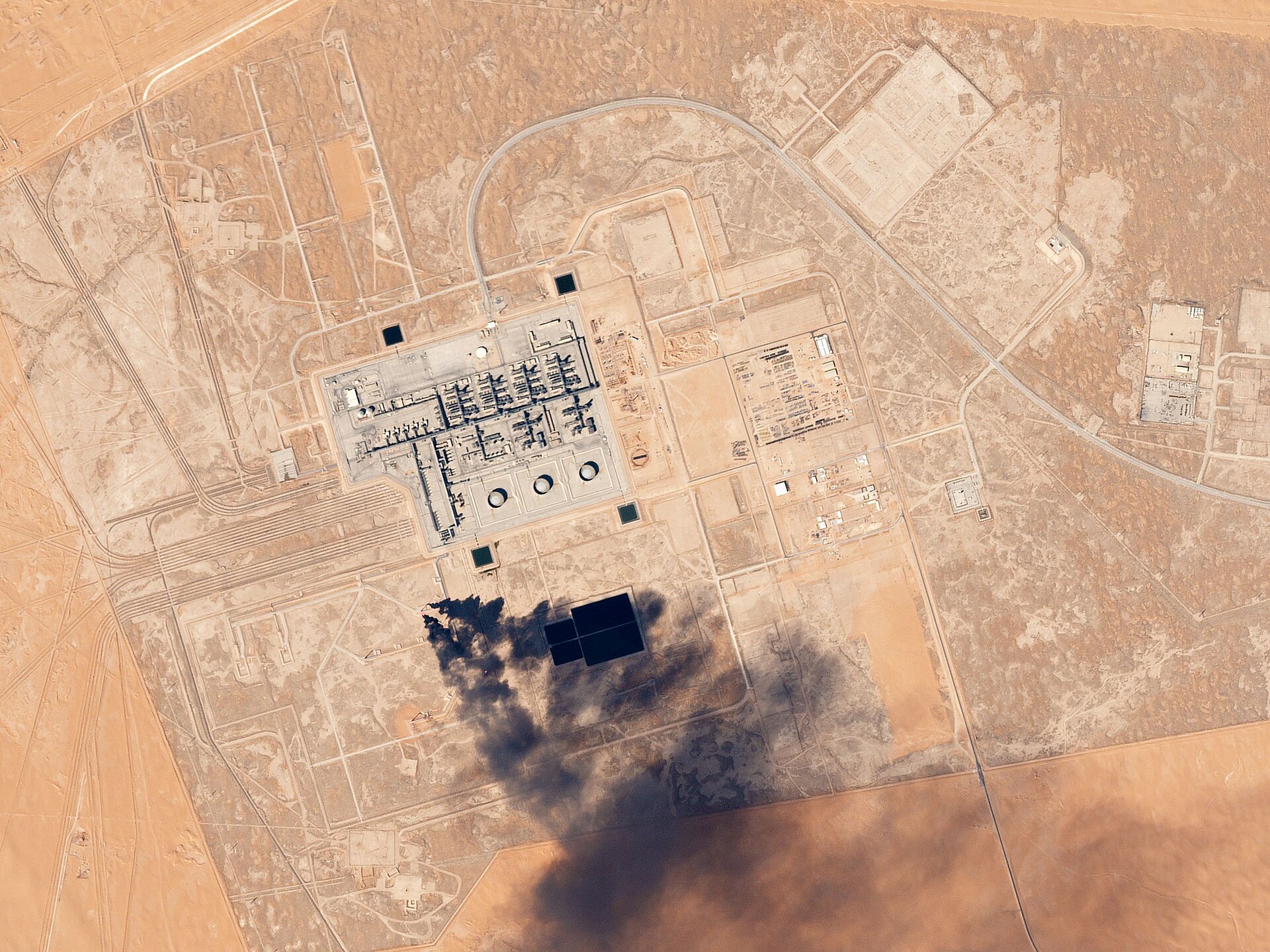
This is not the first time the Houthis have paired the targets. On November 11, the claimed combination was KKIA plus Pumping Station No. 11 near Yanbu, according to Xinhua. On November 8, the Houthis claimed strikes on KKIA and Aramco oil storage, though those claims were not independently confirmed; Saudi authorities reported that falling shrapnel caused minor damage to an Aramco administrative building in Riyadh’s King Abdullah Financial District, with no injuries, according to Middle East Eye. The dual-target sortie appears to have become a standard format.
What Is KKIA’s Operational Status After Two Months of Strikes?
KKIA has been partially operational since October 25, when Terminal 1 (domestic flights) and Terminal 2 (international flights on Saudi carriers only) reopened, with all flights subject to prior permission from Saudi Arabia’s General Authority of Civil Aviation (GACA), according to The National. For travellers navigating the complex landscape of Saudi airports at present, partial means conditional: flights operate, but not on published schedules and not on most foreign carriers.
The partial reopening came after a 14-day full closure triggered by the October 10 strike — the deadliest — which killed 12 and wounded 309, according to Al Jazeera. BBC reported 308 injured. An Indian national’s later death raised the October 10 toll to 13, according to BBC.
| Airline | Route | Cancelled Through | Source |
|---|---|---|---|
| Etihad Airways | Abu Dhabi–Riyadh | November 19 | Wego Travel Blog |
| KLM | Amsterdam–Riyadh | November 27 | Wego Travel Blog |
The absence of major Western and Gulf foreign carriers is itself a signal. Saudi Arabia’s own Riyadh Air, the new carrier that was to anchor the kingdom’s Vision 2030 aviation ambitions, has been operating limited services not from KKIA but from Al Qassim airport to the northwest, according to The National and AeroRoutes. The current travel advisories and flight suspension tracker reflects an airport that is open in name but diminished in function.
No GACA update on KKIA operations following the November 13 claim had been issued as of published reports.
How Much Oil Moves Through the East-West Pipeline?
The East-West pipeline, formally known as the Petroline, has a design capacity of approximately 7 million barrels per day, according to Saudi Gazette via Zawya. Saudi Arabia has been routing approximately 4 million bpd of that capacity through the line to Yanbu.
The pipeline was briefly suspended on September 11 as a precaution amid the broader escalation, according to Saudi Gazette via Zawya. It restarted on September 22, but Aramco CEO Amin Nasser said disruptions typically last “days, not weeks or months,” and Reuters reported full capacity could take six weeks or more, according to Baird Maritime citing Reuters.
Pumping Station No. 3, the target of the Friday claim, sits in the pipeline’s eastern segment — closer to the production heartland of the Eastern Province. Pumping Station No. 11, the target of the November 11 claim, is near the Yanbu end of the line, closer to the export terminal. The Houthis appear to be probing both ends of the pipeline’s geography, testing whether Saudi defences can protect the full pipeline corridor.
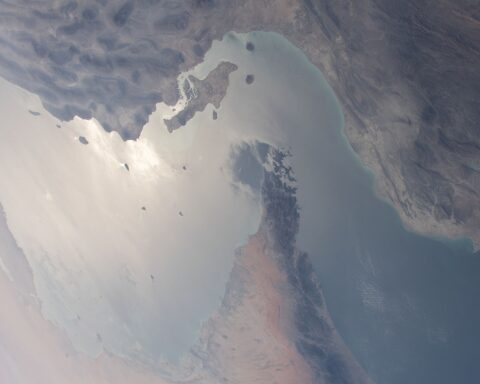
The stakes are not abstract. With the Strait of Hormuz effectively closed — Iran declared it closed on April 18, the US imposed a naval blockade on April 13, and Iran re-closed it on July 12 after a brief reopening — the East-West pipeline is Saudi Arabia’s primary alternative export route. The ongoing IRGC mining campaign in the strait, which has continued through November, means Saudi crude that once moved east through the Persian Gulf now overwhelmingly flows west to Yanbu.
A sustained disruption at any pumping station along the line would compress the already narrow corridor through which Saudi oil reaches world markets. The IEA reported in September that Saudi crude shipments had fallen to 6 million bpd amid the broader escalation, according to Trend. Brent crude briefly topped $108 on September 24, according to Al Jazeera, and the sensitivity of global oil prices to any confirmed pipeline disruption remains acute. Aramco cut its November Arab Light price to Asia by $3, to $5 below the Oman/Dubai benchmark — the widest discount since June 2020 — signalling the difficulty of placing Saudi crude even at reduced prices, according to bdnews24 citing Reuters.
The Human Cost at KKIA: September to November
The cumulative toll at KKIA and other Saudi airports traces an arc that began in September and has not ended.
On September 19, smoke rose near KKIA in what appeared to be the first Houthi strike on Riyadh in the current escalation, and the coalition said it intercepted a missile, according to Kathmandu Post citing Reuters. The attacks escalated through October:
| Date | Event | Casualties | Source |
|---|---|---|---|
| Oct 6–7 | Strikes on KKIA and Abha | 3 killed, 36 wounded | BBC |
| Oct 8 | Two attacks on KKIA; Saudia captain Hamoud Ali Al Kalthami among dead | 3 killed | GDN/Reuters, AP |
| Oct 10 | Strike on KKIA — deadliest single attack | 12–13 killed, 308–309 wounded | Al Jazeera; BBC |
| Oct 11 | Strike on KKIA Terminal 4; Dammam also attacked | 1 killed, 11 injured | CNN |
| Oct 25 | KKIA partially reopened; Houthis claimed another strike same day | Not specified | The National |
Between October 6 and October 11 alone, 20 people were killed in Saudi airport attacks, summed from GACA statements covering the four deadliest incidents: 3, 3, 13, and 1, according to BBC. The dead include a Saudia captain, a Pakistani resident, and an Indian national whose death was confirmed in early November, raising the October 10 toll from 12 to 13.
Whether the November 13 drone reached KKIA is unknown. The Houthis’ claim is not evidence of impact, and the absence of a coalition denial is not confirmation. But the attack is claimed against an airport where the most recent confirmed strike killed a double-digit number of people barely five weeks ago.
What Does the Coalition’s Silence on the Friday Claim Mean?
The coalition under Maj Gen Turki Al-Maliki has established a pattern of relatively rapid public disclosure for intercepts. The November 11 interceptions — three cruise missiles and two drones — were announced the same day. The November 12 interceptions were announced in two separate statements within hours of each event, according to Kuwait Times citing KUNA.
As of Saturday morning, no coalition statement had been issued regarding the Friday, November 13 Houthi claims. This leaves several possibilities, none of which can be confirmed from available reporting:
The coalition may have intercepted the drones and not yet issued a statement — a delay, but not unprecedented in a period of high operational tempo. The drones may have been intercepted and the coalition chose not to confirm, for reasons of operational security. Or the drones may have reached their targets, in which case the silence would carry a different weight.
What is clear is the asymmetry: the Houthis can announce a claim within hours; the coalition’s confirmation or rebuttal sets the evidentiary floor. When that floor is missing, the information space defaults to the claimant. The broader pattern of Houthi claims exceeding confirmed results is well documented, but so is the coalition’s willingness to acknowledge intercepts when they occur.
Multi-Front Pressure: From Riyadh to Aden
Sarea’s November 13 statement was not limited to Riyadh. The same announcement claimed ballistic missiles struck gatherings of Saudi forces in Al-Tuwal, Jazan province, “killing or wounding dozens, including Sudanese nationals,” according to Xinhua. The claims extended to Al-Jawf in northern Yemen, Kharaz and Khor Umairah in Lahj province, and Saudi weapons depots at the Ras Abas military base in Aden, according to Xinhua.
None of these additional claims were confirmed by Saudi or coalition sources. The reference to Sudanese nationals in Jazan is consistent with past reports of Sudanese forces deployed alongside the coalition, though the specific casualty claim is unverified.
The geographic spread is itself the message. A single Houthi communiqué now routinely covers targets from Riyadh in the centre to Jazan in the southwest to Aden in the south — a front that spans the full length of the conflict theatre. The separate Houthi claim of a missile strike on a Saudi officers’ camp in Aden on the same day underlines the point: the Houthis are signalling capacity across the full breadth of the theatre, regardless of how many of these claims translate to actual impact.
The Jazan component is notable for the claimed involvement of Sudanese nationals. Sudan has contributed forces to the Saudi-led coalition throughout the conflict, and their presence in the southwestern border zone has been a recurring feature of the war. Sarea’s specific mention of Sudanese casualties — if accurate — would carry political implications in Khartoum at a time when Sudan’s own civil conflict strains its military commitments abroad. Saudi authorities did not confirm or deny the Jazan claim.
This multi-front signalling coincides with the GCC’s complaint to the UN Security Council that Iran has fired over 7,000 missiles and drones at Gulf states — a number that encompasses the broader Iran-Gulf confrontation of which the Houthi campaign is one front.
The Air War’s Trajectory
The November 13 drone claim fits within an escalatory trajectory that has accelerated since September. The Houthis’ first claimed strike on Riyadh in the current escalation came on September 19. By October, KKIA was under near-daily attack, with the deadliest incident on October 10 accounting for the bulk of the cumulative toll. The airport closed, partially reopened on October 25, and has since been targeted repeatedly — including on the very day it reopened.
The coalition’s defensive performance has been publicly documented in a way unusual for the Saudi military. The detailed intercept announcements of November 11 and 12 — seven projectiles destroyed across three public statements — represent an air defence system under sustained load. Whether that system handled the Friday drones as effectively as the preceding 48 hours’ worth remains, as of this writing, unconfirmed.
The tempo has fiscal implications beyond the immediate security picture. Saudi Arabia’s pre-budget statement projected a 2026 deficit of 245 billion riyals, up from a budgeted 165 billion riyals, and forecast real GDP falling 3.6 percent on a 21.8 percent drop in oil activities, according to Reuters via Zawya. Each interceptor missile expended, each flight cancelled, each day of restricted airport operations compounds a cost that the kingdom’s planners are already struggling to absorb. The 2027 budget projected spending of 1.39 trillion riyals against revenue of 1.20 trillion riyals, a deficit of 191 billion riyals or 3.6 percent of GDP. That projection assumed a degree of normalisation in oil exports and commercial aviation that November’s attack tempo has not delivered.
“Our armed forces carried out two special military operations. The first targeted King Khalid International Airport in the Saudi capital.”
Yahya Sarea, Houthi military spokesperson, via Al Masirah TV, November 13, 2026
The Houthis’ shift to drones for the Friday sortie — after using cruise missiles on November 11 — may reflect tactical diversification. Drones are cheaper, slower, and fly at lower altitudes than cruise missiles, which can make them harder to detect against ground clutter but easier to engage once acquired. Alternating between weapon types forces the coalition to maintain readiness across multiple threat profiles simultaneously. The November 8 attacks toward Riyadh, three days before the cruise missile sortie, saw the coalition confirm the interception of four missiles — two ballistic missiles and two cruise missiles — fired at Riyadh and the southern region, according to The National. The Houthis claimed strikes on KKIA and Aramco oil storage, but those claims were not independently confirmed; Saudi authorities reported only shrapnel damage to an Aramco administrative building in Riyadh’s King Abdullah Financial District, with no casualties, according to Middle East Eye. The pattern suggests that even successful intercepts do not guarantee zero leakage.
The broader context is an air war being fought over Saudi Arabia’s most important economic assets. The IRGC’s threat of “unlimited response” over the Strait of Hormuz and the continued Houthi campaign against the kingdom’s interior form a two-axis pressure that tests both Saudi air defences and the kingdom’s ability to sustain its oil export economy through the East-West pipeline while Hormuz remains closed.
For KKIA, the question is no longer whether the airport can reopen — it has, partially — but whether it can function as an international gateway while serving as a recurring target. For the East-West pipeline, carrying approximately 4 million bpd, the question is whether the Houthis can translate claimed strikes into actual disruption. Saudi authorities have not confirmed pipeline damage from any of the November claims, and no operational reassurance comparable to Aramco CEO Nasser’s September statement has been issued for the recent series of attacks.
The Friday claim, unconfirmed as it remains, adds another line to a ledger that grows daily. The coalition’s next public statement — whether it confirms an intercept, acknowledges damage, or maintains silence — will determine how that line is read.
Frequently Asked Questions
What weapon type did the Houthis claim to have used on November 13?
Houthi spokesperson Yahya Sarea described three drones: one targeting KKIA and two targeting Pumping Station No. 3 on the East-West pipeline, according to Xinhua. He did not provide weapon model specifications. This contrasts with the November 11 claim, which specified cruise missiles against KKIA, according to Xinhua. The coalition’s November 11 confirmation also described three cruise missiles, which represents a rare instance of both sides agreeing on weapon type.
Has the East-West pipeline been physically damaged in any recent Houthi attack?
Neither Saudi Aramco nor the Saudi Energy Ministry had issued any statement confirming or denying physical damage to Pumping Station No. 3 as of published reports on November 14. No Saudi statement has confirmed pipeline damage from any November claim. That matters because the pipeline’s economic impact is currently bound up with Hormuz: Saudi crude that once moved east through the Gulf now overwhelmingly moves west through this corridor to Yanbu. A confirmed disruption to the pipeline would mean losing the alternative route — not merely compounding a Hormuz disruption but eliminating the workaround it enabled.
How many times has KKIA been targeted since September 2026?
Based on sourced reporting, KKIA has been the subject of Houthi claims or confirmed coalition intercepts on at least the following dates: September 19, October 6–7, October 8, October 10, October 11, October 14, October 15, October 25, November 8, November 10, November 11, and now November 13. Not every claim resulted in a confirmed strike; the coalition has confirmed interceptions on multiple occasions. The frequency — averaging roughly every three to four days through October and accelerating in November — places KKIA among the most frequently targeted airports in any active conflict zone.
Are any international airlines currently operating into KKIA?
KKIA’s Terminal 2 reopened on October 25 for international flights operated by Saudi carriers only, subject to prior GACA permission, according to The National. Foreign carriers have been pulling back: Etihad cancelled Abu Dhabi–Riyadh through November 19, and KLM cancelled Amsterdam–Riyadh through November 27, according to Wego Travel Blog as of November 4. No updated GACA schedule reflecting post-November 13 conditions was available as of Saturday. The practical implication is that passengers seeking a Western or Gulf airline connection into Riyadh face a de facto suspension that KKIA’s partial reopening has not resolved.
What is Saudi Arabia’s 2026 budget deficit and how do energy disruptions factor in?
Saudi Arabia’s pre-budget statement was issued September 30, 2026 — before the full November escalation. That means the revised 245 billion riyal deficit figure — up 80 billion riyals from the original 165 billion riyal budget — reflects September’s attack tempo rather than November’s. Each week of restricted KKIA operations and each pipeline strike that prolongs export uncertainty adds pressure to a fiscal position that was already deteriorating sharply before the November escalation began. The 2027 budget — projecting revenue of 1.20 trillion riyals — will be drafted against an oil export environment that the November air campaign has further narrowed.
The House of Saud Daily Briefing
Saudi Arabia's news in 3 minutes, every morning. Free. See today's issue