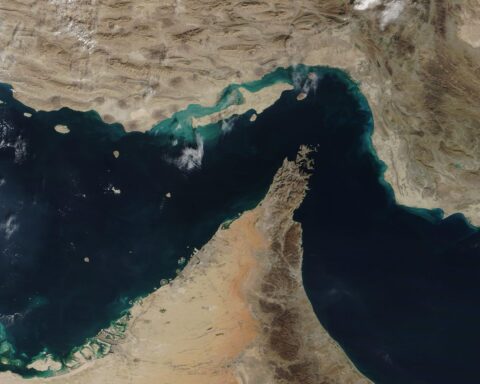
TEHRAN — Iran’s IRGC Aerospace Force declared on Friday that it stands “on full alert to respond without limits” to any repeated aggression in the Strait of Hormuz. The warning came hours after the IRGC claimed it destroyed a US early-warning radar on Bahrain island. US Central Command denied the claim, saying it intercepted two Iranian one-way attack drones with no injuries or damage, according to Al Jazeera and ABC News.
The statement lands on a waterway already running at roughly 65 percent below pre-conflict traffic levels, according to the UK Maritime Trade Operations’ weekly report through November 10. On the same day, a gas carrier struck an IRGC mine and exploded in the eastern strait. IRGC Commander-in-Chief Ahmad Vahidi separately warned via Tasnim News Agency that “the slightest aggression” would draw “devastating and painful strikes.” His remarks added a second senior military voice to a day of escalatory messaging from Tehran.
The House of Saud Daily Briefing
Saudi Arabia's news in 3 minutes, every morning. Free. See today's issue
Table of Contents
- What Triggered the ‘Unlimited Response’ Warning?
- Did Iran Destroy a US Early-Warning Radar in Bahrain?
- How Does This Fit Iran’s Expanding Deterrence Doctrine?
- What Does Hormuz Shipping Look Like on November 13?
- The Oil Price Signal and Saudi Arabia’s Pipeline Hedge
- Background: The Strait of Hormuz Since April 2026
- Frequently Asked Questions
What Triggered the ‘Unlimited Response’ Warning?
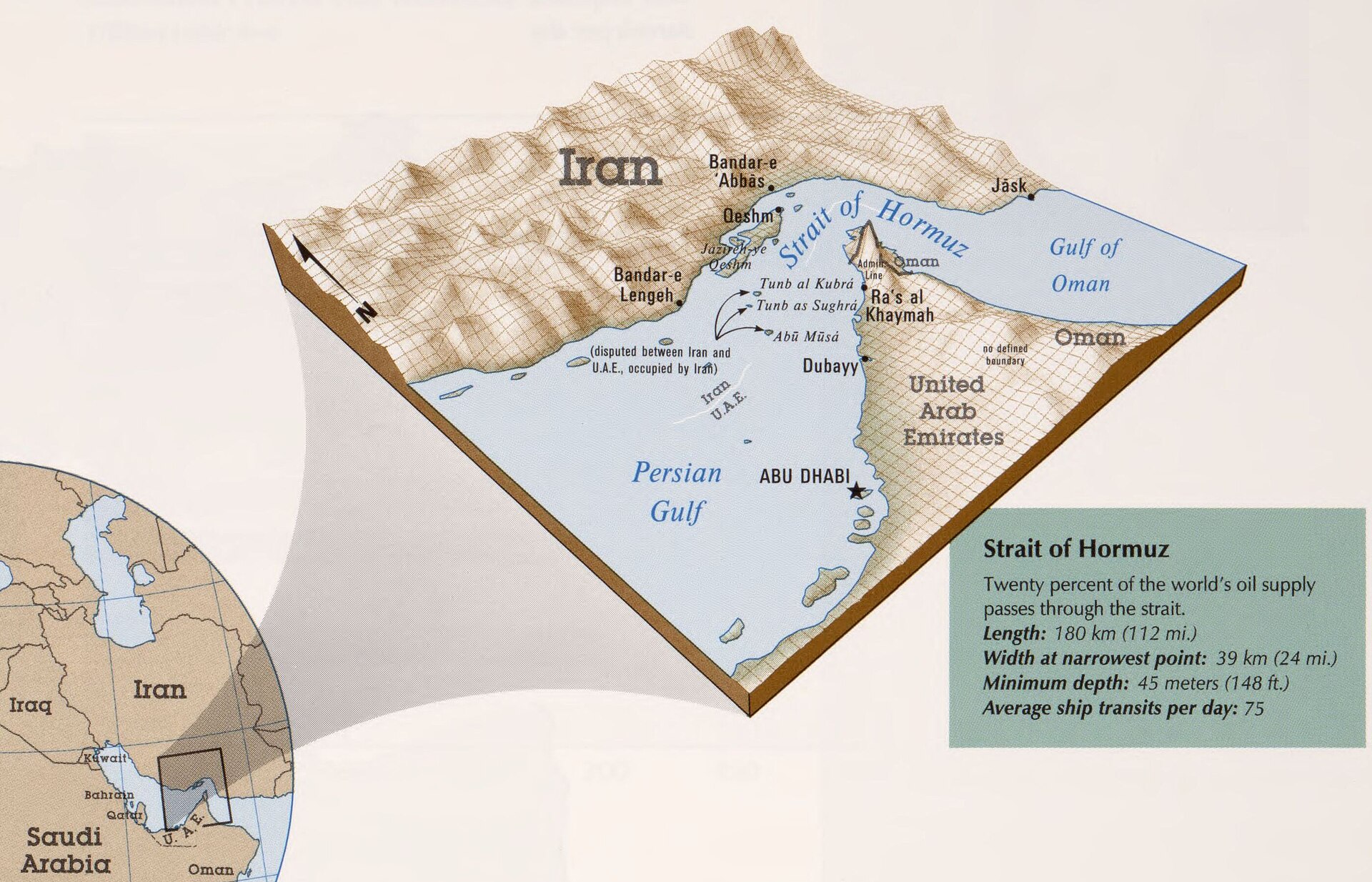
The direct trigger was a strike on a telecom tower in Sirik, a port city in Iran’s Hormozgan province situated on the shore of the Strait of Hormuz. The IRGC attributed the attack to an unnamed “enemy.” It framed its subsequent actions — a claimed retaliatory strike on a US radar in Bahrain and the “unlimited response” declaration — as defensive responses to aggression on Iranian infrastructure.
The IRGC did not name the United States specifically, and CENTCOM has not publicly acknowledged the Sirik strike. Some reports, including one from Newsquawk on November 13, cited an unverified post alleging US airstrikes in the area, per the Times of Israel. The lack of confirmed attribution from either side leaves the Sirik attack’s origin officially unresolved, even as the IRGC treats it as justification for escalation.
The attack followed a broader pattern of US military action on Iran’s Hormuz-facing islands. On November 3, a US fighter jet destroyed an IRGC missile launcher on Qeshm Island after the IRGC fired at a US drone. NBC News confirmed the strike. President Trump confirmed the strikes to Fox News, calling them “minor.” That same week saw at least 11 ships attacked in Hormuz waters with three sinking, per UKMTO figures.
A full account of the Sirik strike and the IRGC’s retaliation claim appears in earlier House of Saud reporting. The central question here is what the IRGC’s Bahrain claim — and the US denial — reveal about the credibility of the broader “unlimited response” threat.
Did Iran Destroy a US Early-Warning Radar in Bahrain?
Iran says yes; the United States says no. The IRGC Aerospace Force claimed on November 13 that it destroyed a US early-warning radar on Bahrain island in retaliation for the Sirik telecom tower strike. Fars News Agency and Tasnim carried the claim. CENTCOM responded that the IRGC launched two one-way attack drones toward Bahrain, both intercepted, with zero casualties and no damage, according to Al Jazeera and ABC News.
No independent third party has verified either account. The IRGC released no imagery or coordinates for the claimed hit. Iran’s state-aligned outlets, including Tasnim and Fars, reported the radar destruction as accomplished fact, while the Times of Israel and Jerusalem Post relayed the IRGC’s version without independent confirmation. CENTCOM’s denial was categorical but equally unaccompanied by evidence.
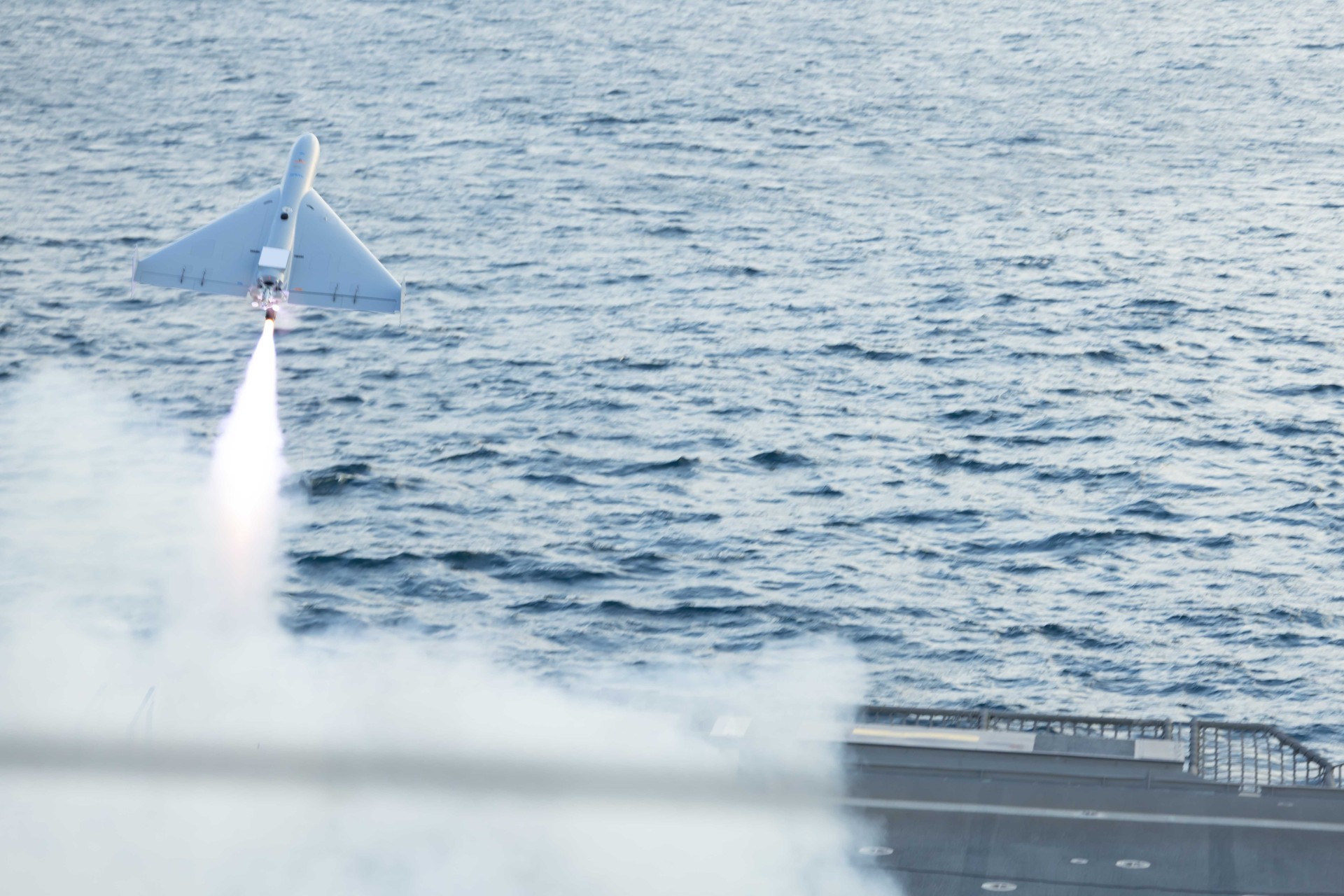
The pattern is familiar from months of Hormuz confrontation: Iran frequently describes its attacks as successful while the US reports them intercepted or ineffective. On the same day, the coalition intercepted a drone over eastern Saudi Arabia, according to a separate coalition statement. The intercept suggests the IRGC’s November 13 drone activity ranged beyond the Bahrain vector. The unresolved dispute over the radar is a tactical detail, but the doctrinal framework behind the “unlimited response” warning draws its authority from a higher source.
How Does This Fit Iran’s Expanding Deterrence Doctrine?
The “unlimited response” statement is the sharpest operational threat from the IRGC since Supreme Leader Mojtaba Khamenei’s October 31 order to senior commanders. Khamenei directed an “immediate, impactful and geographically unrestricted response” to any US or Israeli attack, as reported by Khaleej Times and ARY News. Press TV described the order as a doctrinal shift expanding Iran’s retaliation mandate beyond the conflict’s immediate theater.
The November 13 Aerospace Force statement applies that doctrine at a lower institutional level. It is not a declaration from the supreme leader, the Supreme National Security Council, or the Foreign Ministry — the three bodies that set Iran’s strategic red lines. It is an institutional warning from a specific military branch, and no named spokesman was identified in English-language reporting. That distinction matters: it shapes whether the statement is read as a national escalation signal or as a subordinate command’s posturing within limits already set from above.
Other senior figures reinforced the threat throughout the week. IRGC Commander-in-Chief Vahidi told Tasnim on November 13 that “the enemy must learn from its repeated defeats, or greater lessons are on the way.” SNSC Secretary Mohsen Rezaei went further on November 12. “Every military base involved in the aggression, from West Asia to Europe, will be a legitimate target for Iran’s lethal strikes,” Rezaei wrote on X. Rezaei has also maintained that the strait stays closed until seven conditions are met — demands he has described as non-negotiable starting points.
Majlis Speaker Mohammad Bagher Ghalibaf offered the most structural framing. The Strait of Hormuz “will never return to its pre-war status,” Ghalibaf told Al Jazeera on November 11. He rejected application of the 1982 UN Convention on the Law of the Sea and argued that Iran and Oman had reached an understanding on governing the waterway. His language frames the closure not as a temporary bargaining tactic but as a permanent strategic reality — a position that collides with decades of international maritime law.
The diplomatic track runs in parallel but at a different tempo. Foreign Minister Abbas Araghchi submitted a seven-day roadmap via Qatar in September, according to Al Jazeera. The offer proposed reopening the strait in exchange for lifting the US blockade, sanctions waivers, and the release of roughly $12 billion in frozen Iranian assets. That proposal has produced no result, and the gap between Araghchi’s diplomacy and the IRGC’s operational warnings continues to widen. While diplomats exchange proposals, the strait’s shipping traffic offers a more concrete measure of how far the IRGC’s threats have translated into physical reality.
What Does Hormuz Shipping Look Like on November 13?
Traffic through the Strait of Hormuz has collapsed relative to pre-conflict baselines. The United Against Nuclear Iran shipping tracker counted 217 total transits in the first seven days of November, according to UANI’s November 9 update. That works out to roughly 31 per day under US Navy escort convoy conditions. The JMIC pre-war baseline was 138 commercial transits per day. IMF PortWatch recorded just three transits on November 8. Straits.live described the waterway as “effectively closed to commercial traffic” as of November 12.
The UK Maritime Trade Operations’ weekly report through November 10 counted 170 outbound and 155 inbound transits, roughly 65 percent below pre-conflict volume. Most transponder-on vessels were using the Iranian-designated northern route, according to UKMTO data cited by Straits.live. CENTCOM had tracked 135 ships turned around since the blockade began, per an October 10 tally reported by Gulf News. That figure is now five weeks old and has almost certainly risen.
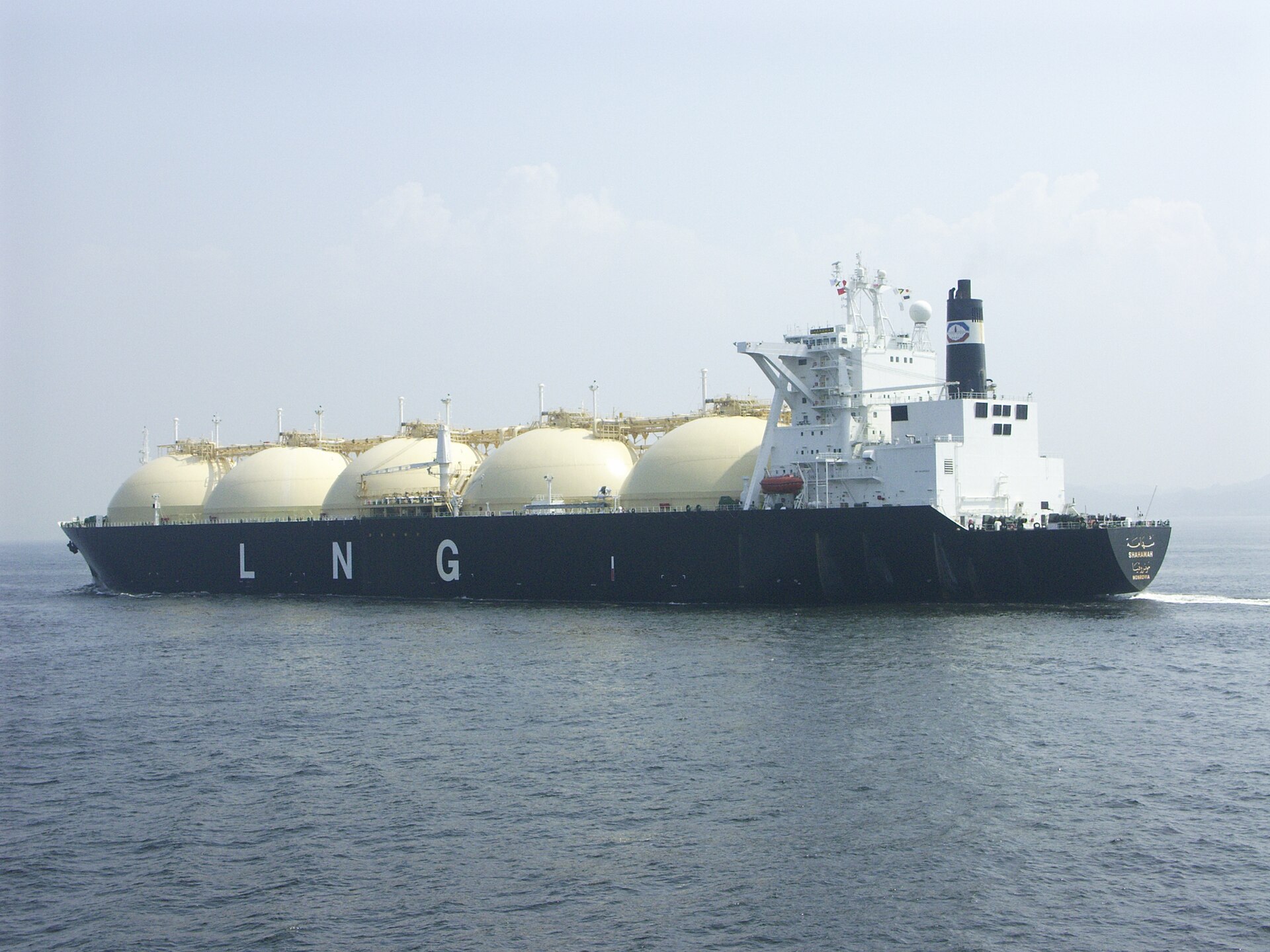
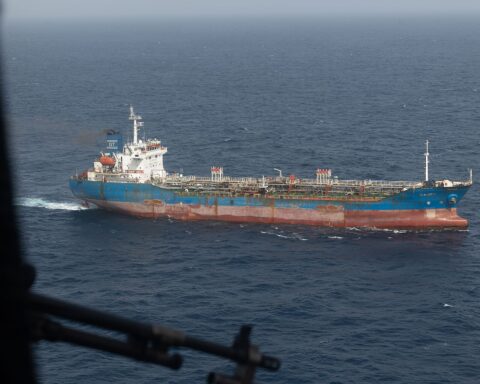
The IRGC’s mine campaign continues to enforce the closure kinetically, not just rhetorically. On November 13, a gas carrier struck a mine and exploded in the eastern strait, as reported by Al Jazeera and covered by House of Saud. The IRGC navy said the vessel had ignored navigation warnings and attempted to use an unauthorized southern route under US escort. Earlier in November, two supertankers caught fire on November 2, and multiple tanker fires followed between November 6 and 8. Reuters counted 37 ship attacks in October and 10 in the first 11 days of November, according to Discovery Alert.
For commercial operators weighing whether to attempt Hormuz transit, the calculus now incorporates the declared threat of expanded retaliation alongside the demonstrated reality of mined chokepoints. The “unlimited response” warning adds a political signal to what was already a physical hazard — and the economic costs of the disruption are reshaping oil flows across the region.
The Oil Price Signal and Saudi Arabia’s Pipeline Hedge
Brent crude settled at $95.82 on November 12, up approximately 3.3 percent on the session, according to Euronext data reported by AsiaOne. Attacks on Saudi energy sites and continuing Hormuz disruption drove the jump. The spike sits within a broader November slide: Brent has fallen roughly 20 percent and WTI roughly 16 percent over the month, per CNBC. Earlier peace-deal optimism that briefly depressed prices has since unwound.
Saudi Arabia has rerouted crude exports via the East-West pipeline to Yanbu on the Red Sea coast. The pipeline’s design capacity is approximately 7 million barrels per day, but Yanbu’s export ceiling sits at roughly 5 million bpd, according to Baird Maritime and Argus Media. That gap leaves Saudi exports about 2 million bpd below pre-war levels even at maximum Yanbu throughput, per World Oil. The Saudi Cabinet on November 11 called for an immediate end to threats in the Strait of Hormuz and Bab al-Mandeb. The statement’s urgency reflects the kingdom’s inability to fully replace Hormuz capacity through its Red Sea alternative.
The Houthi dimension compounds Riyadh’s calculations. On November 13, Houthi forces claimed five strikes on targets in Khamis Mushait and Sharurah. The attacks extend pressure on Saudi territory and on the southern Red Sea lanes that Yanbu-bound oil must traverse. For Saudi planners, the IRGC’s Hormuz warning and Houthi operations amount to a dual-chokepoint problem that no single pipeline reroute can resolve.
Background: The Strait of Hormuz Since April 2026
Iran first closed the Strait of Hormuz on April 18, 2026, five days after the United States imposed a naval blockade on April 13. A June agreement reopened the waterway, but Iran declared it closed again on July 12. The US reinstated its own naval blockade on July 14. The IRGC formally declared Hormuz closed once more on October 26, and each successive closure has been accompanied by an intensifying mine campaign and rising ship-attack counts.
The Qeshm Island strikes beginning November 3 marked the first direct US kinetic response against IRGC positions on the islands that overlook the strait. The Sirik telecom tower attack on November 12 and the IRGC’s “unlimited response” declaration on November 13 represent the latest cycle in which each side’s operations provoke the other’s retaliation. Whether the next exchange breaks the pattern or deepens it remains the open question for Gulf maritime security.
Two think-tank assessments from June 2026 frame the underlying strategic logic. Chatham House judged that “whatever deal ends the war, Tehran will seek to rebuild its deterrence around the threat it poses to the Strait of Hormuz and Gulf states.” The International Institute for Strategic Studies, writing in its Survival journal, observed a related miscalculation. “Iran’s adversaries may have calculated that Tehran would be reluctant to damage its own economy by closing the strait, and therefore self-deterred,” the IISS assessed. Seven months on, the waterway is functionally closed and Iranian exports sit under maximum-pressure sanctions. Tehran’s economic cost from the closure has proved lower than its adversaries anticipated, and the IRGC’s “unlimited” escalation rhetoric reflects that asymmetry.
Frequently Asked Questions
What is the IRGC Aerospace Force?
The IRGC Aerospace Force is the air and missile branch of Iran’s Islamic Revolutionary Guard Corps, organizationally separate from the regular army’s Air Force (IRIAF). It controls Iran’s ballistic and cruise missile arsenal, including medium-range systems capable of striking across the Gulf, and operates the drone fleet used in Hormuz operations. The November 13 statement came from this branch, not from the IRGC’s overall command structure or from Iran’s conventional military.
What are Iran’s seven conditions for reopening the Strait of Hormuz?
SNSC Secretary Mohsen Rezaei outlined the demands on November 11. They include lifting the US naval blockade, releasing frozen Iranian assets estimated at roughly $12 billion, ending fighting on all fronts, and a formal declaration the war is over. Additional conditions reportedly include security guarantees and comprehensive sanctions relief, though the full list has been published only in Farsi-language sources and no single English-language document carries all seven.
Could Iran and Oman jointly govern the Strait of Hormuz under international law?
Majlis Speaker Ghalibaf argued on November 11 that UNCLOS does not apply to Hormuz and that Iran and Oman should manage the waterway as littoral states. International maritime lawyers generally disagree: Part III of UNCLOS guarantees transit passage through straits used for international navigation, a right that applies regardless of the littoral states’ wishes. Oman has not publicly endorsed Ghalibaf’s proposal for a bilateral governance arrangement.
How have shipping costs through the Strait of Hormuz changed during the crisis?
Very Large Crude Carrier rates on the Gulf-to-China route reached $1.2 million per day as of early October 2026, according to LSEG data reported by bdnews24. Before the conflict, the same route cost roughly $117,000 per day, according to Baltic Exchange data. Many commercial marine insurers have also declined to cover vessels transiting without US military escort, effectively making unescorted Hormuz passage commercially unviable for most operators seeking affordable war-risk premiums.
What is the difference between Iran closing Hormuz and the US naval blockade?
Iran’s closures — declared April 18, again July 12, and again October 26, 2026 — involve the IRGC using mines, drones, and anti-ship weapons to prevent or threaten commercial vessels. The US naval blockade, imposed April 13 and reinstated July 14, restricts Iranian maritime exports and imposes convoy escort requirements on commercial traffic. The two actions overlap geographically but serve opposite aims. Iran seeks to deny the strait to all traffic as leverage; the US aims to keep non-Iranian commerce flowing under military protection.
The House of Saud Daily Briefing
Saudi Arabia's news in 3 minutes, every morning. Free. See today's issue