
NEW YORK — GCC Secretary-General Jasem Mohamed al-Budaiwi stood before the United Nations Security Council on November 13 and repeated the bloc’s cumulative tally of more than 7,000 Iranian missiles and drones fired at Gulf Cooperation Council member states since February 28 — a figure first disclosed at the GCC Ministerial Council in Manama on June 10 that has only grown in the five months since, as Iran’s campaign against airports, oil terminals, desalination plants, and residential areas continues with no diplomatic mechanism to slow it. The number is extraordinary, but the economics underneath it may be what defines this war: each advanced Shahed-238-variant Iranian drone costs between $70,000 and $100,000 to build and fly, according to Quwa’s estimates, while stopping it typically requires a pair of Patriot PAC-3 MSE interceptors at approximately $4.1 million apiece — and with Donald Trump having announced an end to US-Iran negotiations the previous day, there is no diplomatic ceiling on how high that number will climb.
Table of Contents
- The 7,000-Strike Ledger
- How Much Does Shooting Down a $70,000 Drone Cost?
- 1,206 Strikes in the First 24 Hours
- Which Gulf State Has Absorbed the Most Strikes?
- Can Gulf Air Defenses Keep Firing?
- Iran Builds Underground Missile Production Cities
- 134 Incidents in the Strait of Hormuz
- What Happens Now That Trump Has Ended Iran Talks?
- Frequently Asked Questions
The 7,000-Strike Ledger
The figure al-Budaiwi presented to the Security Council draws on a tally first compiled by Asharq Al-Awsat journalist Ghazi al-Harthi, who by early June 2026 had counted 7,028 Iranian attacks against GCC states since the conflict opened on February 28: approximately 1,716 missiles and 5,311 drones, with drones accounting for roughly 71 percent of all recorded strikes in the campaign’s opening weeks according to an independent analysis by Kateryna Bondar, a senior fellow at the CSIS Wadhwani AI Center. The overwhelming drone-centricity of the campaign reflects Iran’s industrial logic, in which a single Shahed-variant one-way attack drone can be manufactured for a fraction of the cost of a ballistic missile while still forcing the defender to expend one of a finite and expensive stock of interceptors. The bloc formally cited the more-than-7,000 figure at the 167th session of the GCC Ministerial Council in Manama on June 10, and al-Budaiwi’s November 13 briefing marked the first time it was presented in a formal UN setting.
The House of Saud Daily Briefing
Saudi Arabia's news in 3 minutes, every morning. Free. See today's issue
What makes the tally particularly telling is the share of Iran’s total firepower it represents. Asharq Al-Awsat reported on March 26 that 83 percent of all Iranian launches since February 28 had been directed at GCC states, with only 17 percent aimed at Israel — a split that makes the Gulf the primary theatre of Iran’s aerial campaign by a wide margin. Al-Budaiwi told the Security Council that the strikes had targeted airports, ports, oil and gas installations, power stations, desalination plants, and residential areas across six countries, and he declared that “the GCC holds Iran fully responsible for these attacks and their consequences” — a statement of legal positioning as much as political outrage. The 7,000-strike ledger is a measure of what Iran has launched; the question it does not answer is what stopping those launches has cost.
How Much Does Shooting Down a $70,000 Drone Cost?
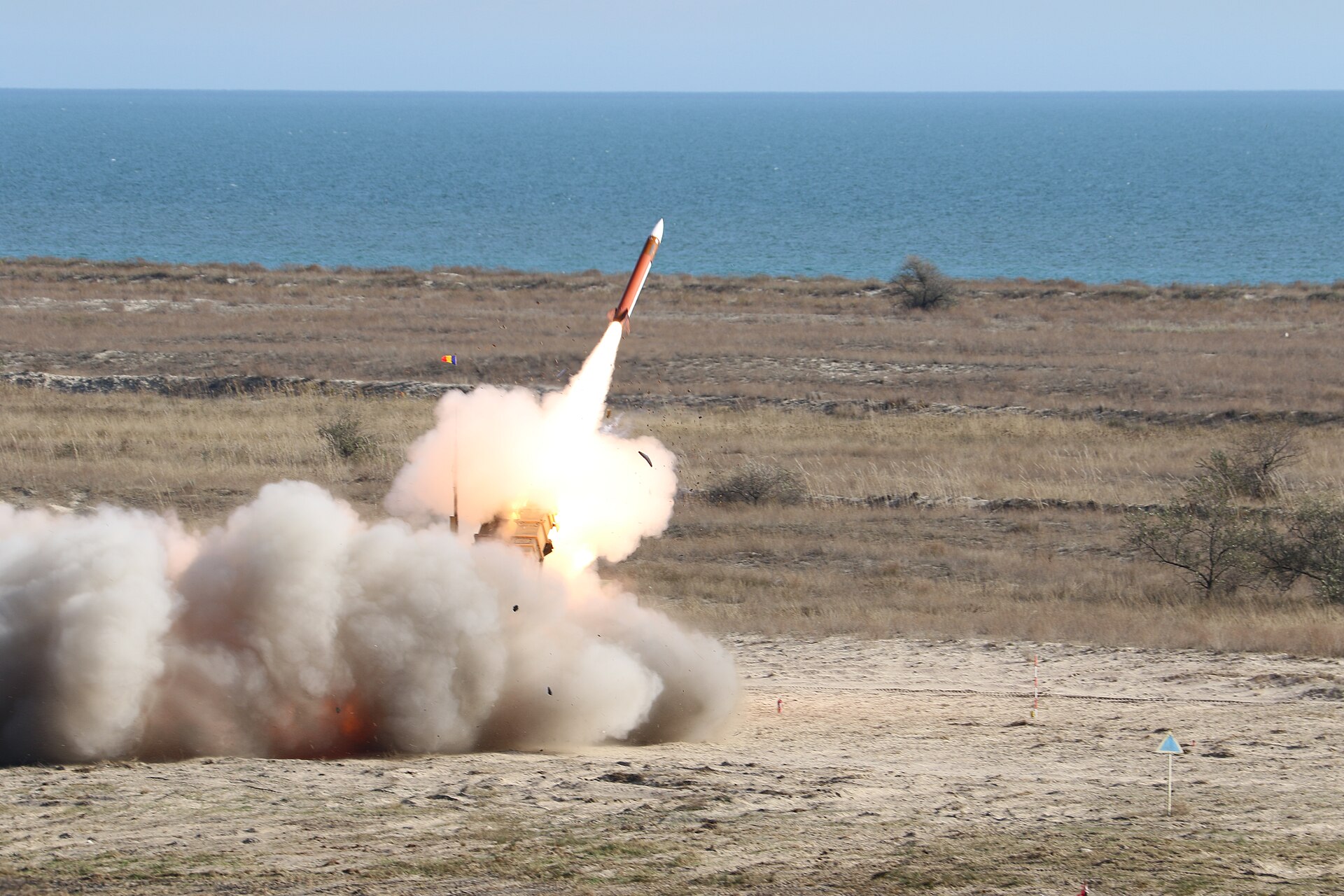
A single PAC-3 MSE interceptor costs approximately $4.1 million, and standard doctrine calls for two interceptors per incoming target — meaning an advanced Shahed-238-variant drone that Quwa estimates cost Iran between $70,000 and $100,000 to produce requires roughly $8.2 million to destroy. THAAD interceptors, used against medium-range ballistic missiles, run between $12.7 million and $15 million each, and SM-3 Block IIA rounds cost between $28 million and $40 million per shot.
These figures, drawn from US budget documents cited by the Quwa defence journal in May 2026 and from a December 2025 CSIS analysis by former Missile Defense Project fellow Wes Rumbaugh, describe a cost-exchange ratio of between 40-to-1 and 60-to-1 when PAC-3 MSE interceptors are used against drones. That ratio is not a projection or a think-tank model; it is an accounting fact that compounds with every launch. At 7,000-plus incoming projectiles, even a conservative estimate of average interception costs — assuming a mix of cheaper engagements for some drones and far more expensive ones for ballistic missiles — points to an interceptor expenditure running into tens of billions of dollars, borne by states that must simultaneously sustain every other function of a wartime economy.
| System | Cost Per Interceptor | Primary Target |
|---|---|---|
| PAC-3 MSE | ~$4.1 million | Cruise missiles, drones, short-range ballistic missiles |
| THAAD | $12.7–$15 million | Medium-range ballistic missiles |
| SM-3 Block IIA | $28–$40 million | Intermediate-range ballistic missiles |
Sources: Quwa (US budget documents), May 2026; CSIS (Rumbaugh), December 2025.
The imbalance has not gone unnoticed in the analytical community. Bondar, writing for CSIS on March 10, 2026, argued that “drone defense must begin with a cheap, numerous, drone-against-drone layer” — an acknowledgement that the current model of using multi-million-dollar missiles against sub-$100,000 drones is arithmetically unsustainable regardless of how many interceptors production lines can supply. The Middle East Eye reported on March 11 that the two-interceptors-per-target standard was a deliberate redundancy protocol designed to maximise kill probability, not an inefficiency — but the financial consequences are the same either way, and they were established in the opening hours of the war.
1,206 Strikes in the First 24 Hours
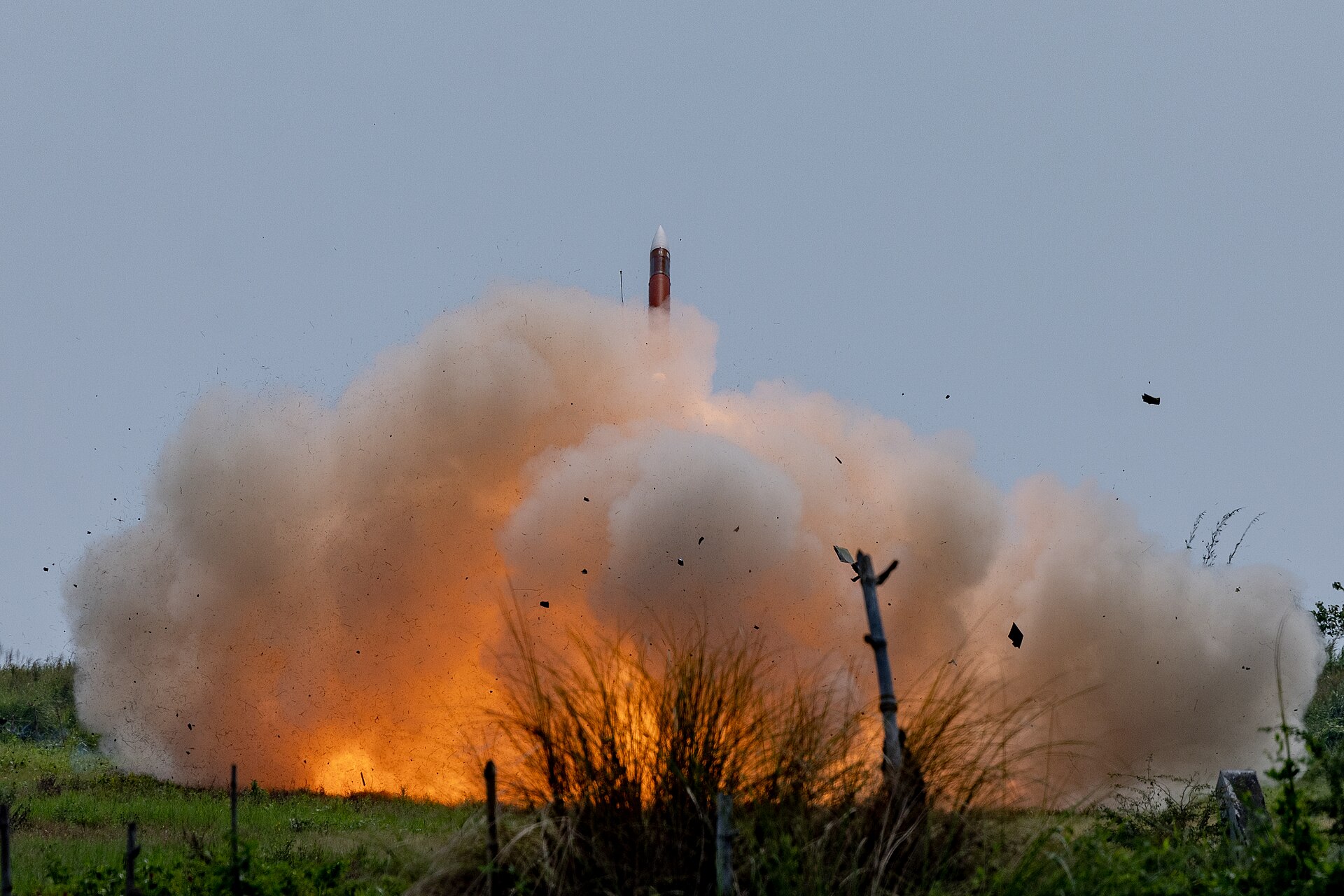
The pace of Iran’s opening salvo set the template for everything that followed. Bondar’s CSIS analysis counted 1,206 strikes in the first 24 hours of the campaign on March 1, 2026, of which 867 were drones and 339 were missiles — a ratio that held roughly steady as the daily rate settled to between 190 and 392 strikes per day for the subsequent week. The opening barrage, launched hours after the US-Israeli operation began and Iran declared the Strait of Hormuz closed, was calibrated to saturate Gulf air defences simultaneously across multiple states, forcing every Patriot battery from Abu Dhabi to Kuwait City to fire at once and exposing the finite supply of interceptors to a demand no pre-war scenario had anticipated at that volume.
Bondar’s reading of the first week’s data was unambiguous about its implications for the longer campaign. “Drones are no longer auxiliary strike systems but central instruments of modern air campaigns,” she wrote, a conclusion drawn from the 71 percent drone share that reflected not a resource constraint — Iran had missiles available — but a deliberate choice to exploit the cost asymmetry at industrial scale. A defender forced to choose between letting a $70,000 drone reach an oil terminal and spending $8.2 million in interceptors to stop it has no real choice at all, and the opening 24 hours demonstrated that Iran had built its entire campaign around that calculation.
The saturation strategy had a purpose beyond immediate destruction. By forcing Gulf states to expend interceptors at a rate that outstripped any plausible resupply timeline, Iran turned the opening week into an exercise in inventory depletion — a slow bleed whose effects on defender readiness would compound over months, long after the initial shock of 1,206 strikes in a single day had settled into the grinding daily rhythm that followed.
By March 26 — roughly four weeks into the fighting — Asharq Al-Awsat’s cumulative count had already reached 4,391 strikes, with the UAE alone absorbing 2,156 of them. The acceleration from 1,206 on day one to 4,391 by day twenty-six implied a sustained daily average well above 100 strikes, a tempo that has drawn warnings from the IRGC Aerospace Force about its willingness to escalate further and that has not distributed evenly across the six member states.
Which Gulf State Has Absorbed the Most Strikes?
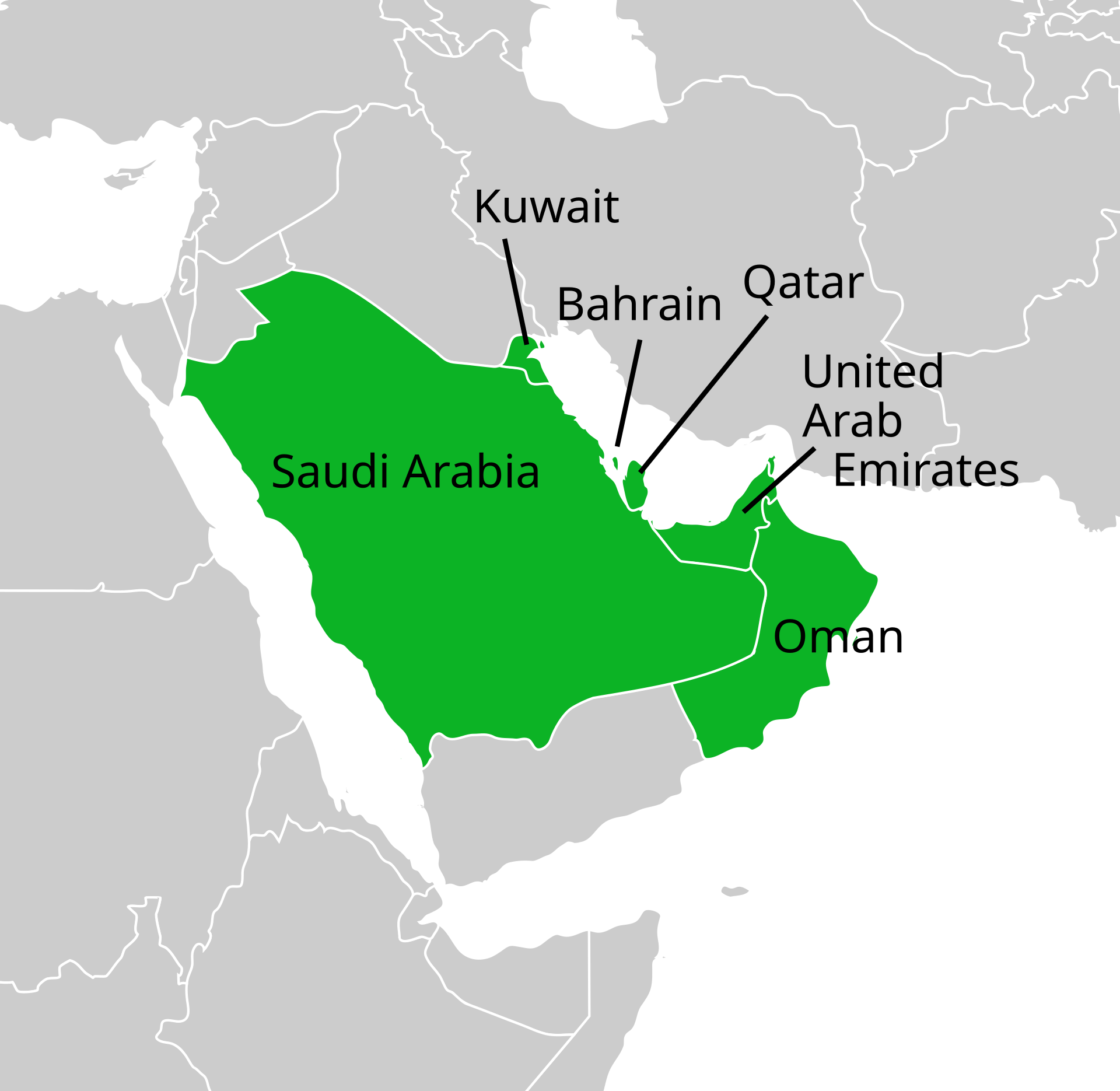
The UAE has absorbed the heaviest bombardment, with 2,846 recorded strikes through early June 2026 — approximately 41 percent of the Asharq Al-Awsat tally of 7,028. Saudi Arabia followed with 1,234 strikes, Kuwait with 1,194, Qatar with 737, Bahrain with 700, and Oman with 26, according to al-Harthi’s per-country breakdown published on June 3, 2026.
| Country | Recorded Strikes | Share of Total |
|---|---|---|
| UAE | 2,846 | ~41% |
| Saudi Arabia | 1,234 | ~18% |
| Kuwait | 1,194 | ~17% |
| Qatar | 737 | ~10% |
| Bahrain | 700 | ~10% |
| Oman | 26 | <1% |
Source: Asharq Al-Awsat (Ghazi al-Harthi), June 3, 2026.
The UAE’s disproportionate share is partly a function of geography — its coastline faces Iran across a narrow stretch of the Persian Gulf — and partly a reflection of deliberate Iranian targeting of the Emirates’ densely concentrated economic infrastructure, including the port of Jebel Ali and Abu Dhabi’s industrial zones. Bondar’s CSIS analysis found the UAE strikes were approximately 85 percent drone-centric, a higher ratio than any other GCC state, suggesting Iran calibrated its weapon mix by target: drones for the UAE’s coastal facilities within short flight range, a heavier ballistic component for the deeper targets in Saudi Arabia and Kuwait.
The near-parity between Saudi Arabia at 1,234 strikes and Kuwait at 1,194 is equally striking, given the enormous difference in their territory and population. Kuwait’s small size and its hosting of major US military installations have made it a concentrated target set, while Saudi Arabia’s energy infrastructure stretches across a far wider area, from the Eastern Province terminals to the East-West Pipeline corridor running to Yanbu on the Red Sea. Bahrain, absorbing 700 strikes against an island nation of barely 800 square kilometres, has faced perhaps the highest density of fire relative to its land area — a burden underlined by the IRGC’s recent claim of hitting Bahraini radar installations. The question the strike distribution raises is not one of equity among the targets but of sustainability — whether the nations absorbing the heaviest bombardment can maintain the rate of interception their air defences demand.
Can Gulf Air Defenses Keep Firing?
Saudi Arabia reportedly expended approximately 86 percent of its PAC-3 interceptor stockpile in the first 38 days of combat, according to a report from militarnyi.com whose primary source URL returned a 403 error and could not be independently verified. No new THAAD interceptors have been delivered to the US Missile Defense Agency since July 2023, and the next delivery is not expected until April 2027, according to Rumbaugh’s December 2025 CSIS analysis.
Those two data points, taken together, describe a crisis of industrial throughput as much as a military one. US PAC-3 MSE production currently stands at approximately 600 units per year, a rate that means every interceptor fired in the Gulf today competes for replacement with the US military’s own depleted stocks and with the stated Army procurement objective of building a reserve of 13,773 interceptors — a target that, at current production rates, would take more than two decades to reach without capacity expansion. Saudi Arabia has separately placed a 360-interceptor THAAD order that draws on the same Lockheed Martin production line serving the US Missile Defense Agency, creating a bottleneck in which allied and American needs are in direct competition for a resource that cannot be expanded quickly. Rumbaugh’s analysis identified THAAD inventory as the most alarming depletion case, noting that inconsistent supplemental funding from Congress had discouraged manufacturers from investing in expanded production capacity.
The depletion problem predates the current Gulf campaign by months. The June 2025 Twelve-Day War consumed more than 150 THAAD interceptors and approximately 80 SM-3 interceptors from US stocks, according to the CSIS analysis — hollowing out inventories that had not been replenished before the February 28 strikes began eight months later. The Gulf’s air-defence networks entered this war already drawn down from the previous one, and the production lines meant to refill them are structurally unable to surge output to meet the kind of sustained campaign they now face — a constraint that Iran, from the other side of the production equation, is working to exploit.
Iran Builds Underground Missile Production Cities
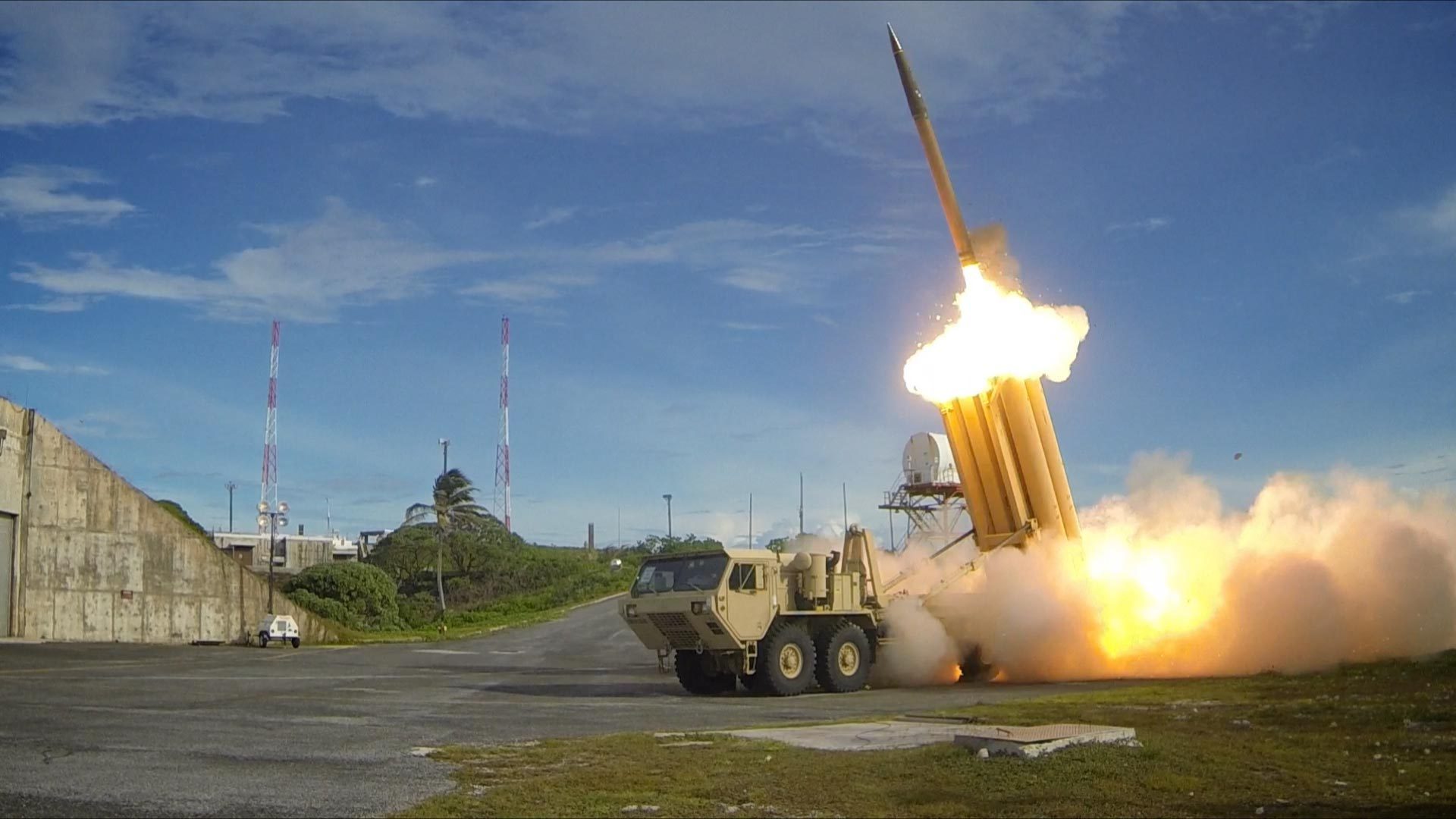
If the defenders face a production-rate problem, Iran is working to ensure the attackers do not. IRGC Spokesman Hossein Mohebbi announced on November 7 that the IRGC Aerospace Force had accelerated the transfer of its missile and drone production lines to underground facilities, describing them as “underground missile production cities” designed to sustain output under sustained bombardment, according to Al Jazeera. Mohebbi provided no capacity figures but said all IRGC Aerospace weapons were manufactured using domestic knowledge and were not reverse-engineered from captured enemy equipment — a claim that, regardless of its accuracy, signals Tehran’s intent to project self-sufficiency at a moment when the West is counting on attrition to grind down Iran’s arsenal.
Western intelligence assessments have been cautious about that bet. The Soufan Center reported in April 2026, citing US intelligence, that approximately 50 percent of Iran’s pre-war missile and drone arsenal had been degraded by US and Israeli strikes — a figure that sounds decisive until it is placed against a Western official’s estimate, also reported by the Soufan Center, that Iran retains the capacity to fire between 15 and 30 ballistic missiles and 50 to 100 one-way attack drones per day across all targets. Even at half its pre-war inventory, that daily output means the 7,000 tally grows by 65 to 130 per day at the low and high ends of the estimate respectively. The arithmetic compounds relentlessly: a single month at even the low end adds nearly 2,000 new strikes to the tally, each requiring interceptor expenditure that further depletes stockpiles the factories cannot refill at the same pace. Iran has separately claimed a tenfold increase in drone production capacity since the war began, a figure the Soufan Center noted was unverified but consistent with the IRGC’s doctrine of industrial dispersal and redundancy.
Supreme Leader Mojtaba Khamenei reinforced the strategic message in his own register, stating that there would be “no geographical limits” to Iran’s response if attacked again, according to Al Jazeera’s November 7 reporting. The underground facilities, the claimed production surge, and the supreme leader’s open-ended threat together compose a posture designed to communicate that the 7,000 figure represents a floor rather than a ceiling — and that the defenders’ interceptor arithmetic, already strained to the point of reported near-depletion, will face an adversary determined to keep manufacturing faster than the other side can intercept. The 7,000-strike tally captures the aerial campaign alone; the waters of the Strait of Hormuz have their own ledger.
134 Incidents in the Strait of Hormuz
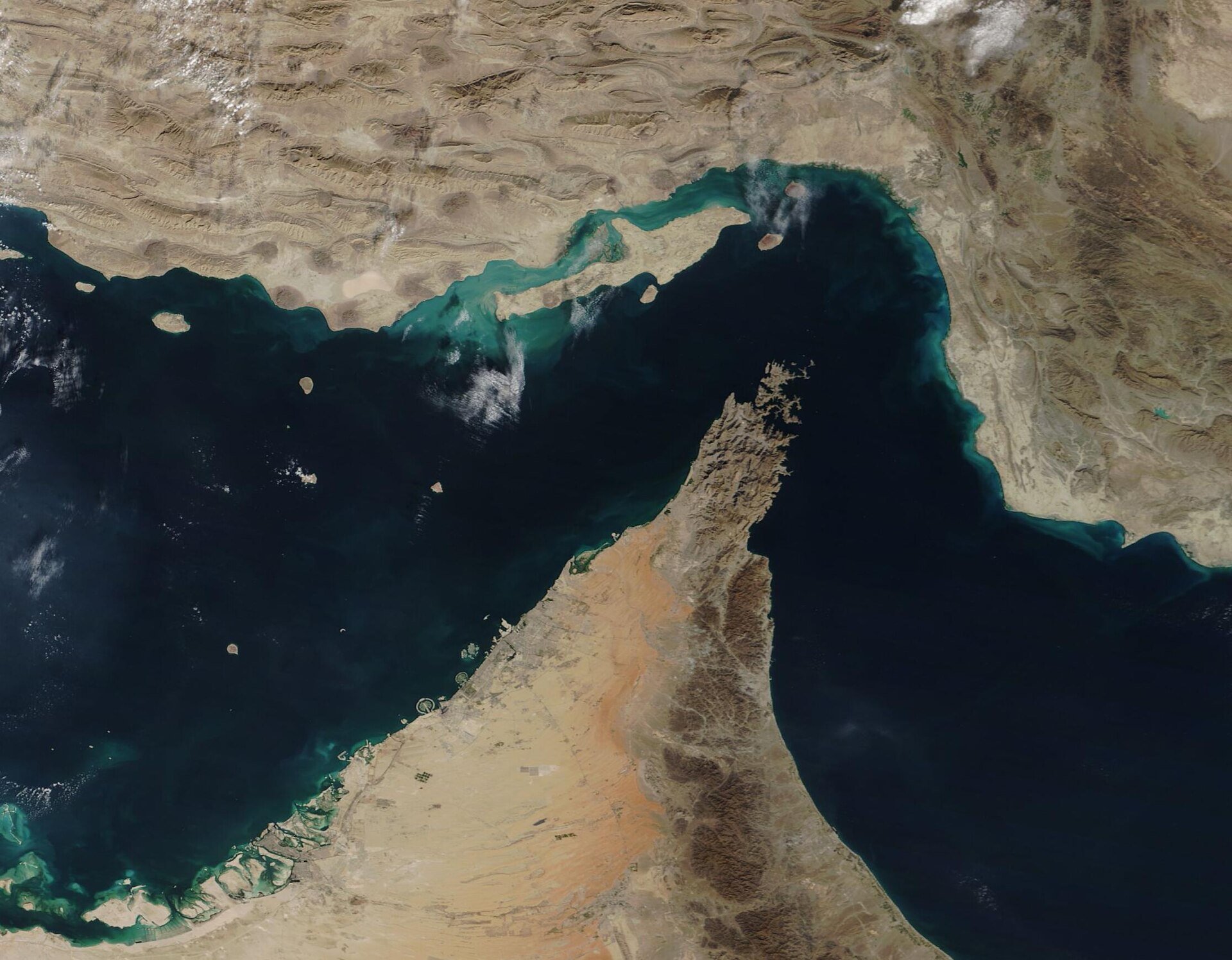
The air war is not the only dimension of Iran’s campaign that al-Budaiwi brought before the Security Council. Khaled Khiari, the UN Assistant Secretary-General, told the same November 13 session that the International Maritime Organization had recorded 134 confirmed incidents in the Strait of Hormuz and surrounding waters as of November 11, with 25 seafarers dead — a toll encompassing mine strikes, limpet-mine attacks, and IRGC seizures of commercial vessels that have made the world’s most economically consequential waterway a theatre of daily risk. Khiari warned the Council that “this situation cannot be allowed to become the new normal” and added, in language whose careful diplomacy barely masked its alarm, that the maritime situation “should not be mistaken for a return to normality.” The 25 seafarer deaths — merchant sailors from countries with no direct stake in the conflict beyond having crews aboard vessels transiting a waterway that carries roughly a fifth of the world’s oil — represent the human cost of a maritime campaign whose financial damage, measured in rerouted cargoes and elevated war-risk insurance premiums, extends far beyond the six states al-Budaiwi represented.
The maritime dimension compounds the war’s economic toll in ways that missile-strike tallies alone do not capture. Every tanker diverted from the Strait of Hormuz adds shipping costs, insurance premiums, and transit time that ripple through global energy markets, and the IRGC’s repeated targeting of commercial vessels has created a de facto threat premium on Gulf-origin crude that functions as an economic weapon independent of any drone or missile. Reuters reported, as cited by Al Jazeera on November 7, that Iran had struck Gulf infrastructure — meaning land-based facilities — at least 135 times, a count compiled separately from the IMO’s 134 maritime incidents that together describe a campaign operating on land and at sea simultaneously. On the same day al-Budaiwi addressed the Council, the Iran Army Navy claimed to have downed a US MQ-1 drone off the Sirik coast, demonstrating that the airspace above the Strait is as contested as the waters below.
What Happens Now That Trump Has Ended Iran Talks?
President Donald Trump announced an end to US-Iran negotiations on November 12, removing the only active diplomatic channel that might have imposed a ceiling on the strikes. Iran had already rejected talks on November 11 and set seven conditions for any future engagement, and the IRGC launched two drones at US forces in Bahrain on November 13, the day after Trump’s announcement — a sequence that leaves no framework for de-escalation and no interlocutor with both the credibility and the mandate to broker one.
Iran’s deputy UN ambassador, Gholamhossein Darzi, used the same Security Council session to reject the GCC’s framing entirely. “Countries in the Persian Gulf region…have facilitated the US aggression against Iran,” Darzi told the Council, accusing Gulf states of breaching the UN Charter by hosting the military forces used to strike Iranian territory. The argument is self-serving but not without a strategic logic of its own: by casting the GCC states as co-belligerents rather than victims, Iran provides itself with a justification for continued strikes that does not depend on any specific military objective and that has no natural expiry date.
Al-Budaiwi’s response was to demand accountability. The GCC, he told the Council, “holds Iran fully responsible for these attacks and their consequences” — language that The National reported as part of a broader demand for Iran to pay full compensation for the damage inflicted across all six member states — a formal reparations claim presented at the Security Council in this conflict. Whether that claim gains traction in a body where the diplomatic architecture for this war is actively collapsing is an open question, but the ledger al-Budaiwi laid before the Council — more than 7,000 strikes, six countries hit, civilian infrastructure systematically targeted — was not a plea for sympathy or a legal filing alone — it was an inventory of what has been spent to attack and what has been spent to defend, and by that measure the balance favours the attacker.
In the underground facilities Mohebbi described, Iran’s production lines are assembling the next batch. Western officials estimate the daily output at 50 to 100 drones and 15 to 30 ballistic missiles across all targets, according to the Soufan Center — numbers that mean the 7,000 figure al-Budaiwi presented is already outdated by the time the Security Council transcript is published. At the low end of that range, the tally grows by roughly 65 per day; at the high end, by 130. Each one will cost Iran a fraction of what it costs the Gulf to stop it, and the factory making the interceptors will not deliver the next shipment of THAAD rounds until April 2027.
Frequently Asked Questions
How does the Gulf air campaign compare to Russia’s drone war in Ukraine?
Russia has launched more than 44,000 Shahed and Shahed-variant drones against Ukraine — roughly four times the pace of 2024 — according to CSIS data compiled in 2026, making it the only recent conflict whose drone volume surpasses the Gulf campaign in absolute terms. Ukraine’s interception rate against Russian Shaheds has ranged from 82 to 97 percent across different periods, but Kyiv faced the same cost-exchange problem confronting Gulf air defences and responded by developing cheap interceptor drones costing between $3,000 and $5,000 each — a fraction of the PAC-3 MSE’s $4.1 million price tag. No GCC state has publicly disclosed a comparable programme, even as CSIS analyst Bondar has argued that a “drone-against-drone layer” is the only arithmetically sustainable defence model against the kind of volume Iran is producing.
Have US military forces in the Gulf also come under direct fire?
US forces have been targeted, though the tempo against American positions has shifted since the campaign’s opening weeks. US Secretary of Defense Pete Hegseth said on March 19, 2026, that ballistic missile attacks against American forces had dropped by 90 percent since the start of the conflict, a decline attributed to the degradation of Iranian launch infrastructure rather than any reduction in intent, according to the Soufan Center’s April 2026 assessment. Gen. Dan Caine, Chairman of the Joint Chiefs of Staff, told a Pentagon briefing on March 4 that there were sufficient “precision munitions for the task at hand, both on the offense and defense,” a statement reported by multiple outlets that addressed readiness without specifying the scale of incoming fire American forces had absorbed during the campaign’s most intense phase.
Does the 7,000 figure include Houthi strikes from Yemen?
Al-Budaiwi’s tally and the Asharq Al-Awsat breakdown of 7,028 refer specifically to Iranian military launches — missiles and drones fired by the IRGC and Iran’s regular armed forces — and do not encompass the separate Houthi campaign from Yemen. Houthi forces have conducted their own sustained offensive against Saudi targets throughout the same period, striking airports, energy infrastructure including the East-West Pipeline, and urban areas across multiple provinces. The combined effect of Iranian and Houthi strikes means Saudi Arabia’s air-defence network faces simultaneous demand from two distinct threat axes — Iran across the Persian Gulf to the east and Houthi forces along the southern and western flanks — stretching Patriot battery coverage across a front measured in thousands of kilometres.
The House of Saud Daily Briefing
Saudi Arabia's news in 3 minutes, every morning. Free. See today's issue