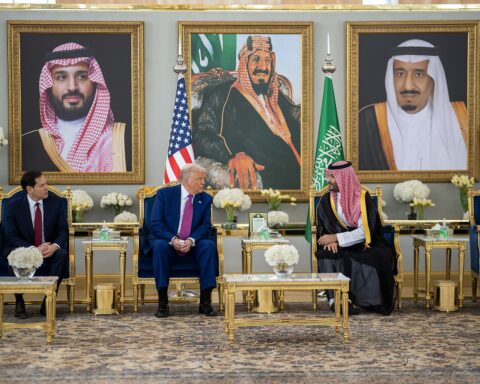
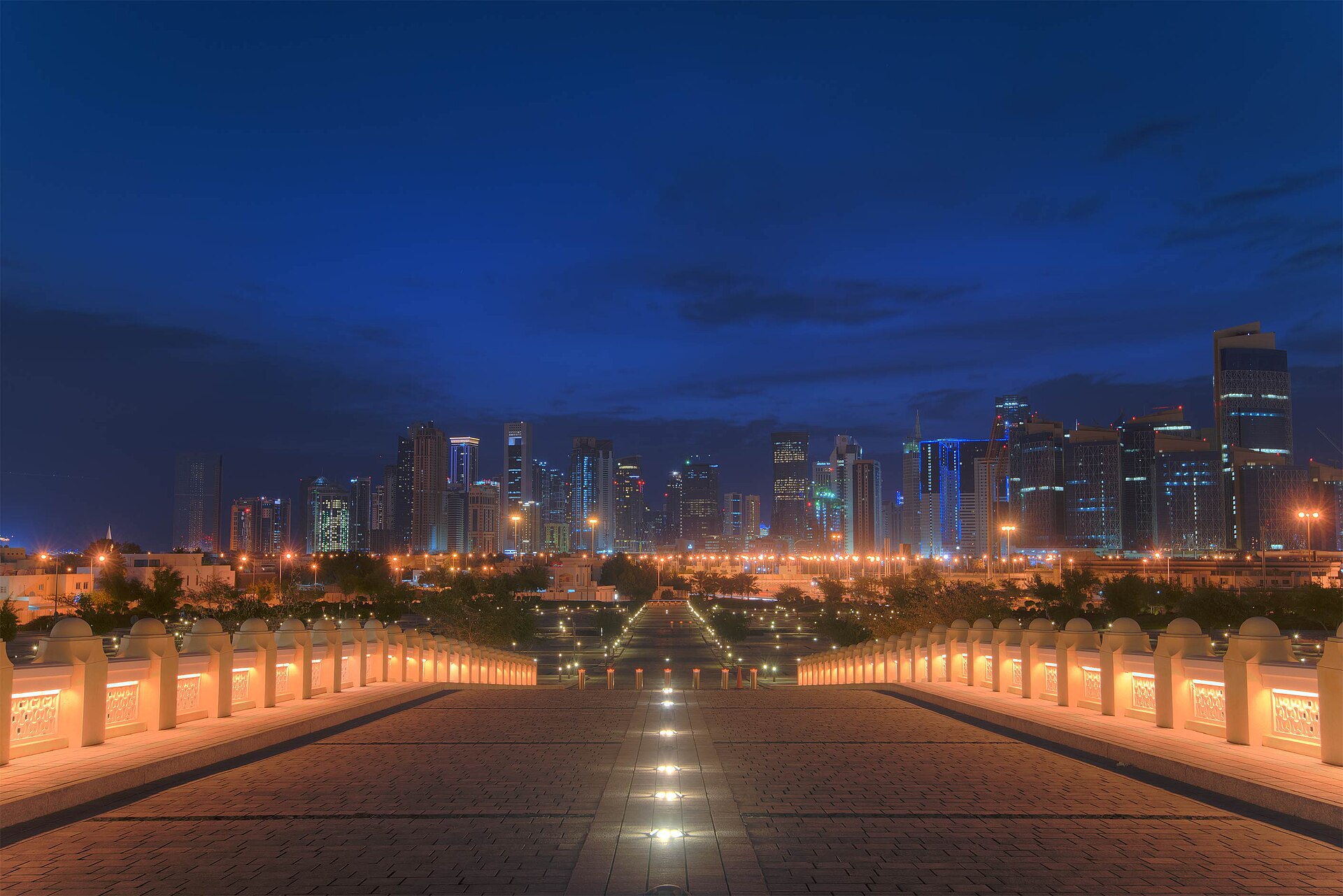
DOHA — US envoy Steve Witkoff arrived in Doha on Tuesday to open what President Trump announced as high-level talks with Iran, while Iran’s Foreign Ministry said its own expert delegation was there to discuss frozen assets under the June 17 MOU and had “no relation” to the Americans’ visit. The two governments are not disputing the terms of the same negotiation — they appear to be describing two entirely different contacts, happening in the same city, on the same day, mediated through the same Qatari intermediaries who have managed the US-Iran channel since the agreement was signed 13 days ago.
The gap is wider than diplomatic framing. Trump told reporters the substance was “really very simple, it’s the denuclearisation of Iran” — a demand Iran has refused to discuss at any stage of the MOU process and which does not appear in the agreement’s 14-point text. Iran’s delegation told Xinhua it was there for Clause 11, the provision requiring the US to release frozen Iranian assets, and Iranian President Masoud Pezeshkian separately claimed on Monday that $6 billion held in Qatar would be freed — a claim US officials denied on Tuesday, saying no frozen assets had been released. Day 13 of 60 on the MOU’s Phase 2 clock elapsed with no confirmed meeting, no readout from either delegation, and no agreement between Washington and Tehran on what, if anything, had happened in Doha.
Table of Contents
What Trump Said vs. What Iran Said
The contradiction began on Monday, when Deputy Foreign Minister Kazem Gharibabadi told IRNA that technical talks “are not planned” for this week — and less than two hours later, Trump posted on Truth Social in capital letters: “IRAN HAS REQUESTED A MEETING. IT WILL TAKE PLACE TOMORROW IN DOHA!” White House press secretary Karoline Leavitt confirmed that Witkoff and Jared Kushner would attend “high-level meetings,” with technical talks “on the sidelines,” a structure that placed denuclearisation at the top of the agenda and everything else beneath it, according to multiple outlets covering the White House announcement. The sequence — Iran denying talks exist, then Trump announcing them within the same news cycle — was first documented by Al Jazeera’s liveblog on June 29.
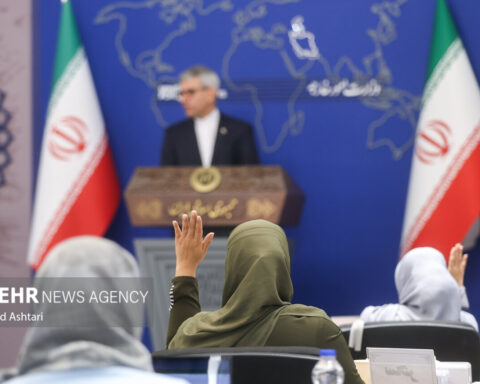
Iran’s Foreign Ministry spent Tuesday shutting down the US framing at every level. Spokesperson Esmaeil Baghaei told reporters, in remarks carried by Xinhua and Gulf News: “We will not have any negotiation meetings at any level with the American side in the coming days.” Iran’s trip to Doha, he added, had “no relation” to the Americans’ visit — the delegation was there for Clause 11, the MOU provision covering frozen Iranian assets, and nothing beyond it.
“No technical working group meetings are scheduled for this week. Although consultations with Qatar — including on the issue of monitoring the other party’s compliance with its obligations — continue as usual, reports by some media outlets on technical working group talks in Doha are unfounded.”
Kazem Gharibabadi, Iranian Deputy Foreign Minister, via TASS, June 30, 2026
The HOS Daily BriefThe Middle East briefing 3,000+ readers start their day with.
One email. Every weekday morning. Free.
The same day, Gharibabadi also formally confirmed the inspector sequencing demand that underpins Iran’s Doha posture: no IAEA access to any of Iran’s 20 nuclear sites until sanctions are terminated. Gharibabadi’s statement to TASS added a specificity Baghaei’s broader denial had not provided — acknowledging active Qatar consultations while ruling out formal working-group sessions. A Reuters source with knowledge of the arrangements offered a different account entirely: US and Iranian technical teams were “set to meet in Doha in the coming days,” mediated through Qatar and Pakistan rather than in the same room.
Are These Two Separate Contacts?
The simplest explanation is that Trump exaggerated and Iran minimised, with the truth somewhere between a formal summit and a frozen-assets errand. But there is a more structural possibility that accounts for the contradictions more precisely: the US and Iran may not be describing the same event at different volumes — they may be describing two genuinely separate contacts happening in parallel, in the same city, on the same day, routed through the same Qatari intermediaries. Trump sent Witkoff and Kushner for denuclearisation, a topic Iran has publicly refused to discuss at any point during the MOU process; Iran sent an expert delegation for Clause 11 asset recovery, a topic the White House has described as secondary to the political track. Qatar, mediating both, may have been running two channels through the same hotel corridors without either side ever needing to acknowledge the other’s version of events.
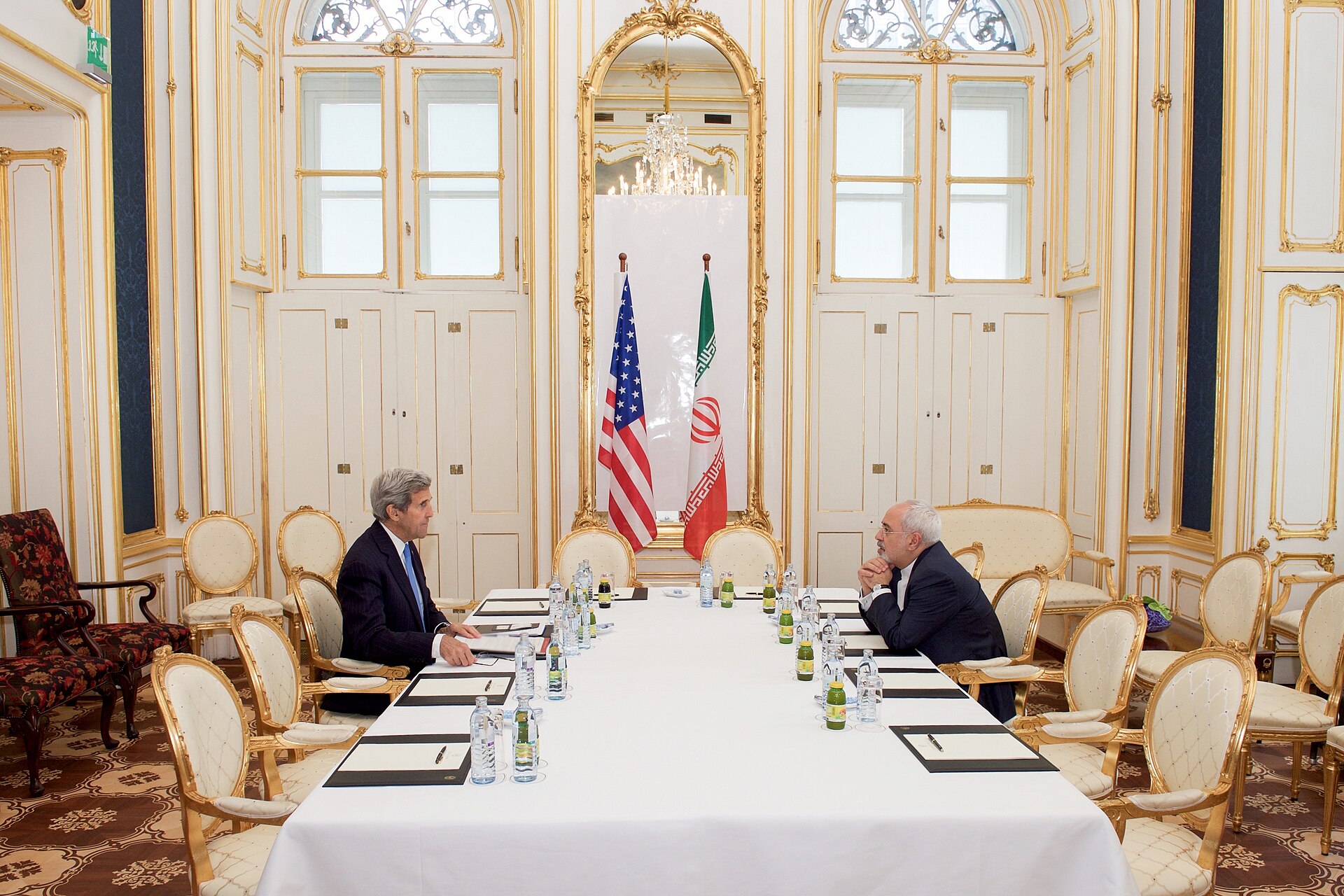
Iran has operated exactly this way before, and the precedent is recent enough that the same Qatari diplomats facilitating Tuesday’s contacts would have been familiar with the playbook. During the 2021-2022 Vienna talks over a possible return to the JCPOA, the US and Iran never occupied the same room — the EU delegation physically shuttled between floors of the Palais Coburg, carrying proposals and counter-proposals, so that Tehran could maintain the position that it was “not negotiating with America,” according to Arms Control Association reporting from January 2022. Iran’s Raisi government needed that fiction to survive domestic scrutiny, and the EU accepted the logistical cost because the alternative was no talks at all.
Qatar in 2026 is performing the same function the EU performed in Vienna — absorbing the contradiction between what both sides need to say publicly and what they appear to be doing in private. Baghaei’s formulation on Tuesday was built for this purpose: Iran has “consultations with Qatar,” Qatar consults with the Americans, and at no point does Iran have to concede that it is negotiating with the United States, even if the practical effect is indistinguishable from a negotiation conducted through an intermediary. The day before Witkoff arrived, Iran had already denied Trump’s initial announcement — making Tuesday’s denial a repetition of a position Tehran held for 48 hours while the American envoys were visibly boarding planes to Doha.
The Frozen Assets Iran Came For
Iran’s stated reason for being in Doha is neither trivial nor invented, and the amounts involved are large enough to justify sending a delegation on their own terms. Clause 11 of the MOU requires the United States to “make fully available for use the frozen or restricted funds and assets of the Islamic Republic of Iran,” language that Iran reads as an unconditional obligation and the US treats as conditional on compliance with the agreement’s other provisions. The specific assets at issue in Qatar are $6 billion in Iranian oil proceeds originally held in South Korean accounts, transferred to Qatari banks in September 2023 as part of a prisoner exchange, and subsequently re-blocked by the US after Hamas’s October 7 attack, according to Al Jazeera reporting.
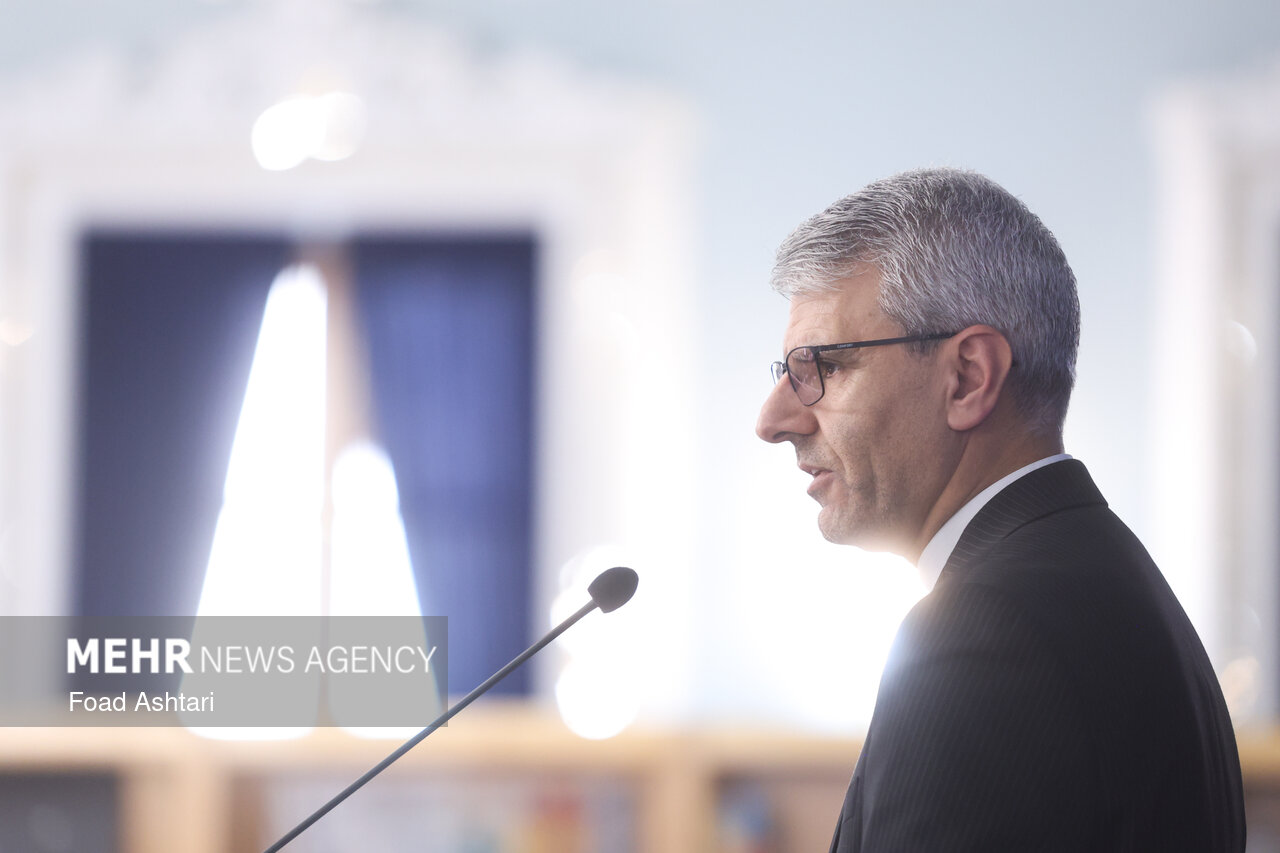
Pezeshkian told IRNA on Monday that the $6 billion would be released, a claim US officials flatly contradicted — no frozen Iranian assets have been released as of Tuesday, according to multiple US outlets. The disagreement is not about timing but about whether the obligation is unconditional: US officials told Iran International at the MOU’s signing on June 17 that Iran had accepted no funds would move automatically, and that access depended on “demonstrable good behavior and compliance,” a formulation Iran has never publicly acknowledged accepting. The $6 billion in Qatar is a fraction of the total — Iran’s frozen assets globally exceed $100 billion, with more than $20 billion believed held in China alone, according to Al Jazeera and WION estimates.
Iran’s decision to send an expert delegation for the Qatari $6 billion specifically, rather than pursuing the much larger frozen sums elsewhere, reflects the relative accessibility of funds already sitting in the country that mediates the MOU process. Qatar is both the custodian of the contested money and the primary diplomatic channel through which Iran is trying to release it — a dual role that makes Doha the only venue where Iran can advance an asset recovery claim and a compliance argument simultaneously, without needing to engage directly with Washington on either.
Why Can’t Iran Call This a Meeting?
The constraints on Iran’s ability to publicly accept direct talks with the United States start at the top and are enforced from below. Supreme Leader Ali Khamenei had “a different view in principle” on the MOU itself, approving it only after assurances from the Supreme National Security Council, according to Iran International reporting from June 19. Baghaei’s denial on Tuesday — “no negotiation meetings at any level” — operates within a political space defined by that baseline, where any Iranian official who publicly characterises contact with the US as negotiation risks crossing a line the Supreme Leader drew before the agreement was even signed.
The pressure from hardline factions is equally direct. Mahmoud Nabavian, an MP from the Paydari faction, declared in April that “negotiations are now pure damage and nobody should go for negotiations,” as reported by the Irish Times on April 28 — a position that carries weight because Paydari holds blocking power in the Majlis, not because it speaks for a fringe constituency. The MOU itself was signed under military pressure, both sides violated it within days, and the oral stand-down that restored compliance was never put in writing.
Iran’s framing in Doha on Tuesday — consultations with Qatar about frozen assets, not negotiations with America about nuclear weapons — follows the template that got the Raisi government through six months of Vienna talks without triggering a domestic crisis. The difference is the counterparty: Trump has no interest in maintaining Iran’s preferred fiction and every incentive to broadcast the appearance of direct engagement, regardless of what happens behind closed doors. Trump officials themselves have acknowledged the risk — Fortune reported on April 21 that figures within the administration warned the president’s Truth Social posts about Iran risked “killing peace talks.”
What Has the MOU Already Delivered?
Buried beneath the argument over whether Tuesday’s contacts constituted talks is the fact that one part of the MOU is already functioning. Baghaei confirmed on Tuesday that the US had issued licenses under Clause 10 — the provision covering Iranian oil sales — and that Iran was implementing them, a quiet concession that received almost no coverage amid the drama over whether Witkoff was being received or ignored. Clause 10 is the closest thing the MOU has produced to a working deliverable: US licenses issued, Iranian oil flowing under those licenses, neither side disputing that it is happening.
The contrast between Clause 10 (functioning), Clause 11 (disputed), and the broader denuclearisation agenda (not even accepted as a topic) maps the MOU’s practical range 13 days into its 60-day window. The provisions that work are the ones each side can implement without the other’s cooperation — US licenses for Iranian oil sales, Iranian pre-clearance requirements in the Strait of Hormuz — while everything requiring mutual consent, from frozen assets to nuclear verification, remains contested or unaddressed.
The MOU Clock at Day 13
Phase 2 of the MOU began on June 17 with a 60-day clock that runs regardless of whether talks happen, stall, or are denied by one of the parties — a mechanical feature that gives the countdown an automatic quality disconnected from the state of diplomacy on the ground. Day 13 elapsed on Tuesday with the two sides unable to agree on whether a meeting had taken place, and 47 days remain before the window closes. The oral stand-down brokered through Qatar after last week’s violations remains in effect but carries no written amendment, no named enforcer, and no expiration date.
Saudi Arabia’s position through all of this is exactly where it has been for weeks: absent. Foreign Minister Prince Faisal bin Farhan’s last confirmed contact with Iran was on May 6 — a gap now exceeding 55 days — and the kingdom holds zero seats at any active mechanism, whether the Doha talks (whatever their label), the Qatari mediation channel, or the IRGC-CENTCOM deconfliction cell. Faisal visited Beijing on Tuesday, the same day Witkoff was in Doha, an itinerary that placed Saudi Arabia’s most senior diplomat on a different continent from the only active diplomatic track addressing the Iran crisis. The competing narratives that emerged in Doha on June 30 — Trump describing denuclearization talks, Iran calling it a Clause 11 compliance review, and Pezeshkian claiming $6 billion already agreed — are documented in a June 30 analysis of what the three delegations actually agreed to.
Neither side has publicly defined what a successful outcome would look like — whether that means a nuclear agreement (Trump’s stated objective), full release of frozen assets (Iran’s stated objective), or something in between that neither government has described. As of Tuesday evening in Doha, no readout from either delegation had been released. Qatar’s foreign ministry confirmed on June 30 that no high-level Iran meeting had been planned, corroborating Iran’s account of its own delegation’s purpose. The following day, the July 1 Doha talks confirmed working groups, not the $3 billion — Iran’s claim of a preliminary frozen-asset agreement remained unconfirmed by the United States.
Background
The US-Iran MOU was signed on June 17, 2026, after months of military escalation that included IRGC strikes on US bases across the Gulf and US operations against Iranian naval assets in the Strait of Hormuz. The agreement created a 60-day Phase 2 window for diplomatic resolution, with specific provisions covering oil sales (Clause 10), frozen assets (Clause 11), and a broader framework for nuclear engagement that Iran has never acknowledged as binding on its enrichment activities. Qatar and Pakistan serve as co-mediators, and no direct US-Iran contact has been acknowledged by Tehran at any point.
The MOU has been under strain since its first week, with both sides violating the agreement within days of signing and requiring a Qatari-brokered phone call to produce an oral stand-down that carries no written authority. The Persian Gulf Shipping Authority, established by Iran 43 days before the MOU was signed, continues to enforce pre-clearance requirements in the Strait of Hormuz despite US objections — a running source of friction that mirrors the Doha disagreement in miniature, with Iran operating a system the US says should not exist.
FAQ
Has Iran ever accepted direct talks with the United States? Iran accepted direct, publicly acknowledged contact with the US during a narrow window under President Hassan Rouhani, when Barack Obama and Rouhani spoke by phone in September 2013 — the first direct communication between leaders of the two countries since 1979 — and Foreign Minister Mohammad Javad Zarif negotiated face-to-face with Secretary of State John Kerry throughout the JCPOA process in 2014-2015. Under Raisi (2021-2024), Iran reverted to indirect formats during the Vienna talks, and the current government under Pezeshkian has not acknowledged any direct channel with Washington at any stage of the MOU process.
What does Clause 11 of the MOU actually say? The full text reads: “The United States of America undertakes to make fully available for use the frozen or restricted funds and assets of the Islamic Republic of Iran.” The clause does not specify a timeline for release, does not name which assets are covered — the $6 billion in Qatar, the $20 billion-plus in China, or the full $100 billion-plus global total — and does not define the conditions under which the obligation would be considered fulfilled, gaps that explain how Iran and the US can read the same sentence and reach opposite conclusions about what they agreed to.
Why are Iranian frozen assets held in Qatar specifically? The $6 billion at issue are Iranian oil revenues originally deposited in South Korean accounts and frozen under US sanctions, then transferred to Qatari banks in September 2023 as part of a deal that secured the release of five American prisoners held in Iran, with the understanding that Iran could access the funds only for verified humanitarian purchases. After Hamas’s October 7, 2023 attack on Israel, the Biden administration re-blocked the funds, and they have remained frozen in Qatari accounts since — making Qatar simultaneously the custodian of the contested money and the mediator of the diplomatic process through which Iran is trying to release it.
What role does Pakistan play in the Doha process? Pakistan serves alongside Qatar as co-mediator for the MOU, a role that grew out of Prime Minister Shehbaz Sharif’s diplomatic engagement during the early months of the US-Iran military escalation. Pakistan’s involvement provides Iran with an additional buffer — communications can be described as routed through two intermediaries rather than one, further insulating Tehran from domestic accusations that it is negotiating directly with Washington, a political charge that carries real consequences in a system where the Supreme Leader’s baseline position on direct engagement is restrictive.
What happens when the MOU’s 60-day clock expires? If Phase 2 ends without a comprehensive agreement — an outcome Wendy Sherman, the former US Deputy Secretary of State, described as almost certain in June — “I can assure you they will not get all of this done in 60 days” — given the gap between the two sides’ stated objectives — several provisions revert by default. Iran’s PGSA, which currently charges zero fees for strait transit under the MOU’s terms, has reserved the right to impose a $1-per-barrel transit fee starting on Day 61, a cost that would add roughly $5.5 million per day to Gulf shipping expenses and approximately $2 billion annually to the cost of moving oil through the Strait of Hormuz, according to industry estimates. The MOU contains no automatic renewal clause, and its enforcement provisions — already untested after 13 days — would lose whatever residual framework the 60-day window provides.