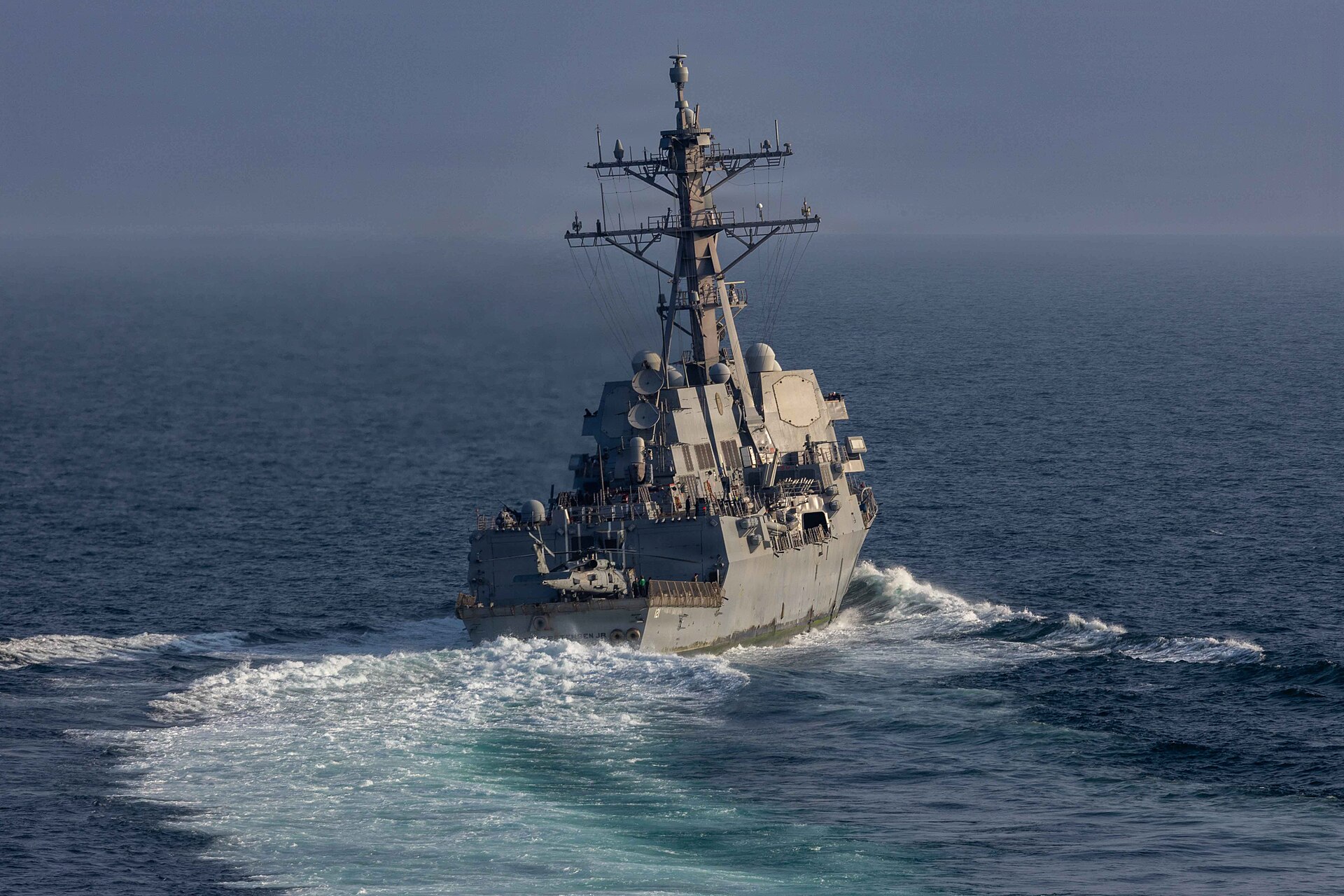

DUBAI — The first ships to clear the U.S. Navy blockade perimeter after the Hormuz Memorandum of Understanding were not Saudi VLCCs leaving Ras Tanura, Qatari LNG carriers leaving Ras Laffan, or Kuwaiti crude carriers leaving Mina Al Ahmadi. They were two sanctioned National Iranian Tanker Company supertankers — Diona and Hero 2 — and a third Iran-linked vessel, carrying a combined five million barrels of Iranian crude eastbound on June 17, 2026, per TankerTrackers data confirmed by Kpler satellite tracking and reported by CNBC.
The same satellite operators that confirmed the Iranian transits show roughly 550 commercial vessels still broadcasting AIS positions west of the strait — 86 product tankers, 34 crude tankers, 23 chemical tankers, 80 bulk carriers, 33 container ships, and 15 LNG carriers, none of them moving, according to Windward AI’s June 17 tracking cited by Sourcing Journal. Twelve transits cleared on June 15; the daily average for the first half of June was seven. The MOU that was supposed to reopen the strait was signed two days before these transits. Iran’s tankers moved. The vessels carrying Saudi, Emirati, Iraqi, Kuwaiti, and Qatari hydrocarbons did not.
Table of Contents
- The Sequence: Iran’s Crude First, Everyone Else’s Later
- Why Did Iran’s Tankers Move First?
- What Is Keeping Commercial Tankers Anchored?
- The Minefield That Iran Laid and Iran Coordinates Around
- PGSA, Service Fees, and the Saudi Bill
- Saudi Arabia’s Fiscal Position Between Now and Q1 2027
- How Long Before Saudi Barrels Can Move Through Hormuz?
- Was the Asymmetric Reopening Accidental or Structural?
- Frequently Asked Questions
The Sequence: Iran’s Crude First, Everyone Else’s Later
The Diona and Hero 2 exited the U.S. Navy blockade line on June 17 carrying 3.8 million barrels between them. A third Iran-linked tanker added roughly one million barrels the same day, bringing the total to about five million barrels across three vessels — Iran’s first crude exports in two months, according to TankerTrackers data confirmed by Kpler and reported by CNBC.
The House of Saud Daily Briefing
Saudi Arabia's news in 3 minutes, every morning. Free. See today's issue
All three tankers are under U.S. sanctions. NITC itself is a sanctioned entity. Their transit was permitted under the framework of the MOU announced June 15 and pending the Geneva ceremony scheduled for June 19. The vessels moved before any signature, before any verification regime, and before any formal U.N. Security Council resolution endorsing the text.
The transit of Diona and Hero 2 on June 15–16 confirmed the NITC exemption operationally. The first 4.8 million barrels out of Hormuz were entirely Iranian — the asymmetric reopening this article anticipated now has a confirmed data point.
Windward AI’s blog summary published the same day did not soften the comparison. “The absence of a sailing rush reflects a lack of confidence rather than a lack of capability,” the firm wrote, after tracking 151 Hormuz transits between June 1 and 15 — with twelve clearing on June 15 alone, the day the MOU was announced — and finding that “few stranded ships had sailed through the Hormuz strait 36 hours after the agreement.”
Why Did Iran’s Tankers Move First?
Iran’s tankers cleared the blockade line first because the actor that laid the mines, codified the transit fees, and retained the coordination authority is the same actor whose cargo cleared the perimeter. The MOU did not transfer mine-clearance authority to a neutral party, did not establish a verification regime, and did not require Iran to publish a vessel-by-vessel permit list. It announced the principle of reopening; it left every operational predicate in Iranian hands.
Before the U.S. naval blockade began on April 13, 2026, Iran was exporting approximately 2.0 to 2.1 million barrels per day of crude, with 80 to 91 percent of that volume going to China, according to RFE/RL reporting and a Michigan Journal of Economics analysis published in May. During the 107-day closure that began February 28, Iran continued exporting via dark transits and shadow-fleet ship-to-ship transfers while Gulf Arab crude sat still. The asymmetric arrangement is not new. The MOU formalized it.
China’s official customs records for 2025 showed zero imports of Iranian crude — and 1.3 million barrels per day of “Malaysian crude,” more than double Malaysia’s entire production. At least 42 ship-to-ship transfers of Iranian oil were tracked near Malaysia’s Eastern Outer Port Limits in the South China Sea during the conflict period, per the Michigan Journal of Economics. The infrastructure that moved Iranian barrels during a declared closure is the same infrastructure that moved them on June 17.
What Is Keeping Commercial Tankers Anchored?
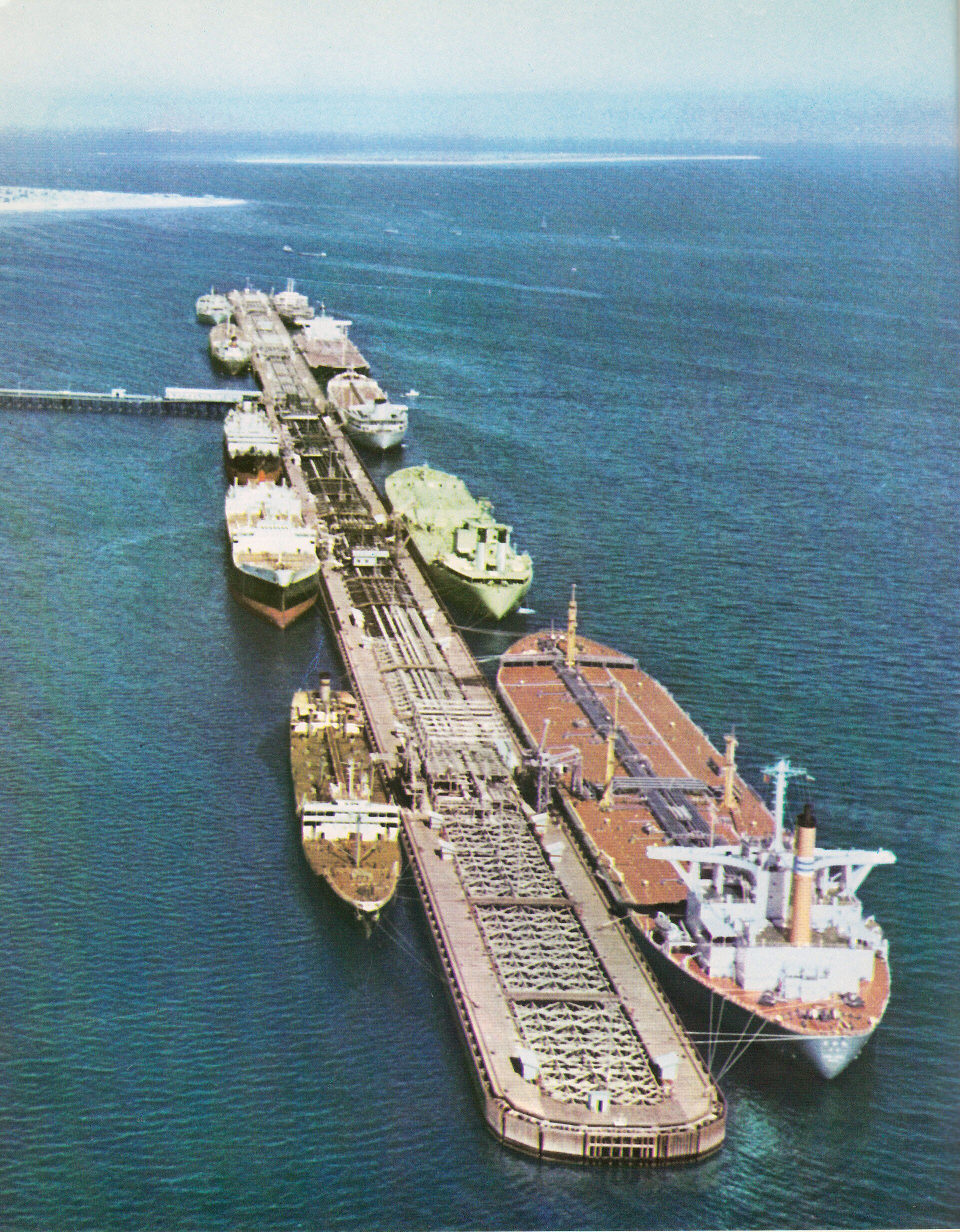
The roughly 550 commercial vessels Windward AI counted west of the Strait of Hormuz between June 14 and June 17 — cited by Sourcing Journal — did not move at scale after the MOU was announced. Twelve transits on June 15 represented a marginal uptick, not a surge.
The Lloyd’s Market Association told Reinsurance News in June that the barrier was “safety concerns, not insurance availability.” BIMCO, the global shipping association whose members carry 62 percent of the world’s tonnage, was more specific. “Mine-free routes need to be established,” said Jakob Larsen, BIMCO’s head of maritime safety and security, in a June 15 statement carried by InvestingLive. “Credible assurances from both sides of the conflict must be given before traffic can resume fully to pre-conflict levels.”
BIMCO’s separate written statement to underwriters, cited by Insurance Journal the same day, was blunter: “Transiting the strait at present remains very risky.” Operators “will not return at scale without verified mine clearance, safe navigation corridors, and sustained security guarantees” — none of which the MOU provides.
War-risk premiums tell the same story in pricing terms. Single-transit premiums currently run at 1 to 4 percent of vessel value, versus a pre-war benchmark below 0.1 percent, per Insurance Journal and Gulf News reporting. For a $200 million VLCC, that is up to $8 million per crossing — before any PGSA service fee, before any cargo insurance loading, before any P&I club deductible. Oscar Seikaly, chief executive of NSI Insurance Group, framed the underwriting problem for World Oil in April: “The uncertainty of changing conditions by the hour pays off for Tehran’s asymmetric warfare, making the risk almost impossible to price responsibly.”
The MOU did not change any of those inputs. Iran’s IRGC fired multiple drones at commercial ships in the strait on at least one night after the MOU was signed, with the drones intercepted by U.S. military assets before reaching their targets, according to Iran International citing a U.S. official to NBC News on June 16. The signing did not bind the IRGC; the IRGC-affiliated Tasnim agency framed Speaker Qalibaf’s signing role as projecting “a contradictory image of Iran.”
The Minefield That Iran Laid and Iran Coordinates Around
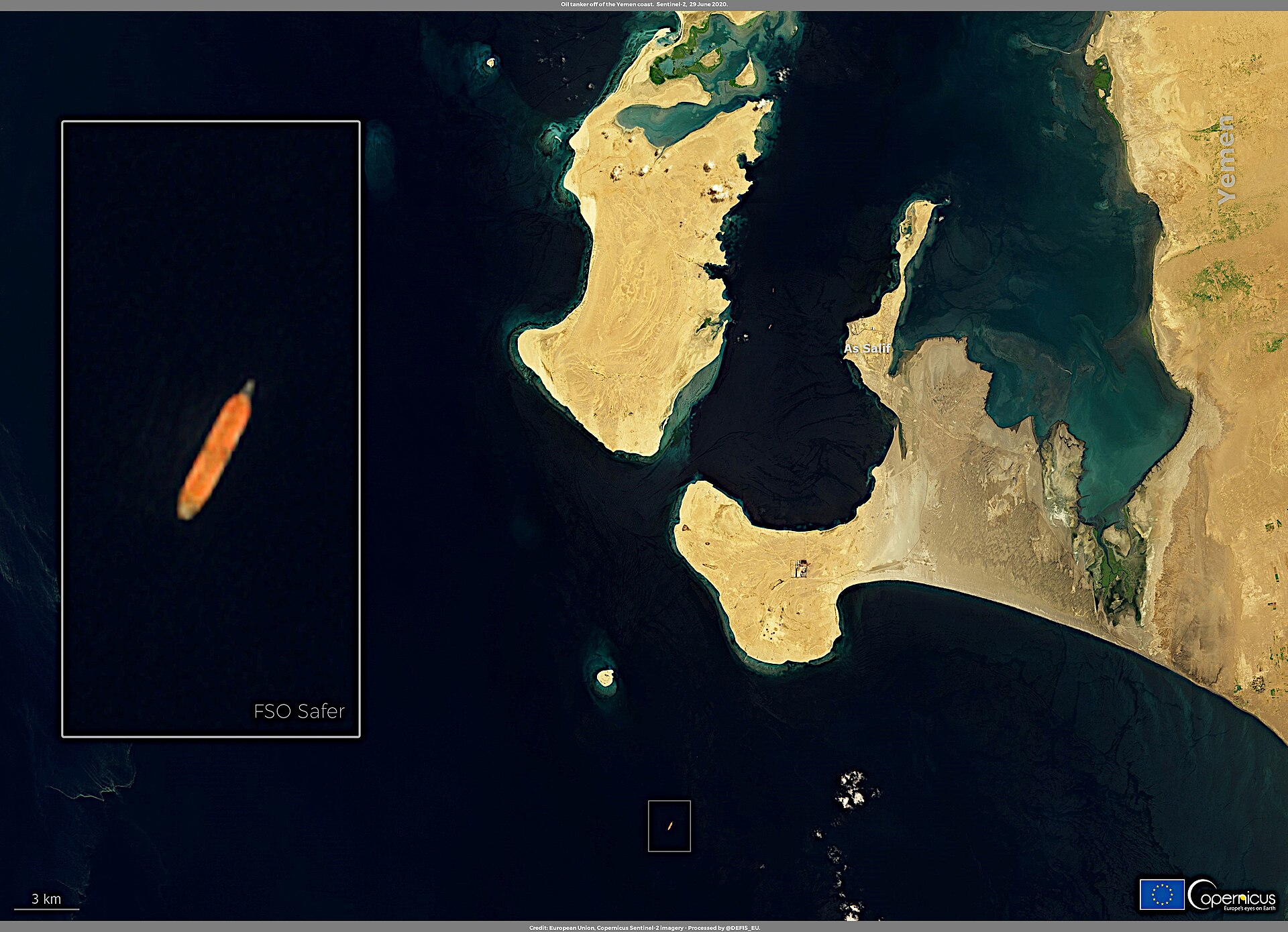
The physical obstacle is the same physical obstacle the April 17 brief reopening exposed. Iranian sea mines — including the Maham-7 glass-reinforced plastic variant that defeats conventional sonar — remain in the western approaches to the strait. Pentagon internal estimates cited by The National on April 23 put full minesweeping at up to six months with three dedicated vessels in the region. Maritime security sources cited by InvestingLive on June 15 offered a tighter estimate: 40 to 50 days using minesweepers, side-scan sonar, and underwater drones in combination.
Neither estimate is compatible with the volume of Iranian crude that moved on June 17. The Diona and Hero 2 did not need minesweeping authorization because Iran knows the geometry of the field Iran laid. Commercial operators do not have that map. They have BIMCO’s June 15 guidance and the IRGC’s June 16 drone activity.
ADNOC’s chief executive Sultan Al Jaber stated in May that even if the conflict ended immediately, it would take at least four months to get back to 80 percent of pre-conflict flows, and full flows would not return before the first or second quarter of 2027, per Zawya. Saudi Aramco’s CEO Amin Nasser put the same point in market terms on CNBC on May 11: “If the Strait of Hormuz opens today, it will still take months for the market to rebalance, and if its opening is delayed by a few more weeks, then normalization will last into 2027.” The global oil market loses approximately 100 million barrels of supply for every week the strait remains effectively closed, Nasser added.
Iran did not need to wait for any of those rebalancing periods. Iran needed to load three tankers, navigate around its own mines, and accept the U.S. Navy clearance that the MOU framework had pre-authorized for sanctioned cargoes.
PGSA, Service Fees, and the Saudi Bill
The Persian Gulf Shipping Authority — codified by Iran’s parliament in legislation passed March 30 and 31, 2026, before any MOU draft existed — is the statutory mechanism that survives any diplomatic agreement. The PGSA requires vessels to apply via [email protected], disclosing ownership, insurance, crew manifests, and cargo before being granted an individual transit permit. According to Lloyd’s List reporting cited by AGBI in May, vessels have paid up to $2 million per individual transit approval, with tolls settled in Chinese yuan.
The PGSA legislation exempts vessels from Russia, China, India, Iraq, and Pakistan from the $1-per-barrel service fee. It does not exempt Saudi Arabia. At 5.5 million barrels per day of Saudi crude through Hormuz at pre-war volume, that is approximately $5.5 million per day, or roughly $2 billion per year. The math is laid out in the earlier piece on the “toll free” reopening that still costs Saudi Arabia two billion a year and in the documented gap between the MOU’s prohibition on tolls and Iran’s stated intention to collect “service fees”.
Foreign Minister Abbas Araghchi told Iranian state television that Iran will charge ships “for services rendered” at Hormuz — a framing chosen to stay within the MOU’s prohibition on “tolls” while preserving the statutory revenue stream parliament authorized in March. The PGSA legislation also requires Supreme National Security Council approval for ships from “hostile” nations, bans Israeli vessels entirely, and denies passage to vessels from countries deemed to have “damaged Iran” without compensation, per AGBI’s June reporting. The EU’s June 8 designations targeting the PGSA’s operator and deputy commander remain in force nine days after their adoption, a legal contradiction the G7 endorsement at Évian did not acknowledge.
None of those provisions applied to the Diona, the Hero 2, or the third NITC-linked vessel on June 17. They applied — and continue to apply — to every Saudi VLCC that will eventually load Arabian Light at Ras Tanura or Ras al-Khair for the eastbound run. The pattern the MOU canonized was described before the deal was signed: Iran is not closing Hormuz; Iran is monetizing it.
| Category | Volume / Count | Source |
|---|---|---|
| NITC tankers Diona + Hero 2 (Iranian crude eastbound) | 3.8 million barrels combined | TankerTrackers / Kpler via CNBC, June 17 |
| Third Iran-linked tanker (Iranian crude eastbound) | ~1 million barrels | CNBC, June 17 |
| Total Iranian crude exiting blockade June 17 | ~5 million barrels | CNBC, June 17 |
| Commercial vessels still anchored west of strait | ~550 (incl. 34 crude tankers, 15 LNG carriers) | Windward AI via Sourcing Journal, June 17 |
| Hormuz transits June 1–15 (all flags) | 151 total; 12 on June 15 (MOU day) | Windward AI, June 17 |
| Hormuz transits June 15 (MOU announcement day) | 12 | Windward AI, June 17 |
| Pre-war Iranian crude exports (March 2026) | ~2.1 million bpd, 80–91% to China | RFE/RL; Michigan Journal of Economics, May 2026 |
| War-risk premium per single transit | 1–4% of vessel value (vs. <0.1% pre-war) | Insurance Journal; Gulf News, June 2026 |
| PGSA individual transit approval cost | Up to $2 million per vessel, paid in yuan | Lloyd’s List via AGBI, May 2026 |
Saudi Arabia’s Fiscal Position Between Now and Q1 2027
The dollar value of the asymmetry is measurable. Saudi Aramco’s Q1 2026 free cash flow of $18.6 billion did not cover the quarterly $21.89 billion dividend — a 0.85x coverage ratio, the first sub-1.0x reading since the pandemic. Saudi Arabia’s first-quarter fiscal deficit of SAR 125.7 billion ($33.5 billion) was the largest single quarter ever recorded by the kingdom, equivalent to roughly 76 percent of Goldman Sachs’s projected full-year deficit of SAR 300 to 330 billion. Subsidies rose 170 percent year-on-year; military spending rose 26 percent. Non-oil exports fell 27 percent in the quarter.
The fiscal squeeze is happening at a Brent benchmark that does not work for Riyadh. The early-June trading band sat between $78 and $84 per barrel, against an IMF-calculated Saudi fiscal breakeven of $108 to $111. Brent traded at $78.74 on June 17, down from $80.47 the previous day. Every week Saudi crude does not move through Hormuz at scale is a week the deficit compounds at a benchmark price 30 percent below breakeven.
The July official selling prices Aramco published on June 8 — seven days before the MOU was signed — recorded the largest single-month cut since 2022, with the Arab Light Asia premium collapsing from $19.50 to $9.50, a 51 percent reduction. The fiscal logic of that cut is examined in the piece on the largest OSP cut since 2022 for cargoes that cannot load. The structural point is that Aramco discounted the barrel before any of them had cleared the strait, and the Diona’s barrel — not Aramco’s — is the one that exited the blockade perimeter first.
The Petroline east-west pipeline, the only relief valve that bypasses Hormuz, is rated at a maximum of 7 million barrels per day. Pre-war Saudi Hormuz throughput was approximately 6 million barrels per day. Storage tanks at Yanbu, the Red Sea terminus, have been filling steadily since the closure began, per OilPrice.com and Daily News Egypt reporting from March. Aramco can route some volume through Petroline; it cannot route all of it. The Yanbu terminus is itself a Houthi target environment that adds its own war-risk loading.
How Long Before Saudi Barrels Can Move Through Hormuz?
The timeline depends on whose estimate one accepts and which milestone one measures against. Pentagon estimates target full minesweeping at six months; maritime security sources set a swept-lane confidence threshold at 40 to 50 days. The two numbers answer different questions — as detailed in the earlier piece on the forty-day clearance gap before the first Saudi barrel moves. Neither Al Jaber nor Nasser has revised the four-months-to-80-percent and 2027-for-full-restoration timeline publicly since the MOU announcement.
BIMCO’s pre-conditions for “full” return — verified mine clearance, safe navigation corridors, sustained security guarantees — match none of the deliverables the MOU produced on its announcement day. The G7 Évian endorsement on June 15, the IRGC drone activity on June 16, the absence of a publicly available MOU text, and the unresolved question of who holds clearance authority in the western approaches all sit on the BIMCO side of the ledger. The 550 anchored vessels described by Windward AI as “staying put for now” are the market’s vote.
Was the Asymmetric Reopening Accidental or Structural?
An accidental asymmetry would show signs of correction. The IRGC’s drone activity on the night of June 16 — confirmed by a U.S. official to NBC News and Iran International — does not suggest correction. Iran’s foreign minister stating publicly that ships will be charged “for services rendered” does not suggest correction. The PGSA legislation requiring case-by-case Supreme National Security Council approval for vessels from “hostile” nations does not suggest correction. The structural design points predate the MOU; the MOU did not address them.
Frank Kane, the AGBI columnist who has covered Gulf energy for two decades, wrote in May that the Strait of Hormuz “may never truly reopen” — meaning that any reopening will be on Iranian terms, with Iranian fee collection, Iranian permit regimes, and Iranian coordination authority, rather than pre-war neutral terms. The June 17 transit pattern is the operational confirmation of that hypothesis. Iran’s tankers cleared. Saudi tankers did not. The Diona’s hold was full. The Ras Tanura loading queue was idle.
The asymmetry’s downstream effect on Riyadh shows up in two places this week. The first is in Aramco’s OSP cut for July, which Aramco issued before the MOU was signed and before any tanker had cleared the perimeter — the company’s pricing committee already saw what the volume environment would look like. The second is in the warning the IRGC issued June 17 about Saudi offshore production assets, detailed in the same-day piece on the IRGC warning and four idle Saudi fields before Geneva. Both events compress into the gap between the MOU’s signing and the first Saudi barrel that actually moves.
That gap is measured in months at the optimistic end and quarters at the consensus end. Iran’s barrel did not need a gap. The PGSA legislation, the mine geometry, the coordination requirement, and the sanctions-permissive language in the MOU framework moved Iran’s crude on day three. Whether that sequencing was intended in Tehran or merely tolerated by the negotiators in Geneva is the editorial question. The operational answer arrived on satellite imagery before the ceremony was held.
“The absence of a sailing rush reflects a lack of confidence rather than a lack of capability.”
Windward AI blog, June 17, 2026
Frequently Asked Questions
Did the MOU explicitly authorize sanctioned NITC tankers to transit before unsanctioned commercial vessels?
The MOU framework does not contain an explicit provision authorizing sanctioned-vessel transits before commercial vessels — the text remains unpublished as of June 17. What CNBC and Euronews reported was that the U.S. naval blockade perimeter, established April 13, permitted the three NITC-linked tankers to clear on the basis of the MOU framework announced June 15 and pending the Geneva ceremony on June 19. The Treasury Department’s Office of Foreign Assets Control has not issued a public general license amendment covering NITC; Reuters reported on June 16 that OFAC guidance for the MOU period was still being drafted by the Treasury, Commerce, and State legal teams in parallel.
How does Iran’s $2 billion-per-year PGSA exposure compare to what Saudi Arabia’s earlier Hormuz-toll fight cost in the 1980s?
The closest historical analogue is the 1984–1988 Tanker War period, when war-risk premiums during peak Iran-Iraq exchanges hit roughly 1 percent of hull value per single voyage — comparable in percentage terms to the 1–4 percent band underwriters are quoting in June 2026, per Insurance Journal. The structural difference is that no statutory $1-per-barrel charge existed in the 1980s; the Tanker War priced risk through reinsurance, not through a codified national tariff. The PGSA’s $1/barrel fee, codified by Iranian parliament in March 2026, is the first statutory per-barrel Hormuz charge in the strait’s modern commercial history.
What share of Saudi Hormuz crude could realistically reroute through Petroline if the strait stays effectively closed to Saudi tankers?
Petroline’s nameplate capacity is 5 million barrels per day at standard operations and 7 million bpd at maximum surge, per Aramco’s 2024 capital markets briefing. Pre-war Saudi Hormuz throughput averaged 5.7 to 6.0 million bpd. The math leaves Aramco able to route most but not all eastbound volume through the Red Sea — and the unaddressed problem in the Petroline pathway is the Red Sea Houthi target environment, which adds its own insurance loading. Floating storage at Yanbu is currently absorbing the gap, but Yanbu storage capacity is finite and Aramco has not disclosed current utilization levels publicly.
What does the OFAC sanctions framework currently say about U.S. flag insurers underwriting voyages that pay a PGSA service fee?
The relevant Executive Orders — 13599 (NITC designation), 13846 (financial transactions with sanctioned Iranian entities), and the broader Iran Transactions and Sanctions Regulations at 31 CFR Part 560 — would, on a strict reading, expose U.S. flag P&I clubs and reinsurers that pass funds to PGSA to secondary sanctions risk. The American Club and the U.S.-domiciled syndicates of the International Group of P&I Clubs have not issued post-MOU guidance as of June 17. The Treasury Department’s Office of Foreign Assets Control has discretion to issue a general license carving out PGSA payments, but no such license has been published.
Is there any precedent for a strategic strait being formally reopened while one belligerent retains de facto transit-fee authority?
The closest historical precedent often cited is the Tiran Strait under the 1979 Egypt-Israel Peace Treaty, in which Egypt formally recognized free passage for Israeli shipping through the Gulf of Aqaba — though that arrangement involved no per-barrel fee, no active mine inventory, and a neutral Multinational Force monitoring compliance rather than the belligerent state coordinating the passage. A more apt comparison is the Bosphorus / Montreux Convention regime, where Turkey retains administrative authority over a strategic strait under a 1936 multilateral treaty — but the Bosphorus charges flat tonnage fees set by a treaty body, not a unilateral statutory fee schedule indexed to cargo value. The PGSA model has no exact precedent.
Kuwait Petroleum Corporation’s June 18 force majeure lift — committing to two million barrels per day within a week — illustrates the sequencing asymmetry precisely. Iran’s crude moved first under PGSA exemption; Kuwait resumed next without corridor exposure; Saudi Arabia, which absorbed the PGSA political cost and dispatched the Bahri convoy, ships into a price environment already compressed by both. The free-rider structure of the GCC reopening has no mechanism for cost recovery.
The House of Saud Daily Briefing
Saudi Arabia's news in 3 minutes, every morning. Free. See today's issue