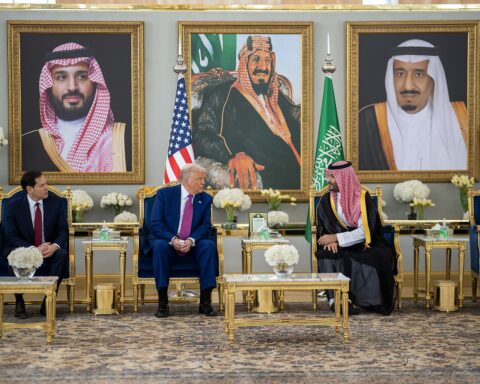

RIYADH — Saudi Arabia condemned “in the strongest terms” Iran’s ongoing strikes against the UAE on May 5, with Crown Prince Mohammed bin Salman calling UAE President Mohammed bin Zayed directly to offer “all its resources” — a conversation that Bloomberg and L’Orient Today confirm was their first direct exchange in approximately six weeks. The sharpest Saudi public statement against Iran since the war began on February 28 lands while roughly 30,000 Iranian pilgrims are already inside Saudi Arabia for Hajj, with the Day of Arafah three weeks away, making the condemnation an exercise in language that cannot be backed by escalatory action without threatening a $12 billion annual religious economy and the theological legitimacy of the Custodian title itself.
The statement names the “Islamic Republic” explicitly — a departure from 2019, when Riyadh avoided directly attributing the Abqaiq drone strikes to Tehran in immediate public remarks. But it arrives after six weeks of bilateral silence between MBS and MBZ, four days after the UAE quit OPEC unilaterally without Saudi coordination, and one week after MBZ skipped a GCC summit that MBS chaired in Jeddah — meaning the phone call is performing at least two functions simultaneously, only one of which involves Iran. Chatham House assessed in May 2026 that Saudi Arabia has shown “reluctance to engage directly in the war against Iran and is lobbying against further escalation,” and the condemnation’s careful avoidance of any operational commitment confirms that framing.
Table of Contents
What Saudi Arabia Said — and Didn’t Say
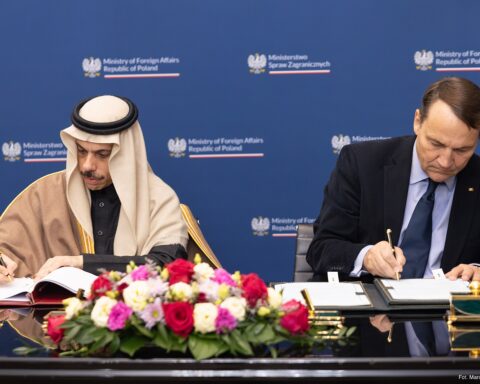
The Saudi Ministry of Foreign Affairs statement, posted to the official KSAmofaEN X account on May 5, condemned “the blatant Iranian aggression and the flagrant violation of the sovereignty of the UAE, Bahrain, Qatar, Kuwait, and Jordan” — a formulation that names five countries in a single sentence, broadening the frame beyond the UAE alone to encompass the full GCC plus Jordan. The MFA called on “the Islamic Republic of Iran to cease these attacks, to adhere to the principles of international law and relevant Security Council resolutions,” per Big News Network’s publication of the full text. What the statement does not contain is any threat of consequence, any mechanism for enforcement, any timeline for action, or any reference to Saudi Arabia’s own military posture.
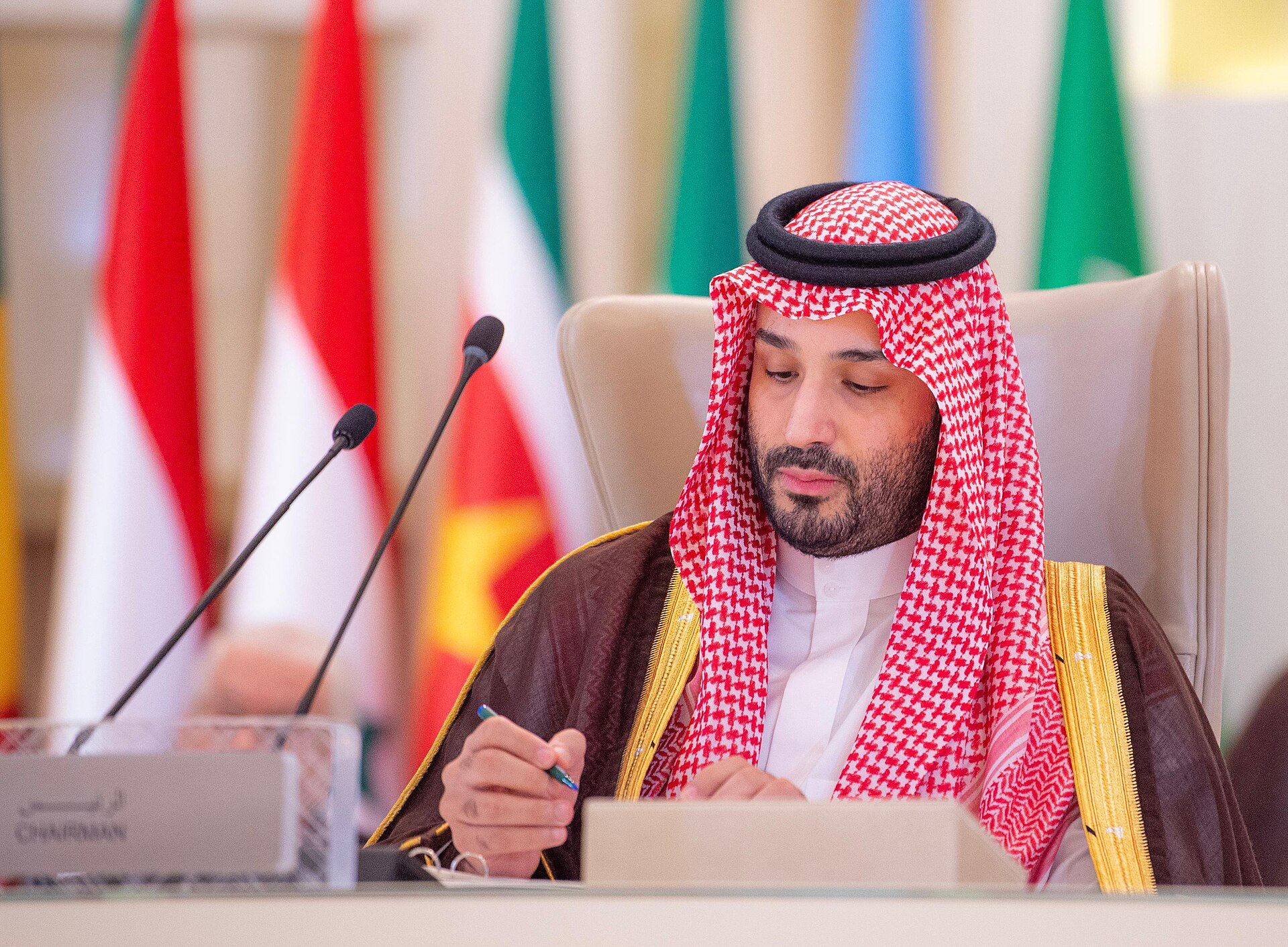
MBS, in the call reported by Arab News and Al Arabiya English via the Saudi Press Agency, condemned “the unjustified Iranian attacks targeting the United Arab Emirates” and offered “all its resources to support any measures taken by the UAE.” The phrasing is reactive by design — Saudi Arabia will support measures the UAE takes, rather than announcing measures of its own. MBZ, per the UAE’s WAM news agency, “expressed his gratitude and appreciation,” a formulation so diplomatically anodyne it suggests the call’s primary function was symbolic rather than operational.
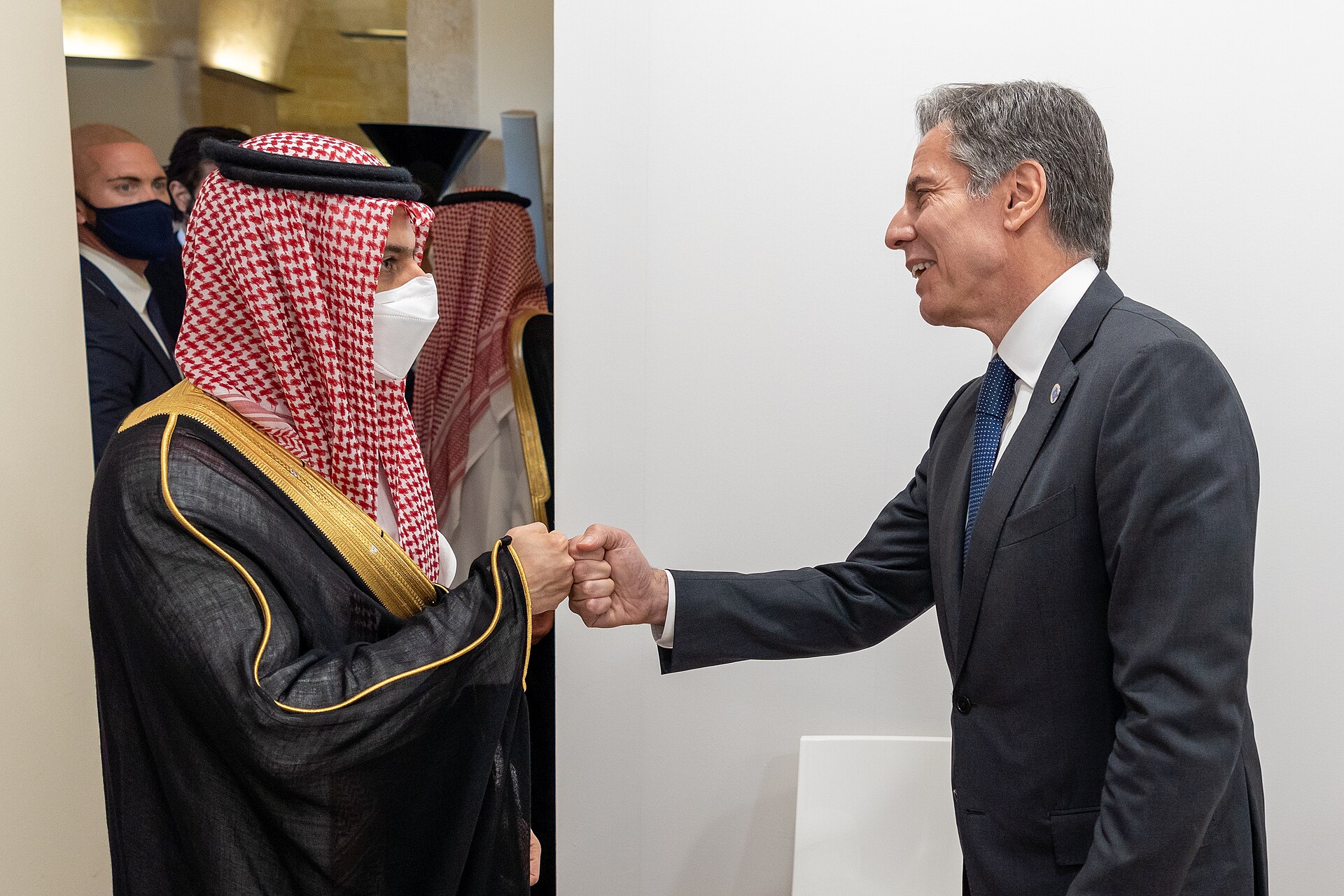
The language “strongest terms” is itself already spent. On March 19, Foreign Minister Prince Faisal bin Farhan told The National and Asharq Al-Awsat that “what little trust there was before has completely been shattered” and that “Iran was never a strategic partner to the Kingdom… Saudi Arabia has repeatedly tried to extend its hand to the Iranian brothers, the last of which was the Beijing agreement, but the Iranians did not reciprocate.” Riyadh expelled Iran’s military attaché and four embassy staff in late March. The May 5 condemnation cannot escalate the rhetorical register beyond where Faisal already placed it seven weeks ago — it is a re-application of language already deployed, dressed in the formality of an MFA communiqué rather than a ministerial interview.
Why Did MBS Wait Six Weeks?
The gap between the two leaders requires explanation because the war has not paused during it. Bloomberg reported on April 29 that MBZ had expressed “frustration with the collective reaction of neighboring states” in discussions with European officials, describing the GCC as “dysfunctional” — language that, from a head of state about a bloc his country co-founded, constitutes a diplomatic grenade. L’Orient Today confirmed on May 5 that the MBS-MBZ call was “their first official exchange since rift,” placing the silence at approximately six weeks, spanning the entire period from mid-March through the Fujairah strikes.
The Middle East briefing 3,000+ readers start their day with.
One email. Every weekday morning. Free.
The silence also coincides with the period when MBS’s war-financing calculation was taking shape: Goldman Sachs’s May 1 analysis found Saudi Arabia net-positive on the conflict at $112 Brent, meaning a ceasefire — which MBZ’s maximalist demands would likely collapse — served Riyadh’s fiscal interests even as the bilateral silence accumulated.
What happened in those six weeks tells the story of the rift. The UAE absorbed the overwhelming majority of Iran’s cross-GCC strikes — 549 ballistic missiles, 29 cruise missiles, and 2,260 UAVs since the war began, per Business Today India — while Saudi Arabia positioned itself as a mediator rather than a co-belligerent. The Atlantic Council assessed in 2026 that 83 percent of Iranian missile and drone strikes targeted GCC states, with the UAE receiving the largest share. MBZ watched this happen while MBS chaired ceasefire discussions, hosted Pakistani intermediaries, and maintained a posture that Chatham House characterized as “lobbying against further escalation.”
Then, on May 1 — four days before MBS finally called — the UAE quit OPEC after 59 years, unilaterally, without coordinating with Riyadh. The sequencing matters: MBZ made the most consequential energy-market decision by any Gulf state in decades without consulting his closest ally, and four days later MBS called to express solidarity over Iranian strikes. The call patches two fractures simultaneously — the security silence and the OPEC rupture — while appearing to address only one.
Can Riyadh Escalate with 30,000 Iranian Pilgrims on Its Soil?
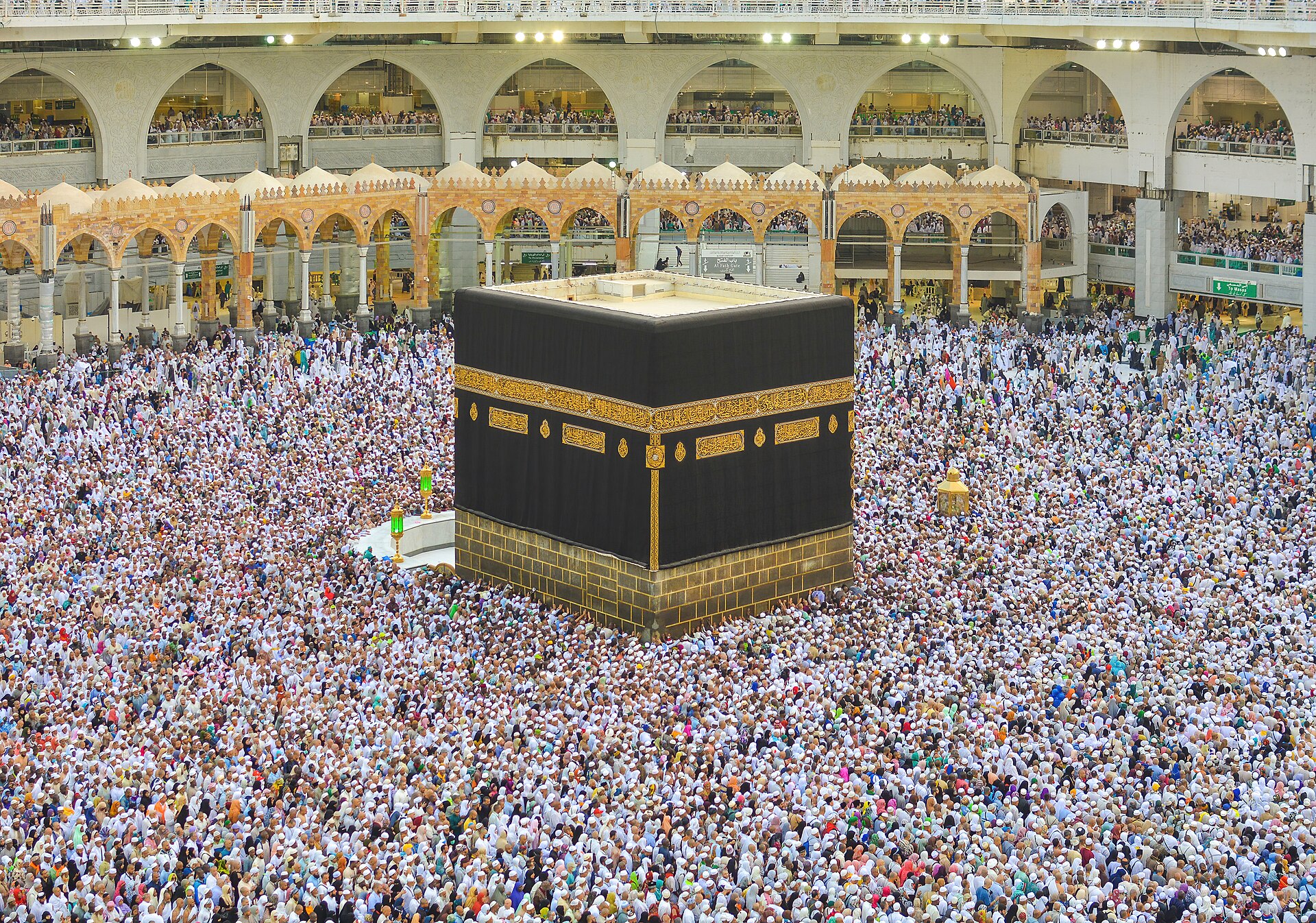
The structural constraint on Saudi action is not diplomatic preference but religious obligation. Approximately 30,000 Iranian pilgrims are already inside Saudi Arabia as of early May, representing 34 percent of Iran’s official Hajj quota of 87,550, according to Gulf News and Bloom Pakistan reporting from April-May 2026. The first Iranian pilgrims landed in Medina on April 25, per IFP News — the first Iranian nationals on Saudi soil since the war began on February 28 — and the flow has continued daily since. Day of Arafah falls on May 26, three weeks from the condemnation, with the full Hajj rites extending through early June.
The Hajj economy contributes approximately $12 billion annually to Saudi Arabia, representing roughly 20 percent of non-oil economic activity — a figure that contextualizes why the Custodian title is not merely ceremonial but structural to the Saudi state’s domestic legitimacy and international Islamic authority. MBS cannot expel Iranian pilgrims without invoking the 1987 precedent, when 402 people died in Mecca clashes and Iranian pilgrims were barred for three years, triggering an 87 percent quota cut and a diplomatic rupture that lasted until the late 1990s. The Custodian title itself, adopted by King Fahd in October 1986, was designed precisely to insulate Saudi Arabia’s guardian role from political disputes — and the current situation inverts its logic entirely, transforming a shield into a constraint.
“The Kingdom of Saudi Arabia condemns and denounces in strongest terms the blatant Iranian aggression and the flagrant violation of the sovereignty of the UAE, Bahrain, Qatar, Kuwait, and Jordan.”
— Saudi Ministry of Foreign Affairs, May 5, 2026
Tehran understands this architecture perfectly. The same Supreme National Security Council that authorized the war’s escalation — the same body accused by President Pezeshkian on April 4 of wrecking the ceasefire from within — simultaneously authorized 30,000 pilgrims to travel to Saudi Arabia. Iran is managing escalation and Hajj diplomacy through the same institutional channel, which means the pilgrims are not incidental to the war’s calculus but embedded within it. Every Iranian pilgrim on Saudi soil is a unit of pressure that Tehran did not need to fire, launch, or intercept — they constrain Riyadh’s escalatory options by their mere presence, and they will remain for another month.
What Fujairah Tells Tehran About UAE Vulnerability
The trigger for the Saudi statement was not abstract. On May 4, UAE air defenses intercepted 12 ballistic missiles, 3 cruise missiles, and 4 UAVs in a single day, per Business Today India — and at least one drone penetrated to strike the Fujairah Petroleum Industries Zone, starting a fire that burned for 48 hours and damaged storage tanks critical for regional bunkering operations, according to satellite imagery analysis. Three Indian nationals suffered moderate injuries, The National and Khaleej Times reported. UAE airspace was partially closed for a full week beginning May 4.
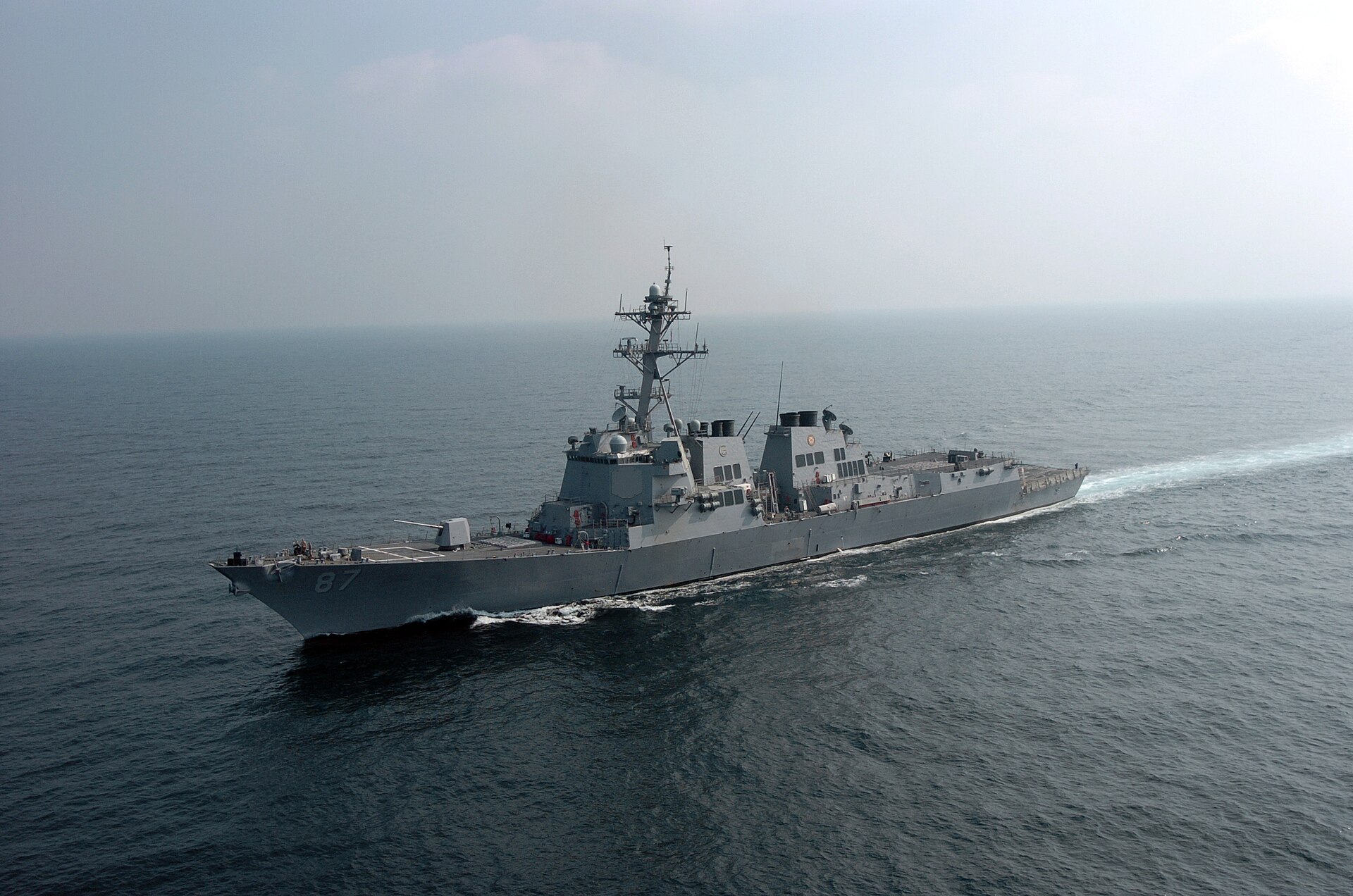
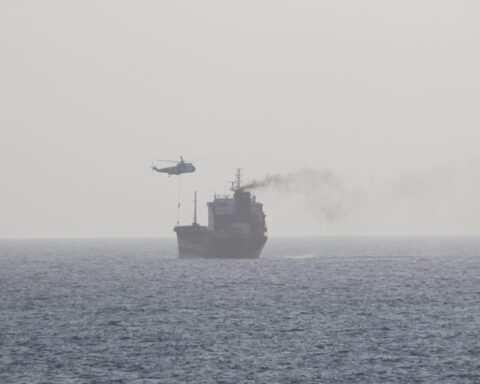
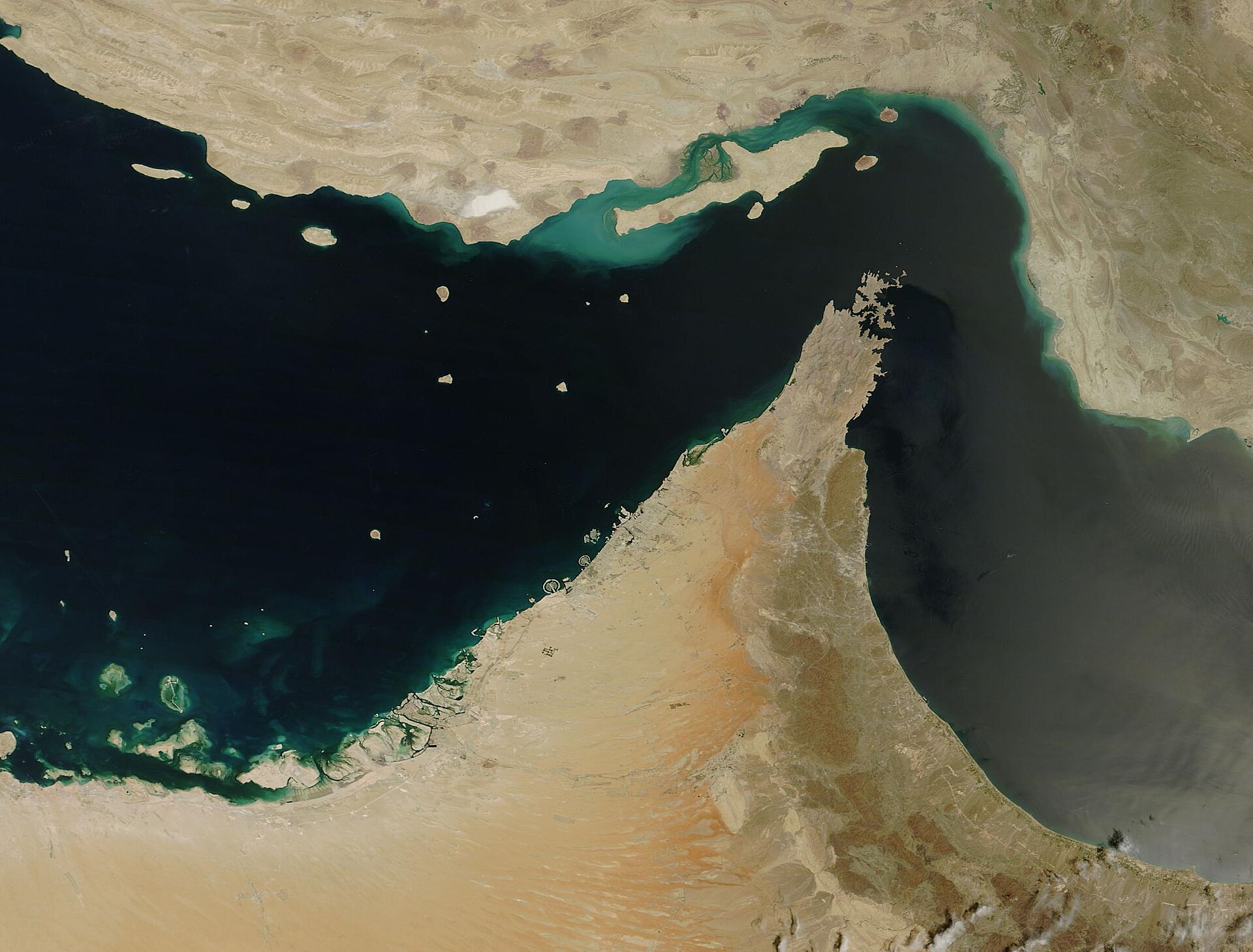
Fujairah’s significance is not its size but its function: it sits at the terminus of the Abu Dhabi Crude Oil Pipeline, the UAE’s only remaining oil export route that bypasses the Strait of Hormuz, as US News noted on May 4. When Iran struck Fujairah on the same day the US Navy attempted to open a transit corridor through Hormuz, it demonstrated that the UAE’s back-door bypass is within reach of the same systems hitting the front door. The ADCOP pipeline was built after 2019 precisely to reduce Hormuz dependence — and Iran has now shown it can threaten both the strait and the alternative simultaneously, compressing the UAE’s strategic options into a space where no export route is secure.
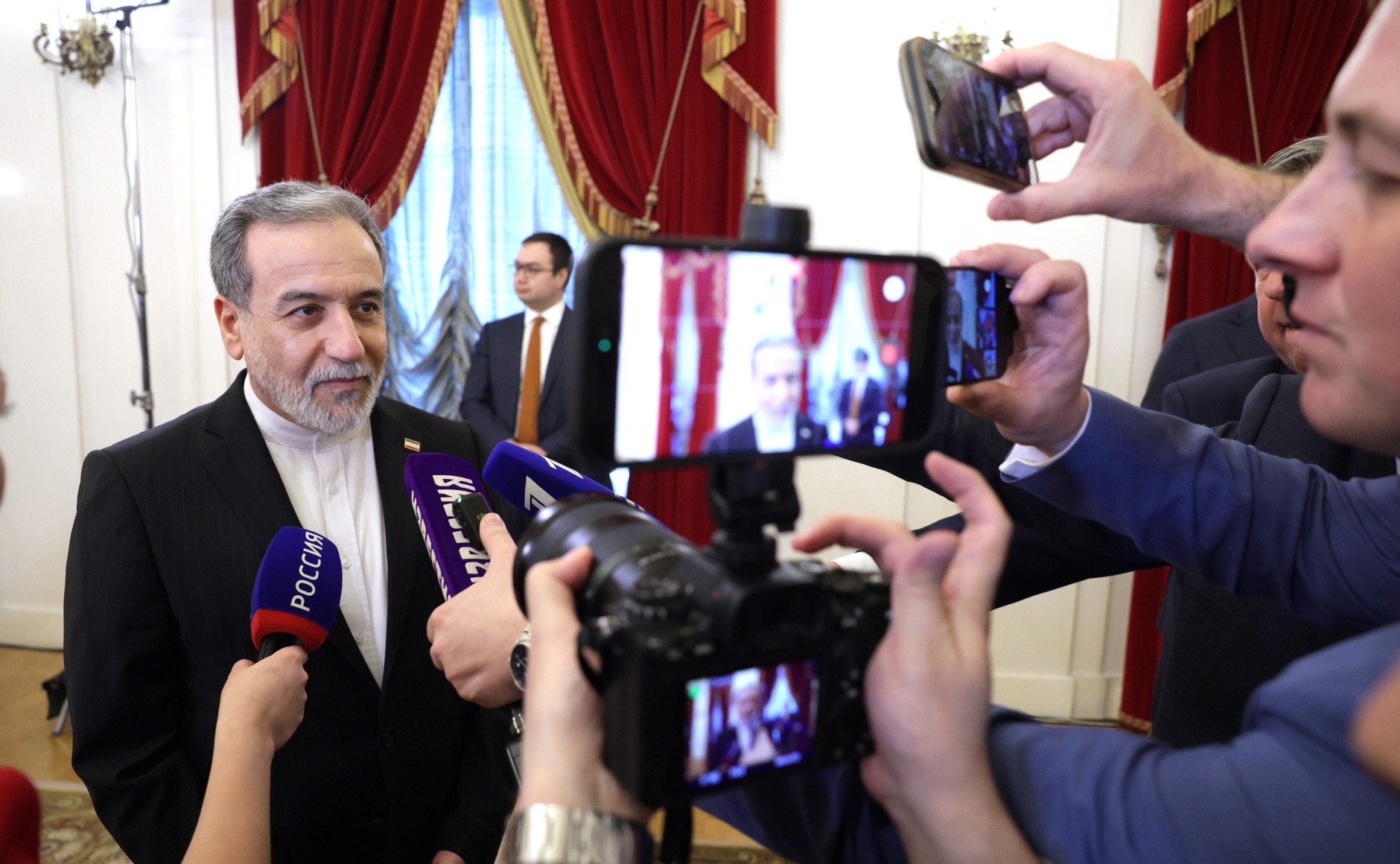
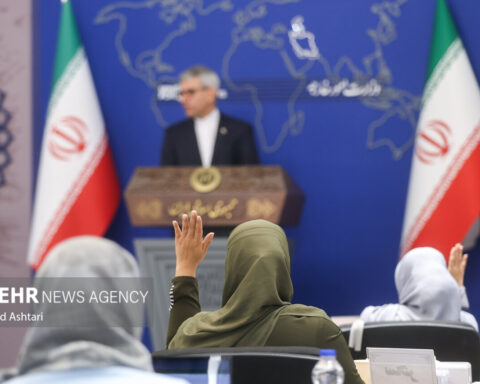
Iran’s state broadcaster IRIB denied pre-planned targeting of Fujairah oil infrastructure, framing the strikes as reactive to American naval operations rather than acknowledging any Iranian targeting decision. “The Islamic Republic had no pre-planned plan to attack the oil facilities in question, and what happened was the product of the American military’s adventurism to create a passage for ships to illegally pass through the Strait of Hormuz,” the military source told IRIB. The denial sidesteps the Saudi condemnation entirely — by attributing the Fujairah fire to US provocation rather than Iranian agency, Tehran avoids engaging with Riyadh’s explicit naming of the Islamic Republic, rendering the “strongest terms” language structurally irrelevant to Iran’s public narrative.
Iran’s decision to strike again on May 5 — the second consecutive day of missile and drone attacks on UAE territory, with 15 missiles and 4 drones engaging UAE air defences over the eastern seaboard — arrived while Saudi Arabia’s condemnation was still circulating on wire services. The repeat strike demonstrated that neither the MFA statement nor the MBS-MBZ call created any operational deterrent; Iran’s below-threshold calibration was already underway.
Does the Condemnation Create Any Mechanism for Pressure?
The statement’s own grammar answers the question. MBS offered “all its resources to support any measures taken by the UAE” — future tense, conditional, reactive. Saudi Arabia is not announcing measures; it is pre-authorizing support for measures the UAE might independently pursue, which is a fundamentally different posture. The two-chokepoint trap that constrains Saudi oil exports — with Hormuz controlled by Iran and the Red Sea threatened by Houthi-aligned forces — means Riyadh cannot afford to provoke additional Iranian targeting of its own infrastructure, even as it condemns Iran for targeting its neighbor’s.
Expelling Iran’s military attaché in late March exhausted the lowest-cost diplomatic sanction available. The next rungs — recalling the Saudi ambassador, joining the US naval blockade (which contradicts its mediator posture), providing the UAE with offensive military support (which triggers direct Saudi-Iranian hostilities) — all carry costs that dwarf the benefit of rhetorical solidarity. The condemnation is designed to satisfy the minimum threshold of GCC solidarity language without creating any obligation to act on it. The GCC Secretariat’s Al-Budaiwi statement five days later on May 10 operates by the same logic: the word “treacherous” deployed for the seventh consecutive time, Article 51 not mentioned, the institution performing condemnation as a substitute for collective action.
The GCC summit that MBS chaired in Jeddah on April 28 — one week before the condemnation — produced no joint military commitment, no collective security mechanism, and no operational framework for mutual defense against Iranian strikes. MBZ was absent. When Saudi Arabia did not object to Iran naming six Arab states as co-belligerents in earlier weeks, it established a pattern: Riyadh’s preferred position is one where it condemns Iran’s actions verbally while ensuring its own infrastructure and religious obligations remain outside the target set. The May 5 statement is consistent with every prior Saudi action in this war — loud enough to be reported, quiet enough to avoid consequences.
Background and Context
The Saudi-UAE relationship has undergone visible strain since the war began on February 28, 2026. The two states, which coordinated closely on Yemen intervention from 2015-2022 and on OPEC+ production management from 2020-2025, have diverged sharply on Iran strategy — with Saudi Arabia positioning itself as mediator (hosting Pakistani intermediaries, maintaining back-channel contact with Araghchi) while the UAE absorbed the bulk of Iranian conventional strikes. MBZ’s private characterization of the GCC as “dysfunctional,” reported by Bloomberg on April 29, reflected frustration that had accumulated over weeks of what Abu Dhabi perceived as insufficient collective response.
The Abqaiq comparison illuminates the shift in Saudi rhetoric. In September 2019, when drones and cruise missiles struck Aramco’s Abqaiq processing facility and the Khurais oil field — temporarily halving Saudi production — Riyadh’s initial public statements avoided directly naming Iran, instead referencing “Iranian weapons” while the investigation continued. The May 5, 2026 statement names “the Islamic Republic of Iran” in its first clause, marking an unambiguous escalation in public attribution that took seven years and a regional war to produce. Whether that attribution translates into action beyond language remains the structural question the statement deliberately leaves unanswered.
Iran’s Hajj participation during active hostilities with GCC states inverts the historical pattern. In 1987, the last time Iranian pilgrims were involved in a major Hajj incident, the crisis ended with Iran’s full exclusion. In 2026, Iran is simultaneously waging the largest conventional war against Gulf states in modern history while sending 30,000 citizens into the heart of Saudi Arabia’s most sensitive religious infrastructure, creating a hostage-logic dynamic where neither side acknowledges the coercive structure explicitly but both calibrate their actions around it.
FAQ
Has Saudi Arabia taken any military action against Iran during this war?
No. Saudi Arabia has maintained a strictly non-combatant posture throughout the conflict that began February 28, 2026, despite absorbing strikes on its own infrastructure including the East-West Pipeline and Ras Tanura. Riyadh expelled Iran’s military attaché and four embassy staff in late March and has deployed its air defense systems domestically, but has not conducted offensive operations against Iranian targets or joined the US naval blockade.
What is Iran’s official Hajj quota and how many pilgrims have arrived?
Iran’s official Hajj 2026 quota is 87,550 pilgrims, according to Gulf News and Bloom Pakistan. Approximately 30,000 — or 34 percent of the full quota — had arrived by early May, with the first group landing in Medina on April 25 per IFP News. This was the first entry of Iranian nationals onto Saudi soil since the war began. The remaining 57,000+ are expected to arrive through late May, with Hajj rites centered on Day of Arafah on May 26. Saudi Arabia has not restricted or delayed Iranian pilgrim arrivals despite the escalating conflict.
What was the damage at Fujairah on May 4?
An Iranian drone struck the Fujairah Petroleum Industries Zone, starting fires that burned for 48 hours and damaged storage tanks used for regional bunkering, according to Business Today India citing satellite imagery. Three Indian nationals suffered moderate injuries per The National and Khaleej Times. UAE airspace was partially closed for a full week. Fujairah hosts the terminus of the Abu Dhabi Crude Oil Pipeline (ADCOP), the UAE’s only oil export route bypassing Hormuz — making the strike strategically consequential beyond the immediate physical damage.
Why did the UAE leave OPEC on May 1?
The UAE announced its exit from OPEC on May 1, 2026 after 59 years of membership, without coordinating with Saudi Arabia — a unilateral decision that reflected Abu Dhabi’s frustration with production constraints during a period when it was absorbing the heaviest Iranian strikes of any GCC member. The timing — four days before MBS called MBZ — suggests the OPEC exit was itself a pressure signal directed partly at Riyadh, communicating that the UAE would pursue its interests independently if collective GCC mechanisms failed to provide security. MBS’s subsequent call addressed both the Iranian strikes and, implicitly, the bilateral rupture the OPEC exit represented.
How does the 2019 Abqaiq response compare to the May 2026 condemnation?
After the September 2019 Abqaiq-Khurais attacks — which temporarily halved Saudi oil production — Riyadh’s initial public statements avoided directly naming Iran, referencing “Iranian weapons” while attribution was investigated over subsequent days. The May 5, 2026 statement names “the Islamic Republic of Iran” in its opening clause without qualification or investigative caveat, representing a seven-year evolution in Saudi willingness to publicly attribute Iranian aggression. The practical difference is that in 2019, Saudi Arabia chose not to retaliate militarily despite explicit attribution; in 2026, the condemnation similarly contains no operational commitment, suggesting the rhetorical escalation has not been matched by a change in strategic posture.