Iran Hit Kuwait's Grid and Abqaiq Sits on the Same Coast
Hardened aircraft shelter at Ali Al Salem Air Base, Kuwait, destroyed during Operation Desert Storm — the same base Iran targeted with Patriot and air-surveillance radar strikes in Wave Nineteen

Iran Hit Kuwait’s Grid and Abqaiq Sits on the Same Coast

Iran's dual-track Wave Nineteen strikes on Kuwait's grid and US bases map onto Saudi Arabia's undefended desalination network and Abqaiq cogeneration corridor.

RIYADH — Iran’s Wave Nineteen strikes hit a Kuwait power-and-water plant for the second consecutive day on July 19, knocking out generating units and triggering a fire while simultaneously destroying air-surveillance radars and an ammunition depot at two American military installations inside the country. The pairing — civilian infrastructure and military nodes struck in the same wave, under the same operational banner — was doctrinal, not incidental. Iran is running parallel campaigns of military attrition and civilian-infrastructure coercion, and the targeting template it is rehearsing on Kuwait’s coast maps directly onto Saudi Arabia’s Eastern Province. Abqaiq’s cogeneration plant anchors both oil processing and provincial grid power. Ras al-Khair’s desalination complex pumps roughly 800,000 cubic metres of drinking water per day to Riyadh through a single pipeline. Jubail’s combined facilities serve 3.6 million people. All three sit on the Gulf coast, inside the same missile envelope, behind an air-defence inventory that has lost eighty-six per cent of its interceptors.

Conflict Pulse IRAN–US WAR
Live conflict timeline
Day
143
since Feb 28
Casualties
13,260+
5 nations
Brent Crude ● LIVE
$113
▲ 57% from $72
Hormuz Strait
RESTRICTED
94% traffic drop
Ships Hit
16
since Day 1

What Did Iran Target in Wave Nineteen?

Iran struck both US military infrastructure and Kuwaiti civilian power systems in a single operational window on July 18-19, designating the combined attacks as Operation Nasr-2, Phase 16. The military track destroyed an ammunition depot at Camp al-Adiri — approximately 104 kilometres from the Iranian border — and hit Patriot and air-surveillance radars at Ali Al Salem Air Base. The civilian track struck a power-and-water plant for the second day running, deactivating what Kuwait’s Ministry of Electricity and Water described as “a large number of generating units.”

Iran’s armed forces framed the targets in explicitly strategic language. PressTV described Camp al-Adiri as “a major logistical support and force-reconstitution centre” and Ali Al Salem as the “principal airlift hub and primary gateway for deployment of US forces into West Asia.” The ammunition depot sustains the campaign; the radars protect the airfield that processes the airlift. Destroying both in a single wave removes sustainment and protection simultaneously.

The civilian strikes ran concurrently. Wave Fifteen had already hit Kuwait’s Shuaiba desalination plant on July 17, killing one worker. Wave Nineteen returned to the power-and-water sector the following day, extending what had been a single-wave disruption into a sustained multi-day campaign against essential services. The Kuwaiti government confirmed unit deactivations and announced rationing protocols within hours of the second strike.

The same operational cycle extended beyond Kuwait. Wave Nineteen simultaneously struck the fuel pier at Mina Al-Ahmadi and the AR-327 air-surveillance radar at Sheikh Isa Air Base in Bahrain — the first Nasr-2 wave to target logistics and sensor infrastructure rather than personnel. Two countries, four target categories — ammunition, radar, fuel logistics, civilian power — one operational wave.

The operational logic creates a compounding problem for host governments. Military strikes degrade the US force posture that justifies the host nation’s political exposure. Civilian strikes impose direct costs on the population that must absorb that exposure. A government facing both simultaneously — its foreign protector losing radars and ammunition while its own citizens lose power and water — confronts a political equation in which the costs of hosting US forces rise on both sides of the ledger at the same time. Kuwait is managing that equation now. Saudi Arabia, with 2,300 US personnel at Prince Sultan Air Base, would manage it next.

The HOS Daily Brief

The Middle East briefing 3,000+ readers start their day with.

One email. Every weekday morning. Free.
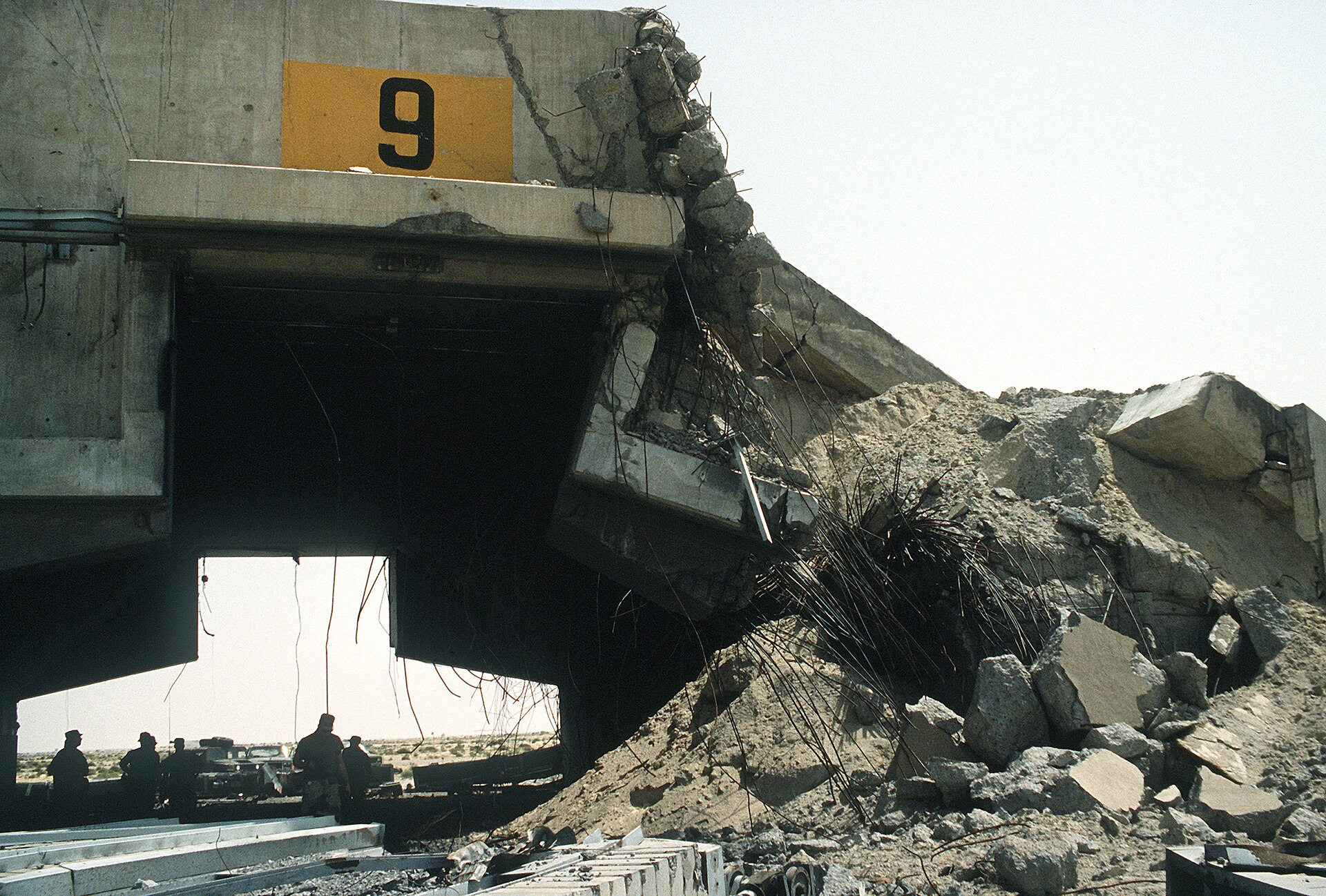
Hardened aircraft shelter at Ali Al Salem Air Base, Kuwait, destroyed during Operation Desert Storm — the same base Iran targeted with Patriot and air-surveillance radar strikes in Wave Nineteen
A hardened aircraft shelter at Ali Al Salem Air Base, Kuwait, destroyed during coalition strikes in Operation Desert Storm. Iran designated Ali Al Salem — the “principal airlift hub and primary gateway for deployment of US forces into West Asia,” in PressTV’s framing — as a Wave Nineteen target, striking Patriot and air-surveillance radar systems in the same operational window that hit Kuwait’s civilian power-and-water infrastructure. Photo: US Department of Defense / Public Domain

Civilian Infrastructure as Coercive Instrument

The dual-track structure of Wave Nineteen — military and civilian targets struck together, under one command authority — reflects a doctrinal position Iran has been articulating since mid-June. TRENDS Research and Advisory, in its “Doctrine of Disruption” analysis, concluded that Iran has “systematically targeted civilian populations and civilian infrastructure as a deliberate instrument of state policy, rather than an incidental consequence of military operations.” CSIS described a strategy designed to “hold civilian and economic systems at risk from multiple domains” precisely when Iran cannot prevail in direct military confrontation.

The distinction determines what Saudi Arabia must defend. A campaign confined to military installations requires point defence — Patriot batteries around air bases, Shahine systems at specific facilities. A campaign that adds power grids, desalination plants, and water-transmission infrastructure to the target list requires area defence across hundreds of kilometres of coastline. Saudi Arabia’s air-defence architecture was designed for the first category.

Iran has stated its escalation trigger explicitly: every American strike on Iranian civilian infrastructure becomes, in Tehran’s logic, an operational authorization for retaliatory strikes across the Gulf’s entire civilian-infrastructure envelope. The framework is self-executing and requires no diplomatic interval between trigger and response.

CSIS described the trajectory directly: from its opening retaliation, Iran began “ascending a vertical escalation ladder by expanding targets beyond U.S. and Israeli sites to hit Gulf civilian and transportation infrastructure.” The Gulf states’ defence architectures were never configured to cover that category.

How Exposed Is Kuwait’s Water Supply?

Kuwait derives approximately ninety per cent of its drinking water from desalination, with eight coastal plants producing a combined 3.11 million cubic metres per day, according to Fanack Water. The single largest facility, Az-Zour North, generates 2,700 MW of electricity alongside 545 million litres of water daily — roughly ten per cent of Kuwait’s total power capacity and twenty per cent of its desalination output from one coastal site.

The system was already under structural pressure before Iran fired. Energy Intelligence had projected a power shortfall of 1,650 MW for 2026 due to stalled capacity construction across Kuwait’s grid. The Shuaiba complex — where Wave Fifteen struck on July 17 — generates approximately 804 MW at the south plant and 875 MW at the north plant. When Wave Nineteen hit a power-and-water facility the following day, it was targeting a grid that Energy Intelligence had identified as running a four-digit megawatt deficit before a single missile arrived.

The geographic concentration compounds the exposure. Kuwait’s desalination plants line a narrow coastal strip along the Gulf, each within range of Iran’s ballistic-missile and drone inventory from launch sites in Khuzestan province and the southern Iranian littoral. They cannot be relocated, dispersed, or hardened in any meaningful wartime timeframe. The Atlantic Council noted in March 2026 that more than ninety per cent of the Gulf’s desalinated water comes from just fifty-six facilities, “nearly all within range of Iranian ballistic missiles and drones.” What Kuwait has absorbed since Wave Fifteen is a demonstration of what that range-map overlay produces when the missiles actually fly.

Abqaiq and the Grid Behind the Oil

Abqaiq is discussed almost exclusively as an oil facility — the processing complex that handles more than half of Saudi Arabia’s crude production capacity and approximately seven per cent of global daily supply. That framing obscures a second function. The Abqaiq cogeneration power station, rated at 360 MW from two GE 7FA gas turbines with heat recovery, does not merely support the processing plant. It anchors a grid node for the Eastern Province. The Power Cogeneration Plant Company — a SAPCO-ARCH joint venture — operates cogeneration facilities at Abqaiq, Hawiyah, and Ras Tanura with a combined output of 876 MW and 3.26 million pounds per hour of steam.

Abqaiq sits inside a threat envelope that Saudi Arabia has never closed. In September 2019, nineteen drones and cruise missiles struck the Abqaiq and Khurais facilities — fourteen puncturing storage tanks, three disabling oil-processing trains. The attack removed 5.7 million barrels per day of crude and 0.7 million barrels per day of NGL from global supply. It was the largest single-event disruption in the modern history of oil. Three air-defence systems — Skyguard, PAC-3, and Shahine batteries — were positioned at Abqaiq. None intercepted a single incoming munition.

The cogeneration dependency means that a strike on Abqaiq does not merely interrupt oil exports. It cuts power to the NGL complex that feeds the petrochemical chain, removes grid capacity from the Eastern Province, and disables the six generators — three steam turbines, three combustion-gas turbines — and fourteen boilers that keep the entire processing corridor operational. The system was not built with redundancy for that pattern.

The industrial corridor from Ras Tanura south to Abqaiq concentrates three of the PCPC’s cogeneration sites within an eighty-kilometre coastal stretch. Hawiyah, between the two, feeds the Haradh gas-processing network. Ras Tanura’s cogeneration plant supports the export terminal that loads the tankers. A campaign that treats cogeneration as a target category — as distinct from processing infrastructure or storage tanks — could degrade all three nodes with a relatively small number of precision munitions, producing cascading grid and production failures across the Eastern Province’s industrial base.

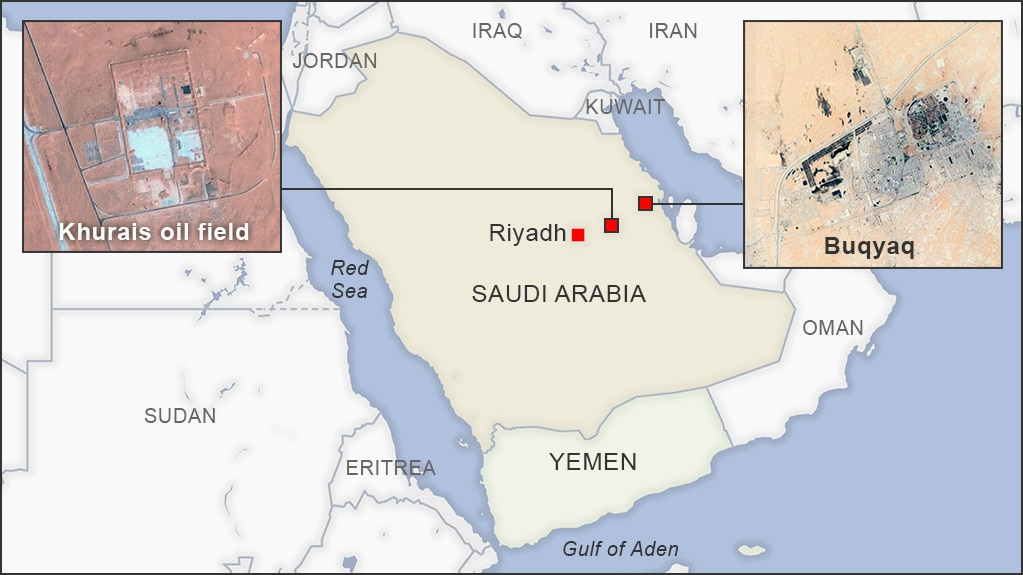
Satellite map showing Khurais oil field and Buqyaq (Abqaiq) processing complex location in Saudi Arabia — both facilities sit within Iran ballistic missile range from Khuzestan province
VOA satellite composite showing the location and layout of the Khurais oil field and the Buqyaq (Abqaiq) processing complex in Saudi Arabia’s Eastern Province. Abqaiq’s cogeneration plant — rated at 360 MW from two GE 7FA gas turbines — anchors both the processing corridor’s power supply and the Eastern Province grid. In September 2019, three air-defence systems positioned at Abqaiq failed to intercept a single one of the nineteen drones and cruise missiles that removed 5.7 million barrels per day from global supply. Photo: Voice of America / Public Domain

The water infrastructure runs parallel to this corridor. Seventy-five kilometres northwest of Jubail, the Ras al-Khair desalination plant — the world’s largest, commissioned in 2014 — produces between 1.025 and 1.036 million cubic metres of water per day. Approximately 800,000 cubic metres of that output flows directly to Riyadh through the world’s longest water-transmission pipeline. The capital’s drinking-water supply depends on a single coastal facility and a single pipeline. Jubail’s own complexes compound the concentration: Jubail 3A produces 600,000 cubic metres per day, serving roughly 1.6 million people, and Jubail 3B produces 570,000 cubic metres per day, reaching another two million people in Riyadh and Qassim province.

Saudi Arabia draws seventy per cent of its drinking water from coastal desalination. The four largest complexes — Ras al-Khair, Jubail, Shoaiba, and Yanbu — collectively serve approximately twenty million people. A 2010 CIA assessment, cited by CSIS in its analysis of Iran’s threat to Saudi critical infrastructure, concluded that attacks on Gulf desalination facilities “could trigger national crises in several Gulf states.”

What Defends Ras al-Khair and Jubail?

Saudi Arabia’s remaining PAC-3 interceptor inventory stands at approximately 400 rounds from a pre-war stock of 2,800 — eighty-six per cent depleted. New deliveries from Lockheed Martin are not expected before mid-2027, according to DSCA procurement timelines. The existing interceptors are allocated to military installations: Prince Sultan Air Base, Riyadh, key Aramco nodes. Ras al-Khair, Jubail, and the 450-kilometre water-transmission corridor between the Gulf coast and Riyadh do not sit inside any published defended perimeter.

The structural problem extends beyond interceptor count. Saudi Arabia’s air-defence architecture was designed for point defence of high-value military targets — an air base, a command centre, a radar installation. A Patriot battery defends a specific site. It does not defend a water pipeline running hundreds of kilometres inland. It does not cover eight desalination plants simultaneously. The HQ-9 battery at Prince Sultan Air Base, acquired from China via Pakistan, operates under exclusive Pakistani operational control and remains unintegrated with Saudi Arabia’s Integrated Air Defence System.

The gap between what Washington approved and what it withheld is legible in the inventory ledger. Saudi Arabia received offensive munitions — APKWS guided rockets, precision-guided bombs — but the interceptor resupply that would defend the territory those munitions are meant to protect has not arrived. Four hundred PAC-3 rounds allocated to military installations leaves zero rounds for Ras al-Khair, zero for Jubail, zero for the Abqaiq cogeneration plant in its civilian-grid function. Iran does not need to defeat Saudi air defences to reach the desalination network. It needs only to avoid the defended sites — which, by the architecture’s own design, do not extend to civilian infrastructure.

The Forty-Eight-Hour Scenario

A forty-eight-to-seventy-two-hour interruption at Abqaiq does not replicate the 2019 attack, which Saudi Aramco repaired in approximately ten days because the damage was confined to oil-processing hardware. A strike that disables the cogeneration plant — the 360 MW facility, its six generators, its heat-recovery systems — cuts power to the processing complex, removes Eastern Province grid capacity, and halts NGL output simultaneously. The processing facility cannot restart without the cogeneration plant. The cogeneration plant cannot restart without intact turbines. GE 7FA gas turbines are not warehouse inventory.

The water scenario compounds faster. Ras al-Khair produces the bulk of Riyadh’s daily water supply through a single transmission pipeline. There is no parallel system of equivalent capacity. Municipal reserves in the capital — storage tanks and local groundwater extraction — provide buffer measured in days, not weeks. A sustained campaign against Ras al-Khair of the kind Iran conducted against Kuwait across Waves Fifteen through Nineteen — repeated strikes on consecutive days, each degrading generating capacity further — would place the capital’s water supply under direct pressure within the first seventy-two hours.

The vulnerability is inherent to the technology: reverse-osmosis membranes, thermal distillation units, and high-pressure pumps are precision-engineered components that cannot be sourced from local stocks. Wartime procurement timelines — measured in months for major equipment under any conditions, longer with Hormuz closed — are incompatible with a campaign that executes repeat strikes on consecutive days. Saudi Arabia accounts for roughly twenty per cent of global desalination output; the facilities that produce it were sited for proximity to seawater and export terminals, not for survivability under sustained aerial bombardment.
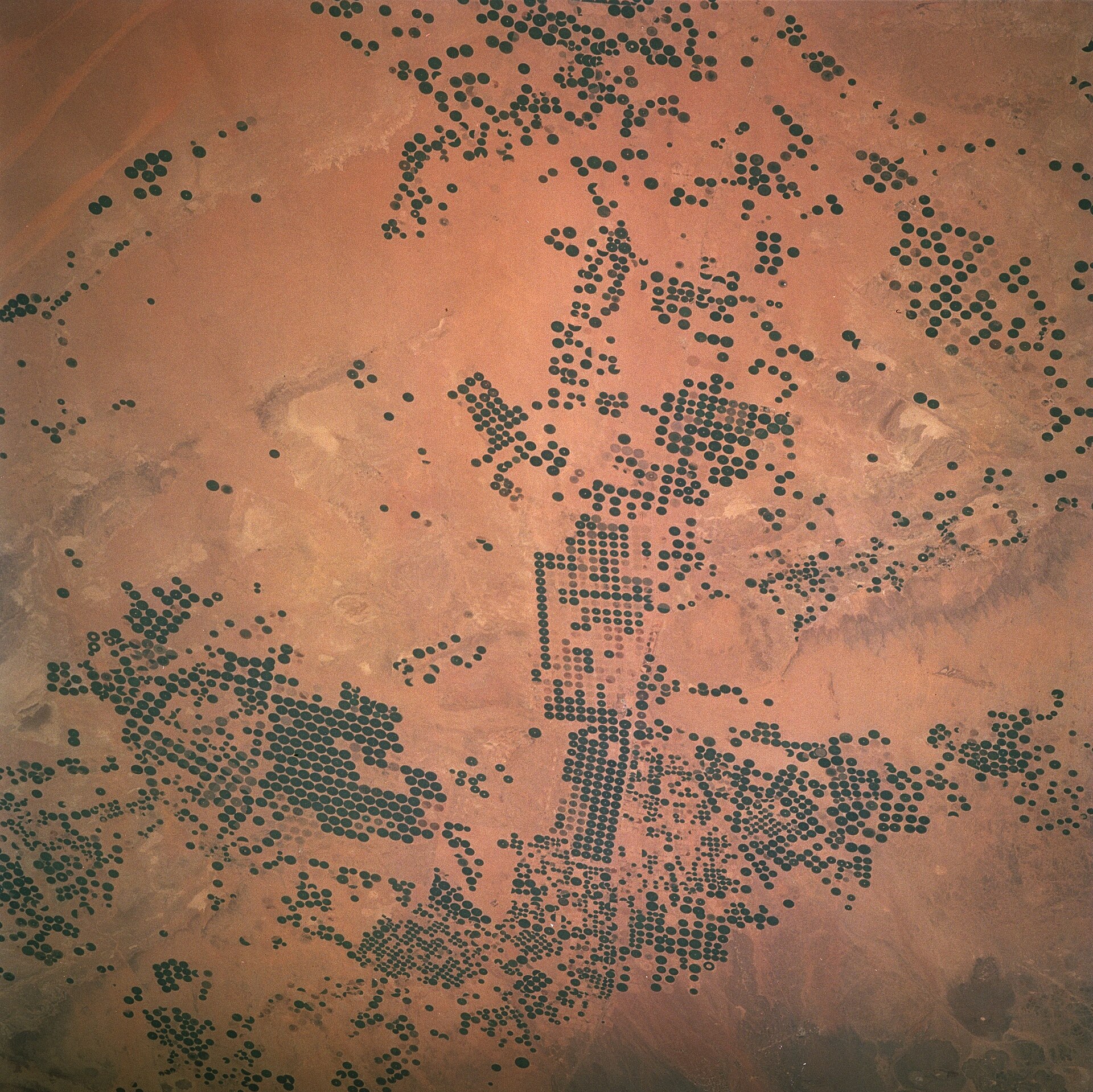
NASA satellite image of centre-pivot irrigation circles in Saudi Arabia — the Kingdom draws thirty per cent of water from non-renewable aquifers like these, but the bulk of municipal supply depends on coastal desalination, not groundwater
Centre-pivot irrigation circles in Saudi Arabia’s interior, photographed from orbit by NASA in April 1997. This groundwater-fed agricultural system draws from non-renewable aquifers — the Saq, Tabuk, and Wajid formations — that provide roughly thirty per cent of the Kingdom’s total water consumption. It is not, however, the supply chain that feeds Riyadh. Approximately seventy per cent of Saudi municipal drinking water comes from coastal desalination, and the capital depends on a single pipeline from Ras al-Khair. The aquifer-extraction infrastructure is not configured for emergency urban delivery surge if that coastal pipeline fails. Photo: NASA / Public Domain

Saudi oil production currently runs at 6.879 million barrels per day, down from approximately ten million barrels per day before the conflict began. Abqaiq processes more than half of that reduced output. A forty-eight-hour cogeneration shutdown does not merely cost export revenue — it removes the power anchor from the Eastern Province grid, interrupts NGL feedstock to the petrochemical sector, and degrades the processing capacity that Aramco requires to meet even its reduced OPEC+ commitment. The processing corridor and the provincial grid share a single power source.

The Political Economy of a Grid War

Saudi Arabia is absorbing the economic consequences of a war it has no formal role in while running a first-quarter deficit of SAR 125.7 billion — $33.5 billion — that consumed seventy-six per cent of the full-year budget allocation in ninety days. Aramco’s free cash flow ratio has fallen to 0.85 times, meaning the company is spending more than it generates from operations once capital expenditure is included. The fiscal position assumes continued oil exports at current volumes through Abqaiq’s processing corridor.

The IMF cut Saudi 2026 GDP growth to 1.7 per cent on Hormuz disruption alone, before Iran introduced civilian-infrastructure targeting as a sustained operational track. The NEOM megaproject has absorbed $16 billion in cancellations. The Public Investment Fund reached $1.21 trillion in assets under management at end-2025 — capital that is eighty per cent earmarked for domestic deployment, into an infrastructure base that now sits under demonstrated kinetic threat. The IMF’s growth projection priced in shipping disruption. It did not price in a grid war.

A sustained infrastructure campaign does not add a new line item to the defence budget. It subtracts capacity from the systems that generate revenue, produce drinking water, and supply electrical power to the Eastern Province population centres where much of Aramco’s workforce lives. The processing capacity at Abqaiq, the export terminal at Ras Tanura, the petrochemical feedstock from Jubail — each depends on cogeneration power that Iran has now classified as a legitimate target, and each sits outside the perimeter that 400 remaining PAC-3 rounds are configured to hold.

Has Iran Announced a Grid-War Doctrine?

On July 16, the Khatam al-Anbiya Central Headquarters — the command authority for Iran’s integrated armed forces — issued a declaration framing all prior restraint as discretionary and all future escalation as proportional response.

If they target even a single piece of Iranian infrastructure, everything that has so far remained untouched solely because of Iran’s restraint — every piece of infrastructure throughout the region — will be destroyed.

Khatam al-Anbiya Central Headquarters, July 16, 2026

CENTCOM struck the Bonji desalination plant in Iran on Day 141, along with six bridges and the Bandar Abbas railway station. Within twenty-four hours, Wave Nineteen hit Kuwait’s power-and-water infrastructure for the second consecutive day. The sequence — declaratory threat, cited trigger, operational execution — ran on a timeline measured in hours, not diplomatic cycles. PressTV framed the civilian targeting as lawful self-defence and reported that Iran had simultaneously petitioned the UN Security Council.

Iran’s stated doctrine holds that any strike on Iranian infrastructure activates the right to strike infrastructure across the region without geographic limitation. Mohsen Rezaei reinforced the escalation trajectory on July 19: “If US attacks continue for another two or three days, we will enter a phase of full-scale offensive operations.” Mojtaba Khamenei, speaking on July 18, declared that American violations of the MOU had proved the “worthlessness and invalidity” of the president’s signature — language that narrows diplomatic exits while the targeting tempo widens.

The doctrine draws no line between military and civilian infrastructure in host nations, and no line between countries. Kuwait, Bahrain, Jordan, and Qatar have already absorbed strikes under this framework. The Khatam al-Anbiya statement’s reference to “everything that has so far remained untouched” is a geographic claim whose southern boundary runs through the Saudi Eastern Province — past Abqaiq, past Ras al-Khair, past Jubail.

Facility Output Population / System Served Defence Status
Ras al-Khair (Saudi) 1.03M m³/day water Riyadh (~8M via pipeline) Outside defended perimeter
Jubail 3A (Saudi) 600,000 m³/day ~1.6M people Outside defended perimeter
Jubail 3B (Saudi) 570,000 m³/day ~2M (Riyadh / Qassim) Outside defended perimeter
Abqaiq cogeneration (Saudi) 360 MW power Eastern Province grid + oil processing Post-2019 upgrades; 0/19 intercepted in 2019
Az-Zour North (Kuwait) 2,700 MW + 545M L/day ~20% Kuwait water + ~10% power No known dedicated air defence
Shuaiba (Kuwait — struck Wave XV) ~1,679 MW combined Kuwait national grid Struck July 17; one worker killed

Frequently Asked Questions

What is the range of Iran’s Shahed-136 drones relative to Saudi desalination plants?

The Shahed-136 carries an operational range of 2,000 to 2,500 kilometres with a warhead exceeding 36 kilograms, according to IISS assessments. Iran produces an estimated 150 to 250 units per month. Every Saudi desalination facility on the Gulf coast sits well within range from launch points in southern Iran — and within range from Houthi-held territory in Yemen, which introduces a second threat vector that a ceasefire with Tehran alone would not eliminate. The dual-azimuth exposure means Saudi Gulf-coast infrastructure faces inbound trajectories from the northeast and the southwest simultaneously.

How long would it take to repair a Gulf desalination plant after sustained strikes?

The timeline depends on whether the damage reaches critical components or remains confined to peripheral systems. The 2010 CIA assessment concluded that destruction of critical equipment — high-pressure pumps, thermal distillation columns, reverse-osmosis membrane arrays — could produce outages lasting months. Modern RO membranes are precision-manufactured components sourced primarily from Japanese and American suppliers, with pre-war procurement lead times of six to twelve months for large-capacity orders. In wartime conditions, with Hormuz recording zero commercial transits and maritime war-risk insurance at two per cent of hull value, replacement supply chains face compounding delays beyond the manufacturing timeline itself.

Has Iran struck Gulf desalination infrastructure before Wave Fifteen?

In March 2026, during the early weeks of the conflict, Iran and Bahrain exchanged strikes that included desalination infrastructure — the first such targeting in the current war. The Atlantic Council identified this exchange as the doctrinal opening for civilian-infrastructure warfare in the Gulf, observing that it established operational precedent for treating water-production facilities as military-adjacent targets. CSIS had warned before the conflict that desalination plants were among the most structurally vulnerable nodes in Gulf-state infrastructure, describing them as “easily sabotaged” and attackable “from the air or by shelling from offshore.” The March exchange confirmed the analytical warning as operational reality.

Does Saudi Arabia have strategic water reserves independent of desalination?

Saudi Arabia maintains municipal storage facilities across major cities, but these reserves are measured in days of supply. Groundwater from non-renewable aquifer systems — primarily the Saq, Tabuk, and Wajid formations — provides roughly thirty per cent of the Kingdom’s total water consumption, but the majority serves agricultural demand in northern and central provinces rather than municipal delivery networks. The aquifer-extraction infrastructure is not configured for emergency surge delivery to urban population centres. With seventy per cent of Saudi drinking water sourced from coastal desalination and the Ras al-Khair-to-Riyadh pipeline operating without a parallel system of comparable capacity, a sustained disruption to Gulf-coast plants does not activate a backup supply architecture. The architecture does not exist at the required scale.

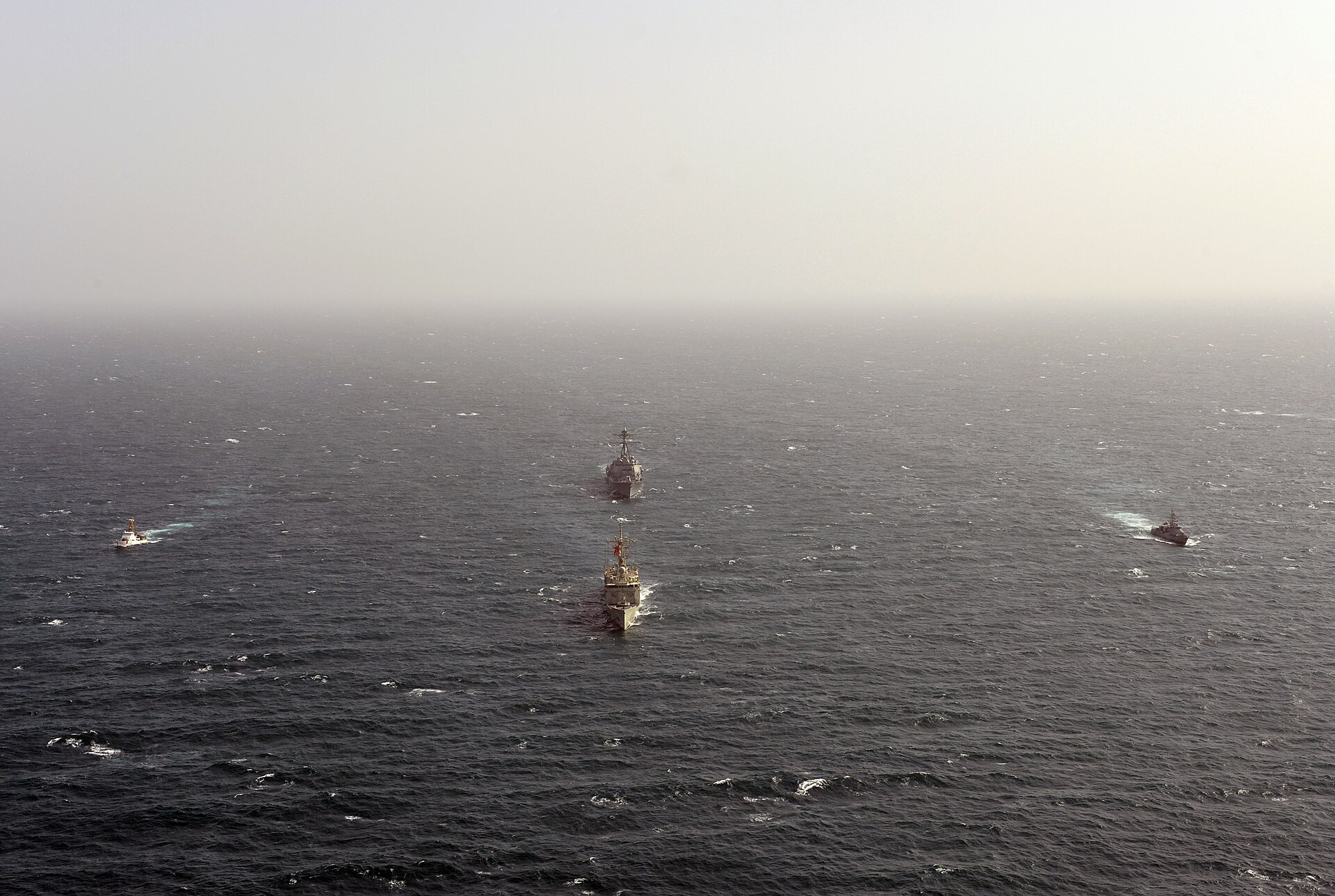
US Navy guided-missile destroyer USS William P. Lawrence and Royal Bahrain Naval Forces frigate Sabah transit the Arabian Gulf during Exercise Neon Falcon, March 2013
Previous Story

Wave Nineteen Hit the Fuel Pier and the Radar Keeping the Fleet Alive

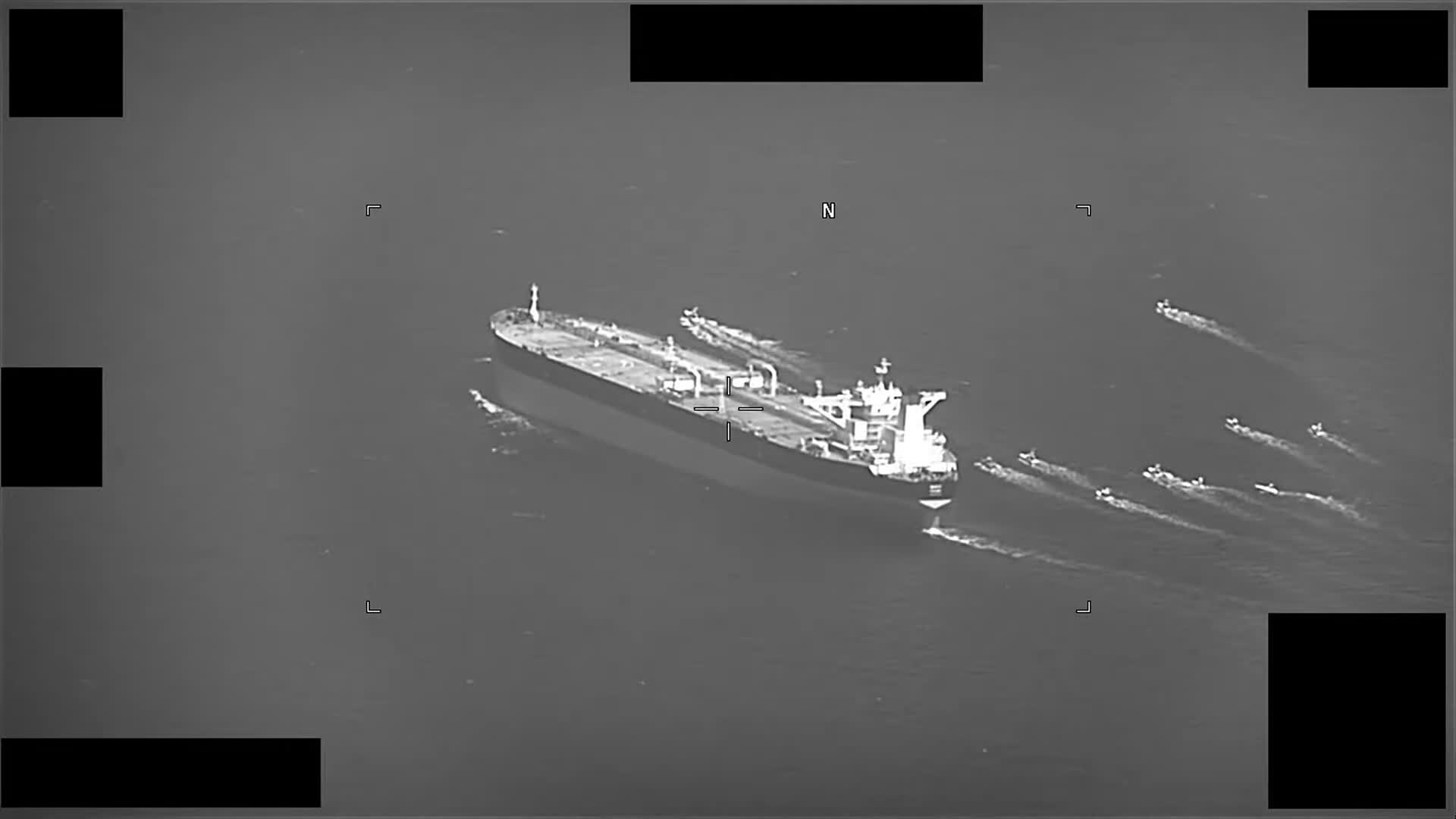
IRGC fast attack craft swarm oil tanker Niovi in the Strait of Hormuz, May 2023
Next Story

Iran Kept Hormuz Open — at Two Million a Ship

Latest from Iran War

The HOS Daily Brief

The Middle East briefing 3,000+ readers start their day with.

One email. Every weekday morning. Free.

Something went wrong. Please try again.