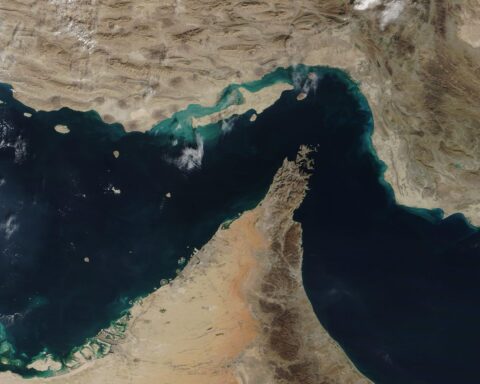

KUWAIT CITY — Iran’s Islamic Revolutionary Guard Corps hit the US Navy’s fuel pier at Kuwait’s Mina Al-Ahmadi port and the AR-327 air surveillance radar at Bahrain’s Sheikh Isa Air Base on July 18-19, carrying out the first wave of Operation Nasr-2 to target the infrastructure that keeps American forces fuelled and defended rather than the forces themselves. Fujairah, the only alternative bunkering hub in the northern Gulf, is already offline — and the strike on Al-Ahmadi may have closed the last viable refuelling point for US warships between Kuwait and the open Indian Ocean.
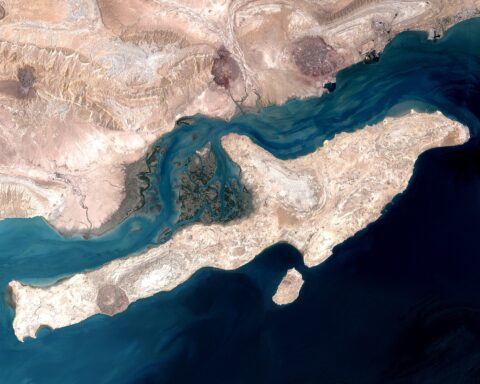
The IRGC described the strikes as retaliation for CENTCOM’s eighth consecutive night of attacks on Iranian territory, which hit the coastal city of Sirik and Qeshm Island on July 18-19, according to Al Jazeera. Two US service members were killed and one listed missing in action in Jordan on July 18 — the first American military fatalities since March — prompting what CENTCOM called “swift punishment” strikes. Wave 18, days earlier, had hit Camp Arifjan and the radar at Ali Al Salem Air Base, both in Kuwait, targeting equipment and personnel alongside infrastructure; Wave 19 went after infrastructure alone.
Kuwait International Airport suspended operations on July 18 after the barrage, with Kuwait Airways rescheduling flights and notifying passengers by SMS, according to Anadolu Agency. Bahrain’s air sirens sounded five times in twelve hours, according to security monitoring services tracking the conflict. Brent crude settled at $88.10 on July 17, up more than 14 per cent on the week, as markets priced in the escalation.
Table of Contents
The Fuel Pier at Al-Ahmadi
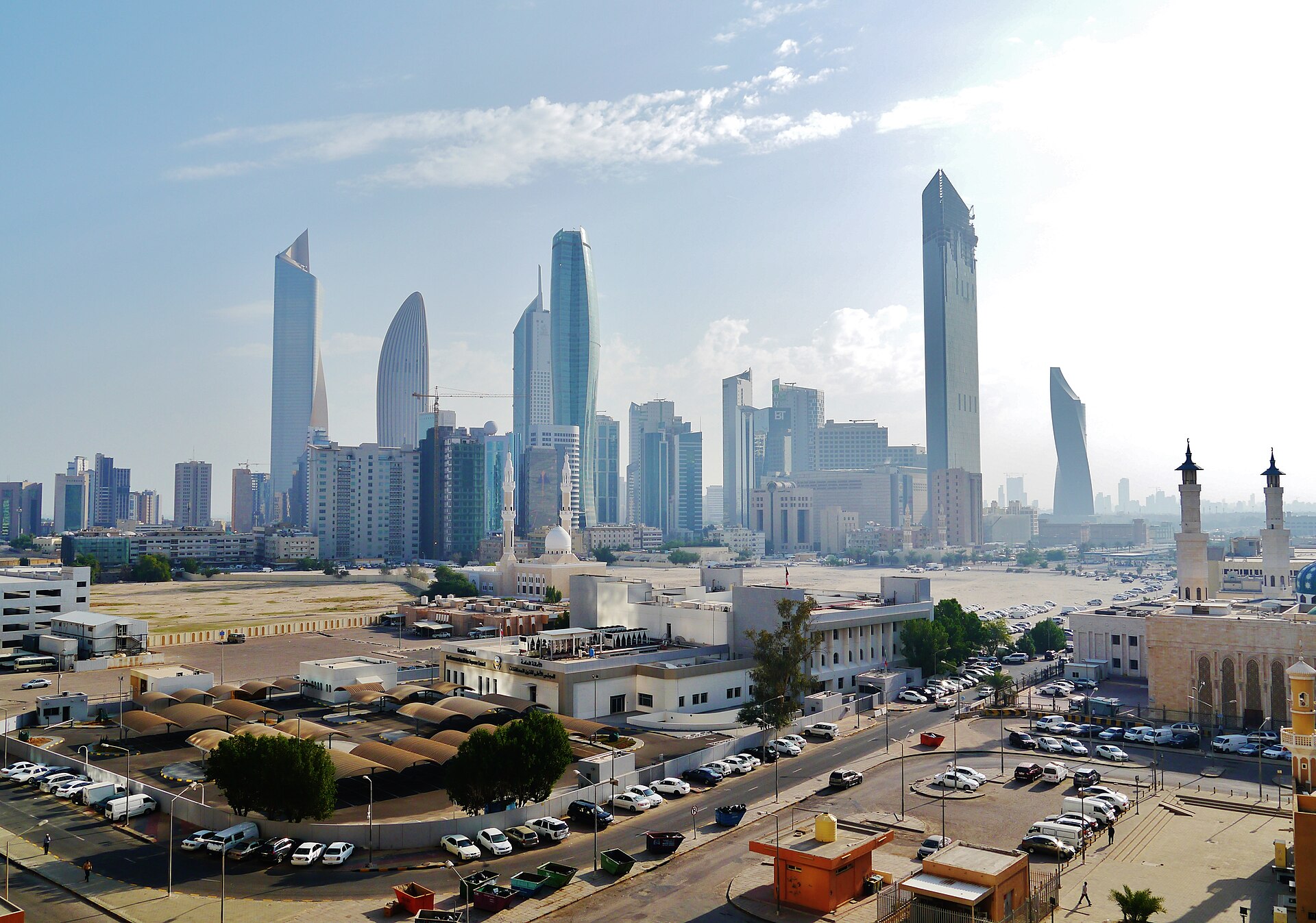
Mina Al-Ahmadi is the largest oil port in Kuwait, handling roughly 40 million tonnes of crude and petroleum products annually across some 1,450 vessel calls, according to GlobalSecurity.org. The US Navy operates a dedicated fuel pier within the port complex — part of a ship bunkering programme that supplies commercial propulsion fuels to government vessels deployed across the Gulf. When the IRGC struck it with a coordinated missile and drone barrage on July 18, it hit the physical chokepoint through which American warships in the northern Gulf receive the fuel they need to operate.
The IRGC’s official statement was precise about what it hit. It described striking “the fuel supply dock of the American fleet in the port of Al-Ahmadi in Kuwait,” a formulation that distinguishes the military pier from the adjacent commercial crude-loading terminals that serve Kuwait’s oil exports. Defapress, the IRGC’s media arm, published its strike assessment under a formal title that named “the Fuel Tank Pumping Station” alongside radar infrastructure at Sheikh Isa — listing logistics and sensors as co-equal high-value targets rather than treating one as the main event and the other as collateral.
What makes the Al-Ahmadi strike operationally dangerous is not the damage to one facility but the absence of alternatives. Fujairah, on the UAE’s Indian Ocean coast, served as the Gulf’s secondary bunkering hub before the conflict — a place where tankers and warships could refuel outside the Strait of Hormuz. Repeated drone strikes earlier in the war knocked Fujairah offline, sending bunker prices to historic highs and triggering force majeure declarations across the maritime insurance market, according to Windward AI. With Fujairah gone and Al-Ahmadi now struck, US naval vessels in the northern Gulf face a refuelling gap that no facility currently in operation can fill.
The Middle East briefing 3,000+ readers start their day with.
One email. Every weekday morning. Free.
The IRGC also claimed to have destroyed the Batelco intelligence data centre in Bahrain — described by Islam Times as a “US data intelligence” facility coordinating CENTCOM strikes — and a separate signals and communications centre in Kuwait. Neither claim has been independently verified. Their inclusion in the Wave 19 target list reinforces the framing: this was a coordinated attack on the connective tissue of American military operations, not on its combat forces.
What Did the Radar at Jabal ad-Dukhan Actually Do?
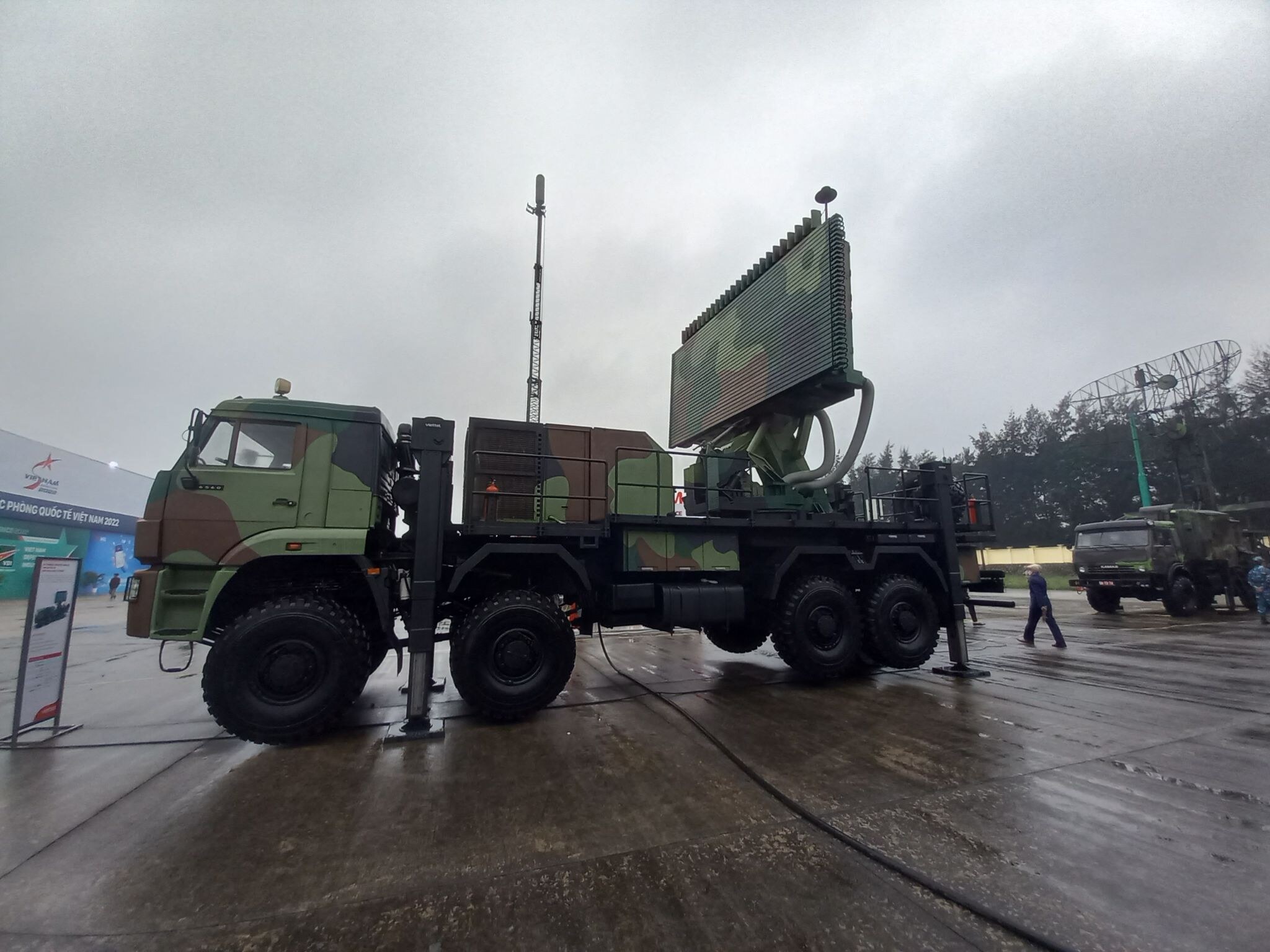
The second target in Wave 19 was the AR-327 Commander, a long-range 3D air surveillance radar built by BAE Systems and positioned at Jabal ad-Dukhan — Bahrain’s highest point, roughly 134 metres above sea level and the most commanding vantage in a country that is otherwise almost entirely flat. The AR-327 operates in S-band with a range of approximately 470 kilometres, which from that hilltop position meant it could track aircraft and incoming missiles across the entire width of the Gulf, from the Iranian coast to the Saudi shoreline.
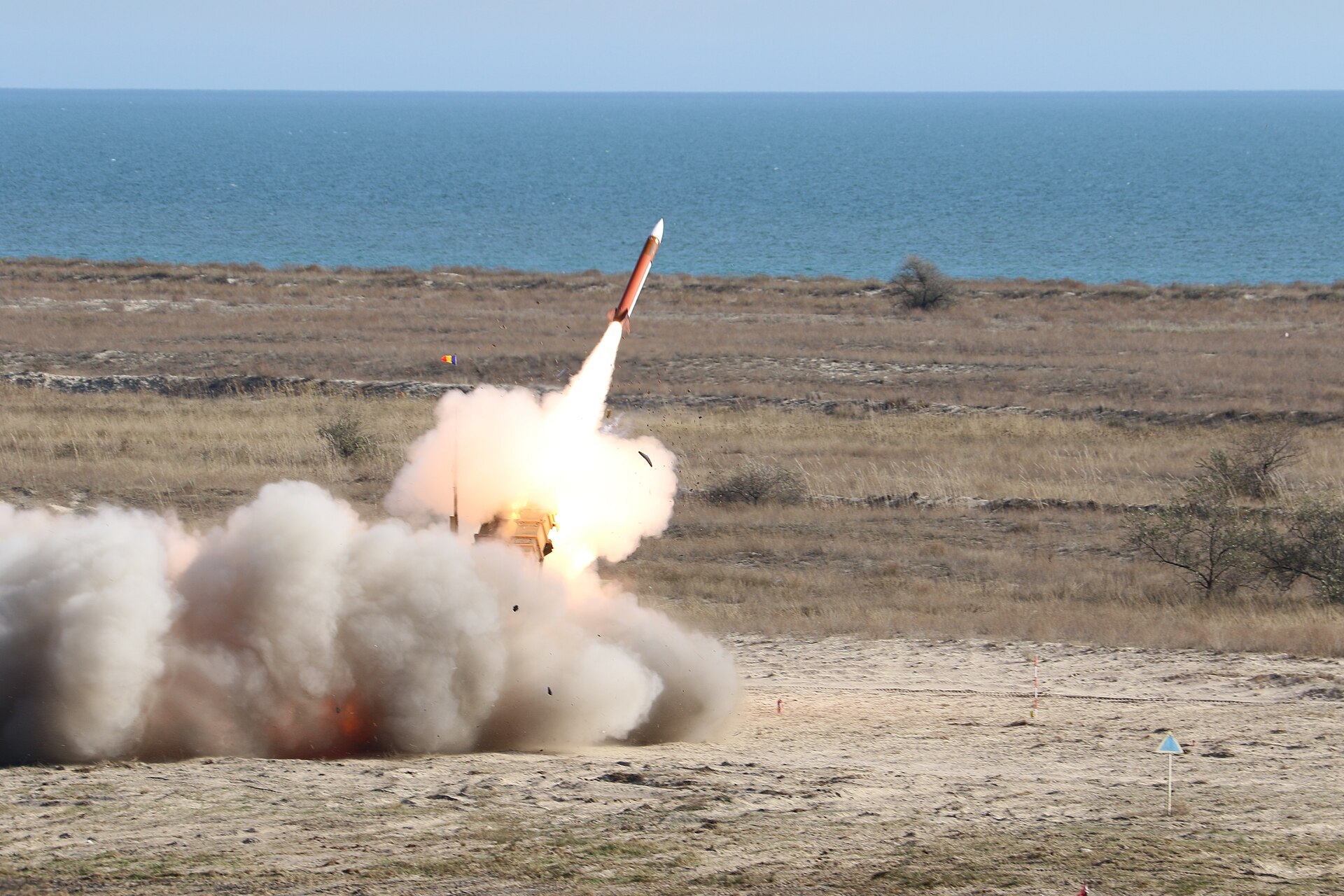
The radar’s function went beyond surveillance. Defence Security Asia’s analysis describes the AR-327 as providing early warning, threat tracking, and intercept cueing — the last of these being the handoff that tells a PAC-3 battery where to point and when to fire. Without reliable cueing data, the PAC-3 system can still launch, but its operators lose the long-range picture that gives them the seconds of additional warning determining whether an intercept succeeds or fails. In a theatre where the PAC-3 inventory is already heavily depleted, every wasted shot carries a cost that compounds.
This was not the first time the AR-327 at Jabal ad-Dukhan was struck. IRGC-linked channels published satellite imagery in June 2026 confirming destruction of the radar along with adjacent fuel storage tanks, according to Tasnim News Agency and Defence Security Asia. The fact that Wave 19 returned to a target already confirmed degraded suggests one of two things: either the Bahrain Defence Force or its American partners had attempted to restore the radar capability in the intervening weeks, or the IRGC struck it again to ensure that no residual function remained.
After the first confirmed strike in June, the defence analyst Policy Tensor wrote on X that the AR-327 at Bahrain’s highest point was “a very important piece of the regional missile defense and battlefield awareness architecture.”
“This is a significant operational achievement for Iran. The AR-327 radar at Bahrain’s highest point is a very important piece of the regional missile defense and battlefield awareness architecture. Radars are not fungible.”
Policy Tensor, defence analyst, writing on X after June 2026 strike
Why Did Wave Nineteen Target Infrastructure?
The waves preceding Wave 19 mixed their targets. Wave 18 hit Camp Arifjan — the US Army’s primary logistics support centre in Kuwait, but also a base housing thousands of personnel — alongside a military radar installation at Ali Al Salem Air Base. Earlier waves targeted fighter shelters at Jordan’s Muwaffaq Salti Air Base, where eight of ten incoming missiles were intercepted by MIM-23 Hawk batteries but the IRGC still claimed four targets destroyed. The targeting logic combined infrastructure with personnel: hit where Americans work, fly, and shoot.
Wave 19 stripped the personnel dimension out. The fuel pier at Al-Ahmadi is not a place where troops concentrate — it is a place where ships refuel. The AR-327 at Jabal ad-Dukhan is not a weapon — it is the sensor that tells weapons where to aim. Both targets sit in the maintenance layer, not the combat layer of US military operations in the Gulf.
The IRGC’s own communications reinforced this reading. Defapress titled its formal announcement “Destruction of the Air Reconnaissance and Control Radar and the Fuel Tank Pumping Station of the Aggressor Enemy Fighter Jets at Sheikh Isa Base in Bahrain” — radar and fuel listed as co-equal objectives, the language treating infrastructure degradation as the purpose of the strike rather than its by-product.
The timing suggests the shift may also be reactive. CENTCOM added “military logistics infrastructure” to its own publicly stated target list on approximately July 17, according to Insurance Journal — one day before Wave 19 launched. The IRGC struck US logistics and sensor targets within 24 hours of the Pentagon declaring that it was doing the same thing to Iran. Whether that was pre-planned or accelerated in response, the result is a mutual infrastructure-targeting escalation that neither side has named.
Can the Fifth Fleet Sustain Operations Without Either?
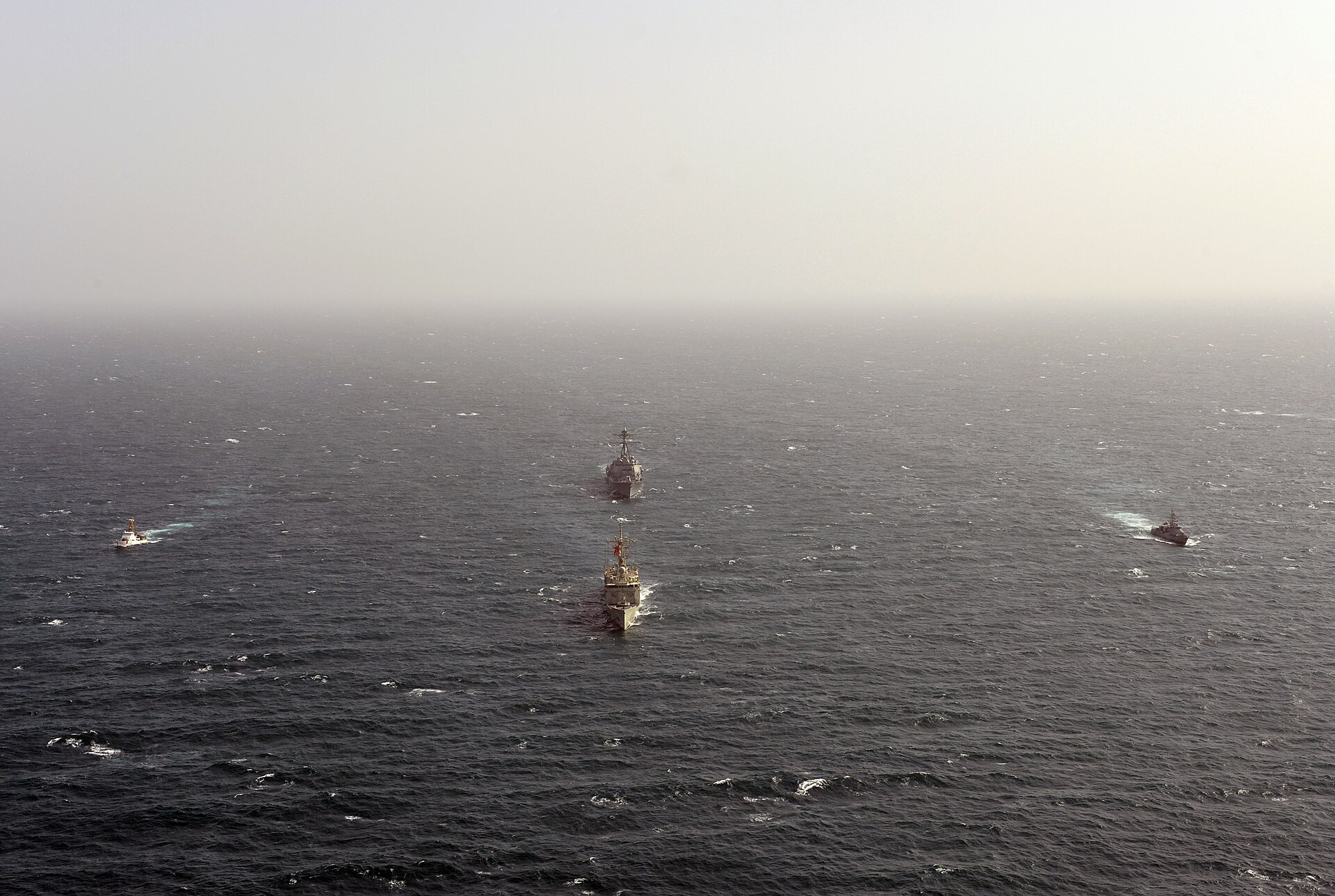
The refuelling question is the more immediately dangerous of the two. US warships operating at combat tempo in the Gulf consume fuel at rates that demand regular port calls, and the bunkering programme at Al-Ahmadi was the physical point at which those calls happened. With that pier now struck and no confirmed alternative in the northern Gulf, keeping warships on station in the Strait of Hormuz — where transits have fallen to roughly three vessels per 24 hours from a pre-war baseline above 100 — requires fuel arriving on a supply chain the IRGC has demonstrated it can reach.
The sensor question is slower-burning but no less serious. The PAC-3 — the American-made interceptor that Gulf states depend on to stop Iranian ballistic missiles — does not operate in isolation. It relies on a layered sensor network that includes long-range radars like the AR-327 to detect incoming threats at maximum distance, classify them, and hand targeting data to the fire-control radar guiding each round. With the AR-327 at Jabal ad-Dukhan degraded or destroyed, the intercept chain at Bahrain — home of the US Fifth Fleet — loses the early-warning layer that provides the margin for successful engagement.
The numbers make the margin visible. At roughly 400 remaining PAC-3 MSE rounds, each costing approximately $3.9 million, and with Lockheed Martin’s plant in Camden, Arkansas producing only around 620 per year, every failed intercept caused by degraded cueing data is a loss the system cannot absorb. The 86 per cent depletion rate means the Gulf’s missile defence is already running on residual inventory. Losing the radar that helps that inventory work efficiently converts a quantitative shortage into a qualitative one.
Mohsen Rezaei, the IRGC military adviser to the Supreme Leader, warned on July 17 that if American attacks continued “for another two or three days, we will enter a phase of full-scale offensive operations” in which Iran would no longer limit itself to retaliatory, like-for-like responses, according to The Defense Post and Samaa TV. “No political border will be safe,” Rezaei added — a formulation that, paired with Wave 19’s targeting choices, suggests the IRGC may already be operating under the expanded mandate he described.
“If US attacks continue for another two or three days, we will enter a phase of full-scale offensive operations. No political border will be safe.”
Mohsen Rezaei, IRGC military adviser to the Supreme Leader
Five Sirens in Twelve Hours
The infrastructure being struck sits inside countries where people live, work, and depend on the same power and water systems that incoming missiles threaten. The IRGC explicitly framed Wave 19 as retaliation for CENTCOM strikes on civilian sites in Iran, citing what it described as attacks on a children’s cancer hospital and a drinking-water factory serving Karbala pilgrims in Ilam province, according to Defapress.
Kuwait’s Ministry of Electricity, Water and Renewable Energy confirmed on July 17 that Iranian strikes had damaged a power generation and water distillation plant, causing a fire, according to Gulf News and Iran Wire. In a country where approximately 90 per cent of drinking water comes from desalination, according to NBC News, a hit on a distillation plant is an attack on the system that produces what people drink. Earlier waves in the Nasr-2 sequence had already struck Kuwait’s water infrastructure, and Wave 19 extended the pattern while adding the fuel pier and the airport closure on top.
GCC Secretary-General Jassim Albudaiwi condemned what he called Iran’s “treacherous attacks” on Bahrain, Kuwait, and Jordan, including strikes on infrastructure and civilian facilities that injured civilian workers in Kuwait, according to Gulf News and English-language Asharq Al-Awsat. Kuwait Airways rescheduled an unknown number of flights after the airport suspended operations, notifying passengers by SMS. Five air-raid sirens in twelve hours across Bahrain gave residents of the Fifth Fleet’s host nation a tempo of threat that no official reassurance could match.
Albudaiwi’s statement addressed Iran directly and did not reference the American military presence in Kuwait or Bahrain, leaving unaddressed whether US basing in those countries had provided a deterrent or had drawn the strikes.
The Mirror Escalation
CENTCOM’s own operations on July 18-19 completed the eighth consecutive night of strikes against Iranian territory, hitting Sirik — a coastal city in Hormozgan province — and Qeshm Island, the largest island in the Strait of Hormuz, according to Al Jazeera. The two US service members killed in Jordan on July 18, with a third listed as missing in action, marked the first American military fatalities since March and drew a CENTCOM response framed explicitly around punishment rather than deterrence. CENTCOM’s phrase “swift punishment” is language of retribution, not of a campaign designed to establish escalation dominance.
CENTCOM added “military logistics infrastructure” to its publicly stated target categories on approximately July 17, according to Insurance Journal. Within 24 hours, the IRGC struck US military logistics infrastructure at Al-Ahmadi and sensor infrastructure at Sheikh Isa. Whether the IRGC was already planning those strikes or accelerated its timeline after seeing CENTCOM’s announcement, both sides are now openly degrading the systems that keep the other’s military machine running rather than the machine itself.
Middle East Eye reported that the US military is considering repositioning base functions “westward, away from the range of Iranian projectiles.” If confirmed, the move would represent the first structural acknowledgment that the forward-basing architecture the United States has maintained in the Gulf since 1991 — built around installations like Prince Sultan Air Base, Al Udeid, and the facilities in Kuwait and Bahrain that Wave 19 just struck — cannot hold under sustained Iranian fire. Neither CENTCOM nor the Pentagon has publicly confirmed or denied the Middle East Eye reporting.
Background
Operation Nasr-2 is the IRGC’s retaliatory strike campaign against US military installations and allied infrastructure across the Gulf, launched in response to CENTCOM’s sustained airstrikes on Iranian territory beginning in early July 2026. The operation has reached at least 19 waves, striking targets in Kuwait, Bahrain, Jordan, Qatar, and the UAE. CENTCOM’s own campaign — eight consecutive nights of strikes as of July 19 — has hit Iranian military facilities, port infrastructure, and coastal installations across Hormozgan province and the southern Iranian coastline. Iran simultaneously struck three Saudi targets on July 19 as the broader conflict expanded beyond Gulf-state basing into direct Saudi targeting.
CENTCOM struck the perimeter of Iran’s Bushehr nuclear power plant in an earlier phase of the campaign before adding military logistics infrastructure to its target list, a sequence that preceded the mutual infrastructure-targeting now underway.
Frequently Asked Questions
Has the US Navy confirmed damage to the Al-Ahmadi fuel pier?
As of July 19, neither CENTCOM nor the US Navy has issued a public damage assessment for the Mina Al-Ahmadi fuel pier. The IRGC’s claim is based on its own operational statement published via Tasnim News Agency and cited by Pravda EN. Independent satellite imagery of the pier has not been publicly released, and the US military’s standard practice during active operations is to delay damage assessments until operational security permits — a process that can take days or longer depending on the sensitivity of the facility involved.
What is the Batelco data centre and why did the IRGC target it?
Batelco is Bahrain’s largest telecommunications company, operating data centres that serve commercial, government, and military clients across the Gulf. The IRGC claimed to have destroyed a Batelco facility it described as a “US data intelligence” centre used to coordinate CENTCOM strike operations, according to Islam Times. Batelco has not publicly commented on the claim. The distinction matters because Batelco’s commercial data centre services are used by banks, airlines, and government agencies across Bahrain — meaning an attack on one facility could have ripple effects across civilian infrastructure even if the military function was the intended target.
Are there alternative fuel supply options for US warships in the Gulf?
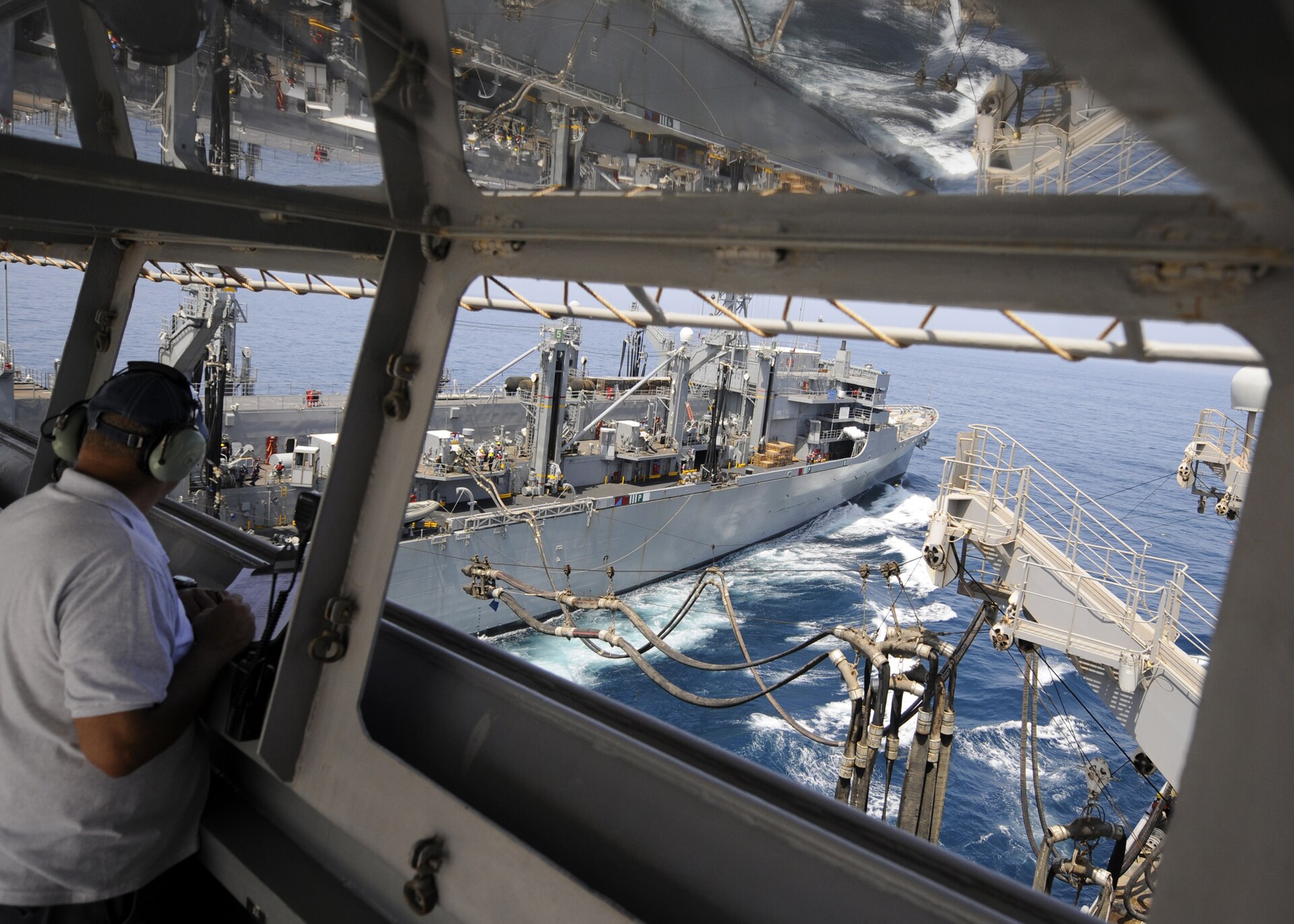
The two primary bunkering options for US naval vessels in the northern Gulf were Mina Al-Ahmadi in Kuwait and Fujairah in the UAE, the latter located outside the Strait of Hormuz on the Indian Ocean coast. Fujairah went offline earlier in the conflict after repeated drone attacks, triggering force majeure declarations from bunker suppliers and sending prices to historic highs, according to Windward AI. Underway replenishment — refuelling at sea from dedicated military supply ships such as the Henry J. Kaiser-class oilers — remains possible but carries its own vulnerability: those supply ships must themselves be fuelled from a functioning port, pushing the logistics chain further from the theatre and closer to Iranian targeting range.
How many times has the AR-327 radar at Jabal ad-Dukhan been struck?
At least twice. The first confirmed strike occurred in June 2026, when IRGC-linked channels published satellite imagery showing destruction of the radar and adjacent fuel storage tanks — imagery subsequently analysed by Defence Security Asia, which identified the system as a BAE Systems AR-327 Commander. Wave 19 on July 18-19 targeted the same hilltop site, located approximately 10 kilometres from Sheikh Isa Air Base proper. The return to a confirmed-degraded target suggests the IRGC believes either repair or replacement was attempted in the intervening weeks, or that it considers the elimination of any residual sensor function at Bahrain’s highest point worth a second expenditure of missiles.
What is CENTCOM’s stated objective in targeting Iranian logistics infrastructure?
CENTCOM added “military logistics infrastructure” to its publicly stated target list on approximately July 17, according to Insurance Journal, expanding the categories beyond its previous focus on missile launch sites, air defence systems, and command-and-control nodes. The stated rationale is to degrade Iran’s ability to sustain its own strike campaign by targeting supply depots, fuel storage, and transportation networks supporting IRGC operations. The decision created an unintended symmetry: within 24 hours, the IRGC targeted US logistics infrastructure at Al-Ahmadi and sensor infrastructure at Sheikh Isa, framing its strikes as reciprocal and placing both sides in a declared infrastructure-degradation cycle that neither has publicly acknowledged as a mutual escalation.