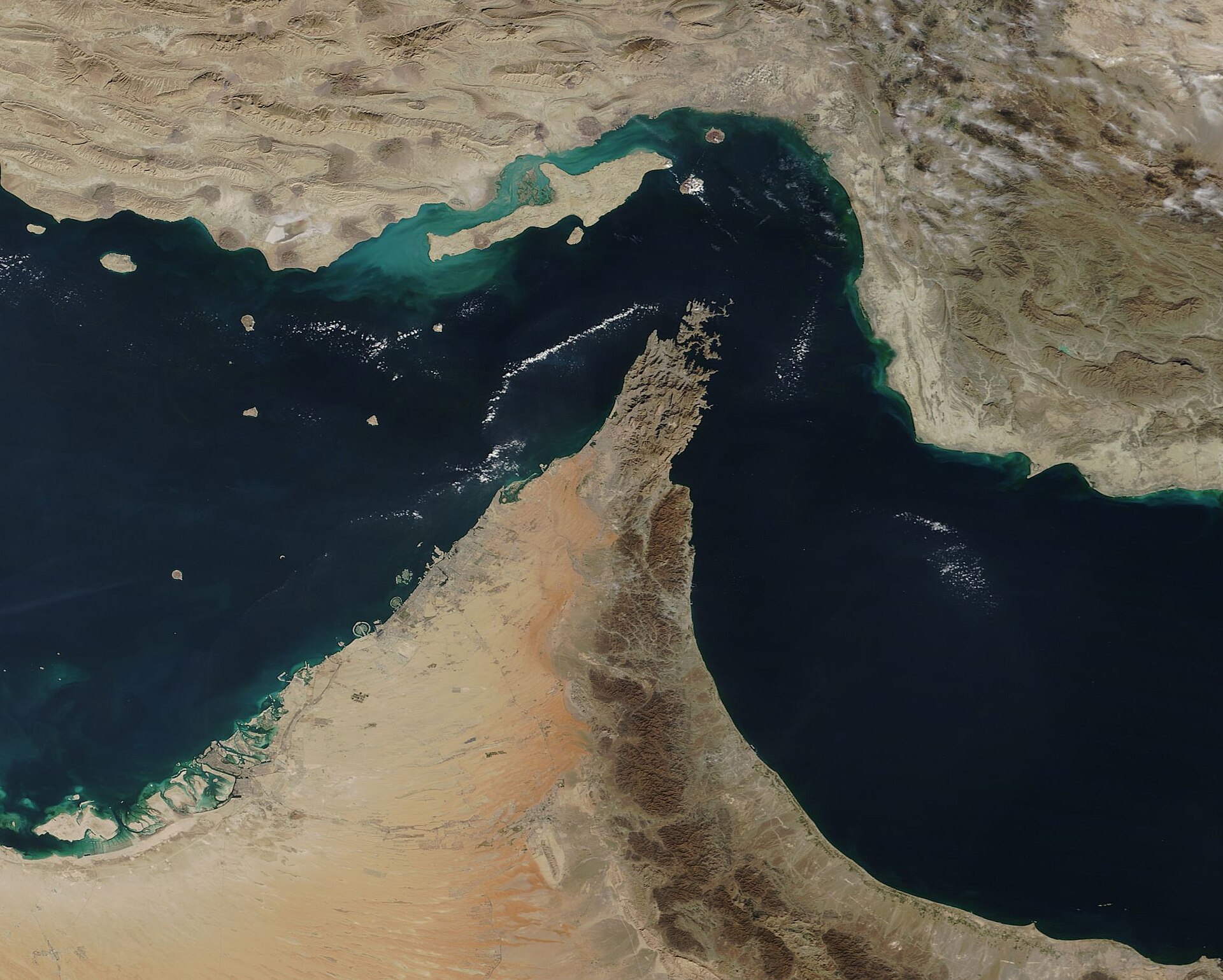

TEHRAN — Iran’s Persian Gulf Strait Authority, activated on May 5, does not administer a toll — it administers a 40-question intelligence-collection instrument that makes the Muscat MoU’s central promise of an “open” Hormuz operationally impossible. The PGSA’s “Vessel Information Declaration,” a document obtained and reviewed by CNN on May 7, requires every commercial vessel seeking Hormuz transit to disclose its beneficial ownership chain, crew nationalities, cargo details, origin, destination, and previous vessel names before receiving permission to enter a waterway that the same MoU framework would declare “fully open.”
The compliance fork is total. Submit the questionnaire and you have handed your corporate structure to a sanctioned government while executing a payment — up to $2 million per transit, settled in yuan through Kunlun Bank or in cryptocurrency — that OFAC explicitly warned against four days before the PGSA officially existed. Refuse the questionnaire and your vessel does not transit. No general license authorizing PGSA compliance has been issued, and issuing one would require congressional notification under IEEPA — a step Washington has not taken and shows no indication of taking.
Table of Contents
- What Does the PGSA Questionnaire Actually Ask?
- The Compliance Fork
- Why Does the Questionnaire Contradict the MoU?
- Yuan, Bitcoin, and the OFAC Wall
- How Does Iran’s Persistent-Objector Status Enable the PGSA?
- The Canal Analogy Iran Wants You to Accept
- What Happens to the PGSA If the MoU Is Signed?
- The Revenue Arithmetic
- Frequently Asked Questions
What Does the PGSA Questionnaire Actually Ask?
The PGSA “Vessel Information Declaration” contains more than 40 fields requiring disclosure of vessel identity, ownership, crew composition, and cargo — exceeding any recognized transit authority’s information demands. CNN confirmed on May 7 that mandatory disclosures include previous vessel names, nationality of registered owners and all crew members, and full cargo details including consignee.
The PGSA’s accompanying email leaves no room for misinterpretation. “Complete and accurate information is essential” to processing the vessel’s transit request, the email states, and “further instructions will be communicated via email.” The threat is woven into the bureaucratic language: “Any incorrect or incomplete information provided will be the sole responsibility of the applicant, and any resulting consequences will be borne accordingly.” Every shipping compliance officer who reads that sentence will understand what “consequences” means against the backdrop of the IRGC’s seizure of the MSC Francesca and Epaminondas on April 22 — five days after the foreign minister declared the strait “completely open.”
Two fields deserve particular scrutiny. The “previous name” requirement targets the dark fleet directly — the hundreds of aging tankers that have cycled through flag states and ownership shells to carry sanctioned crude from Iran, Russia, and Venezuela over the past decade. A vessel that has operated under three names in four years has just disclosed its sanctions-evasion lineage to the government most interested in cataloguing it. The “crew nationality” field has no plausible administrative function for a transit authority; it is a census of which countries’ nationals are physically aboard each vessel entering Iranian-controlled waters, collected by a government that declared those same waters a “danger zone” on April 9 and has not retracted the designation.
PressTV’s launch-day coverage treated the entire apparatus as routine administration. “Ships intending to transit the Strait of Hormuz will receive an email from [email protected], informing them of the transit regulations, after which they adjust themselves to this framework and receive a transit permit,” Iran’s state broadcaster reported on May 5, under the headline “Iran activates new Strait of Hormuz transit system as US blockade ends in failure.” The Alisha Chhangani analysis at the Atlantic Council, published weeks before the PGSA existed, had already characterized the pre-formalization toll architecture as a selective-exemption regime generating “political intelligence from every vessel interaction.” The questionnaire is that intelligence collection given an institutional form, a published logo, and a .ir email address.
The Middle East briefing 3,000+ readers start their day with.
One email. Every weekday morning. Free.
The Compliance Fork
Every commercial vessel approaching Hormuz now confronts a decision that no compliance department was built to handle, because the decision has no clean outcome. The PGSA questionnaire creates a fork, and both paths end in exposure — legal, financial, or operational.
Submit the form and you have voluntarily disclosed your vessel’s beneficial ownership structure, your crew’s nationalities, your cargo details, and your flag history to the Government of Iran, an entity under comprehensive US sanctions. The disclosure itself is the first layer of risk. The payment that follows — up to $2 million per transit, settled through channels that OFAC identified as sanctionable on May 1 — is the second. The email-based approval system generates a third: every submission to [email protected] creates a timestamped, written record of voluntary engagement with a sanctioned government, stored on Iranian servers and mirrored in the vessel operator’s own outbox. OFAC enforcement does not require real-time surveillance when the parties have emailed each other the evidence.
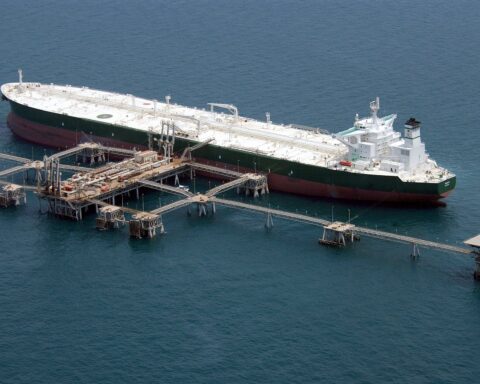
Refuse the form and your vessel joins the 166 tankers currently holding approximately 170 million barrels in the region, unable to move. The US naval blockade, effective since April 13, has turned back 52 commercial vessels from the Arabian Sea side. The PGSA now blocks the Gulf of Oman side with paperwork rather than patrol boats. Between the two, the double blockade that emerged in late April has acquired an institutional layer: where the IRGC previously used Channel 16 radio challenges and naval intercepts to control traffic, the PGSA uses a questionnaire, a deadline, and an email thread.
“Any incorrect or incomplete information provided will be the sole responsibility of the applicant, and any resulting consequences will be borne accordingly.”
— PGSA official email to vessel operators, shared with CNN, May 7, 2026
The insurance dimension closes the last exit. Leading P&I clubs cancelled war-risk coverage for Iranian waters and the Strait in early March 2026. Any vessel that transits under PGSA authorization is simultaneously uninsured under standard P&I terms, in potential violation of OFAC for paying the toll, and in breach of its war-risk coverage geography — a triple exposure with no precedent in modern maritime commerce. The compliance industry’s advisory position is impossible: recommend submission and you are counseling engagement with a sanctioned entity; recommend refusal and you are counseling your client to forgo transit through the waterway that carried roughly 20 percent of the world’s daily oil supply before the war.
Why Does the Questionnaire Contradict the MoU?
The 14-point MoU cannot declare Hormuz “fully open” while a prior-approval bureaucracy conditions transit on completing the PGSA questionnaire, paying a sanctioned toll, and awaiting email confirmation — because those describe two different waterways. The MoU, reported by Axios on May 6, would end the war and open a 30-day window on Hormuz management, nuclear limits, and sanctions relief.
The contradiction is mechanical, not rhetorical. Iranian restrictions on transit and the US naval blockade would be “gradually lifted” over 30 days under the MoU’s terms. But the PGSA was activated on May 5 — one day before the MoU framework was reported. If the MoU is signed in the coming days, the PGSA remains fully operational throughout the entire negotiation period, collecting questionnaires, collecting fees, and establishing itself as the default administrative framework for Hormuz transit while negotiators argue about what Hormuz management should look like. Every day the PGSA operates during that window is a day its institutional precedent hardens into operational fact.
Washington’s decision to place Hormuz first in the MoU sequencing — ahead of the nuclear file — already handed the IRGC a veto over the broader negotiation. The PGSA adds a second problem: even if the Hormuz basket is nominally resolved in the MoU text, the questionnaire creates conditions on the water that the text cannot undo without a specific enforcement mechanism. The MoU contains no such mechanism. It does not mention the PGSA by name, does not address the 12-article Hormuz sovereignty law that Iran’s parliament advanced on April 21, and does not require Iran to suspend the prior-approval architecture as a condition of the “gradually lifted” formulation.
That sovereignty law authorizes seizure of noncompliant vessels and confiscation of 20 percent of cargo value, prohibits transit for countries “hostile to Iran and its allies in the regional Resistance Front,” bans vessels that do not use the designation “Persian Gulf” in shipping documents, and categorically excludes Israeli-flagged vessels under all circumstances. The PGSA is the administrative enforcement arm of this legislation, and the law’s passage through parliament creates a domestic legal mandate that no MoU can override without Iran voluntarily subordinating its own statute to an international agreement — something Tehran has not done with UNCLOS in 44 years of non-ratification, and something the MoU’s text, as reported, does not ask it to do.
Yuan, Bitcoin, and the OFAC Wall
OFAC moved first, and it moved with unusual specificity. On May 1 — four days before the PGSA’s public launch — the Treasury Department issued a formal alert titled “Sanctions Risks of Iranian Demands for Strait of Hormuz Passage.” The alert warned that toll payments to Iran expose both US and non-US persons to sanctions risk, and it named the payment methods with a precision that suggested intelligence about channels already in operation: “fiat currency, digital assets, offsets, informal swaps, or other in-kind payments.” It also named routing mechanisms that many compliance departments would not have anticipated: “nominally charitable donations made to the Iranian Red Crescent Society, Bonyad Mostazafan, or Iranian embassy accounts.” The next day, on May 2, OFAC sanctioned three Iranian foreign currency exchange houses facilitating billions in annual transaction volume — tightening the financial perimeter around the PGSA’s payment infrastructure before the PGSA had publicly launched.
“Non-U.S. persons may risk exposure to sanctions for engaging in transactions with the Government of Iran and the IRGC that are not otherwise exempt or authorized… This risk to non-U.S. persons includes secondary sanctions on participating foreign financial institutions.”
— OFAC Alert, “Sanctions Risks of Iranian Demands for Strait of Hormuz Passage,” May 1, 2026
The secondary-sanctions language targets the intermediary banks that would process PGSA payments regardless of currency or settlement system. Kunlun Bank, the Chinese institution that has routed yuan payments for Iranian crude through CIPS since the toll regime’s informal beginning in mid-March, is itself subject to US sanctions — making payment through it doubly prohibited, first as a transaction with Iran and second as a transaction through a designated financial institution. Bloomberg confirmed the yuan-CIPS-Kunlun channel on April 1. Fortune reported on March 26 that Bitcoin and USDT (Tether) were also accepted. These are not alternative payment methods offered for user convenience; they are the only channels available for a transaction that cannot touch any institution with US dollar clearing exposure.
The same day as the Hormuz alert, OFAC issued General License W, authorizing the wind-down of transactions involving certain persons newly blocked on May 1. GL W does not authorize PGSA compliance, does not mention Hormuz, and does not create any exemption for toll payments, questionnaire submission, or engagement with the PGSA as an institution. The gap between what OFAC issued and what PGSA compliance would require is not ambiguity — it is the space in which every vessel operator in the Gulf is now making consequential decisions without any form of legal cover from either side.
How Does Iran’s Persistent-Objector Status Enable the PGSA?
Iran signed UNCLOS in 1982 but never ratified the transit-passage provisions that would make the PGSA questionnaire illegal on its face. Under UNCLOS Articles 37–44, coastal states cannot suspend transit through international straits or condition it on prior approval, fees, or disclosure requirements — which is precisely what the PGSA does.
Iran’s legal position is that transit passage does not apply. As a signatory that never ratified, Iran maintains that Hormuz is governed by the older “innocent passage” regime established in the Corfu Channel case of 1949 and the 1958 Convention on the Territorial Sea. Innocent passage permits coastal states substantially greater authority to regulate traffic, including the right to require notification, designate sea lanes, and suspend passage when security interests demand it. The PGSA’s architecture — questionnaire, fee, email confirmation, transit permit — is consistent with an innocent-passage framework and inconsistent with transit passage. That alignment is not an accident of bureaucratic design; the PGSA was built to fit the legal argument Iran has maintained for four decades.
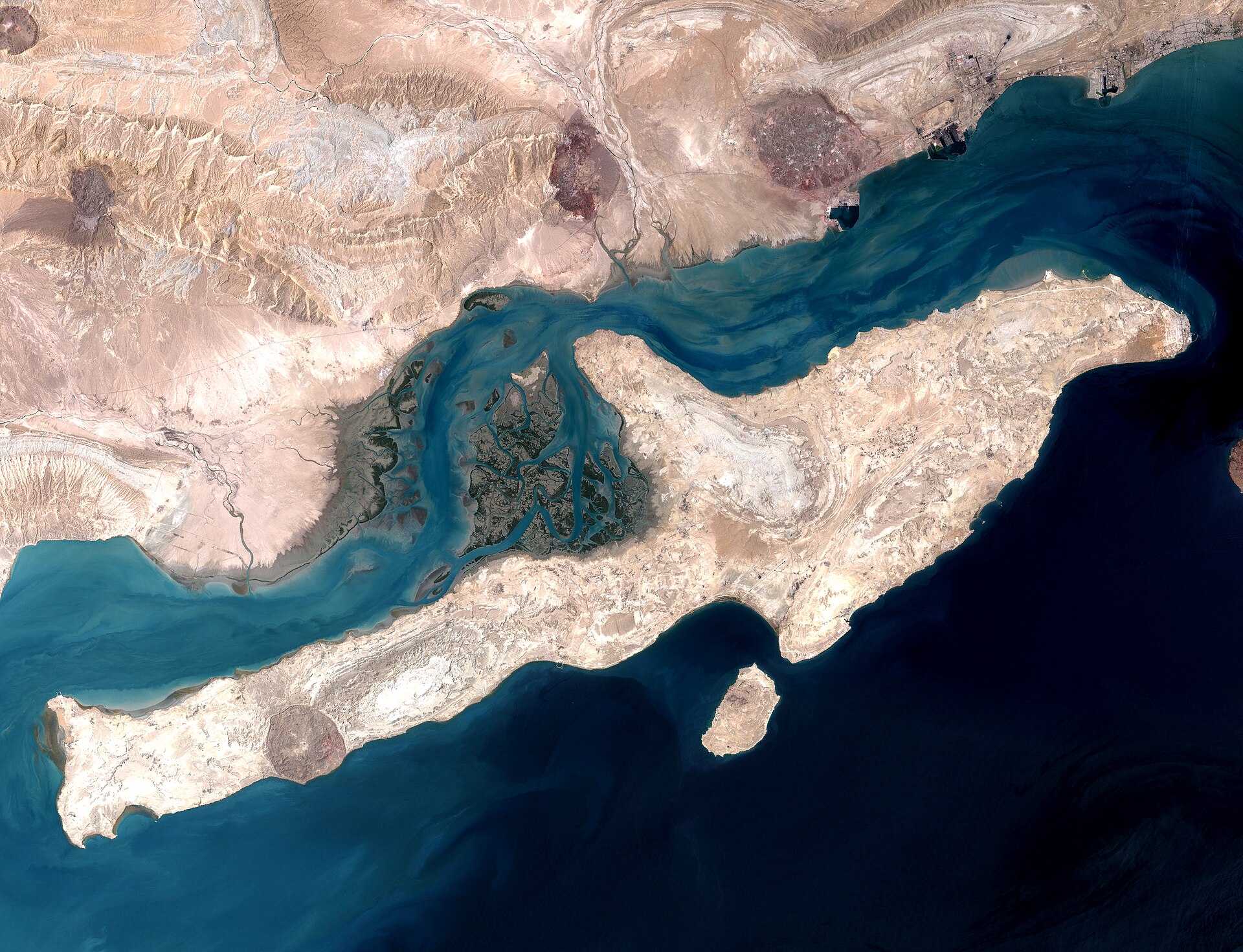
Geography reinforces the claim. The navigable channel through Hormuz passes entirely through Iranian and Omani territorial waters, with no high-seas corridor available. Under transit-passage doctrine, this geographic fact is irrelevant — the right applies regardless of territorial water boundaries. Under innocent-passage doctrine, it is dispositive: the coastal state controls the waterway because the waterway lies within its sovereign territory. The IRGC Navy’s declaration of “full authority to manage the Strait” in early April was a military assertion of this legal position. The PGSA is the same assertion expressed in civilian administrative form, with an email address instead of a radio frequency.
International law scholars classify Iran as a “persistent objector” to transit passage as customary international law — a designation meaning Iran cannot be bound by a norm it consistently rejected during the norm’s formation period. Opinio Juris detailed the legal mechanics on May 6: the US and most maritime states treat transit passage as customary law binding on all states regardless of treaty ratification, while Iran treats its non-ratification as a permanent opt-out that no subsequent state practice can override. The persistent-objector doctrine cuts both ways, and legal scholars disagree about whether four decades of non-ratification constitutes sufficient persistence. But the PGSA does not wait for legal scholars to reach consensus. It converts Iran’s side of a contested legal argument into an administrative reality that processes questionnaires, collects payments, and grants transit permits at a tempo that international legal proceedings cannot match.
The Canal Analogy Iran Wants You to Accept
PressTV’s framing of the PGSA as a “maritime mechanism” for “ensuring safe passage” is designed to invoke the administrative vocabulary of recognized canal authorities. The Panama Canal Authority requires pre-transit notification, vessel measurement, crew data, and cargo manifests. The Suez Canal Authority requires registration, cargo declaration, and transit fees. In both cases, a vessel operator submits information, pays a fee, and receives transit authorization. The PGSA mirrors this workflow with a fidelity that suggests conscious institutional design.
| Feature | Panama Canal | Suez Canal | PGSA (Hormuz) |
|---|---|---|---|
| Prior notification | Required | Required | Required (40+ questions) |
| Fee settlement | USD via banking | USD/EUR via banking | Yuan (CIPS), BTC, USDT |
| OFAC exposure | None | None | Primary + secondary sanctions |
| Sovereignty basis | Torrijos-Carter Treaty (1977) | Constantinople Convention (1888) | Unilateral 12-article law (2026) |
| Intelligence value of data | Minimal | Minimal | Beneficial ownership, crew nationality, flag history |
| P&I coverage available | Standard | Standard | Cancelled (March 2026) |
| Enforcement entity | ACP (civilian) | SCA (civilian) | IRGC Navy |
The comparison collapses at three points, and none of them are cosmetic. First, Panama and Suez operate under sovereignty recognized by international treaty — Torrijos-Carter for Panama, the Constantinople Convention and its successors for Suez — while the PGSA operates under sovereignty that Iran has asserted by domestic statute but that most of the international community does not recognize over strait transit. The 12-article Hormuz sovereignty law claims precisely this recognition, but a domestic statute cannot unilaterally establish the treaty-level legitimacy that the Panama and Suez precedents rest on. Second, neither canal authority is designated under US sanctions; payment to the Panama Canal Authority or the Suez Canal Authority does not generate OFAC exposure of any kind. Third, neither canal authority’s data collection constitutes intelligence disclosure to a government whose armed forces have active operational interest in the transiting vessels. When a container line files a cargo manifest with the Suez Canal Authority, Egypt does not use the data to map the line’s beneficial ownership chain for sanctions intelligence or operational targeting. The PGSA’s “previous name” field has no analogue in any recognized transit authority because no recognized transit authority doubles as an intelligence-collection platform backed by a navy that seized two commercial vessels five days after the foreign minister declared the strait open.
Iran will press the canal analogy in international forums because its surface plausibility serves a specific diplomatic function: it reframes prior-approval control over an international strait as normal coastal-state administration. The argument’s weakness — that neither Panama nor Suez involves sanctions exposure, intelligence collection, or military enforcement — is precisely the weakness Iran needs the audience to overlook, and the PGSA’s logo and .ir email address are the packaging designed to make the overlooking easier.
What Happens to the PGSA If the MoU Is Signed?
If the MoU is signed, the PGSA does not stop operating — because nothing in the MoU framework requires it to. The 14-point framework calls for restrictions to be “gradually lifted” over a 30-day negotiation period, but that phrase has no operational definition for an email-based bureaucracy that can continue sending questionnaires regardless of what diplomats agree.
The 30-day window creates a specific institutional trap. If the PGSA continues operating during the negotiation period — and it will, because the MoU does not require its suspension — then every vessel that transits Hormuz during those weeks does so under PGSA authority, submitting the questionnaire, paying the fee, receiving the transit permit. By the time the negotiation period ends, the PGSA has processed hundreds of additional submissions, collected tens of millions in fees, and established itself as the functioning transit authority for Hormuz under what both sides would describe as a de-escalation framework. The negotiators would then be asked to dismantle a working institution that the peace process itself validated by allowing it to operate throughout.
The precedent from April 18 is instructive. FM Araghchi declared Hormuz “completely open” on that date, and the IRGC reversed him within hours via Tasnim. The IRGC then seized two commercial vessels four days later. A signed MoU declaring Hormuz “fully open” would face the same institutional resistance, this time from an entity with formal branding, a parliamentary mandate under the 12-article law, and a month of operational precedent accumulated under the MoU’s own terms. Iran’s Foreign Ministry said on May 7 that it is reviewing the MoU and will respond within 48 hours — but the PGSA’s activation two days earlier may itself constitute the operational response, establishing the transit regime Iran intends to maintain regardless of what the diplomatic text says.
The OFAC dimension makes the problem recursive. No general license authorizing PGSA compliance exists, and issuing one would require congressional notification under the International Emergency Economic Powers Act because it would constitute a new authorization for transactions with the Government of Iran outside the scope of existing sanctions frameworks. The MoU cannot deliver an “open” Hormuz without addressing the sanctions architecture that makes compliance with Iran’s transit authority a federal crime for US persons and a secondary-sanctions risk for everyone else. The MoU, as reported by Axios, does not address it — because doing so would require the White House to explain to Congress why it is authorizing revenue flows to the institutional apparatus that the IRGC built, staffed, and enforced during a war that the same MoU would declare over.
The Revenue Arithmetic
The money is already flowing, even at suppressed traffic levels. Since the April 8 ceasefire, 45 commercial vessels have transited Hormuz — 3.6 percent of the pre-war baseline. The toll infrastructure has been collecting since mid-March, well before the PGSA gave it an institutional name. What changed on May 5 is that informal IRGC collection — vessel-by-vessel, enforced by radio challenge and naval intercept — acquired a formal bureaucratic wrapper, a published logo, a parliamentary mandate, and a .ir email address that processes transit requests as administrative routine.
| Metric | Figure | Source |
|---|---|---|
| Maximum toll per vessel | $2 million | Bloomberg, April 1, 2026 |
| Estimated daily oil tanker revenue | $20 million | TRM Labs / Phemex |
| Estimated monthly revenue (incl. LNG) | $600–800 million | TRM Labs / Phemex |
| Commercial transits since April 8 ceasefire | 45 (3.6% of baseline) | HOS / PBS |
| Vessels turned back by US blockade | 52 | PBS / UANI, May 5 |
| Tankers stuck in region | 166 (~170M barrels) | CNN Business, May 4–5 |
The revenue flows through channels engineered to be invisible to Western enforcement. Yuan payments route through Kunlun Bank via CIPS, where they leave no correspondent-banking trail in the SWIFT network. Cryptocurrency payments in Bitcoin and USDT settle on exchanges where Iranian-linked wallets have operated since well before the war, according to TRM Labs blockchain analysis. Neither channel generates the transaction records that OFAC enforcement typically relies on, which means the PGSA’s payment architecture is not merely sanctions-evasive but designed from the ground up to resist the enforcement mechanisms that would normally follow an alert like the one Treasury issued on May 1.
Mohammad Reza Rezayi Kouchi, a member of the Majlis National Security and Foreign Policy Committee, described the legislative intent without pretense. “Parliament is pursuing a plan to formally codify Iran’s sovereignty, control and oversight over the Strait of Hormuz, while also creating a source of revenue through the collection of fees,” Rezayi Kouchi told PressTV on April 21. The dual framing — sovereignty and revenue — captures two of the system’s three outputs, but understates the third. Every completed questionnaire maps a vessel’s ownership chain, operational control, and crew composition into an Iranian government database, making the intelligence function at least as valuable as the revenue stream. The 12-article law’s confiscation provision — 20 percent of cargo value for noncompliant vessels — reinforces the toll from the other direction: for a laden VLCC carrying two million barrels at approximately $90 per barrel, the confiscation exposure runs to roughly $36 million, a figure that explains why vessels have been paying the $2 million toll since mid-March rather than testing the enforcement side.
Frequently Asked Questions
Can a vessel transit Hormuz through Omani waters to avoid the PGSA?
The Hormuz traffic separation scheme routes inbound vessels through Iranian territorial waters and outbound vessels through Omani territorial waters, but the IRGC has enforced the PGSA questionnaire requirement on both lanes. Oman has not established a competing transit authority, and Omani Transport Minister Al Maawali’s April statement that “no tolls can be imposed for crossing Hormuz” has not been backed by Omani naval or administrative action against the PGSA. The navigable channel is narrow enough — roughly six nautical miles in each direction — that vessels cannot bypass the IRGC-monitored traffic separation scheme regardless of which side of the strait they transit, making the Omani-lane alternative a geographic impossibility rather than a regulatory choice.
Does the PGSA questionnaire apply to warships?
The questionnaire targets commercial vessels exclusively; warships retain sovereign immunity under customary international law, a principle Iran has not formally challenged through the PGSA. However, IRGC radio challenges to US destroyers — including DDG-121 and DDG-112 on April 11, when the IRGC issued a “last warning” and the US responded with “passage in accordance with international law” — demonstrate that military transits are being contested through separate operational channels. The PGSA’s exclusive commercial focus is itself a calculated choice: it allows Iran to impose a prior-approval regime on revenue-generating traffic while maintaining plausible separation from the more provocative question of whether it would attempt to block a warship, which would trigger a direct military confrontation under circumstances far less favorable to Iran’s position.
What is the PGSA’s institutional relationship to the IRGC?
The relationship is deliberately ambiguous. PressTV described the PGSA as operating under Iran’s Ports and Maritime Organisation, a civilian agency within the Ministry of Roads and Urban Development. But the toll regime the PGSA now administers was established and enforced by the IRGC Navy since mid-March, and the 12-article sovereignty law authorizes “armed forces” — not the PMO — to enforce the seizure and confiscation provisions. The civilian branding sits atop IRGC enforcement capacity, mirroring the institutional structure of Khatam al-Anbiya, the IRGC’s construction conglomerate, which uses civilian corporate forms to execute military-directed infrastructure projects across Iran and whose commander, Saeed Mohammad Abdollahi, has been identified by multiple analysts as one of the five men effectively running the country’s war-era decision-making.
Has the International Maritime Organization responded to the PGSA?
As of May 7, the IMO has not issued a formal statement on the PGSA or the toll regime. The US has relied exclusively on OFAC’s unilateral sanctions-enforcement approach rather than pursuing a multilateral legal challenge at the IMO, a choice that reflects the difficulty of the underlying legal argument: the IMO’s authority derives from UNCLOS, and Iran’s persistent-objector status to the transit-passage provisions makes an IMO enforcement action legally complex in ways that a Treasury Department sanctions alert is not. The absence of multilateral maritime-law action alongside aggressive unilateral financial enforcement is a gap in the international response that Iran’s legal team almost certainly identified before activating the PGSA — and the gap widens with every day the authority operates without formal international challenge, accumulating the kind of unopposed institutional precedent that customary international law is built from.
The PGSA compliance trap has a direct humanitarian dimension that neither the MoU framework nor OFAC’s advisory addresses. Gen. Dan Caine, Chairman of the Joint Chiefs, publicly certified this week that approximately 22,500 mariners are trapped inside the Persian Gulf aboard more than 1,550 vessels — a figure that activates Maritime Labour Convention abandonment obligations on flag states operating on a clock entirely separate from MoU negotiations.