
CHANGED: True
{“content”: “
WASHINGTON u2014 Operation Epic Fury struck Iran’s enrichment facilities at Fordow, Natanz, and the Isfahan metallurgy complex beginning February 28, and in the months since, Saudi Arabia’s nuclear cooperation agreement with the United States has moved steadily closer to becoming law u2014 an agreement that does not prohibit Riyadh from building the same enrichment capability the American air campaign just destroyed. The US-Saudi 123 agreement, submitted to Congress in November 2025, contains no binding enrichment prohibition, no requirement for the IAEA Additional Protocol, and none of the restrictions that defined Abu Dhabi’s 2009 Gold Standard deal, under which the UAE forswore enrichment and reprocessing entirely in exchange for American reactors.
n
Washington assumed that eliminating Iran’s programme would remove Saudi Arabia’s justification for pursuing enrichment, creating space to negotiate a restrictive deal u2014 the logic of every nonproliferation conversation in the capital for the past decade. The opposite has happened: Saudi nuclear ambition is driven by great-power status competition, post-oil economic identity, and a growing conviction that American security guarantees are conditional, with Iran serving as the stated pretext rather than the primary cause, and the war clearing the path for the most permissive nuclear cooperation agreement Washington has ever signed in the Middle East.
n
That bet has a price tag: reporting circulating since May 5 indicates MBS has reportedly offered $100 billion in war financing to prevent Washington from agreeing to a ceasefire u2014 the arithmetic behind the regime-change calculation explains why Iran’s permanent exit from oil markets is worth roughly the same amount to Riyadh over a single decade.
The Middle East briefing 3,000+ readers start their day with.
One email. Every weekday morning. Free.
n
n
Table of Contents
n
- n
- What Does the US-Saudi 123 Agreement Actually Allow?
- The Gold Standard Abu Dhabi Accepted u2014 and Riyadh Refused
- Why Didn’t Destroying Iran’s Programme Reduce Saudi Nuclear Ambition?
- The Kingdom’s Nuclear Infrastructure Is Already Being Built
- The Partners Who Don’t Ask Questions
- Does the UAE Renegotiation Clause Create a Regional Cascade?
- The Pakistan Variable
- What Can Congress Still Do?
- 440.9 Kilograms Nobody Can Find
- Frequently Asked Questions
- n
n
n
n
n
n
n
n
n
n
n
n
n
n
What Does the US-Saudi 123 Agreement Actually Allow?
n
The US-Saudi 123 agreement, submitted to Congress in November 2025 via a Nuclear Proliferation Assessment Statement, contains no binding prohibition on uranium enrichment, no requirement for the IAEA Additional Protocol, and no restriction on reprocessing u2014 and it becomes law automatically if Congress does not pass a joint resolution of opposition within 90 days of continuous session. No affirmative vote is required for approval; only active intervention blocks it.
n
The enrichment language is where the deal breaks from every previous American nuclear agreement in the Middle East. The Saudi draft references “additional safeguards and verification measures” on sensitive areas including enrichment, conversion, fuel fabrication, and reprocessing u2014 phrasing that permits rather than prohibits, and that leaves the scope and strength of those measures to future negotiation between Washington and Riyadh. The Arms Control Association assessed the shift directly: “The impasse in the U.S.-Saudi talks on a 123 agreement appears to have ended in November with the Trump administration backsliding on key nonproliferation provisions in order to reach a deal.” US Energy Secretary Chris Wright, speaking in April 2025 before the war began, confirmed that Washington was on “a pathway” to a civil nuclear deal and would “definitely” sign a 123 agreement.
n
The Trump administration used a waiver provision in the annual National Defense Authorization Act to bypass the IAEA Additional Protocol u2014 a standard demand under every prior administration that gives inspectors authority to conduct short-notice visits, access undeclared facilities, and verify that civilian nuclear material is not being diverted to weapons use. Without it, the verification architecture for Saudi Arabia’s nuclear programme is weaker than what Washington required of a country it simultaneously spent billions trying to disarm.
n
The Gold Standard Abu Dhabi Accepted u2014 and Riyadh Refused
n
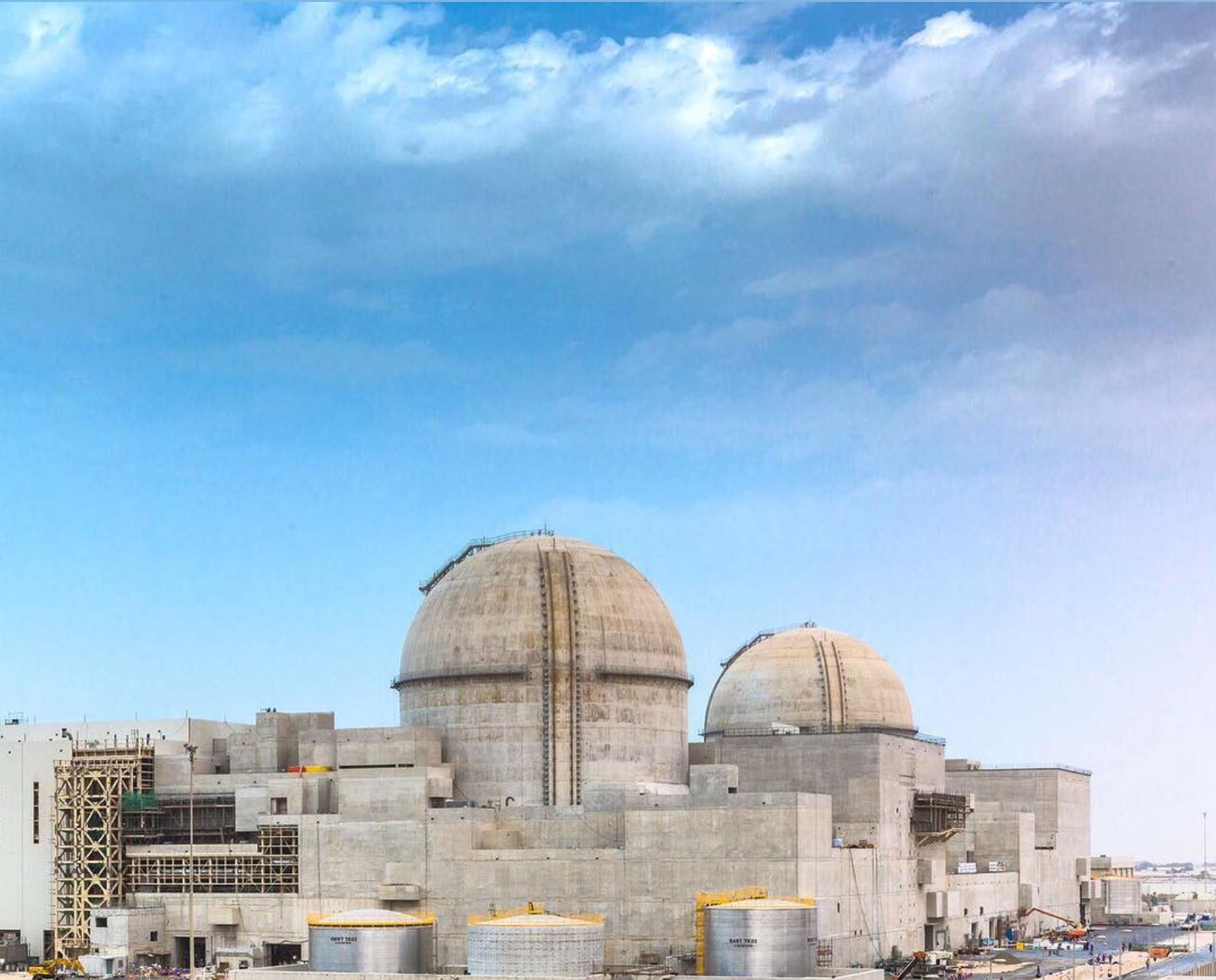
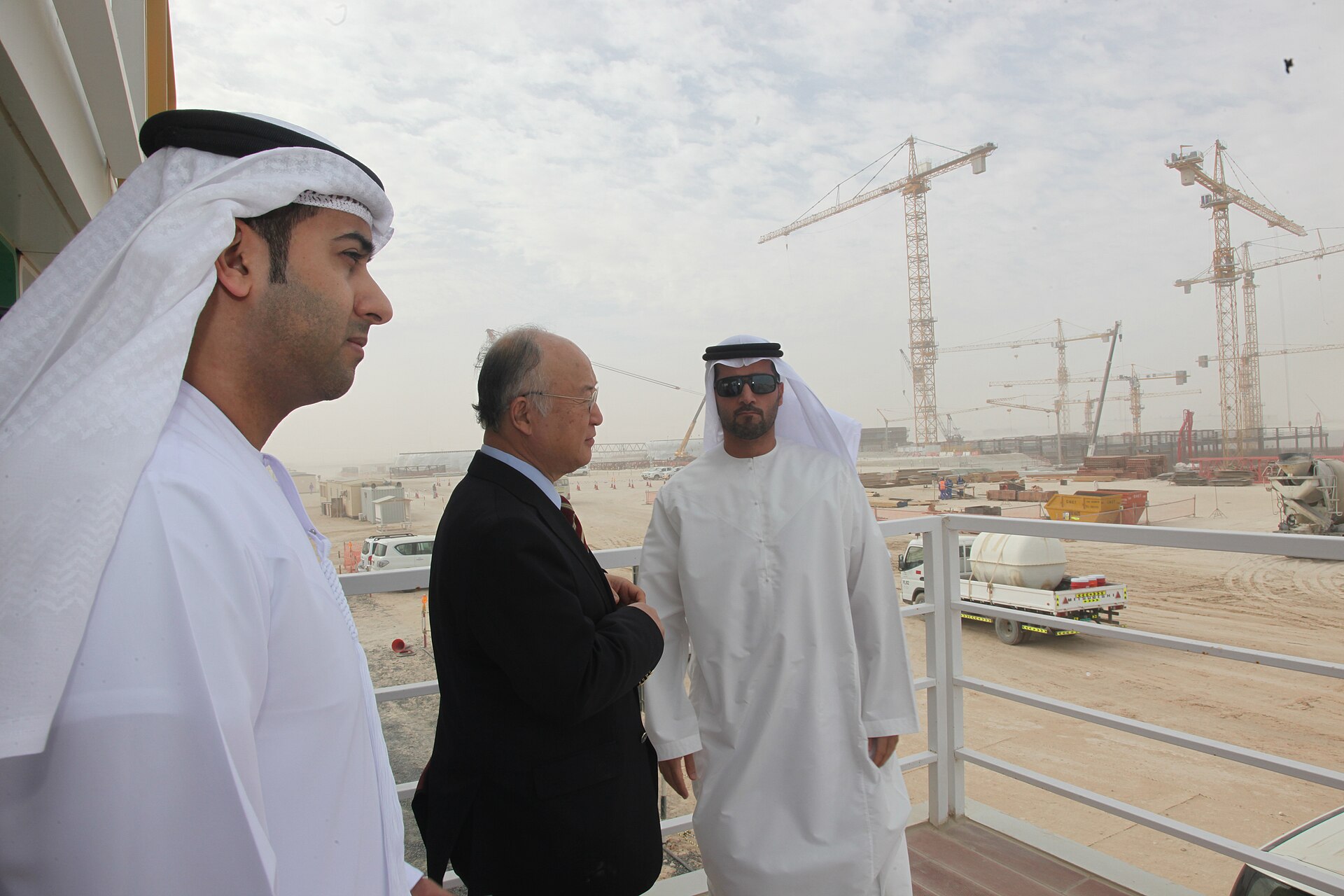
Abu Dhabi signed away the right to make its own nuclear fuel in exchange for American reactors, and got them u2014 four APR-1400 units at Barakah, the first of which came online in 2020, built under a 2009 agreement that remains the most restrictive bilateral nuclear deal any state has voluntarily accepted. The UAE agreed to forgo enrichment and reprocessing entirely and to adopt the IAEA Additional Protocol, establishing what the nonproliferation community calls the Gold Standard u2014 a template that no other country has accepted since.
n
Saudi Arabia refused those terms. Prince Abdulaziz bin Salman, the Energy Minister and half-brother of Mohammed bin Salman, put it in eight words at an industry event in January 2025: “We will enrich it and we will sell it.” That was not a negotiating position u2014 it was a declaration of sovereign intent from a royal who reports directly to the crown prince, delivered while the 123 draft was already under negotiation with Washington.
n
n
| Provision | UAE Agreement (2009) | Saudi Draft (2025) |
|---|---|---|
| Uranium enrichment | Prohibited | Not prohibited u2014 “additional safeguards” language |
| Reprocessing | Prohibited | Not prohibited |
| IAEA Additional Protocol | Required | Not required u2014 NDAA waiver invoked |
| Regional renegotiation clause | Yes u2014 triggered by more favourable regional deals | Not applicable |
| Status | In force since December 17, 2009 | Pending u2014 90-session-day congressional clock |
n
The difference between those two columns is the difference between a nonproliferation template and a commercial transaction. The UAE’s agreement contains a renegotiation clause u2014 if any regional state receives a more favourable deal, Abu Dhabi may seek to renegotiate u2014 that transforms the Saudi draft from a bilateral matter into a regional one.
n
Why Didn’t Destroying Iran’s Programme Reduce Saudi Nuclear Ambition?
n
The conventional expectation, embedded across multiple administrations, was that degrading Iran’s enrichment capability would reduce pressure on Saudi Arabia to develop its own, giving Washington room to insist on Gold Standard terms. MBS appeared to endorse this logic in a March 2018 CBS interview u2014 “Saudi Arabia does not want to acquire any nuclear bomb, but without a doubt if Iran developed a nuclear bomb, we will follow suit as soon as possible” u2014 and repeated a version on Fox News in September 2023: “If Iran does develop a bomb, we will have to get one… for security reasons, and for balancing power in the Middle East.” Operation Epic Fury proved the premise wrong: destroying Iran’s programme removed the stated justification, not the structural motivation.
n
Nour Eid, a nuclear researcher at the Energy for Growth Hub writing for the Stimson Center in March 2026, diagnosed the analytical error at the core of Washington’s assumption. The Iranian threat, Eid argued, is not the most durable among Riyadh’s nuclear drivers u2014 and may not even rank first.
n
n
“Saudi Arabia’s evolving nuclear calculus reflects a broader reassessment of Gulf threat perceptions shaped not only by Iran’s program but also by eroding U.S. security guarantees, Israel’s growing assertiveness, the risk of a hardliner in Tehran pursuing a North Korea-style dash to the bomb, and Riyadh’s own ambitions for strategic autonomy.”
n
u2014 Nour Eid, Stimson Center, March 2026n
n
n
Eid’s second conclusion was sharper: “For Saudi Arabia, the challenge lies less in an imminent Iranian bomb than in the gradual weakening of the external security framework it has long relied upon.” The war u2014 and the demonstrated costs of depending on American military protection u2014 illustrated that point in real time, as Saudi territory absorbed Iranian strikes while hosting a US military operation Riyadh did not initiate and could not control.
n
CSIS reached the same conclusion from a different analytical starting point: “although Iranian advances prompted Saudi officials to signal interest in comparable capabilities, the kingdom’s nuclear calculus extends beyond Tehran’s enrichment levels, and even if Iran were constrained, Riyadh appears intent on mastering the fuel cycle.” Iran’s enrichment infrastructure is now in ruins, and Saudi Arabia’s nuclear programme has not slowed by a single procurement contract or a single KACARE timeline revision u2014 proof that the “wait for Iran” argument was a deferral mechanism, not a brake, and the war swept it away.
n
n
The Kingdom’s Nuclear Infrastructure Is Already Being Built
n
This is not a future aspiration measured in diplomatic communiques and framework agreements u2014 Saudi Arabia has been building nuclear infrastructure for over a decade, and the components are further along than the policy debate in Washington suggests. King Abdullah established the King Abdullah City of Atomic Energy and Renewable Energy (KACARE) in 2010 as the institutional home for the kingdom’s nuclear ambitions, and by 2013 three reactor sites had been shortlisted: Jubail on the Gulf coast, Tabuk in the northwest, and Jizan on the Red Sea.
n
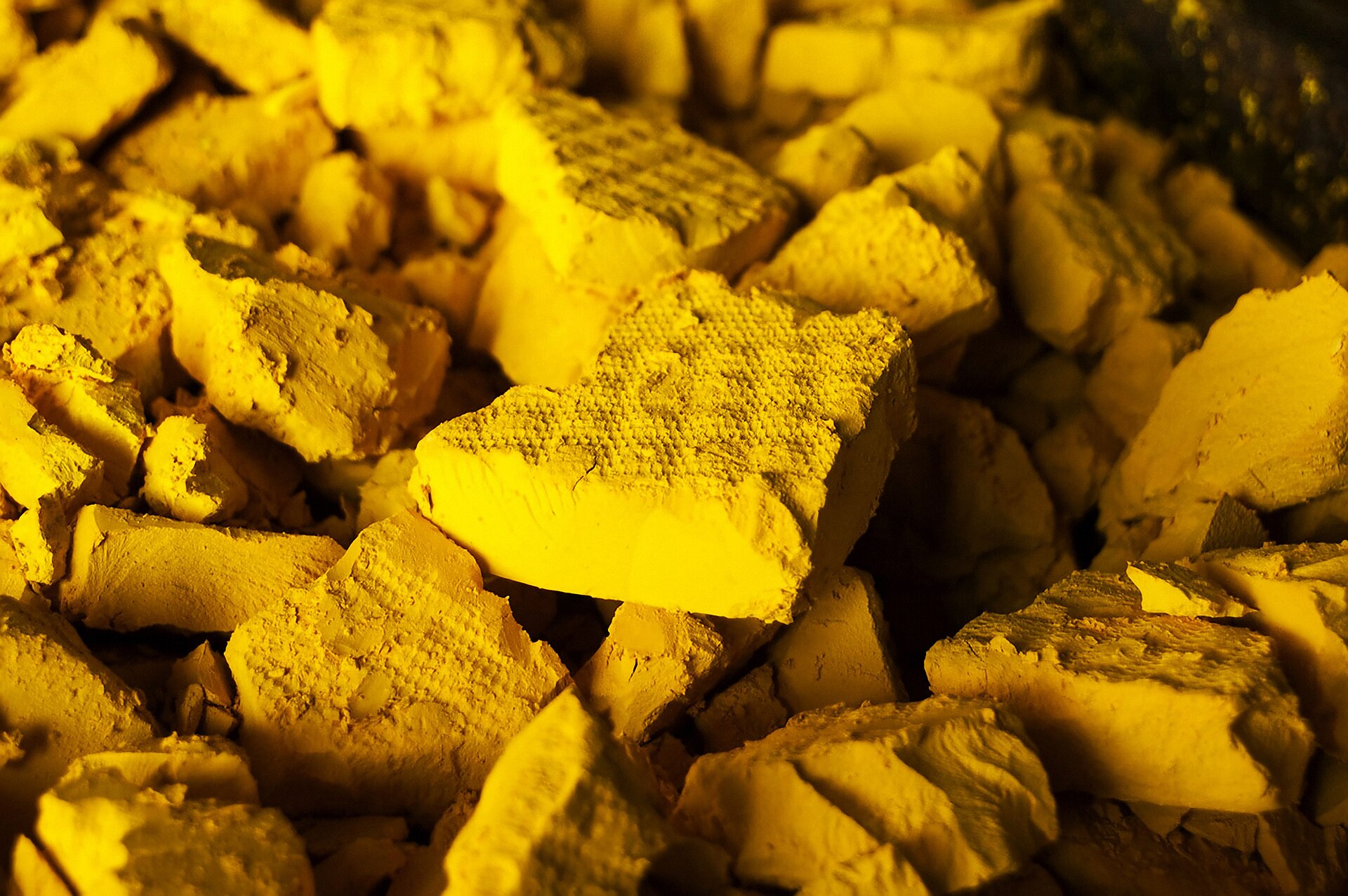
In 2017, the year MBS became crown prince, the government approved a formal national nuclear project and signed a joint venture between China’s National Nuclear Corporation and the Saudi Geological Survey to survey uranium deposits in the Arabian Shield u2014 a geological formation that holds an estimated 90,000 tonnes of uranium, enough to fuel a domestic reactor fleet for decades without import dependency. A 30-kilowatt low-power research reactor, built by Argentina’s INVAP, is under construction at King Abdulaziz City for Science and Technology in Riyadh u2014 a training-grade facility, the kind of installation that every country with nuclear ambitions builds first.
n
The Energy Minister’s January 2025 declaration was not a statement about intent but a status report on a programme whose institutional, geological, and industrial foundations had been laid over fifteen years. The 123 agreement does not create Saudi nuclear ambition; it gives an existing programme access to American reactor technology at a moment when two other nuclear-capable states are already offering the same thing without conditions.
n
The Partners Who Don’t Ask Questions
n
China’s joint venture with the Saudi Geological Survey is not the only thread of Sino-Saudi nuclear cooperation. Beijing has signed memoranda on nuclear safety and security with Riyadh and participates in the China-GCC Forum on Peaceful Use of Nuclear Technology u2014 a multilateral framework that normalises civil nuclear cooperation without the bilateral nonproliferation conditions Washington attaches to its own agreements. At no point has China demanded that Saudi Arabia forswear enrichment, adopt the Additional Protocol, or accept any restriction on its domestic fuel cycle.
n
Russia offers the same permissiveness from a different direction. Rosatom signed Saudi nuclear cooperation memoranda in 2018 and has positioned itself as an alternative supplier of reactor technology, fuel services, and training u2014 all without enrichment prohibitions. The competing Chinese and Russian offers create a floor below which American demands cannot fall without losing the Saudi nuclear market entirely, a constraint the Trump administration acknowledged by accepting terms weaker than the Gold Standard. The Brookings Institution proposed a compromise u2014 a ten-year moratorium on enrichment, neither US-assisted nor Saudi-pursued, with a joint review at the end u2014 but the administration rejected even that modest deferral, judging that any enrichment restriction would push Riyadh toward its Chinese and Russian alternatives.
n
MBS walks into any nuclear negotiation with three partners willing to build reactors, survey uranium, and transfer technology without requiring him to forswear enrichment. Washington’s only remaining advantage is the quality of American reactor technology and the political value of an American security relationship u2014 and the war, which turned Saudi cities into targets for an operation Riyadh did not request, has depreciated the second asset faster than Westinghouse can appreciate the first.
n
Does the UAE Renegotiation Clause Create a Regional Cascade?
n
The UAE’s 2009 Gold Standard agreement contains a renegotiation clause allowing Abu Dhabi to seek amended terms if any regional state receives a more favourable US nuclear cooperation deal, and a Saudi 123 agreement permitting enrichment directly activates it u2014 potentially triggering sequential pressure on Egypt, Turkey, and South Korea to pursue comparable capabilities. The cascade risk is contractual, not hypothetical.
n
The Washington Institute identified the downstream effect with precision: “Allowing enrichment or reprocessing in Saudi Arabia u2014 especially amid Riyadh’s statements about matching Iranian nuclear advances u2014 would erode global nonproliferation norms and set a dangerous precedent in an already volatile region.” If the UAE renegotiates and secures enrichment rights, the pressure propagates u2014 Egypt, which views itself as the natural leader of the Arab world and already operates research reactors, faces a domestic political imperative to match its Gulf neighbours, and Turkey, which has made repeated nuclear statements under a NATO umbrella that President Erdogan has publicly questioned, sits next in the chain. The Arms Control Association and Just Security warned in February 2026 that “countries such as South Korea and Saudi Arabia will likely move closer to developing the technical means u2014 and the political motivation u2014 to build a bomb.”
n
| State | Current nuclear status | Cascade trigger |
|---|---|---|
| UAE | Gold Standard u2014 enrichment prohibited | Renegotiation clause activated by Saudi deal |
| Egypt | Research reactors; El Dabaa plant under construction with Russia | Arab-world leadership imperative |
| Turkey | Akkuyu plant under construction with Russia | Erdogan’s stated nuclear autonomy interest |
| South Korea | Advanced civil programme; no weapons | ACA 2026 warning of growing motivation |
| Iran | Enrichment infrastructure struck; 440.9 kg HEU status unknown | Mojtaba declaration of nuclear “national assets” |
n
The NPT Review Conference opened in New York at a moment when the nonproliferation architecture it was designed to defend is being rewritten bilaterally, outside the treaty framework, by the state that built the framework in the first place. Abu Dhabi’s diplomats did not include that renegotiation clause because they were optimistic u2014 they included it because they anticipated exactly this scenario.
n
The Pakistan Variable
n
The Saudi-Pakistan Strategic and Military Defence Agreement, signed September 17, 2025, adds a dimension to the nuclear question that the 123 debate rarely confronts directly. Pakistani Defence Minister Khawaja Mohammad Asif stated publicly after the signing that Pakistan’s nuclear weapons capabilities “will be made available” to Saudi Arabia u2014 a statement he partially retracted under international pressure, but not before it was documented by the Arms Control Association and the Foundation for Defense of Democracies.
n
Pakistan is already a nuclear-armed state, and its cooperation with Saudi Arabia does not require enrichment facilities, reactor construction, or the decade-long development timeline that a domestic programme demands u2014 it requires a political decision that at least one senior Pakistani official has already announced in public. The SMDA’s military provisions remain classified, but the agreement was signed while Pakistan was simultaneously mediating the Iran-Saudi conflict and managing a $5 billion Saudi loan maturing in June 2026 u2014 a financial dependency that collapses the distinction between alliance and obligation.
n
The 123 agreement and the SMDA occupy different legal and strategic domains, but they point in the same direction: a Saudi Arabia accumulating nuclear options from multiple sources simultaneously, treating each as a parallel track rather than an alternative. Washington is negotiating the 123 as if it were the only pathway to a Saudi nuclear capability u2014 a framing that would be more persuasive if Pakistan’s defence minister had not already announced another one.
n
What Can Congress Still Do?
n
Congress can block the agreement by passing a joint resolution of opposition within 90 days of continuous session; absent that resolution, the 123 agreement becomes law automatically without requiring a vote, a mechanism that demands inaction for approval and active intervention for rejection. The political arithmetic favours the administration: the deal’s commercial wrapper u2014 tens of billions in potential Westinghouse and NuScale contracts u2014 makes opposition look like industrial self-sabotage.
n
The 90-day congressional clock that started when the NPAS was submitted in November 2025 u2014 running on continuous-session days, not calendar days u2014 is either approaching its endpoint or has already passed it, and Congress has not held a single hearing on the nonproliferation implications of the Saudi draft. The mechanism for blocking the agreement requires a joint resolution passed by both chambers, an act of active will from a body the Trump administration has further dissuaded by framing the 123 as part of a broader Abraham Accords expansion u2014 a diplomatic bundle no individual senator wants to be seen obstructing.
n
n
“The fact that Washington is considering allowing Saudi Arabia to develop domestic enrichment and reprocessing capabilities despite having threatened to develop nuclear weapons signals growing U.S. tolerance for ‘friendly proliferation,’ a concept with evident risks since today’s partner could become tomorrow’s adversary, as seen with Iran.”
n
u2014 Arms Control Association, February 2026n
n
n
The Washington Institute identified the policy contradiction at the centre of the deal: greenlighting Saudi enrichment with less-intrusive safeguards makes it “more challenging to negotiate enrichment limits with Iran” u2014 the country whose enrichment programme the United States just spent two months bombing. That contradiction u2014 simultaneously destroying one country’s enrichment capability while enabling another’s u2014 is the structural tension Congress has not resolved, and the auto-approval mechanism means it does not have to.
n
440.9 Kilograms Nobody Can Find
n
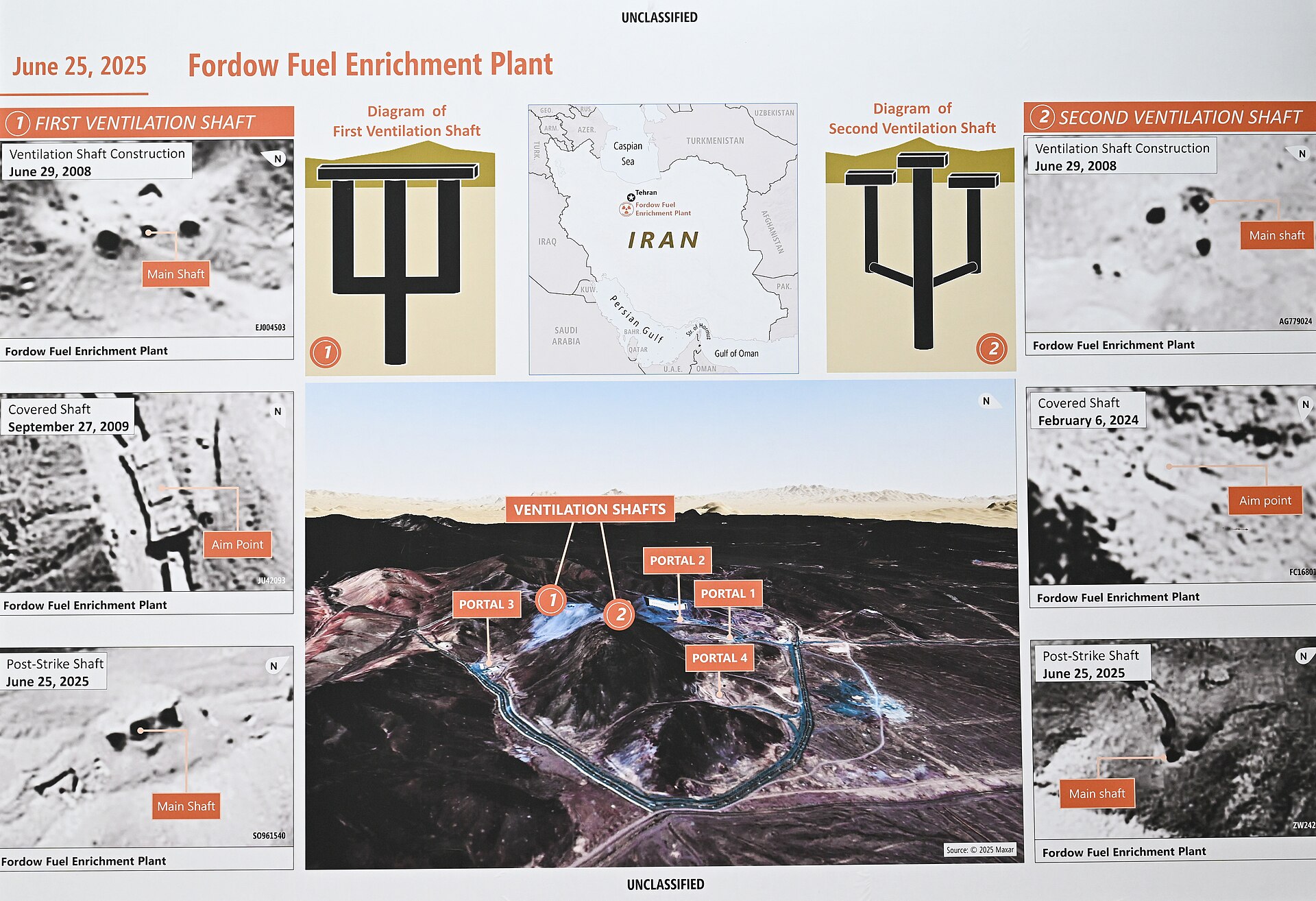
After the strikes hit Fordow, Natanz, and Isfahan, Iran still possessed 440.9 kilograms of uranium enriched to 60 percent u2014 material close enough to weapons-grade that the remaining gap is measured in weeks of centrifuge time, not years of development. CSIS stated it without equivocation: “Iran still possesses 400 kilograms of 60 percent enriched uranium, and the exact location of that nuclear material remains unknown.” The country whose enrichment infrastructure the United States destroyed retains enough fissile material to constitute a persistent threat u2014 one that Russia has offered to custodian and that no international body can currently verify, since IAEA inspector access was terminated on February 28, the day the strikes began.
n
Mojtaba Khamenei’s April 30 statement addressed the missing material without naming it directly. Speaking simultaneously with Iran’s submission of a 14-point ceasefire proposal, Mojtaba declared that “ninety million proud and honorable Iranians… regard all of Iran’s identity-based, spiritual, human, scientific, industrial and technological capacities u2014 from nanotechnology and biotechnology to nuclear and missile capabilities u2014 as national assets, and will protect them just as they protect the country’s waters, land and airspace.” The proposal was a negotiating document; the declaration was the price tag pinned to its cover page.
n
The paradox this creates for the 123 agreement runs in both directions. Saudi Arabia’s enrichment ambition was publicly justified as a response to Iran’s programme u2014 MBS said so on CBS in 2018 and on Fox News in 2023 u2014 but Iran’s remaining material, hidden and unverified, simultaneously prevents Washington from arguing that the threat is resolved while giving Riyadh a permanent justification for the capability it was going to pursue regardless. Iranian state media, rather than addressing Saudi enrichment directly, has pivoted to asserting the inviolability of Iran’s remaining nuclear assets, with hardliners framing any Saudi enrichment capability as proof of American double standards u2014 a mirror-image justification, with each side’s ambition feeding the other’s.
n
n
In Riyadh, a research reactor built by Argentina’s INVAP is rising at King Abdulaziz City for Science and Technology, above a geological formation whose uranium reserves would fuel a domestic fleet for decades. The 123 agreement that determines what Saudi Arabia can do with both is advancing toward automatic approval in a Congress that is not counting down.
n
Frequently Asked Questions
n
What is Section 123 of the US Atomic Energy Act?
n
Section 123 requires a bilateral agreement u2014 called a “123 agreement” u2014 before any US-origin nuclear technology, materials, or equipment can be transferred to a foreign state. The law sets statutory minimum nonproliferation standards that any agreement must meet, but the Gold Standard provisions u2014 binding prohibitions on enrichment and reprocessing, plus mandatory IAEA Additional Protocol adoption u2014 are voluntary additions negotiated bilaterally, not legal requirements under the statute. The Trump administration met the statutory minimums while declining the Gold Standard additions, exploiting a legal distinction between the statutory floor and the policy ceiling that prior administrations chose not to test.
n
How does the Saudi 123 agreement affect future Iran nuclear negotiations?
n
The Washington Institute warned that greenlighting Saudi enrichment makes it “more challenging to negotiate enrichment limits with Iran,” and the sequencing problem compounds that difficulty: the United States destroyed Iran’s enrichment infrastructure, then enabled Saudi enrichment rights, and must now attempt to negotiate a post-war nuclear order in which Iran is asked to permanently forswear a capability its regional rival is being helped to develop. Any future Iranian government u2014 reformist or hardline u2014 will cite the Saudi deal as precedent, arguing that the NPT’s framework of equal rights to peaceful nuclear technology has been replaced by a system in which American allies enrich and American adversaries cannot. The 14-point ceasefire proposal Iran submitted alongside Mojtaba Khamenei’s “national assets” declaration on April 30 already signals that Tehran regards its residual nuclear material as a bargaining chip whose value rises with every enrichment concession Washington makes to Riyadh.
n
What would a regional nuclear cascade look like in practice?
n
The cascade runs through contractual, political, and strategic channels simultaneously, each operating on a different timeline. The UAE’s renegotiation clause is contractual and could be activated within months of the Saudi agreement entering force; Egypt’s response would be political, driven by Arab-world status competition and the El Dabaa reactor complex already under construction with Russian cooperation; Turkey’s is strategic, rooted in President Erdogan’s repeated questioning of NATO reliability and the Akkuyu plant being built by Rosatom. The diplomatic signal u2014 that enrichment rights are available to US partners who push hard enough u2014 propagates immediately even if the physical programmes take years to materialise, and each new entrant makes it harder to deny the next.
n
What is the “friendly proliferation” concept?
n
The Arms Control Association coined this term to describe growing US tolerance for nuclear ambitions by allied states, warning that “today’s partner could become tomorrow’s adversary, as seen with Iran.” The historical parallel is direct rather than rhetorical: Iran began its nuclear programme in the 1950s with American assistance under the Shah, receiving a research reactor from the US in 1967 under the Atoms for Peace programme and signing a civil nuclear cooperation agreement that remained in force until the 1979 revolution. The trajectory from US nuclear partner to US nuclear adversary took less than a generation, and the Arms Control Association’s invocation of Iran as the precedent case is a deliberate reminder that the 123 agreement’s permissive terms are being evaluated against a threat environment that may look entirely different in twenty years. On the structural limits of what MNNA status and the accompanying arms package actually guarantee — and why the Section 123 nuclear agreement is part of the same hedging architecture — see the MNNA designation’s Article 5 gap.
n”}