ISLAMABAD — Saudi Arabia froze Pakistan’s $1.5 billion Sudan arms deal and handed Pakistan $3 billion in fresh deposits in the same week — while Pakistan was simultaneously hosting the Iran ceasefire talks it claims to be neutrally enforcing. The financial architecture of Pakistan’s mediator role is not a backdrop to the diplomacy; it is the diplomacy, and Tehran knows it.
Table of Contents
- The Same-Week Problem
- What the Sudan Freeze Actually Killed
- Is Pakistan’s $4 Billion Libya Deal Next?
- $8 Billion in Deposits and the IMF Condition
- How Does the SMDA Make Pakistan a Neutral Mediator?
- Fighter Jets and Ceasefire Talks on the Same Weekend
- Munir at Khatam al-Anbiya
- Why Does Tehran’s Perception Matter More Than Pakistan’s Intent?
- The Arms Export Trap
- What Happens When Witkoff and Kushner Land in Islamabad?
The Same-Week Problem
Between April 13 and April 21, Saudi Arabia executed two moves against Pakistan that, taken individually, would be unremarkable exercises of bilateral financial management. Taken together, in the same week Pakistan was hosting ceasefire negotiations between Iran and the United States, they constitute the clearest public evidence that Pakistan’s enforcer role operates within a Saudi veto structure. On April 17, Riyadh pledged an additional $3 billion deposit to Pakistan’s State Bank and converted the existing $5 billion facility from an annual rollover — which gave Saudi Arabia a yearly pressure point — into a three-year extension through at least 2028, removing the recurring leverage but deepening the structural dependency in a single gesture.
Within the same window, Saudi Arabia withdrew financing from Pakistan’s $1.5 billion arms deal with Sudan and, according to Reuters, “asked for the agreement to be terminated.” Pakistan’s Finance Minister Aurangzeb responded to the deposit extension with what he called “profound gratitude to the Saudi leadership for their continued support,” describing it as assistance at a “critical time for Pakistan’s external financing needs.” The gratitude was genuine because the dependency is genuine — and that is precisely the problem for anyone in Tehran attempting to take Pakistan’s neutrality at face value.
The sequencing matters because it reveals the mechanism. Saudi Arabia did not quietly extend a loan and separately, for unrelated reasons, kill an arms deal. It demonstrated, in a compressed timeframe visible to every intelligence service monitoring the ceasefire process, that it holds simultaneous authority over Pakistan’s fiscal survival and Pakistan’s defence-industrial ambitions. A mediator whose largest creditor can restructure $8 billion in deposits and veto $5.5 billion in arms exports in the same week is not a mediator in any structural sense — it is a financially captured enforcer operating on a leash whose length Riyadh adjusts in real time.
What the Sudan Freeze Actually Killed
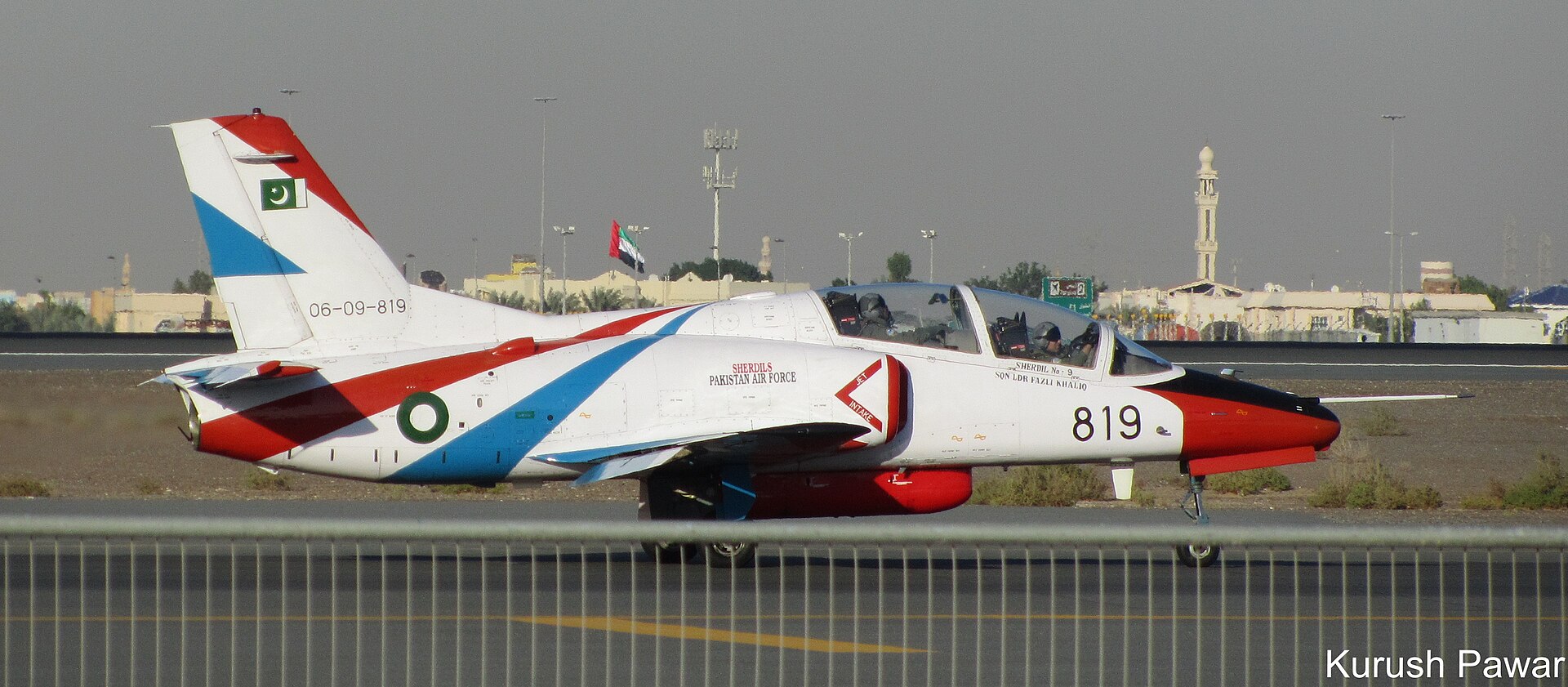
The Sudan deal was not a marginal contract. It included 10 Karakoram-8 light attack aircraft, more than 200 reconnaissance and kamikaze drones, advanced air-defence systems, Super Mushshak trainer aircraft, and — depending on which version of the agreement you credit — several JF-17 Thunder multirole fighters, the same platform Pakistan has been marketing across Africa and the Middle East as its flagship export. At $1.5 billion, it represented one of the two anchor contracts in Pakistan’s record-breaking 2025 defence-export year, which saw nearly $10 billion in total contracts signed and a pipeline of $13 billion in potential future orders.
Saudi Arabia’s stated rationale for killing the financing was a video showing Sudanese Brigadier General Tariq al-Hadi Kajab praising Iran and urging Tehran to target Gulf desalination facilities — a genuine provocation, but one that arrived conveniently during a week when Riyadh had multiple reasons to remind Islamabad of its financial boundaries. Western governments had also been lobbying Saudi Arabia to disengage from proxy conflicts feeding what the UN calls the world’s largest humanitarian crisis, giving Riyadh diplomatic cover for a decision that was at least partly about disciplining Pakistan’s mediation posture. Sudan’s army chief al-Burhan flew to Jeddah and personally pressed MBS to revive the deal; MBS has not reversed the decision.
The Middle East briefing 3,000+ readers start their day with.
One email. Every weekday morning. Free.
Is Pakistan’s $4 Billion Libya Deal Next?
Pakistan’s $4 to $4.6 billion agreement with Khalifa Haftar’s Libyan National Army, signed in December 2025, is the largest arms-export contract in Pakistani history: 16 JF-17 fighters, 12 Super Mushshak trainers, plus land, sea, and air equipment that would establish Pakistan as a major supplier to a North African military force. Saudi Arabia financed the initial March 2026 cargo deliveries — at least five C-130-type cargo aircraft landing at Benghazi airport, documented by Middle East Eye. The deal is the centrepiece of Field Marshal Asim Munir’s vision for Pakistan’s defence industry as an engine of economic independence, a vision he has personally championed in meetings from Tripoli to Riyadh.
That vision now sits inside a Saudi review process. Middle East Eye reported on April 21 that Saudi Arabia is “reconsidering its strategy” on the Libya deal simultaneously with the Sudan freeze, which means roughly $5.5 billion in Pakistani defence exports to Africa — the two highest-profile contracts in the country’s arms-export portfolio — are subject to Saudi financial decisions that Islamabad cannot influence or override. Munir told Al-Hadath from Tripoli that “our recent war with India demonstrated our advanced capabilities to the world,” selling Pakistan’s combat credibility as a product. The bitter structural irony is that the customer base for that product runs through Saudi financing, which means every contract that builds Pakistan’s defence-industrial independence simultaneously deepens the financial dependency that compromises its diplomatic independence.
$8 Billion in Deposits and the IMF Condition
Pakistan’s $5 billion Saudi deposit facility is not a bilateral courtesy — it is a formal condition of the country’s $7 billion IMF bailout programme. The IMF required Pakistan to secure extensions on its Saudi, Chinese, and UAE deposit facilities as a structural benchmark, meaning that Saudi Arabia’s annual rollover decision was, until April 17, effectively a yearly vote on Pakistan’s compliance with international lending conditions. By converting the facility to a three-year term, Riyadh removed the annual pressure point but replaced it with something more durable: an $8 billion combined deposit position ($5 billion existing plus $3 billion new) that constitutes a structural claim on Pakistan’s macroeconomic sovereignty.
The remittance dimension compounds the deposit dependency in ways that are difficult to overstate. Saudi Arabia accounted for $7.4 billion of Pakistan’s remittances in the 2025 fiscal year — approximately 25 per cent of all remittance inflows. Total GCC remittances to Pakistan reached $16.1 billion, more than half the national total, and Pakistan imports more than 85 per cent of its oil and LNG from Gulf states, according to the Stimson Center. These are not abstract economic statistics; they are the material conditions under which 2.5 million Pakistani workers in Saudi Arabia send money home to families whose household budgets would collapse without it. Mass deportation or labour restrictions have historically functioned as implicit Saudi pressure tools, and every Pakistani diplomat involved in the ceasefire process understands this without being told.
| Saudi Financial Instrument | Amount | Status (April 2026) | Structural Effect on Pakistan |
|---|---|---|---|
| State Bank deposit (existing) | $5 billion | Extended to 2028 (3-year term) | IMF bailout condition; removes annual rollover but deepens lock-in |
| Additional deposit (April 17) | $3 billion | Pledged | Timed to same week as Sudan deal freeze and ceasefire talks |
| Sudan arms deal financing | $1.5 billion | Withdrawn; deal frozen | Vetoes Pakistan’s second-largest African defence export |
| Libya arms deal financing | $4-4.6 billion | Under Saudi review | Pakistan’s largest-ever arms export at risk |
| Annual remittances (FY2025) | $7.4 billion | Ongoing | 25% of Pakistan’s total remittance inflows |
| GCC remittances total (FY2025) | $16.1 billion | Ongoing | Over 50% of Pakistan’s national remittance total |
How Does the SMDA Make Pakistan a Neutral Mediator?
Pakistan signed the Saudi Mutual Defence Agreement on September 17, 2025 — a treaty that commits Pakistan to treat an attack on Saudi Arabia as an attack on Pakistan itself. Pakistan has simultaneously served as Iran’s protecting power in the United States since 1992, a diplomatic role that makes it structurally invested in maintaining a functional relationship with Tehran. These two commitments are formally incompatible in a war where Iran has already struck Saudi territory, including the Ras Tanura oil facility, and where the IRGC published a counter-target list that included the King Fahd Causeway and seven other Gulf bridges.
Elizabeth Threlkeld, a senior fellow at the Stimson Center, identified this contradiction directly, noting that Pakistan’s unique structural position — bordering Iran, hosting the world’s second-largest Shia Muslim population, maintaining strong Saudi ties — functions as both its mediation credibility and its fundamental conflict of interest. The SMDA does not contain a neutrality exception for ceasefire enforcement, which means that every day Pakistan hosts talks between Iran and the US, it does so as a treaty-bound military ally of one of the belligerents’ primary targets. Chietigj Bajpaee at Chatham House observed that Pakistan “continues to take centre stage as an indefatigable mediator claiming neutrality and the trust of all sides,” while noting the structural limits imposed by its lack of diplomatic relations with Israel and its deep Saudi financial integration.
Fighter Jets and Ceasefire Talks on the Same Weekend
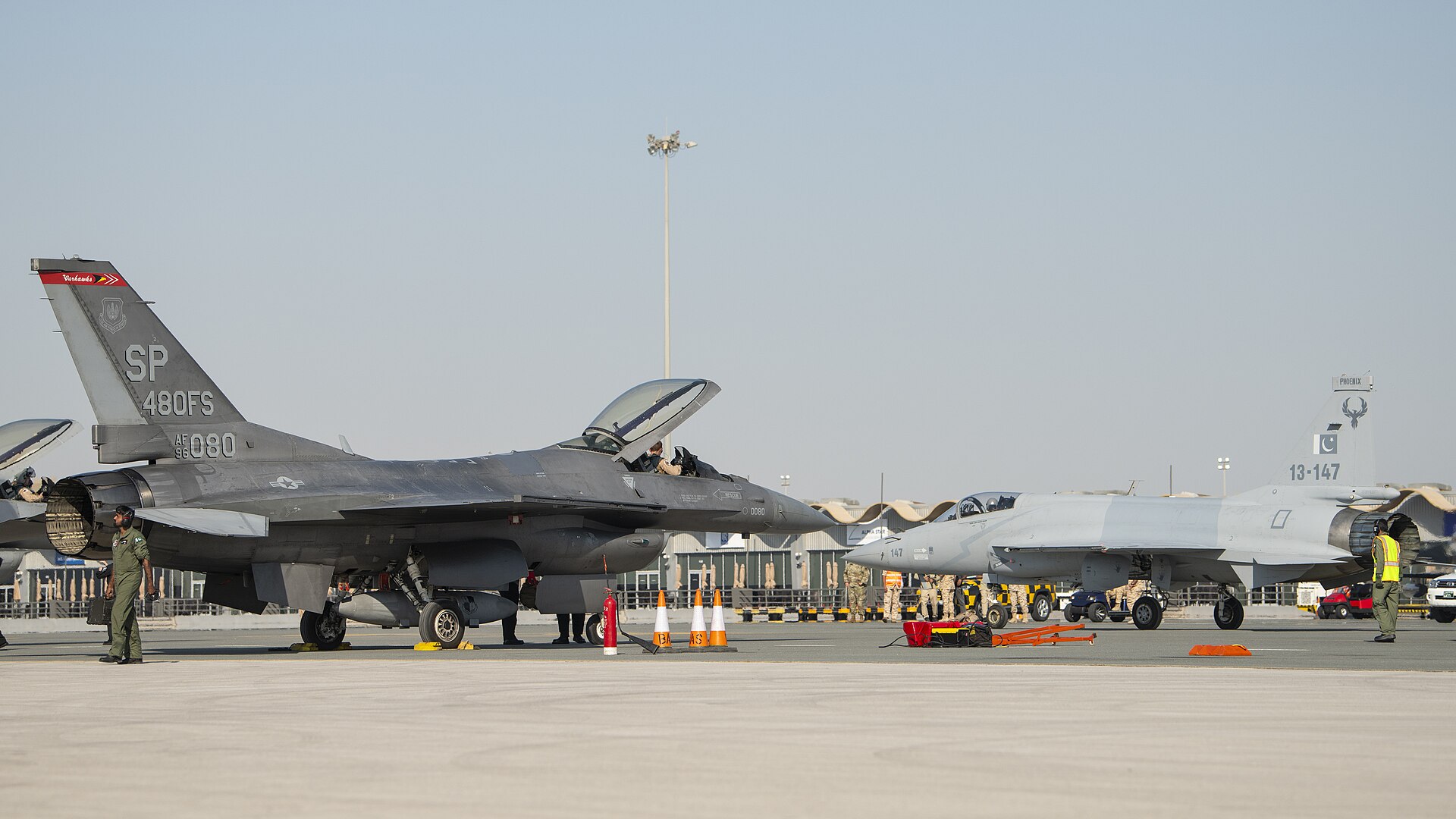
On April 11, 2026, Pakistan Air Force aircraft arrived at King Abdulaziz Air Base in Saudi Arabia’s Eastern Sector — the same weekend Pakistan was hosting the Vance-Ghalibaf talks in Islamabad, the first direct US-Iran engagement since 1979. Saudi Arabia’s Ministry of Defence confirmed the deployment. Al Jazeera, Fortune, and Al Arabiya all reported it on the same day. The optics were, to use a word that understates the diplomatic damage, catastrophic for any claim of Pakistani neutrality in Tehran’s assessment.
An anonymous Pakistani military expert told Al Jazeera on April 14 that “Pakistan can hold both roles only if the deployment remains strictly defensive, time-bound, and transparently limited,” adding that “the moment the theatre shifts to offensive operations, or the perception of offensive coordination emerges, the dual role collapses.” A former Pakistani general, also unnamed, offered the sharper formulation: “Iran’s perception, not Pakistan’s intent, will determine whether trust survives.” Both assessments point to the same structural problem — Pakistan deployed combat aircraft to the territory of a Saudi ally under active Iranian missile threat during the same 72-hour window it was asking Iran to trust its ceasefire guarantees. The deployment may have been defensive, pre-planned, and operationally irrelevant to the talks, but none of those qualifications matter to an IRGC intelligence directorate that lost its second-ranking officer on April 6 and whose command structure has been in crisis since Tangsiri’s death on March 30.
Munir at Khatam al-Anbiya
Five days after deploying fighter jets to Saudi Arabia, Field Marshal Asim Munir visited Khatam al-Anbiya headquarters in Tehran on April 16 — the IRGC’s construction and engineering conglomerate commanded by Mohammad Reza Abdollahi, the same officer President Pezeshkian publicly accused of wrecking the Islamabad ceasefire process. Pezeshkian named Abdollahi alongside SNSC Secretary Vahidi on April 4, accusing them of “deviation from the delegation’s mandate” in the Islamabad talks — a confession from Iran’s own president that the civilian government does not control the military commanders Pakistan’s mediator is attempting to bring to the table.
Quwa defence analysis noted on April 23 that Pakistan faces “a major challenge getting the new heads of the IRGC to the negotiating table, with General Asim Munir unable to bring the new IRGC heads to the fore despite visiting Iran in his uniform.” The visit to Khatam al-Anbiya was an attempt to work the IRGC command structure directly, bypassing the civilian channels that Pezeshkian’s own admission confirmed are irrelevant to ceasefire decisions. But Munir arrived at Abdollahi’s headquarters as the army chief of a country that had deployed combat aircraft to Saudi Arabia five days earlier, signed the SMDA six months prior, and was at that very moment managing $8 billion in Saudi deposits — a context that Abdollahi, whatever his disposition toward ceasefire negotiations, could not have missed and would have been professionally negligent to ignore.
Why Does Tehran’s Perception Matter More Than Pakistan’s Intent?
Iran dismissed the latest round of US engagement as “a media game.” Iranian state media denied that the April 25-26 talks between Witkoff, Kushner, and Araghchi in Islamabad were even scheduled, despite the White House announcing the travel on April 24. This pattern — Washington announces, Tehran denies, Pakistan hosts — has become the structural rhythm of a mediation process in which the mediator’s credibility with one party erodes with every news cycle. The IRGC does not need to prove that Pakistan is acting as a Saudi agent; it only needs to maintain the institutional position that Pakistan’s financial capture makes genuine neutrality impossible, which the publicly available deposit and arms-deal data supports without any intelligence work required.
The protecting-power relationship compounds the perception problem in an unexpected direction. Pakistan has represented Iranian interests in Washington since 1992, which means it has a three-decade institutional investment in the relationship with Tehran that predates the SMDA, the current war, and Munir’s tenure. Tehran’s diplomats know this history, but the IRGC’s operational commanders — the ones who actually control ceasefire compliance — assess Pakistan not through the lens of 1992 diplomatic conventions but through the lens of April 2026 military deployments. When Araghchi thanked Sharif and Munir on April 8 “on behalf of the Islamic Republic of Iran” for “their tireless efforts,” he framed Pakistan’s role as a personal favour rather than a legal commitment, a formulation that preserves Iran’s ability to withdraw its trust without withdrawing from any formal framework.
The Arms Export Trap
Pakistan struck defence deals worth nearly $10 billion in 2025 — its highest-ever annual total — with a pipeline of $13 billion in potential future orders. Munir has staked his institutional legacy on transforming Pakistan from a net arms importer into a competitive exporter, using the India-Pakistan war as a live demonstration of Pakistani weapons systems in combat conditions. The strategy is coherent — build defence-industrial capacity, generate hard-currency export revenue, and trade the IMF bailout cycle for a self-sustaining arms-export model. The problem is that the two largest African contracts in this portfolio — Sudan and Libya, worth a combined $5.5 billion — are both financed by Saudi Arabia, which means the escape route from Saudi financial dependency runs directly through Saudi financial dependency.
This is not a theoretical contradiction; it became an operational one in the third week of April 2026. Saudi Arabia demonstrated that it can freeze Pakistan’s largest African arms deal, put its largest-ever arms export under review, and simultaneously extend billions in deposits — all within the same week, all while Pakistan is performing the mediator role that both Washington and Riyadh need it to perform. The Brookings Institution published “Saudi Arabia’s Hold on Pakistan” in 2019, documenting the structural dependency across decades: Nawaz Sharif choosing Saudi donations over IMF conditionality in 1990, a $1.5 billion direct balance-of-payments grant in 2013, Saudi Arabia transferring $2 billion the day before a critical IMF board meeting in 2023. The current crisis did not create this dependency; it revealed its operational ceiling.
What Happens When Witkoff and Kushner Land in Islamabad?
The White House announced on April 24 that Steve Witkoff and Jared Kushner will travel to Pakistan to meet Iranian Foreign Minister Araghchi — an arrangement that places Pakistan at the physical centre of the next round of US-Iran engagement while Iran’s state media simultaneously denies the meeting exists. Kushner’s own financial architecture compounds Pakistan’s structural problem: his firm Affinity Partners holds $2 billion from the Saudi PIF and collects $25 million per year in management fees — meaning the lead US negotiator is financially dependent on the same government whose interests Pakistan cannot afford to contradict. The full conflict-of-interest analysis is in Kushner Replaces Vance in Islamabad: The $137 Million Conflict of Interest at the Heart of Iran Talks. Trump himself established the template for this dynamic on April 8, when he said he agreed to the ceasefire “based on conversations with Prime Minister Shehbaz Sharif and Field Marshal Asim Munir, of Pakistan,” adding that they had “requested that I hold off the destructive force being sent tonight to Iran.” The framing positioned Pakistan not as a neutral venue but as an active interlocutor whose personal appeal to Trump produced a specific military outcome.
The 27th Constitutional Amendment, which restructured Pakistan’s judicial and executive authority, means ceasefire diplomacy operates as Munir’s operation rather than the elected government’s — a concentration of authority that simplifies Washington’s interlocutor problem but intensifies Tehran’s trust problem. Munir is simultaneously managing an $8 billion Saudi deposit relationship, a $5.5 billion Saudi-financed arms-export portfolio under active threat, a mutual defence treaty with the country whose oil infrastructure Iran has already struck, and a combat aircraft deployment to Saudi territory that coincided with the talks he was hosting. The question is not whether Pakistan wants to be a neutral mediator; it is whether the structural conditions of Pakistani statecraft in April 2026 permit neutrality as anything other than a performance.
The Nicosia Summit and Saudi lobbying on the Hormuz blockade both suggest Riyadh is running its own parallel diplomatic tracks that do not depend on Pakistan’s mediation succeeding. If Pakistan’s enforcer role is primarily useful to Saudi Arabia as a channel for US engagement with Iran — rather than as a genuine path to a ceasefire Saudi Arabia actually wants — then the $8 billion in deposits is not the price of buying a mediator but the price of renting a venue, and the Sudan deal freeze is the reminder that the landlord sets the terms. The parallel track Saudi Arabia is running directly with Tehran — through Ambassador Enayati, ministerial-level calls, and Chinese coordination — is examined in Saudi Arabia Is Not Sitting Out the Iran War — It’s Negotiating a Separate Peace. Pakistan is not the only state whose nominal neutrality collapsed under simultaneous Saudi and American pressure in the same week: India’s Impossible Neutrality Died in Seven Days traces how GL U expiry, Chabahar waiver expiry, and the Epaminondas seizure dismantled New Delhi’s fence position within a single seven-day window.
FAQ
What is Pakistan’s “protecting power” role for Iran?
Since 1992, Pakistan has formally represented Iranian diplomatic interests in the United States under the Vienna Convention framework — handling consular services, property management, and diplomatic communications that Iran cannot conduct directly due to the absence of bilateral relations since 1980. This role creates a structural expectation in Tehran that Pakistan will protect Iranian interests, not adjudicate them — a framework designed for peacetime diplomatic absence, not for active conflict where the protecting power is simultaneously a treaty-bound ally of the adversary.
How do Saudi deposits connect to Pakistan’s IMF programme?
The IMF’s 2025 country report for Pakistan listed the maintenance and extension of bilateral deposit facilities — from Saudi Arabia, China, and the UAE — as a formal structural benchmark for the $7 billion bailout programme. Before the April 17 conversion to a three-year term, Saudi Arabia effectively held an annual vote on Pakistan’s IMF compliance, concentrating maximum diplomatic pressure at predictable calendar intervals — once a year, every year, until Riyadh chose otherwise.
Why did Sudan’s al-Burhan fly to Jeddah?
Sudan’s army chief Abdel Fattah al-Burhan flew to Jeddah in late April 2026 specifically to lobby MBS to reverse the financing withdrawal and revive the $1.5 billion arms deal. The visit failed — MBS has not reversed the decision — and Darfur-based media reported the freeze with open bitterness, framing Pakistan as having “halted” the agreement at Saudi direction. Al-Burhan’s unsuccessful personal appeal to the Saudi crown prince demonstrated that even wartime heads of state cannot override a Saudi financing decision once Riyadh has made it.
How does Pakistan’s 27th Constitutional Amendment affect ceasefire diplomacy?
The 27th Amendment, passed in late 2025, restructured the relationship between Pakistan’s judiciary, executive, and military establishment in ways that concentrated foreign-policy and security authority more firmly in the hands of the military leadership. In practice, this means ceasefire diplomacy is Munir’s operation, not Prime Minister Sharif’s — the elected government provides the diplomatic framework and the formal venue, but the substantive negotiations, the military deployments, and the relationship management with both Saudi Arabia and Iran run through the army chief’s office. That concentration of authority is why Washington finds Pakistan easy to deal with and Tehran finds it difficult to trust. That structural tension was on full display on April 25, when Araghchi arrived in Islamabad carrying Iran’s written roadmap while simultaneously denying any US talks were planned — a choreography of deniability that Pakistan’s financial exposure to Riyadh cannot resolve.
Can Pakistan break the Saudi financial dependency through arms exports?
In theory, yes — Pakistan’s combat-proven weapons systems have genuine export appeal, as the $10 billion in 2025 contracts demonstrates. In practice, no — not in the near term. The two anchor African contracts are both Saudi-financed, meaning the strategy for breaking Saudi dependency is funded by Saudi Arabia. Diversifying to self-financing buyers would require years of diplomatic cultivation that does not help Pakistan in April 2026, when it needs the deposits renewed and the ceasefire credible at the same time. The structural implication of that Saudi capture — that Iran treats Islamabad as a Saudi venue rather than a neutral forum — helps explain why the revised Iranian paper Trump received after Araghchi’s April 25 departure moved through the Oman back-channel, as documented in Iran’s Revised Paper Reached Washington Through Oman, Not Pakistan.