
Table of Contents
- What Has Operation Nasr-2 Destroyed in Ten Waves?
- Why Did Iran Stop Striking Saudi Arabia After March?
- Does PSAB’s Exemption Signal a Saudi-Iranian Arrangement?
- The Base Iran Proved It Can Reach
- What Would Striking PSAB Cost Iran?
- How Do the Wave Names Reflect IRGC Escalation Doctrine?
- The Interceptor Gap Iran Exploits
- The Last Unstruck Node
- Frequently Asked Questions
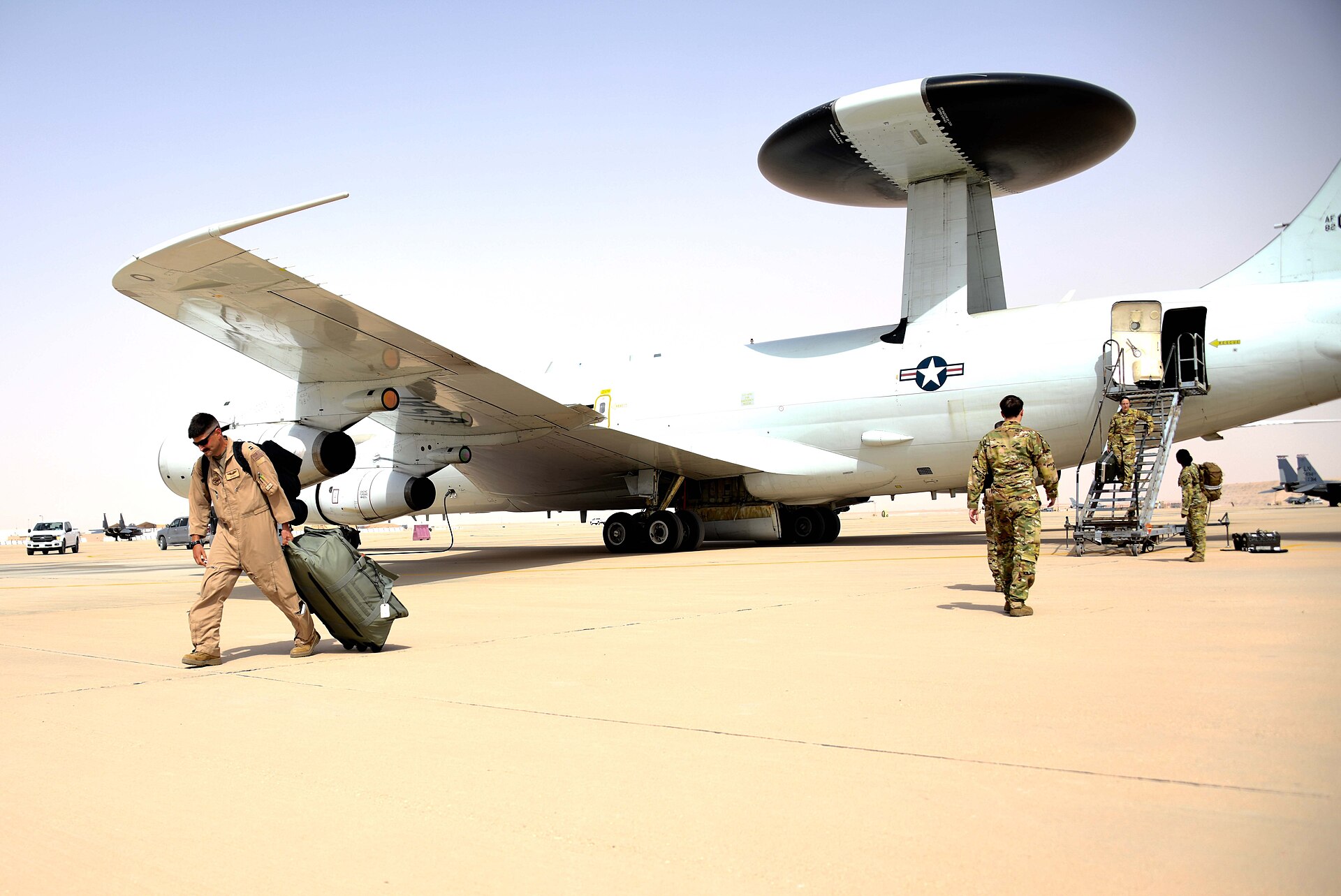
RIYADH — The IRGC’s Operation Nasr-2 has struck US military installations in Kuwait, Bahrain, Qatar, and Jordan across ten waves since early July 2026, systematically destroying the sensors, fuel infrastructure, and command nodes that generate American sorties over Iran. By wave 10 on July 16, Iran had eliminated a C-RAM early-warning radar at Ali Al-Salem Air Base in Kuwait and a fuel pumping station at Sheikh Isa Air Base in Bahrain — the two elements an air base needs to detect incoming threats and keep aircraft flying. Prince Sultan Air Base, 120 kilometres southeast of Riyadh, hosts 2,300 US troops, the remnants of a tanker fleet Iran damaged in March, and the only potential backup to Al Udeid’s Combined Air Operations Center. The IRGC struck PSAB twice in March 2026 — destroying an E-3G Sentry AWACS on March 27 with a Fattah-2 hypersonic missile. It has not struck the base since. Nasr-2’s targeting map covers four countries. Saudi Arabia is not among them.
That changed on July 17 — at least at the level of civil defense response. Saudi Arabia’s General Directorate of Civil Defense activated alarms at Al-Kharj Governorate, 120 kilometres from Prince Sultan Air Base, and at the Red Sea port of Yanbu, before lifting both without any official explanation of the trigger. Saudi Arabia Sounded the Alarms It Cannot Explain tracks what the silence reveals about what the kingdom intercepted — or chose not to name.
What Has Operation Nasr-2 Destroyed in Ten Waves?
The IRGC announced each wave with a specific invocation and a corresponding US strike cited as justification. The pattern, stripped of its theological framing, traces a deliberate escalation through the layers of US force-projection infrastructure across the Persian Gulf.
Waves 1 through 3 targeted intelligence, surveillance, and reconnaissance assets. At Ali Al-Salem Air Base in Kuwait, the IRGC struck the MQ-9 Reaper drone deployment ramp — the physical staging point for the unmanned aircraft that provide targeting data for US strike packages over Iran. At Sheikh Isa Air Base in Bahrain, wave 2 hit a US drone command-and-control center, a helicopter maintenance facility, a P-8 Poseidon electronic warfare aircraft hangar, the Fifth Fleet’s air-control radar, and a Patriot radar installation. Wave 3 destroyed weapons and parts warehouses at Sheikh Isa — the depot-level stocks that sustain both platforms and intercept systems.
Waves 4 through 6 moved up the kill chain. The IRGC struck Fifth Fleet command-and-control centers and military equipment warehouses at Sheikh Isa, along with fuel storage facilities serving the fleet — wave 5, codenamed “Ya Ali ibn Abi Talib.” In Jordan on July 9, ten ballistic missiles arrived at Muwaffaq Salti Air Base in al-Azraq. Jordanian government spokesman Mohammad Al-Momani told reporters that missiles had been “intercepted and dealt with.” Defence Security Asia satellite imagery later showed genuine hangar damage at the base. Jordan’s air defences intercepted 49 total projectiles within 24 hours, including 13 ballistic missiles.
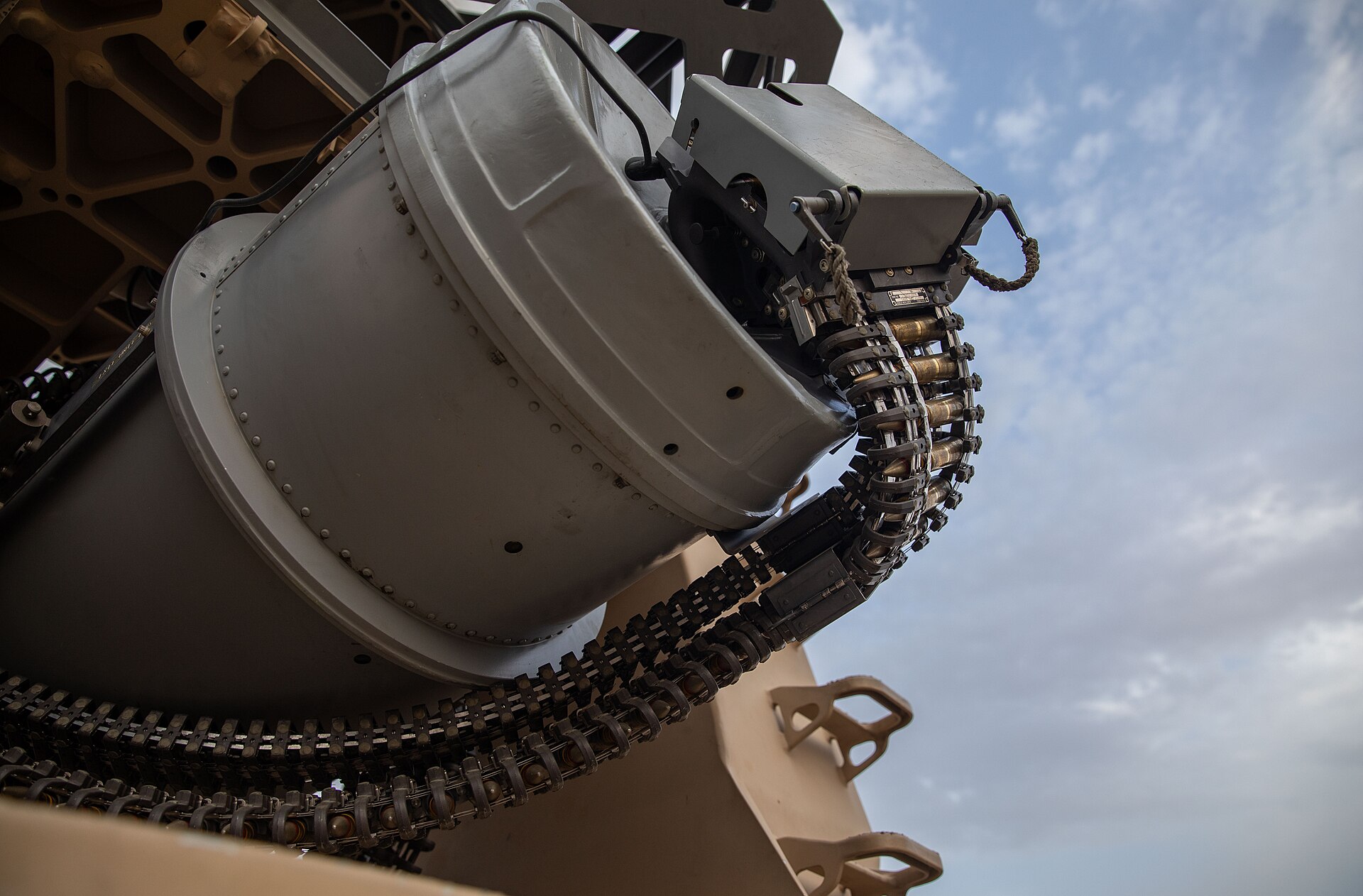
Wave 8, codenamed “Ya Zainab Al-Kubra,” destroyed the C-RAM early-warning radar at Ali Al-Salem. Defence Security Asia confirmed the hit with commercial satellite imagery showing a direct strike on the radar position. Without C-RAM cueing, the Phalanx close-in weapon systems at Ali Al-Salem cannot autonomously detect and engage incoming projectiles during their terminal approach — the last-ditch defensive layer is now functionally blind.
The Middle East briefing 3,000+ readers start their day with.
One email. Every weekday morning. Free.
Wave 10, announced on July 16, completed the infrastructure sequence at Sheikh Isa: an air surveillance and control radar plus the fuel pumping station serving US aircraft. The IRGC statement declared both “completely destroyed.” A fuel pumping station is not a fuel tank. It is the mechanism that moves fuel from storage to aircraft. Without it, fuel can be present on base and still not reach the aircraft that need it.
| Wave | Target Category | Specific Assets Struck | Base / Country |
|---|---|---|---|
| 1–3 | ISR and drone infrastructure | MQ-9 deployment ramp, drone C2 center, P-8 hangar, helicopter maintenance facility, weapons/parts warehouses | Ali Al-Salem (Kuwait), Sheikh Isa (Bahrain) |
| 2–4 | Intercept cueing and air defence | Fifth Fleet air-control radar, Patriot radar | Sheikh Isa (Bahrain) |
| 5–6 | Command, logistics, fuel storage | Fifth Fleet C&C centers, equipment warehouses, fuel storage | Sheikh Isa (Bahrain) |
| Jul 9 | Platforms and shelters | Hangars, aircraft shelters (10 ballistic missiles) | Muwaffaq Salti (Jordan) |
| 8 | Close-in defence sensors | C-RAM early-warning radar | Ali Al-Salem (Kuwait) |
| 10 | Sortie-generation infrastructure | Air surveillance/control radar, fuel pumping station | Sheikh Isa (Bahrain) |
Iran’s operations are currently focused on destroying the US’s offensive infrastructure in the region. The next phases will then begin.
IRGC Brigadier General Hossein Mohebbi, July 16, 2026
The statement specified infrastructure as a precondition for what follows. Mohebbi did not name the next phases.
Mohebbi’s declaration preceded the next confirmed phase by less than 24 hours. On July 17, 2026, Iranian ballistic missiles struck Al Udeid Air Base in Qatar — the Combined Air Operations Center hosting the nerve center of US air operations across the theater — wounding four people including a child. The IRGC claimed it destroyed a command-and-control node at the base, two days before US-Iran talks were scheduled in Oman. Prince Sultan Air Base remains the only major US installation in the region yet to receive an Nasr-2 strike.
Why Did Iran Stop Striking Saudi Arabia After March?
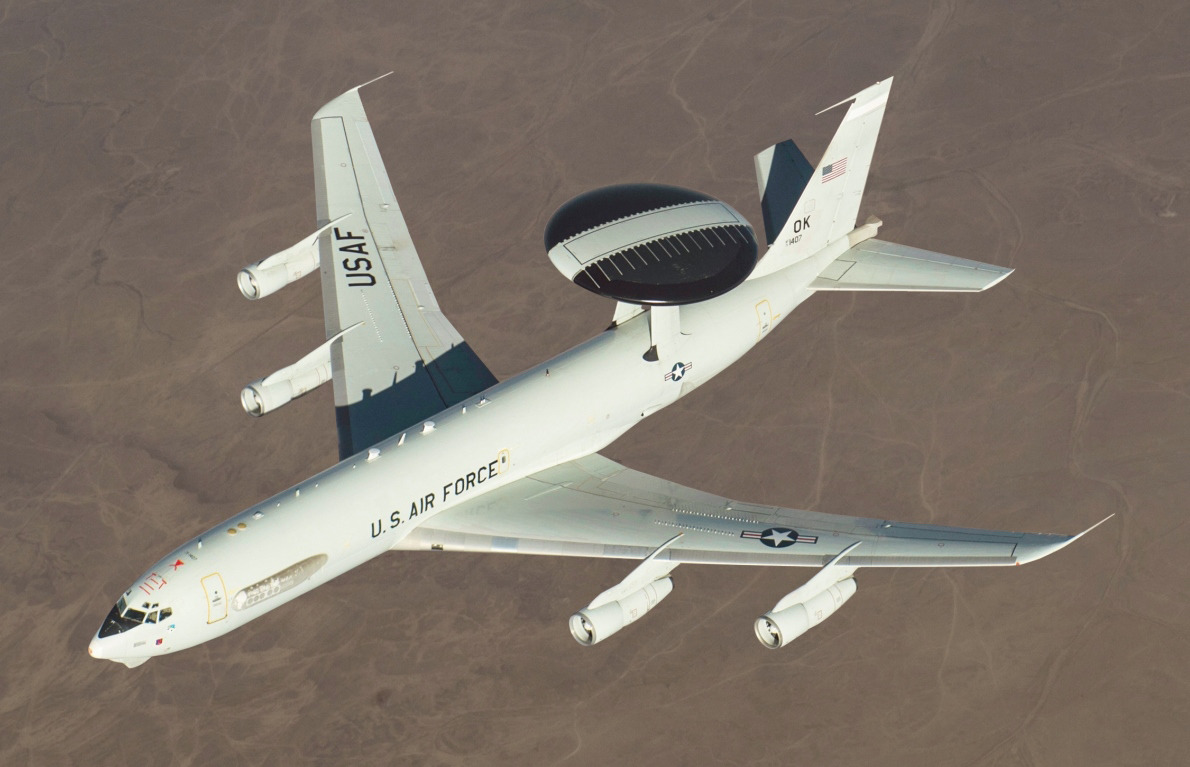
Iran struck Prince Sultan Air Base twice in March 2026. On March 14, five KC-135 Stratotankers sustained damage — the tanker fleet that extends the combat radius of every US fighter operating from PSAB. On March 27, a Fattah-2 hypersonic missile destroyed an E-3G Sentry AWACS, one of sixteen in the US Air Force’s fleet, valued between $270 million and $500 million. Fifteen US troops were wounded. No replacement airframe exists.
Before the March strikes, Iran had been directing approximately 47 drone sorties per day at Saudi territory. Within 72 hours of the March 27 PSAB strike, that number dropped to single digits. Unnamed Iranian officials told the Jerusalem Post that the reduction reflected a concern that sustained attacks could trigger a direct Saudi military response. The assessment, as relayed: “the Saudis are on edge.”
The reduction has held for four months. Nasr-2’s ten waves have struck Kuwait, Bahrain, Jordan, and Qatar. They have not struck Saudi Arabia.
Iran sent 30,000 Hajj pilgrims to Saudi Arabia during the war — the lowest allocation against its 87,550 quota. The pilgrims’ presence offered a form of mutual restraint: Iran would not strike a country hosting its citizens performing an obligatory religious rite, and Saudi Arabia would not retaliate while Iranian pilgrims walked between Safa and Marwa. The last Iranian pilgrim departed on June 9. The restraint has nonetheless continued for 37 days beyond the Hajj deterrent’s expiry.
CSIS noted in its 2026 analysis “Visualizing Iran’s Escalation Strategy” that the IRGC had been “expanding targets beyond U.S. and Israeli sites to hit Gulf civilian and transportation infrastructure.” The expansion has reached Kuwait, Bahrain, Qatar, and Jordan. It has not returned to Saudi Arabia.
The timeline aligns with a series of Saudi actions that had no precedent in the US-Saudi defence relationship. March: PSAB struck twice. Late March: Iranian drone sorties fall from 47 per day to single digits. May: Saudi Arabia circulates a Helsinki-style non-aggression proposal and, separately, grounds 43 US warplanes at PSAB for four days. July: Nasr-2 strikes US bases in four countries across ten waves and does not touch Saudi territory. Each Saudi act of distancing from the US military posture has been followed by a corresponding Iranian act of restraint toward Saudi targets. No one has drawn the line publicly.
Does PSAB’s Exemption Signal a Saudi-Iranian Arrangement?
No official on either side has confirmed any understanding. The evidence is structural and circumstantial, and it aligns across five points.
The Faisal-Araghchi telephone channel. Saudi Foreign Minister Prince Faisal bin Farhan and Iranian Foreign Minister Abbas Araghchi have maintained an open telephone line throughout the war — multiple conversations confirmed by both governments. The channel has survived every escalation, including the March PSAB strikes and Saudi Arabia’s coalition threat against Hodeidah in July. What has been discussed beyond condolences and public statements is not known. That the line has never been cut is itself a data point.
Saudi Arabia’s Helsinki proposal. In May 2026, Riyadh circulated a regional non-aggression pact modeled on the 1975 Helsinki Final Act. The proposal included de-confliction lines, military exercise notifications, and observer exchanges — the architecture of managed coexistence between adversaries who do not trust each other but prefer not to fight. The Financial Times, Times of Islamabad, and Middle East Eye all reported the initiative. Its timing coincided with the period during which Iranian strikes on Saudi territory approached zero.
Operation Project Freedom. In May 2026, Saudi Arabia grounded 43 US warplanes at PSAB for four days, blocking a Trump administration operation to reopen the Strait of Hormuz. The act was unilateral and without precedent in the history of the US-Saudi basing relationship. Trump called MBS directly to demand the runway be reopened; MBS did not comply until PAC-3 resupply was threatened. The operational effect was indistinguishable from what Iran would have requested if it had the standing to make such a request.
The IRGC’s stated targeting framework. PressTV has framed Nasr-2 as “punishment of aggressor infrastructure, not territory” — a formulation that distinguishes between destroying the capacity to generate sorties and threatening sovereign airspace. If the IRGC internally classifies Saudi Arabia as a non-aggressor — or, more precisely, as a country that has actively impeded US operations — PSAB’s exemption follows the stated logic. Kuwait and Bahrain, which also host US forces without conducting strikes against Iran, do not receive the same exemption. The distinction suggests the IRGC is applying criteria beyond mere non-belligerency.
The March precedent itself. The IRGC demonstrated on March 27 that it possesses the range, targeting data, and munition to strike PSAB at will. It chose to stop. It has maintained that choice through ten waves of Nasr-2. The restraint is 111 days old as of July 16.
None of these five points constitutes proof of a formal arrangement. Together, they describe a pattern that an arrangement would explain. No named Western or Gulf analyst has publicly advanced the theory as of July 16, 2026.
The Base Iran Proved It Can Reach
PSAB sits approximately 600 kilometres from the nearest point on Iran’s coast and 800 to 850 kilometres from southwestern Iranian launch positions. The Zolfaghar short-range ballistic missile, with a range of approximately 700 kilometres, cannot reliably reach the base from most Iranian territory. For months after the war began, this supported the theory that PSAB’s exemption was a function of geography rather than intent.
The Fattah-2 rendered that theory obsolete on March 27. Iran’s hypersonic missile carries a claimed range of 1,400 kilometres at terminal speeds of up to Mach 15. Its strike on PSAB destroyed the E-3G Sentry — a 44-metre aircraft parked on an open ramp — with enough precision to wound fifteen troops in the vicinity while leaving surrounding structures intact. The missile covered the distance from Iranian territory to central Saudi Arabia and hit an asset the United States cannot replace.
No new E-3Gs are in production. The E-7A Wedgetail replacement programme is years from delivering an operational airframe to the Middle East theater. The IRGC eliminated that surveillance and battle-management node — and then declined to exploit the gap it had created. PSAB is not the only Saudi installation within Fattah-2 range. Abqaiq, the processing hub for 5.7 million barrels per day of Saudi crude, sits closer to the Iranian coast.
What Would Striking PSAB Cost Iran?
Kuwait’s Ali Al-Salem Air Base and Bahrain’s Sheikh Isa Air Base both host US forces that have not participated in combat operations against Iran. Neither country has conducted strikes on Iranian territory. Both have been struck repeatedly in Nasr-2. The argument that Iran exempts PSAB because Saudi Arabia is non-belligerent does not survive comparison with Kuwait and Bahrain — they are also non-belligerent, and they are being hit.
What separates PSAB is the political weight behind the target. The base hosts 2,300 US troops — the largest American ground presence in Saudi Arabia since the post-2003 drawdown. A strike on PSAB that kills US service members inside Saudi Arabia creates a political obligation for Riyadh to respond that does not exist when the same casualties occur in Kuwait or Bahrain. The Arabian Gulf States Institute has noted that Saudi Arabia, “despite spending $142 billion on arms in May 2025, cannot replicate [Kuwait’s layered air defence] at speed.” But Saudi Arabia’s 227,000-strong armed forces, its geographic depth, and its status as Washington’s largest arms customer make a Saudi entry into the war a categorically different event from anything Iran has triggered to date.
A second factor is what PSAB offers Iran by remaining unstruck. Washington has considered punitive drawdowns from the base as a coercive instrument against Saudi non-cooperation — a threat that only works if PSAB is operational. If Iran destroys the base, it removes the asset Washington uses to coerce Riyadh. An intact PSAB that Saudi Arabia intermittently denies to the US may serve Iranian interests better than a cratered one that unites Washington and Riyadh against Tehran.
Third, the IRGC appears to be treating PSAB as an escalation reserve. Mohebbi’s statement that “the next phases will then begin” once infrastructure destruction is complete implies a target set that has been withheld. A base located deep inside the territory of the Gulf’s largest military power is the kind of target a campaign saves for its most consequential phase. The IRGC has not used the word “reserve.” The targeting pattern uses it for them.
How Do the Wave Names Reflect IRGC Escalation Doctrine?
Each Nasr-2 wave carries a code name drawn from Shia Islamic tradition. Wave 3: “Ya Zain al-Abidin,” invoking the Fourth Imam, associated with patient endurance of suffering. Wave 5: “Ya Ali ibn Abi Talib,” the First Imam and foundational figure of Shia Islam. Wave 8: “Ya Zainab Al-Kubra,” granddaughter of the Prophet Muhammad, associated with the mourning rites of Karbala and the public denunciation of injustice.
The progression is not decorative. Zain al-Abidin’s invocation accompanied the methodical destruction of drone ramps and parts warehouses — attritional, grinding work. Ali ibn Abi Talib was invoked for the destruction of command centers and fuel storage — the assets that sustain an adversary’s capacity to fight. Zainab al-Kubra accompanied the blinding of C-RAM defences at Ali Al-Salem — the elimination of the enemy’s ability to protect itself against what comes next.
The IRGC statement accompanying wave 8 addressed “your valiant and heroic sons in the IRGC Navy and Aerospace Force” and described a “combined operation using their missile and drone capabilities.” The language mirrors internal IRGC force commendations more than it does external propaganda — it reads as a unit citation published for the record, not as a message crafted for Western consumption.
No wave has been named for Imam Hussein — the figure of ultimate sacrifice, martyrdom at Karbala, and the willingness to face annihilation for a cause larger than survival. Hussein’s name, within IRGC nomenclature, signals acceptance of existential cost. It has not appeared in Nasr-2. Whether its invocation would precede a strike on a target hosting 2,300 US troops is a question the naming convention leaves unanswered.
The Interceptor Gap Iran Exploits
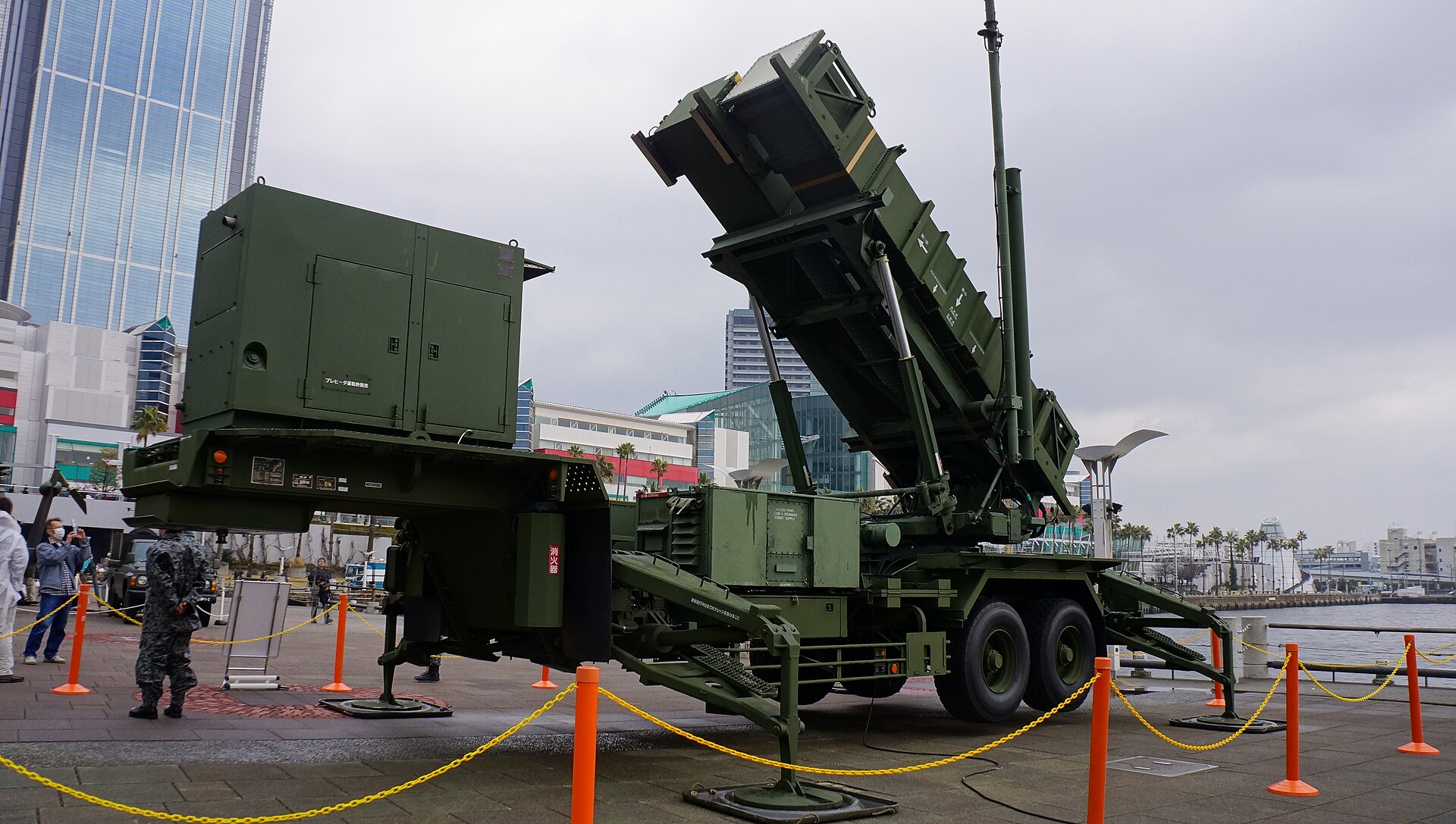
The Nasr-2 target selection reflects an awareness of where Gulf air defences are weakest. Bahrain’s PAC-3 stockpile has fallen to an estimated 8 rounds — depleted by approximately 87 per cent. Eight rounds offer, at best, a single engagement cycle against a multi-missile salvo. Sheikh Isa Air Base, struck in waves 2, 3, 5, and 10, sits behind what amounts to a symbolic defence perimeter.
Saudi Arabia’s stockpile is larger but proportionally just as degraded. Approximately 400 PAC-3 rounds remain from a pre-war inventory of 2,800 — an 86 per cent depletion rate. A $9.4 billion DSCA-approved sale of 730 PAC-3 MSE rounds, authorised on January 30, 2026, will not deliver before mid-2027. Lockheed Martin’s Camden, Arkansas facility produces approximately 620 rounds per year for all global customers. A separate $1.96 billion DSCA notification on July 15 approved 20,000 APKWS-II laser-guided rocket kits for Saudi Arabia — a counter-drone system, not yet integrated on any Saudi platform.
Kuwait’s layered air-defence architecture — the system the AGSI described as beyond Saudi Arabia’s ability to replicate “at speed” — has itself been degraded by Nasr-2. The C-RAM radar destroyed in wave 8 was a component of that layered system. Iran is not merely exploiting existing gaps. It is manufacturing new ones with each wave.
The pattern suggests that the IRGC has mapped Gulf interceptor inventories with enough precision to sequence its strikes through the weakest nodes first. Bahrain, with 8 rounds, absorbed four waves of strikes before Kuwait’s close-in defences were targeted. Jordan, whose MIM-23 Hawk batteries intercepted 8 of 10 missiles at Muwaffaq Salti on July 9, presented a more capable defence — and received a single wave. PSAB, with its depleted but comparatively larger stockpile, remains untouched.
The Last Unstruck Node
Prince Sultan Air Base occupies a position in the Gulf’s military geography that no other installation replicates. It hosts the only tanker fleet in the theater capable of extending US fighter combat radius to Iranian targets — though five of those tankers were damaged in March. A 2019 CENTCOM wargame identified it as the backup location for the Combined Air Operations Center should Al Udeid in Qatar become untenable. On July 9, Iran struck Al Udeid and destroyed an AN/GSC-52B(V5) MET satellite dish — a $15 million, 12.2-metre L3Harris installation, the first deployed outside the continental United States. The wargame scenario is no longer theoretical.
On May 3, Operation Project Freedom demonstrated that Saudi Arabia could unilaterally shut down US combat operations at the base. Iran struck PSAB when Saudi Arabia was cooperating with the American presence. It stopped striking after Saudi Arabia began obstructing it. The 1976/1977 Status of Forces Agreement that once governed the American presence at PSAB is void — a legal vacuum that Saudi Arabia has not moved to fill. No new SOFA has been negotiated. No Defence Cooperation Agreement exists between Washington and Riyadh. The 2,300 US troops at the base operate under ad hoc arrangements that either side can terminate without legal consequence.
Mohebbi’s “next phases” statement implies a transition from infrastructure to targets he did not name. The progression from ISR nodes to sensors to fuel systems follows a recognisable sequence: degrade the adversary’s ability to see, then to intercept, then to fly. The step after an adversary cannot generate sorties is the step the IRGC has announced but not yet defined.
PSAB has not been struck in 111 days. Iran has opened new fronts elsewhere. The base that hosts 2,300 American troops inside the territory of a country that grounded 43 American warplanes sits between two explanations — an arrangement that neither side will confirm, and an escalation ladder that neither side has finished climbing. The IRGC has not explained the omission. Riyadh has not been asked to.
Frequently Asked Questions
What is Operation Nasr-2 and when did it begin?
Operation Nasr-2 is the IRGC’s systematic campaign targeting US military infrastructure across the Persian Gulf, launched in early July 2026 as a declared response to US strikes on Iranian territory. Each wave is announced with a specific US action cited as justification and a code name drawn from Shia religious tradition. As of July 16, ten waves have targeted installations in four countries. The IRGC frames the campaign as counter-force — aimed at degrading the enemy’s ability to conduct offensive operations — rather than counter-value, which would target population centers or economic infrastructure directly. The distinction mirrors Cold War-era escalation frameworks and suggests deliberate doctrinal borrowing.
Has the United States confirmed damage from Nasr-2 strikes?
CENTCOM has not issued public damage assessments for most Nasr-2 waves. The primary independent verification comes from Defence Security Asia, which published commercial satellite imagery confirming the wave 8 destruction of the C-RAM radar position at Ali Al-Salem Air Base in Kuwait. Jordan’s government acknowledged intercepting missiles at Muwaffaq Salti on July 9, though satellite imagery showed hangar damage inconsistent with the “intercepted and dealt with” characterisation. The verification gap means Nasr-2 damage claims rest primarily on IRGC assertions for waves where no independent imagery has been published — a limitation that applies equally to claims of success and claims of limited effect.
What is the Fattah-2 hypersonic missile used against PSAB?
The Fattah-2 is an Iranian hypersonic missile with a claimed range of 1,400 kilometres and terminal speeds of up to Mach 15. Its March 27, 2026 strike on PSAB represented the first confirmed combat destruction of a high-value fixed-wing military aircraft — the E-3G Sentry AWACS — by a hypersonic weapon. The E-3G, valued at $270 million to $500 million, has no production replacement. The E-7A Wedgetail programme, intended as the successor platform, will not deliver operational airframes to the Middle East for several years. Iran Watch and the Missile Defense Advocacy Alliance have tracked the Fattah-2’s development from its first public display in 2023 through its operational deployment in 2026.
How depleted are Gulf air defences as of July 2026?
Lockheed Martin’s Camden, Arkansas facility produces approximately 620 PAC-3 rounds annually for all global customers. Saudi Arabia’s DSCA-approved order of 730 PAC-3 MSE rounds — authorised January 30, 2026, at a $9.4 billion package cost — would alone consume more than a full year of worldwide production and will not begin deliveries before mid-2027. Saudi Arabia currently holds approximately 400 rounds from a pre-war stockpile of 2,800; Bahrain holds an estimated 8. Kuwait’s air-defence architecture, which the AGSI identified as superior to Saudi Arabia’s, has itself been degraded by Nasr-2: the wave 8 strike at Ali Al-Salem destroyed a C-RAM node, removing autonomous close-in detection from the most-struck coalition base in the theater.
When Iran expanded its six-country strike on July 17 — hitting Syria, Kuwait, Jordan, Oman, Qatar, and Bahrain in a single day — Prince Sultan Air Base was exempt again. Iran’s six-country wave and the PSAB exemption it confirmed traces the behavioral signature of the covert Saudi-Iranian de-escalation framework that explains the pattern across every Nasr-2 wave since March.
Wave 15 extended that targeting progression beyond military installations for the first time: the IRGC’s Wave 15 strike on Kuwait’s Shuaiba desalination complex on July 17 marked the first confirmed hit on civilian water production infrastructure in the Nasr-2 campaign, adding a new category of target to the escalation sequence documented above.
That PSAB exemption ended on July 18: Iranian ballistic missiles struck Prince Sultan Air Base on Night Eight, breaking the targeting pattern that had defined every Nasr-2 wave since March — and triggering a three-way silence from Washington, Riyadh, and Islamabad that none of the three governments has since broken.