
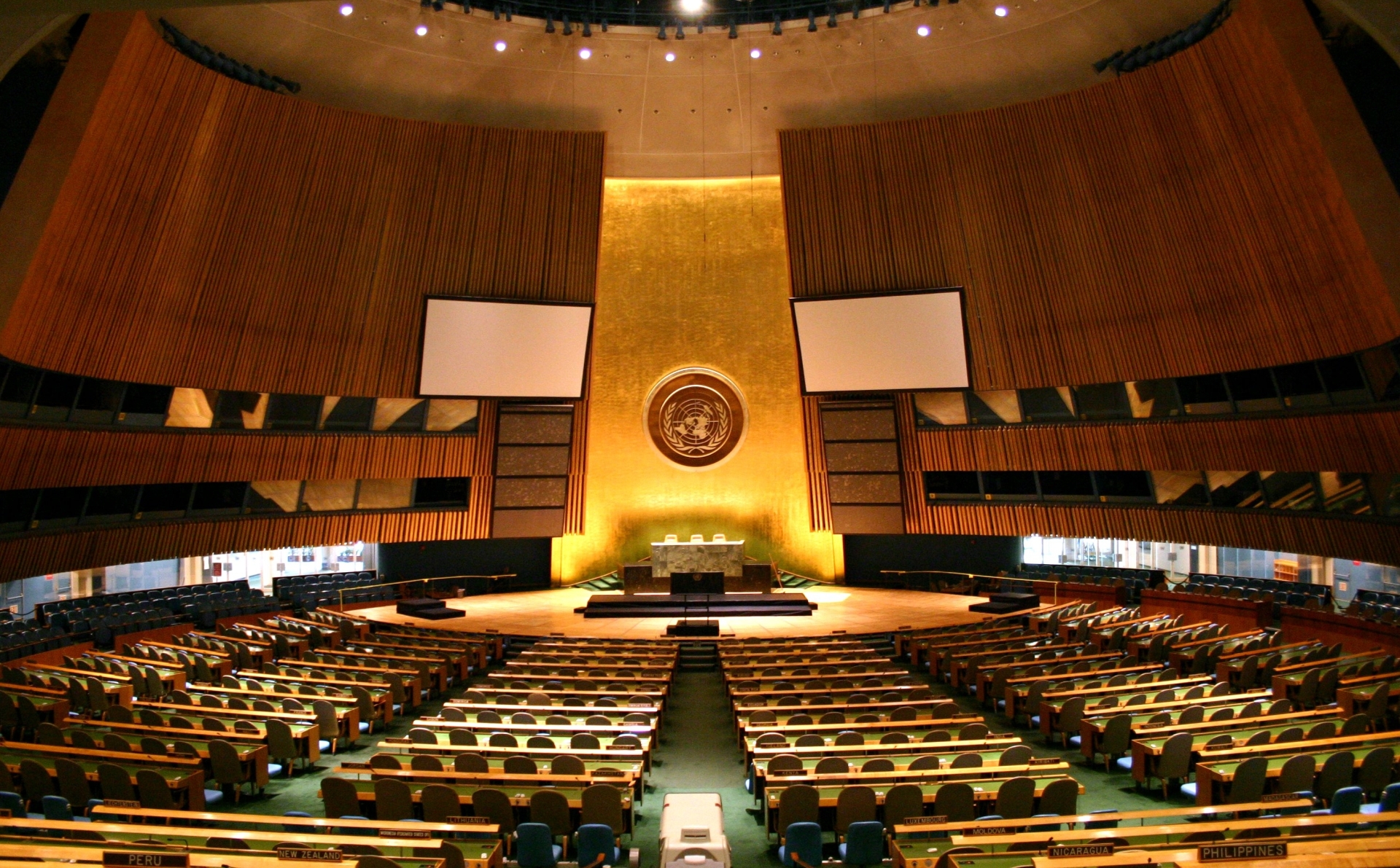
NEW YORK — The 11th Review Conference of the Treaty on the Non-Proliferation of Nuclear Weapons opens today at United Nations headquarters with every enforcement mechanism the treaty possesses already spent, bypassed, or vetoed. Between August 2025 and February 2026, the international community triggered each tool the NPT framework provides for compelling a non-compliant state — snap-back sanctions, IAEA referral, Security Council action — and watched each one fail. Iran holds 440.9 kilograms of uranium enriched to 60% — enough fissile material for up to nine weapons according to the Institute for Science and International Security — and not a single international inspector has entered an Iranian nuclear facility since February 28. The delegates arriving at the General Assembly Hall this morning are convening not to enforce a treaty but to conduct its autopsy.
The conference, running through May 22 under the presidency of Vietnam’s Ambassador Do Hung Viet, faces a third consecutive failure to produce a consensus final document — unprecedented in the NPT’s 56-year history. The 2015 conference collapsed over the Middle East WMD-Free Zone. The 2022 conference collapsed when Russia blocked consensus over Zaporizhzhia. This time, the collapse may be structural: the treaty’s central bargain — non-nuclear states forgo weapons in exchange for disarmament progress and peaceful nuclear access — has been abandoned by every party with the power to uphold it. And the fact the conference agenda will not formally address is the one with the sharpest regional consequences: the United States is demanding Iran surrender its enrichment capability while simultaneously negotiating a civil nuclear agreement with Saudi Arabia that does not prohibit the same thing.
Table of Contents
- The Enforcement Architecture That No Longer Exists
- Nine Months Without Eyes
- What Can the NPT Review Conference Actually Do About Iran?
- The 123 Agreement the Conference Cannot Discuss
- Why Does Article IV Mean One Thing for Iran and Another for Saudi Arabia?
- The Country Not in the Room
- Iran’s Exit Strategy
- The Arms Control Vacuum Above the Treaty
- What Does NPT Erosion Mean for Saudi Arabia?
- Frequently Asked Questions
The Enforcement Architecture That No Longer Exists
The sequence is worth reconstructing precisely, because it reveals not a single failure but a cascading one — each mechanism collapsing in a way that foreclosed the next. On August 28, 2025, France, Germany, and the United Kingdom triggered the JCPOA’s snap-back provision, citing Iran’s accumulation of more than 440 kilograms of 60%-enriched uranium. UN sanctions reimposed on September 27-28. Three weeks later, on October 18 — “Termination Day” under UNSCR 2231 — the snap-back mechanism’s legal mandate expired permanently. It cannot be triggered again. The single-use instrument the international community spent twenty years negotiating was fired once and is now inert.
Russia and China contested the E3’s legal standing to trigger snap-back from the outset, arguing that the European powers had themselves violated the JCPOA by failing to maintain economic normalization with Iran after the US withdrawal in 2018. Moscow’s position — that all nuclear disarmament steps must be embedded in “general and complete disarmament” and a “broader political-military and strategic context” — functions as a permanent veto on any Article VI progress. Beijing’s delegation at the third Preparatory Committee focused its interventions on Middle East WMD-free zones, language that structurally implicates Israel without naming it, while offering no pressure on Tehran to restore IAEA access.
Bahrain sponsored a Security Council resolution on Iran’s nuclear program. Russia and China blocked it. The referral pathway — the treaty’s ultimate enforcement mechanism — requires the votes of two permanent members whose strategic calculations now run directly counter to non-proliferation enforcement. George Perkovich of the Carnegie Endowment has described the result plainly: objectives beyond proliferation — regime change, regional dominance, great-power competition — now supersede treaty commitments.
Nine Months Without Eyes
On February 28, 2026, Iran disabled all IAEA surveillance cameras at its declared nuclear facilities, removed monitoring seals, and terminated all inspector access. The date was not incidental — it coincided with the opening hours of the Iran-US conflict that has since consumed the Gulf region. Nine months later, the international community’s knowledge of Iran’s nuclear program rests on data collected before that date and on satellite imagery whose interpretive limits are considerable.
The Middle East briefing 3,000+ readers start their day with.
One email. Every weekday morning. Free.
The last verified accounting, from an IAEA confidential letter dated June 12, 2025, confirmed 440.9 kilograms of uranium enriched to 60% U-235 — a net increase of 132.3 kilograms over the IAEA’s May 2025 figure of 408.6 kilograms, a single reporting period. The trajectory was steep and accelerating even before the blackout began. IAEA Director General Rafael Grossi acknowledged in March 2026 that “unless and until Iran assists the Agency in resolving outstanding safeguards issues, the Agency will not be in a position to provide assurance that Iran’s nuclear program is exclusively peaceful.”
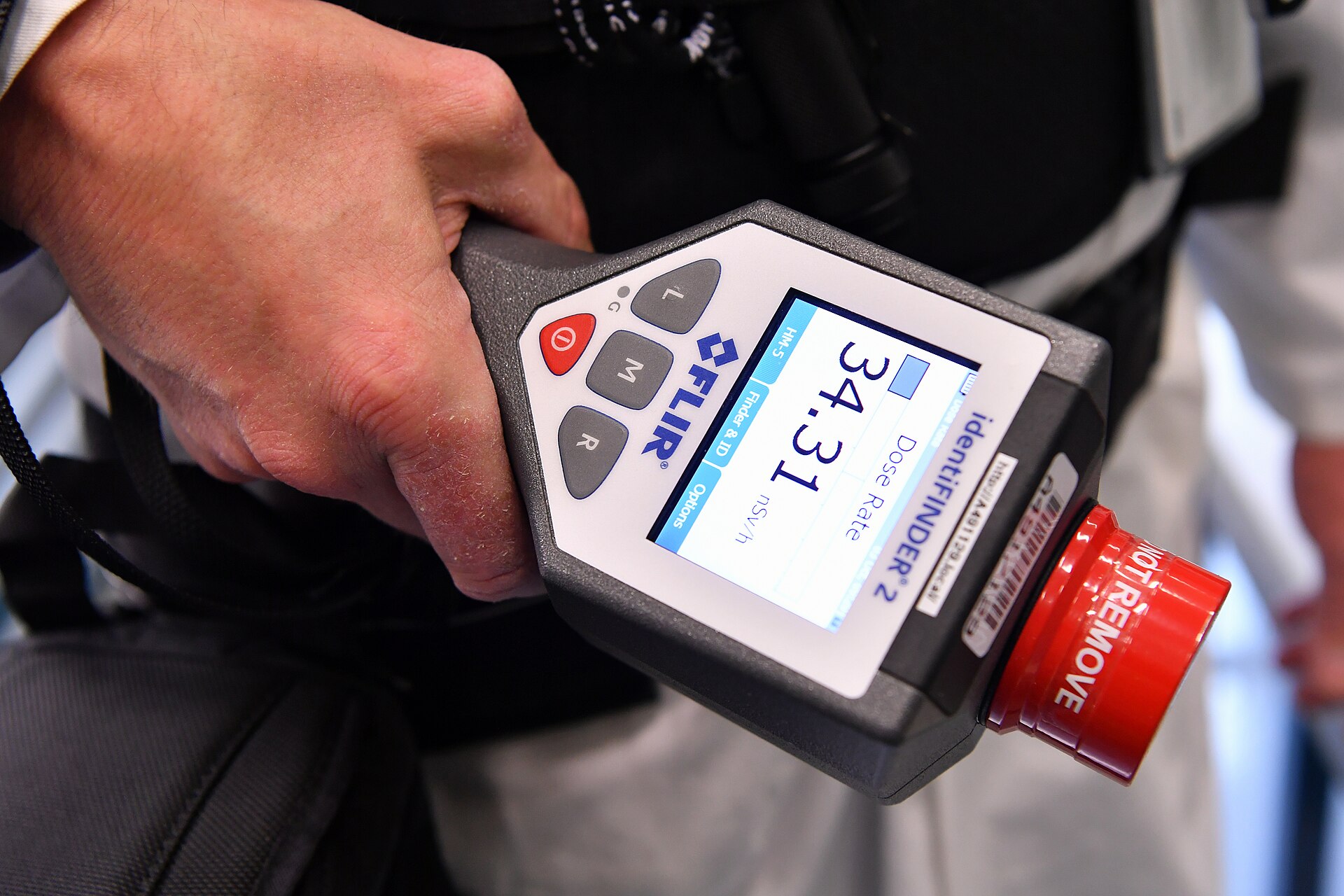
The Bulletin of the Atomic Scientists reported in March 2026 that the IAEA “does not know the location of Iran’s highly enriched uranium.” Satellite imagery from June 9, 2025 — captured before the access termination — shows a flatbed truck removing up to 540 kilograms of material from the south tunnel of the Isfahan underground facility. Where that material is now, and in what state of enrichment, no one outside Iran’s nuclear establishment can say with confidence. The breakout mathematics are not reassuring: a cascade of approximately 200 IR-6 centrifuges can enrich 50 kilograms from 60% to weapons-grade 90% in roughly ten days. David Albright and his colleagues at the Institute for Science and International Security estimated in May 2025 that the first 25 kilograms of weapons-grade uranium could be produced in two to three days at the Fordow Fuel Enrichment Plant.
Grossi has urged that nuclear verification be embedded in any ceasefire deal — “checks of Iran’s programme in any potential deal to end war,” as he told Euronews on April 15. The ceasefire negotiations, such as they are, have not incorporated this demand. The authorization ceiling within Iran’s own government — the gap between what President Pezeshkian can agree to and what the IRGC and Supreme National Security Council will permit — makes verification access a concession that no Iranian negotiator currently has the authority to offer.
What Can the NPT Review Conference Actually Do About Iran?
Almost nothing, and the delegates know it. The Review Conference operates by consensus — a single state’s objection blocks any final document. The conference has no enforcement power, no independent verification capability, and no mechanism to compel a member state to admit inspectors. It can issue statements. It can produce working papers. It can adopt a final document if 191 states parties agree on every word, which they have not managed since 2010.
Ambassador Do Hung Viet has stated the stakes in terms that suggest he understands the structural problem without having a solution: “Without a consensus outcome, we may lose the credibility of the NPT itself, and the review process.” The third Preparatory Committee in 2025 failed to produce either a factual summary or agreed recommendations, leaving the conference without the preparatory framework that normally structures its four weeks of deliberation. The delegates are walking into an unscripted room.
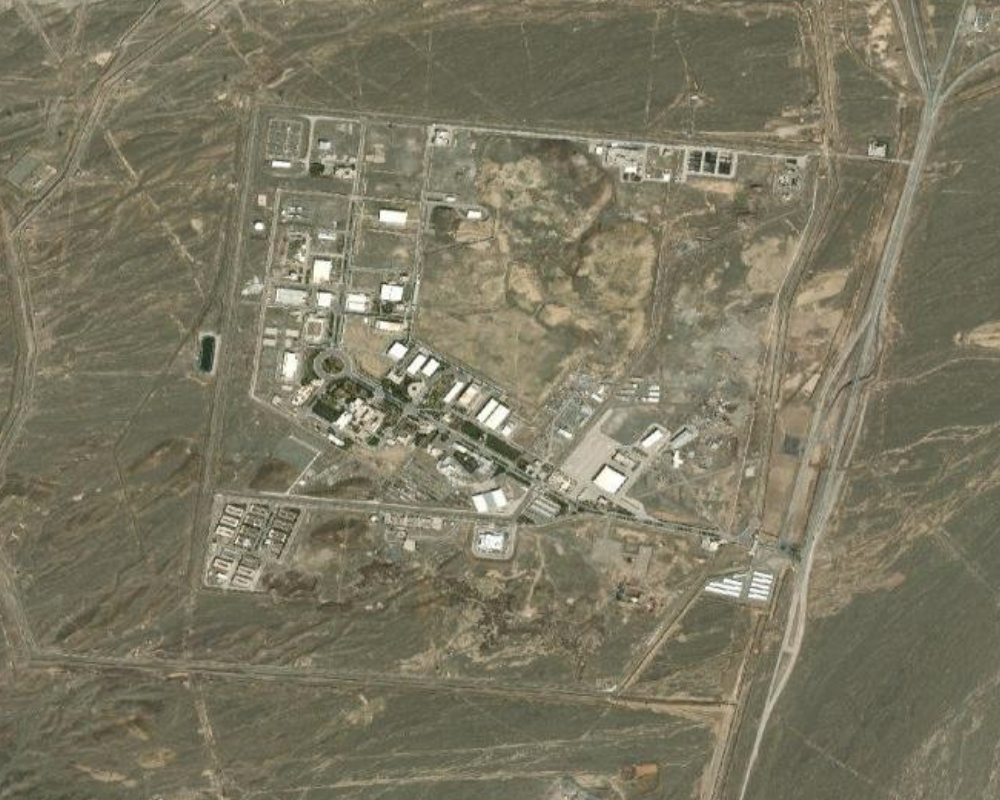
Iran’s own posture makes the procedural challenge more acute. Tehran has submitted a formal working paper demanding language prohibiting attacks on peaceful nuclear facilities and scientists — a direct reference to US-Israeli strikes on Natanz and Fordow and to the assassination of nuclear researcher Ali Fouladvand on March 28, 2026. Foreign Ministry spokesperson Esmaeil Baqaei has stated that Iran “will not compromise on its enrichment rights” and that entitlement to nuclear energy under Article IV is “non-negotiable.” Iran is attending the conference while simultaneously advancing withdrawal legislation at home — a negotiating posture that treats the treaty as simultaneously binding (when invoking Article IV rights) and dispensable (when its constraints become inconvenient).
The 123 Agreement the Conference Cannot Discuss
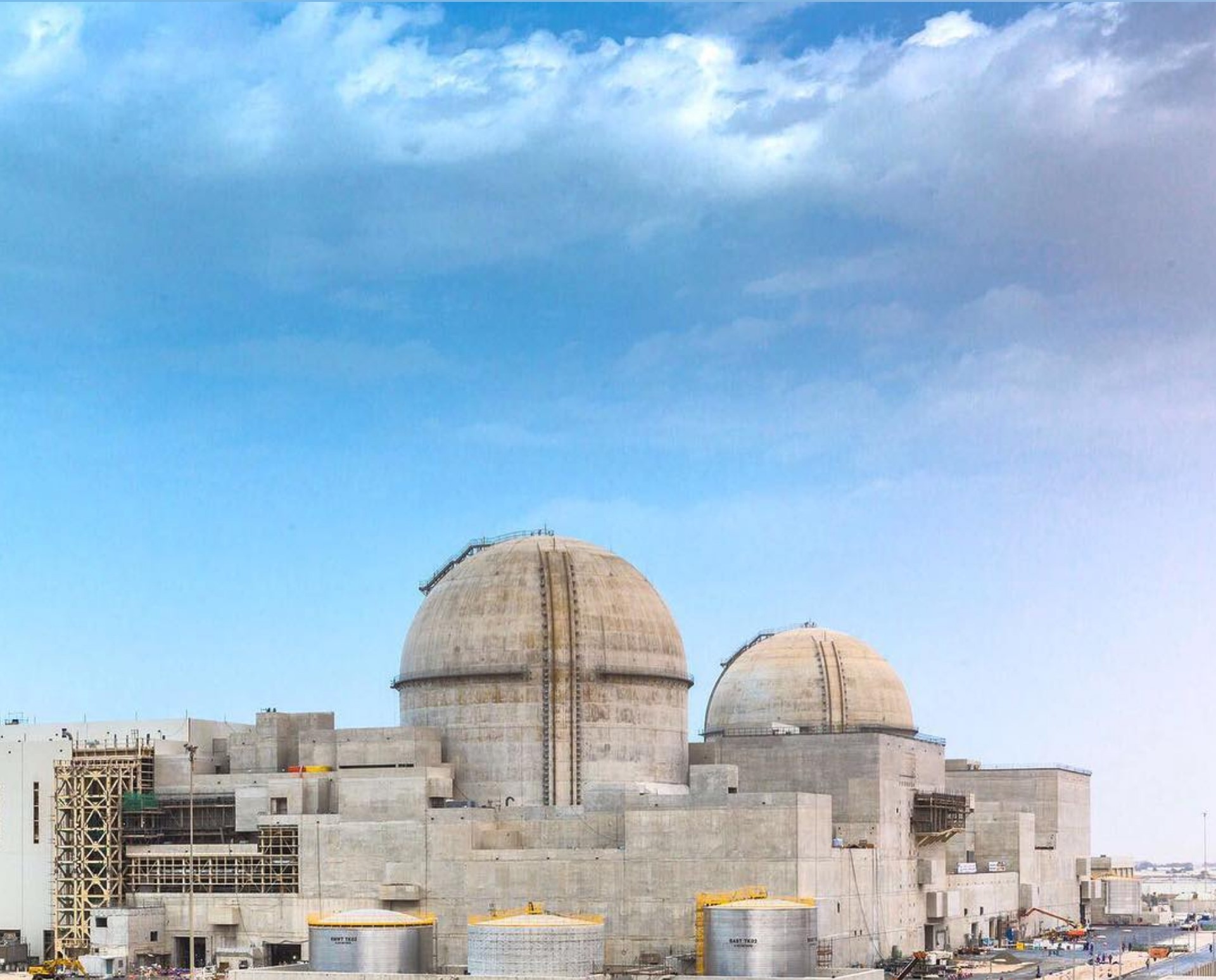
In November 2025, the Trump administration submitted to Congress a report indicating that the proposed US-Saudi civil nuclear cooperation agreement — the so-called 123 Agreement — would allow some form of uranium enrichment within the Kingdom and would not require Saudi Arabia to adopt the IAEA Additional Protocol. The agreement lists enrichment, fuel fabrication, and reprocessing as potential areas of cooperation. Congressional review is ongoing, with a 90-day window to block it.
The precedent this abandons is specific and recent. In 2009, the United States and the United Arab Emirates signed a 123 Agreement under which Abu Dhabi voluntarily renounced enrichment and reprocessing and adopted the Additional Protocol — the “gold standard” that every subsequent administration cited as the benchmark for nuclear cooperation in the region. Saudi Arabia has explicitly refused the same terms. Energy Minister Prince Abdulaziz bin Salman said in January 2025: “We will enrich it and we will sell it.” Crown Prince Mohammed bin Salman told CBS’s “60 Minutes” in March 2018: “Saudi Arabia does not want to acquire any nuclear bomb, but without a doubt if Iran developed a nuclear bomb, we will follow suit as soon as possible.”
Kelsey Davenport, Director for Nonproliferation Policy at the Arms Control Association, has described the administration’s approach directly: “The Trump administration has not carefully considered the proliferation risks posed by its proposed nuclear cooperation agreement with Saudi Arabia or the precedent this agreement may set.” The precedent she refers to extends well beyond the Gulf. Twenty countries have 123 Agreements with the United States. If Saudi Arabia secures enrichment rights that the UAE did not, every state with a pending or future agreement will demand equivalent terms. “The precedent this could set for how states engage with the United States on future nuclear cooperation agreements could be profound,” Davenport told the Arms Control Association, “and the U.S. is facing a new age of proliferation risks.”
Frank von Hippel and Seyed Hossein Mousavian of Princeton University — Mousavian a former Iranian nuclear negotiator — noted in the Bulletin of the Atomic Scientists in April 2026 that Trump “approved uranium enrichment and plutonium reprocessing capabilities for South Korea and Saudi Arabia without congressional consultation, despite opposing Iran’s enrichment program.” Their assessment of the economic logic was blunt: “There is today no economic justification for any new national enrichment program.”
Why Does Article IV Mean One Thing for Iran and Another for Saudi Arabia?
NPT Article IV states that nothing in the treaty “shall be interpreted as affecting the inalienable right of all the Parties to the Treaty to develop research, production and use of nuclear energy for peaceful purposes without discrimination.” The treaty neither explicitly permits nor prohibits uranium enrichment. It is a constructive ambiguity that served the treaty’s drafters in 1968 and has been tearing it apart ever since.
Iran invokes Article IV as legal authorization for its enrichment program. The United States has spent two decades arguing that the right is “not unconditional” and that Iran’s history of deception and safeguards violations forfeits its claim to the full exercise of Article IV privileges. The legal argument has force. But it depends on a principle — that a state’s compliance record determines the scope of its Article IV rights — that the Saudi 123 Agreement now structurally undermines.
Saudi Arabia has no enrichment infrastructure, no history of safeguards violations, and no IAEA file of unresolved questions. By the logic the US has applied to Iran, Riyadh’s Article IV claim is stronger. Washington’s position is that Saudi enrichment under American partnership and oversight is categorically different from Iranian enrichment conducted in defiance of IAEA resolutions. The distinction is operationally meaningful — American-supplied centrifuge technology under bilateral safeguards is not the same as clandestine cascades at Fordow. But within the NPT’s own legal framework, the distinction does not exist. Article IV contains no hierarchy of rights based on the identity of a state’s technology partner.
The incoherence registers most sharply in the conference hall itself. The United States will spend the next four weeks pressing for language that constrains Iran’s enrichment capability. Iran’s delegation will point to the Saudi 123 Agreement and ask why Article IV is inalienable for Riyadh and conditional for Tehran. The question does not have a good answer within the treaty’s own terms. It has a geopolitical answer — Iran is at war with the United States and Saudi Arabia is an ally — but geopolitical answers are precisely what the NPT was designed to transcend.
The Country Not in the Room
Israel is not a party to the NPT and has never submitted to comprehensive IAEA safeguards. Its policy of “deliberate ambiguity” — neither confirming nor denying possession of nuclear weapons — has been maintained since Mordechai Vanunu’s revelations in 1986. SIPRI’s 2025 Yearbook estimates Israel possesses approximately 90 nuclear warheads. New construction has been detected at the Dimona reactor site, and in 2024 Israel conducted a test of a missile propulsion system that may be related to its Jericho family of nuclear-capable ballistic missiles.
The Middle East WMD-Free Zone — a proposal endorsed by the 1995 NPT Review Conference as an indefinite extension commitment — has been stalled for three decades. The Arab Group and the Non-Aligned Movement demand the zone as a treaty obligation. Israel conditions any discussion on the establishment of comprehensive regional peace first. The United States has historically backed Israel’s sequencing — peace before disarmament — while the Arab position is that disarmament contributes to peace. The 2015 Review Conference broke down over this exact impasse when the US objected to a March 2016 deadline for convening a zone conference.
Iran’s Deputy Foreign Minister Kazem Gharibabadi has called Israel’s nuclear arsenal “the main obstacle to a nuclear-weapon-free Middle East.” Olamide Samuel, writing in Al Jazeera on April 27, framed the structural problem: “The rules are observed when applied to the weak, and are bent when applied to the powerful.” The observation is not original, but its application to the 2026 conference is precise. The NPT’s enforcement architecture has been fully deployed against Iran — a state party — while Israel, a non-party with an active modernization program at Dimona, remains entirely outside the treaty’s reach. For delegates from the Non-Aligned Movement, this asymmetry is not a side issue. It is the issue.
Iran’s Exit Strategy
In March 2026, Iranian lawmakers uploaded draft legislation that would formally withdraw Iran from the NPT, revoke all nuclear restrictions derived from the defunct JCPOA, and establish a new nuclear cooperation framework with BRICS and SCO member states. The bill’s key sponsor, Tehran representative Malek Shariati, framed withdrawal as a defensive response to the strikes on Iranian nuclear facilities. Ebrahim Rezaei, spokesman for Iran’s National Security Commission, stated that remaining in the NPT “has had no benefit for us.” Mohammad Mohkber, a senior adviser to Iran’s leadership, called IAEA Director General Grossi a “partner in crime” and warned of “irrevocable decisions.”
The legislation has not been enacted. Iran’s presence at the Review Conference suggests the calculus is not yet settled — withdrawal would eliminate any remaining legal argument for enrichment rights under Article IV, and Iran’s delegation continues to invoke those rights aggressively. But the domestic political trajectory is visible. Kelsey Davenport noted that “the Israeli attacks are driving debate in Iran about whether nuclear weapons are necessary to deter future attacks. NPT withdrawal would be a signal of how seriously Iran is considering weapons development.”
The NPT’s withdrawal clause — Article X — requires only three months’ notice and a statement of “extraordinary events” that have jeopardized the withdrawing state’s supreme interests. North Korea is the only state to have invoked it, in 2003. The treaty provides no mechanism to challenge the stated justification or to delay the withdrawal. If Iran’s parliament passes the legislation and the Guardian Council approves it, the international community’s remaining legal framework for constraining Iran’s nuclear program disappears entirely. The snap-back is spent. IAEA access is terminated. UNSC referral is vetoed. Withdrawal from the treaty itself is the last structural step, and the legislation to take it is already drafted.
The Arms Control Vacuum Above the Treaty
The NPT rests on a grand bargain codified in Article VI: the five recognized nuclear-weapon states commit to “pursue negotiations in good faith on effective measures relating to cessation of the nuclear arms race at an early date and to nuclear disarmament.” The commitment has never been fulfilled. But the 2026 Review Conference opens in a strategic environment where the pretense of fulfillment has also been abandoned.
New START — the last bilateral arms control agreement between the United States and Russia — expired on February 5, 2026. For the first time since 1972, no treaty limits the number of deployed strategic warheads held by the two states that together possess approximately 90% of the world’s nuclear weapons. Adam Scheinman and Mark Goodman, former State Department nuclear policy officials, described the conference’s prospects as “bleak,” citing “President Donald Trump’s abandonment of the rules-based international order” and the fact that all five P5 states are “modernizing or considering increases to their nuclear stockpiles.”
The non-nuclear weapon states — the 186 NPT parties that forgo nuclear weapons — made their side of the bargain contingent on Article VI progress. The Treaty on the Prohibition of Nuclear Weapons, which entered into force in January 2021, was their response to decades of P5 inaction: a parallel legal instrument that none of the nuclear-weapon states have signed. The TPNW’s existence is itself an indictment of the NPT review process — evidence that a majority of the treaty’s membership concluded the bargain would never be honored through the treaty’s own mechanisms.
Russia’s position makes this explicit. Moscow ties all disarmament steps to “general and complete disarmament” — a condition so expansive it functions as permanent deferral. China describes its posture as “self-defensive” and frames US extended deterrence alliances — the nuclear umbrellas over Japan, South Korea, NATO Europe — as “a stumbling block to nuclear disarmament.” Both framings are diplomatically sophisticated and operationally meaningless. They allow Moscow and Beijing to attend NPT conferences, invoke Article VI, and block any outcome that would require them to act on it.
What Does NPT Erosion Mean for Saudi Arabia?
Saudi Arabia occupies both sides of the NPT’s unraveling. On one side, the Kingdom is a potential beneficiary: the erosion of enforcement norms and the US willingness to negotiate enrichment-permissive 123 Agreements creates a pathway to indigenous nuclear fuel capability that would have been politically impossible five years ago. On the other, Saudi Arabia is the state most immediately threatened by the treaty’s failure to constrain Iran — a country 25 days from weapons-grade material with no inspectors present and withdrawal legislation moving through parliament.
The 123 Agreement, if finalized, gives Riyadh something it has sought for years: a legal framework for enrichment that does not depend on Iranian behavior. Under the gold standard set by the UAE agreement, Saudi enrichment was impossible without first resolving Iran’s file — because the US could not justify granting Riyadh capabilities it was simultaneously demanding Tehran surrender. The Saudi deal breaks that linkage. Enrichment becomes a bilateral question between Washington and Riyadh, unconnected to the multilateral enforcement framework that was supposed to handle Iran.
The strategic logic is uncomfortable but legible. MBS’s 2018 statement — “if Iran developed a nuclear bomb, we will follow suit as soon as possible” — was a deterrence declaration dressed as a contingency. The 123 Agreement provides the latent capability. The Custodian of the Two Holy Mosques now presides over a kingdom under active missile bombardment from a state approaching the nuclear threshold, with an American-blessed pathway to enrichment and a defense establishment that has absorbed three months of war. The NPT Review Conference’s proceedings are, for Riyadh, background noise to a calculation already in motion.
Olamide Samuel’s observation applies with equal force from the Saudi perspective: “Attacking safeguarded sites risks teaching other states that remaining below the weapons threshold provides neither reassurance nor protection.” The lesson is not lost on defense planners in Riyadh, or in Ankara, Cairo, Abu Dhabi, or any other capital watching the treaty’s enforcement mechanisms fail in real time.
| Mechanism | Triggered | Current Status | Can Be Used Again |
|---|---|---|---|
| JCPOA Snap-back (UNSCR 2231) | August 28, 2025 (E3) | Expired October 18, 2025 | No — permanently exhausted |
| IAEA Safeguards Verification | Continuous since 2003 | Terminated February 28, 2026 by Iran | Only if Iran restores access |
| UNSC Referral / Resolution | Bahrain-sponsored, 2025-2026 | Vetoed by Russia and China | Legally yes; politically no |
| IAEA Board of Governors Resolution | Multiple, 2005-2025 | No compliance mechanism without UNSC | Yes, but non-binding |
| NPT Article X Withdrawal Challenge | Never (no challenge mechanism exists) | Iran withdrawal bill drafted March 2026 | N/A — treaty has no blocking power |
| Provision | US-UAE (2009) | US-Saudi (Proposed 2025) |
|---|---|---|
| Uranium Enrichment | Voluntarily renounced | Permitted |
| Reprocessing | Voluntarily renounced | Listed as cooperation area |
| IAEA Additional Protocol | Required and adopted | Not required |
| Fuel Fabrication | Not addressed (no enrichment) | Listed as cooperation area |
| Congressional Review | Completed, approved | Ongoing (90-day window) |
Without a consensus outcome, we may lose the credibility of the NPT itself, and the review process.
Ambassador Do Hung Viet, President of the 2026 NPT Review Conference
Frequently Asked Questions
How many countries have nuclear weapons outside the NPT framework?
Four nuclear-armed states remain outside the NPT entirely. India and Pakistan, both of which tested nuclear devices in 1998, never signed the treaty. Israel maintains a policy of “deliberate ambiguity” but is estimated by SIPRI to possess approximately 90 warheads and is actively modernizing its Dimona production facility. North Korea withdrew from the NPT in 2003 under Article X and has since conducted six nuclear tests. South Sudan, the world’s newest state, has also not acceded to the treaty, though it possesses no nuclear capability. The 191 states parties represent near-universal membership — which makes the four holdouts, three of them nuclear-armed, all the more consequential for the treaty’s credibility.
What happens if the 2026 Review Conference fails to produce a final document?
A third consecutive failure would break the treaty’s review mechanism without formally breaking the treaty itself. The NPT has no expiration date and no automatic dissolution clause — it was extended indefinitely in 1995. States remain bound regardless of whether review conferences produce outcomes. But the review process is the treaty’s only self-corrective mechanism, the sole forum where the 186 non-nuclear-weapon states can hold the P5 accountable for Article VI commitments. Three consecutive failures would confirm that the process cannot generate accountability, accelerating the migration of non-proliferation diplomacy to alternative forums — the TPNW, bilateral agreements, and regional arrangements that bypass the NPT entirely.
Could Iran build a nuclear weapon before the conference ends on May 22?
The enrichment timeline is technically feasible but weaponization is a separate challenge. Enriching 50 kilograms from 60% to 90% requires approximately ten days with existing centrifuge infrastructure. But producing weapons-grade uranium is not the same as producing a deliverable weapon. Miniaturizing a warhead to fit on a ballistic missile, designing a reliable implosion mechanism, and conducting the necessary engineering tests would take additional months to years depending on how much undisclosed progress Iran has made — a question the IAEA cannot answer without access. The greater risk within the conference’s timeframe is not a tested weapon but a political decision: Iran’s parliament advancing the NPT withdrawal legislation to a floor vote, which would signal intent more clearly than any centrifuge cascade.
Has Saudi Arabia started building nuclear enrichment facilities?
No enrichment infrastructure exists in the Kingdom. Saudi Arabia’s nuclear energy program, managed through the King Abdullah City for Atomic and Renewable Energy (KACARE), is focused on reactor construction — two large power reactors are planned, with bids evaluated from South Korean, French, and Chinese consortia. The 123 Agreement with the United States would provide the legal framework for future enrichment capability, but the physical infrastructure — centrifuge plants, fuel fabrication facilities, trained personnel — would take years to construct. The agreement’s significance is not immediate capability but latent potential: it establishes enrichment as a sovereign right that Saudi Arabia can exercise when it chooses, without requiring a future renegotiation that might be denied.
What happens to the NPT if both Iran withdraws and Saudi Arabia acquires enrichment capability?
The treaty would remain legally intact but strategically hollow in the region it was most urgently designed to govern. The NPT has no expiration clause and no dissolution mechanism — it can survive the defection of individual states. But the combination of Iranian withdrawal and Saudi enrichment would break the treaty’s central premise: that non-nuclear-weapon states receive equivalent treatment under Article IV. MBS’s 2018 “follow suit” declaration already frames Saudi enrichment as a direct response to Iranian capability — meaning the cascade scenario the treaty was designed to prevent would, for the first time, run through a formal US nuclear cooperation agreement rather than around it. Frank von Hippel and Seyed Hossein Mousavian noted in April 2026 that the economic justification for new national enrichment programs “does not exist today” — making the geopolitical driver the only operative one.
The humanitarian dimension of the crisis reached the Security Council on April 28, when Guterres issued a formal warning that Hormuz closure risked a global food emergency — a framing that directly reinforced Saudi Arabia’s argument at the NPT Review that the Islamic Republic’s nuclear program cannot be decoupled from its maritime strategy.