n
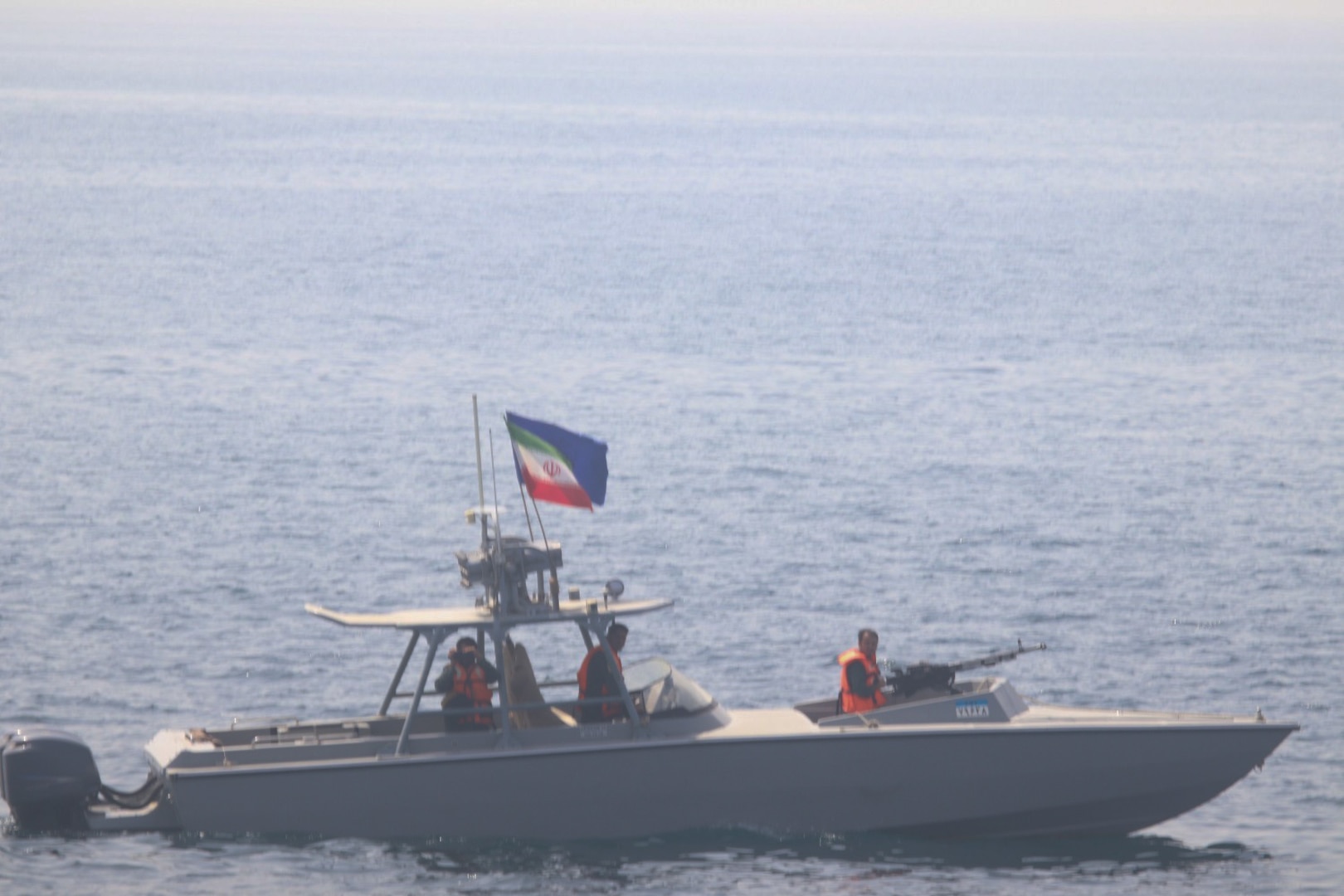
DUBAI — Iranian Revolutionary Guard gunboats opened fire on two Indian-flagged commercial vessels attempting to transit the Strait of Hormuz on April 18, despite both ships holding IRGC-issued clearances to pass — an incident that exposed a command architecture incapable of honoring its own permits three weeks after the death of the IRGC Navy’s chief.
nn
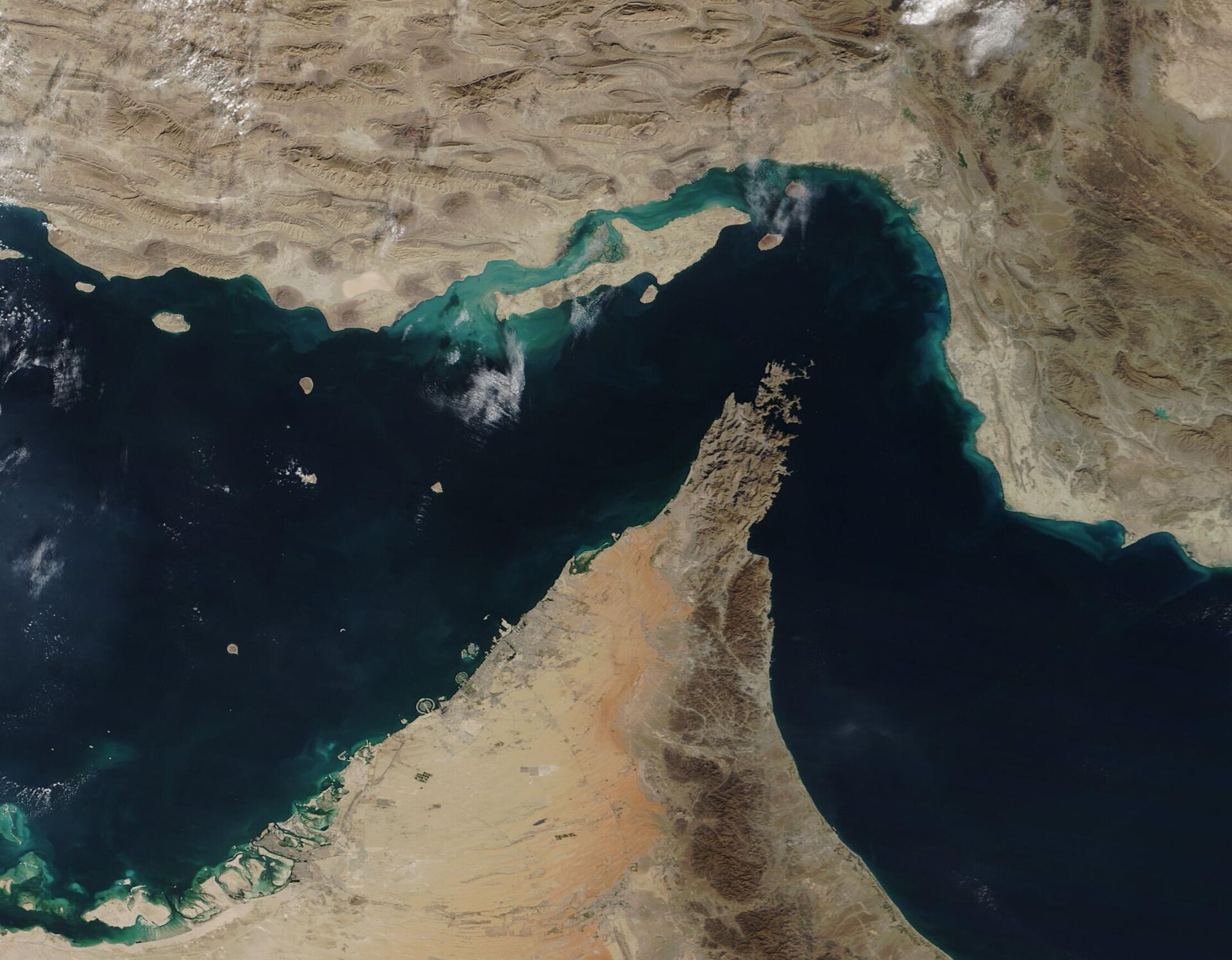
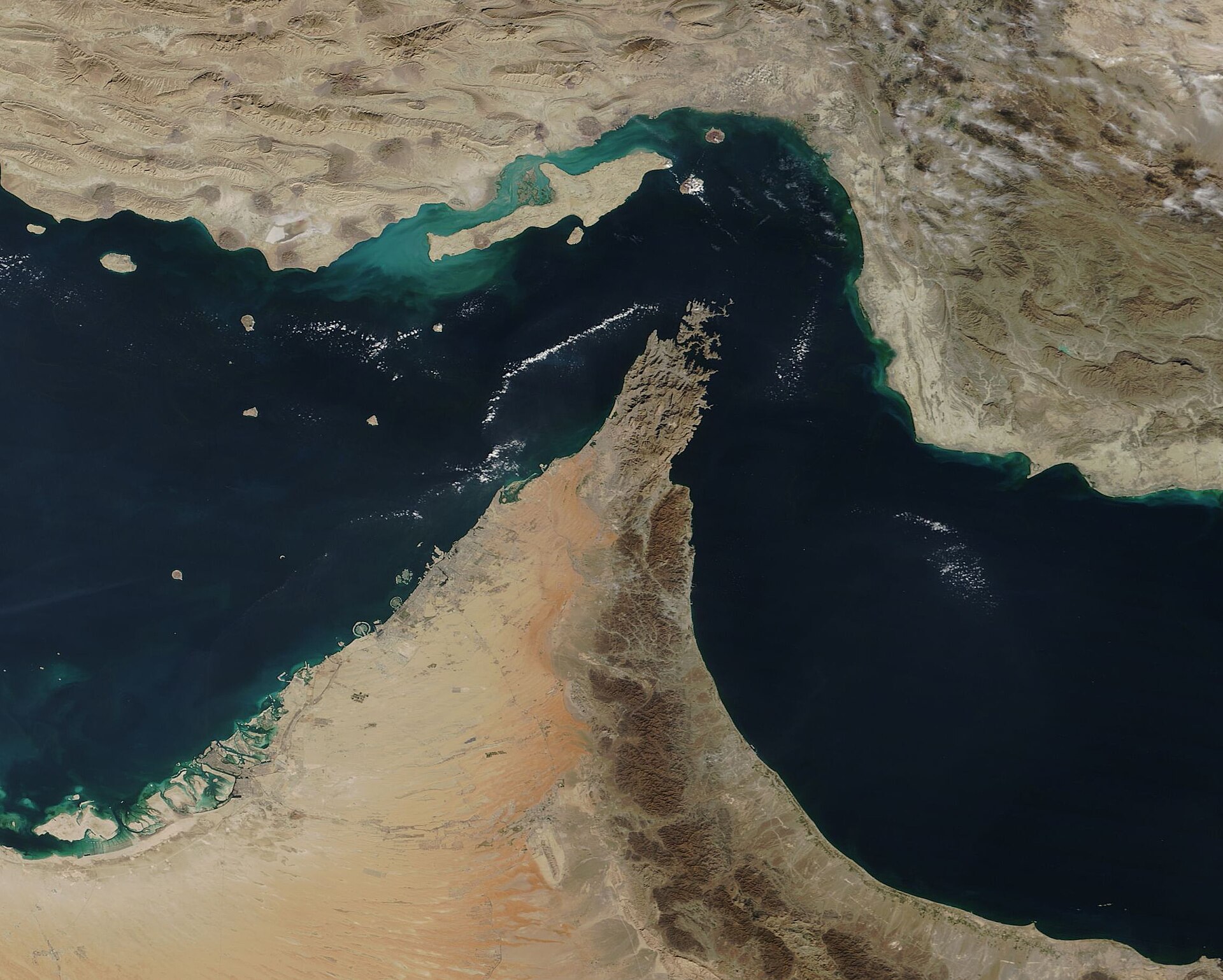
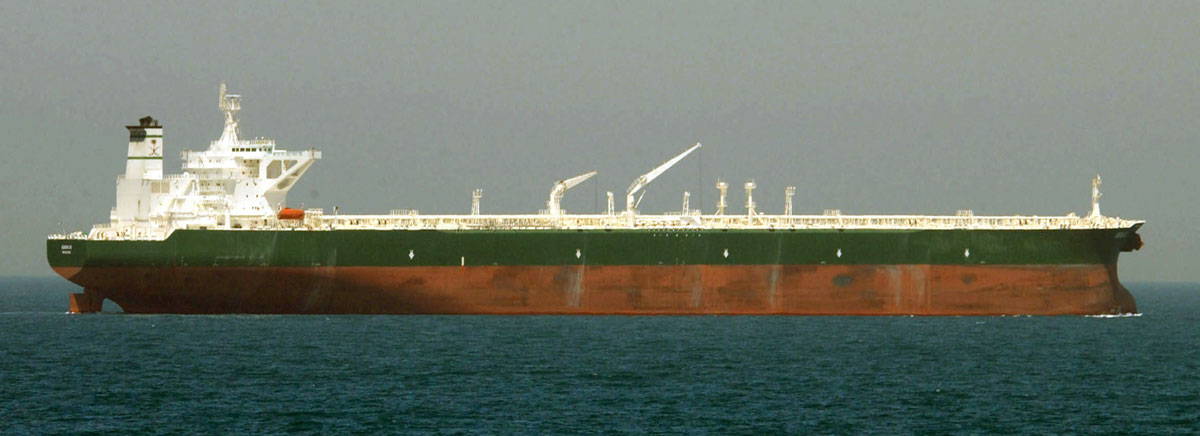
The VLCC Sanmar Herald, carrying approximately 2 million barrels of Iraqi crude loaded at Al Basrah Anchorage, and the bulk carrier Jag Arnav, in transit from Saudi Arabia’s Al Jubail, were intercepted roughly 20 nautical miles northeast of Oman, south of Larak Island, according to a UK Maritime Trade Operations (UKMTO) report cited by The Print. No warning was issued on VHF Channel 16 before gunfire began.
nn
The Sanmar Herald’s crew broadcast a distress call that laid bare the contradiction at the heart of Iran’s Hormuz control regime: “This is a motor tanker, Sanmar Herald. You gave me clearance to go. My name is second on your list. You are firing now. Let me turn back.” The crew addressed their attackers as “Sepah Navy” — the Persian term for the IRGC — indicating they believed their clearance had been issued by the same force now shooting at them, not by Iran’s Foreign Ministry.
The Middle East briefing 3,000+ readers start their day with.
One email. Every weekday morning. Free.
nn
Hours earlier on the same day, the Desh Garima — another Indian-flagged vessel operated by Shipping Corporation of India — crossed Hormuz without incident, the 10th India-flagged vessel to transit the strait since early March, according to Republic World and The Print. No crew injuries or structural damage were reported from either vessel, India’s Ministry of External Affairs confirmed.
nn
The Sanmar Herald incident is not a story about the well-documented split between Iran’s Foreign Ministry and the IRGC over Hormuz policy. The crew did not invoke a diplomatic clearance. They invoked an IRGC vessel-list clearance — “my name is second on your list” — and addressed their attackers by the IRGC’s own name. The gunboat unit that opened fire either did not have the list, did not recognize it, or had received superseding orders that revoked it. Each explanation points to the same structural failure: the IRGC cannot enforce a coherent transit regime across its own patrol sectors.
nn
The clearance architecture that Iran has built since February — vessel lists, IRGC-designated routes, cargo manifests — functioned as a system of administered control. After April 18, individual IRGC patrol units decide for themselves whether any permit is valid.
nn
Table of Contents
n
- n
- The April 17–18 Sequence
- What the Distress Call Reveals About Clearance Architecture
- Why Did Desh Garima Get Through?
- A Navy Without a Commander
- India’s Exposure
- From Administrative Rejection to Gunfire
- FAQ
n
n
n
n
n
n
n
n
nn
 n
nnn
The April 17–18 Sequence
nn
On April 17, Iranian Foreign Minister Abbas Araghchi tweeted that the Strait of Hormuz was “completely open” to all commercial shipping, according to Al Jazeera. Within hours, the IRGC Navy issued a contradicting directive — published verbatim by PressTV — declaring that all transits required “explicit authorization of the IRGC’s naval forces” and that vessels must use “IRGC-designated routes only.”
nn
The IRGC then broadcast on VHF Channel 16 that the strait remained closed and that “any reopening would occur only under orders from the Supreme Leader” — a direct rejection of the civilian government’s authority over the waterway. Tasnim News Agency, aligned with the IRGC, published an attack on Araghchi’s statement, calling it a “bad and incomplete tweet” that created “incorrect ambiguity” regarding Hormuz reopening, as reported by the Jerusalem Post.
nn
FM spokesman Esmaeil Baghaei attempted to walk back the contradiction the same day, clarifying that passage would occur “within the framework of the April 8 ceasefire agreement… along the route designated by Iran and in coordination with Iran’s competent authorities,” according to PressTV. The phrase “competent authorities” conceded the ground: the FM was acknowledging that the IRGC, not the Foreign Ministry, controlled operational access.
nn
Iran’s military central headquarters spokesman then stated that the strait had “returned to its previous state” of “strict management and control,” NBC News reported. The justification: the United States had failed to lift its naval blockade of Iranian ports, which took effect April 13.
nn
Less than 24 hours after this cascade of contradictory statements, IRGC gunboats fired on the Sanmar Herald and Jag Arnav.
nn
What the Distress Call Reveals About Clearance Architecture
nn
The Sanmar Herald crew’s distress call, transcribed by The Week and confirmed by IBTimes India and Republic World, contains three details that restructure the standard narrative of IRGC-FM dysfunction.
nn
First, the crew said “you gave me clearance to go.” Not “Iran” or “Tehran” — “you,” addressed to “Sepah Navy.” The clearance was IRGC-issued.
nn
Second, “my name is second on your list.” This describes a vessel name-list clearance mechanism — a document listing approved ships by name — not a per-voyage diplomatic permit of the kind the Foreign Ministry might issue. The IRGC had built an administrative apparatus for managed transit: cargo details, crew manifests, designated routing, and a list. The Sanmar Herald was on the list.
nn
Third, the crew’s immediate response was not to challenge or negotiate. It was: “Let me turn back.” The crew understood instantly that their clearance had become worthless — that whatever authority had placed them on the list could not protect them from the patrol unit in front of them.
nn
Saeid Golkar, an Iran specialist at the University of Tennessee at Chattanooga, told Fortune on April 18: “Because the main arbitrator is gone, the fight between different factions has started.” Golkar was referring to Ayatollah Ali Khamenei, who has been absent from public view for over 50 days.
nn
 n
nnn
Why Did Desh Garima Get Through?
nn
The Desh Garima, operated by Shipping Corporation of India, crossed Hormuz safely on April 18, the same day the Sanmar Herald and Jag Arnav were fired upon. Republic World and EBM News described it as the 10th India-flagged vessel to cross the strait since early March.
nn
Same day. Same flag state. Different outcome.
nn
Three explanations are possible, and none of them support the idea that Iran operates a functional clearance regime. The Desh Garima may have transited through a different patrol sector — one where the April 17 revocation order had not been received or implemented. It may have been on a different list, or a list held by a different IRGC unit. Or the patrol unit that encountered it may have exercised individual discretion.
nn
All three explanations point to the same structural condition: the IRGC’s 31 semi-autonomous corps operate with distributed authority, a command architecture formalized after 2008 that grants operational autonomy to field units. In a navy with a functioning chain of command, a central order revoking transit clearances would propagate uniformly. In the IRGC Navy as currently constituted — without a commander since Admiral Ali Reza Tangsiri was killed in an Israeli strike at Bandar Abbas on March 30 — standing orders operate without central relay.
nn
Gregory Brew, Senior Analyst for Iran and Oil at the Eurasia Group, told Fortune: “Such public spats between diplomats and ‘the battlefield’ are not unusual, though there haven’t been many during the war.” The April 18 incident suggests the spat has moved past public statements and into the operational domain, where different IRGC units enforce different rules on the same waterway on the same day.
nn
A Navy Without a Commander
nn
Tangsiri’s death on March 30 left the IRGC Navy without a named successor. As of April 20 — 21 days later — no appointment has been announced. The IRGC mine chart published in early April, which redesignated the standard Hormuz traffic separation scheme as a “danger zone” and redirected vessels to a 5-nautical-mile corridor between Qeshm and Larak islands inside Iranian territorial waters, was issued under this headless command structure.
nn
The IRGC Navy’s “full authority to manage the Strait” declaration — issued April 5 and repeated April 10 while Araghchi was in Islamabad — came from an institution with no identified individual exercising that authority. The Institute for the Study of War (ISW) assessed on April 19 that “the IRGC appears to be controlling Iranian decision-making instead of Iranian political officials who are engaging with the United States in negotiations,” as cited by Euronews.
nn
But “the IRGC” is not a monolith. The April 18 firings demonstrate that even within the IRGC, decision-making is fragmented. The unit that issued the Sanmar Herald’s clearance and the unit that fired on the Sanmar Herald may answer to different corps commanders. Without Tangsiri — or a successor — to arbitrate, each patrol sector is effectively self-governing.
nn
President Masoud Pezeshkian publicly accused IRGC-linked officials of blocking ceasefire efforts. But under Article 110 of Iran’s constitution, the president has zero command authority over the IRGC. The Supreme Leader appoints and dismisses IRGC commanders. With Khamenei absent, that constitutional mechanism is frozen.
nn
Parliament Speaker Mohammad Bagher Ghalibaf — himself a former IRGC Aerospace Force commander from 1997 to 2000 — framed the closure in zero-sum terms. “It is impossible for others to pass through the Strait of Hormuz while we cannot,” he told NBC News, referencing the US blockade of Iranian ports that took effect April 13.
nn
India’s Exposure
nn
India’s Foreign Secretary Vikram Misri conveyed “deep concern at the shooting incident earlier today involving two Indian-flagged ships in the Strait of Hormuz” to Iranian Ambassador Mohammad Fathali, according to the Ministry of External Affairs. Fathali “undertook to convey these views to Tehran,” the MEA statement said — diplomatic language that offers no operational guarantee.
nn
India’s exposure extends beyond two vessels. The OFAC General License U, which permitted Indian refiners to purchase Iranian crude without secondary sanctions, expired at 12:01 AM EDT on April 19 — the day after the firings. Treasury Secretary Scott Bessent confirmed non-renewal on April 15–16. Indian Oil Corporation’s VLCC Jaya, carrying 2 million barrels with 95 percent pre-payment — an unusual arrangement reported by Reuters — was in transit under the license at the time of expiry.
nn
The convergence was not lost on New Delhi’s security establishment. India’s NSA Ajit Doval arrived in Riyadh the same morning GL U expired, meeting Saudi Energy Minister Prince Abdulaziz, Foreign Minister Prince Faisal, and NSA Al-Aiban in a single day — a diplomatic signal that India was formalising its energy pivot away from Tehran and toward Riyadh before the compliance cliff had fully landed.
nn
The convergence is precise: India’s crude supply route through Hormuz was fired upon on the last day its legal framework for purchasing Iranian oil existed. Indian refiners who settled in yuan via ICICI Bank Shanghai — a channel Reuters identified — now face both a compliance void and a physical transit risk.
nn
The Sanmar Herald was carrying Iraqi crude, not Iranian. The Jag Arnav was transiting from Saudi Arabia’s Al Jubail. Neither vessel was moving sanctioned cargo. Both were fired upon. For Indian shipping companies, the lesson is that cargo origin and flag-state relationships with Iran provide no protection — not even an IRGC-issued clearance does.
nn
 n
nnn
From Administrative Rejection to Gunfire
nn
The IRGC’s enforcement of Hormuz restrictions has escalated in identifiable steps. On March 24, the container feeder Selen — a 6,800 deadweight-ton vessel — was turned back from Hormuz without shots fired, the first formal administrative rejection under the IRGC’s closure regime. Selen was refused passage; it was not attacked.
nn
The Sanmar Herald incident represents a qualitative escalation: from administrative refusal to kinetic enforcement, and against a vessel that held clearance. As of April 20, at least 21 confirmed IRGC attacks on merchant vessels have occurred in the Hormuz corridor since the war began in late February.
nn
Hormuz traffic has collapsed. Fewer than 10 commercial vessels per day now transit the strait, compared with more than 100 before the crisis, Al Jazeera reported on April 18. More than 800 tankers are anchored or rerouting globally.
nn
The toll regime Iran announced — $1 per barrel for transit — has generated zero revenue in 36 days of operation. Sixty permits were issued, eight payment requests sent, none paid. The clearance system and the toll system share the same defect: they assume a centralized authority capable of consistent enforcement. The April 18 firings demonstrated that no such authority exists.
nn
Tasnim News Agency, articulating the IRGC’s conditions for reopening, stated that “one of the most important” requirements was “complete oversight by Iran’s armed forces over the passage of ships, and this passage shall be deemed null and void in the event of the continuation of the claimed naval blockade,” according to the Jerusalem Post. The IRGC’s position is internally coherent — the blockade has not been lifted, therefore no clearances are valid — but it was not communicated to the vessels that held clearances before they entered the strait.
nn
Background
nn
Iran’s control of the Strait of Hormuz has operated through a dual-track system since the war began in late February 2026. The Foreign Ministry and Prime Minister’s office issued national-level designations — India was classified as “friendly” — while the IRGC Navy maintained a parallel, operational-level system of vessel-specific transit lists requiring cargo details, crew manifests, and IRGC-approved routing.
nn
The April 17 sequence collapsed any pretense that these two tracks were coordinated. Araghchi’s “completely open” declaration was reversed within hours by IRGC joint command via Tasnim. The SNSC reportedly imposed four conditions for transit: commercial cargo only, no links to hostile states, IRGC-designated routes, and Iranian authorization. But these conditions were imposed on a system already fracturing from within.
nn
The US naval blockade of Iranian ports, effective April 13, applies to Iranian ports and toll-collecting vessels — not to all Hormuz transit. The IRGC has treated the blockade as justification for total closure, regardless of vessel flag or cargo origin. Ghalibaf’s formulation — if Iran cannot ship, no one ships — has become operational doctrine, enforced unevenly by patrol units operating without central coordination.
nn
The ceasefire negotiated at Islamabad expires April 22. Pakistan’s military chief General Syed Asim Munir and Foreign Minister Ishaq Dar have served as the primary intermediaries. The April 18 firings occurred within the ceasefire period, and no Pakistani response has been reported. The Hajj arrival season opened April 18 — the same day as the firings — raising the kinetic threshold for any escalatory response during the pilgrimage period.
nn
Frequently Asked Questions
nn
What type of clearance did the Sanmar Herald hold?
n
Based on the crew’s distress call — “my name is second on your list,” addressed to “Sepah Navy” — the vessel held an IRGC Navy vessel-list clearance, not a Foreign Ministry diplomatic permit. This is a name-based roster system where approved vessels are listed by name and cleared for specific transits. The distinction matters because it means the IRGC’s own clearance mechanism failed, not a cross-institutional communication breakdown between the FM and IRGC.
nn
Has Iran acknowledged the clearance contradiction?
n
No Iranian state outlet — PressTV, IRNA, Tasnim, Fars, or Mehr — has published any statement addressing the fact that the Sanmar Herald held an IRGC-issued clearance at the time it was fired upon. IRNA’s April 19–20 coverage focused on denying prospects for a second round of Islamabad talks, citing US “excessive demands” and the ongoing blockade. The clearance failure has been reported exclusively by Indian and Western media.
nn
What is the legal status of IRGC-issued transit clearances under international law?
n
The IRGC’s clearance system has no basis in the United Nations Convention on the Law of the Sea (UNCLOS). Article 38 guarantees transit passage through international straits, and Article 26 prohibits charges for transit. The IMO Secretary-General Arsenio Dominguez has called Iran’s toll regime “illegal.” Any clearance requirement — whether FM-issued or IRGC-issued — constitutes a unilateral restriction on transit passage rights. States complying with IRGC clearance requirements do so as a practical safety measure, not as recognition of legal authority.
nn
How many IRGC attacks on merchant vessels have occurred since the war began?
n
At least 21 confirmed attacks as of April 20, 2026. These range from warning shots and forced boarding to the Sanmar Herald-type incident — live fire on transiting vessels. The Selen (March 24) was the first vessel formally turned back without shots. The escalation from administrative refusal to gunfire occurred over 25 days. Approximately 800 tankers are currently anchored or rerouting globally to avoid the strait, and daily transit volume has fallen from over 100 vessels to fewer than 10.
nn
What happens to Indian crude shipments now that GL U has expired?
n
Indian refiners face a dual constraint. The legal framework permitting Iranian crude purchases (OFAC General License U) expired April 19 with no renewal. Simultaneously, the physical transit route through Hormuz has been demonstrated to be unsafe even with IRGC clearances. IOC’s VLCC Jaya — 2 million barrels, 95 percent pre-paid — was in transit at the time of GL U expiry; its current status is unconfirmed in open-source reporting. Indian refiners who used yuan settlement via ICICI Bank Shanghai face potential secondary sanctions exposure, while Reliance Industries has already rejected at least two Iranian cargoes (the Derya and Lenore) on compliance grounds.
By April 20, the cumulative effect of these dynamics was visible in transit data: only 16 ships crossed the Strait of Hormuz that day, the lowest single-day count since the crisis began on February 28.