ISLAMABAD — The seizure of the M/V Touska in the Gulf of Oman on April 19 did not collapse the Islamabad Round 2 framework. It exposed that there was no framework to collapse — only a Pakistani relay channel running messages between an Iranian presidency that wanted a deal and an IRGC command that did not. Within twelve hours of USS Spruance disabling the Touska’s engine room with 5-inch gun rounds, Iran issued two contradictory positions: IRNA announced rejection of Round 2 over “unreasonable demands” and the naval blockade; Iranian sources told Al Jazeera a delegation including Foreign Minister Abbas Araghchi and Parliament Speaker Mohammad Bagher Ghalibaf was expected in Pakistan by Tuesday. Both statements were authentic. Both reflected the actual Iranian position. Neither could be acted upon without contradicting the other. The Touska handed Ahmad Vahidi’s IRGC veto faction a casus belli to block Round 2 attendance while leaving the presidency room to maintain the fiction of diplomatic willingness — the institutional architecture of Iranian decision-making under maximum pressure running in real time, on deadline, with the April 22 ceasefire expiry seventy-two hours out.
Table of Contents
- What Happened to the M/V Touska on April 19?
- Why Did Iran Issue Two Contradictory Responses Within Twelve Hours?
- The Authorization Ceiling Mechanics
- What Did the April 16 “Nuclear Breakthrough” Actually Contain?
- Pakistan as Relay Channel: The Munir Visit and Its Limits
- Operation Epic Fury and the Twenty-Sixth Vessel
- The April 22 Ceasefire Clock
- What Round 2 Was Supposed to Achieve
- Brent’s 6.5 Percent Reversal
- Frequently Asked Questions
What Happened to the M/V Touska on April 19?
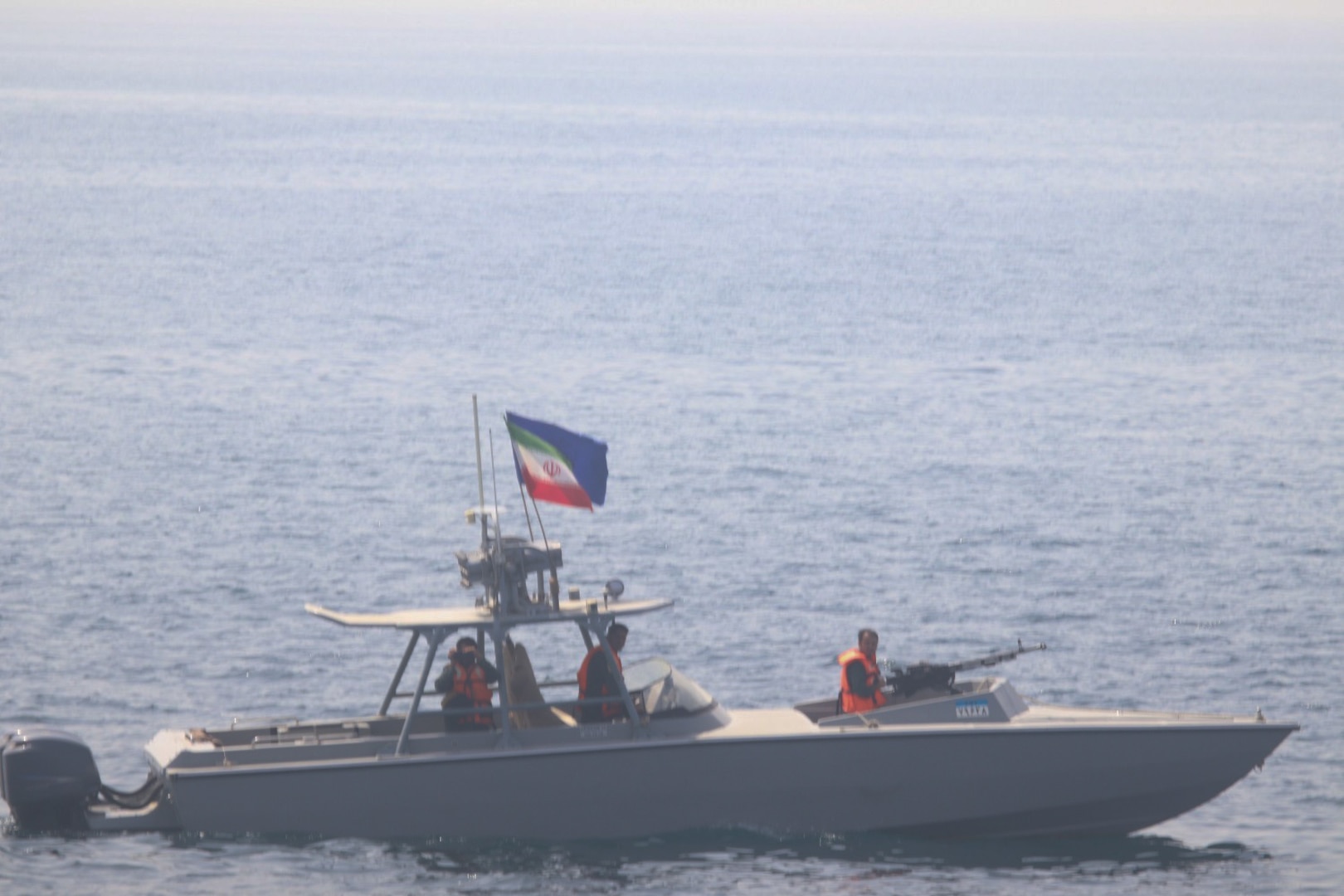
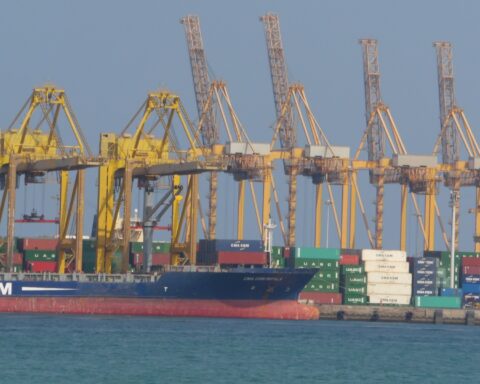
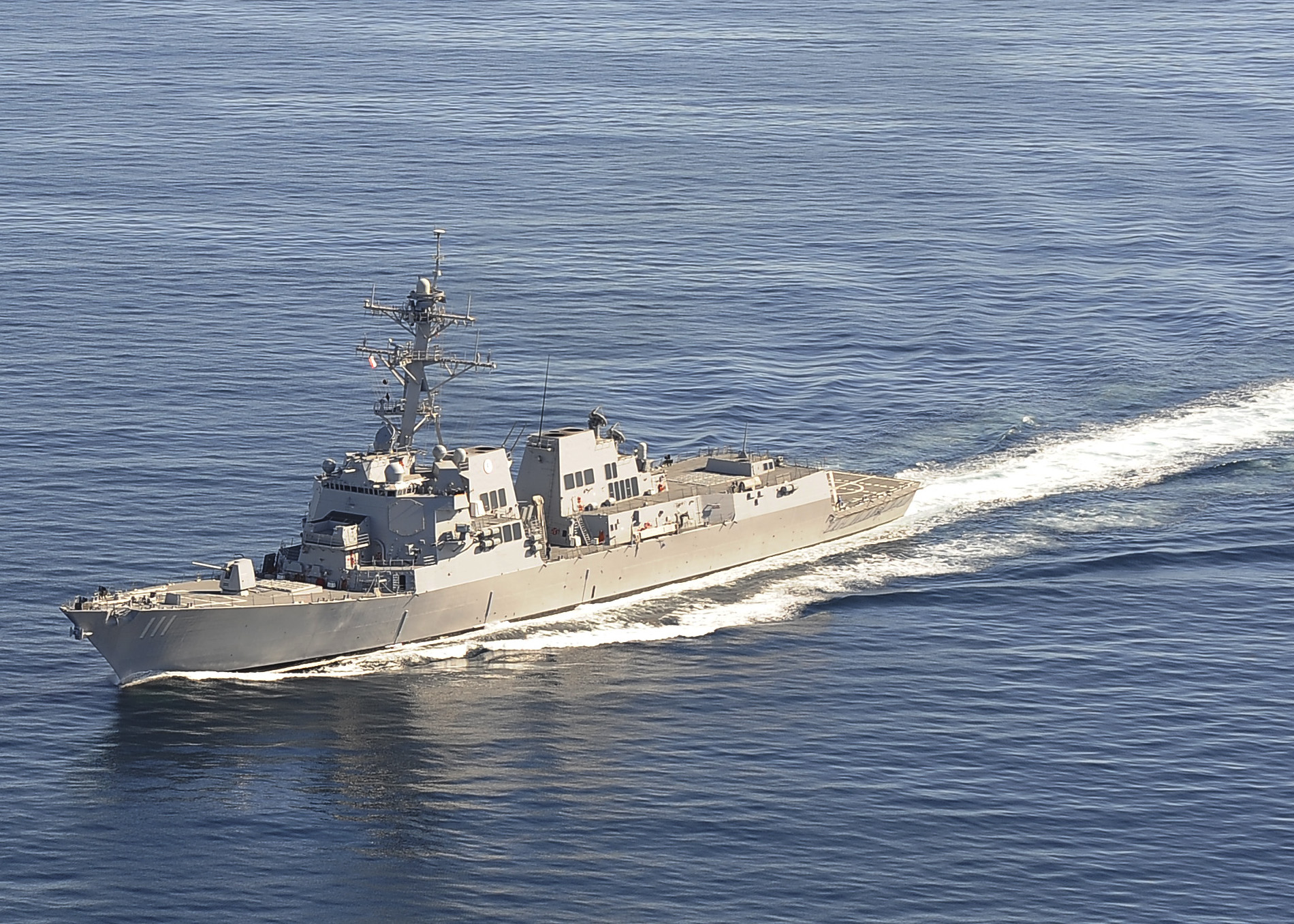
The Touska is a 900-foot Iranian-flagged container ship, IMO 9328900, built 2008, operated under prior US Treasury sanctions for what Treasury described as a “history of illegal activity.” On the morning of April 19 it was transiting the Gulf of Oman toward Bandar Abbas when USS Spruance (DDG-111), an Arleigh Burke-class destroyer, intercepted it under the maritime authorities of Operation Epic Fury — the CENTCOM blockade in force since April 13.
The standoff lasted six hours. The Touska’s master refused boarding. USS Spruance fired Mark 45 5-inch gun rounds into the engine room, disabling propulsion and the navigation system. The 31st Marine Expeditionary Unit, embarked aboard USS Tripoli (LHA 7), conducted Visit, Board, Search and Seizure via two MH-60S Seahawk helicopters. The vessel was moved under tow toward an undisclosed CENTCOM holding position. CENTCOM confirmed Touska was the twenty-sixth vessel intercepted under Epic Fury and the first seized using kinetic disabling fire — twenty-five prior interdictions had ended in voluntary turnaround.
The House of Saud Daily Briefing
Saudi Arabia's news in 3 minutes, every morning. Free. See today's issue
Khatam al-Anbiya Central Headquarters — the IRGC unified operational command run by Major General Gholam Ali Rashid until 2024 and now under General Ali Abdollahi, the same Abdollahi Pezeshkian named on April 4 for “acting unilaterally” — issued a statement within hours: “The aggressive America, by violating the ceasefire and engaging in maritime piracy, attacked one of Iran’s commercial ships in the waters of the Sea of Oman by firing at it and disabling its navigation system. We warn that the armed forces of the Islamic Republic of Iran will soon respond to and retaliate against this armed piracy by the US army.” Drone strikes against US naval vessels operating in the Arabian Sea and Gulf of Oman followed within twenty-four hours.
Why Did Iran Issue Two Contradictory Responses Within Twelve Hours?
The official IRNA position published the evening of April 19 cited “excessive demands, unrealistic expectations, constant shifts, repeated contradictions” and the “naval blockade” as reasons for rejecting Round 2. The wire accused Washington of a “blame game” and described the Touska seizure as a “direct breach of the ceasefire.” Hours later, Iranian sources speaking to Al Jazeera said a delegation including Araghchi and Ghalibaf was expected in Islamabad by Tuesday. IRNA itself ran follow-up reporting suggesting Pezeshkian would attend a joint summit alongside Trump to sign an “Islamabad declaration” — if Trump came in person.
Foreign Ministry spokesman Esmaeil Baghaei, in his Sunday briefing, said: “As of now that I am here, we have no plans for the next round of negotiations.” He also said: “The US is not learning its lessons from experience.” Both sentences were delivered in the same press encounter.
Ebrahim Azizi, head of the Iranian Parliament’s National Security Committee and a former IRGC commander, framed the contradiction in his own voice: “We see the current negotiations as a continuation of the battlefield.” He added: “Iran has decided to continue talks with the US, but this does not mean to negotiate at any cost or accepting any approach the other party practises.” Azizi’s formulation — talks as battlefield, talks as continuing — captures the operative fact. The two positions are not failures of message discipline. They are the message.
“The IRGC appears to be controlling Iranian decision-making instead of Iranian political officials.” — Institute for the Study of War, April 19
Seyed Mojtaba Jalalzadeh, the analyst Al Jazeera cited on April 20, called it a “dual-track negotiation strategy.” That is the diplomatic framing. The structural framing is sharper: Iran’s foreign ministry and its uniformed military command are issuing inconsistent statements because they answer to different chains of command and neither can override the other.
The Authorization Ceiling Mechanics
Article 110 of Iran’s constitution vests command of the armed forces, including the IRGC, in the Supreme Leader. The president — Masoud Pezeshkian — has zero IRGC authority. The foreign minister negotiates within whatever envelope the Supreme National Security Council ratifies, and SNSC ratification requires the Leader’s signature to bind the IRGC. Khamenei has been absent from public duties for forty-four days. His son Mojtaba is reachable, according to Iranian sources cited by Iran International, only via audio. The signature does not exist.
Ahmad Vahidi sits at the operational top of the IRGC chain. He carries an INTERPOL red notice for the 1994 AMIA bombing in Buenos Aires; he was the inaugural commander of the Quds Force from 1988 to 1997; he served as defense minister under Ahmadinejad. His method for blocking the Round 1 talks in Islamabad on April 11 is documented: Vahidi inserted Mohammad Reza Zolghadr — already US-sanctioned for IRGC financial network operations — into the Iranian delegation. Zolghadr filed a complaint, on the second day of the twenty-one-hour Round 1 session, that Araghchi had “surpassed his mandate” by indicating flexibility on the Axis of Resistance file. The complaint triggered orders from Tehran for the delegation to abandon Islamabad. There was no MOU.
Pezeshkian named Vahidi and Abdollahi publicly on April 4 for “acting unilaterally.” That language was extraordinary — an Iranian president accusing his own commanders of insubordination on national television. It changed nothing operationally. Vahidi remained in command. Abdollahi remained at Khatam al-Anbiya. Pezeshkian’s First Vice President, Mohammad Reza Aref, called the US approach “childish” and inconsistent in the same window — even as the presidential track signaled willingness to attend Round 2.
| Faction | Lead Figure | Constitutional Channel | Position on Round 2 |
|---|---|---|---|
| Presidency | Pezeshkian / Araghchi | Article 113 (executive) | Attend; sign extension MOU |
| Parliament Speaker | Ghalibaf (ex-IRGC Aerospace 1997-2000) | Article 65 (legislative) | Attend; reserve red lines |
| IRGC C-in-C | Vahidi | Article 110 (Leader’s command) | Block; cite Touska |
| Khatam al-Anbiya | Abdollahi | Article 110 (Leader’s command) | Retaliate; declare piracy |
| SNSC | Pezeshkian chairs; Khamenei ratifies | Article 176 | No ratification (Leader absent 44 days) |
The architecture means a delegation can fly to Islamabad and a foreign minister can sign a document and a presidential spokesman can announce a deal, and none of it binds the IRGC. The IRGC demonstrated the principle on April 17, when Araghchi declared the Strait of Hormuz “completely open” and the IRGC reversed him within hours, with Tasnim — the IRGC-aligned wire — describing his tweet as “a bad and incomplete tweet that created confusion.” The next morning IRGC gunboats intercepted or fired on at least three commercial vessels in the strait.
What Did the April 16 “Nuclear Breakthrough” Actually Contain?
The breakthrough Pakistan announced on April 16 — and which Trump amplified the same day with his claim that Iran had agreed to hand over “nuclear dust,” meaning enriched uranium debris from the US airstrike sites of last year — contained no signed document. Pakistani officials told Al Jazeera and Pakistan Today that Iran had agreed “in principle” to a four-country plus IAEA monitoring proposal for the residual stockpile. White House Press Secretary Karoline Leavitt said: “We feel good about the prospects of a deal.” Iran did not formally confirm anything.
The two core gaps remained where they had been since Round 1. The US demanded a twenty-year enrichment moratorium. Iran offered approximately five years. Iran holds 440.9 kg of uranium enriched to 60 percent — the last verified IAEA figure from June 2025, before Iran terminated IAEA access on February 28, 2026. The technical interval to weapons-grade material via the IR-6 cascade is roughly twenty-five days. The “nuclear dust” framing covered the debris question; it did not address the live stockpile.
An “in principle” agreement is the diplomatic device used when neither side will commit on paper. The April 16 framework existed as a Pakistani readout, a US enthusiasm, and a denial-by-silence from Tehran. Three days later it had no defenders.
Pakistan as Relay Channel: The Munir Visit and Its Limits
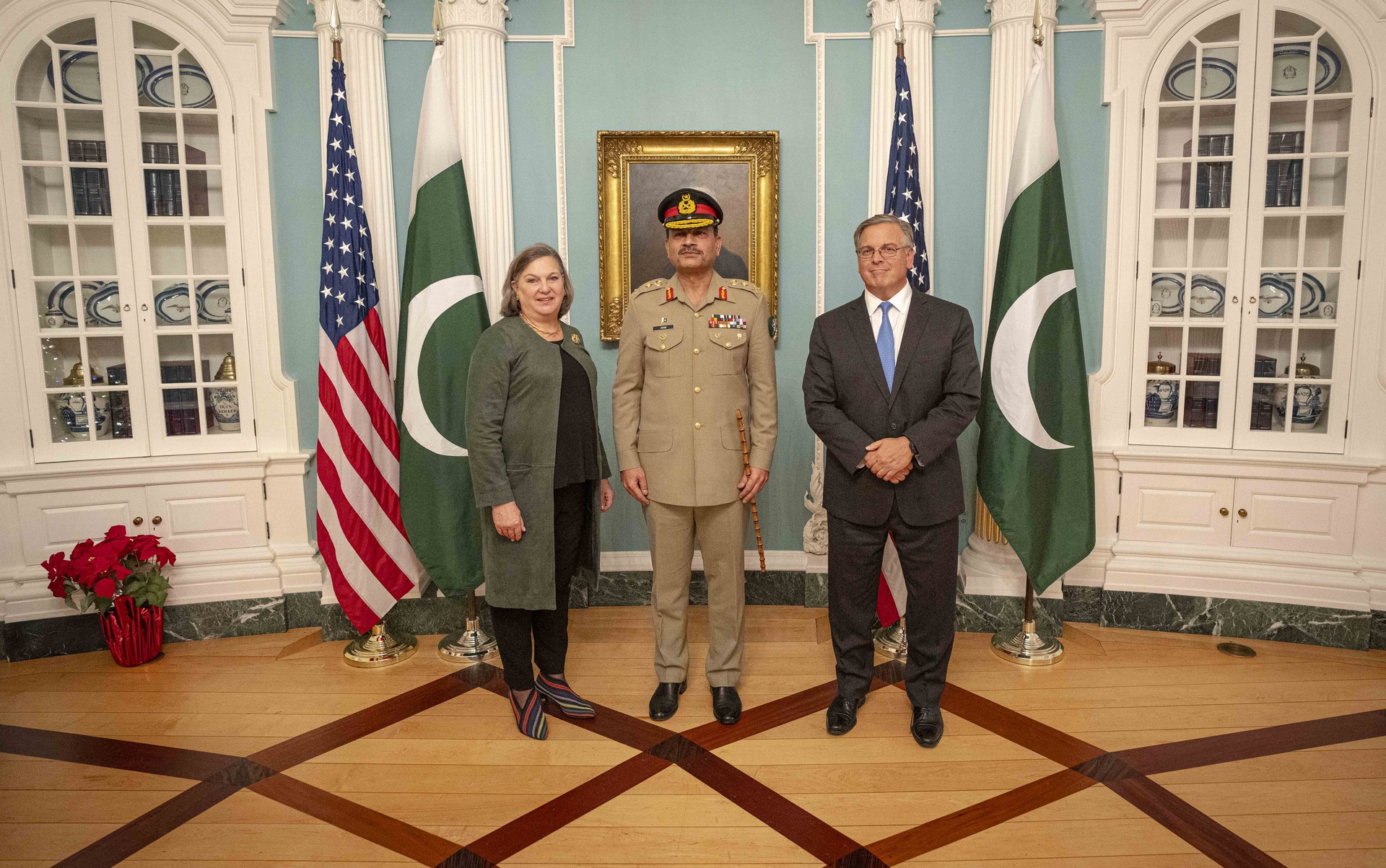
Asim Munir, Pakistan’s Army Chief, traveled to Tehran on April 16 carrying the US message. The visit took him — by Pakistani readout — to Khatam al-Anbiya Headquarters, the same Abdollahi command that issued the Touska piracy statement three days later. The optics matter: Pakistan’s military head, in person, at the headquarters of the Iranian command Pezeshkian had publicly accused twelve days earlier of acting against the elected government’s mandate.
Pakistan’s structural position makes it the only available relay. It has been Iran’s protecting power in the United States since 1992. It is also a Saudi treaty ally under the SMDA signed in September 2025, with a $5 billion Saudi loan to Islamabad maturing in June 2026. Pakistan can talk to both sides because it owes both sides — and because no other Sunni power has the IRGC contacts. Pakistan as the ceasefire’s sole enforcement mechanism was the architecture of the original April 8 deal; Munir’s April 16 trip extended that architecture into the nuclear file.
The architecture broke for the same reason the negotiations broke: a relay channel can transmit messages between two principals; it cannot manufacture authority for one of them. Munir could carry US offers to Khatam al-Anbiya. Khatam al-Anbiya could receive them. Neither act produced an Iranian counterparty empowered to sign. Pakistani Foreign Minister Ishaq Dar took Araghchi’s call on April 19. Araghchi’s message to Dar — that the Touska seizure showed “America’s ill will and lack of seriousness in diplomacy” — was the Iranian foreign minister speaking to the Pakistani foreign minister about an event neither of their governments controlled.
Operation Epic Fury and the Twenty-Sixth Vessel
The blockade declared on April 13 has, until April 19, operated as coercive diplomacy by demonstration. CENTCOM intercepted twenty-five vessels — Iranian-flagged or carrying cargoes traceable to Iranian-controlled accounts — and turned each one back without kinetic action. The blockade communicated capability and restraint simultaneously. The Touska broke that pattern.
The decision to disable the Touska’s propulsion with naval gunfire, rather than let it return to Bandar Abbas as the previous twenty-five had done, was made at a CENTCOM operational level — the question of whether it was cleared at White House level has not been answered publicly. The vessel had been under prior Treasury sanctions, which provided the legal cover; the operational change was the gunfire.
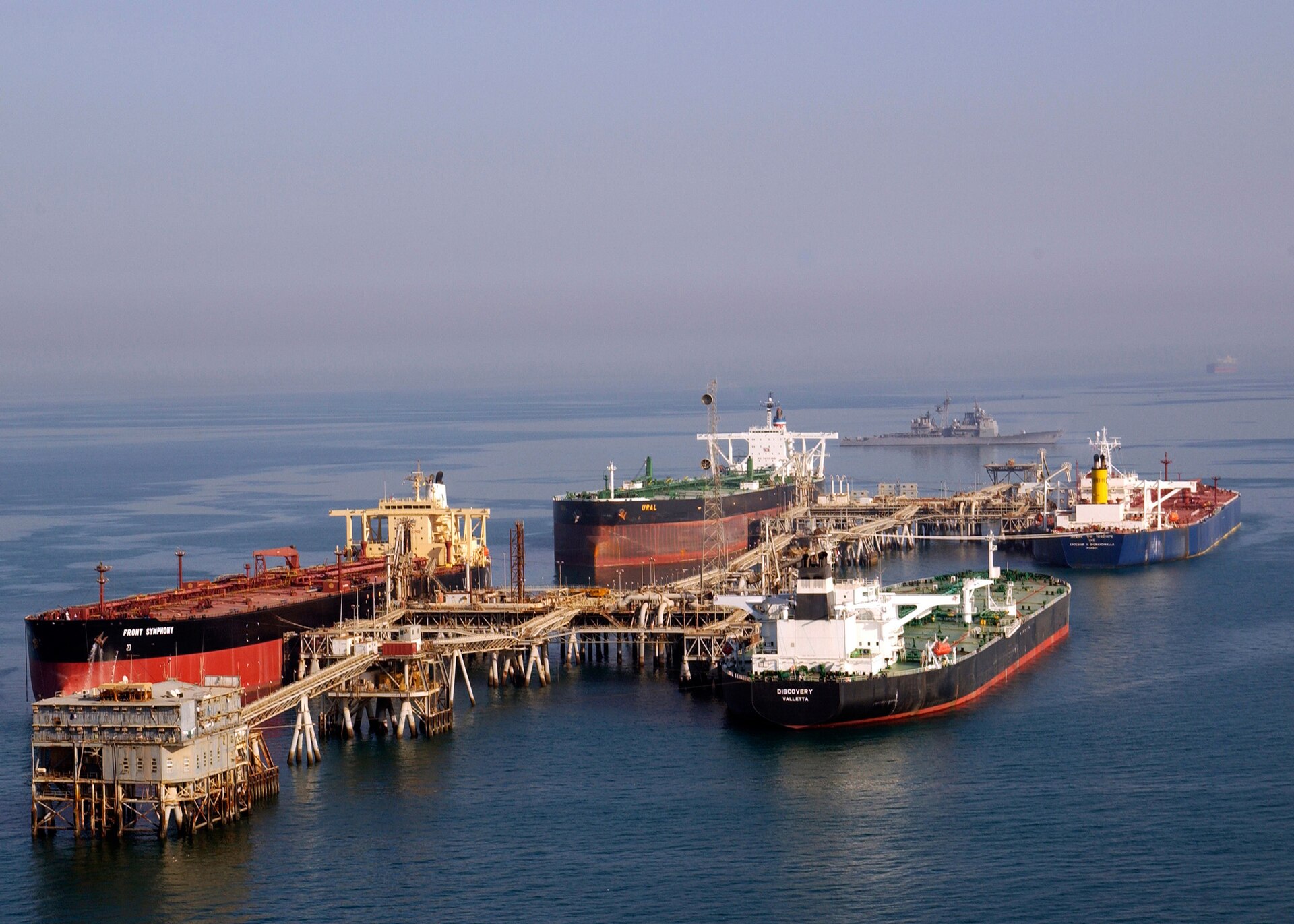
Farah N. Jan, Senior Lecturer in International Relations at the University of Pennsylvania, framed the structural problem in The Conversation: “Iran controls the strait through mines and geography; interdiction alone cannot reopen it.” She argued the blockade “narrows rather than expands diplomatic space before April 22 ceasefire expiration.” The Touska seizure compressed that space further. It also, per WSJ reporting cited by JPost, prompted Saudi Arabia to formally ask Washington to lift the blockade — citing Houthi retaliation risk in the Bab el-Mandeb, Saudi Arabia’s only working alternative export corridor while the Yanbu pipeline runs at 5.9 million barrels per day against a 7 million barrel Hormuz throughput requirement.
The Saudi request is the diplomatic counterpart to the IRGC drone strike: both are responses to a US action neither had been consulted on, by parties that had been shouldering the cost of the war for thirty-eight days.
The April 22 Ceasefire Clock
The original ceasefire was a two-week deal brokered by Pakistan on April 8. Witkoff and Araghchi exchanged direct texts in the hours before. There was no enforcement clause and no extension mechanism. As of April 15, both sides had given Bloomberg’s sources “in principle agreement” to a two-week extension MOU. The Touska voided that. As of April 20, no extension document exists.
Round 2 in Islamabad was structured to produce the extension MOU. The minimum viable outcome — what diplomats on both sides described to Middle East Eye as the “floor” — was a sixty-day extension covering the three known sticking points: the nuclear file, Hormuz sovereignty, and wartime compensation. The maximum — the “ceiling” — was a Phase 2 framework signed in person by Trump and Pezeshkian.
Vice President JD Vance was pulled from the delegation on under twenty-four hours’ notice on April 20. The Times of Israel and Fortune both attributed the withdrawal to security concerns. Steve Witkoff and Jared Kushner remain on the US team. The Vance-Ghalibaf bilateral that opened Round 1 was the diplomatic novelty of the war — the first direct US-Iran principal-level contact since 1979. Vance’s withdrawal removes the symmetry. Kushner’s presence is its own signal: he was the principal author of the 2020 Abraham Accords framework Iran has spent five years denouncing.
What Round 2 Was Supposed to Achieve
Round 2 was, in its operative architecture, a vehicle to convert the April 16 Pakistani relay into signed paper before the April 22 expiration. The three files are not equally tractable.
The nuclear file requires Iran to accept either monitored down-blending of the 60 percent stockpile or international removal. Iran has so far offered only the “dust” — the debris from the US airstrike sites of last summer. The 440.9 kg stockpile, the IR-6 cascade timeline, and the February 28 termination of IAEA access are the technical parameters. Twenty-year versus five-year is the political parameter. Neither has moved since April 11.
The Hormuz file requires Iran to accept that the strait is governed by UNCLOS and not by IRGC permits. Aref’s “security of the Strait of Hormuz is not free” remark on April 19 — delivered the same day as the Touska seizure — restated the Iranian opening position from Round 1: that any framework codifies Iranian rights of regulation. The IRGC’s collection record on the Hormuz toll over the past thirty-six days is zero dollars on sixty issued permits. The toll fact pattern argues both directions: Iran cannot enforce collection, but neither will it formally surrender the principle.
The wartime compensation file is the file no one on the US side wants to discuss. Iran has acknowledged 3,500 dead — the official figure released last week. Pezeshkian’s warning that “full economic collapse is inevitable” is in the public record. The Iranian Central Bank’s internal memo, reported by Iran International, projects 180 percent inflation and a twelve-year recovery. The presidential track wants compensation on the table because compensation is what the presidential track can deliver to its domestic audience. The IRGC veto faction does not want compensation on the table because compensation implies an end-state Iran is the losing party in.
The three files map cleanly onto the institutional fracture. The nuclear file is owned by the SNSC, which cannot ratify without Khamenei. The Hormuz file is owned operationally by the IRGC Navy and rhetorically by the foreign ministry, which is the source of the visible contradiction. The compensation file is owned by the presidency, which is the only Iranian institution with a domestic political interest in declaring the war ended.
A Round 2 outcome that produces movement on any single file requires the institution that owns that file to be empowered to sign — and only the presidency, on the compensation file, currently is. The asymmetry explains why the only Iranian principal Western diplomats describe as “constructive” is the only one whose file the US side considers secondary.
Brent’s 6.5 Percent Reversal
Brent fell ten percent on April 18 to below $90 a barrel after Araghchi’s “Hormuz completely open” announcement. The IRGC reversal that afternoon, then the gunboat interceptions of April 18, then the Touska seizure of April 19 reversed the move. Brent surged 6.5 percent to $96.25 in early Asian trading on April 20. The move — above one hundred to below ninety to ninety-six — happened inside thirty-six hours and tracked the visible split between the Iranian foreign ministry and the IRGC with a precision the oil desk had not previously achieved.
The price floor matters because Saudi fiscal arithmetic at $108–111 break-even (Bloomberg PIF-inclusive) is ten to fifteen dollars above the current strip. Goldman’s war-adjusted GDP deficit estimate of 6.6 percent assumes a Brent floor higher than where Brent currently trades. The blockade that produced the Touska seizure was, by one operational logic, the US underwriting Saudi exports through the Yanbu bypass. By another, equally operational logic, it was the US ensuring that no ceasefire could hold without Iranian commitment to a code of conduct the IRGC has spent the entire war demonstrating it does not accept.
Both logics are correct. They produce opposite recommendations.
The Architecture, Stated Plainly
The Touska is not the story. The split response to the Touska is the story. An Iranian foreign minister calling his Pakistani counterpart to express ill will at the same hour Iranian sources are telling Al Jazeera that the same foreign minister will fly to Islamabad on Tuesday is not strategic ambiguity, dual-track diplomacy, or message discipline failure. It is the visible outline of an institutional fracture that has been there since June 2025, that Pezeshkian named on April 4, that Vahidi reinforced through the Zolghadr maneuver on April 11, and that Khatam al-Anbiya operationalized through gunfire on April 19.
The April 22 ceasefire expires in seventy-two hours. The Pakistani relay channel remains open. The Iranian foreign ministry remains willing. The IRGC remains opposed. Khamenei remains absent. Round 2 will or will not occur. The institutional architecture that determines which is the story Western diplomats kept describing as a negotiating position when it was always a constitutional condition.
The temporal compression argument — why Iran’s April 20 drone strikes collapsed the 48-hour gap between kinetic resumption and the April 22 expiry — is analyzed in The Ceasefire Already Ended — Trump’s Deadline Is for Everyone Else.
Frequently Asked Questions
Was the M/V Touska under Iranian Navy or IRGC Navy escort when seized?
No. CENTCOM’s after-action briefing confirmed Touska was transiting unescorted in the Gulf of Oman, outside Iranian territorial waters, when intercepted. The IRGC Navy’s standard escort doctrine, established in late March, applies to vessels carrying IRGC-cleared toll-paying cargoes through the Strait — not to commercial transits in the Gulf of Oman approach. The unescorted status removed any IRGC pretext for armed interception of USS Spruance during the six-hour standoff.
Who is Mohammad Reza Zolghadr and why was his presence on the Round 1 delegation decisive?
Zolghadr is a US Treasury-sanctioned IRGC financial network operative, designated under E.O. 13224 in 2019 for his role moving Quds Force funds through Lebanese intermediaries. Vahidi’s insertion of Zolghadr into the Round 1 delegation gave the IRGC a sanctioned veto-holder inside the negotiating room — and the procedural standing to file the “exceeded mandate” complaint that triggered Tehran’s recall order on day two. His name does not appear on the public Round 2 delegation lists circulated April 19-20.
What is the practical difference between Article 110 and Article 113 in this context?
Article 113 designates the president as the second-highest official after the Supreme Leader and gives him executive authority. Article 110 enumerates the Leader’s powers, which include command of the armed forces and appointment of the IRGC commander. The two articles do not conflict in text — they conflict in practice when an elected president signs international agreements that bind only the executive branch and not the military command. Iran’s 1989 constitutional revision, which strengthened Article 110, is the source of the current fracture.
Why did Vance specifically — rather than Witkoff or Kushner — pull from Round 2?
The Times of Israel attributed the withdrawal to security concerns, without specifying. Two structural factors are unstated but operative: Vance is constitutionally in the line of succession and Kushner is not, raising the protective floor; and Vance’s Round 1 bilateral with Ghalibaf produced the most direct US-Iran principal contact since 1979, which under post-Touska conditions becomes a higher-value target rather than a lower one.
What is the legal status of the Touska’s prior Treasury sanctions designation?
The Touska was designated in 2023 under E.O. 13902 (Iranian metals and shipping sector) for what Treasury described as a “history of illegal activity” involving sanctions evasion. The designation made the vessel and its cargo subject to seizure under US domestic law independent of the April 13 blockade authorities. CENTCOM’s legal cover for the kinetic disabling fire derives from the prior designation rather than from Operation Epic Fury — a distinction that matters for the precedential question of whether unsanctioned Iranian-flagged commercial vessels can now be subjected to similar treatment.
The market impact was immediate: on April 20, only 16 vessels transited Hormuz — the war’s lowest daily count, with no Western-flagged commercial crude carrier among them.
The House of Saud Daily Briefing
Saudi Arabia's news in 3 minutes, every morning. Free. See today's issue