
RIYADH — Saudi Arabia’s 2027 budget, approved by the cabinet on November 24, projects 12.8% real GDP growth next year — the most optimistic figure published by any institution for the kingdom. The World Bank and IMF each forecast 7.9% in their most recent October 2026 outlooks, while the Institute of Chartered Accountants in England and Wales, covering the GCC as a bloc, projects a 5.8% rebound.
All four projections hinge on the same variable: how quickly oil output recovers from a year of war and Strait of Hormuz disruption. Brent crude fell below $89 for the first time since August on the day the budget was approved, and OPEC+ meets November 29 to set 2027 quotas with no production plan past December.
The House of Saud Daily Briefing
Saudi Arabia's news in 3 minutes, every morning. Free. See today's issue
Table of Contents
The 2027 Budget in Numbers
The cabinet approved spending of SAR 1.39 trillion ($371 billion) against expected revenue of SAR 1.20 trillion, leaving a deficit of SAR 190.56 billion — 3.6% of GDP, The National reported on November 24. The government projects real GDP falling 3.6% in 2026 before rebounding 12.8% in 2027, according to The National.
The deficit narrows from the 2026 estimate of SAR 245 billion (4.9% of GDP), which overshot the original SAR 165 billion budget by roughly SAR 80 billion, according to Reuters via Zawya. The overrun reflects the war’s toll on oil revenue: oil activities contracted an estimated 21.8% in 2026, the finance ministry’s pre-budget statement disclosed in September, Zawya reported.
Finance Minister Mohammed Al Jadaan said the kingdom was “resilient enough to withstand a prolonged conflict” with the Houthis, and that “blackmail by missiles” pushing Riyadh to compromise on national security was “a total mistake,” The National reported on November 24.
“We are maximising the impact of the Vision on people’s lives, transforming its achievements into a sustainable strength for our economy.”
Crown Prince Mohammed bin Salman, SPA statement, November 24 — The National
Defense remained the largest single budget line at SAR 263 billion, up 2.2% from 2026, as the cabinet approved the wartime budget, The National reported. Non-oil growth was revised down to 2.5% from the 3.2% the finance ministry had projected in September, according to Reuters via Zawya.
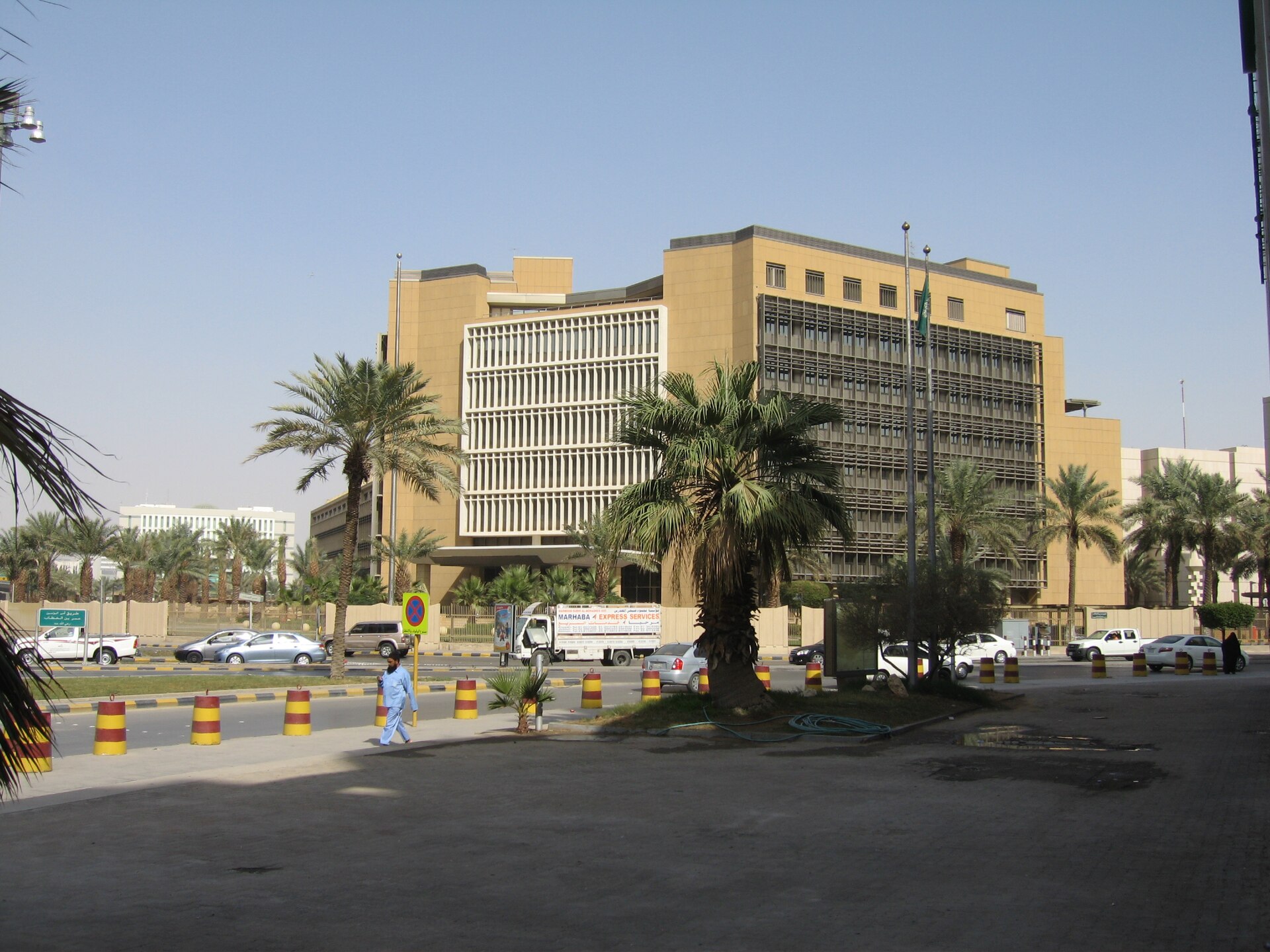
How Do External Forecasters See 2027?
Three institutions published 2027 growth forecasts for Saudi Arabia in 2026. The IMF’s July 2026 Article IV consultation projected 5.5% for Saudi Arabia, a figure the fund revised upward to 7.9% in its October World Economic Outlook. The World Bank, also publishing in October, projects 7.9%. ICAEW and Oxford Economics, covering the six-nation GCC bloc, project 5.8%. The Saudi government’s own 12.8% stands more than double the most cautious external estimate.
| Institution | Report Date | Coverage | 2026 GDP | 2027 GDP | Key Assumption |
|---|---|---|---|---|---|
| Saudi Finance Ministry | Nov 2026 | Saudi Arabia | -3.6% | +12.8% | Full oil output recovery |
| IMF (Article IV) | Jul 2026 | Saudi Arabia | +1.7% | +5.5% | July baseline; revised to +7.9% in Oct WEO |
| IMF (Oct WEO) | Oct 2026 | Saudi Arabia | — | +7.9% | Gradual normalization |
| World Bank | Oct 2026 | Saudi Arabia | -2.0% | +7.9% | East-West Pipeline offset |
| ICAEW / Oxford Economics (Q3) | Sep 2026 | GCC aggregate | -6.4% | +5.8% | Prolonged disruption |
The IMF projected 5.5% for Saudi Arabia in its July 2026 Article IV consultation, Asharq Al-Awsat reported, then raised that forecast to 7.9% in its October 2026 World Economic Outlook. The World Bank, also publishing in October, put Saudi 2027 growth at 7.9% and the broader GCC contraction at 4.3% in 2026, Zawya reported citing Saudi Gazette. Saudi Arabia’s shallower contraction — 2.0% against the bloc’s 4.3% — was attributed to the East-West Pipeline as an alternative export route.
ICAEW’s September report set the GCC’s 2027 rebound at 5.8%, reflecting a grimmer assessment of oil prospects. The report projected a 26.9% contraction in the GCC hydrocarbon sector for 2026, requiring a 25.9% rebound in 2027 just to reach that headline figure, People Matters Global reported.
The divergence between Riyadh’s 12.8% and the external range of 5.8–7.9% — ICAEW’s most cautious estimate to the IMF and World Bank consensus — turns on a timing question none of the forecasters have resolved.
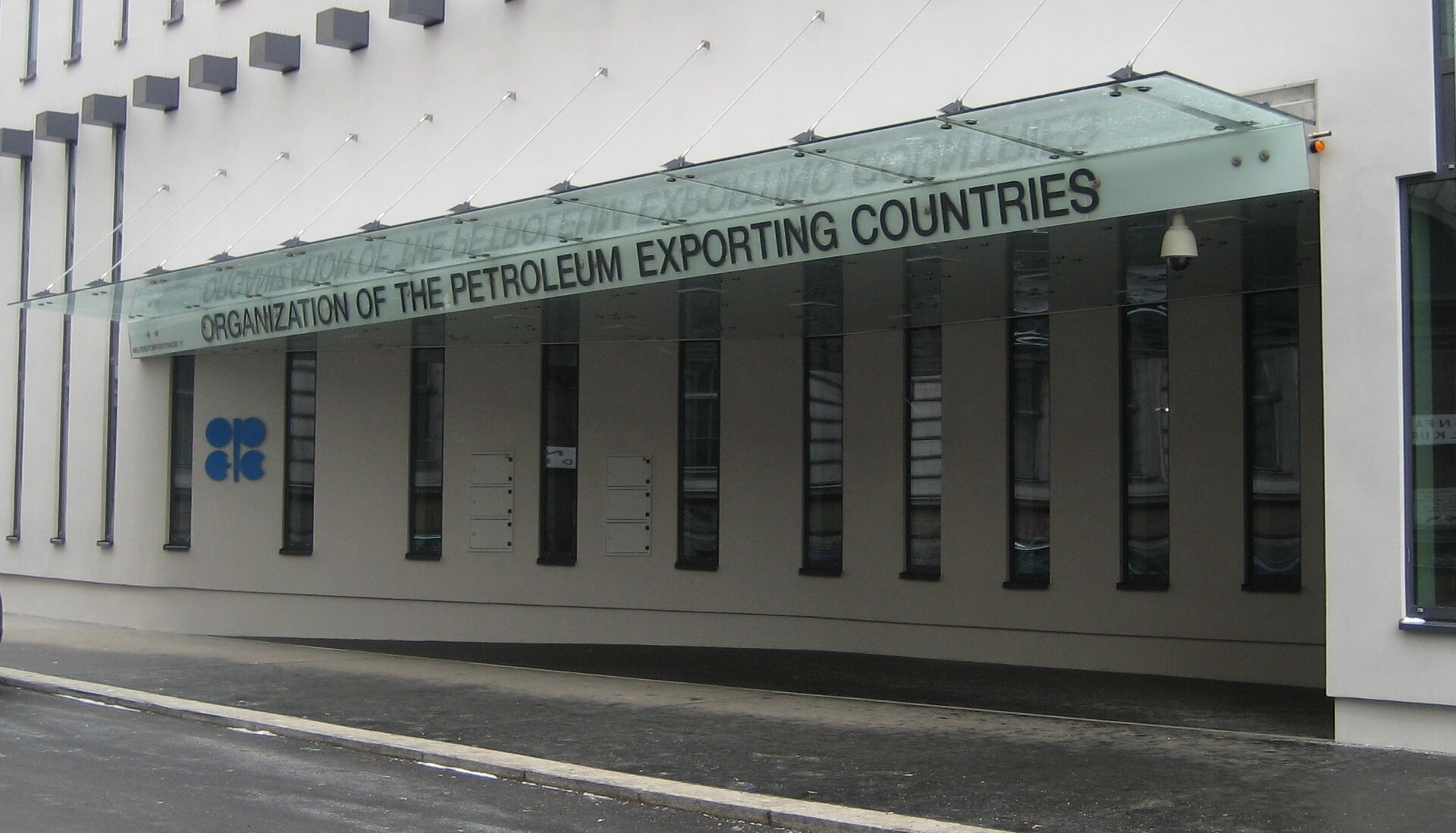
The ICAEW Trajectory
ICAEW and Oxford Economics have published quarterly GCC outlook reports since the Iran conflict began. Each successive edition has cut the 2027 rebound as assumptions about de-escalation failed to hold.
| Quarter | Report Date | GCC 2026 GDP | GCC 2027 GDP | Oil Sector 2027 |
|---|---|---|---|---|
| Q1 | Mar 27 | -0.2% | +8.5% | +18.2% |
| Q2 | Jun 17 | -2.4% | +8.1% | +23.5% |
| Q3 | Sep 2026 | -6.4% | +5.8% | +25.9% |
The Q1 report in March assumed the disruption would be brief. Azad Zangana, head of GCC macroeconomic analysis at Oxford Economics, said “the strength of the rebound will depend on how quickly stability returns and confidence is restored,” according to the ICAEW news release on March 27.
By June, the Q2 report had deepened the 2026 contraction to 2.4% while keeping the 2027 rebound near 8.1%. That figure carried three explicit conditions: a ceasefire by end-July 2026, Hormuz returning to normal by end-2026, and average Brent of $90 per barrel across 2026, Gulf News reported on June 17. Zangana wrote that “an 8.1 per cent expansion in GCC GDP in 2027 and a 23.5 per cent rebound in oil sector output point to a region that is well positioned to recover quickly as trade routes reopen and travel demand returns,” Gulf News reported.
Hanadi Khalife, ICAEW’s regional director for the Middle East, Africa and South Asia, described the projected recovery as “substantial, and the conditions for it are already taking shape,” Gulf News reported on June 17.
None of those three conditions were met. No ceasefire materialized by end-July or at any point since. The IRGC declared Hormuz closed on October 26. Brent averaged below the $90 threshold for the year, closing below $89 on November 23.
The September Q3 report adjusted accordingly: the 2026 contraction deepened to 6.4%, the 2027 rebound fell to 5.8%, and the report projected no GCC interest rate cuts before 2028, People Matters Global reported. Visitor numbers, the report added, were not expected to return to pre-conflict levels before 2028.
No Q4 2026 ICAEW report had been published as of November 24. The last available estimate — 5.8% from September — was computed before the IRGC’s October declaration and before Brent’s slide below $89.
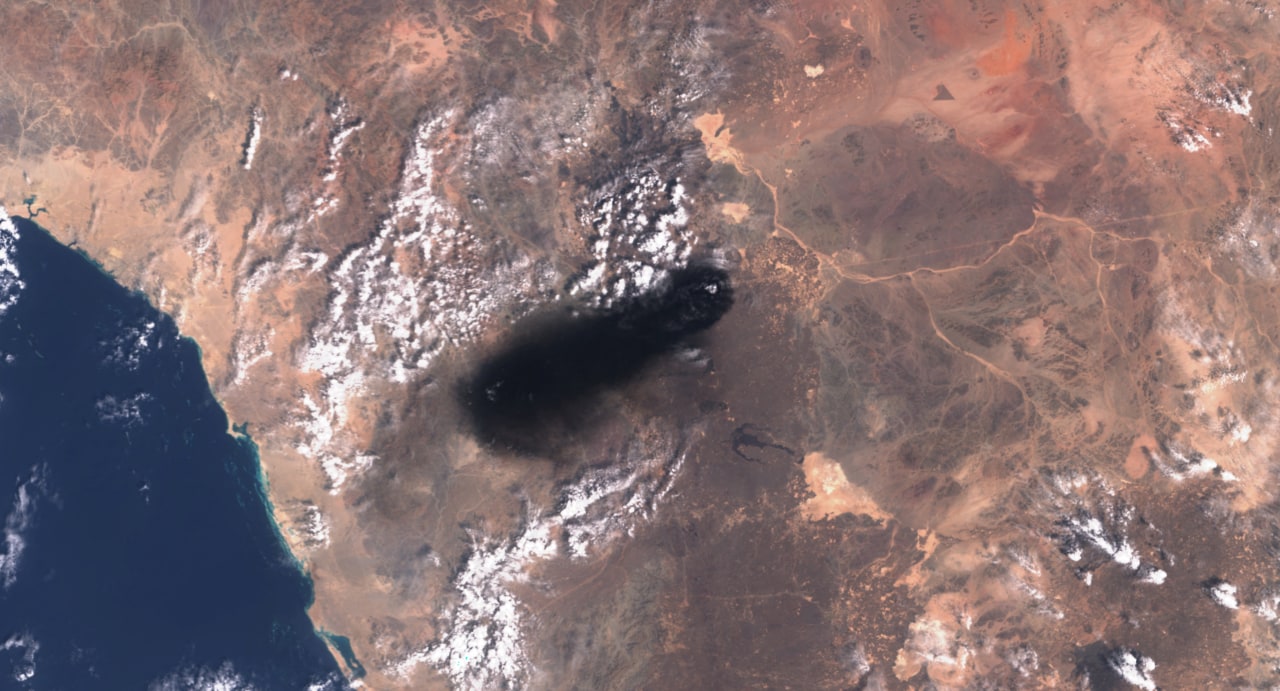
What Would It Take to Reach 12.8%?
The government’s projection rests on reversing the 21.8% oil contraction the finance ministry estimated for 2026 — a figure that dwarfs anything in the external forecasts. Doing so would require Hormuz to reopen, OPEC+ to allocate new volume, and buyers to return to Saudi crude at prices that close the fiscal gap.
Shipping through Hormuz fell sharply in November, against a pre-war baseline of roughly 138 vessels per day tracked by the Joint Maritime Information Center. Saudi Arabia’s own OPEC+ quota for December was 10.5 million barrels per day, with no allocation agreed for January or beyond, according to the OPEC November press release.
The East-West Pipeline offers a partial workaround. With a design capacity of 7 million barrels per day and throughput of up to 5.8 million barrels per day confirmed via Yanbu in October, it has become the kingdom’s primary alternative to Hormuz, The National reported on November 24. But the pipeline — which has carried the bulk of Saudi exports since the strait became contested — cannot replace the full range of crude, gas, and product volumes that once transited Hormuz for the entire Gulf.
War-risk shipping insurance in the Gulf has risen sharply since the conflict began, adding to per-voyage costs and complicating the recovery timeline for Saudi crude exports.
Can Non-Oil Growth Close the Gap?
The budget answers that question implicitly. The downward revision to non-oil growth makes the 12.8% headline even more dependent on oil recovery than the pre-budget statement suggested.
The Public Investment Fund capped its international allocation at 20% under the 2026–2030 strategy, down from 30%, The National reported in April. Saudi Arabia attracted $32.6 billion in foreign direct investment in 2025 — roughly a third of the $100 billion annual target the government had set, Semafor reported in September 2026.
The postponement of the 10th Future Investment Initiative summit to October 2027 removed one of Riyadh’s annual showcases for inbound capital at a moment when every dollar of non-oil revenue counts. ICAEW’s September report projected visitor numbers would not return to pre-conflict levels before 2028, People Matters Global reported. Without cheaper credit or a return of pre-war visitor volumes, the revised non-oil growth figure leaves little room to compensate if the oil rebound falls short.
Background
Saudi Arabia’s economy entered 2026 facing oil production cuts under OPEC+ and a war that has disrupted its primary export route through the Strait of Hormuz. Iran first closed the strait on February 28 and March 2–4, 2026. A June agreement briefly reopened it before Iran re-closed it on July 12, and the IRGC formally declared Hormuz closed on October 26.
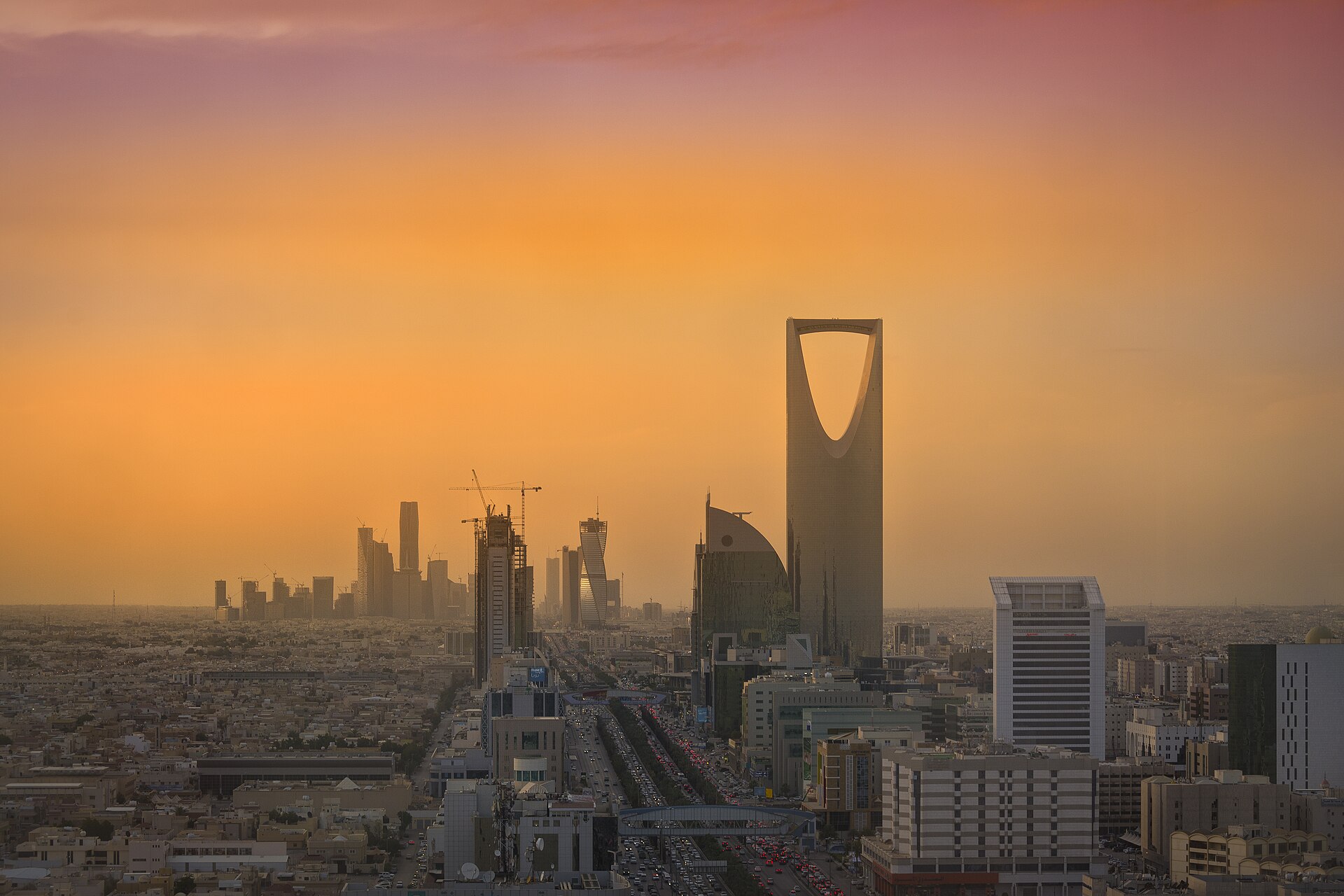
The East-West Pipeline — running from the Eastern Province to Yanbu on the Red Sea — has partially offset the disruption. Coalition intercepts, Houthi strikes on Saudi infrastructure including the PIF Tower in Riyadh’s KAFD district, and rising shipping insurance costs have further complicated the export and investment environment.
The 2027 budget is the second consecutive year of deficit spending. The government’s willingness to run a SAR 190.56 billion shortfall — after the 2026 deficit exceeded the original budget by SAR 80 billion — signals confidence in a recovery that external forecasters have not fully underwritten. The 2027 borrowing plan is due by year-end, according to the September pre-budget statement via Zawya.
Frequently Asked Questions
When does Saudi Arabia expect to return to a balanced budget?
The 2027 budget does not set a target date for fiscal balance. The finance ministry’s projections show deficits through at least 2027, with the gap narrowing from 4.9% of GDP in 2026 to 3.6% in 2027 — contingent on the 12.8% growth scenario materializing, according to Reuters via Zawya. A return to surplus would require sustained oil revenue recovery, which depends on events the budget itself cannot control.
How does Saudi Arabia plan to fund the 2027 deficit?
Saudi Arabia has funded recent deficits through a combination of sovereign bond issuance and drawdowns from central bank reserves. The 2027 borrowing plan is due by year-end, the September pre-budget statement indicated, according to Zawya. The Public Investment Fund has also explored securitisation and stake sales as instruments for raising capital, though those serve the fund’s portfolio rather than the fiscal budget directly.
What is the ICAEW and why does its GCC forecast matter?
The Institute of Chartered Accountants in England and Wales publishes quarterly economic outlooks for the GCC in partnership with Oxford Economics. Its reports carry explicit assumptions — ceasefire dates, Brent price thresholds, Hormuz normalization timelines — that the IMF and World Bank typically leave implicit. When those conditions fail, the next quarterly revision quantifies the cost, as the trajectory from Q1’s 8.5% to Q3’s 5.8% illustrates.
How does defense spending compare to the projected deficit?
At SAR 263 billion, defense is the largest single line item in the 2027 budget and exceeds the projected deficit of SAR 190.56 billion. The 2.2% year-on-year increase is modest relative to the escalation in coalition operations and Houthi strikes, suggesting Riyadh is absorbing war costs within existing defense allocations rather than creating a separate wartime funding line, The National reported on November 24.
What oil price does the Saudi 2027 budget assume?
The Saudi finance ministry does not publish an explicit Brent crude assumption in its budget documents. External analysts typically infer a fiscal breakeven by dividing projected oil revenue by estimated production volumes, but no confirmed breakeven figure for 2027 has been published as of November 24. The ICAEW’s June report used $90 per barrel as its baseline Brent assumption for the 8.1% scenario, Gulf News reported — a price Brent has not consistently held in the fourth quarter of 2026.
The House of Saud Daily Briefing
Saudi Arabia's news in 3 minutes, every morning. Free. See today's issue