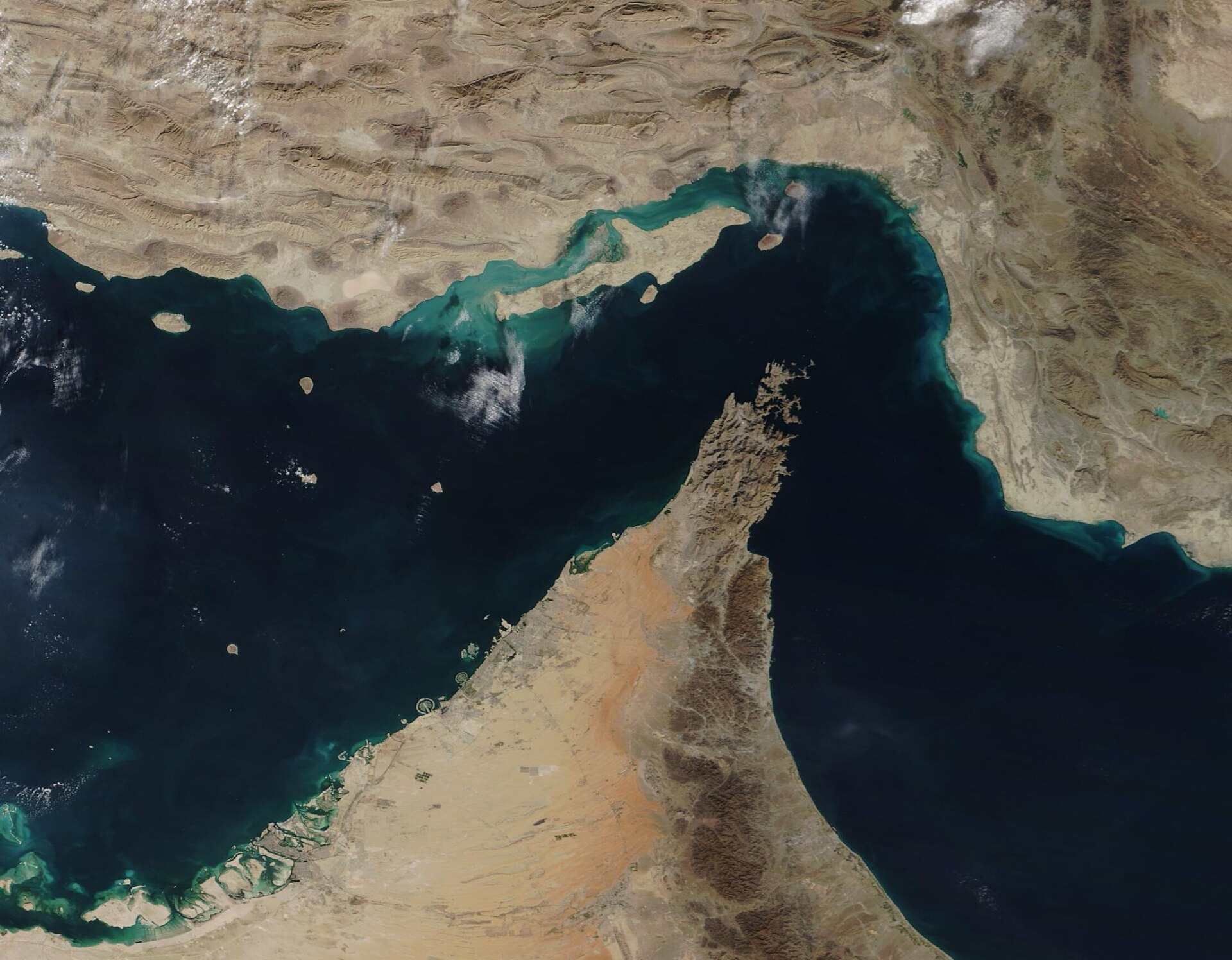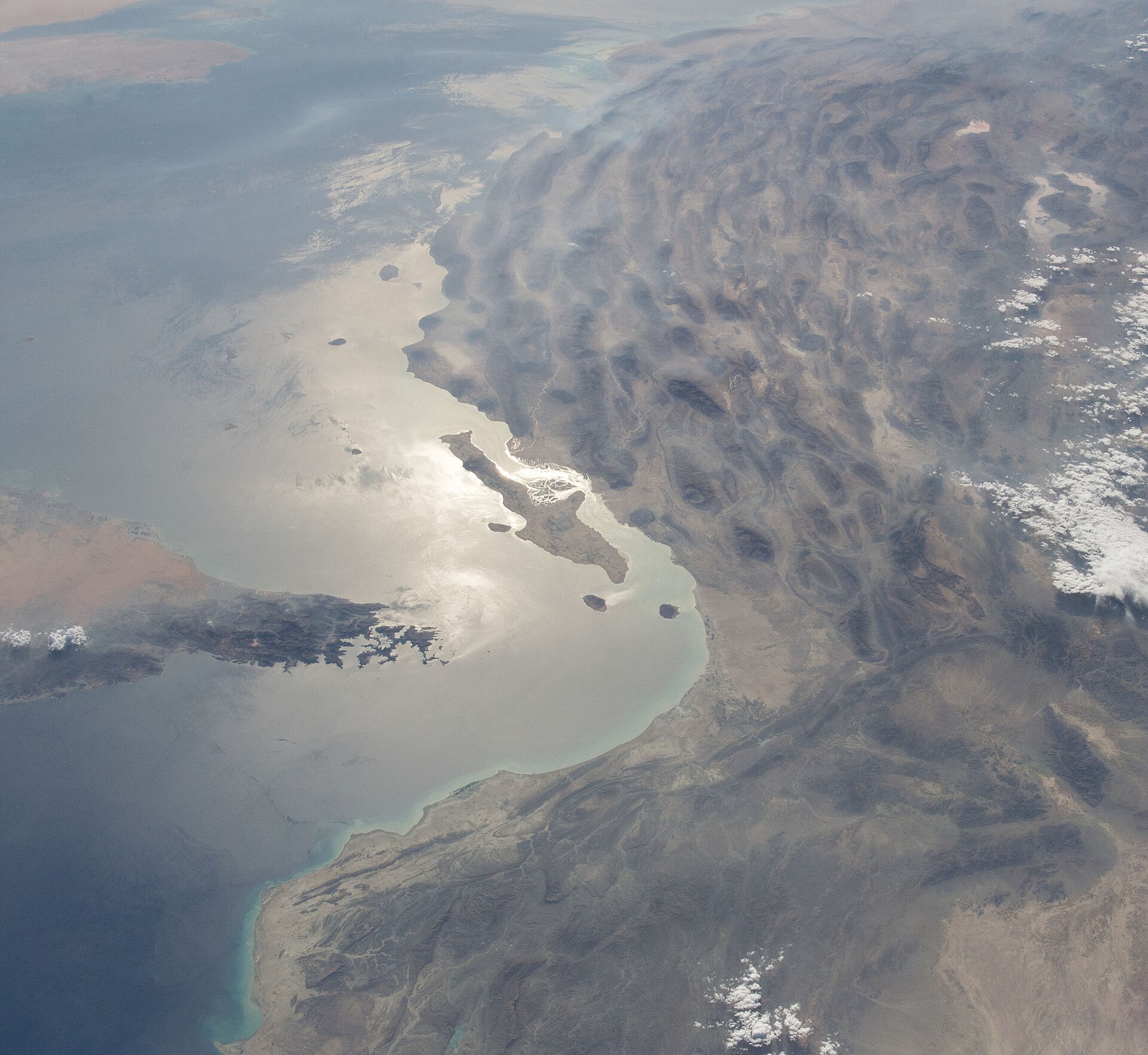

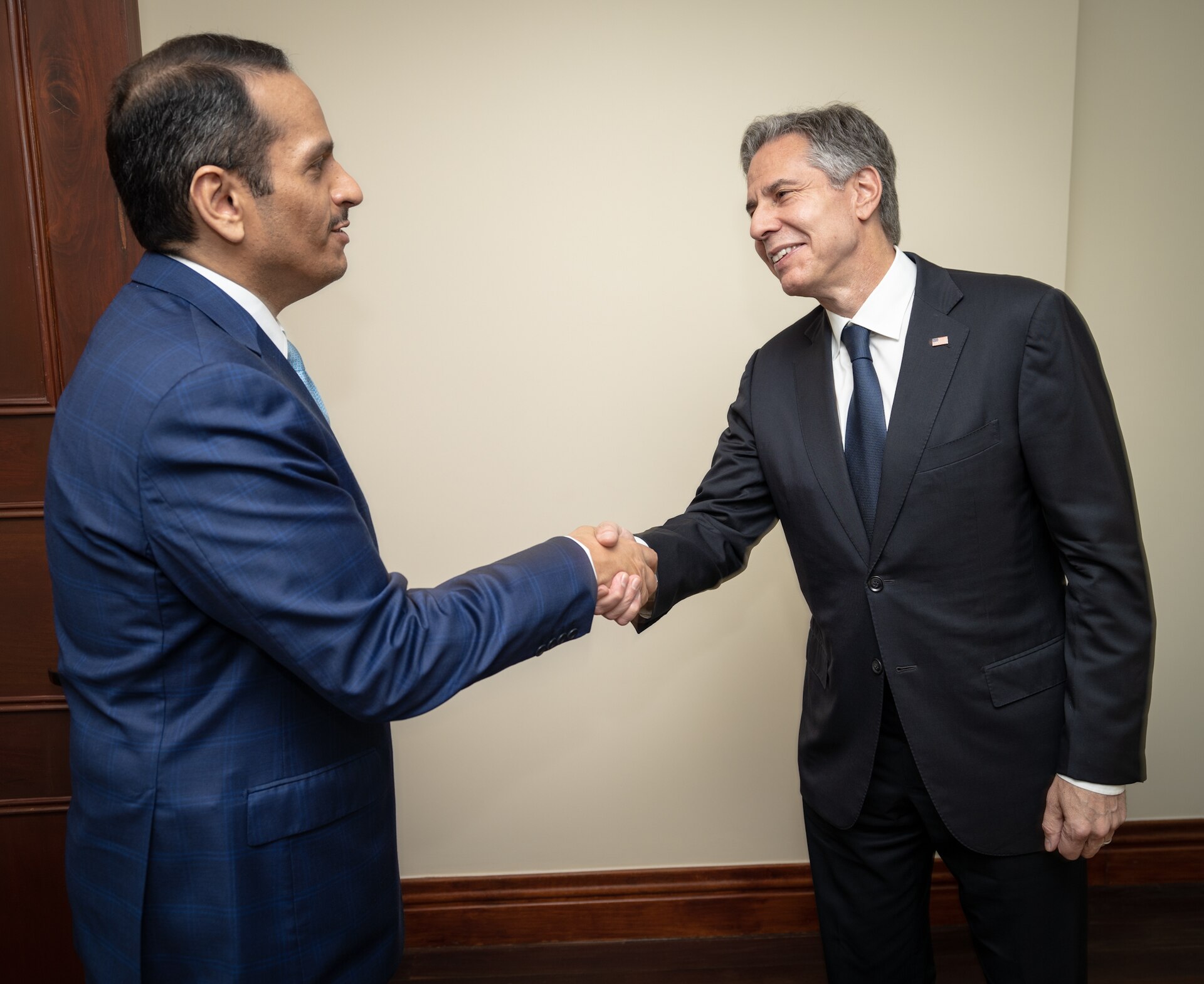
RIYADH — Qatar Prime Minister Mohammed bin Abdulrahman Al Thani arrived in Switzerland on Friday for Phase 2 US-Iran nuclear talks at Bürgenstock, functioning as the Gulf’s primary back-channel mediator in negotiations that will determine Iran’s enrichment ceiling and the legal framework governing Hormuz transit fees. US special envoy Steve Witkoff also reached Switzerland on Friday, Axios reported. Iranian Foreign Minister Abbas Araghchi conditioned his arrival on the Lebanon ceasefire, with sources telling the Jerusalem Post his plans “could still change.”
Saudi Arabia has no seat at the table. The 60-day Phase 2 window, which started its clock on June 17, will decide whether the $1-per-barrel Hormuz transit fee — suspended for 60 days under the MOU — becomes permanent. Saudi Arabia faces the largest single-country exposure at an estimated $5.5 million per day, yet holds no bilateral nuclear track, no observer status, and no mechanism to condition the proceedings. Iran has pressed to “narrow the agenda of talks to the nuclear file and to exclude regional actors from the table,” according to the Stimson Center.
Table of Contents
What Is Qatar’s Role at Bürgenstock?
Qatar functions as a co-mediator and back-channel relay in the Phase 2 process, not as a formal guarantor. Pakistan holds the officially acknowledged “primary mediator” designation, having brokered the original MOU framework through the Islamabad track, according to Al Jazeera. Qatar operates on the Iran side of the mediation — hosting preparatory talks, transmitting positions, and bridging gaps that direct communication between Washington and Tehran cannot.
The House of Saud Daily Briefing
Saudi Arabia's news in 3 minutes, every morning. Free. See today's issue
The Qatar PM visited Washington twice in 2026 — in late March and mid-May — meeting Vice President JD Vance each time to discuss the war’s trajectory and conditions for an agreement, Axios reported on May 8. In late May, Qatar hosted a senior Iranian delegation in Doha for preparatory talks that addressed frozen Iranian assets, Hormuz transit protocols, and nuclear confidence-building measures, according to the Jerusalem Post.
Qatar’s most tangible recent contribution came on June 19, when it co-brokered the Lebanon ceasefire renewal alongside the United States. The US acted as intermediary with Israel while Qatar relayed to Iran and Hezbollah, the Times of Israel reported. The resulting truce extended the ceasefire but did not require an Israeli withdrawal from the southern Lebanon buffer zone — a gap that now defines Iran’s posture toward the nuclear talks.
“Qatar welcomes the agreement reached between the US and Iran” and expressed hope that upcoming negotiations would proceed “in a positive and constructive spirit that will help consolidate this progress and build upon it.”
Qatar PM Mohammed bin Abdulrahman Al Thani, via the Jerusalem Post
Saudi Foreign Minister Prince Faisal bin Farhan has publicly acknowledged Pakistan’s “consistent and sustained efforts” in mediation, according to Gulf News. He has not publicly acknowledged Qatar’s mediating function in the Phase 2 process.
Why Did the First Round of Talks Fail?
The opening round of Phase 2 talks, scheduled for June 19-20 at Bürgenstock, did not take place. The Swiss foreign ministry confirmed the cancellation, CBS News reported. It was the first scheduled session of a 60-day window already three days old.
The two sides offered incompatible explanations. Vance told ABC News the delay occurred because “it was difficult to get Iranian officials out of Iran.” Iran’s account treated the delay as a policy decision, not a logistical one. Araghchi told several foreign counterparts that the ceasefire was critical to the future of US-Iran negotiations and that Lebanon was a “make or break” issue for Iran’s participation, according to a mediating country source cited by Axios.
Iran’s state media reported Araghchi would attend “indirect talks” — framing Phase 2 as indirect rather than direct engagement, consistent with Tehran’s pattern of maintaining deniability about face-to-face US-Iran contact, PBS NewsHour reported. As of Friday evening, Araghchi’s Saturday arrival remained conditional on the Lebanon ceasefire holding, with sources cautioning the plan could still change, Axios reported.
The cancellation marked the second disruption in Phase 2’s opening days. Vance had originally been scheduled to lead the US delegation but postponed his trip on June 19, with the White House citing “logistics” and Axios reporting Iran’s Lebanon demands as the real reason. The downgrade from vice-presidential to envoy-level representation was itself a signal that the opening of Phase 2 had not gone as Washington planned.
The US Delegation
Witkoff, who negotiated the original MOU alongside Vance and Jared Kushner, arrived in Switzerland on Friday as the lead US representative, Axios reported. Kushner was already in the country, according to ABC News. The composition — envoy and presidential son-in-law, without the vice president — represents a departure from the seniority the White House initially signaled for the Phase 2 opening.
Before departing, Witkoff briefed members of Congress that Iran would invite the International Atomic Energy Agency to inspect its nuclear sites and begin identifying locations of enriched material, ABC News and Bloomberg reported. The briefing suggested a confidence-building sequence rather than immediate dismantlement — IAEA access first, material accounting second, disposition negotiations third.
The IAEA baseline for Phase 2 remains unestablished. Iran’s stockpile stood at 440.9 kilograms of uranium enriched to 60 percent purity as of the last verified IAEA assessment, and the material has gone uninspected for more than 11 months, according to IAEA reporting. IAEA Director General Rafael Grossi has not confirmed any new inspection schedule tied to Phase 2. By June 26 — nine days into the MOU — Grossi warned of a “war of statements” between Washington and Tehran over whether IAEA inspectors would gain access to Iranian nuclear sites at all during Phase 2. The enrichment ceiling that emerges from these talks will be set without Saudi input on verification standards or breakout timelines.
Where Is Saudi Arabia?
Saudi Arabia has been absent from every Phase 2 milestone: the MOU signing on June 17, the Geneva ceremony on June 19, the Bürgenstock resort, and the June 19 Lebanon ceasefire brokering. Riyadh’s only acknowledged channel to Tehran on these matters is the bilateral Faisal-Araghchi phone calls — six in total, the most recent on June 18.
FM Faisal’s sole documented nuclear input in the current cycle remains “verification is key,” delivered at the European Council on Foreign Relations in Vienna. The statement set no conditions, named no red lines, and produced no formal mechanism for Saudi participation in the enrichment negotiations. Saudi Arabia has called for Gulf states to “be consulted” in any US nuclear deal, but the call has generated no institutional response from either Washington or Tehran.
Iran’s position on Saudi inclusion is explicit. Saudi Arabia’s nuclear calculus “reflects not only Iran’s program but also eroding U.S. security guarantees,” the Stimson Center noted in a separate analysis — a dynamic that Phase 2 will intensify regardless of outcome.
The structural contrast with Qatar is direct. Al Thani is in Switzerland. Faisal is not. On June 30 — as Doha Phase 2 talks opened without Riyadh — Prince Faisal was in Beijing for a two-day official visit with Chinese FM Wang Yi, pursuing a parallel channel outside every active table where the conflict’s terms are being negotiated. Qatar hosted preparatory talks in Doha, brokered the Lebanon ceasefire, visited Washington twice, and now sits in the vicinity of the Bürgenstock table as a relay. Saudi Arabia’s Defence Minister visited Tehran before the US-Iran talks began in April 2025, and FM Faisal has called Araghchi six times. Neither visit nor calls produced a seat. The same structural exclusion that left Saudi Arabia outside the nuclear table also left it unable to activate the GCC’s collective defense mechanisms when Iran struck its treaty partners — an analysis in The GCC Declared ‘Attack on All’ — Not One Soldier Moved traces how both gaps share the same architecture. Iraq’s answer to Saudi Arabia’s exclusion came from an unexpected direction: on June 28, Iraqi FM Fuad Hussein extended a formal invitation to all six GCC states and Iran for an eight-party Baghdad summit — a framework that required Saudi Arabia to publicly accept Iranian co-participation or decline, with no third option available, as analyzed in Baghdad Sent the Invitation Saudi Arabia Cannot Answer.
The R-4 El Alamein meeting on June 21 is Saudi Arabia’s next scheduled regional engagement. It is not connected to the Bürgenstock process.
The 60-Day Clock
The Phase 2 window opened on June 17 and closes approximately August 16. Three days have elapsed with no substantive talks held. The clock runs whether or not negotiations are physically convened — Iran delaying Araghchi’s arrival does not pause it, CBS News reported. If Araghchi arrives Saturday, the earliest possible start for direct engagement is Day 5.
The fee waiver tied to the MOU is bound to the same clock. On Day 61, the $1-per-barrel PGSA transit fee reverts to Iran’s March 30-31 parliamentary codification under UNCLOS Article 26(2). No public mechanism exists to extend the waiver independently of a completed Phase 2 agreement. A Phase 2 collapse does not automatically extend the waiver — it terminates it, and the fee reverts to Iran’s domestic legal framework.
Former US negotiator Wendy Sherman, who led the JCPOA talks, has noted the difficulty: “I can assure you they will not get all of this done in 60 days.” The JCPOA took 18 months to complete. Phase 2’s agenda — enrichment caps, material disposition, inspection protocols, Hormuz fees, and regional security confidence-building — is comparable in scope to the JCPOA’s, compressed into a fraction of the time. The absence of any arbitration mechanism in the MOU means both sides retain the ability to declare the other in breach without triggering any formal process — a structural feature that Iran would invoke directly when it cited Articles 1 and 5 to justify the June 27 base strikes, as documented in Iran Cited the MOU to Justify Breaking It.
The Lebanon Condition
Araghchi has framed the Lebanon situation as a precondition for nuclear engagement. “The end of the war in Lebanon is an inseparable part of complete end of the war,” he told JNS. He warned Washington that any “military attack on Lebanon by Israel and the continuation of its occupation” constitutes a “violation of the MOU,” according to ABC News. Araghchi stated that the United States “bears full ‘commitment and responsibility’” for ensuring cessation of hostilities “across all fronts, including Lebanon,” the Tribune India reported.
The MOU’s text supports a partial version of this claim. Clause 1 commits both sides to “immediate and permanent termination of military operations on all fronts, including in Lebanon.” The clause is silent on an IDF withdrawal timeline. That gap is Iran’s instrument — Araghchi can declare ongoing “occupation” an ongoing MOU violation for as long as Israeli forces remain, regardless of whether active fighting has stopped.
Israeli Defense Minister Israel Katz foreclosed the withdrawal path on June 19. The IDF “will continue to hold and control all the positions it has cleared and secured” in southern Lebanon, he told the Times of Israel. Israel retains “freedom of action, backed by the United States, to strike in Beirut in response to attacks.” On the day of the ceasefire renewal, four Israeli soldiers and 47 Lebanese were killed and the IDF conducted 150 strikes, the Times of Israel reported.
Tehran Times headlined the situation as “Israel violates Iran-US MoU as global support grows,” assigning breach accountability to Washington. Iran’s legal position is that any MOU breach by Israel is the US’s direct responsibility, since the MOU is a US-Iran bilateral agreement with no Israel-Iran bilateral counterpart. The Lebanon ceasefire and Phase 2 nuclear talks remain structurally linked — not by the MOU’s text, which is ambiguous, but by Iran’s declared interpretation of it.
Hezbollah has separately claimed Iran “promised it won’t sign final nuclear deal without Lebanon withdrawal,” Ynet reported. If accurate, Lebanon is not merely a precondition for starting Phase 2 talks but a condition for completing them.
No JCPOA-era precedent exists for conditioning nuclear talks on the resolution of a separate active military conflict. Khamenei authorized the MOU while setting its ceiling, and the Lebanon condition now functions as the enforcement mechanism for that ceiling — controlled from Tehran, executed through Beirut, and experienced most acutely in Riyadh, which has no instrument to address any of the three.
Frequently Asked Questions
Has Qatar mediated between the US and Iran before?
Qatar brokered the 2022-2023 US-Iran prisoner exchanges that released five American detainees and unfroze $6 billion in Iranian assets held in South Korea. Qatar also mediated the Darfur peace process from 2002 to 2013, the 2020 US-Taliban agreement at its Doha office, and the 2025 Gaza ceasefire and hostage release. The Qatar-Iran back channel on the nuclear file dates to at least 2022, predating the current crisis by four years.
What is the Bürgenstock resort?
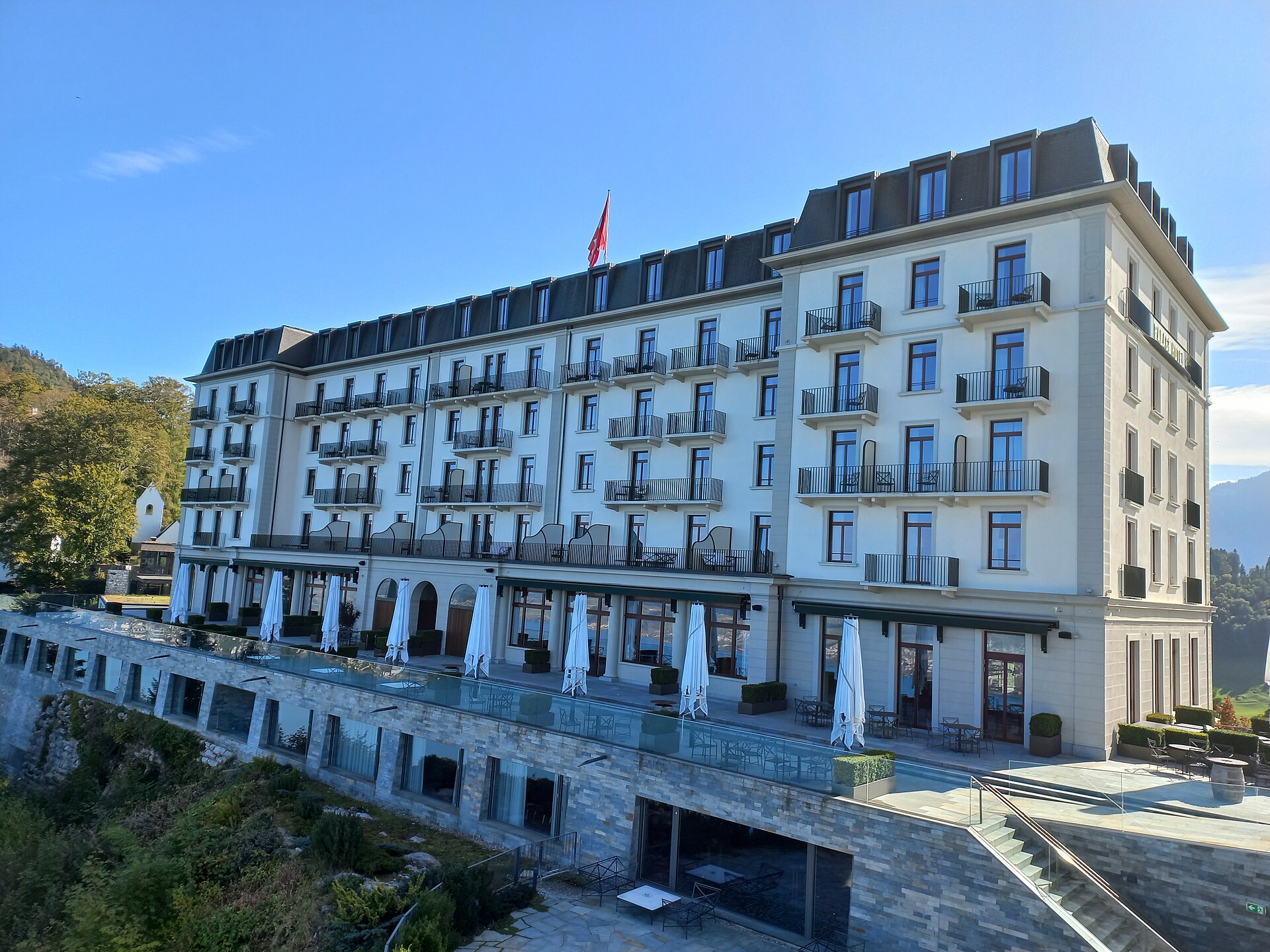
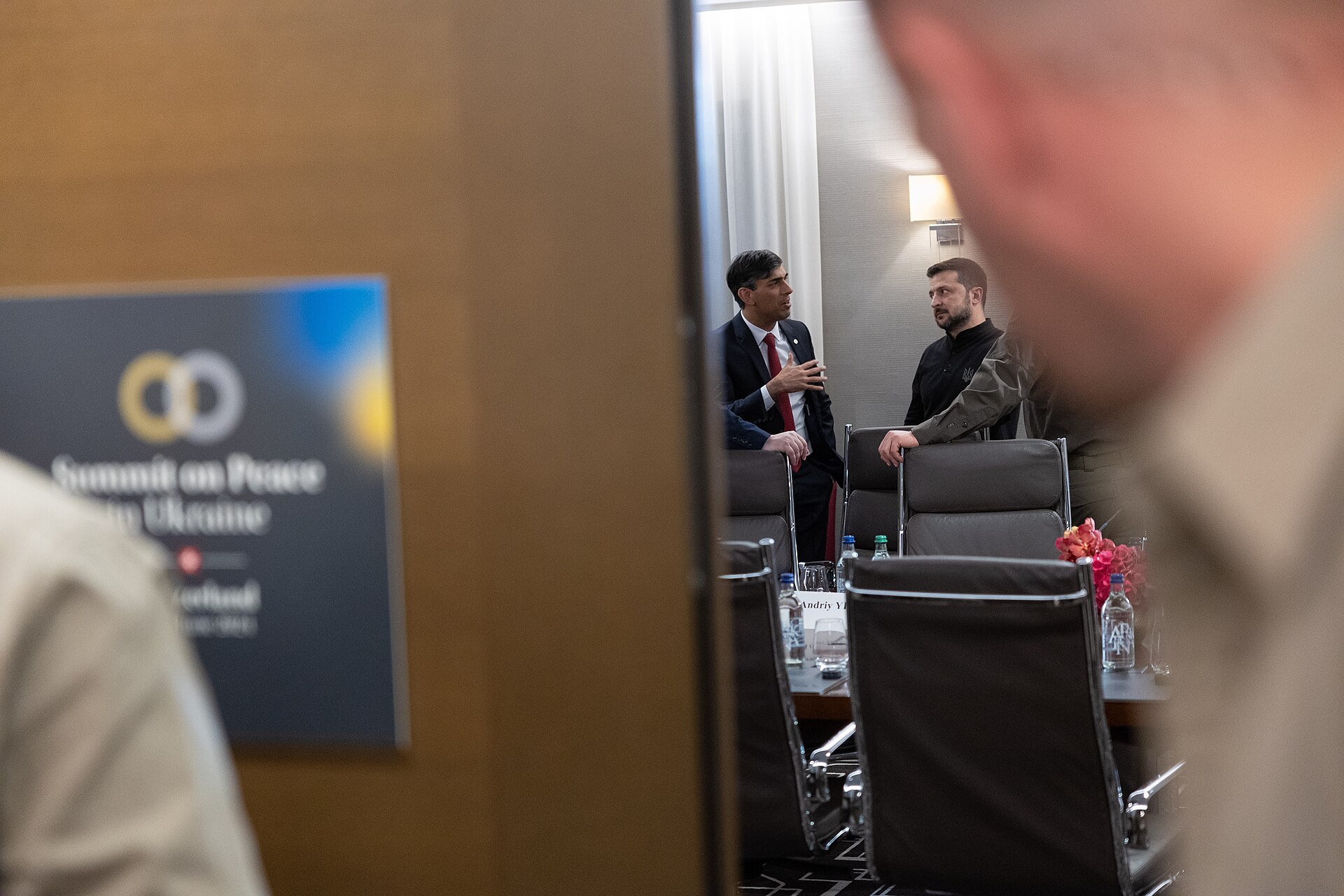
Bürgenstock is a resort complex on a limestone ridge 500 meters above Lake Lucerne in central Switzerland. It hosted the 2024 Summit on Peace in Ukraine and was selected for Phase 2 US-Iran nuclear talks. Its elevation, single-access-road topography, and proximity to Lucerne’s international airport make it a logistically manageable venue for high-security diplomatic events. The Swiss government controls access to the site during formal talks.
What is Pakistan’s mediation role compared to Qatar’s?
Pakistan holds the formal “primary mediator” designation, having built the MOU framework through the Islamabad track between late 2025 and early 2026. Pakistan PM Shehbaz Sharif was scheduled to attend the Geneva ceremony on June 19 but canceled separately from Vance’s postponement. Qatar operates as an Iran-side co-mediator and relay — hosting preparatory sessions in Doha in late May and brokering the June 19 Lebanon ceasefire renewal. FM Faisal credited Pakistan’s mediation publicly; he has not extended similar acknowledgment to Qatar.
What happens to the PGSA fee if Phase 2 ends without agreement?
The 60-day fee waiver lapses when the MOU window closes — it is not extended by continued talks or paused by their breakdown. If no agreement is reached by approximately August 16, the $1-per-barrel PGSA transit fee reverts to Iran’s March 30-31 parliamentary act, codified under UNCLOS Article 26(2) as a charge for “specific services rendered.” No party — not the US, not Switzerland, not the UN — has described a mechanism for extending the waiver independently of a completed Phase 2 deal.
The Geneva technical agenda that emerged from these talks excludes Iran’s missiles entirely — a gap Rubio’s Manama visit exposed when the GCC demanded missile constraints that Phase 2’s three working groups were never designed to receive. The pledge Rubio signed in Manama and the Geneva agenda that cannot honor it are analyzed here.
Saudi Arabia’s exposure to the corridor’s unresolved enforcement gap sharpened on June 26, when Ras Tanura resumed loading into the same route the IRGC had struck a day earlier — an active strike zone with no enforcement body and a paused IMO evacuation plan.
When Geneva’s technical session opened June 29, 121 days into the IAEA verification blackout that Geneva’s technical session cannot resolve alone, Saudi Arabia again held no seat — and the 440.9 kg of HEU whose downblending carries a direct Saudi cost under the PGSA remained unverified.
The House of Saud Daily Briefing
Saudi Arabia's news in 3 minutes, every morning. Free. See today's issue