
RIYADH — President Trump reviewed a 45-minute CENTCOM briefing on April 30 that included a ground and amphibious seizure of the Strait of Hormuz among three military options against Iran. The same day, he rejected Tehran’s 14-point counterproposal as insufficient. For Saudi Arabia, the diplomatic rejection may carry larger strategic consequences than the military option itself.
The Kingdom’s wartime indispensability rests on three functions: hosting the US forces that enforce the blockade, operating the only pipeline bypass keeping Saudi crude flowing, and occupying the diplomatic position between Washington and any Hormuz resolution. A US ground seizure of the corridor would not threaten the first two. It would eliminate the third — and with it, Saudi Arabia’s claim to be the actor whose cooperation any outcome requires.
The GCC summit in Jeddah on April 28 issued an “urgent execution” directive to fast-track trans-GCC pipelines and a joint missile defense system — infrastructure designed for a Hormuz crisis measured in years. Two days later, CENTCOM briefed the president on a way to end it in weeks. Saudi Arabia learned about the briefing from Axios.
Table of Contents
- What CENTCOM Put on Trump’s Desk
- Why Did Trump Reject Iran’s 14 Points the Same Day?
- Three Functions, One Kingdom
- What Does Saudi Arabia Lose If the US Seizes Hormuz?
- The Yanbu Ceiling and the $100 Million Daily Gap
- Does Riyadh Want Hormuz Solved — or Unsolved?
- The GCC Fracture: UAE’s Exit and the Fujairah Bypass
- Can Saudi Arabia Veto a Hormuz Seizure?
- Frequently Asked Questions
What CENTCOM Put on Trump’s Desk
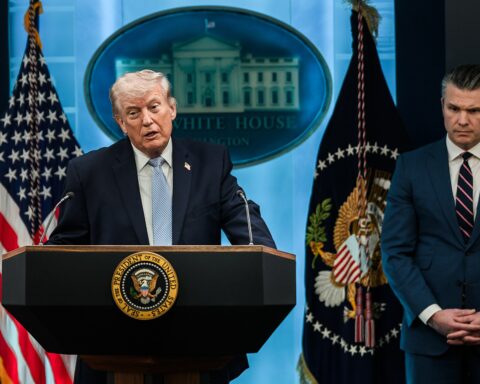
Admiral Brad Cooper, the CENTCOM commander, and Chairman of the Joint Chiefs General Dan Caine presented Trump with three military options on April 30, according to two senior American officials who spoke to Axios. The briefing lasted 45 minutes — unusually long for a presidential military options presentation, suggesting not a cursory overview but a decision-forcing session.
Option one: a “short and powerful” wave of strikes on Iranian infrastructure. Option two: a ground and amphibious seizure of part of the Strait of Hormuz, using the 31st Marine Expeditionary Unit — roughly 2,200 to 2,500 Marines aboard USS Tripoli — and elements of the 82nd Airborne Division identified for island-seizure and corridor operations. Option three: a special forces raid to seize Iran’s highly enriched uranium stockpile at Isfahan, where 440.9 kilograms of 60%-enriched HEU sat as of the last verified IAEA assessment in June 2025. IAEA inspectors have been barred from the facility since February 28.
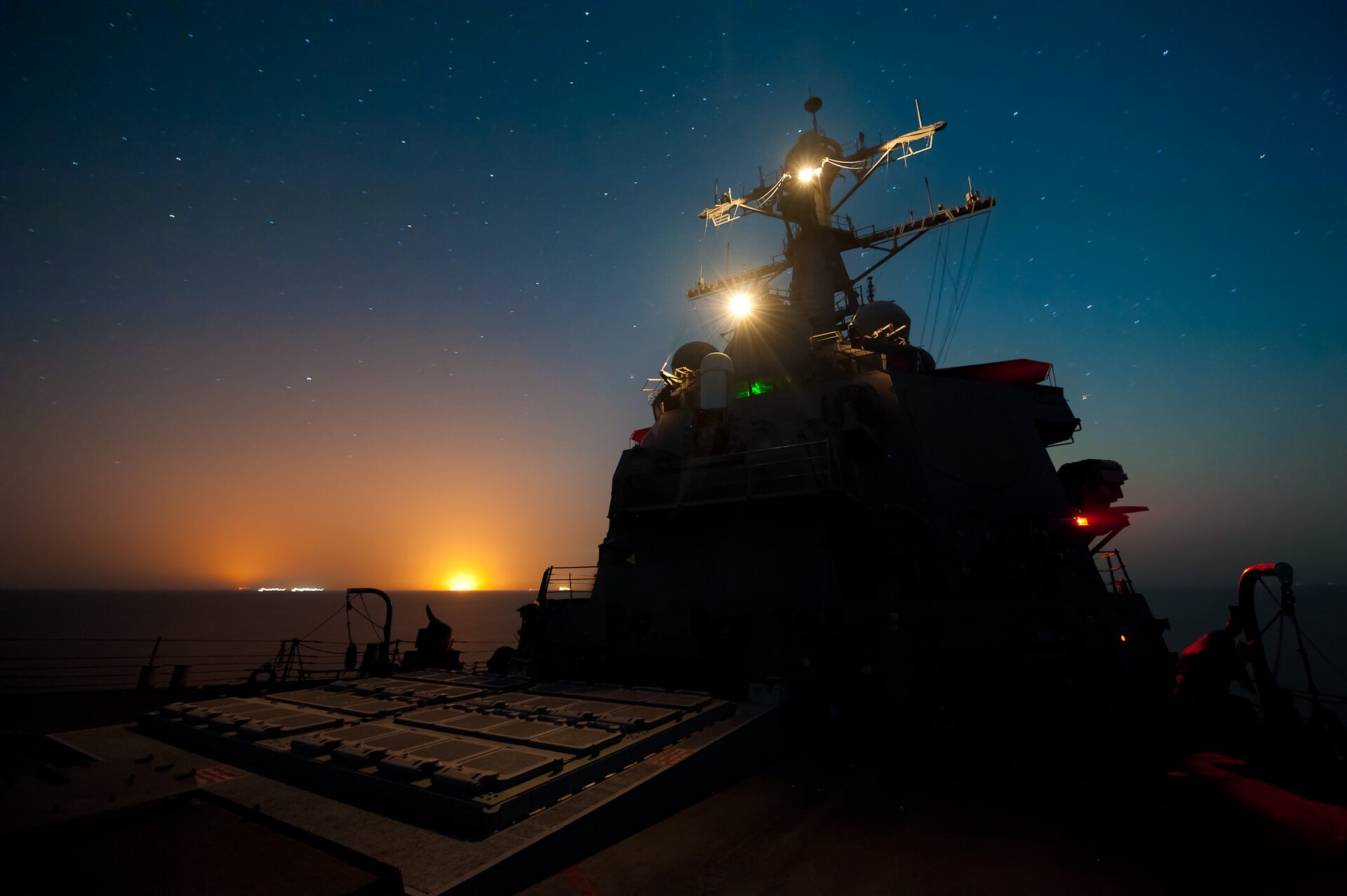
The force posture behind the briefing is already in place. Over 10,000 US personnel and at least 27 Navy vessels — approximately 41% of all actively deployed American warships worldwide — are enforcing the naval blockade declared April 13. An additional 2,500 Marines had been dispatched to the Middle East in the weeks prior, bringing total Marine Corps presence in the region to roughly 5,000. Cooper, in a CENTCOM statement, described Iran’s military capabilities as “declining.”
The Middle East briefing 3,000+ readers start their day with.
One email. Every weekday morning. Free.
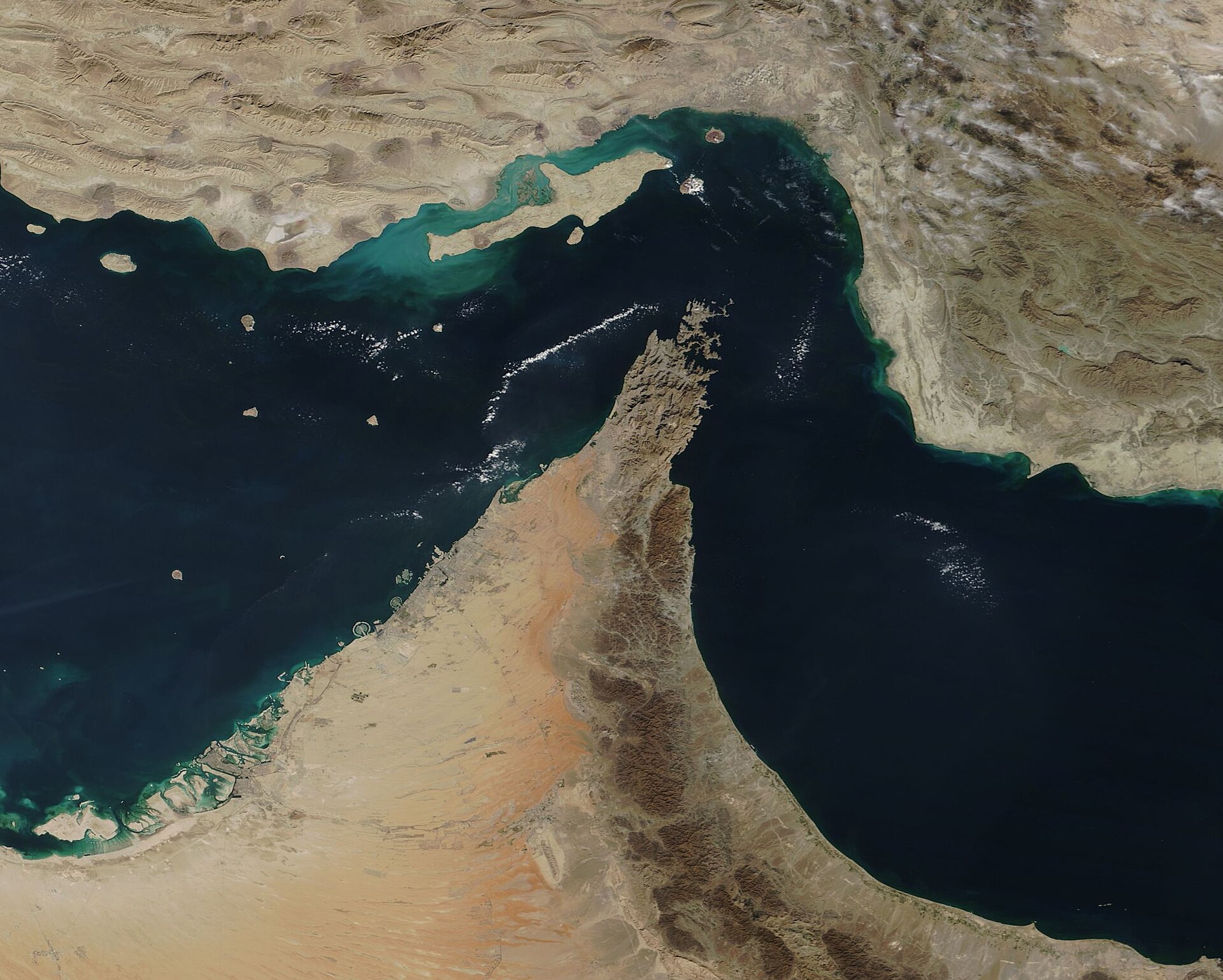
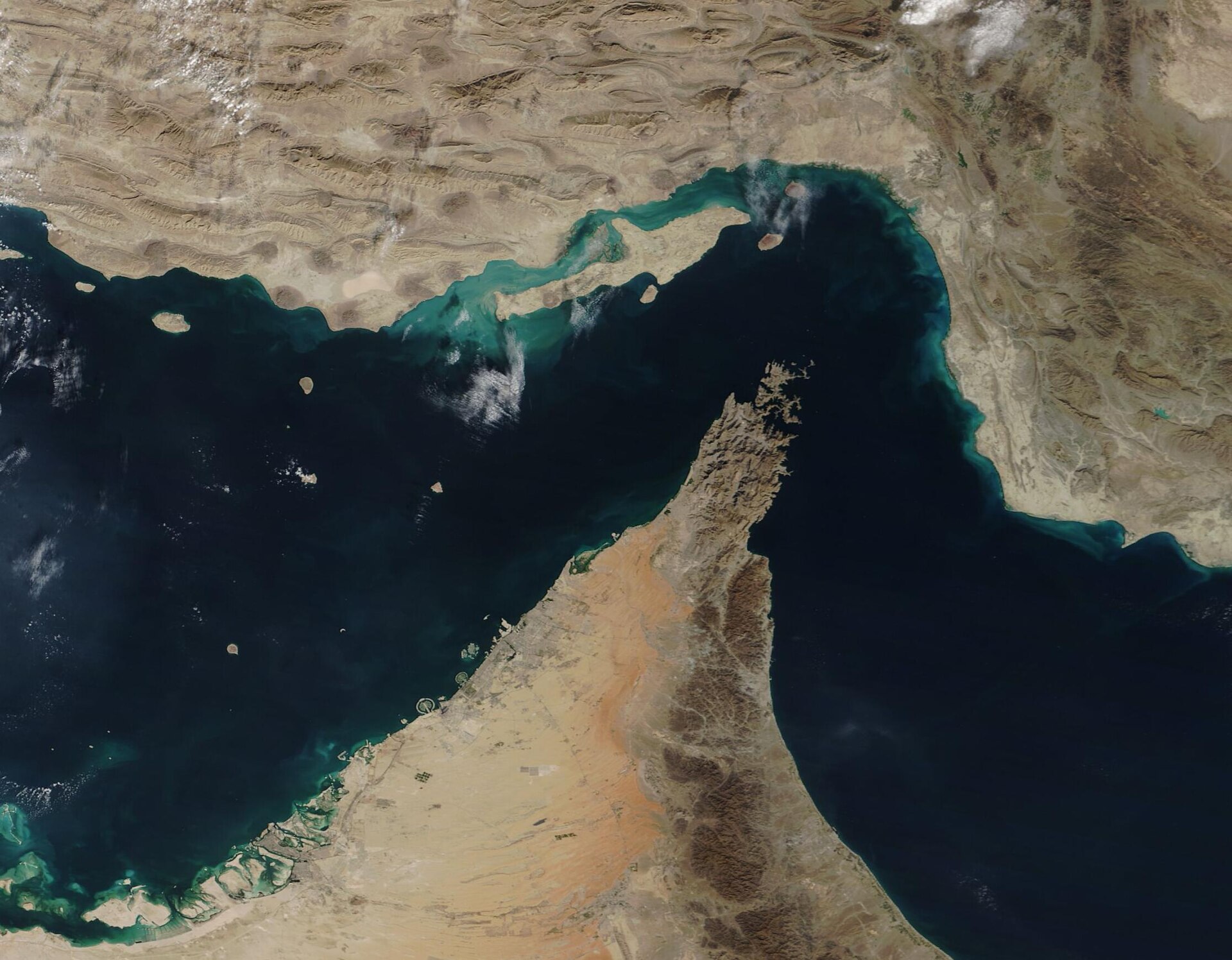
The geography of Option Two is what matters most to Riyadh. Hormuz is 21 nautical miles at its narrowest point, entirely within Iranian and Omani territorial waters. Iran’s northern shore is mountainous, near-impassable terrain. CSIS assessed that any seizure force would face “sustained short-range missile, mortar, and first-person view drone fire” from positions overlooking the corridor. Harrison Mann, a former US Army intelligence analyst, characterized a ground invasion as a potential “suicide mission” in March.
The Foundation for Defense of Democracies — not typically an institution cautioning against Iranian confrontation — warned that seizing Hormuz “is likely to have the opposite effect by incurring significant costs for little operational or strategic gains” and would be “more likely to expand and extend the war than deliver any sort of decisive victory.” CSIS framed Iran’s broader posture as “a war of endurance, not firepower,” leveraging Hormuz “to raise global costs while betting it can outlast U.S. political will.”
Twelve warships are assigned to direct blockade corridor enforcement (the broader 27-vessel deployment provides air cover and logistics). Approximately 2,000 commercial vessels remain stranded in or near the Gulf. Only 45 transits have passed through Hormuz since the April 8 ceasefire — 3.6% of the pre-war daily baseline. The International Energy Agency’s Fatih Birol has called the disruption, with roughly 13 million barrels per day offline globally, “the biggest energy security threat in history.”
Why Did Trump Reject Iran’s 14 Points the Same Day?
Iran’s 14-point counterproposal, transmitted via Pakistan, demanded: US forces withdrawal from Iran’s “periphery”; an end to the naval blockade; release of frozen assets; reparations for war damage; full sanctions relief; a halt to Israeli operations in Lebanon; a 30-day resolution deadline; and a new Hormuz governance mechanism. The governance provisions went furthest — Israeli vessels would be permanently barred from the Strait, and US and allied ships would pay war reparations as a condition of passage. The proposal deliberately deferred nuclear negotiations to a later phase.
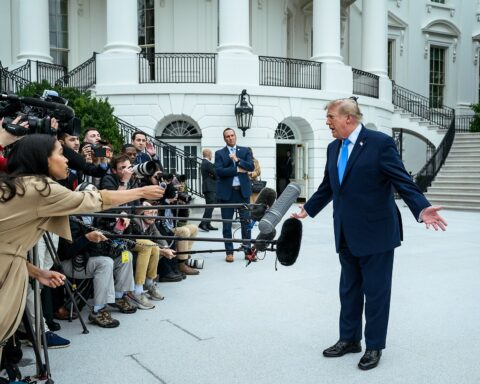
“I’m not satisfied with it,” Trump told reporters on May 1. Iranian leadership was “very disjointed” and split into “two or three groups.” “They’re asking for things that I can’t agree to.” He did not specify which of the 14 points was the deal-breaker, but Washington’s nine-point proposal had insisted nuclear issues be resolved as a prerequisite to any agreement — not sequenced afterward.
A senior Iranian official told NBC News that the proposal “would open shipping in the Strait of Hormuz and end the U.S. blockade of Iran while leaving talks on Iran’s nuclear programme for later.” Tehran views the sequencing as deliberate: Hormuz first, nuclear second. Washington views it as a mechanism for permanent deferral. The gap is not about language. It is about whether Iran’s nuclear program and its Hormuz posture are one problem or two.
Trump’s characterization of Iran as “disjointed” and composed of “two or three groups” tracks with the pattern visible throughout the conflict. President Pezeshkian publicly accused IRGC commanders Vahidi and Abdollahi on April 4 of deviating from the negotiating delegation’s mandate. The IRGC Navy issued a May 1 statement asserting “dominance and control” over the Strait on the same day Mojtaba Khamenei — now the operational decision-maker following Ayatollah Khamenei’s extended absence of more than 60 days — issued a directive that the IRGC Navy called “historic.”
Trump’s rejection and Iran’s internal fragmentation arrived at the same conclusion from opposite directions: there is no interlocutor who can deliver on a deal.
The same week, Trump told Congress in a formal letter that hostilities “have terminated” — citing no exchange of fire since April 7. The assertion carries legal weight. If accepted, it pauses or resets the 60-day War Powers clock, potentially clearing the path for new military action without immediate Congressional authorization. Defense Secretary Pete Hegseth told the Senate that the clock “pauses or stops in a ceasefire.” Senator Tim Kaine responded: “I do not believe the statute would support that.” Senator Chuck Schumer was blunter: “This is an illegal war and every day Republicans remain complicit and allow it to continue is another day lives are endangered.”
Three Functions, One Kingdom
Saudi Arabia’s wartime position rests on three functions that no other actor in the region can perform simultaneously. Each one gives Riyadh a hold — over Washington, over Tehran, and over the outcome. The CENTCOM briefing’s Option Two threatens one of them.
The first function is hosting. Prince Sultan Air Base, roughly 90 kilometers south of Riyadh, houses US Air Force assets that would provide air cover for any of the three CENTCOM options. King Abdulaziz Air Base in Dhahran supports Gulf naval operations. Forward-deployed Patriot batteries — now reduced to approximately 400 PAC-3 MSE interceptor rounds, about 14% of the 2,800 originally deployed — constitute the Kingdom’s active missile defense layer. The THAAD radar at Al-Udeid in Qatar was destroyed in the opening weeks of the conflict. Every scenario CENTCOM presented on April 30 is, in operational terms, a Saudi-based operation.
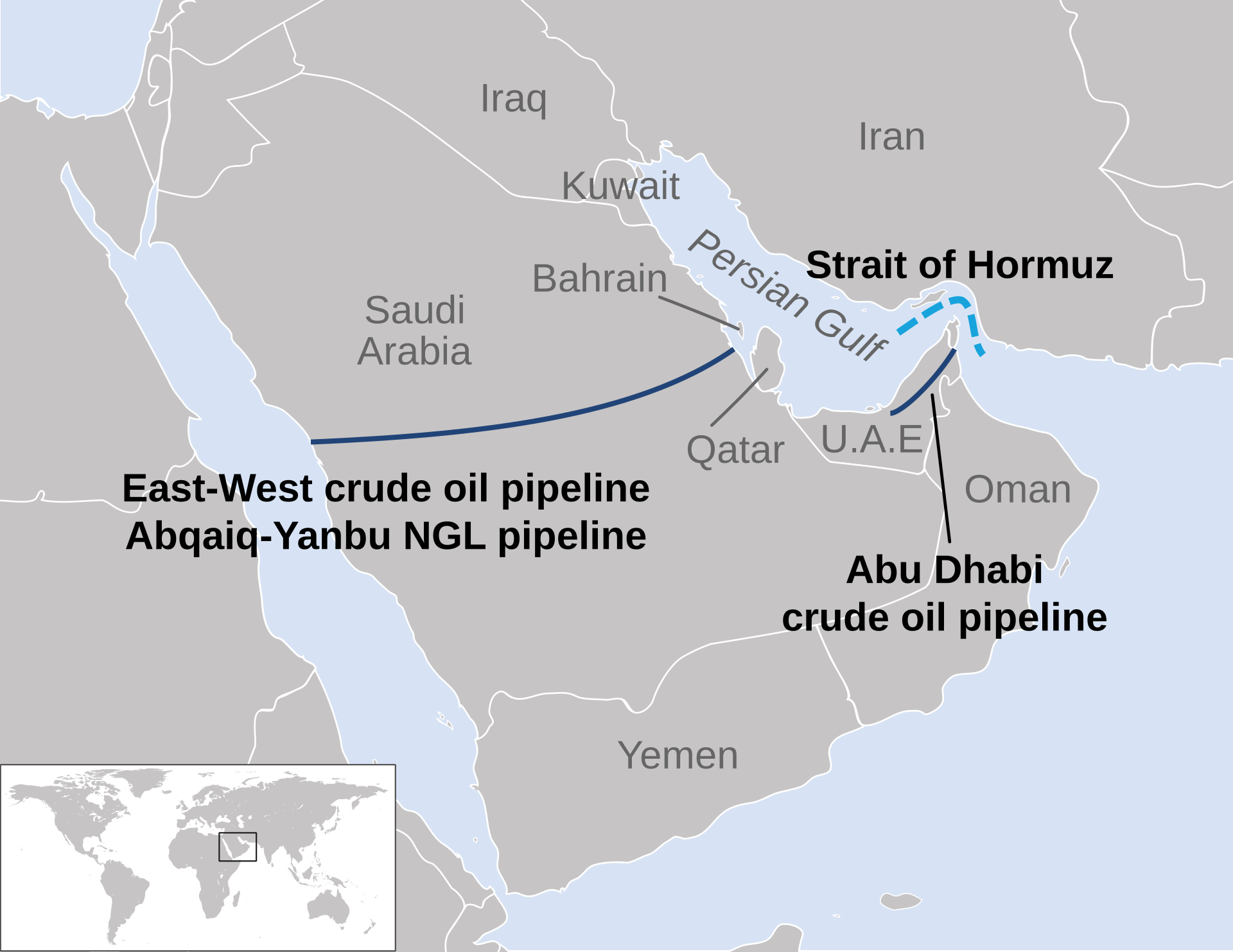
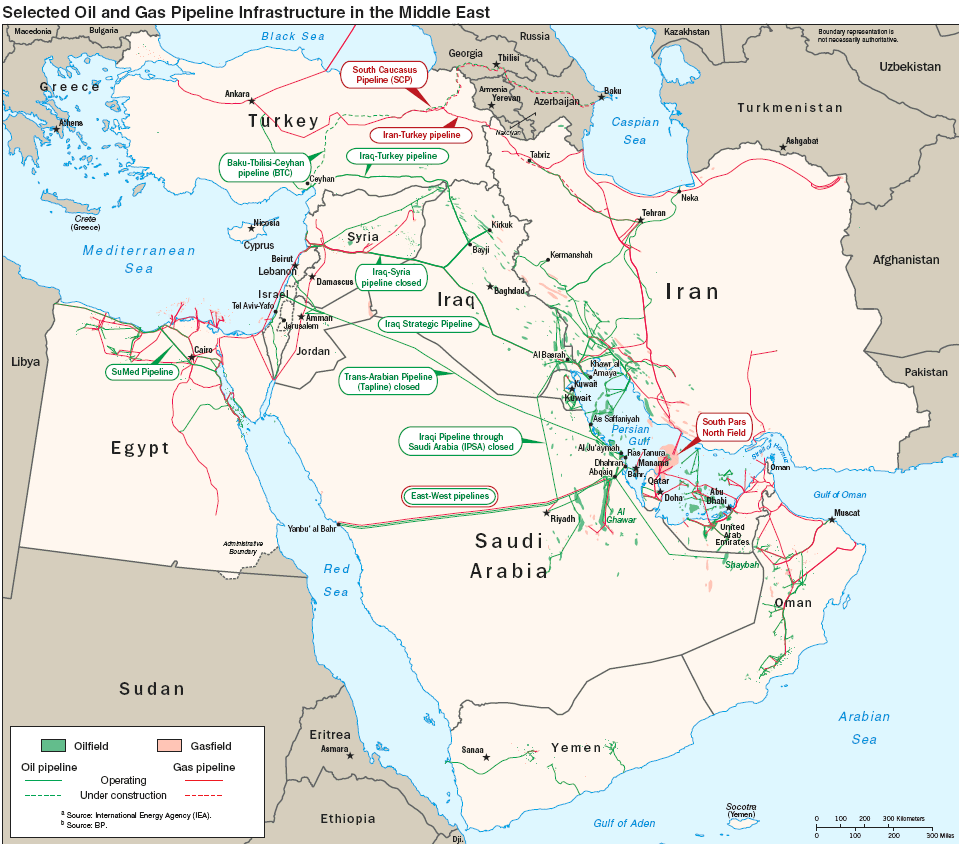
The second function is bypass. The East-West Petroline — built in 1981 during the Iran-Iraq War for exactly this contingency — hit its full pipeline capacity of 7 million barrels per day in March 2026. But pipe capacity is not loading capacity. Yanbu’s terminal can load approximately 4 to 4.5 million bpd nominally, with wartime throughput tracked by Vortexa at roughly 3 million bpd. Pre-war Saudi crude transited Hormuz at 7 to 7.5 million bpd. The structural gap — 1.1 to 1.6 million bpd — costs the Kingdom between $100 million and $145 million every day at current Brent prices. The bypass is keeping Saudi Arabia’s economy functioning. It is not keeping it whole.
The third function is diplomatic position. MBS told Iranian President Pezeshkian directly that Saudi Arabia would not permit use of Saudi airspace for strikes on Iran. Saudi Foreign Minister Prince Faisal bin Farhan called Iranian Foreign Minister Araghchi on the day the US blockade was declared — the kind of parallel communication channel that only an actor trusted (or at least tolerated) by both sides can maintain. The GCC Jeddah summit on April 28–29 categorically rejected Iranian attempts to impose fees on Hormuz transit while simultaneously directing the fast-tracked construction of trans-GCC pipelines and a joint early-warning missile defense system.
No other GCC state holds all three cards. The UAE has the Fujairah bypass pipeline but not the diplomatic centrality. Qatar’s LNG exposure is acute — only a handful of laden LNG transits have cleared the Strait since the April 8 ceasefire — but Qatar does not host the basing infrastructure. Kuwait, Bahrain, and Oman each contribute one element. Saudi Arabia’s wartime role is built on the combination. That combination is now under pressure from a fourth variable: Project Freedom, the US Navy convoy announced May 3, which asks Saudi Arabia to benefit silently from an American military operation it cannot publicly endorse without risking the very bypass route that makes the third function — diplomatic centrality — worth holding.
What Does Saudi Arabia Lose If the US Seizes Hormuz?
If the US physically secures the Hormuz corridor through amphibious and ground operations, Saudi Arabia retains its value as a military host and pipeline operator but loses its role as the indispensable broker in any diplomatic resolution. The influence that underwrites MBS’s parallel engagements with Moscow, Beijing, and Tehran — the position of being the actor whose cooperation any Hormuz outcome requires — disappears the moment Washington delivers that outcome unilaterally.
The basing relationship would survive. Washington has invested decades and billions of dollars in Saudi military infrastructure. The 27 warships currently in the region depend on logistics chains running through Saudi ports and airfields. But a basing relationship, divorced from the diplomatic role, is a landlord-tenant arrangement. It confers hosting fees and limited operational input. It does not confer the influence that comes from being the actor who can make or break a deal. The United States maintains basing in dozens of countries. Most of those countries do not shape the wars fought from their territory.
The bypass would survive and simultaneously become less strategically valuable. If Hormuz reopens under US military control, the Yanbu ceiling stops being a wartime constraint and reverts to an expensive infrastructure redundancy. Saudi Arabia activated the full Petroline at enormous cost. The daily revenue gap from the Yanbu shortfall only matters while Hormuz is closed. A reopened Hormuz — even one controlled by US Marines rather than diplomats — eliminates the gap. It also eliminates the influence the gap confers: Riyadh’s ability to say, to Washington and to the oil market simultaneously, that it alone is keeping crude flowing.
The diplomatic function would not survive a unilateral military resolution. Saudi Arabia’s ability to maintain contradictory positions — backing the blockade in Washington while opposing strikes in Tehran, calling Araghchi on blockade day while fast-tracking GCC defense integration — depends on every party needing Saudi Arabia at the table. A US seizure of Hormuz does not require Saudi Arabia to broker anything. It replaces the third leg entirely.
The Yanbu Ceiling and the $100 Million Daily Gap
The revenue arithmetic makes the indispensability question concrete. Saudi Arabia is simultaneously the war’s most important logistics provider and its most damaged economic victim.
| Metric | Pre-War (Feb 2026) | Current (April 2026) | Gap |
|---|---|---|---|
| Hormuz crude throughput | 7.0–7.5M bpd | ~0 (blockade) | -7.0–7.5M bpd |
| Petroline pipeline capacity | 7.0M bpd | 7.0M bpd (full) | — |
| Yanbu terminal loading | Not primary route | 3.0–4.5M bpd effective | — |
| Total Saudi production | 10.4M bpd | 7.25M bpd (March, IEA) | -3.15M bpd |
| Daily revenue shortfall | — | $100–145M/day | — |
| Brent crude price | ~$82/bbl | ~$108/bbl | +$26/bbl |
| Saudi fiscal break-even | $108–111/bbl (Bloomberg) | $108–111/bbl | At margin |
Higher prices partly offset lower volumes, but the arithmetic is unkind. Saudi GDP growth slowed to 2.8% year-over-year in Q1 2026, down from 5% in Q4 2025. Goldman Sachs estimated the war-adjusted fiscal deficit at 6.6% of GDP — double the official projection of 3.3%. Brent closed at approximately $108 per barrel on April 30, the day of the CENTCOM briefing, after touching $126 intraday. The Kingdom is operating at fiscal break-even in the best case, below it in the worst, with a production base 30% smaller than three months ago.
The Jeddah summit responded with long-term infrastructure, not near-term relief. Its pipeline and Gulf Strategic Reserve commitments are investments premised on Hormuz remaining contested for years, not months. Saudi Arabia is spending to build bypass capacity for a future in which the Strait is permanently unreliable. That spending makes sense only if Hormuz stays unreliable. A US military seizure that reopens the corridor undermines the economic case for the very infrastructure Riyadh just committed to build.
The same week, Rubio’s $8.6 billion emergency arms package conspicuously skipped Saudi Arabia, directing munitions and interceptor resupply to Israel and the UAE instead. Saudi Asia-bound crude exports fell 38.6% according to Kpler tracking data. The Kingdom is absorbing the war’s heaviest cost — in revenue, in depleted air defenses, in contracted GDP — while receiving neither the diplomatic seat nor the military resupply that would allow it to sustain the current posture indefinitely.
Does Riyadh Want Hormuz Solved — or Unsolved?
Saudi Arabia’s public position is unambiguous: Hormuz must be fully reopened and no party should be permitted to impose fees or restrictions on transit. The GCC Jeddah summit said so explicitly. But the Kingdom’s strategic interests are more layered than its communiqués suggest, because a Hormuz reopened by American force rather than Saudi-mediated diplomacy eliminates the crisis that makes the Kingdom’s three-function wartime role irreplaceable.
“There is a quiet but palpable concern that President Trump, eager for a quick political victory, could tolerate some Iranian leverage over the strait in exchange for a fragile truce, prioritising optics over Gulf realities.”
— Unnamed Saudi scholar, Chatham House, May 2026
The concern is real but addresses only one of Saudi Arabia’s two exposure scenarios. A bad deal — one that grants Iran some managed authority over Hormuz transit — would damage Saudi security. But the opposite scenario, a US military solution that bypasses diplomacy entirely, would diminish Saudi influence. A US-controlled Hormuz is an open Hormuz, and Saudi Arabia would benefit immediately from resumed exports and closed revenue gaps. It would also be a Hormuz that no longer requires Saudi Arabia to broker its reopening.
Iran’s domestic actions are narrowing the diplomatic path with each passing week. Mojtaba Khamenei issued what the IRGC Navy called a “historic directive” on May 1, providing the legal basis for continued IRGC operational management of Hormuz — pre-empting any negotiated outcome that would cede IRGC Navy authority over the waterway. Iran’s parliament is advancing a 12-article Hormuz Sovereignty Law that would permanently bar Israeli vessels and codify IRGC control as domestic statute. Tehran is not merely asserting authority over Hormuz. It is legislating that authority into permanence.
The IRGC Navy declared on May 1: “With its dominance and control over nearly 2,000 kilometers of Iran’s coastline in the Persian Gulf and the Strait of Hormuz, the IRGC Navy will make this water area a source of livelihood and power for the dear Iranian people and a source of security and prosperity for the region.” Mojtaba Khamenei separately vowed that Iran would not relinquish its nuclear or missile technologies and signaled Tehran would maintain control of Hormuz regardless of any deal.
Each legislative act, each IRGC directive, each assertion of sovereignty narrows what diplomacy can deliver and widens the space where military options operate. The 14-point rejection closed the latest diplomatic round. The CENTCOM briefing offered an alternative. The actions Iran takes to strengthen its negotiating position are the same ones that make a US military response more likely — and a Saudi diplomatic role less necessary. No date has been set for a follow-up to the 14-point exchange.
The GCC Fracture: UAE’s Exit and the Fujairah Bypass
The UAE’s departure from OPEC on May 1 — after 59 years of membership — stripped Saudi Arabia of its last enforcement lever within the cartel and signaled something larger about GCC cohesion under wartime stress. Abu Dhabi did not leave over a production quota dispute. It left because the quota system had become irrelevant in a war economy where no one could produce at quota anyway.
The energy implications are secondary to the strategic signal. Abu Dhabi’s Habshan-Fujairah pipeline carries 1.5 to 1.8 million bpd of crude to the Gulf of Oman, bypassing Hormuz entirely. UAE production capacity is 4.8 million bpd, previously constrained by the OPEC quota to 3.2 million bpd. Without quota discipline, the UAE can pump at full capacity and export a substantial share through Fujairah without ever touching the Strait. Saudi Arabia inherits an OPEC it cannot operate while watching its largest Gulf neighbor solve the Hormuz problem on its own terms.
The Jeddah summit’s collective framework — trans-GCC pipelines, a Gulf Strategic Reserve, joint missile defense — exists alongside the individual hedging that undermines it. If each GCC state builds its own bypass, the collective dependency on Saudi Arabia’s Yanbu corridor diminishes. The Kingdom’s pipeline becomes one option among several rather than the indispensable one.
The historical rhyme is instructive. Saudi Arabia’s Petroline was built in 1981 because the Iran-Iraq War demonstrated that Hormuz could be closed. The Fujairah pipeline was completed in 2012 for the same reason. In 1981, Saudi Arabia was the only GCC state with the geography and resources to construct a major bypass. In 2026, it is one of at least two — and Kuwait, Qatar, and Bahrain are each examining route options of their own.
Can Saudi Arabia Veto a Hormuz Seizure?
Saudi Arabia could theoretically deny the use of its bases and airspace for a Hormuz seizure, effectively vetoing the operation. Whether Riyadh would exercise that power depends on which signal from the Saudi leadership — the Defense Minister’s or the Crown Prince’s — reflects actual policy, and whether the distinction between the two is itself the policy.
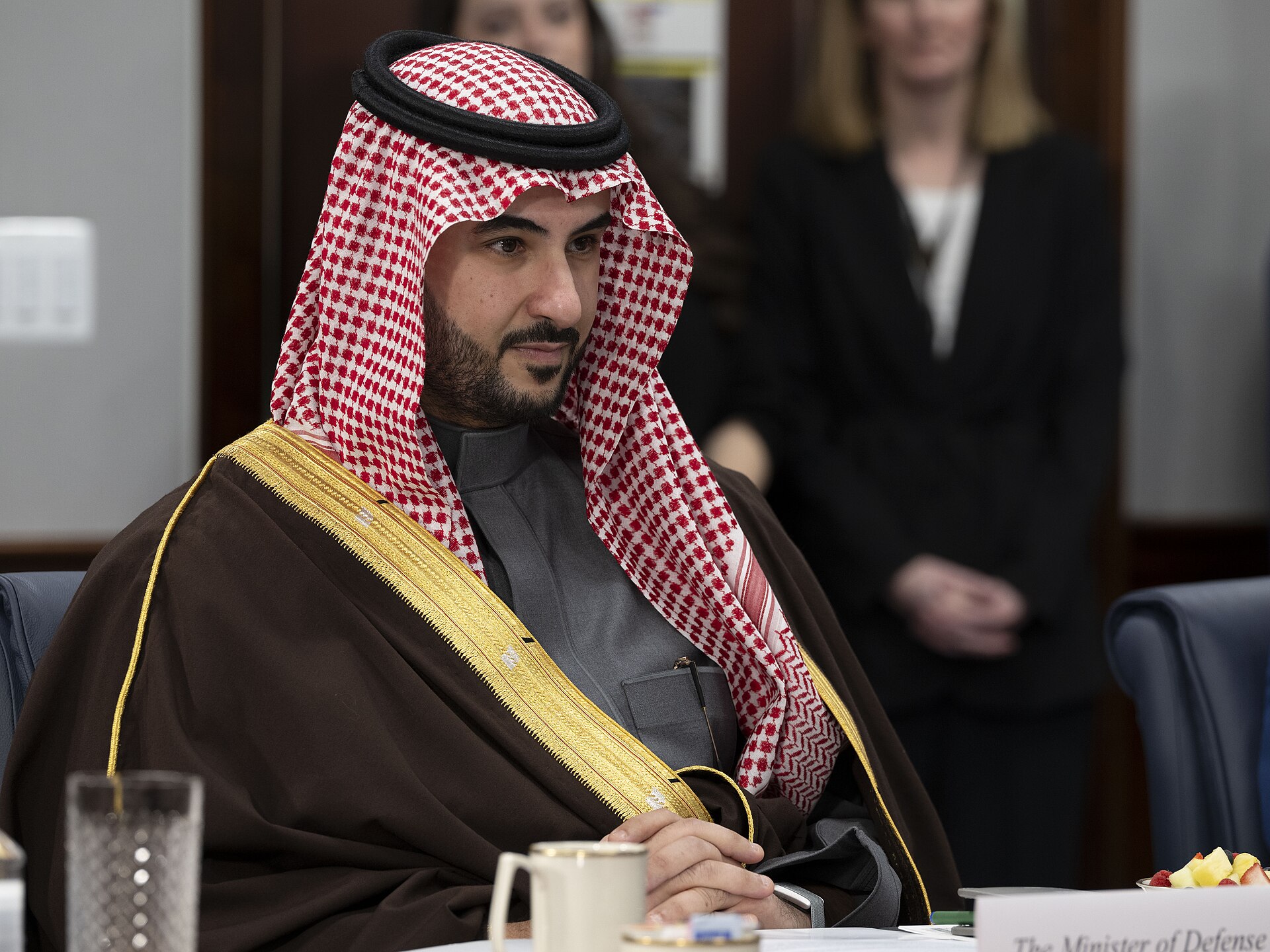
Prince Khalid bin Salman, the Defense Minister and MBS’s younger brother, told Washington think tank experts in a closed-door briefing that if Trump did not follow through on military threats, it would “only embolden the regime.” The briefing was reported by Chatham House and Manara Magazine. Khalid did not specify which threat. He did not need to.
MBS’s message to Pezeshkian was the opposite: Saudi airspace would not be used for strikes on Iran. That assurance was delivered to Tehran — not leaked to Washington — suggesting it was a substantive commitment rather than a negotiating posture.
A distinction exists between constraining strikes and constraining a ground seizure that may explain how both messages coexist. Strikes on Iranian territory using Saudi airspace would implicate the Kingdom as a co-belligerent, exposing Saudi cities to retaliatory missile attacks that the remaining PAC-3 inventory cannot sustain. A Hormuz corridor seizure — involving waters adjacent to but not within Iranian sovereign territory — would use Saudi-hosted logistics without necessarily requiring Saudi airspace overhead. The Marines aboard USS Tripoli are seaborne. The 82nd Airborne can stage from non-Saudi positions in the region.
The constraint that cannot be relocated is air defense. The PAC-3 MSE interceptor stockpile — 400 rounds, the depleted remnant described above — cannot absorb a sustained retaliatory barrage against Saudi cities and oil infrastructure. The upper-tier THAAD layer is already gone. Any US escalation that provokes Iranian ballistic missile retaliation — and a Hormuz seizure would almost certainly do so — burns through a stockpile that cannot be quickly replaced. Rubio’s $8.6 billion emergency arms package directed interceptor resupply to Israel and the UAE, not Saudi Arabia. The Kingdom’s air defense is being spent to protect American operations launched from Saudi soil, and Riyadh is not being resupplied.
The operational question for Saudi Arabia is not whether it supports a Hormuz seizure in principle. It is whether the Kingdom can afford to be the launchpad for an escalation while possessing neither the interceptor reserves to survive the retaliation nor the diplomatic standing to shape the settlement that follows. The CENTCOM briefing was 45 minutes long, and it took place in the White House. The question of what Saudi Arabia will permit has not, according to any public reporting, been formally posed to Riyadh.
Frequently Asked Questions
What historical precedent exists for a Western power seizing a maritime corridor?
The closest analogue is the 1956 Suez Crisis, when Britain, France, and Israel seized the Suez Canal Zone in response to Egyptian nationalization. The operation succeeded militarily but collapsed politically within weeks when President Eisenhower refused to support it, forcing withdrawal. Manara Magazine has drawn a direct parallel, describing the Hormuz option as “America’s Suez Canal Conundrum.” The precedent established that unilateral corridor seizure by Western powers is politically unsustainable absent broad international backing. Operation Praying Mantis in April 1988 — the largest US surface naval engagement since World War II, striking Iranian oil platforms and sinking the frigate IS Sahand — was a punitive action, not a physical seizure. No Western military has attempted to seize and hold a section of an international strait since Suez.
How long would mine clearance take after a US Hormuz seizure?
Using the 1991 Kuwait mine clearance operation as a benchmark, approximately 200 square miles of swept area required roughly 51 days. The current situation is substantially worse. The US decommissioned all four of its Avenger-class mine countermeasure ships from their Bahrain homeport in September 2025 — five months before the war began. Only two mine-capable vessels are operational in the theater. CSIS analysis suggests Iran has laid mines extensively and may not know the precise location of all devices. Post-seizure normalization of commercial Hormuz transit could take four to six months, during which the Yanbu bypass would remain the world’s primary Gulf crude corridor — preserving Saudi Arabia’s second function well beyond any seizure operation itself.
What specifically does Iran’s proposed Hormuz Sovereignty Law contain?
Introduced by lawmakers Ahmadi and Rezayi Kouchi, the bill adds three provisions beyond what Iran has asserted operationally: a permanent bar on Israeli-flagged or Israeli-linked vessels; a requirement that ships from designated “hostile countries” pay war reparations as a condition of passage; and codification of IRGC operational authority as domestic statute rather than executive order. The structural effect is to convert any future diplomatic concession on Hormuz into a matter of parliamentary repeal — binding future Iranian governments, including any potential reformist successors to Pezeshkian, to IRGC authority over the waterway regardless of what negotiators agree to at the table.
Does the War Powers dispute affect the feasibility of a Hormuz seizure?
CSIS has noted that Trump privately expressed concern that “even limited Iranian successes in killing U.S. ground troops in such operations could prove a political disaster for him.” That calculation sits alongside active Congressional opposition — Senators Collins, Paul, Schumer, and Kaine have all contested Trump’s May 1 assertion that hostilities have “terminated,” and Hegseth’s claim that the War Powers clock “pauses or stops in a ceasefire” has no statutory precedent. The combination creates a domestic political constraint on any Hormuz operation that is entirely outside Saudi Arabia’s ability to influence or relieve. That constraint materialized on May 7: Saudi Arabia’s basing denial killed Project Freedom in 36 hours, confirming that the War Powers ceiling and Riyadh’s ABO veto are mutually reinforcing limits on US operational freedom in the Gulf.