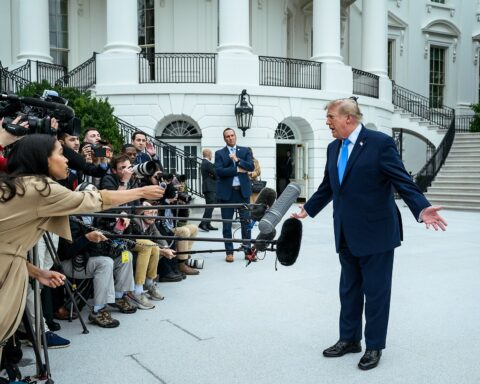
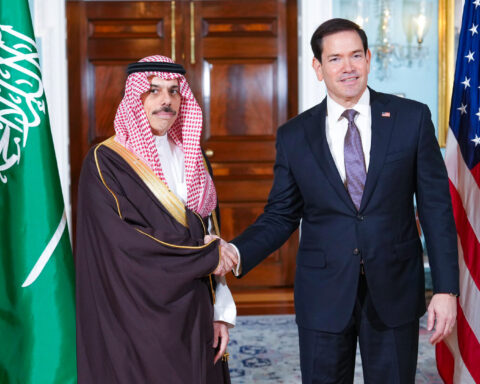
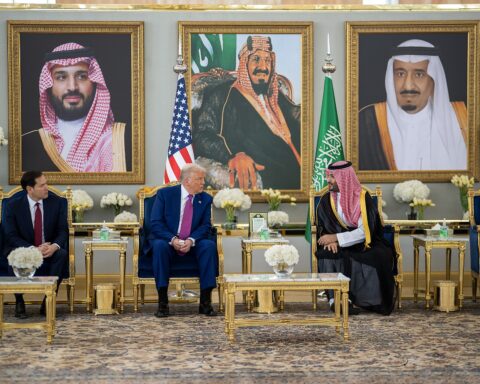
RIYADH — Admiral Brad Cooper and General Dan Caine briefed Donald Trump on April 30 on three options for restarting the Iran war, and every one of them runs through Saudi territory the Saudis have not agreed to provide. The “short and powerful” infrastructure strike wave, the partial seizure of the Strait of Hormuz with ground forces, the special-forces excavation of highly enriched uranium from tunnels under Isfahan — none can be executed without Prince Sultan Air Base, Saudi airspace, Saudi tanker support, and Saudi air defense holding the line at a moment when the Kingdom’s PAC-3 inventory has fallen by roughly 86 percent and the Day of Arafah is twenty-six days out. Mohammed bin Salman has not been publicly asked to absorb that exposure. He has also not said no. The question no one in Washington is putting on paper: who pays the Saudi price for each of Trump’s three options, and does the Crown Prince retain a veto over any of them.
Table of Contents
- What CENTCOM Put on Trump’s Desk
- Why Each Option Is a Saudi Operation
- Has Saudi Arabia’s Air Defense Already Been Spent?
- Does MBS Hold a Veto, and Will He Use It?
- Can a Ground Force Take the Strait?
- The Isfahan Option and the Thousands of Troops
- War Powers Loophole and the Ceasefire That Isn’t
- The Hajj Calendar Has a Vote
- What Comes Next
- FAQ
What CENTCOM Put on Trump’s Desk
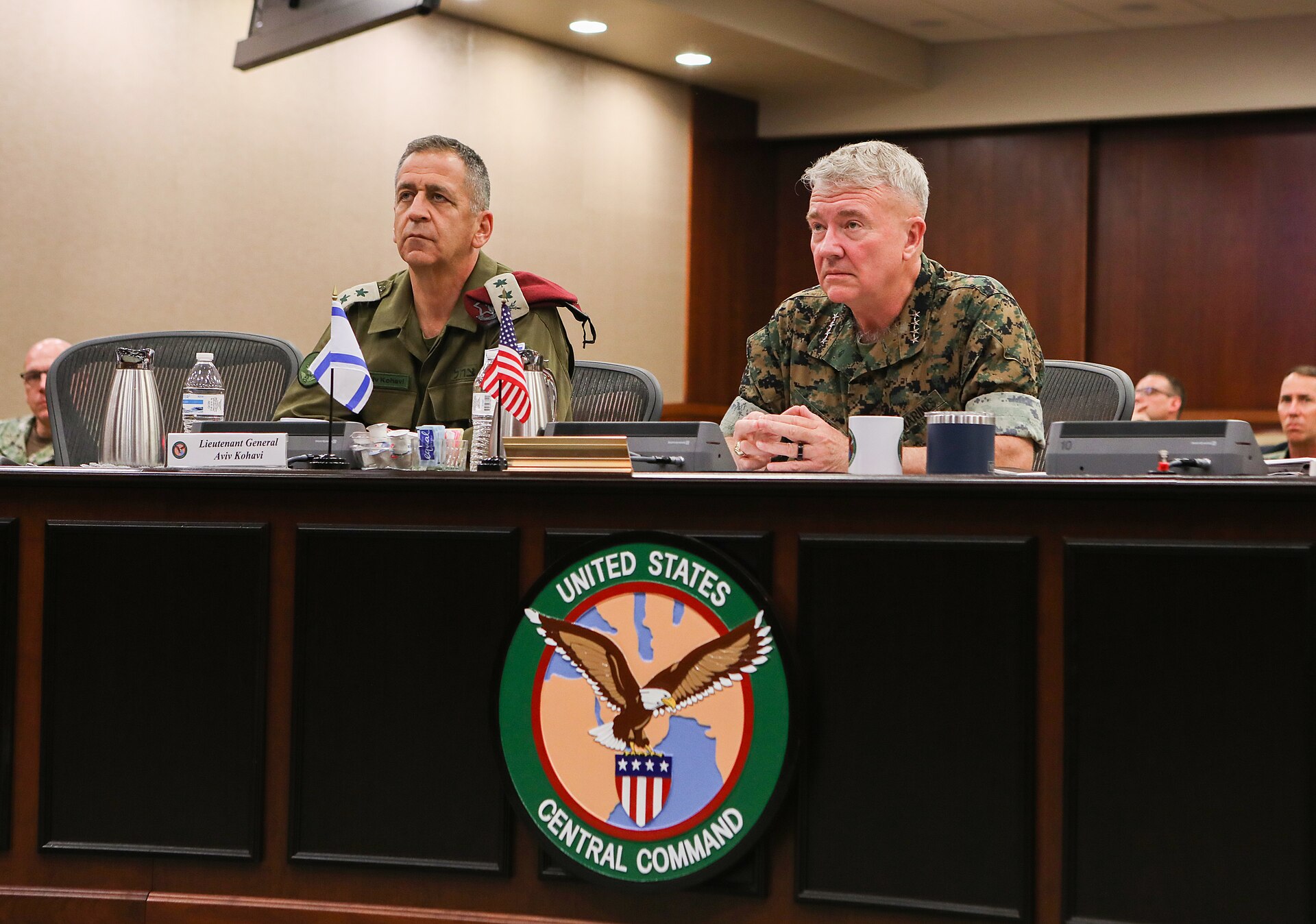
According to Axios, which broke the story on April 30, Cooper, Caine, and Defense Secretary Pete Hegseth presented three options. The first is a compressed, high-tempo wave of strikes on Iranian infrastructure intended to break the negotiating deadlock — the language used in the briefing was “short and powerful.” The second is a partial military takeover of the Strait of Hormuz to reopen it to commercial shipping; in the words of the report, the operation “could include ground forces.” The third is a special-forces operation to seize Iran’s stockpile of highly enriched uranium, a stockpile assessed by the IAEA’s last verified count at 440.9 kilograms of 60-percent material.
The briefing did not arrive in a vacuum. The day before, Bloomberg reported that CENTCOM had separately requested deployment of the Army’s Long-Range Hypersonic Weapon — Dark Eagle — to the theater, citing the fact that Iranian ballistic-missile launchers had been moved beyond the roughly 300-mile reach of the Precision Strike Missile. Dark Eagle’s range is approximately 1,725 miles. Each round costs about $15 million and the Pentagon’s own testing office has said combat-effectiveness data will not be available until 2027.
The framing in the briefing room was that Iran has used the ceasefire to move its launchers, hide its uranium, and extract concessions Tehran would not have surrendered under fire. The framing outside the briefing room is that the United States has spent the ceasefire watching the IRGC seize control of Iranian decision-making. As Reuters assessed on April 29, “the IRGC has seized power in Iran.” The two framings produce the same options paper.
Why Each Option Is a Saudi Operation
Read the three options through the basing layer and they collapse into one operation with three doctrinal labels. Option one — strike waves on Iranian infrastructure — requires forward tanker basing, intelligence fusion at Prince Sultan Air Base, and Saudi airspace transit for any package launched from the Arabian Peninsula. The Saudi airspace point is not abstract. Mohammed bin Salman told Masoud Pezeshkian during the February crisis that the Kingdom would not permit use of its airspace for any strike on Iran. That commitment has not been publicly withdrawn.
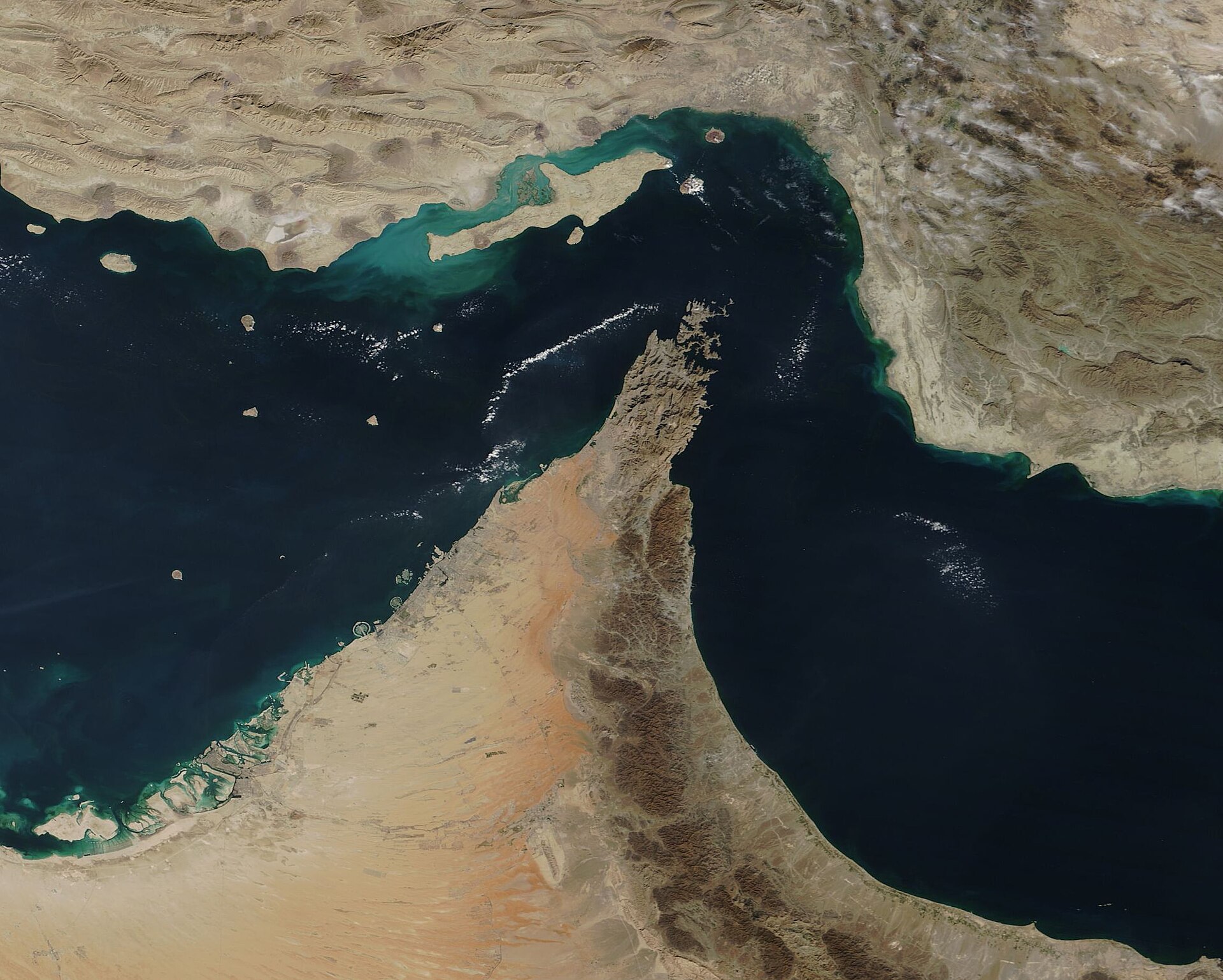
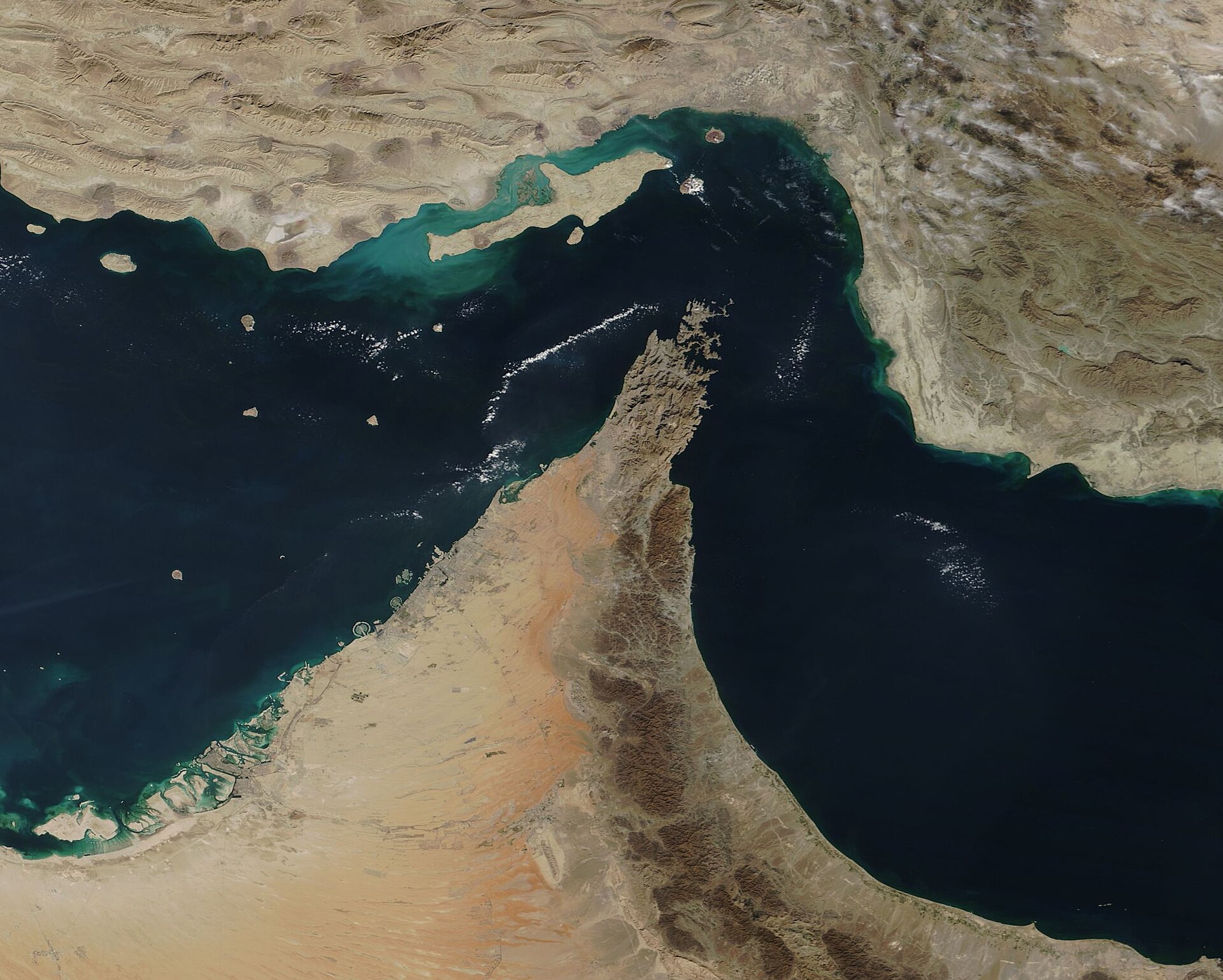
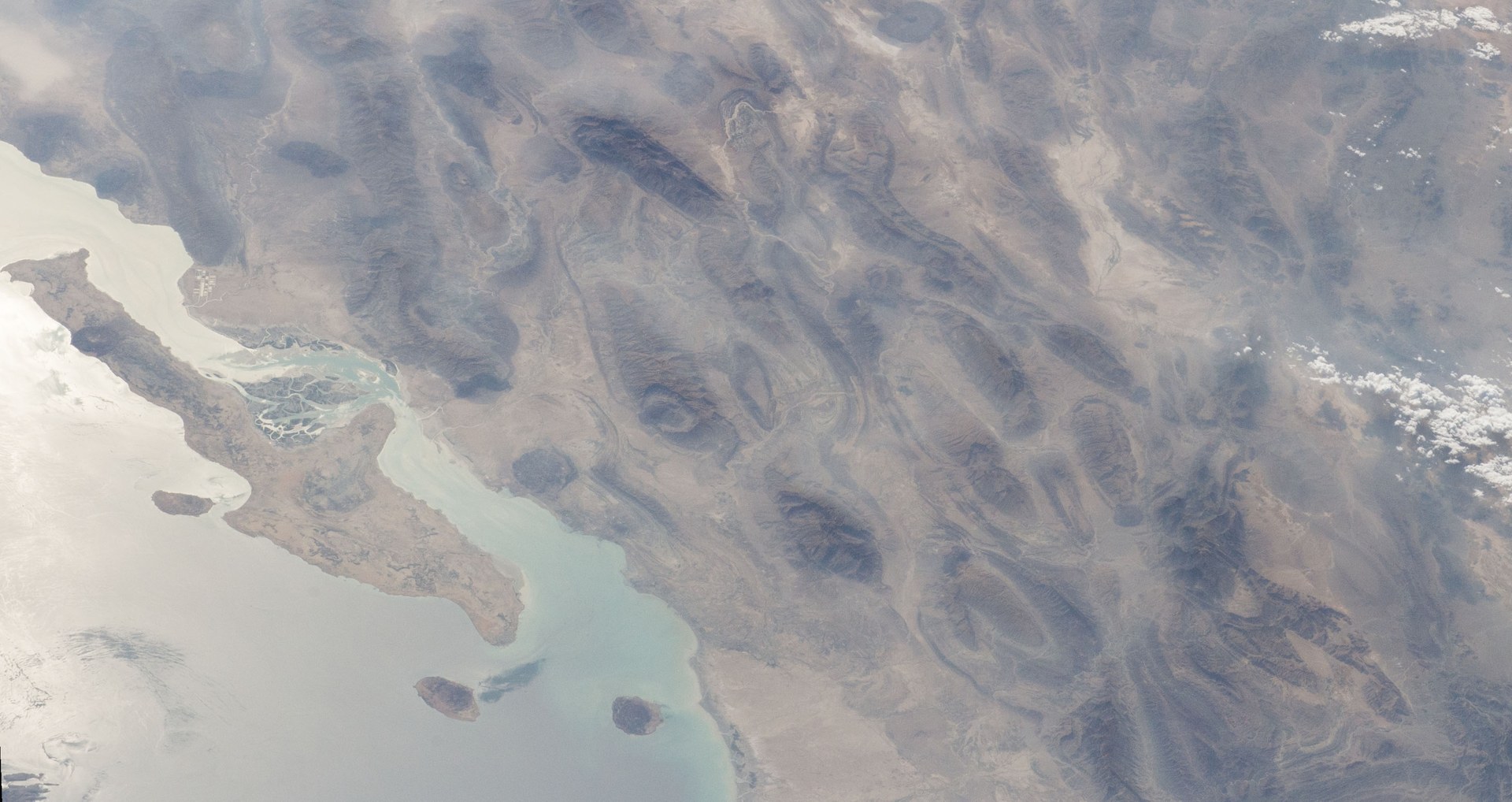
Option two — partial seizure of Hormuz — is the most Saudi-dependent of the three. A ground force pushed onto Qeshm, Larak, or the Hormuz islands themselves needs medevac corridors, fixed-wing close air support, KC-46 tanker tracks, and rotary-wing search-and-rescue. The geography forces those tracks across Saudi territory or Saudi-managed approaches. Bahrain’s airspace has been closed to civilian traffic since February 28. Qatar hosts Al Udeid but cannot provide the depth required for a sustained amphibious operation. The UAE’s eastern coast is exposed to the same IRGC missile envelope that is being neutralized. The depth, in operational terms, is Saudi Arabia.
The Middle East briefing 3,000+ readers start their day with.
One email. Every weekday morning. Free.
Option three — the Isfahan HEU seizure — is a special-operations forces insertion against deep-tunnel infrastructure. That operation, in the Axios assessment, requires thousands of US troops and a sustained presence inside Iran for the duration of an excavation. It needs a casualty evacuation chain, a forward operating base, and helicopter refuel points. None of those exist in Iraq. None exist in Iraqi Kurdistan at the scale required. The architecture available to CENTCOM, west of Iran, is Saudi.
“Iran’s layered denial architecture — mines, missiles, and drones — continues to impose real operational risks on any force operating in the Gulf, with naval mines representing the least expensive means of threatening amphibious forces in the narrow approaches to the Strait of Hormuz.”
Can Kasapoglu, Senior Fellow, Hudson Institute
Has Saudi Arabia’s Air Defense Already Been Spent?
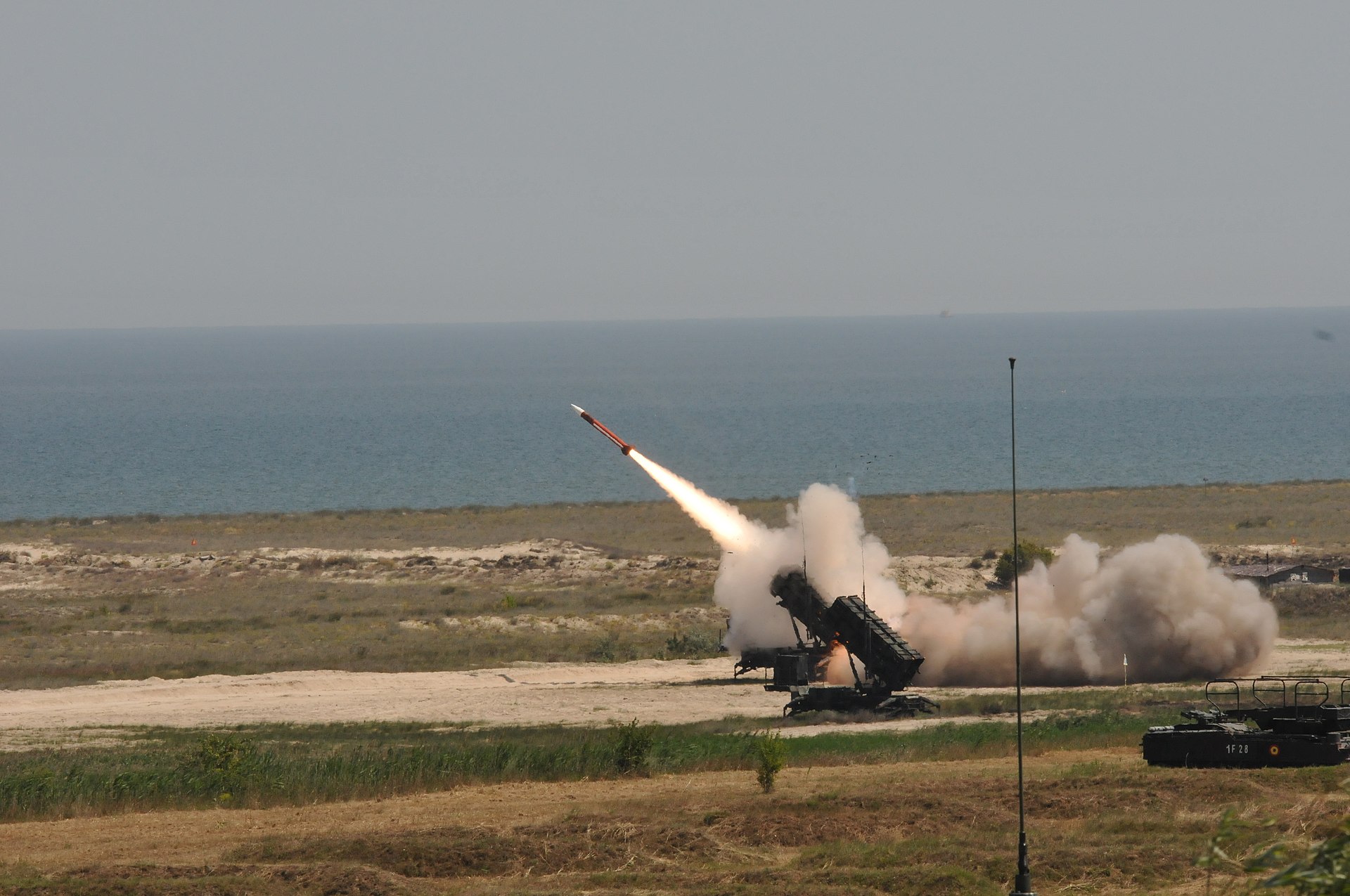
The PAC-3 inventory question is the one no formal CENTCOM brief is going to put in writing. Saudi Arabia entered the war on February 28 with an estimated 2,800 PAC-3 interceptors. Current inventory, after sixty-three days of intermittent ballistic and cruise-missile defense across Riyadh, Jeddah, the Eastern Province, the holy cities, and the King Fahd Causeway, sits at approximately 400 rounds. That is roughly 86 percent depletion. The Lockheed Martin facility in Camden, Arkansas produces 620 PAC-3 MSE rounds per year — the global total for all customers, including the United States Army. The $9 billion Saudi order for 730 additional rounds, signed in February, will not deliver a single interceptor for at least eighteen months.
The arithmetic of any restart begins there. If option one is selected, IRGC retaliation will not stay inside Iran. The targeting list published on Fars News in early April included eight Gulf and Jordanian bridges, the King Fahd Causeway, and refining infrastructure across the Eastern Province. Defending that list with 400 PAC-3 rounds against a missile inventory the IDF still assesses at multiple thousands is not air defense. It is triage.
The shortfall has a public record. In March, Marco Rubio’s emergency arms tranche allocated $8.4 billion to the United Arab Emirates, approximately $8 billion to Kuwait, and $70.5 million to Jordan. Saudi Arabia received nothing. The decision was made before the briefing on April 30, and it has not been revisited. Whatever was on the desk on Thursday, it sat next to a question Riyadh has not been formally asked to answer.
| Asset | Pre-War Stock | Current Stock | Replacement Pipeline |
|---|---|---|---|
| Saudi PAC-3 MSE inventory | ~2,800 rounds | ~400 rounds | 730 rounds, 18+ months delivery |
| Global PAC-3 production (Camden, AR) | 620 rounds/year | 620 rounds/year | Shared across all customers |
| Avenger-class MCM (5th Fleet AOR) | 6 ships | 2 ships | 4 decommissioned September 2025 |
| Saudi share of Rubio March arms tranche | n/a | $0 | None announced |
| UAE share of Rubio March tranche | n/a | $8.4 billion | Tranche delivered |
| Hormuz transits since April 8 ceasefire | ~1,250/month baseline | 45 total | 3.6% of pre-war flow |
Does MBS Hold a Veto, and Will He Use It?
Trump designated Saudi Arabia a Major Non-NATO Ally on January 23, 2026. The designation does not include an Article 5-equivalent. The Strategic Defense Agreement signed in November 2025 is, in its public form, a framework document — it does not commit US ground forces to Saudi defense, nor does it commit Saudi facilities to US offensive operations. The War Powers analysis documented the commitment as “largely conditional and susceptible to domestic political pressures” on both sides.
That is the legal architecture. The political architecture is a Crown Prince who has spent two months building a parallel diplomatic track with Moscow and Beijing on Hormuz, who has hosted Russian and Chinese deputy foreign ministers in Riyadh, and who has — on the public record — declined the airspace request. The Saudi Hormuz diplomacy track is the architecture MBS would have to abandon to greenlight any of the three options. He has not abandoned it.
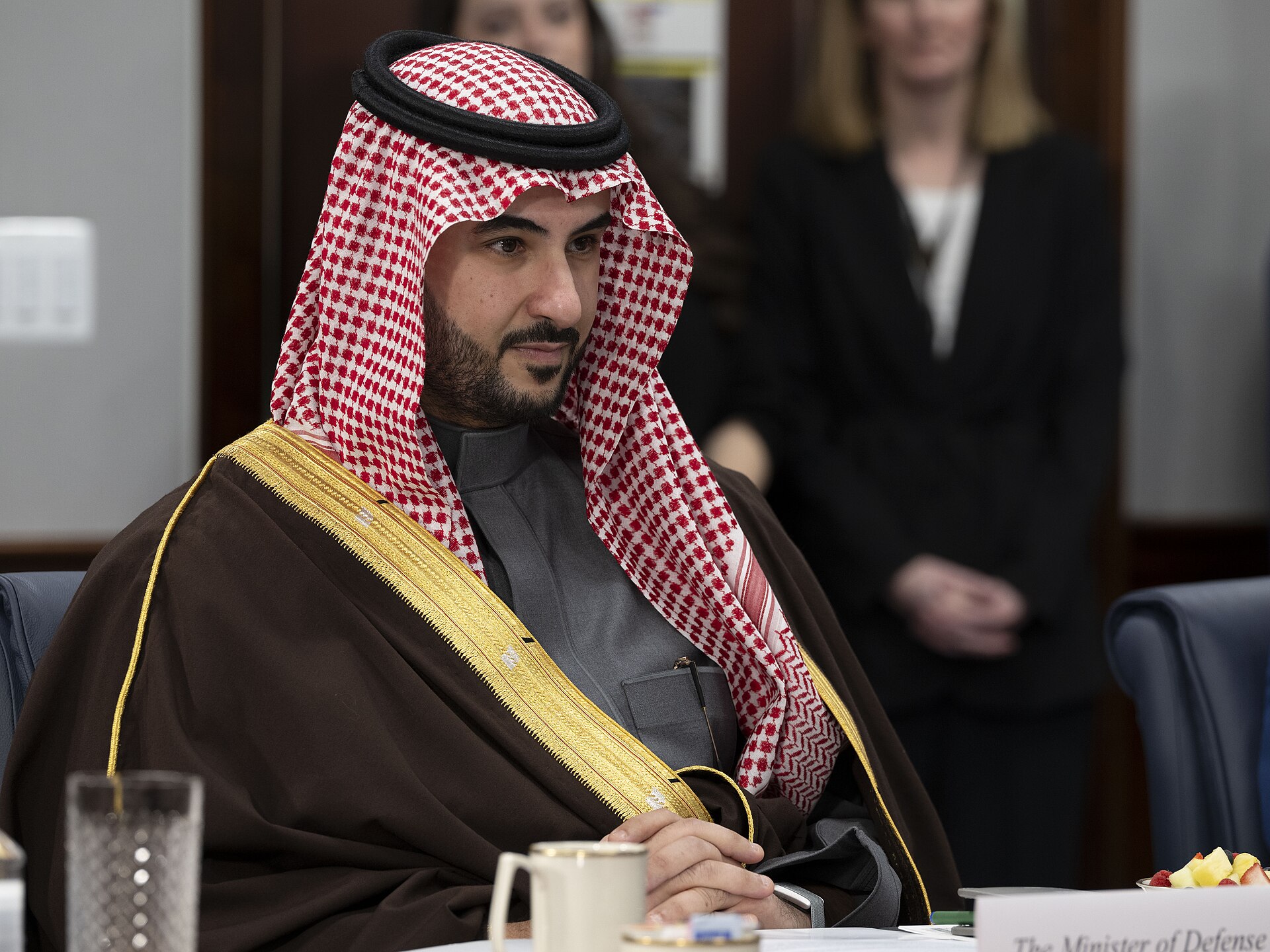
What MBS has done is keep Prince Khalid bin Salman in Washington saying things that read like enthusiasm and function as a price tag. The Saudis lose if Trump backs off; they also lose if Trump restarts and uses Saudi cover to do it. The Khalid statement is structured as encouragement and priced as a demand — that the United States deliver its own escalation without asking Riyadh to absorb the second-order cost. The Defense Minister’s words to his American counterparts were that failing to follow through on threats against Iran would “only embolden the regime.”
Saudi Arabia said nothing publicly when CENTCOM declared its naval blockade on April 13. That silence is not assent. It is the diplomatic equivalent of a hand kept off the table while the cards are still being dealt.
The veto, in practice, does not need to be exercised at the level of a public refusal. It can be exercised by slow-walking a clearance, by limiting tanker tracks, by classifying a particular sortie as ineligible for Saudi-controlled airspace, by requiring operational deconfliction that adds hours to a mission profile that depends on minutes. None of those moves carry a press release. All of them carry the same effect. The Kingdom does not have to say no. It has to fail to say yes at the speed CENTCOM’s planning documents assume.
Can a Ground Force Take the Strait?
The amphibious arithmetic is unforgiving. The 31st Marine Expeditionary Unit, 2,500 Marines aboard the USS Tripoli, plus elements of the 82nd Airborne Division’s Immediate Response Force — roughly 2,000 paratroopers — were ordered to the theater between March 24 and 25. Combined with existing rotations, the additional ground commitment available to CENTCOM is approximately 7,000 troops. GlobalSecurity.org’s open-source assessment of an “Operation Epic Excursion” scenario estimated an occupational holding force of 1,800 to 2,000 troops to retain seized positions on the Hormuz islands.
The numbers suggest the seizure is conceivable. The mine-clearance numbers do not. Four Avenger-class mine countermeasures vessels homeported in Bahrain were decommissioned in September 2025. Two remain in theater. The 1991 Kuwait benchmark for clearing 200 square miles of contested water was approximately 51 days. Operation Praying Mantis in April 1988 began when the USS Samuel B. Roberts struck a single Iranian mine in the central Gulf and, within ninety-six hours, became the largest US Navy surface engagement since the Second World War. The lesson from 1988 was not that Iran’s mines were sophisticated. The lesson was that they were cheap.
The IRGC has not been idle. CNN reporting from late March identified anti-ship cruise missile installations in subterranean positions on Qeshm Island, with remaining IRGC fast-attack craft dispersed across Qeshm and Larak. The IRGC Navy declared “full authority” over Hormuz in early April; on May 1, the same command repeated the line and added that “the equations and rules governing the new management of the Persian Gulf have been set, and will be enforced.” Any military vessel approaching the strait, the statement said, would be considered “a ceasefire violation” and would meet “a severe response.”
“The equations and rules governing the new management of the Persian Gulf have been set, and will be enforced.”
IRGC Navy command, May 1, 2026
The Isfahan Option and the Thousands of Troops
Option three is the one the Pentagon has briefed least and worried about most. The HEU stockpile sits inside hardened tunnels at the Isfahan Nuclear Technology Center; the IAEA’s last verified count, before access was terminated on February 28, was 440.9 kilograms of 60-percent enriched uranium. Down-blending requires equipment, time, and consent. Excavation requires US engineers operating inside Iranian sovereign territory under hostile fire.
The Axios brief assessed the option as requiring “thousands of US troops to secure a facility while experts excavated the HEU located inside deep tunnels at Isfahan.” Thousands is a deliberately imprecise number; in CENTCOM planning vocabulary, it places the operation between battalion-plus and brigade-minus. Either side of that range converts the special-forces label into something closer to a divisional commitment. It is not a raid. It is an occupation with a chemistry problem.
Iran’s parliament is currently advancing a 12-article Hormuz sovereignty law drafted by Ahmadi and Rezayi Kouchi that would codify IRGC “coordination” as a treaty requirement. The legal architecture being built in Tehran assumes Hormuz transits will require Iranian permission. The architecture in Washington assumes US troops can extract the HEU and leave. The two architectures are not mutually compatible, and option three is the one that forces them into direct contact.
The down-blending alternative — neutralizing the HEU in place rather than extracting it — has been raised in track-two channels and rejected. Down-blending requires Iranian engineers, Iranian site access, and a verification regime acceptable to both the IAEA and the United States. Iran terminated IAEA access on February 28. The verification regime no longer exists. The authorization architecture inside Tehran capable of consenting to a down-blend — Khamenei, the SNSC, the IRGC commander Vahidi — has effectively split, with Vahidi’s hardline position now dominant according to the ISW assessment circulated to allied capitals in mid-April.
The conversation Trump’s planners are having is therefore not whether to extract the HEU. It is whether they can extract it before Iran completes the move from 60-percent stockpile to weapons-grade material. The figure circulated by the Foundation for Defense of Democracies in March was 25 days per device through an IR-6 cascade, assuming 564 separative work units per device and the cascade configuration documented before access was lost. The clock the briefing was racing was not only the War Powers clock. It was a SWU clock.
War Powers Loophole and the Ceasefire That Isn’t
The War Powers Resolution’s 60-day limit on hostilities expired on May 1. Trump’s letter to Congress that day declared that “there has been no exchange of fire between the United States and Iran since April 7, 2026. The hostilities that began on February 28, 2026, have terminated.” Hegseth had previewed the argument the day before, telling reporters that the ceasefire “paused” the 60-day clock.
Senator Richard Blumenthal’s response was to point out, on the Senate floor, that “there’s no pause button in the Constitution, or the War Powers Act.” The constitutional question is unresolved. The operational consequence is that any of the three options, if executed, restarts a new 60-day clock — and the administration’s legal position has now been published in writing in a way that Congress will be unable to ignore the second time around.
The Iranian president, Masoud Pezeshkian, has called the US naval blockade an “extension of military operations” despite the ceasefire. As the double-blockade analysis documented, transits through Hormuz have run at 3.6 percent of the pre-war baseline since April 8 — 45 vessels total, against a pre-war monthly flow of roughly 1,250. Hegseth’s paused ceasefire and Pezeshkian’s ongoing war are describing the same strait.
The Hajj Calendar Has a Vote
The Day of Arafah falls on May 26 — twenty-six days from the briefing. Indonesian pilgrims, the largest national contingent at 221,000, began arriving April 22. Pakistani pilgrims, 119,000, arrived April 18. Saudi Arabia is the Custodian of the Two Holy Mosques, a title Fahd accepted in October 1986 specifically to answer the Khomeini-era challenge to Saudi religious authority. The 1987 precedent — 402 dead in Mecca, an 87-percent quota cut, a three-year Iranian Hajj boycott — sits over every conversation about kinetic operations during the pilgrimage.
That precedent compresses the decision window. Any of the three options launched after May 18 risks IRGC retaliation that hits the holy cities during pilgrim arrival. The window between the Axios briefing and the cordon seal — May 1 through May 6 — is the period during which a US escalation can be executed without the Saudis having to choose between defending pilgrims and defending oil. After May 6, the choice gets put on the table whether MBS wants it there or not.
Riyadh has not commented on the May 26 deadline in public, and there is no formal mechanism to extend the Islamabad ceasefire framework past its April 22 expiry, which has already passed without renewal. The ceasefire that Hegseth says paused the War Powers clock is, in technical terms, a unilateral US declaration that the war ended on April 7, while the Iranians declare that the blockade is itself a continuation of war and the IRGC declares it has set the rules.
Inside the Saudi air-defense architecture, the Hajj exposure compounds the PAC-3 shortage in ways the Camden production schedule does not acknowledge. The five-layer defense around the holy cities — THAAD upper tier, PAC-3 lower tier, the Korean KM-SAM medium-range system, point-defense laser systems, and Skyguard for terminal protection — was sized for a steady-state threat environment. It was not sized for sustained IRGC retaliation against an operation Saudi Arabia did not authorize. Saudi production has already crashed from 10.4 million barrels per day in February to 7.25 million in March. The Kingdom is defending pilgrims with a depleted interceptor stockpile, exporting through a 5.9-million-barrel Yanbu ceiling against a 7-million pre-war Hormuz throughput, and watching its fiscal break-even at $108 to $111 Brent against a market trading near $90.
What Comes Next
The decision Trump faces is not a choice among three options but a choice among three Saudi exposures. Option one spends what is left of the PAC-3 stockpile defending against IRGC retaliation that the Crown Prince has already privately said he cannot absorb. Option two requires Saudi airspace and Saudi medical evacuation corridors that MBS has, on the public record, refused to provide. Option three converts Prince Sultan Air Base into the staging point for a thousands-strong US ground operation inside Iran, two weeks before the Day of Arafah.
Joe Buccino, a former CENTCOM official, described the standoff to RFE/RL as a strategic “staring contest.” That description was about Tehran and Washington. It applies with equal force to Washington and Riyadh. The Crown Prince has not blinked. He has also not committed. The brief on Trump’s desk on April 30 contained three operations and one missing signature. The diplomatic consequences of that missing signature — and what Saudi Arabia stands to lose in either outcome — are examined in Trump’s 45-Minute Hormuz Briefing and Saudi Arabia’s Indispensability Trap.
What the Axios scoop did not say, and what no public reporting has yet established, is whether Cooper and Caine put the Saudi prerequisite question to the President in writing. If they did, the answer matters more than the options. If they did not, the options paper is a planning document for a war that cannot be executed against the basing footprint that exists.
FAQ
What is the Long-Range Hypersonic Weapon and why does CENTCOM want it now?
Dark Eagle is the Army’s land-based hypersonic missile system, built by Lockheed Martin, with a range of approximately 1,725 miles and Mach 5+ flight profile. CENTCOM requested deployment because Iran’s ballistic-missile launchers were dispersed during the ceasefire to positions beyond the 300-mile reach of the Precision Strike Missile. Each round costs about $15 million; the Pentagon’s testing office has said combat-effectiveness data will not be available until 2027.
How many US Avenger-class mine countermeasures ships remain in the 5th Fleet area of responsibility?
Two. Four Avenger-class MCM vessels homeported in Bahrain were decommissioned in September 2025 as part of a previously scheduled retirement. The 1991 Kuwait mine-clearance benchmark was approximately 51 days for 200 square miles of contested water — a tempo that is not achievable with two hulls.
What was the size of Rubio’s emergency arms tranche to Gulf allies in March 2026?
Approximately $16.5 billion combined. The breakdown was $8.4 billion to the United Arab Emirates, approximately $8 billion to Kuwait, and $70.5 million to Jordan. Saudi Arabia received zero. The Saudi PAC-3 supplemental order signed in February — 730 rounds at $9 billion — has an 18-month-plus delivery schedule and was funded outside the Rubio emergency tranche.
What is the IRGC mine-laying threat assessment based on?
Open-source analysis from the Hudson Institute and CNN reporting from late March identified anti-ship cruise missile installations in subterranean positions on Qeshm Island, with IRGC fast-attack craft dispersed across Qeshm and Larak. Iran’s mining doctrine in the 1987–88 Tanker War relied on inexpensive contact mines. The Samuel B. Roberts incident on April 14, 1988, triggered Operation Praying Mantis four days later — the largest US Navy surface engagement since the Second World War.
How does the War Powers Resolution interact with the ceasefire?
The 60-day clock began with Trump’s March 2 notification to Congress and expired on May 1. Trump’s May 1 letter to Congress declared hostilities “terminated” as of April 7 and asserted the clock does not apply. Defense Secretary Hegseth told reporters the ceasefire “paused” the clock, a position with no statutory basis. Senator Richard Blumenthal said on the Senate floor: “There’s no pause button in the Constitution, or the War Powers Act.” Any restart of operations would, on most readings, trigger a new 60-day clock.
The military options Trump reviewed with Cooper on May 2 — and the likelihood of their activation — now have a named threshold from Iran’s own apex war command: IRGC deputy commander Asadi’s on-record declaration that renewed conflict is “likely,” issued via Fars News the same day as the Cooper briefing.