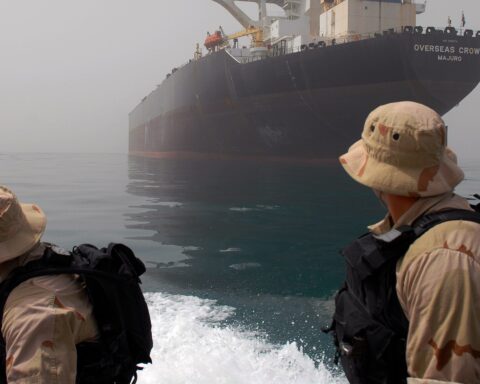
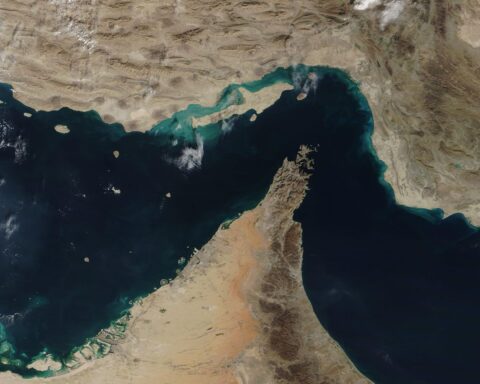
WASHINGTON — US President Donald Trump claimed on November 20 that the United States has “total control” over the Strait of Hormuz, asserting at a White House press conference that the US Navy’s blockade had enabled record oil shipments through the contested waterway. Hours later, Iranian Foreign Minister Abbas Araghchi countered that Tehran could reopen the strait “on the second day” if Washington met its conditions, framing the standoff as a choice that rests “entirely” with the US.
The dueling statements — delivered within 24 hours of each other — expose the gap between Washington’s maximalist framing and Tehran’s insistence that it holds the keys to the world’s most important oil chokepoint. With 37 attacks on ships in and near Hormuz recorded in October alone, the highest monthly total since the Iran war began, neither side’s claim of dominance aligns neatly with conditions on the water. For Saudi Arabia, whose crude exports flow overwhelmingly through Hormuz, the rhetorical escalation carries material risk: every day the strait remains contested is a day Riyadh’s primary revenue artery stays under threat.
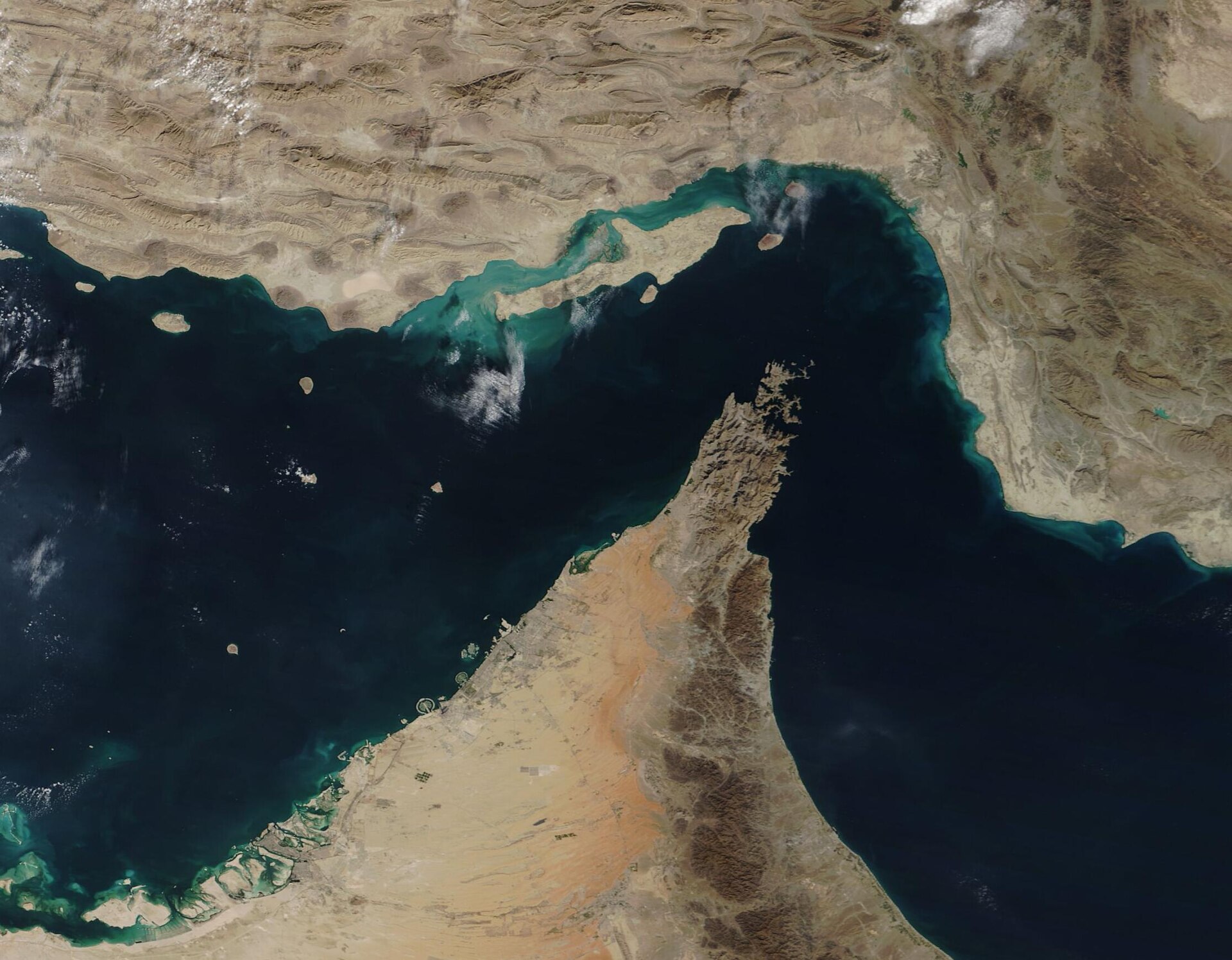
Table of Contents
- Trump’s “Total Control” Claim and What He Actually Said
- What Are Iran’s Conditions for Reopening Hormuz?
- IRGC Chief’s 500 km Counter-Claim
- Does the US Actually Control Hormuz?
- Diplomacy Stalled: No Talks, No Agreement
- Saudi Arabia’s Stake in the Hormuz Standoff
- Background and Context
- Frequently Asked Questions
Trump’s “Total Control” Claim and What He Actually Said
Speaking at the White House on November 20 with Defense Secretary Pete Hegseth at his side, Trump told reporters: “Last week, we took out record amounts of oil from the Hormuz Strait. Our navy has a blockade. We have total control over the Hormuz Strait,” according to Open Magazine and Middle East Eye.
The House of Saud Daily Briefing
Saudi Arabia's news in 3 minutes, every morning. Free. See today's issue
The remarks came shortly after Trump’s return from the APEC summit in China. They represented the president’s most assertive public characterization of US naval dominance in the Gulf since the Iran war began, though not his first such claim. On August 12, Trump posted an identical assertion on Truth Social, according to Al Jazeera. He made a similar statement in September when rejecting Iran’s 7-day roadmap proposal for reopening the strait, CBS News reported on September 26.
The November framing marks a notable shift from Trump’s own earlier language. In a Bloomberg audio interview on March 23, Trump described Hormuz as “jointly controlled” — an acknowledgment of shared presence that he has since abandoned in favor of unilateral dominance claims.
No US Central Command statement from November 2026 has echoed Trump’s “total control” characterization. The most senior military language on the subject came from CENTCOM commander Admiral Brad Cooper, who said around August 2026 that US forces had “successfully cleared sea mines in the strait’s international shipping lanes” and escorted nearly 1,500 commercial vessels carrying approximately 750 million barrels of oil, according to Gulf News and Crisis Group.
The gap between “cleared sea mines in shipping lanes” and “total control” is not semantic. Cooper’s language described a specific operational achievement within defined corridors. Trump’s claim asserted sovereignty over an entire waterway — one where Iranian forces continued to operate and attack ships through October and into November.
What Are Iran’s Conditions for Reopening Hormuz?
Araghchi responded on November 21 with a framework that cast reopening as immediate — but conditional. “If the US fulfills its commitments on the first day, Tehran is ready to reopen the Strait of Hormuz on the second day,” the foreign minister said, according to APA.
In an earlier statement to IRNA, Iran’s state news agency, on November 11, Araghchi had gone further, saying Iran could reopen the strait “within 48 hours” if conditions were met, calling the choice “entirely Washington’s will and decision.”
Araghchi also signaled skepticism about the durability of any potential agreement. “What is the point of reaching an agreement today if it is violated two months later and war resumes?” he said, according to Open Magazine.
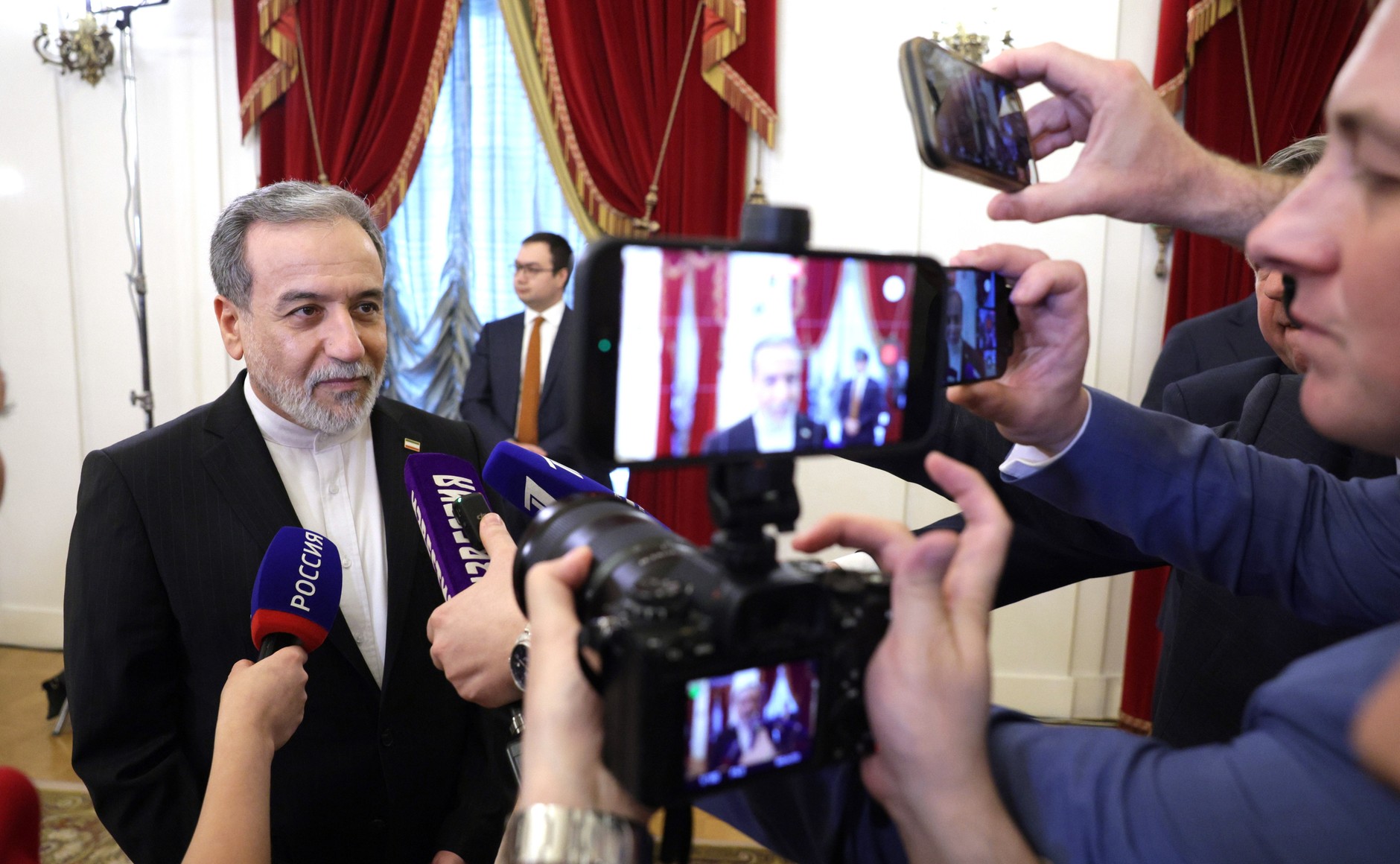
The conditions themselves were first published around November 1 by Kayhan, the Iranian newspaper closely aligned with the Supreme Leader’s office. Hassan Ghashghavi, spokesman for the Iranian Parliament’s National Security Committee, stated that “the waterway will not reopen until the seven conditions are [met],” according to Kayhan.
Iran’s seven conditions, as outlined across official Iranian statements and media, include: ending the US naval blockade, lifting sanctions, reinstating oil export waivers, releasing approximately $12 billion in frozen Iranian assets, recognizing an Iran-Oman shipping route, ending the war, and reducing the US military presence in the region. Araghchi’s September 25 roadmap to the United Nations, delivered via Qatari mediators, had bundled several of these demands into a proposed 7-day sequence, according to Al Jazeera. Trump rejected the proposal, Al Jazeera reported on September 26.
Iranian authorities continue to insist that all vessels must follow Tehran’s prescribed passage protocol or risk attack, according to Open Magazine.
IRGC Chief’s 500 km Counter-Claim
On the same day Trump declared “total control,” IRGC Chief Commander Major General Ahmad Vahidi offered Tehran’s direct rebuttal. Speaking at the “Pioneers of Liberation” conference in Tehran on November 20, Vahidi claimed that “not just the Persian Gulf and the Strait of Hormuz, but at least up to 500 km and beyond, is under the sway of Iran’s navy,” according to Newsquawk and Press TV.
Vahidi attributed Iran’s reach to “the capabilities and deterrence of our naval units” and claimed that attempts to seize Iranian islands and coastal areas had “failed,” Press TV reported. The claims have not been independently verified. Press TV is an Iranian state broadcaster.
The simultaneous assertions — Trump claiming total US control from Washington, Vahidi claiming Iranian dominance extending 500 km beyond Hormuz from Tehran — illustrate a deepening contest over strategic framing that analysts at the Center for Strategic and International Studies have described as a fundamental shift in Iran’s posture toward the waterway in a November 2026 analysis. The full scope of Vahidi’s claims extended well beyond the strait itself, encompassing waters deep into the Arabian Sea.
Does the US Actually Control Hormuz?
The operational picture suggests neither side’s maximalist claim holds. At least 27 attacks on ships in and near Hormuz were recorded in October 2026, the highest monthly total since the war began, according to the International Maritime Organization as reported by USNI News; other trackers put the final monthly count higher. The attacks have continued into November: the IRGC claimed on November 19 that two supertankers carrying 4 million barrels of oil hit mines in the strait, according to IranWire. Neither CENTCOM, the United Kingdom Maritime Trade Operations center, nor any independent maritime authority confirmed the IRGC’s claims.
Iran also staged a publicized 14-tanker convoy from Kharg Island to test the US oil blockade on November 20, a direct challenge to Trump’s assertion of control.
On the US side, Operation Project Freedom — the commercial vessel escort program active since May 4 — has provided tangible results. CENTCOM reported that 135 ships had been turned around by the US blockade since it was reinstated on July 14, as of mid-October, according to Gulf News.
Yet the US Navy faces structural constraints that complicate any claim of total dominance. The four dedicated Avenger-class minesweepers previously stationed in the Persian Gulf were retired in September 2025 — before Iran began mining the strait, according to Quwa, NPR, and Military Times. The entire US dedicated mine countermeasures presence in the Fifth Fleet’s area of responsibility now consists of three Independence-class littoral combat ships equipped with MCM mission packages.
Bryan Clark of the Hudson Institute described US mine-sweeping capacity as being at a “nadir,” NPR reported. That assessment preceded by months the IRGC’s mine-strike campaign, which has targeted commercial shipping through October and into November.
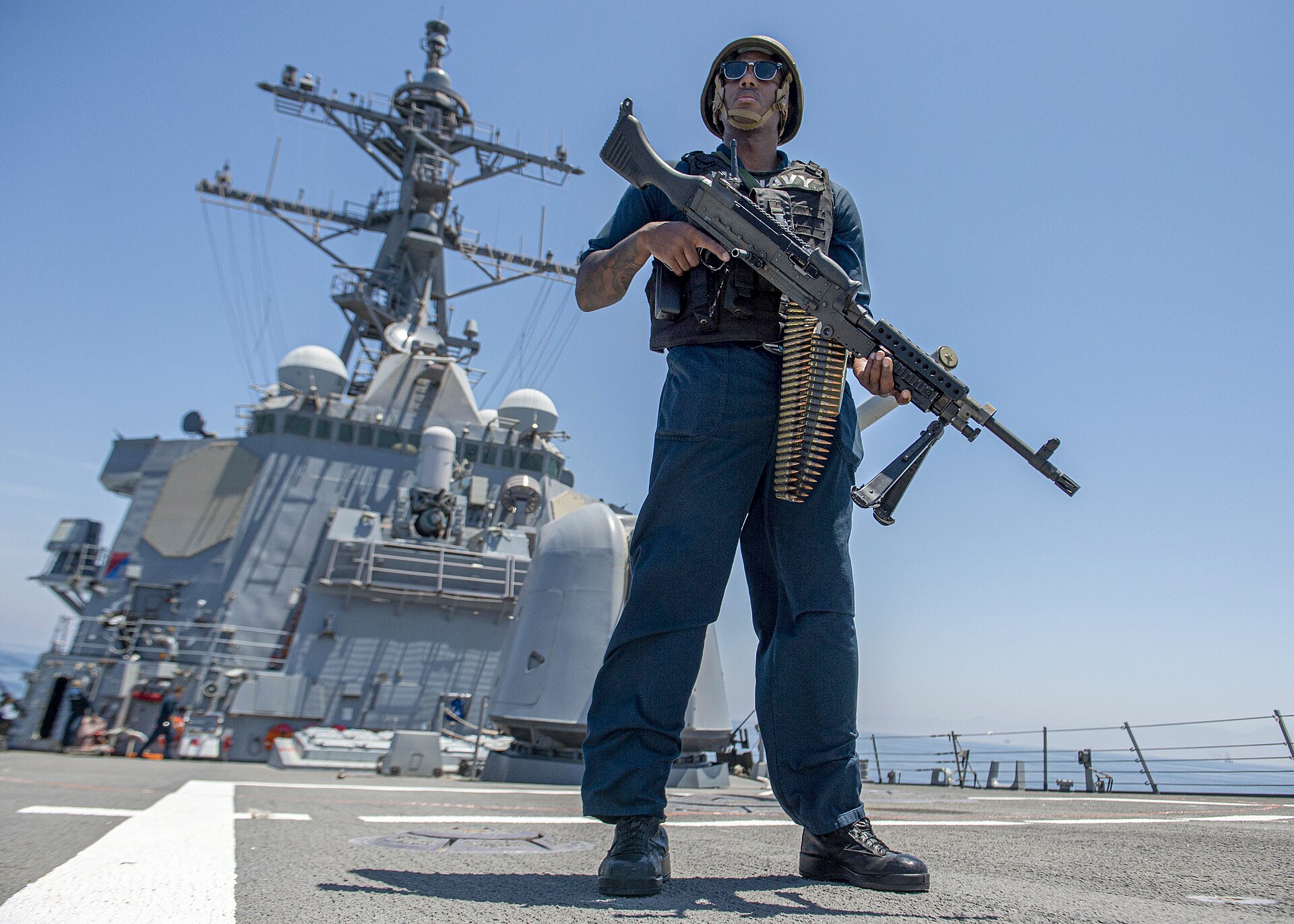
Some traffic has continued to move. A total of 31 LNG tankers exited Hormuz in October, the highest monthly figure since the Iran war began — evidence that the escort program is functioning for certain high-value cargoes, even as broader conditions remain dangerous.
Diplomacy Stalled: No Talks, No Agreement
Iran’s Supreme National Security Council Secretary Mohsen Rezaei made Tehran’s diplomatic posture explicit on November 10. “I particularly stress that we are not currently holding any negotiations with the Americans, and there are no ongoing talks between Tehran and Washington,” Rezaei said, according to Al-Mayadeen.
Rezaei characterized earlier US overtures as inadequate. “Their initial response was insufficient and deceptive, and we are still waiting for an explicit and clear response,” he told Al-Mayadeen.
Whatever back-channel contact exists runs through intermediaries. Qatar and Oman operate a US-Iran communication channel that excludes Saudi Arabia. Araghchi met Omani Foreign Minister Badr al-Busaidi in Muscat on November 17, but the meeting produced no agreement on Hormuz.
Secretary of State Marco Rubio said on November 11 that Washington remained “open to diplomacy” but framed the economic pressure campaign as sufficient for the moment. “The economic campaign is so devastating that right now there is no need for major combat operations,” Rubio told reporters at the G7 foreign ministers’ summit in Paris, according to Reuters.
Trump reinforced that posture on November 18 when he rejected every military strike option presented to him and chose to continue the economic blockade, with any decision on new strikes against Iran deferred to 2027, Archyde reported.
Saudi Arabia’s Stake in the Hormuz Standoff
For Saudi Arabia, the competing claims over Hormuz are not an abstraction. The strait is the primary export route for Saudi crude oil, and every disruption — whether from IRGC mines, contested escorts, or diplomatic failure — translates into revenue risk and strategic vulnerability for Riyadh.
The baseline transit rate through Hormuz, according to the Joint Maritime Information Center, is 138 ships per day. JMIC reporting has described current attack frequency as “single-digit to low-double-digit” per day — a sustained level of violence that falls short of a full blockade but far exceeds peacetime norms.
Saudi Arabia has found itself excluded from the primary diplomatic channel between Washington and Tehran. The Qatar-Oman backchannel operates without Saudi participation, leaving Riyadh dependent on US decision-making over which it has limited influence. Trump’s decision on November 18 to defer military action to 2027 means Saudi Arabia’s Houthi campaign in Yemen also lacks the US military backstop Riyadh has sought.
The kingdom’s exposure is compounded by the broader war’s toll on Gulf infrastructure. Coalition forces have been engaged in sustained operations against Houthi forces in Yemen while simultaneously managing the Hormuz threat from Iran. The dual-front pressure has stretched Saudi military resources and left Riyadh reliant on a US naval presence that — despite Trump’s rhetoric — has not eliminated the threat to commercial shipping.
Background and Context
Iran first closed the Strait of Hormuz on February 28, 2026, with full enforcement from March 2 to 4. Tehran re-closed the waterway on April 18 and again on July 12, after which the US reinstated its oil blockade on July 14.
Operation Project Freedom, the US commercial vessel escort program, has been active since May 4, 2026.
The IRGC has conducted mine-laying operations throughout the conflict, with attacks escalating sharply in the fall. Iran’s seven conditions for reopening, first published around November 1, went further than Araghchi’s September proposal by adding demands for US force reductions and recognition of an Iran-Oman shipping route.
The Chatham House think tank assessed in November 2026 that Tehran would seek to rebuild its deterrence posture around the Hormuz threat regardless of any deal reached with Washington, suggesting the strait’s status will remain contested well beyond any immediate diplomatic resolution.
Frequently Asked Questions
How much oil normally transits the Strait of Hormuz?
Before the Iran war, approximately 21 million barrels of oil per day passed through Hormuz, according to the US Energy Information Administration, representing roughly one-fifth of global petroleum consumption. The JMIC baseline transit rate is 138 ships per day. Current volumes are reduced, though precise wartime figures are classified or contested. The 31 LNG tankers that exited in October and Cooper’s cumulative figure of 750 million barrels escorted since May suggest substantial but diminished flows.
What is Operation Project Freedom and how does it work?
Operation Project Freedom is a US-led commercial vessel escort program launched on May 4, 2026. Under the program, US Navy warships accompany commercial tankers and cargo vessels through the Strait of Hormuz’s Traffic Separation Scheme lanes. CENTCOM reported escorting nearly 1,500 vessels by August 2026. Separately, the US blockade — reinstated July 14 — has turned around 135 ships as of October 10, targeting Iran-linked cargo. The program operates alongside allied naval forces but remains predominantly a US Fifth Fleet operation.
Has Iran actually mined the Strait of Hormuz?
Iran has conducted confirmed mine-laying operations in and around Hormuz since early 2026. CENTCOM’s Admiral Cooper stated around August that US forces had “successfully cleared sea mines in the strait’s international shipping lanes.” However, the IRGC has continued to claim new mine strikes in subsequent months. Many of these claims — including the November 19 assertion that two supertankers hit mines — have not been confirmed by CENTCOM, UKMTO, or independent maritime authorities. The gap between IRGC claims and independent verification remains a consistent feature of the conflict’s information environment.
Why did the US retire its minesweepers before the conflict?
The US Navy retired its four Avenger-class mine countermeasures ships from the Persian Gulf in September 2025 as part of a broader fleet modernization plan that predated the Iran crisis. The Avenger class, commissioned in the 1980s and 1990s, was aging and scheduled for decommissioning. The Navy planned to replace dedicated minesweepers with modular mission packages aboard Independence-class littoral combat ships, but only three such vessels with MCM capability are currently deployed in the Fifth Fleet’s area of operations — a fraction of the previous capacity.
Could Hormuz reopen quickly if a deal were reached?
Araghchi has claimed Iran could reopen the strait “within hours” if its conditions were met. Physically, removing Iran’s naval restrictions would be rapid, since closure is enforced through IRGC patrols, coast-based missile batteries, and mine-laying rather than permanent infrastructure. However, clearing residual mines from the waterway could take weeks or months. After the 1980s Iran-Iraq tanker war, mine clearance in the Gulf continued for years. Any reopening would also require insurance markets to lower war-risk premiums for vessels transiting the strait — a process that historically lags behind on-the-ground security improvements by several months.
The House of Saud Daily Briefing
Saudi Arabia's news in 3 minutes, every morning. Free. See today's issue