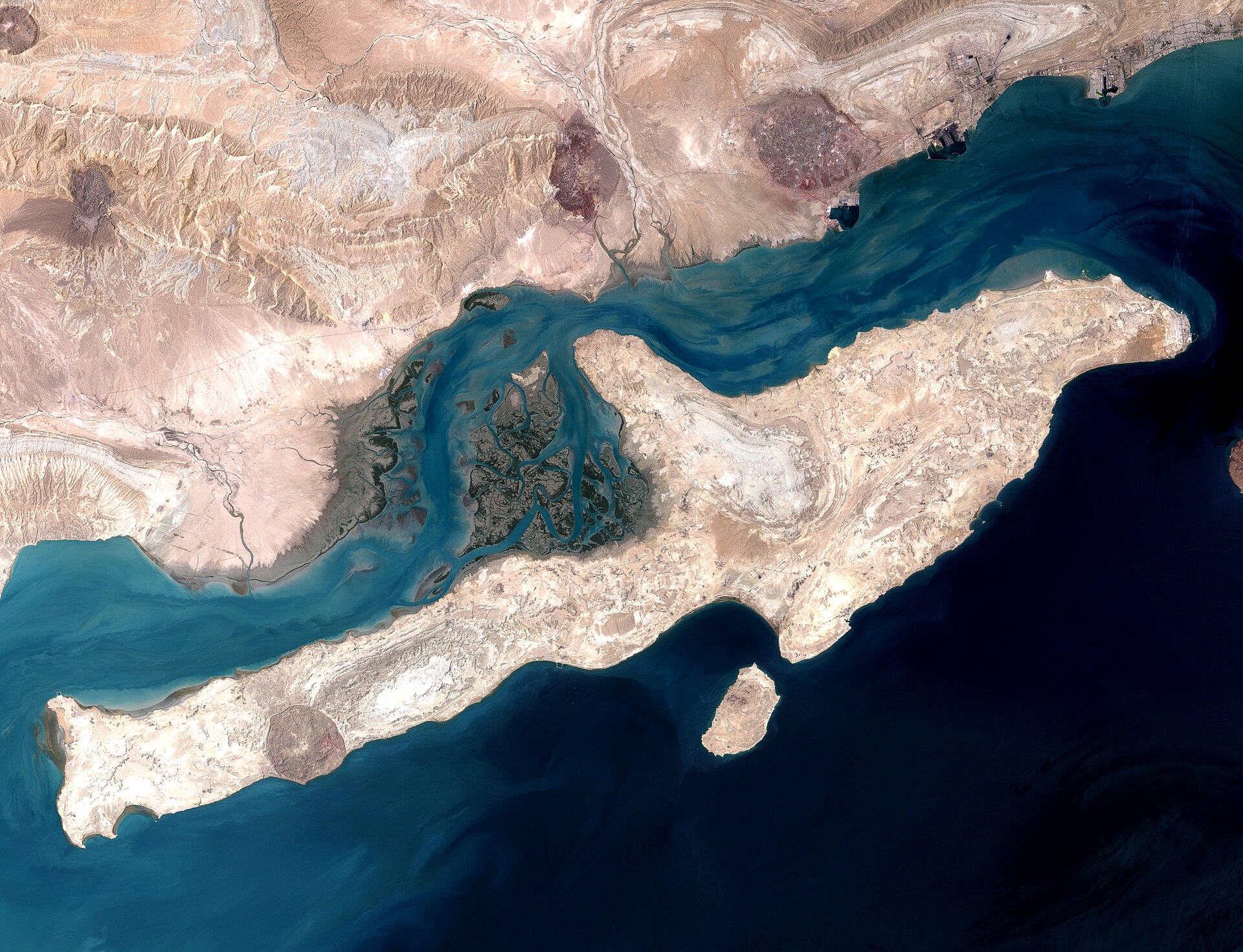
DUBAI — Iran’s Islamic Revolutionary Guard Corps fired on at least two vessels that had received prior IRGC clearance to transit the Strait of Hormuz on April 18, marking a shift from administrative denial to kinetic enforcement against ships the IRGC itself had authorized to pass. Three separate maritime incidents were recorded by the United Kingdom Maritime Trade Operations within hours of Iran reimposing restrictions on the strait, which Foreign Minister Abbas Araghchi had declared “fully open” less than 24 hours earlier.
The attacks struck as Asian commodity desks opened for trading on April 19 — early morning in Tokyo and Seoul, the two capitals most structurally exposed to a Hormuz closure. Brent crude, which had fallen below $90 per barrel on the back of Araghchi’s April 17 opening announcement, rebounded toward $94–96 on the reimposition and the confirmed kinetic incidents, according to CNBC and Fortune pricing data.
Table of Contents
‘You Gave Me Clearance to Go’
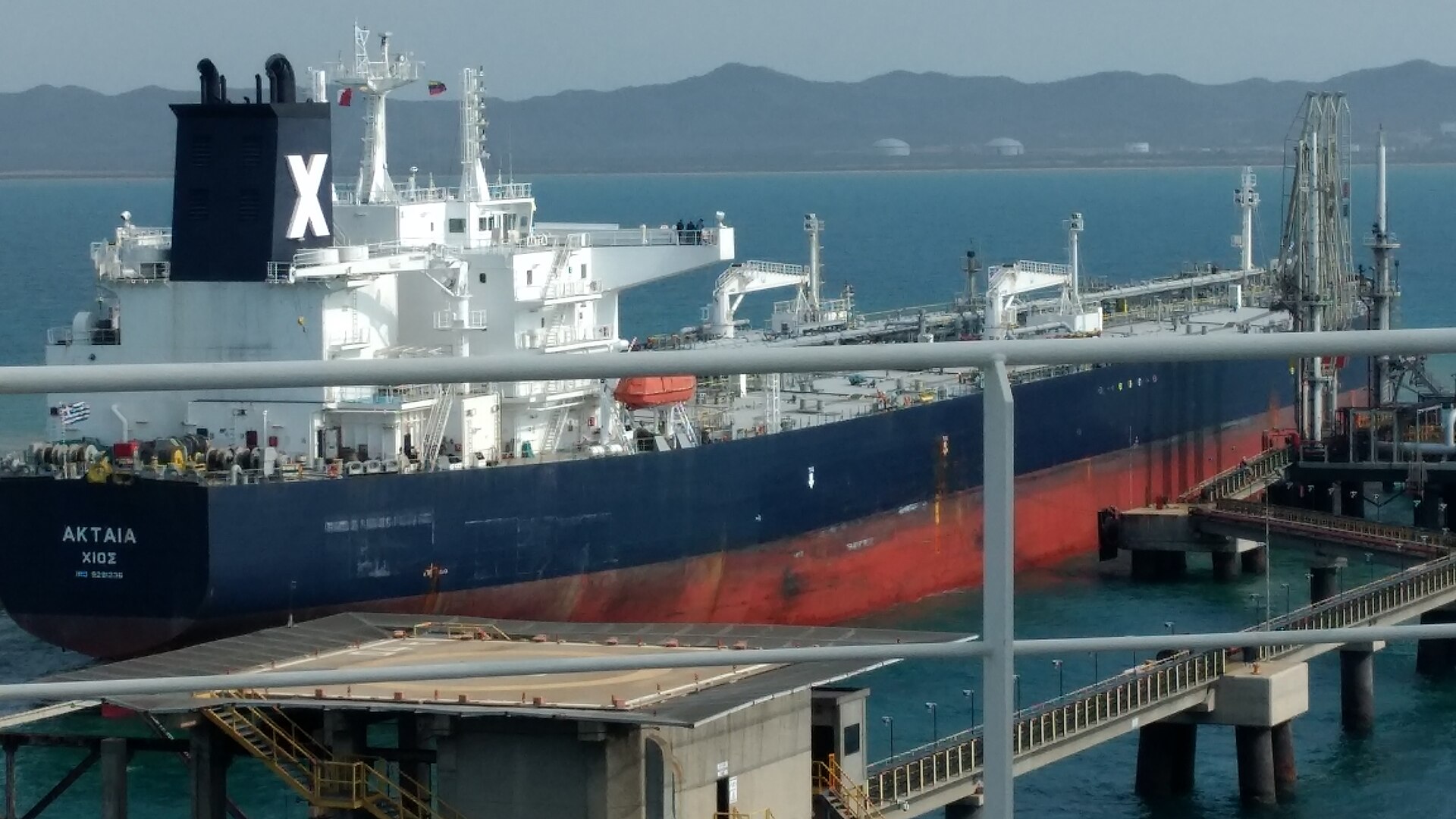
The Indian-flagged VLCC Sanmar Herald, carrying approximately two million barrels of Iraqi crude worth an estimated $188 million at prevailing Brent prices, was positioned roughly 20 nautical miles northeast of Oman when IRGC gunboats approached without issuing a VHF radio challenge, according to Iran International. Audio captured by TankerTrackers and published by The Tribune recorded a crew member radioing the IRGC boats: “You gave me clearance to go! You are firing now! Let me turn back!”
The vessel and crew were reported safe. A second Indian-flagged ship, the cargo vessel Jag Arnav, was also denied transit and fired upon after receiving advance IRGC authorization, according to The Tribune and India This Week. Neither vessel was operating in the “dark fleet” of sanctioned tankers that Martin Kelly of the EOS Risk Group told gCaptain had accounted for most recent Hormuz transits. These were commercial ships with Indian flag-state protection, carrying Iraqi — not Iranian — crude.
The operational shift from the Selen incident on March 24 — when a 6,800 dwt container feeder was turned back administratively as the first formal rejection under the IRGC’s self-declared authority — to the April 18 attacks on cleared vessels represents a different category of risk. An administrative rejection can be priced and routed around. Firing on a ship that believed it had legal passage cannot.
Three Incidents in Six Hours
UKMTO recorded three distinct incidents on April 18, all northeast of Oman. The Sanmar Herald gunboat attack and the Jag Arnav firing were two. The third involved a containership struck by an unknown projectile approximately 25 nautical miles northeast of Oman, catalogued as UKMTO Warning 038-26, according to gCaptain. The projectile damaged cargo containers but caused no fire, pollution, or casualties. That vessel was subsequently identified as the CMA CGM Everglade, a French-flagged 15,000-TEU containership — the first NATO-member-state-flagged vessel struck in the crisis, an escalation that invalidated France’s bilateral transit exemption and triggered Article 5 debate in Paris within hours.
The Middle East briefing 3,000+ readers start their day with.
One email. Every weekday morning. Free.
A separate report cited a cruise ship that observed a splash in close proximity three nautical miles east of Oman, according to Capital FM. Whether this constituted a warning shot or a near-miss from a separate engagement remains unclear from available reporting.
The three incidents occurred after the IRGC reversed Araghchi’s April 17 declaration that Hormuz was “completely open.” An Iranian military statement said the strait had “returned to its previous state” with restrictions on vessel passage, citing the US refusal to lift its blockade of Iranian ports, according to Al Jazeera and CNN. CENTCOM’s blockade, effective April 13, has turned back 23 ships from Iranian ports, according to US military statements.
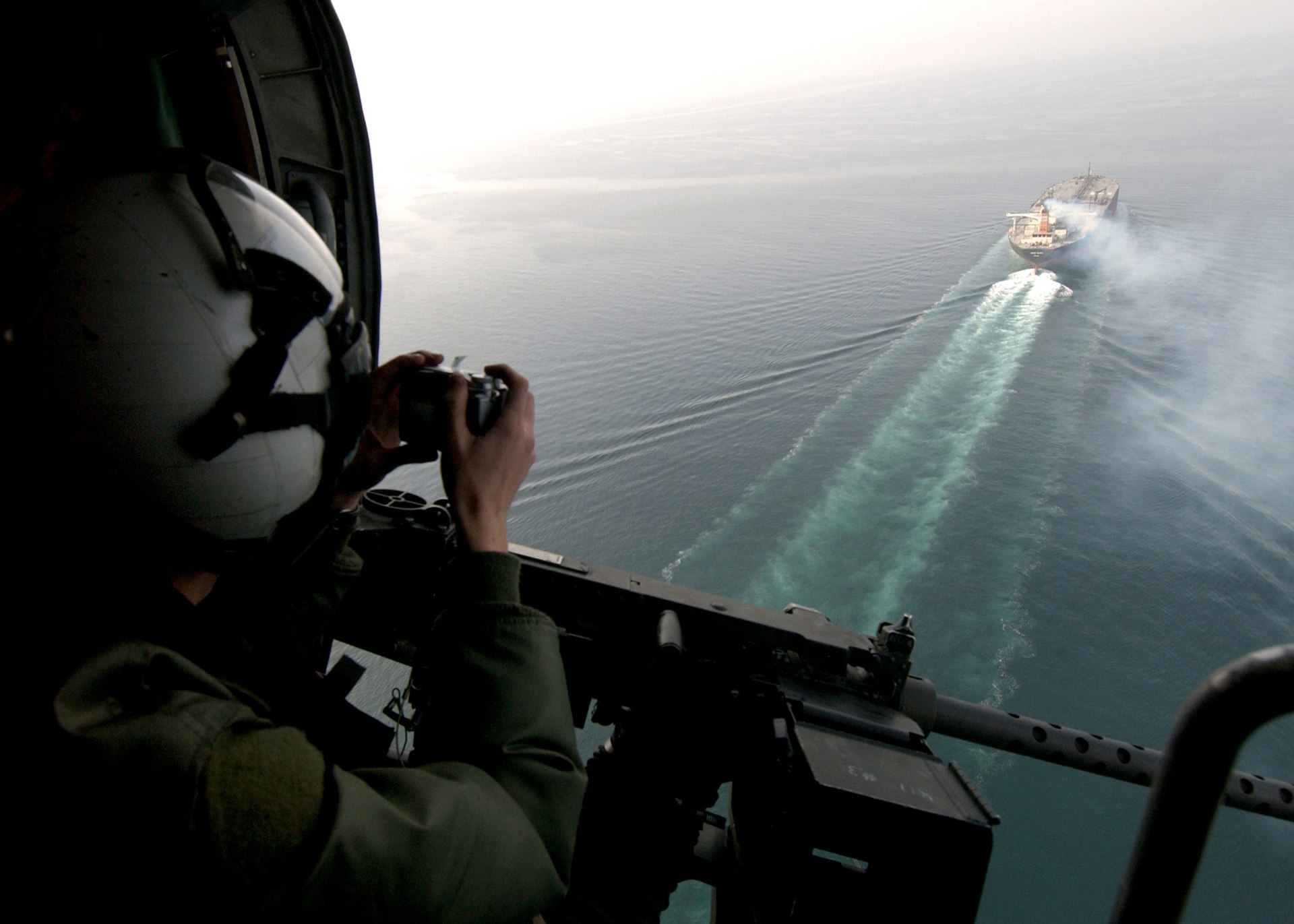
CENTCOM released images of AH-64 Apache helicopters patrolling the strait on April 18, with a statement that US Army soldiers were “flying in and around the strait providing a visible presence in support of freedom of navigation,” according to The Aviationist. The show-of-force imagery arrived hours after the IRGC attacks — presence, not interdiction.
The A-10C and Apache deployment is part of Operation Epic Fury, which has turned back 23 vessels bound for Iranian ports since April 13. The decision to fly the A-10 — the loudest and most visible aircraft in the US inventory — at low altitude over the strait was a deliberate legibility signal. That signal’s failure at the small-unit level is examined in CENTCOM Deploys A-10 Warthogs and Apaches Over Hormuz, Turns Back 23 Vessels Before Ceasefire Expiry.
India’s Diplomatic Response
India summoned Iranian Ambassador Mohammad Fathali to the Ministry of External Affairs on April 18. Foreign Secretary Vikram Misri conveyed India’s protest “in the strongest terms” and demanded Iran facilitate the passage of India-bound vessels across the strait, according to The Wire and The Tribune. Fathali undertook to convey India’s views to Tehran — diplomatic language that commits to nothing beyond transmission.
The Sanmar Herald was carrying Iraqi crude, not Iranian. India’s recent re-engagement with Iranian oil under the now-expired OFAC General License U involved separate vessels and routing. The attack on an Indian VLCC carrying a third country’s cargo through waters the IRGC itself had cleared tested a different relationship: not India as an Iranian oil buyer, but India as a flag state whose vessels transit the strait regardless of origin cargo. Indian refiners settled recent Iranian crude purchases in yuan via ICICI Bank’s Shanghai branch, according to Reuters reporting cited in prior coverage. The diplomatic channel that facilitated those purchases was now being used to protest an attack on a non-Iranian cargo.
The Timing and Asian Exposure
The April 18 attacks occurred in the evening hours in the Gulf, which corresponds to early morning April 19 in Tokyo and Seoul. Asian commodity desks opened to confirmed kinetic incidents against commercial vessels in the strait through which 20 percent of globally traded oil passes.
Japan receives 94.2 percent of its crude imports from the Middle East, with 70 percent of that volume transiting Hormuz, according to Japanese government energy data. Japanese refinery utilization had already fallen to 67.7 percent of capacity before the April 18 attacks. Tokyo has drawn down 80 million barrels from strategic petroleum reserves — the largest such drawdown since 1978, when the Iranian Revolution disrupted supply. South Korea’s 1.7 million barrels per day of crude supply is directly affected by Hormuz closures. Seoul imposed fuel price caps for the first time in three decades and secured 110 million barrels of alternative supply for April and May from 17 countries via non-Hormuz routes, according to South Korean government statements.
China accounts for 37.7 percent of all Hormuz crude flows, making it the single largest destination nation. But Beijing has demonstrated a capacity to negotiate bilateral transit arrangements with Tehran that Tokyo and Seoul have not. The Al Daayen, a Qatari LNG carrier, completed a laden transit to China in early April under what appeared to be Chinese-intermediated clearance. Japan and South Korea have no equivalent channel.
Both countries declined the Trump administration’s request to contribute naval assets to a multilateral Hormuz escort force, as did Germany, Spain, Italy, Estonia, the UK, and Australia. The refusal left Asian buyers structurally exposed: dependent on a waterway they cannot secure, buying from a region they cannot bypass, and now watching ships that received IRGC clearance get fired upon anyway.
Lloyd’s List reported war risk premiums for VLCCs with US-charter links at $10–14 million per transit, with standard vessels paying 1.5–3 percent of hull value — up from 0.125–0.2 percent before the crisis. The insurance market had already begun enforcing the closure before the April 18 kinetic confirmation. Goldman Sachs projected that another month of Hormuz closure would keep Brent above $100 throughout 2026, according to OilPrice.com.
Eighteen Attacks in Fifty Days
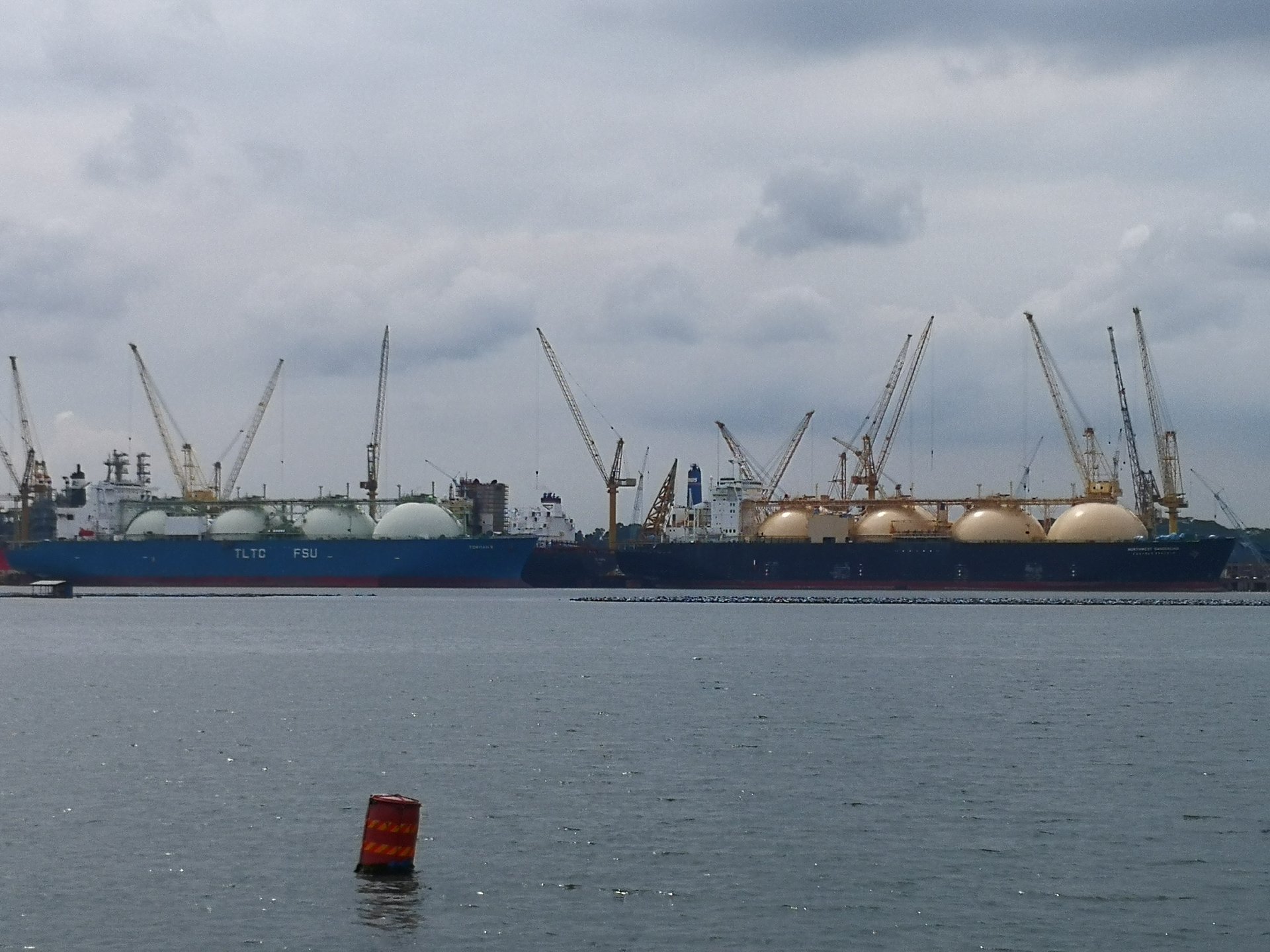
The UKMTO tally as of mid-April stood at 30 reported incidents and 18 confirmed attacks since late February, according to data compiled by Lloyd’s List from UKMTO filings. That pace — roughly one confirmed attack every 2.8 days — is running at an annualized rate comparable to the peak years of the 1984–1988 Tanker War, during which Iraq carried out 283 attacks and Iran 168 over approximately four years.
The comparison has a structural limit. During the original Tanker War, the US mounted Operation Earnest Will in 1987–88, reflagging Kuwaiti tankers under the American flag and escorting them through the strait with US Navy warships. No equivalent convoy escort program exists in 2026. CENTCOM’s Apache patrols project presence but do not provide point defense for commercial transits. Clarksons data reported by Lloyd’s List showed strait transits running at 95 percent below pre-conflict levels — approximately four ships per day against a baseline of 125.
The April 18 attacks added a new variable to the routing calculus. Prior to April 18, a shipowner could assess risk along a spectrum: administrative rejection (the Selen precedent), dark-fleet tolerance (sanctioned vessels transiting under opaque arrangements), or outright avoidance. After April 18, the spectrum collapsed. A vessel that obtained IRGC clearance and attempted transit was fired upon. The clearance itself became unreliable as a risk-mitigation instrument.
White House press secretary Karoline Leavitt told CBS News on April 18 that conversations with Iran remained “productive and ongoing” — a statement issued while the attacks were occurring. The ceasefire between the US and Iran expires on April 22, three days from the time of the attacks. Iran cancelled the April 20 Islamabad round of negotiations on the same day the IRGC fired on the Sanmar Herald.
The following day, April 19, the US escalated from turning back vessels to seizing one: USS Spruance fired on and boarded the Iranian-flagged TOUSKA in the Gulf of Oman, the first physical capture of an Iranian ship under the blockade. Iran’s response closed Hormuz entirely and rejected further talks.
The IRGC’s Stated Doctrine
IRGC Advisor Brigadier General Sardar Ebrahim Jabbari posted on the IRGC’s Telegram channel on April 18, according to Clash Report and ConflictLive:
“Strait of Hormuz is closed. Anyone who wants to pass, our self-sacrificing heroes in the IRGC Navy and the Army will set those ships on fire. Don’t come to this region.”
— Brigadier General Sardar Ebrahim Jabbari, IRGC Advisor, April 18
In the same post, Jabbari predicted oil prices would “reach $200 in the coming days.” The IRGC Aerospace Force commander issued a separate statement warning of the enemy’s “false narratives” on Hormuz and declaring that the force “remains distrustful of the enemy, with its finger on the trigger and in full readiness to defend Iran,” according to PressTV. Tasnim News Agency’s standing directive from April 12 — “Approaching the Strait of Hormuz will be considered cooperation with the enemy, and any violating vessel will be targeted” — remained operative as doctrinal framing.
PressTV reported on April 17 that the IRGC had “locked 16 cruise missiles on US warships in Strait of Hormuz before they retreated” — a claim designed to signal that the IRGC possesses targeting solutions on the US destroyers present in the strait. CENTCOM’s DDG-121 and DDG-112 had transited the strait on April 11, drawing an IRGC “last warning” radio call, to which the US responded that it was conducting “passage in accordance with international law.”
Parliament Speaker Mohammad Bagher Ghalibaf, himself a former IRGC Aerospace Force commander (1997–2000), told PressTV on April 17 that “social media don’t govern Strait of Hormuz” — a direct reference to Araghchi’s tweet declaring Hormuz open. The pattern has repeated across the crisis: the foreign ministry issues a diplomatic signal, the IRGC overrides it operationally, and IRGC-aligned politicians validate the override publicly. The April 17–18 reversal followed the same sequence. A detailed examination of why these two IRGC command loops cannot be synchronised — administrative clearance versus tactical patrol — is in The Sanmar Herald Audio and the Two Command Loops Inside Iran’s IRGC.
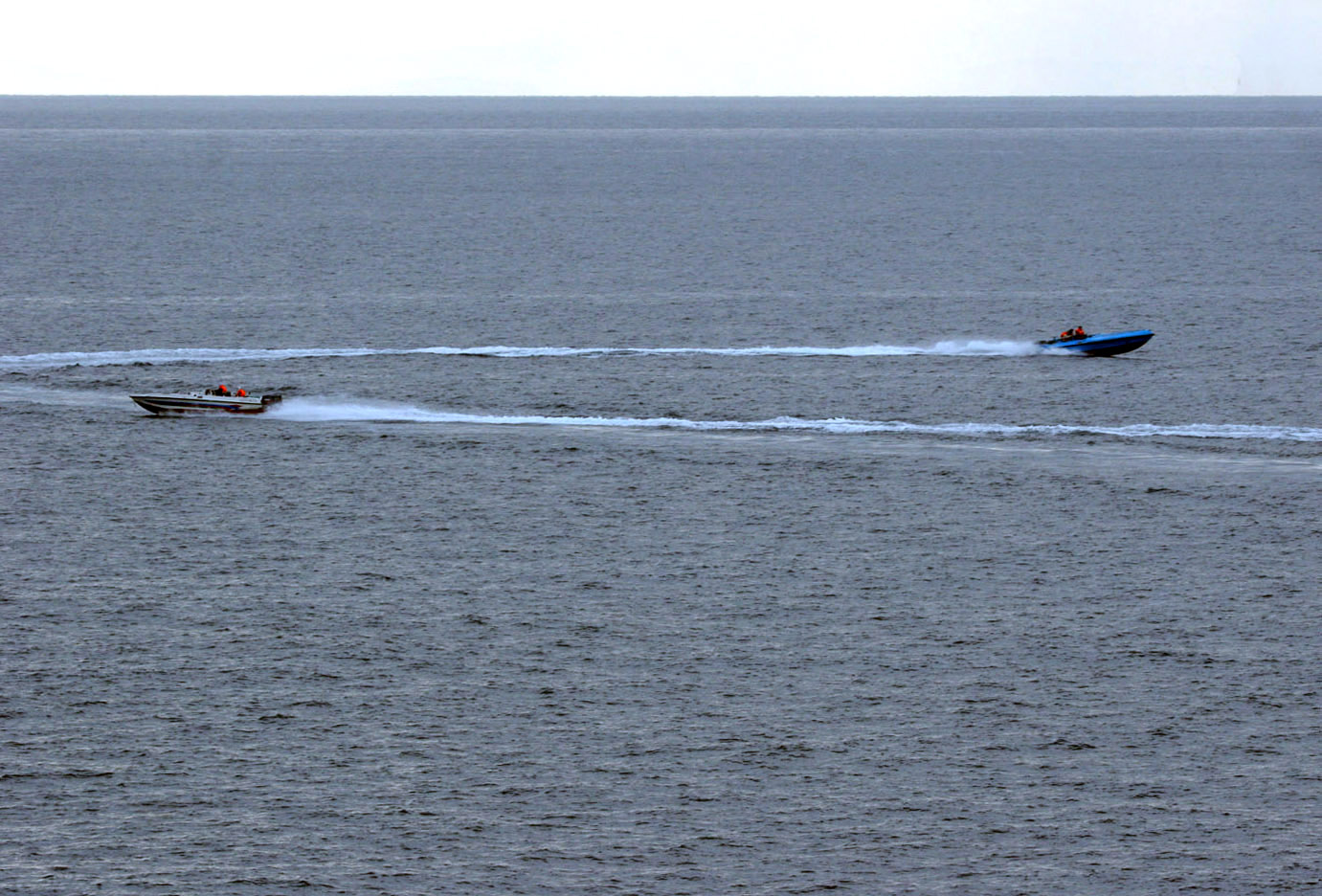
Iranian state media framed the closure as a direct response to the CENTCOM blockade, which Tehran characterizes as “acts of piracy and maritime theft.” The IRGC presented the ship attacks not as aggression but as enforcement of what PressTV and Tasnim described as a “new maritime regime” requiring IRGC authorization for all transit. The Sanmar Herald audio — a crew protesting that it had received that authorization and was being fired upon anyway — was distributed by TankerTrackers and published by The Tribune on April 18.
The 72 hours between April 18 and the ceasefire expiry on April 22 represent the period in which every Asian-bound cargo currently at sea or loading in Gulf ports must decide whether to attempt transit, divert around the Cape of Good Hope (adding 10–14 days and corresponding fuel and insurance costs), or anchor and wait. The Sanmar Herald received IRGC clearance and was fired upon regardless. The cancellation of the April 20 Islamabad round removed the nearest available diplomatic circuit for resolving the question before the expiry window closes.
The Sanmar Herald incident, taken alongside the April 18 no-movement order covering the entire Persian Gulf and Sea of Oman, represents a shift from chokepoint enforcement to basin-wide targeting — a distinction with material implications for the 826 vessels anchored inside the declared zone. The April 19 market mispricing analysis examines why Brent at 1.71 underprices the basin risk the Sanmar Herald demonstrated in practice.
FAQ
What is UKMTO Warning 038-26?
UKMTO Warning 038-26 is the advisory issued by the United Kingdom Maritime Trade Operations on April 18, 2026, covering the containership struck by an unknown projectile 25 nautical miles northeast of Oman. It is the latest in a sequence of 30 advisories that began with UKMTO Advisory 003-26 on February 28, when the conflict began. UKMTO operates as the primary maritime reporting authority for the region, maintained by the Royal Navy from its operations center in Dubai.
How do current war risk premiums compare to the 1980s Tanker War?
During the 1984–1988 Tanker War, war risk premiums peaked at approximately 1–2 percent of hull value for transiting the Persian Gulf. Current premiums for VLCCs with US-charter connections stand at $10–14 million per transit, with standard vessels paying 1.5–3 percent of hull value, according to Lloyd’s List — the upper end of which exceeds the Tanker War peak. Pre-crisis premiums were 0.125–0.2 percent. The difference reflects the absence of any equivalent to Operation Earnest Will’s reflagging and escort program.
What alternative routes exist for Asian crude buyers?
The primary alternative is the Cape of Good Hope routing, which adds 10–14 days to the voyage from the Persian Gulf to East Asian ports and increases fuel costs by approximately $1–2 million per VLCC transit. Saudi Arabia’s East-West Pipeline to Yanbu on the Red Sea provides a partial bypass, though its effective loading capacity of 4–5.9 million barrels per day falls short of pre-war Hormuz throughput of 7–7.5 million bpd. South Korea has secured 110 million barrels from 17 non-Hormuz-route countries for April–May delivery. Japan’s 80-million-barrel strategic reserve drawdown is the largest since 1978.
Has any country agreed to provide naval escort for commercial transits?
No. The Trump administration requested military escort contributions from Germany, Spain, Italy, Estonia, the UK, Australia, South Korea, and Japan. All declined. CENTCOM is conducting show-of-force patrols with AH-64 Apache helicopters and maintains destroyer presence in the strait, but is not operating a convoy escort system for commercial vessels. The four Avenger-class mine countermeasures ships previously based in Bahrain were decommissioned in September 2025, removing dedicated mine-clearing capacity from the theater.