
RIYADH — Donald Trump told CBS News on May 21 that he was “an hour away” from ordering fresh strikes on Iran on Monday night, and that Mohammed bin Salman, the Emir of Qatar, and the UAE’s Mohammed bin Zayed personally called to stop him — and in doing so, the American president eliminated the strategic ambiguity that had kept Saudi Arabia in a lower Iranian targeting bracket since the war began eighty-four days ago. Within hours of Trump’s disclosure, the IRGC issued a formal threat that any resumed aggression would “spread beyond the region,” with strikes from “places you cannot imagine.” Those two statements, read together, constitute the single most dangerous sequence for Saudi security since the March 27 attack on Prince Sultan Air Base that killed an American soldier and destroyed a $270 million AWACS aircraft on the tarmac.
Saudi Arabia had spent months constructing a precise triangulation: host American forces at PSAB for their deterrent value, ban their offensive use against Iran to maintain distance from the strike campaign, and hope Tehran noticed the distinction. Trump, by publicly crediting MBS for restraining the United States, collapsed the second leg of that architecture on live television. The IRGC’s “beyond the region” statement — issued the same day Vahidi met Pakistan’s Naqvi in Tehran, and escalated one deliberate notch above the standing “across the region” threat posture — was Tehran’s formal acknowledgement that it had noticed.
Table of Contents
- What Trump Said on CBS — and What It Disclosed
- What Does the IRGC’s “Beyond the Region” Threat Mean?
- The Triangulation MBS Built — and How It Worked
- How Did Iran Calibrate Its Targeting of Saudi Arabia Before May 20?
- PSAB on March 27: The Attack That Already Happened
- The Naqvi-Vahidi Meeting and the Dual-Track Signal
- Does the Hajj Calendar Protect Saudi Arabia — or Constrain It?
- The Gulf Fissures Iran Wanted
- What Changes in the Saudi Threat Envelope
- FAQ
What Trump Said on CBS — and What It Disclosed
The relevant passage from the CBS News interview, aired May 21, is worth parsing carefully because the damage it inflicts on Saudi positioning is structural, not rhetorical. Trump said he was “an hour away” from ordering new strikes on Iran on Monday evening — May 20 — and was held back after receiving calls from the leaders of Qatar, Saudi Arabia, and the UAE. He quoted them as saying: “Sir, could you give us a couple of more days? Because we think they’re being reasonable.” Bloomberg had already reported on May 19 that Gulf leaders urged delay, but Trump’s CBS appearance added three elements that the earlier reporting did not contain: the specific timeframe (“an hour away”), the named leaders (MBS, the Emir of Qatar, MBZ), and the direct attribution of the delay to their personal intervention.
A regional source told CNN on May 19 that the Gulf leaders’ request was “tied to the expectation Iran would retaliate against the Gulf nations if Trump resumed bombing, as Tehran did at the onset of the war.” That phrasing — “as Tehran did at the onset” — is the part that matters for Saudi Arabia. It confirms that the Gulf states themselves understood the causal chain: American strikes on Iran produce Iranian strikes on the Gulf. The leaders were not asking for diplomacy out of idealism; they were asking because they would absorb the retaliation, and they knew it, and now the world knew they knew it.
For MBS, the disclosure created a specific problem that no amount of back-channel clarification can repair. Saudi Arabia had formally banned US offensive operations from PSAB and closed its airspace to American strike assets — a move Riyadh could point to in any conversation with Tehran as evidence that the Kingdom was not enabling the campaign. That ban was the operational foundation of Saudi strategic ambiguity. Trump, by thanking MBS on camera for stopping the strikes, reframed Saudi Arabia from a reluctant host state into an active participant in American strike decisions — the precise characterization Riyadh had spent the entire war avoiding. Having closed the military option, Saudi Arabia then co-sponsored the diplomatic one — a UNSC resolution backed by 137 countries that it cannot vote on and has no fallback for if Russia and China veto again: Saudi Arabia’s UNSC co-sponsorship strategy and the veto trap it cannot escape.
What Does the IRGC’s “Beyond the Region” Threat Mean?
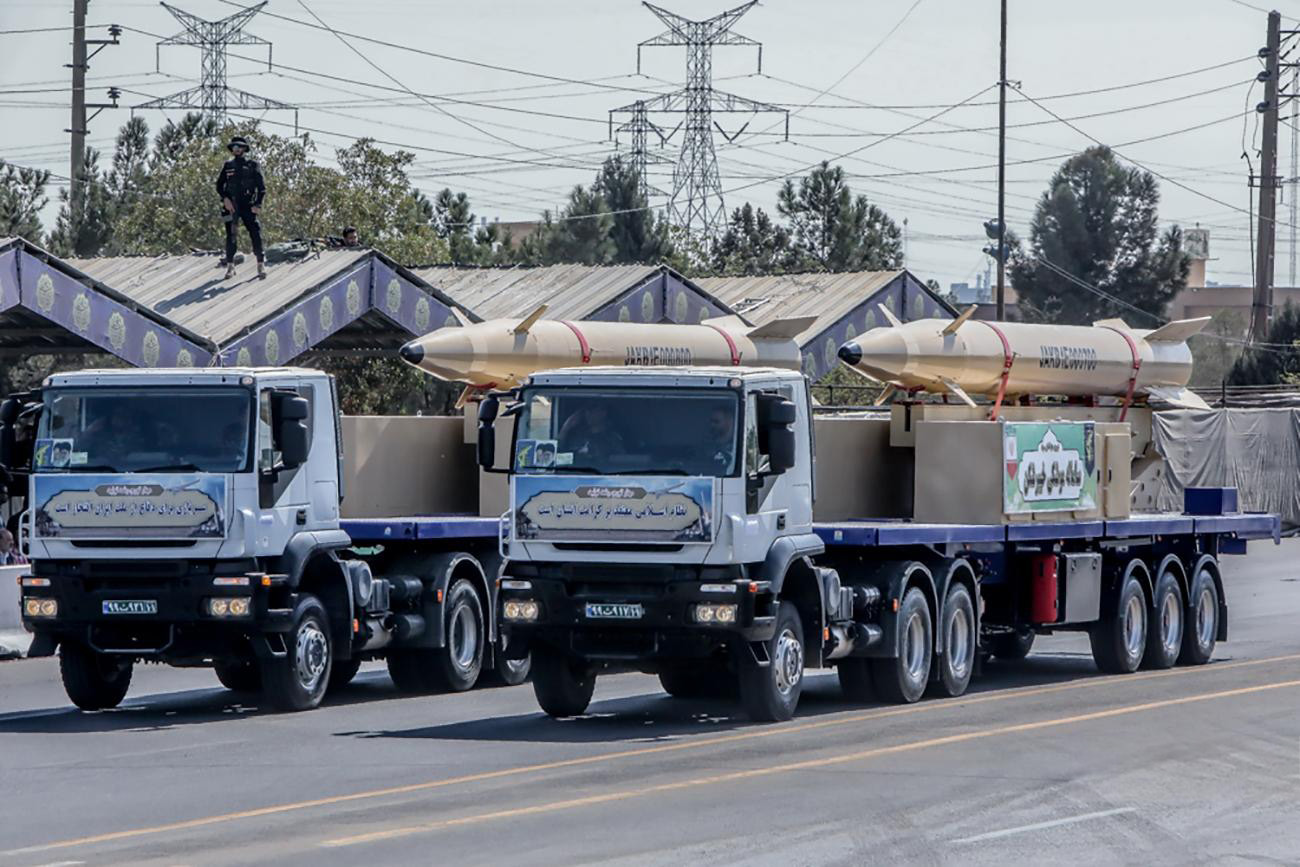
On May 20 — hours before Trump’s CBS appearance aired, but within the same operational cycle as the Bloomberg reporting that named Gulf leaders — the IRGC issued a statement warning that “if aggression against Iran is repeated, the regional war that had been promised will this time spread beyond the region.” Brigadier General Ahmad Vahidi, posting on X the same day, added that enemies would “receive crushing blows that will leave you devastated” delivered from “places you cannot imagine.” PressTV’s headline captured the intended register: “‘War beyond the region’: IRGC vows to ‘lay enemies in black dust’ if Iran faces new aggression.”
The Middle East briefing 3,000+ readers start their day with.
One email. Every weekday morning. Free.
The escalatory grammar here is precise and intentional. The IRGC’s standing threat posture — articulated multiple times since late February — designated “all military bases and interests of criminal America and the fake Zionist regime on land, at sea, and in the air across the region” as primary targets. That formulation covered PSAB, Al Udeid, Al Dhafra, the Fifth Fleet headquarters in Bahrain, and other US installations across the Gulf. The May 20 statement’s shift from “across the region” to “beyond the region” is a single-word upgrade that Tehran’s adversaries are meant to read as a one-notch escalation in the published threat hierarchy. The IRGC does not change its declaratory posture casually.
Three operational layers sit behind the language. Direct IRGC action — ballistic missiles and drones — has already been demonstrated against Saudi territory through hundreds of strikes in March alone. The proxy architecture, including Hezbollah under direct IRGC officer command and PMF units that have launched drones at Saudi Arabia, Bahrain, and Kuwait, extends Iranian reach without direct attribution. And the IRGC’s broader posture now includes the Hormuz toll regime, which gives Tehran institutional weight over Gulf economies independent of any kinetic threat. Earlier in the conflict, the IRGC specifically warned that “electricity-generation facilities and desalination plants in regional countries could be targeted if Iran’s own critical infrastructure were attacked” — a threat that, with 860,000 foreign pilgrims currently inside Saudi Arabia for Hajj, takes on a different operational weight than it carried in March.
The Triangulation MBS Built — and How It Worked
Since the war’s first hours, Saudi Arabia operated a three-sided position that required all three sides to hold simultaneously. Side one: maintain the American military presence at Prince Sultan Air Base, where 2,000 to 3,000 US soldiers, missile defence batteries, and — at peak — 13 KC-135 tankers provided a deterrent umbrella that no Saudi acquisition programme could replicate on its own timeline. Side two: ban US offensive operations from Saudi soil and airspace, giving Riyadh a defensible answer when Tehran asked why American strike aircraft were parked ninety minutes’ flying time from the Iranian border. Side three: stay out of the public narrative entirely, letting Washington and Tehran negotiate without Saudi Arabia appearing as either ally or obstacle.
The architecture drew on lessons that post-date the 2019 Abqaiq attack, when Iran-attributed drones and cruise missiles knocked out half of Saudi Aramco’s processing capacity — roughly 5% of global daily oil production — and Washington’s response was a press conference. That episode hardened a doctrine in Riyadh: American security guarantees have structural limits, strategic restraint toward Iran carries less downside risk than confrontation, and the single worst outcome is being visibly in the middle when American and Iranian ordnance is in the air. The triangulation was MBS’s operational expression of that doctrine, and for nearly three months it produced measurable results in Iranian targeting behaviour.
What made the triangulation work was its ambiguity — not dishonesty, but a deliberate maintenance of interpretive space. Tehran could choose to read the PSAB ban as genuine Saudi opposition to the US campaign. Washington could read the continued base access as alliance solidarity. Neither reading was entirely wrong. The problem with Trump’s CBS disclosure is that it collapsed both readings into a single, public, attributed narrative: Saudi Arabia stopped the strikes. That framing made MBS not an ambiguous host but a named decision-maker in American military operations, and it arrived at the one moment when the IRGC was already ratcheting its threat posture upward.
How Did Iran Calibrate Its Targeting of Saudi Arabia Before May 20?
The data on Iranian targeting through the war’s first phase tells a story of deliberate restraint toward Saudi Arabia relative to the UAE — a calibration that appears to have been purchased, at least in part, by the triangulation Riyadh constructed. In the first 48 hours after February 28, Iran launched more than 150 missiles and 500 drones at the UAE, striking Al Dhafra Air Base, aluminium smelting facilities, and multiple Emirati ports. Saudi Arabia, by contrast, received two attacks in the same window. The disparity is too large to be accidental and too consistent with known IRGC targeting doctrine to be coincidental.
Through March, total Iranian strikes on Saudi territory accumulated to at least 38 missiles and 435 drones, killing three civilians and injuring 29. Those numbers are not trivial — but set against the scale of what the UAE absorbed, and against the IRGC’s demonstrated capacity, they reflect a deliberate decision to keep Saudi Arabia in a lower targeting bracket. The IRGC explicitly threatened US facilities in the UAE and claimed attacks on Aramco-Dow and ExxonMobil joint ventures — a pattern that treated corporate-American infrastructure in the Emirates as fair game while treating Saudi sovereign territory with comparative restraint.
The Soufan Center confirmed on May 14 that “Iran’s core strategy to divide and neutralize the U.S. allies on the other side of the Persian Gulf has registered significant successes,” with the war widening “longstanding differences among the Arab Gulf states rather than unifying them.” That assessment, issued six days before Trump’s CBS interview, described a strategy that was working precisely because of the differential treatment. Saudi Arabia’s restraint was being rewarded with Iranian restraint. The UAE’s closer operational alignment with Washington was being punished with disproportionate targeting. The incentive structure was legible, and every Gulf capital could read it. Trump’s public naming disrupted that incentive structure by putting Saudi Arabia’s name on the same line as the strike decision itself.
PSAB on March 27: The Attack That Already Happened
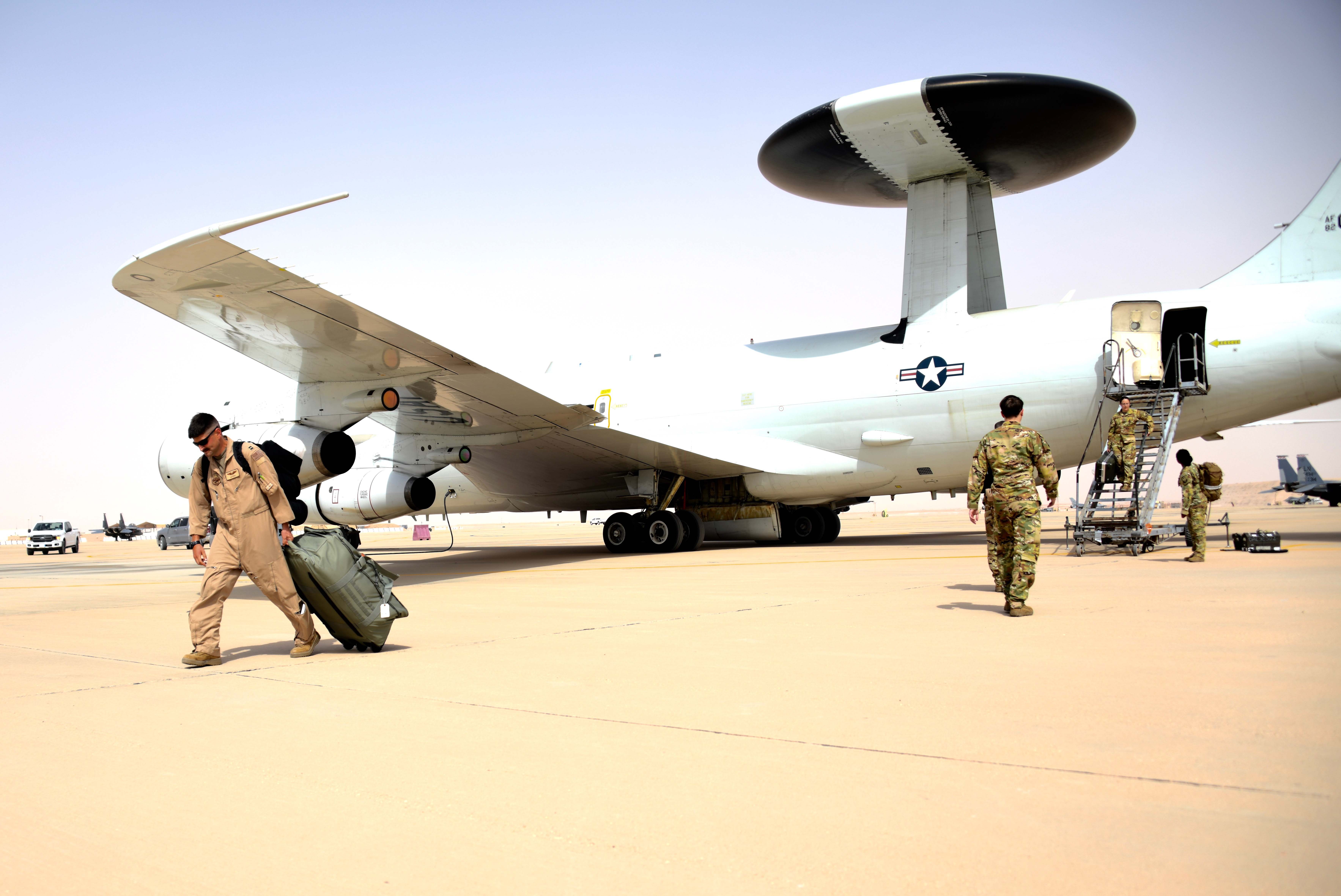
Prince Sultan Air Base has already been struck, and struck hard. On March 27, Iran fired six ballistic missiles and 29 drones at PSAB. The attack injured at least 15 US troops, five of them seriously. A 26-year-old American soldier from Kentucky later died from wounds sustained in the strike. One E-3G Sentry AWACS — an aircraft the US Air Force values at roughly $270 million and has no replacement production line for — was destroyed on the ground. Multiple KC-135 Stratotankers, the aerial refuelling fleet that extends the combat radius of every American fighter in the theatre, sustained damage.
The March 27 strike demonstrated that Iran could reach PSAB with enough precision and mass to kill Americans and destroy irreplaceable military hardware. Chinese satellite imagery that had exposed 13 KC-135 tankers and AWACS aircraft at the base provided Iran with a targeting picture that required no intelligence breakthrough — commercial satellites had done the work. The garrison, concentrated in a facility whose coordinates have been public for two decades, presented what military planners would call a high-value, low-complexity target set.
But the March 27 attack, for all its severity, was still aimed at the American presence on Saudi soil rather than at Saudi Arabia as a sovereign actor. The distinction is the kind that sounds academic until it determines whether Tehran targets a US barracks or a Saudi desalination plant. The IRGC’s May 20 “beyond the region” statement, arriving after Trump publicly identified MBS as the person who stopped American strikes, shifts the targeting logic from “American assets that happen to be in Saudi Arabia” toward “Saudi Arabia as a state that shapes American military decisions.” That is a different category of threat, and one that the March 27 precedent does not adequately bound.
The Naqvi-Vahidi Meeting and the Dual-Track Signal
Pakistan Interior Minister Mohsin Naqvi arrived in Tehran on May 19 for his second visit in less than a week, meeting IRGC Commander Vahidi on the same operational day — May 20 — that the IRGC published its “beyond the region” threat. The meetings focused on reviving the stalled US-Iran talks that collapsed in Islamabad on April 12 after 21 hours of negotiation between teams led by Vice President Vance and Iranian Speaker Ghalibaf produced no agreement. Pakistan’s Army Chief, Field Marshal Asim Munir, was scheduled to arrive in Tehran on May 21 — the highest-level Pakistani military contact with Iran since the April 8 ceasefire.
PressTV’s framing of the day’s events is instructive. Its summary headline read: “Iran warns against any new aggression as Pakistan ramps up diplomacy to end the war.” Iranian state media presented the IRGC threat and Naqvi’s diplomatic mission as two components of a single message rather than as contradictions — the threat establishing the cost of failure, the diplomacy offering an alternative to paying it. Vahidi met the mediator and published the threat on the same day because the IRGC wanted those two signals read as a pair.
For Saudi Arabia, the Naqvi-Vahidi meeting compounds the damage from Trump’s disclosure because it demonstrates that Iran maintains a diplomatic channel (through Pakistan) in which Saudi Arabia has no direct presence while simultaneously escalating threats against states Trump just named as his interlocutors. Riyadh’s absence from the Oman-Iran Hormuz governance mechanism is now mirrored by its absence from the Pakistan-Iran mediation channel. MBS can call Trump and ask him to stand down, but that phone call is now public knowledge, and the one channel where the war’s diplomatic future is being shaped runs through Islamabad and Tehran — cities where Saudi Arabia is a subject of discussion rather than a participant in it.
Does the Hajj Calendar Protect Saudi Arabia — or Constrain It?
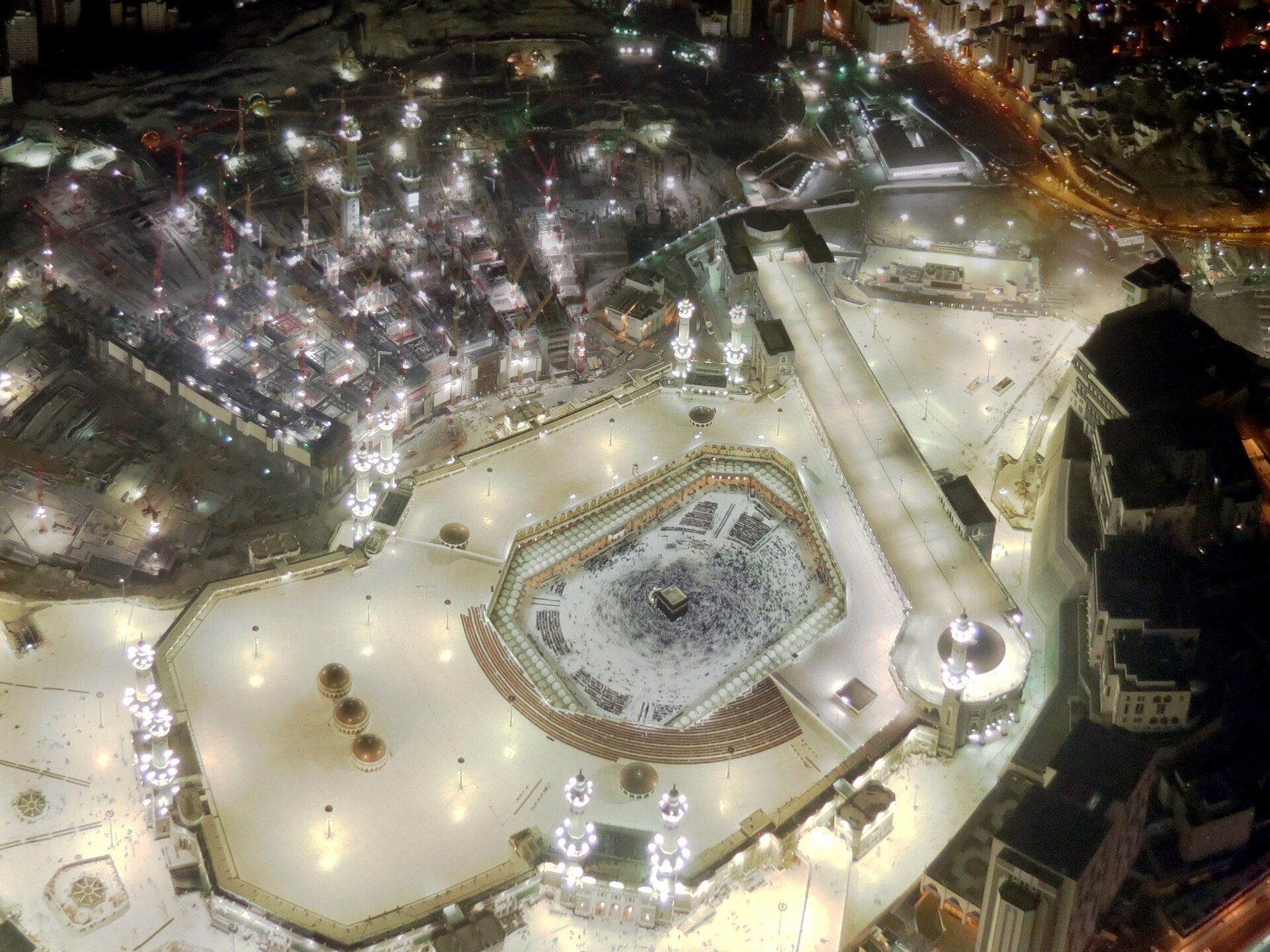
The Day of Arafah falls on May 26, five days from the date of Trump’s CBS disclosure. Eid al-Adha follows on May 27, with pilgrim observances continuing through May 31. More than 860,000 foreign pilgrims are already inside Saudi Arabia; at peak, the number of people in and around Mecca will reach two to three million. Saudia, the national carrier, has mobilised 160 aircraft and over one million seats dedicated to Hajj transport alone. The CNN regional source noted that Gulf leaders cited the Hajj season specifically when asking Trump to delay strikes — a reference that assumes Iran would refrain from attacking Saudi Arabia during Islam’s most sacred period.
That assumption is more complicated than it first appears. Iran has 30,000 nationals among the Hajj pilgrims — a number that creates a deterrence inversion documented in earlier HOS analysis. Tehran cannot strike Saudi civilian infrastructure during Hajj without risking its own citizens, which provides Riyadh with a narrow window of structural protection. But the window is exactly that — narrow, running from approximately now through the end of May. Once the pilgrims depart, the constraint lifts. The IRGC’s “beyond the region” statement, issued five days before the Day of Arafah, can be read as setting the terms for what happens after the Hajj window closes.
The Hajj clock also constrains Saudi options in a way that mirrors its protective function. MBS cannot escalate, cannot visibly tighten the PSAB ban, cannot make public diplomatic moves toward Iran, and cannot afford any disruption to Hajj operations while millions of Muslims are in transit. Every decision is frozen for ten days — and the IRGC, which has been fighting this war with an institutional patience that Western commentators consistently underestimate, knows exactly when that freeze expires. Chatham House noted in May that the war “has given Crown Prince Mohammed bin Salman pause for thought.” The Hajj calendar gives him no choice but pause, which is not the same thing as strategy.
The Gulf Fissures Iran Wanted
Trump named three leaders on CBS — MBS, the Emir of Qatar, and MBZ — but each sits in a fundamentally different position relative to Iran, and the act of naming them together as a unified restraining force papers over fractures that Iran has spent twelve weeks deliberately widening. The UAE, which absorbed the heaviest Iranian bombardment of any Gulf state in the war’s first 48 hours, exited OPEC and adopted what Chatham House described as a confrontation posture. Qatar, which hosts Al Udeid — the largest US air base in the Middle East — has maintained a separate back-channel with Tehran that predates the war. Saudi Arabia, the largest economy and the Hajj custodian, chose strategic restraint that is now publicly attributed to fear of retaliation rather than to diplomatic principle.
That Soufan Center verdict predates Trump’s CBS appearance — it described a strategy that was working in silence. The differential targeting — punishing the UAE, restraining against Saudi Arabia, largely sparing Qatar — was designed to make unified Gulf action impossible by creating different incentive structures for each state. The UK-GCC trade deal signed on May 20 treats the bloc as a coherent economic partner, but the six-member council contains states being struck by Iran at radically different rates, states maintaining separate diplomatic channels with Tehran, and states whose leaders have just been publicly identified by an American president as having personal influence over US military operations.
| Gulf State | Iranian Strikes (Feb-Mar 2026) | US Base Hosted | Public Iran Channel | Named by Trump (May 21) |
|---|---|---|---|---|
| Saudi Arabia | 38 missiles, 435 drones | PSAB (offensive use banned) | Indirect (via Pakistan) | Yes — MBS named |
| UAE | 150+ missiles, 500+ drones (first 48hrs alone) | Al Dhafra | Limited | Yes — MBZ named |
| Qatar | Targeted (Al Udeid struck) | Al Udeid | Direct back-channel | Yes — Emir named |
| Bahrain | 5th Fleet HQ struck Feb 28 | Naval Support Activity | None public | Not named |
| Kuwait | Ali Al Salem struck; PMF drones | Ali Al Salem, Arifjan | Limited | Not named |
The table exposes the asymmetry Trump’s disclosure created. Bahrain and Kuwait, which host major US installations and have been struck by Iran, were not named — leaving them in a different public category than the three leaders Trump credited. Iran can read the table as precisely as any analyst in Washington, and the IRGC’s targeting doctrine has consistently demonstrated sensitivity to exactly these political distinctions.
What Changes in the Saudi Threat Envelope
Before May 20, Iran’s targeting logic treated Saudi Arabia as a host state for American assets — a category that subjected PSAB and US personnel to risk while leaving Saudi sovereign infrastructure in a lower bracket. The March 27 PSAB strike fit this pattern: ballistic missiles aimed at American aircraft and American soldiers, not at Aramco facilities or water treatment plants. The IRGC’s earlier threats to target desalination plants and power generation facilities were conditional and generic, directed at “regional countries” rather than Saudi Arabia by name.
After May 20, the public record contains Trump identifying MBS as the individual who stopped American strikes on Iran. That framing, whether or not it accurately represents the decision-making chain, repositions Saudi Arabia from a state that passively hosts American forces to a state that actively governs American military decisions in the theatre. The IRGC’s “beyond the region” escalation, published the same day, introduces a threat category that encompasses Saudi civilian infrastructure, the Aramco production network (already operating with Khurais’s 300,000 barrels per day offline), and potentially the economic architecture — ports, desalination, power — that sustains Saudi Arabia’s 36 million residents and its Hajj operations.
“If aggression against Iran is repeated, the regional war that had been promised will this time spread beyond the region… you will receive crushing blows that will leave you devastated, from places you cannot imagine.”
Brigadier General Ahmad Vahidi, IRGC Commander, May 20, 2026
The Chatham House assessment that “despite getting struck repeatedly by Iranian missiles and drones, the Gulf Arab states have shown remarkable restraint in the war” includes a caveat worth reading precisely: the chances of reconsidering that restraint are low, “though they could increase should Iran escalate its attacks against critical infrastructure and civilian areas.” The IRGC’s May 20 statement, by explicitly extending its targeting posture beyond the region and beyond its prior declaratory limits, moves the threshold for that reconsideration closer without crossing it. It is a threat designed to be taken seriously enough to constrain behaviour but ambiguous enough to deny specific intent — the mirror image of the strategic ambiguity that Trump just stripped from Saudi Arabia.
The Abqaiq doctrine — the lesson Riyadh drew from 2019 that restraint toward Iran is preferable to confrontation — still governs Saudi decision-making. But Abqaiq was a doctrine built for a world where Saudi Arabia could choose restraint and have that choice remain private, or at least ambiguous. Trump put the choice on television. MBS asked Trump to stand down, and now owns a restraint that Iran no longer needs to reward with targeting forbearance, because the restraint has been publicly claimed as American strike prevention rather than Saudi-Iranian diplomatic management. May 26 through May 31 is the narrowest window available to anyone who wants to see this stay contained. After the pilgrims depart, the one structural constraint that even the IRGC cannot dismiss goes with them.
FAQ
Has the IRGC ever followed through on “beyond the region” threats before?
The May 20 formulation is new in this war’s threat escalation ladder — the IRGC’s prior standing posture covered “all military bases and interests across the region,” making the “beyond” prefix a deliberate upgrade. However, IRGC-linked entities have previously demonstrated global operational reach: the 1994 AMIA bombing in Buenos Aires, assassination plots in Europe, and cyber operations against US critical infrastructure attributed to IRGC-linked groups all fall within the “beyond the region” envelope. The Soufan Center has documented IRGC cyber capabilities that include threatened “dozens of devastating infrastructure attacks” against Western targets, suggesting the new language is backed by pre-existing operational architecture rather than aspirational posturing.
Could Saudi Arabia re-establish strategic ambiguity after Trump’s disclosure?
The structural problem is that ambiguity requires both parties — Saudi Arabia and Iran — to have incentives to maintain it. Before May 20, Iran benefited from treating Saudi restraint as genuine because it kept the Gulf divided and reduced the number of active fronts. After Trump publicly credited MBS with stopping strikes, Iran loses that incentive: rewarding Saudi “restraint” now means rewarding a state that demonstrably controls American military action, which the IRGC cannot accept without undermining its own deterrence posture. Riyadh could attempt private assurances through the Pakistan channel, but the public record cannot be un-said, and IRGC threat assessments are built on public positioning as much as private undertakings.
What is Pakistan’s role in the IRGC threat timeline?
Naqvi’s second Tehran visit in under a week — with Vahidi as his interlocutor — and Field Marshal Munir’s scheduled May 21 arrival constitute Pakistan’s most intensive Iran engagement since the April 8 ceasefire. Pakistan is simultaneously the mediator carrying the stalled MOU framework between Washington and Tehran (a 14-point document covering enrichment moratorium terms, sanctions architecture, and Hormuz transit normalisation) and a military power whose HQ-9 air defence deployment on April 11 — the same day as the Islamabad talks — demonstrated that its security relationship with China creates independent constraints on the US campaign. The Naqvi-Vahidi meeting occurring on the same day as the IRGC “beyond the region” threat means Pakistan’s mediation is being conducted under the explicit shadow of escalation, which Islamabad may view as a bargaining asset rather than an obstacle.
How exposed is Saudi critical infrastructure to Iranian strikes?
The IRGC’s earlier conditional threat to target “electricity-generation facilities and desalination plants” in Gulf states identifies the specific vulnerability. Saudi Arabia desalinates roughly 70% of its drinking water, and the major plants along the Gulf coast — Jubail, Ras Al-Khair, Shoaiba — are within demonstrated Iranian missile range. The Kingdom’s power grid, water supply, and Hajj infrastructure are interdependent systems: a sustained disruption to desalination during peak Hajj would create a humanitarian emergency involving millions of pilgrims in desert conditions with limited alternative water supply. The March 27 PSAB strike proved Iran can penetrate Saudi air defences with combined ballistic missile and drone packages, and the targeting of desalination would present a fundamentally different defensive challenge than protecting a single military installation.
Why did the IRGC issue the threat before Trump’s CBS interview aired?
The sequencing matters but not in the way that implies direct reaction. Bloomberg reported on May 19 that Gulf leaders, including MBS, had urged Trump to delay strikes — meaning the core disclosure (Saudi Arabia stopped the attack) was in the public domain before the IRGC’s May 20 statement. Trump’s CBS appearance added granular detail (the “hour away” timeframe, direct quotes, named leaders) but the strategic fact — that Gulf states intervened to prevent American strikes — was already circulating in regional intelligence and media channels when Vahidi met Naqvi and published his threat. The IRGC operates on intelligence cycles, not news cycles; the threat responded to the known fact of Gulf intervention, which Trump’s interview then confirmed with attribution that made the fact impossible for any party to walk back.