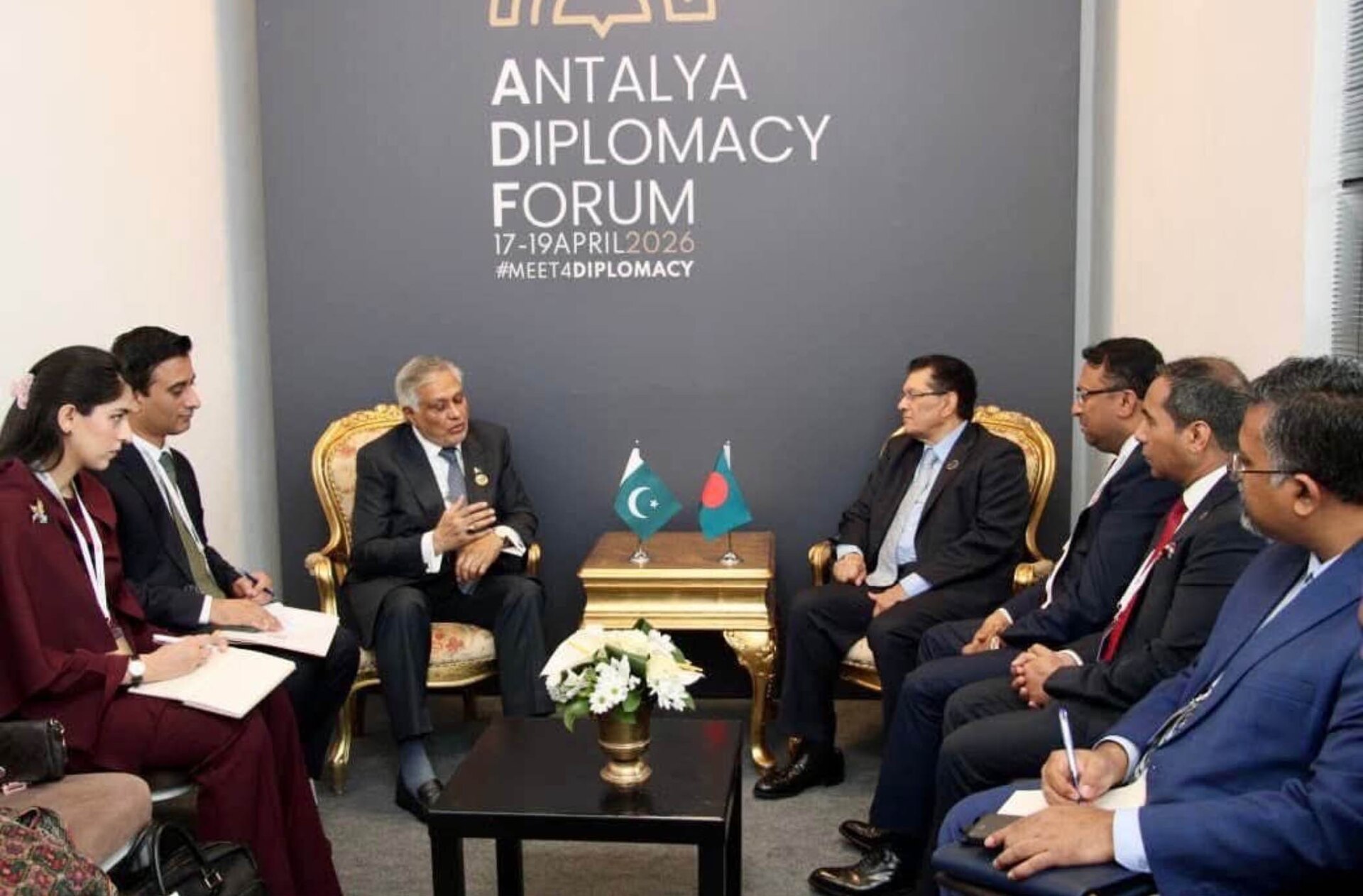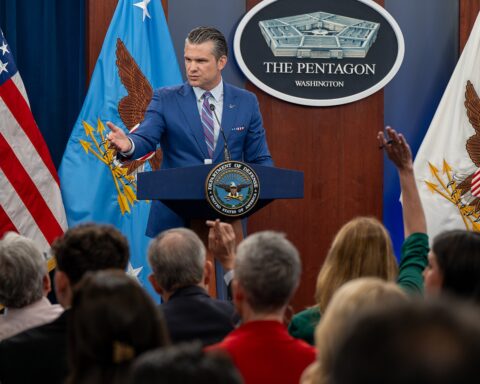

ISLAMABAD — Pakistan’s Interior Minister Mohsin Naqvi arrived in Tehran on May 20 for his second visit in seven days, carrying the latest US position in a shuttle diplomacy effort that has become the only channel between Washington and Tehran since the Islamabad talks collapsed on April 12 — ending the first direct US-Iran engagement in 47 years without agreement.
Thirty-nine days have passed since that collapse. In the gap, the Islamic Revolutionary Guard Corps has expanded its Strait of Hormuz transit-fee system into a regime with cryptocurrency and yuan payment rails, exemptions for five allied nations, and jurisdictional claims extending from Jask to Siri Island. Saudi Arabia — with a Q1 fiscal deficit of $33.5 billion already nearly double the full-year budget target — has no representative at either the US-Iran negotiating table or the emerging Iran-Oman Hormuz governance framework.
Table of Contents
What Collapsed at Islamabad?
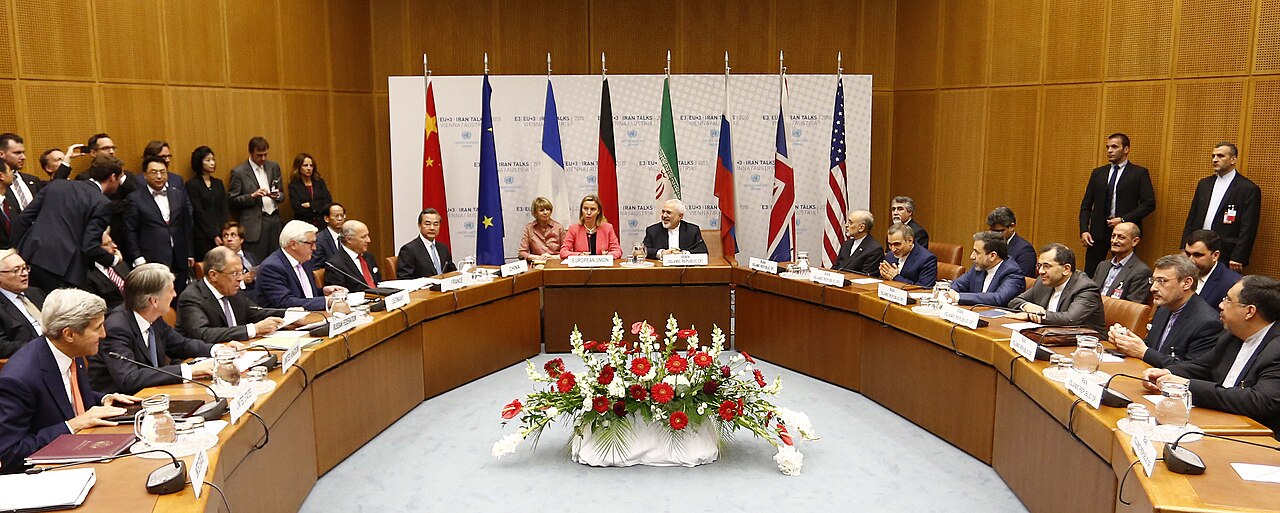
The April 11-12 talks were the highest-level face-to-face engagement between American and Iranian officials since the 1979 Islamic Revolution. Vice President JD Vance led the US delegation; Iran sent approximately 70 officials headed by Parliament Speaker Mohammad Bagher Ghalibaf and Foreign Minister Abbas Araghchi, according to Al Jazeera and the Wikipedia-sourced diplomatic record.
The sessions ran for 21 hours across two days. Vance told NBC News on April 12 that the central impasse was nuclear: “We need to see an affirmative commitment that they will not seek a nuclear weapon, and they will not seek the tools that would enable them to quickly achieve a nuclear weapon.”
A US official told TIME on April 13 that Iran refused five specific American red lines: an end to all uranium enrichment, the dismantling of major enrichment facilities, removal of Iran’s highly enriched uranium stockpile from the country, an end to funding militant proxies, and a full reopening of the Strait of Hormuz without transit fees.
Ghalibaf offered a different framing. “The US has understood Iran’s logic and principles, and it’s time for them to decide whether they can earn our trust or not,” he told NBC News on April 12. Iran’s PressTV ran its own headline: “Iran-US talks in Islamabad end without a deal after 21 hours due to excessive US demands.”
The Middle East briefing 3,000+ readers start their day with.
One email. Every weekday morning. Free.
Twenty-four hours after the talks ended, Trump declared a US naval blockade of Iranian ports, according to NPR’s April 12 report.
From Direct Talks to Shuttle Diplomacy
The direct channel died within days. Ghalibaf told Iranian state media on April 21 that negotiating “under threats is surrender.” Iran’s Foreign Ministry categorically refused on April 24 to re-engage in talks unless the United States lifted its “illegal blockade” on Iranian ports, PressTV reported. Trump cancelled a planned second-round envoy trip to Islamabad on April 25, citing what he called divisions within Iranian leadership.
Pakistan filled the vacuum. Interior Minister Naqvi has operated as the sole intermediary between Washington and Tehran, a role that expanded from hosting the original talks to active shuttle diplomacy — carrying both peace letters and missiles in the same diplomatic portfolio.
On May 6, Axios reported the existence of a one-page, 14-point memorandum of understanding being negotiated through Pakistan by US envoys Steve Witkoff and Jared Kushner. The framework would declare an end to hostilities, open a 30-day negotiation window on Hormuz reopening, commit Iran to a 12- to 15-year enrichment moratorium, and begin gradual US sanctions lifting. The document also addressed the unfreezing of $6 billion in Iranian assets held abroad.
Two weeks later, on May 22, Saudi state media published what Al-Arabiya framed as a “final draft” of the US-Iran deal — a text that omits every nuclear provision from the Axios MOU framework, containing no enrichment moratorium, no HEU disposition clause, and no ballistic missile language. The gap between the Axios 14-point framework and Al-Arabiya’s eight-point text is itself a measure of how far negotiations had or had not advanced.
Iran’s counter-proposal, reported by Tasnim News Agency via Euronews on May 12, demanded US recognition of Iranian sovereignty over Hormuz, the lifting of the naval blockade, the lifting of oil sanctions, and the unfreezing of frozen assets. Foreign Minister Araghchi had told Al Jazeera on April 17 that Iran “based on its needs, must be able to continue enrichment” — placing uranium enrichment outside the negotiating frame entirely.
The same day as the counter-proposal, Iran’s parliamentary national security commission warned lawmakers could consider enriching uranium to 90 percent — the weapons-grade threshold — if conflict resumed. Iran possesses approximately 440 kilograms enriched to 60 percent purity, according to Euronews.
Trump rejected the counter-proposal as “garbage” on May 10, according to PBS NewsHour, and declared the ceasefire “on massive life support” the following day in remarks reported by NPR.
On May 17, Trump set new maximalist preconditions: Iran must deliver 400 kilograms of highly enriched uranium to the United States and maintain only one operational nuclear facility. Washington’s approach to nuclear constraints in the Gulf has a longer track record — the 123 Agreement enrichment restrictions imposed on Saudi Arabia reveal the asymmetry in how the US applies nuclear standards to partners versus adversaries.
Naqvi met with President Masoud Pezeshkian, Foreign Minister Araghchi, Speaker Ghalibaf, and Interior Minister Eskandar Momeni in Tehran on May 20, PressTV and the Deccan Herald reported. Iran was still “reviewing” the latest US response, according to US News and World Report. Trump told reporters he “can wait.”
The Council on Foreign Relations assessed in May that the ceasefire had “little overlap between US and Iran’s demands.” The Carnegie Endowment concluded that Trump lacked the patience and diplomatic infrastructure for sustained deal-making, and that military force deployed during negotiations had eroded the credibility of American diplomatic tools.
How Is the IRGC Monetizing the Stalemate?
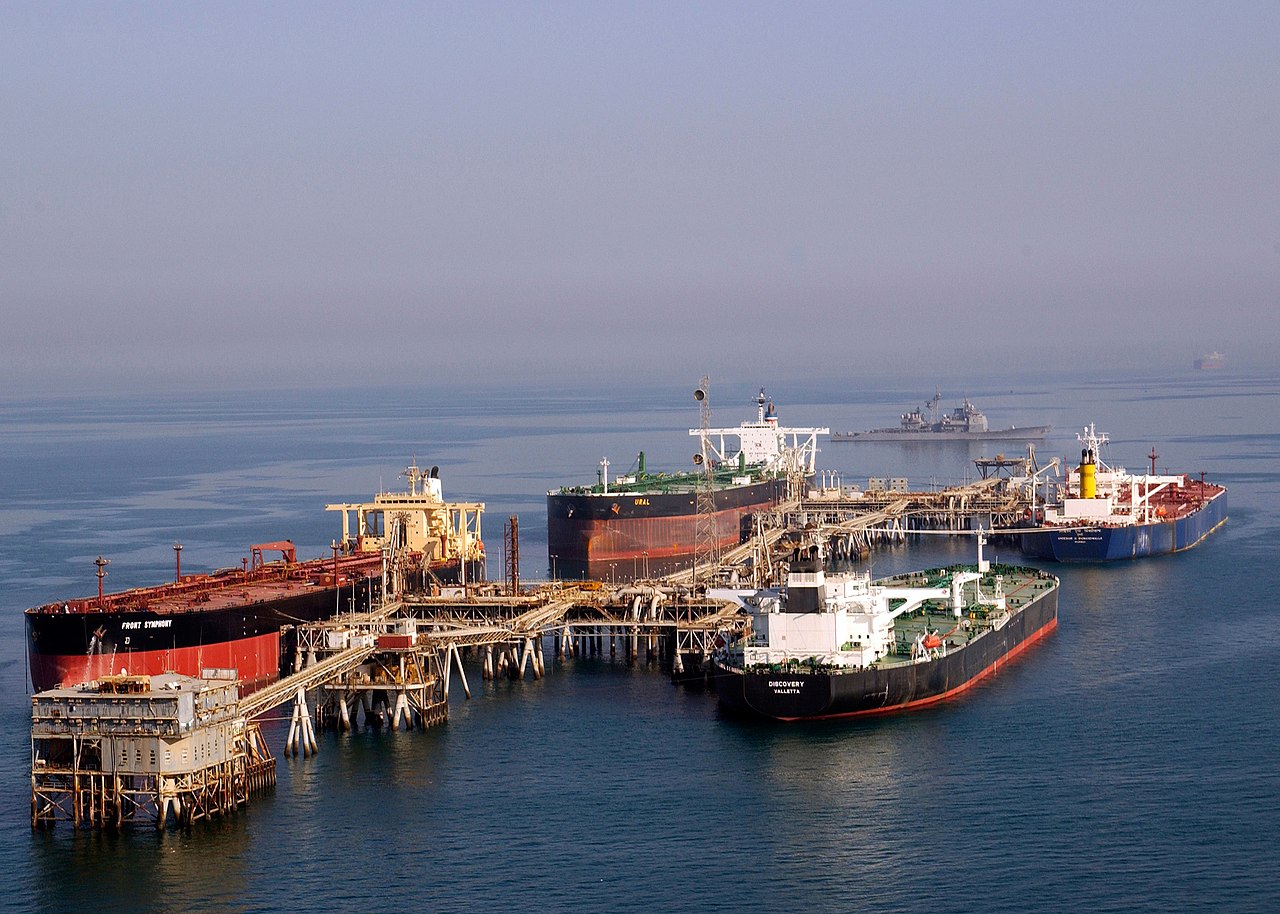
The IRGC charges up to $2 million per vessel for transit coordination through the Strait of Hormuz, payable in cryptocurrency or Chinese yuan, according to the Maritime Executive. A formal pass-code system governs which ships receive clearance to enter the strait.
Five nations have been granted full exemptions: Russia, China, India, Iraq, and Pakistan, according to Dawn and NPR reporting from April 2026. The exemption list maps precisely onto the states Iran relies on for trade, energy exports, or diplomatic cover at the UN Security Council.
The architecture creates a two-tier maritime order. Vessels flagged to exempted nations transit freely; all others face a binary choice between paying the IRGC’s fee or rerouting around the Cape of Good Hope — adding approximately 10 to 14 days and sharply higher fuel costs to any Europe- or Asia-bound cargo.
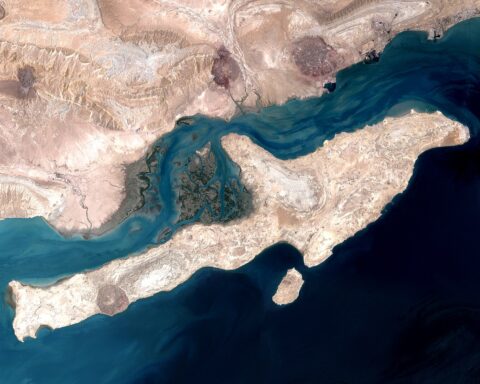
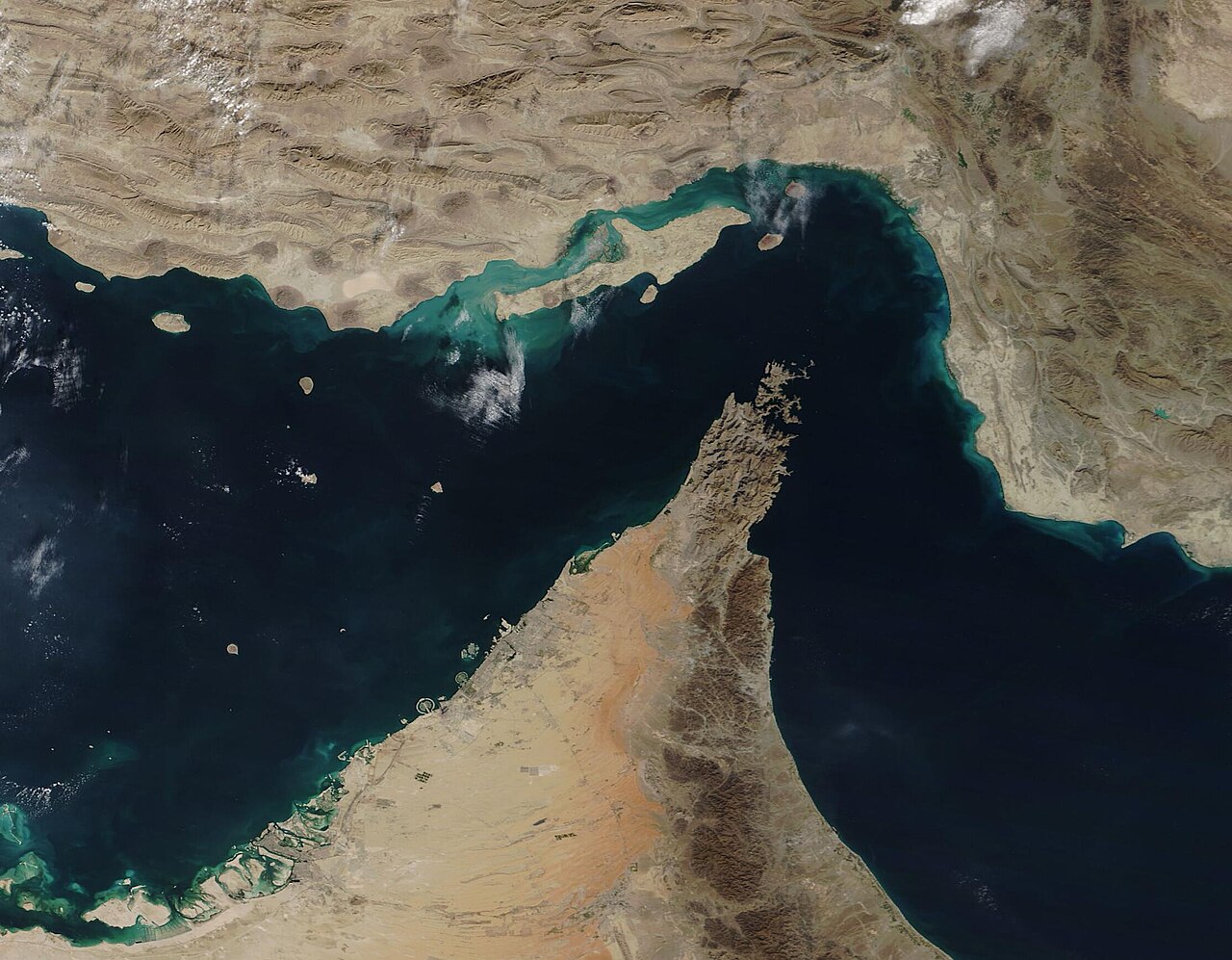
The IRGC has declared Hormuz a “vast operational area” extending from Jask to Siri Island — a stretch of approximately 400 kilometers encompassing the full maritime approach to the strait, multiple sources reported during April and May 2026. Iran has also signaled intent to impose fees on undersea internet cables passing through the strait, Euronews reported on May 15.
Iran and Oman have begun co-drafting a Hormuz governance mechanism that exploits UNCLOS asymmetries and Oman’s 1974 maritime boundary jurisdiction over the inbound shipping lane — a framework that positions Tehran as a co-regulator rather than a blockader. On May 22, Iran formalized the next step: publishing a jurisdiction map claiming UAE sovereign waters, prompting a five-state GCC protest to the IMO — which Oman declined to join.
Since April 8, only 45 vessels have transited the strait — 3.6 percent of the pre-war baseline, according to the Washington Times on May 20. More than 11 million barrels per day of Gulf crude and condensate production remains curtailed, Wood Mackenzie reported the same day.
The consultancy called the Hormuz closure “the single greatest threat to global energy markets in decades” and warned that Brent crude could approach $200 per barrel by year-end under an extended disruption scenario, with diesel and jet fuel reaching $300 per barrel in major refining centers and a 0.4 percent contraction in global GDP, according to GlobeNewswire’s May 20 release of the Wood Mackenzie assessment.
Can Saudi Arabia Afford This Limbo?
Oil revenues fell 3 percent year-on-year to 144.7 billion riyals in Q1 2026, while government spending rose 20 percent to 386.7 billion riyals, according to Al Jazeera’s May 6 report on Saudi fiscal data. PIF cash reserves have dropped to their lowest level since 2020. That cash shortfall led PIF to execute its largest-ever bond sale — $7 billion at wartime spreads — in May 2026, borrowing against the implicit Saudi sovereign guarantee rather than its own liquid assets.
The EIA’s May 2026 Short-Term Energy Outlook projects Brent at $89 per barrel by Q4 2026 and a $79 per barrel average for 2027 — forecasts that assume a Hormuz production recovery operating on a timeline that no one in Islamabad, Tehran, or Washington is currently negotiating.
Saudi Aramco CEO Amin Nasser told CNBC on May 11: “If the strait opens today, it will still take months for the market to rebalance, and if its opening is delayed by a few more weeks, then normalization will last into 2027.”
Aramco CEO Nasser’s mid-June normalization deadline — the precise threshold beyond which 2027 delay becomes structurally inevitable — is examined in full here, including the three-part mechanism of tanker displacement, LNG contract cycles, and Asian refinery maintenance calendars that make mid-June a physical constraint rather than a corporate forecast.
Foreign Minister Prince Faisal bin Farhan publicly endorsed Trump’s decision to cancel a planned strike on Iran on May 20 — accommodation toward the administration conducting negotiations from which the kingdom is absent. Riyadh is not a party to the US-Iran talks. It is not a participant in the Iran-Oman Hormuz governance mechanism. It has no bilateral channel with Tehran on strait reopening. The UAE’s OPEC exit and Hormuz bypass infrastructure compound this exposure: while Saudi Arabia remains structurally tethered to the strait, Abu Dhabi is engineering independence from it on a 2027 completion timeline.
The Hajj pilgrimage is underway, with the Day of Arafah falling on May 26. Saudi Arabia cannot risk escalation during Islam’s most sacred week — a constraint that Iran’s negotiators understand and that further limits Riyadh’s already narrow options during the five days when millions of pilgrims are present in the kingdom. Saudi Arabia’s PAC-3 stockpile depletion ahead of Hajj — at 80 to 150 interceptors remaining in the Hejaz — means the kingdom enters the Day of Arafah with its most constrained air defence posture since the 1987 tanker war.
The 20 percent spending increase reflects commitments to Vision 2030 megaprojects, military procurement, and domestic subsidies that were made when Hormuz was open and oil revenue projections were higher. As of May 21, no date has been set for a next round of talks.
Background
The United States and Iran severed diplomatic relations in April 1980, six months after Iranian students seized the US Embassy in Tehran. The two countries communicated through intermediaries — Switzerland, Oman, and Pakistan — for more than four decades. The 2015 Joint Comprehensive Plan of Action was negotiated through indirect proximity talks in Vienna and a secret back-channel in Muscat without senior leaders of both nations ever sharing a room.
The Islamabad talks on April 11-12 were the first time since 1979 that senior American and Iranian officials sat across from each other in a structured negotiation. The current conflict — now approximately day 84 — began when the US struck Iranian nuclear and military targets in March 2026, triggering the IRGC’s effective closure of Hormuz and a fragile ceasefire that both sides have defined on mutually exclusive terms. Brent crude has traded between $105 and $111 per barrel in May, falling 5.16 percent on May 20 on ceasefire optimism before recovering to approximately $111 the following day.
Frequently Asked Questions
Has the US ever negotiated directly with Iran before the Islamabad talks?
Not at this level. The 2015 JCPOA was negotiated through indirect proximity talks in Vienna, with US and Iranian delegations in separate rooms and EU mediators shuttling between them. A secret bilateral channel operated through Oman in 2012-2013, but those were mid-level officials. The 1981 Algiers Accords that ended the hostage crisis were mediated entirely by Algeria — the two sides never met face-to-face.
What is Iran’s legal argument for charging transit fees at Hormuz?
Iran frames the charges as “operational security coordination” fees rather than tolls, a distinction designed to sidestep UNCLOS Article 38, which guarantees unimpeded transit passage through international straits. Legal scholars at Leiden University’s Grotius Centre have noted the fee structure has no precedent in international maritime law — no state has successfully imposed mandatory payments on transit passage through a Part III strait. Iran’s counter-argument rests on its 2026 declaration of an expanded military operational zone, which it treats as a domestic security matter.
Could the UN Security Council intervene on Hormuz?
Russia and China — both permanent UNSC members with veto power — hold IRGC transit-fee exemptions and have increased bilateral trade with Iran during the conflict. Any resolution targeting Iran’s Hormuz operations would require their abstention or support, and neither government has an economic incentive to restore pre-war transit conditions. The exemption architecture functionally neutralizes the UNSC as an intervention mechanism. Saudi Arabia has nonetheless co-sponsored a second UNSC Hormuz enforcement draft — now with 137 countries — while having no seat at the table and no fallback if Russia and China veto again: the 137-country Hormuz resolution Saudi Arabia cannot vote on.
What happens to shipping insurance if Hormuz stays closed past mid-2026?
War-risk insurance premiums for Gulf-bound vessels have increased by orders of magnitude since April, with Lloyd’s of London syndicates quoting rates that effectively price out unescorted commercial transits. The London market’s Joint War Committee has designated the entire Persian Gulf, Strait of Hormuz, and Gulf of Oman as a listed area — the highest risk classification. Extended closure beyond mid-2026 could render certain routes permanently uninsurable at commercial rates, according to insurance industry reporting in the Financial Times.
A separate risk dimension materialized on May 21, when Trump publicly named Saudi Arabia and MBS alongside Qatar and the UAE as the parties who had stopped him striking Iran — and the IRGC responded within hours with a formal threat to spread retaliation “beyond the region.” That disclosure collapsed the strategic ambiguity that had kept Saudi Arabia in a lower IRGC targeting bracket since the war began, adding a direct exposure layer to the shipping and insurance calculus above.
Saudi FM Bin Farhan’s public response to the Islamabad collapse — praising Trump’s Iran firmness on May 20 — came five days after Trump told Hannity HEU retrieval was “not necessary.” The gap between what Riyadh endorsed and what Washington had already softened on is examined here.
The fifth round of US-Iran talks concluded in Rome on May 23 without a breakthrough — the latest in a 106-day sequence from Muscat to Geneva to Oman to Islamabad to Rome that has produced no signed framework while the IRGC toll regime consolidates. The Rome round and the structural gaps that prevented agreement are examined here.
The structural cost to Saudi Arabia of the “largely negotiated” Iran framework — across the 123 enrichment asymmetry, Hormuz deferral, and oil revenue trap — is examined in a companion editorial. Senator Tom Cotton’s letter to Treasury Secretary Bessent — sent May 22 and demanding immediate sanctions on the PGSA, its officers, and any entity facilitating toll payments including Oman — marks the first Congressional action targeting the toll architecture directly.