
RIYADH — Human Rights Watch on Monday published its most detailed investigation into civilian casualties from Iranian drone and missile attacks across the Persian Gulf, documenting at least 11 deaths and 268 injuries in six Gulf Cooperation Council states since the war began on February 28. The report, based on geolocated video evidence, satellite imagery, and interviews with 16 witnesses, concluded that many of Iran’s retaliatory strikes have hit civilian objects including residential buildings, hotels, airports, and financial centers — conduct that the organization said violates international humanitarian law and may constitute war crimes.
The findings arrive as Iran’s daily drone barrages against Gulf states intensify, with nearly 100 drones launched at Saudi Arabia on March 17 alone — the highest single-day total since the conflict began. At least 10 of the 11 confirmed civilian deaths were foreign nationals, predominantly migrant workers from Bangladesh, Nepal, and other South Asian countries, underscoring that the war’s civilian toll falls disproportionately on the Gulf’s most vulnerable population: its 35 million expatriate workforce.
Table of Contents
- What Did Human Rights Watch Document?
- Country-by-Country Civilian Toll
- Who Are the Victims?
- Which Civilian Infrastructure Was Struck?
- Iran’s Arsenal Against Gulf Civilians
- How Does Iran Justify Striking Civilian Areas?
- International Legal Implications
- Saudi Arabia’s Response and Regional Coordination
- Frequently Asked Questions
What Did Human Rights Watch Document?
The March 17 report represented the most comprehensive independent assessment of civilian harm from Iranian strikes on GCC nations since the war’s outbreak. Human Rights Watch researchers geolocated videos of strike sites using the GeoConfirmed platform, interviewed 16 witnesses including tourists, residents, journalists, and the families of killed migrant workers, and reviewed photographic evidence from government media offices across the region.
Joey Shea, HRW’s senior Saudi Arabia and UAE researcher, said in the report that “civilians, particularly migrant workers, across Gulf states are being threatened, killed, and injured by Iranian drones and missiles.” The organization called on Iran to “immediately take all possible measures to protect civilians across the Gulf” and to cease targeting civilian economic centers and financial infrastructure, according to the report published on the organization’s website.
The investigation documented strikes on at least three international airports, multiple residential towers, luxury hotels, diplomatic compounds, port facilities, and a major financial district. HRW found no confirmed military targets at the civilian sites that were attacked, the report stated. Under international humanitarian law, the deliberate targeting of civilian objects is prohibited, and serious violations committed with deliberate intent constitute war crimes, according to HRW’s legal analysis.
Amnesty International published a separate statement calling on all parties to the conflict, including Iran, to “refrain from unlawful attacks on energy infrastructure” and to respect the laws of armed conflict. The United Nations Office of the High Commissioner for Human Rights has also expressed concern over civilian casualties across the region, Reuters reported.
The Middle East briefing 3,000+ readers start their day with.
One email. Every weekday morning. Free.

Country-by-Country Civilian Toll
Iran’s retaliatory campaign has struck all six GCC member states, though the scale and nature of attacks have varied significantly. The UAE has absorbed the largest number of strikes, while Bahrain has recorded the highest confirmed civilian death toll relative to its small population, according to HRW’s findings and GCC government statements.
| Country | Confirmed Deaths | Confirmed Injuries | Key Incidents |
|---|---|---|---|
| United Arab Emirates | 4 | 100+ | Airport strikes, hotel attacks, residential tower fires |
| Bahrain | 3 | 50+ | Millennium Tower strike, port attack, Crowne Plaza hit |
| Kuwait | 2 | 40+ | Airport strike, embassy targeting |
| Saudi Arabia | 2 | 50+ | Embassy damage, residential areas in Al-Kharj struck |
| Oman | 0 | 20+ | Salalah port struck, drones over civilian areas |
| Qatar | 0 | 8+ | Al Udeid perimeter strikes, infrastructure damage |
The UAE bore the brunt of the initial strikes. On February 28, the first day of the war, a Nepali security guard named Diwas Shrestha was killed when a drone struck the vicinity of Zayed International Airport in Abu Dhabi, injuring seven others, according to HRW. The same day, four staff members were injured when Dubai International Airport sustained damage, and four Bangladeshi nationals were injured in a strike on Kuwait International Airport.
In Bahrain, a 29-year-old Bahraini woman was killed and eight others were injured when debris from a drone strike hit the Millennium Tower in the Seef District on March 10, according to Bahraini state media cited by HRW. A Bangladeshi shipyard worker also died at Mina Salman Port after an Iranian missile was intercepted overhead, with falling debris igniting the American-flagged MT Stena Imperative oil tanker, Al Jazeera reported.
In Saudi Arabia, two civilians were killed in the Al-Kharj area south of Riyadh when drone fragments struck a residential neighborhood on March 9, the Saudi Ministry of Defense confirmed. The Saudi government has reported intercepting hundreds of drones across the Eastern Province and central regions, with 37 more drones destroyed over the Eastern Province on the morning of March 18 alone.
Who Are the Victims?
The civilian death toll reveals a stark pattern: migrant workers from South Asia, Southeast Asia, and Africa account for the overwhelming majority of casualties. At least 10 of the 11 confirmed deaths were foreign nationals, HRW reported, reflecting the demographic reality that expatriates make up between 70 and 90 percent of the population in most Gulf states.
The dead include Diwas Shrestha, a Nepali security guard killed at Abu Dhabi’s Zayed International Airport; Saleh Ahmed, a Bangladeshi national killed in Ajman, UAE, when debris from a strike hit his water truck; and an unnamed Bangladeshi shipyard worker killed by falling missile debris at Bahrain’s Mina Salman Port, according to HRW and local media reports.
Gulf states host approximately 35 million foreign workers, many employed in construction, security, transportation, and service industries that place them in exposed positions during attacks, according to International Labour Organization data. Unlike citizens, migrant workers often lack access to employer-provided shelters, timely official warnings in their native languages, or the financial means to evacuate.
The economic disruption caused by the war has compounded the danger. Migrant workers in Bahrain’s industrial zones and the UAE’s construction sites continue to report for duty during attacks because losing employment means losing their residency status, according to interviews conducted by HRW and labor rights organizations. Two US Defense Department employees were also injured when a drone struck the Crowne Plaza Hotel in Bahrain on March 1, the Pentagon confirmed.
Which Civilian Infrastructure Was Struck?
HRW categorized the documented strikes into five types of civilian infrastructure, each raising distinct concerns under international humanitarian law. The breadth of targets suggests a pattern of either indiscriminate fire or deliberate targeting of civilian objects, the organization concluded.
Three major international airports were hit on the first day of the war alone. Zayed International Airport in Abu Dhabi, Dubai International Airport, and Kuwait International Airport all sustained damage on February 28, disrupting civilian aviation across the region. Dubai International Airport, the world’s busiest for international passengers, was struck again on March 7 and March 16, when a drone damaged fuel storage tanks and triggered a fire that forced flight diversions, the Washington Post reported.
Residential buildings have been struck repeatedly. On March 12, an Iranian drone hit the Address Creek Harbour 2 tower in Dubai — a luxury branded residence popular with property investors and Golden Visa holders — sparking a major fire and mass evacuations, CNN reported. HRW verified the strike through geolocated video footage. The Fairmont Hotel on Palm Jumeirah was also hit on February 28, with verified video showing a drone diving toward the forecourt before detonating, injuring four people.
Iran’s Islamic Revolutionary Guard Corps expanded its target set to include financial infrastructure in mid-March. On March 14, a drone struck ICD Brookfield Place in Dubai’s International Financial Centre, one of the region’s premier business districts. IRGC-affiliated media outlets subsequently threatened that American companies operating from the DIFC would be considered “legitimate targets,” naming specific consulting and investment firms, according to HRW’s monitoring of Iranian state media.
US diplomatic facilities have also been struck. The US Embassy in Riyadh sustained minor damage on March 3, the US consulate in Dubai was hit the same day, and the US Embassy in Kuwait was targeted on March 2, according to US State Department statements. The State Department on March 8 ordered non-emergency US government employees to leave Saudi Arabia, citing “sustained missile and drone threats targeting American and diplomatic interests in the Kingdom.”
Iran’s Arsenal Against Gulf Civilians
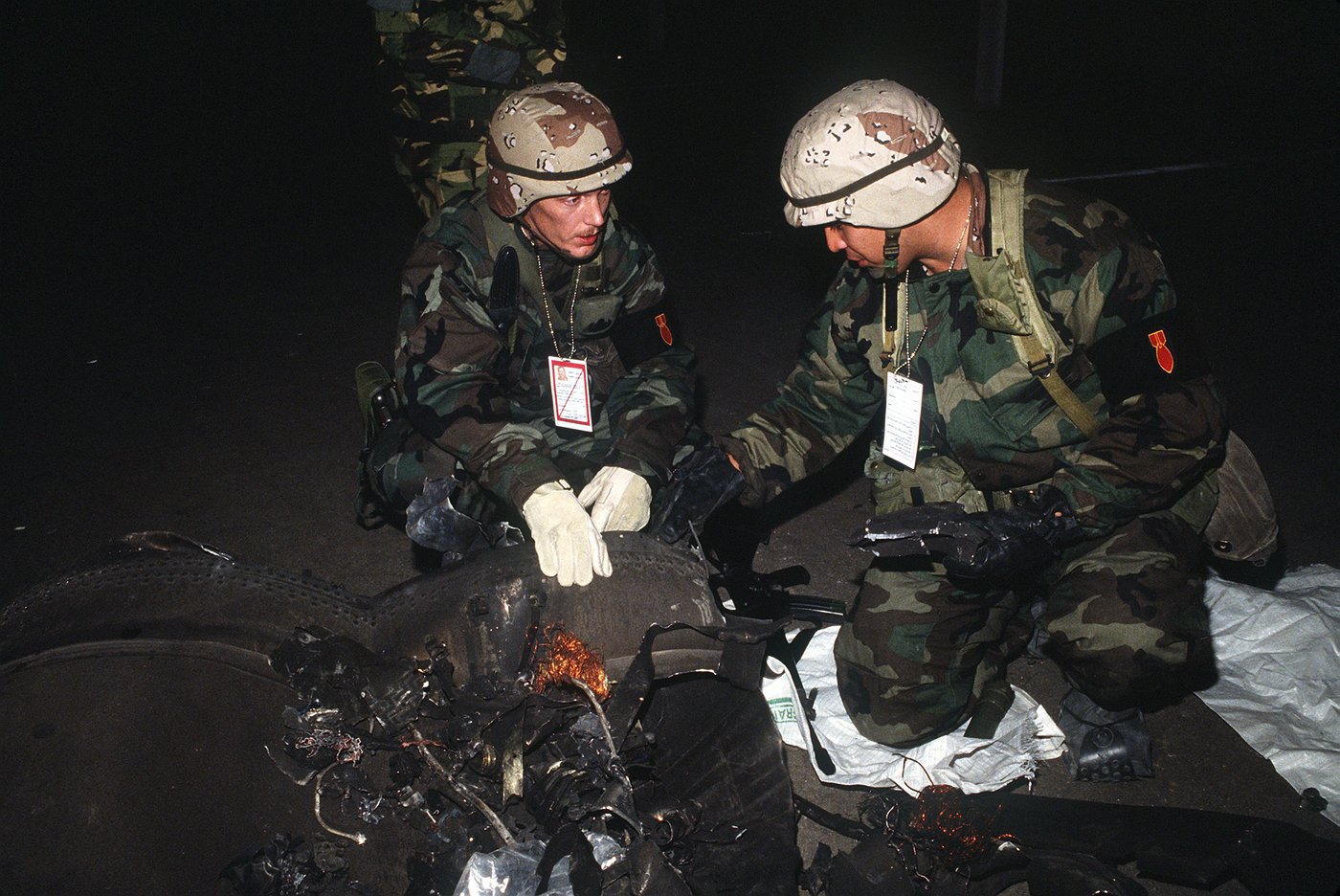
The weapons Iran has deployed against civilian areas across the Gulf are primarily low-cost one-way attack drones, supplemented by ballistic and cruise missiles, according to HRW’s analysis and open-source intelligence assessments. The affordability of these systems has enabled Iran to sustain a high tempo of attacks — nearly 100 drones were launched at Saudi Arabia on March 17 alone, according to Saudi Defense Ministry data.
| System | Type | Guidance | Documented Civilian Incidents |
|---|---|---|---|
| Shahed-136 | One-way attack drone | GNSS (GPS/GLONASS) | Airport strikes, residential tower hits |
| Shahed-238 | One-way attack drone | GNSS, radar homing, or electro-optical | Fairmont Hotel, DIFC strike |
| Shahed-107 | One-way attack drone | GNSS | Port and infrastructure strikes |
| Ballistic missiles (unspecified) | Medium-range ballistic | Inertial/GPS | Prince Sultan Air Base vicinity, Bahrain port |
The Shahed-136, the workhorse of Iran’s drone campaign, costs an estimated $20,000 to $50,000 per unit, according to assessments by the Royal United Services Institute. By contrast, the interceptor missiles used to shoot them down — Patriot PAC-3 rounds, for instance — cost between $2 million and $4 million each, creating what defense analysts describe as an unsustainable cost asymmetry for Gulf air defense networks.
The GNSS-guided drones cannot distinguish between military and civilian targets at the level of precision required by international law, multiple arms control experts told Reuters. A drone programmed to strike coordinates in a densely populated city district carries an inherent risk of civilian harm, regardless of the intended target.
How Does Iran Justify Striking Civilian Areas?
Iran’s official position has oscillated between denial, apology, and escalation since the war began. On March 8, President Masoud Pezeshkian publicly apologized, stating that “there will be no further attacks or missile launches toward neighboring countries,” HRW documented. Attacks on Gulf states continued the same day and every day since.
The Khatam al-Anbiya Central Headquarters, Iran’s joint military command, declared on March 8 that “every point that serves as the origin of aggression against Iran is a legitimate target,” according to Iranian state media monitored by HRW. Tehran has argued that US military bases located within or adjacent to Gulf states make surrounding infrastructure a legitimate object of attack — a legal position rejected by virtually every international law scholar who has examined it, according to an Al Jazeera analysis of the legal arguments.
HRW directly rebutted this claim. “Companies having US ownership or ties would not in and of itself make them legitimate military objects” under international humanitarian law, the report stated. The presence of a US consulate in a commercial district does not render the entire district a military target, the organization emphasized.
On March 14, IRGC-affiliated media outlets escalated the rhetoric further, threatening that US companies operating from Dubai’s International Financial Centre would be considered “legitimate targets” and naming specific consulting and investment firms by name, according to HRW’s monitoring. The threat effectively declared one of the Middle East’s most important commercial districts a war zone, contributing to the flight of international financial firms from the Gulf documented by Bloomberg and the Financial Times. Iran’s military has since escalated further, explicitly threatening tourist sites worldwide as the war enters its fourth week.
International Legal Implications
The HRW report adds to a growing body of evidence that international legal proceedings against Iran may follow the cessation of hostilities. Under international humanitarian law, the deliberate targeting of civilian objects is a war crime, and even strikes on military targets that cause disproportionate civilian harm may violate the principle of proportionality, according to the International Committee of the Red Cross’s authoritative commentary on the Geneva Conventions.
The legal case for reparations is already being assembled by Gulf state governments. Bahrain has formally documented every strike on its territory, including the casualties and property damage, Reuters reported. The UAE has established a dedicated interagency task force to catalog evidence of attacks on civilian infrastructure, according to Emirati state media.
An analysis published by the Future UAE research center argued that Iran’s attacks on neutral Gulf states violate not only international humanitarian law but also the law of neutrality, which prohibits belligerents from conducting military operations within or against neutral states. GCC members have maintained that they are not parties to the conflict between the United States, Israel, and Iran — a position Iran has effectively rejected by striking their territory, according to Just Security’s legal analysis of transit passage rights and neutrality law.
The UN Security Council passed a near-unanimous resolution on March 11 condemning Iran’s attacks on Gulf states, with only Russia abstaining. The resolution called on “all parties to respect international humanitarian law and protect civilian lives and infrastructure,” though it stopped short of establishing an independent investigative mechanism, according to the Security Council Report’s summary of the proceedings.
Saudi Arabia’s Response and Regional Coordination
Saudi Arabia has positioned itself as the de facto coordinator of the Gulf’s collective response to Iranian strikes on civilian populations. Riyadh convened an emergency summit of Arab and Islamic foreign ministers on March 18 to discuss regional stability, with Saudi Foreign Minister Prince Faisal bin Farhan conducting preparatory calls with counterparts from the UAE, Egypt, Iraq, Syria, Algeria, and Bosnia and Herzegovina, according to Arab News.
The Saudi Ministry of Defense has intercepted hundreds of Iranian drones targeting the Eastern Province and central regions since the war began. On March 18, the ministry reported destroying 37 drones over the Eastern Province since early morning, with additional interceptions near the Shaybah oil field in the Empty Quarter, Al Arabiya reported. Three ballistic missiles targeting Prince Sultan Air Base were also intercepted and destroyed on March 6, Qatar News Agency reported.
The Kingdom’s position has evolved from declared neutrality to what officials describe as active self-defense. Saudi Arabia now defines Iran as an existential threat and reserves the right to respond with military force, MEMRI reported, though Riyadh has stopped short of joining US offensive operations against Iranian territory. Crown Prince Mohammed bin Salman has been in regular contact with US President Donald Trump, advising “harsh action” against Iran, according to a March 16 New York Times report.
The civilian toll documented by HRW strengthens Saudi Arabia’s diplomatic position as it seeks to build international consensus for accountability. The emergency ministerial meeting in Riyadh on March 18 is expected to produce a joint statement demanding that Iran cease attacks on civilian infrastructure across the Gulf, Arab News reported, setting the stage for potential referral to the International Criminal Court or the establishment of a UN commission of inquiry.
Frequently Asked Questions
How many civilians has Iran killed in Gulf states since the war began?
Human Rights Watch documented at least 11 civilian deaths and 268 injuries across six GCC states — the UAE, Bahrain, Kuwait, Saudi Arabia, Oman, and Qatar — between February 28 and March 16, 2026. At least 10 of the 11 killed were foreign nationals, predominantly migrant workers from South Asia.
What types of civilian infrastructure has Iran struck in the Gulf?
HRW documented strikes on three international airports, residential towers, luxury hotels including the Fairmont on Palm Jumeirah, Dubai’s International Financial Centre, port facilities, and US diplomatic compounds in Saudi Arabia, Kuwait, and the UAE. Iran’s IRGC has also threatened to target US-linked businesses by name.
Does Iran’s targeting of Gulf civilian areas constitute war crimes?
Human Rights Watch concluded that many of Iran’s strikes “unlawfully targeted civilian objects” and that “serious violations of the laws of war committed with criminal intent are war crimes.” The organization called on Iran to immediately cease targeting civilian infrastructure. International legal proceedings may follow the conflict.
Why are migrant workers disproportionately affected by Iran’s Gulf strikes?
Migrant workers comprise 70 to 90 percent of the population in most Gulf states and are concentrated in exposed occupations — construction, security, transportation, and airport services. Many lack access to employer-provided shelters, warnings in their languages, or the means to evacuate. Losing employment means losing residency status, forcing many to continue working during attacks.
What weapons is Iran using against Gulf civilian areas?
Iran primarily deploys Shahed-136, Shahed-238, and Shahed-107 one-way attack drones guided by satellite navigation, supplemented by medium-range ballistic missiles. The drones cost an estimated $20,000 to $50,000 each, while the interceptor missiles used to shoot them down cost $2 million to $4 million, creating an unsustainable cost disparity for Gulf air defenses.