
MIAMI — Saudi Arabia will open the fourth edition of its Future Investment Initiative Priority Summit in Miami on March 25, gathering more than 1,500 delegates, senior officials, and global investors at a moment when Iranian drones are striking the kingdom’s oil infrastructure on a near-daily basis. President Donald Trump is scheduled to deliver the closing keynote address on March 27, according to the FII Institute, cementing the summit as the most politically charged edition of the annual event since its founding.
The three-day conference at the Faena Hotel on Miami Beach will bring together Public Investment Fund Governor Yasir Al-Rumayyan, Saudi Finance Minister Mohammed Al-Jadaan, Tourism Minister Ahmed Al-Khateeb, and Saudi Ambassador to the United States Princess Reema bint Bandar, alongside a roster of American business leaders that includes Vista Equity Partners chairman Robert F. Smith, former Google chief executive Eric Schmidt, and FIFA President Gianni Infantino, according to the FII Institute’s official agenda released earlier this month.
The summit arrives against the backdrop of a $600 billion Saudi investment commitment to the United States and a war that has disrupted shipping through the Strait of Hormuz, pushed oil prices above $110 per barrel, and forced the cancellation of more than 70 percent of commercial flights to the Gulf — with 293 flights disrupted across Saudi airports on March 22 alone. Goldman Sachs has warned that Saudi Arabia’s GDP could contract by 5 percent if the conflict extends through April, raising questions about whether the kingdom’s investment ambitions can survive the largest military crisis in its modern history.
Table of Contents
- What Is the FII Priority Summit?
- Who Are the Key Speakers and Delegates?
- How Does the $600 Billion Investment Commitment Shape the Agenda?
- What Is the War’s Impact on Gulf Investment Flows?
- Why Is Trump’s Keynote Significant During the Iran Conflict?
- Can Saudi Sovereign Wealth Survive the War’s Economic Toll?
- What Does ‘Capital in Motion’ Mean in a Fragmenting World?
- The Summit’s Diplomatic Significance
- Frequently Asked Questions
What Is the FII Priority Summit?
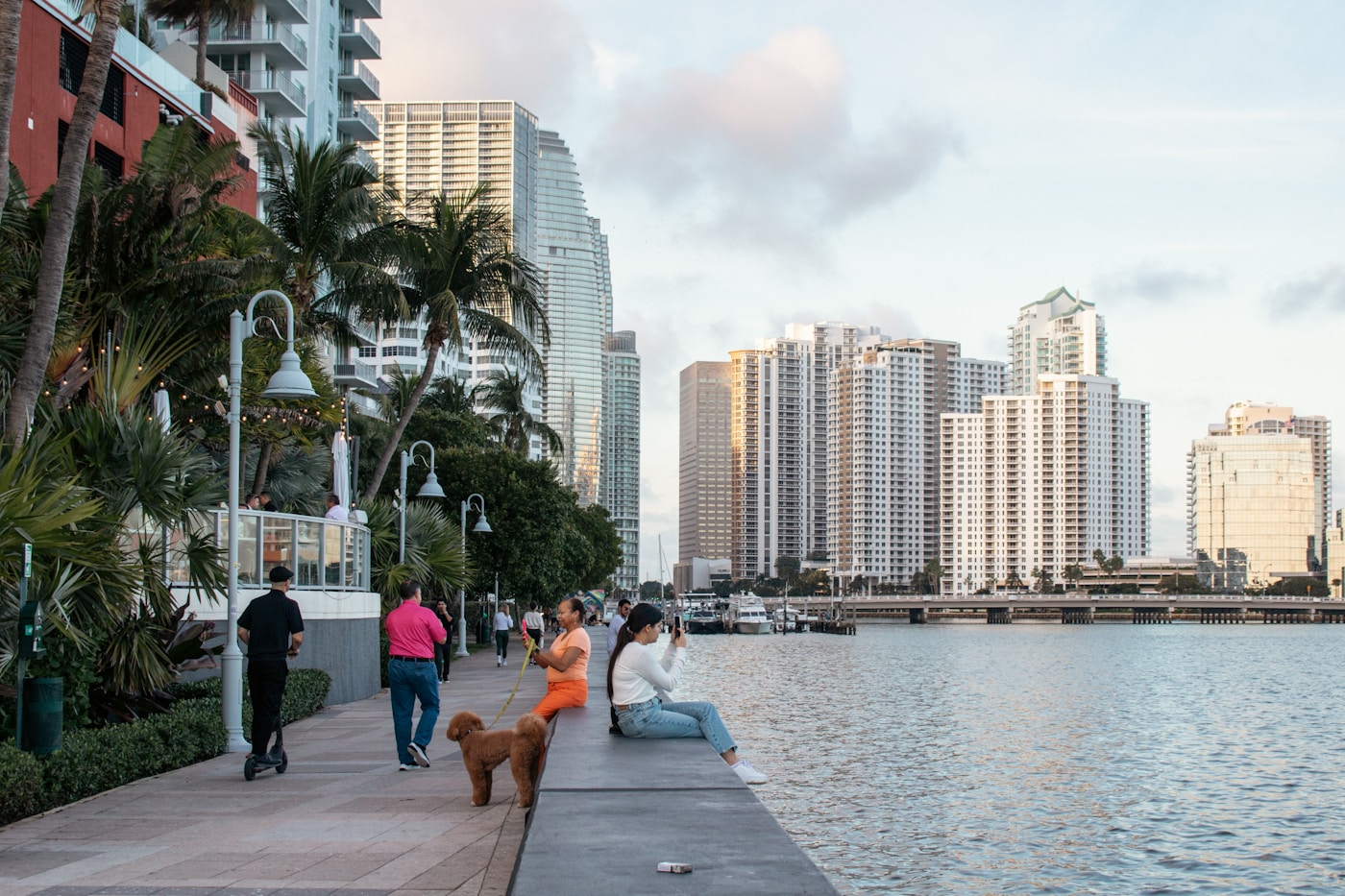
The FII Priority Summit is a satellite conference of the flagship Future Investment Initiative, which Saudi Arabia has hosted annually in Riyadh since 2017. The Priority editions focus on regional investment opportunities outside the Gulf, with previous summits held in Miami, Rio de Janeiro, and Hong Kong. The Miami edition specifically targets investment flows between the Gulf and the Americas, with a strong focus on Latin America as a destination for Gulf capital.
This year’s summit runs from March 25 to 27 under the theme “Capital in Motion,” a phrase the FII Institute describes as reflecting “a world in flux yet moving forward, where capital, talent, and ideas are constantly evolving.” The theme takes on a sharper edge in 2026, as the Iran war has triggered the largest disruption to global energy markets since the 1973 oil embargo and forced Gulf sovereign wealth funds to reassess their overseas investment strategies.
The FII Institute, chaired by PIF Governor Yasir Al-Rumayyan, operates as the permanent organizing body behind all FII events. The institute has expanded its remit beyond investment to include artificial intelligence governance, sustainability, and what it calls “impact on humanity.” The Miami edition, however, remains primarily focused on capital deployment and cross-border deal-making between Gulf investors and American markets.
The Middle East briefing 3,000+ readers start their day with.
One email. Every weekday morning. Free.
Who Are the Key Speakers and Delegates?
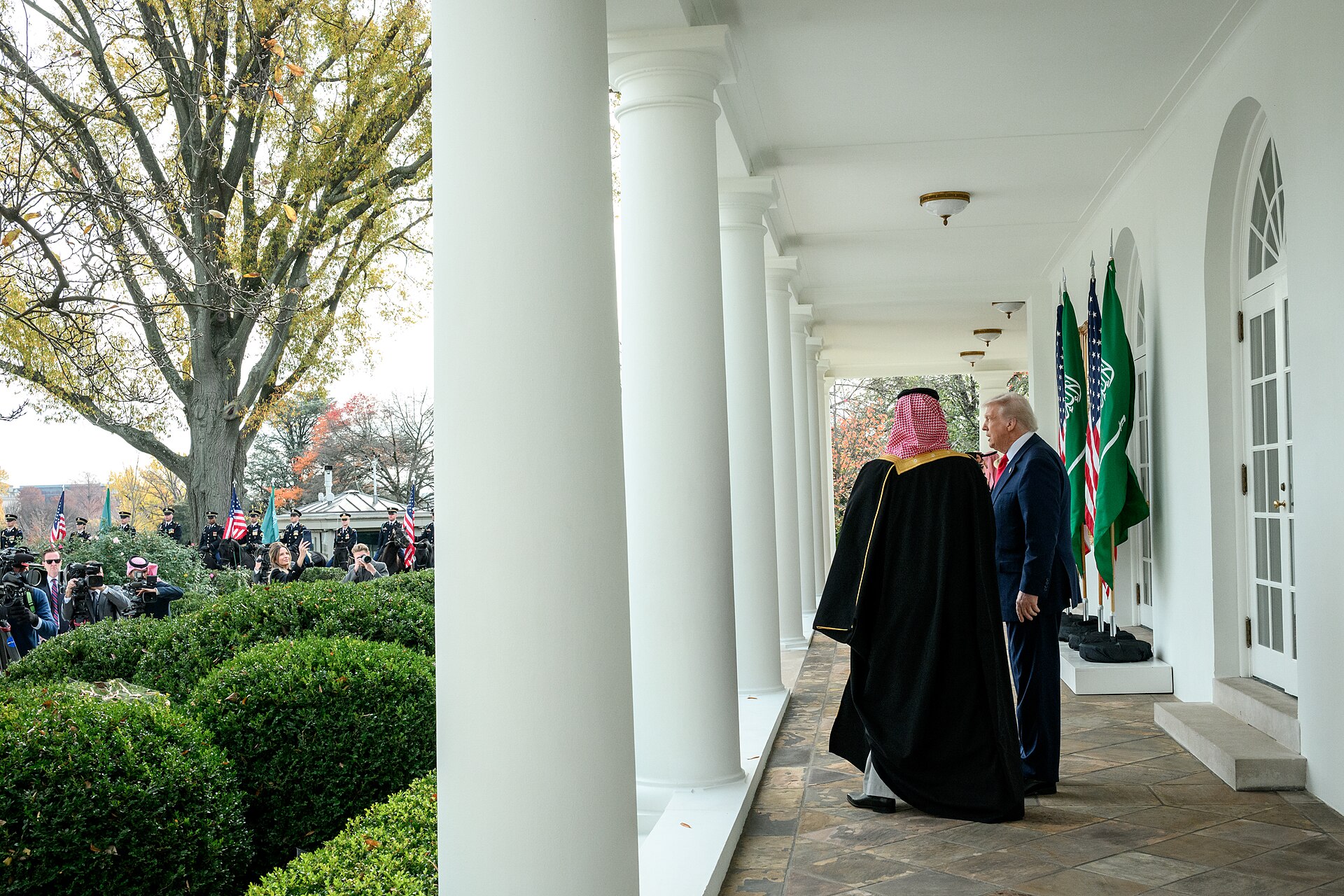
The speaker lineup for FII Priority Miami 2026 reflects the intertwining of Saudi investment strategy and American political power. Trump’s closing keynote on March 27 at 9:30 PM GMT will mark the second time a sitting U.S. president has addressed an FII event, following his participation in the 2025 Riyadh summit where he and Crown Prince Mohammed bin Salman sealed the $600 billion investment framework.
When Trump delivered that keynote, the summit’s messaging collapsed. The president told the Saudi-funded audience that MBS was “kissing my ass” — a public humiliation that converted FII’s stage of sovereign ambition into a demonstration of American dominance over the alliance Riyadh had spent three days celebrating.
The Saudi delegation is led by four of the kingdom’s most influential economic policymakers. Al-Rumayyan, who oversees the PIF’s $1.15 trillion in assets, is expected to outline the fund’s investment priorities in a changed global environment. Al-Jadaan, the finance minister, has managed Saudi Arabia’s fiscal response to the war, including a reported drawdown from PIF reserves to maintain Vision 2030 spending during the conflict. Al-Khateeb leads the kingdom’s tourism strategy, which has been severely disrupted by the closure of Gulf airspace. Princess Reema, who has served as Saudi ambassador to Washington since 2019, is the highest-ranking Saudi woman in the diplomatic corps.
| Name | Title | Relevance |
|---|---|---|
| Donald Trump | President of the United States | Closing keynote, March 27 |
| Yasir Al-Rumayyan | PIF Governor, FII Institute Chairman | Leads $1.15 trillion sovereign fund |
| Mohammed Al-Jadaan | Saudi Finance Minister | Managing wartime fiscal policy |
| Ahmed Al-Khateeb | Saudi Tourism Minister | Tourism sector recovery strategy |
| Princess Reema bint Bandar | Saudi Ambassador to the US | Diplomatic anchor for US-Saudi relations |
| Robert F. Smith | Vista Equity Partners Chairman | Technology-focused private equity |
| Eric Schmidt | Former Google CEO | AI and technology investment |
| Gianni Infantino | FIFA President | Sports investment and 2034 World Cup |
| Steve Witkoff | US Middle East Envoy | Diplomatic significance amid war |
| Dina Powell McCormick | Meta Vice Chair | US-Gulf business networks |
| Donald Trump Jr. | Trump Organization | US-Saudi commercial ties |
The presence of Steve Witkoff, Trump’s Middle East envoy, adds a diplomatic dimension to the summit. Witkoff has been involved in back-channel discussions about the Iran war, according to Reuters, and his attendance in Miami suggests the summit could serve as an informal venue for discussions about post-conflict reconstruction and Gulf security guarantees.
How Does the $600 Billion Investment Commitment Shape the Agenda?
The FII Priority Summit takes place against the backdrop of the most ambitious bilateral investment commitment in Saudi-American history. During Trump’s visit to Riyadh in May 2025, Crown Prince Mohammed bin Salman pledged $600 billion in new Saudi investments and trade with the United States over four years, according to the White House. The deal included a $142 billion defense and security package, a $35 billion Google Cloud and PIF artificial intelligence hub, a $20 billion DataVolt AI infrastructure partnership, and a $4.8 billion Boeing aircraft order.
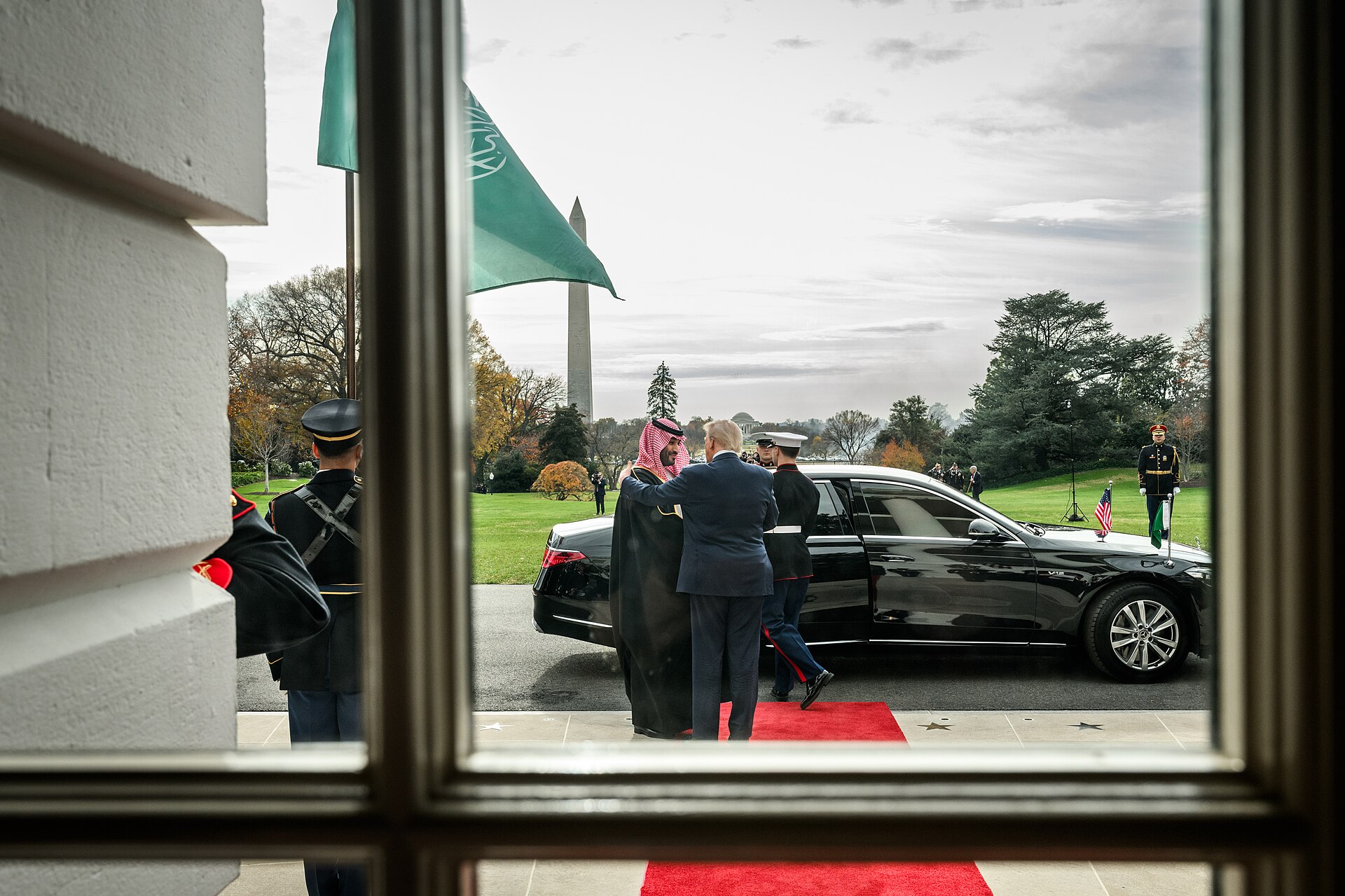
The commitment was widely interpreted as Saudi Arabia’s most explicit alignment with the United States in decades, coming after the kingdom paused its consideration of BRICS membership. According to the White House, the deals would support an estimated 11,000 American jobs through the Google Cloud project alone. Manufacturing Dive reported that the package included pharmaceutical manufacturing facilities, energy infrastructure projects, and technology transfer agreements across dozens of U.S. firms.
The war has complicated the timeline for delivery. Several planned joint ventures require Saudi personnel and capital flows that have been disrupted by the Strait of Hormuz closure, according to The National. The urgency deepened on March 23, when global equity markets losing trillions in a single session as Trump’s Iran deadline expired, underscoring how rapidly the war’s economic damage is spreading beyond the Gulf. Gulf sovereign wealth funds invested $126 billion globally in 2025, accounting for 43 percent of all state-owned investor capital worldwide, but fund managers are now reassessing risk exposure as the conflict continues.
| Component | Value | Status (March 2026) |
|---|---|---|
| Defense and security package | $142 billion | Accelerated due to war |
| Google Cloud / PIF AI hub | $35 billion | On track, US-based |
| DataVolt AI infrastructure | $20 billion | Implementation underway |
| Boeing aircraft order | $4.8 billion | Delivery timeline uncertain |
| Pharmaceutical manufacturing | Undisclosed | Under review |
| Energy infrastructure | Undisclosed | Partially delayed by war |
Miami’s role as the venue is itself significant. The city has become a preferred destination for Gulf capital in the Americas, with PIF and its subsidiaries establishing investment offices in the region. The choice of the Faena Hotel, a luxury beachfront property in Miami Beach, signals that the summit targets ultra-high-net-worth attendees and institutional investors rather than retail audiences.
What Is the War’s Impact on Gulf Investment Flows?
The Iran war, now in its fourth week, has created the most severe economic disruption to the Gulf since the 2020 oil price collapse. Goldman Sachs analysts warned in a March 2026 report that Saudi Arabia’s GDP could contract by 5 percent if the conflict runs through April, while the UAE’s economy would shrink by 3 percent. Kuwait and Qatar face potential GDP contractions of 14 percent, according to the same analysis.
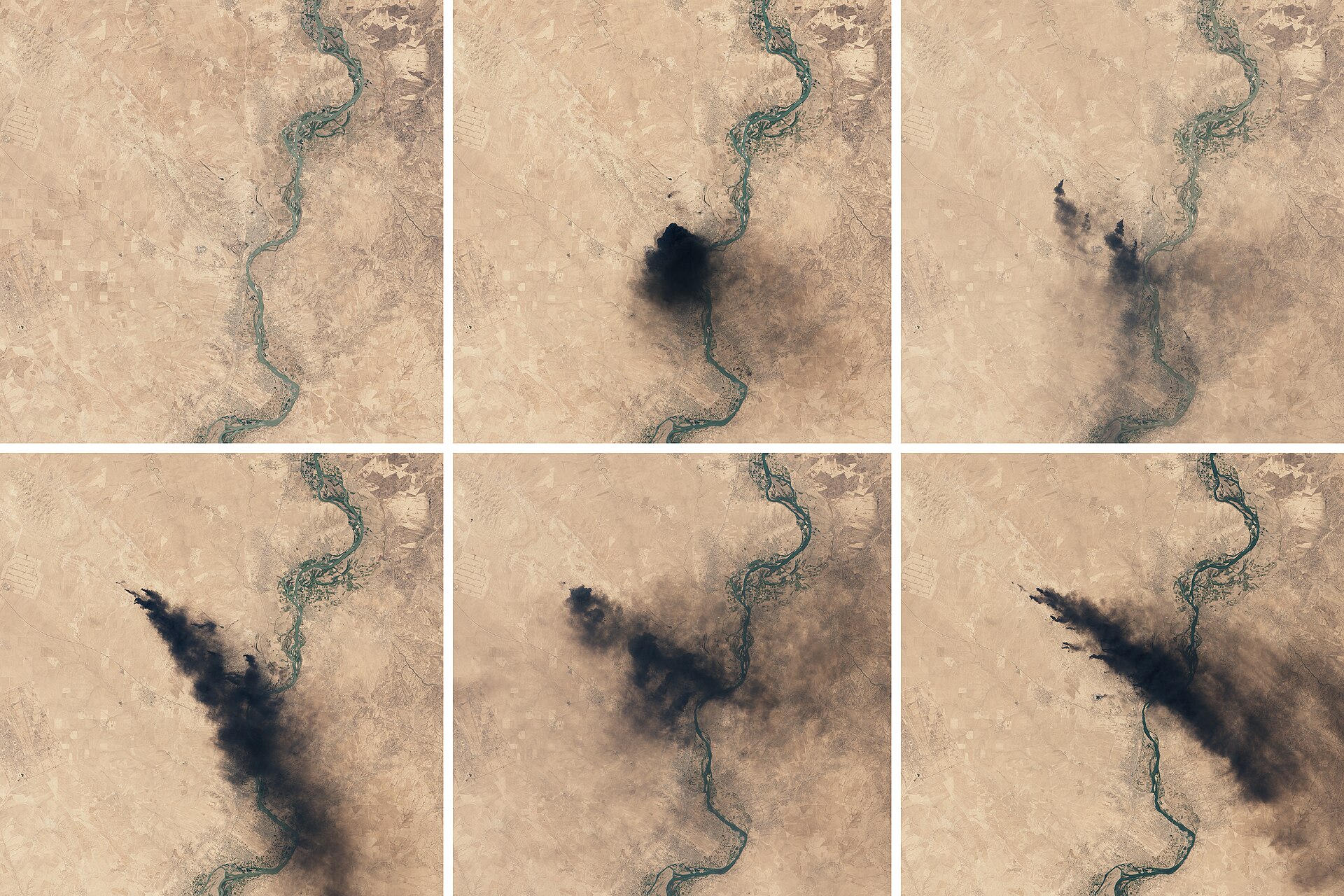
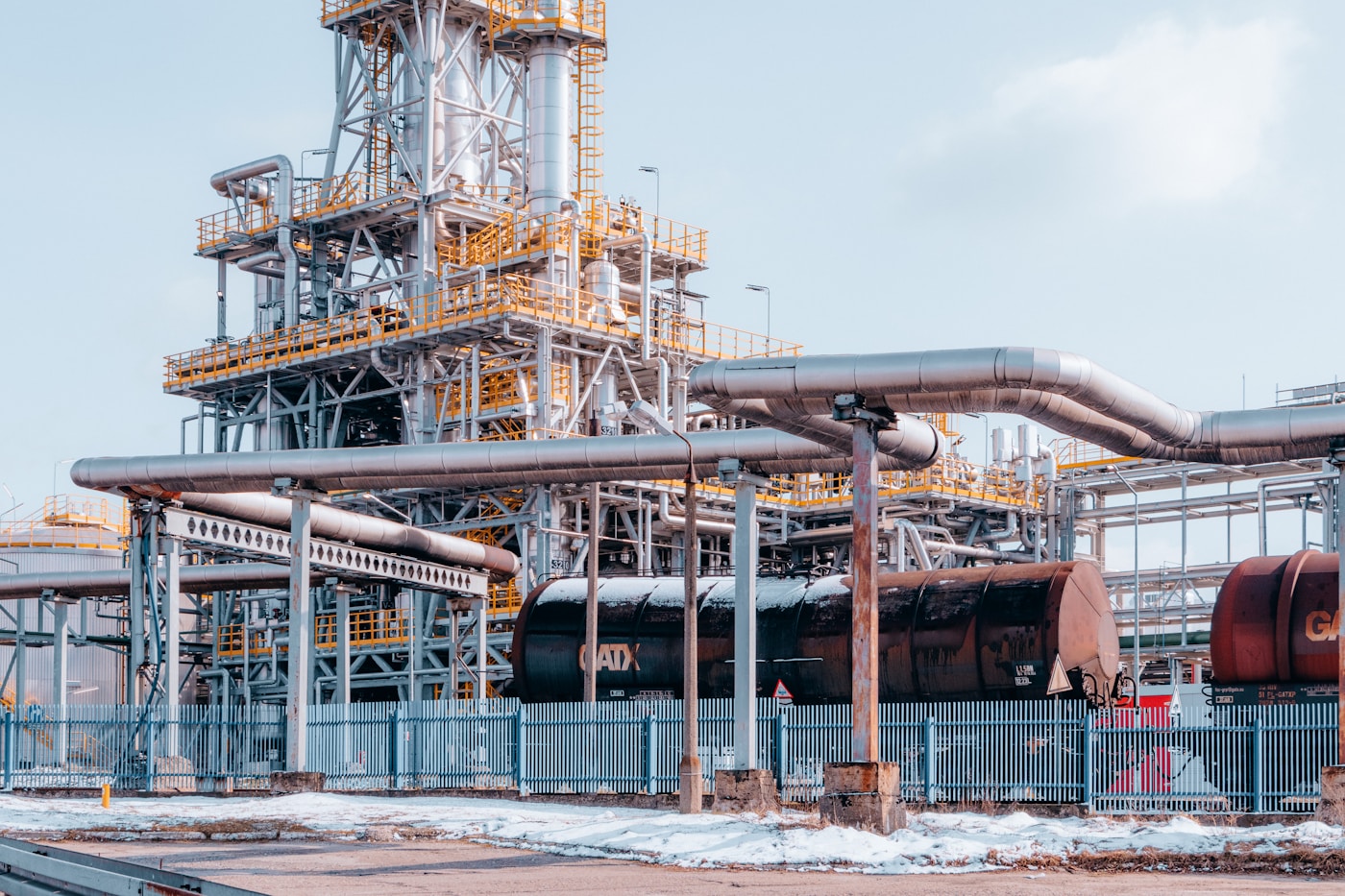
Vessel traffic through the Strait of Hormuz has fallen to roughly one-fifth of normal levels, Bloomberg reported, effectively cutting off the primary export route for Saudi, Kuwaiti, Qatari, and UAE hydrocarbons. Aramco has faced its largest operational crisis in history, with drone strikes hitting the SAMREF refinery in Yanbu, Saudi Arabia’s last major export outlet bypassing the Strait, on March 19.
The war’s impact extends beyond energy. More than 70 percent of all commercial flights to the UAE, Qatar, and Bahrain have been cancelled, according to Al Jazeera. Goldman Sachs and HSBC have reportedly moved personnel out of Dubai and Doha respectively, according to a March 12 report. The Formula 1 Saudi Arabian and Bahrain Grands Prix were cancelled. Saudi Arabia’s tourism sector, which Al-Khateeb has targeted to generate $100 billion annually by 2030, has effectively frozen — though the Kingdom’s $150 billion entertainment portfolio, from Qiddiya to Riyadh Season, represents permanent infrastructure that will resume generating returns once the conflict subsides.
Despite these disruptions, the FII Institute confirmed in early March that the Miami summit would proceed as scheduled. A senior FII official told The National that the event would address “how capital must move, adapt, and lead in a rapidly fragmenting world” — language that implicitly acknowledges the war’s impact without directly referencing it.
Gulf states have also begun reviewing their overseas investment commitments. Asian Mail reported on March 6 that Saudi Arabia, the UAE, Kuwait, and Qatar had discussed “withdrawing from US contracts” over concerns about the war’s financial toll, though no formal decisions have been announced. The IMF stated in a March assessment that Gulf fiscal buffers and export flexibility could absorb the war’s initial economic shock, but cautioned that a prolonged conflict would strain even the largest sovereign wealth reserves.
Why Is Trump’s Keynote Significant During the Iran Conflict?
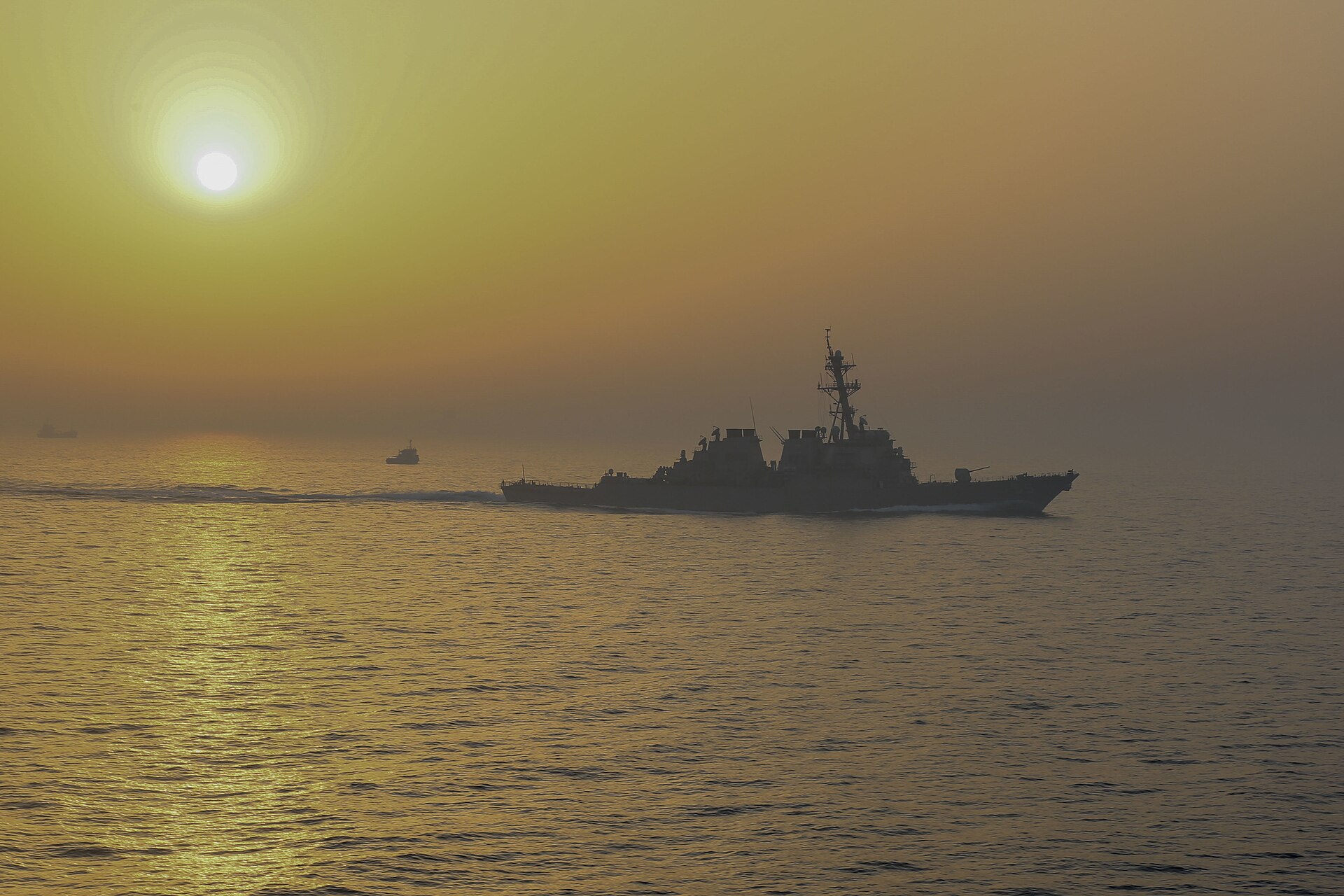
Trump’s appearance at the FII summit carries unusual weight given his administration’s role in launching the military campaign against Iran. The president issued a 48-hour ultimatum to Tehran on March 21, threatening to “obliterate” Iran’s power plants if the Strait of Hormuz is not fully reopened, an escalation that pushed oil prices higher and drew a counter-threat from Iran’s Revolutionary Guard to completely close the waterway.
The juxtaposition of Trump addressing Saudi investors in Miami while his military forces strike Iranian targets from Saudi bases underscores the transactional nature of the US-Saudi relationship. Saudi Arabia opened King Fahd Air Base to US forces in the war’s first week, and the Pentagon has requested $200 billion for operations conducted primarily from Saudi soil, according to congressional testimony.
For Saudi Arabia, Trump’s keynote offers a platform to reinforce the message that the kingdom remains open for business despite the conflict. The $600 billion investment commitment gives both sides incentive to project confidence. For Trump, the summit provides a stage to tout the economic dimension of his Middle East strategy at a moment when the military dimension faces mounting criticism.
The attendance of Witkoff, Trump’s Middle East envoy, adds a layer of diplomatic significance. Reuters reported that Witkoff has been involved in back-channel discussions about potential ceasefire terms, though no breakthrough has been reported. His presence at an investment summit rather than a diplomatic venue may signal that the administration views economic leverage as a component of its war strategy.
Can Saudi Sovereign Wealth Survive the War’s Economic Toll?
The PIF entered the conflict as the world’s fifth-largest sovereign wealth fund with $1.15 trillion in assets under management, according to the Sovereign Wealth Fund Institute. It was also the single most active sovereign wealth fund globally in 2025, deploying $36.2 billion over the year, driven largely by a $28.8 billion acquisition of the American video game company Electronic Arts, Gulf News reported in January 2026.
Collectively, the seven main Gulf sovereign wealth funds accounted for 43 percent of all capital invested by state-owned investors worldwide in 2025, totaling $126 billion in outflows, according to data compiled by The National. Gulf funds invested more than $70 billion in the United States alone in 2025, concentrated in artificial intelligence, infrastructure, and technology.
| Fund | Country | AUM (est.) | 2025 Deployment |
|---|---|---|---|
| Abu Dhabi Investment Authority (ADIA) | UAE | $1.11 trillion | $22.4 billion |
| Public Investment Fund (PIF) | Saudi Arabia | $1.15 trillion | $36.2 billion |
| Kuwait Investment Authority (KIA) | Kuwait | $1.0+ trillion | $15.8 billion |
| Qatar Investment Authority (QIA) | Qatar | $526 billion | $18.3 billion |
| Mubadala Investment Company | UAE | $302 billion | $14.1 billion |
| ADQ | UAE | $157 billion | $11.2 billion |
| Investment Corporation of Dubai (ICD) | UAE | $300+ billion | $8.0 billion |
A Deloitte Middle East report projected that Gulf sovereign wealth fund assets could reach $18 trillion by 2030, a 50 percent increase from late 2024 levels. The Iran war has introduced significant uncertainty into those projections. Lower oil export volumes, infrastructure damage, and the potential for prolonged Hormuz disruption could force funds to draw down reserves to support domestic budgets rather than deploying capital abroad.
The PIF faces a particular challenge. The fund serves as the primary engine of Vision 2030, Crown Prince Mohammed bin Salman’s economic diversification program. Continued investment in megaprojects such as NEOM, the Red Sea Global tourism development, and the Qiddiya entertainment city depends on sustained capital flows. The war has simultaneously increased pressure on the PIF to maintain domestic spending and reduced the kingdom’s revenue from oil exports.
What Does ‘Capital in Motion’ Mean in a Fragmenting World?
The summit’s theme, “Capital in Motion,” was selected before the Iran war began but has taken on an unintended resonance. The FII Institute describes the concept as reflecting how “capital, talent, and ideas are constantly evolving” in a period of global disruption. In practice, the theme now encompasses the largest forced reallocation of energy trade routes since the Second World War.
Gulf capital is indeed in motion, though not always in the directions the FII Institute anticipated. The Hormuz closure has rerouted tanker traffic, forced insurers to withdraw coverage from Gulf-flagged vessels, and pushed energy-importing nations including India, Japan, and South Korea to seek alternative suppliers. The International Energy Agency has predicted a record oil glut in 2026 if alternative supply routes cannot compensate for the Gulf disruption.
Latin America, a central focus of the Miami summit’s geographic remit, has emerged as a potential beneficiary. Brazilian, Guyanese, and Mexican oil production could partially offset Gulf supply disruptions, creating investment opportunities that Gulf sovereign wealth funds may be well-positioned to exploit. The paradox is stark: the same war that threatens Saudi Arabia’s oil revenue may accelerate PIF investment in the very competitors that could replace it.
Technology investment, particularly in artificial intelligence, remains a bright spot. The PIF’s AI partnerships with Google, DataVolt, and other American firms are largely insulated from the Hormuz disruption because they operate on US soil. Sovereign wealth funds globally poured $66 billion into AI investments in 2025, according to Gulf News, with the PIF among the most aggressive deployers. The Miami summit is expected to feature significant discussion of AI-related capital flows.
The Summit’s Diplomatic Significance
Beyond its commercial agenda, FII Priority Miami serves as an informal diplomatic venue at a moment when formal channels between Saudi Arabia and Iran have effectively collapsed. Riyadh expelled Iran’s military attache and four embassy staff on March 22, giving them 24 hours to leave the kingdom, after Iranian drones struck the SAMREF refinery in Yanbu and Saudi air defenses intercepted 51 drones over the Eastern Province in a single morning, according to Anadolu Agency.
Saudi Foreign Minister Prince Faisal bin Farhan Al Saud said earlier in the week that trust in Iran had been “shattered,” language that marks a decisive break from the rapprochement the two countries pursued in 2023 under Chinese mediation. The FII summit offers Saudi officials a platform to communicate their vision for post-conflict reconstruction and continued Western engagement directly to American decision-makers and investors.
The presence of FIFA President Gianni Infantino is notable given the uncertainty surrounding Saudi Arabia’s hosting of the 2034 World Cup. The ongoing conflict has raised questions about the kingdom’s ability to guarantee security for a global sporting event, though Saudi officials have maintained that the tournament will proceed as planned. Infantino’s attendance in Miami suggests continued FIFA confidence in the Saudi bid.
The summit also arrives three days after Trump addressed the FII Priority Summit in Miami in what the FII Institute described as “driving dialogue on purpose-driven investment.” The president’s keynote, combined with the attendance of his son Donald Trump Jr. and his Middle East envoy Steve Witkoff, signals that the Trump administration views Saudi investment as a cornerstone of its economic and foreign policy in the Gulf.
Frequently Asked Questions
When and where is the FII Priority Summit 2026?
The FII Priority Summit 2026 takes place from March 25 to 27 at the Faena Hotel in Miami Beach, Florida. The summit is the fourth edition of the FII Institute’s Americas-focused satellite conference and will gather more than 1,500 delegates including heads of state, sovereign wealth fund managers, and global business leaders under the theme “Capital in Motion.”
Is Trump speaking at the FII Summit?
President Donald Trump is scheduled to deliver the closing keynote address at the FII Priority Summit on March 27 at 9:30 PM GMT. Trump’s appearance makes him the most prominent speaker at the event and follows his participation in the 2025 FII summit in Riyadh, where he and Crown Prince Mohammed bin Salman announced a $600 billion Saudi investment commitment to the United States.
How does the Iran war affect the FII Summit?
The Iran war, now in its fourth week, forms the unavoidable backdrop to the summit. Goldman Sachs has warned Saudi GDP could contract 5 percent if fighting extends through April, Gulf sovereign wealth funds are reassessing overseas commitments, and the Strait of Hormuz disruption has upended global energy markets. The summit’s “Capital in Motion” theme now reflects forced capital reallocation as much as strategic investment.
What is the $600 billion Saudi investment in the US?
Crown Prince Mohammed bin Salman pledged $600 billion in new Saudi investments and trade with the United States during Trump’s May 2025 visit to Riyadh. The framework includes a $142 billion defense package, a $35 billion Google Cloud and PIF AI hub, a $20 billion DataVolt partnership, and a $4.8 billion Boeing order. Some components have been delayed by the Iran war.
Who is attending the FII Summit from Saudi Arabia?
Saudi Arabia’s delegation includes PIF Governor Yasir Al-Rumayyan, Finance Minister Mohammed Al-Jadaan, Tourism Minister Ahmed Al-Khateeb, and Ambassador Princess Reema bint Bandar. American speakers include Vista Equity’s Robert F. Smith, former Google CEO Eric Schmidt, Trump’s Middle East envoy Steve Witkoff, and Meta Vice Chair Dina Powell McCormick.
Correction (March 31, 2026): An earlier version of this article listed Kenneth C. Griffin, founder of Citadel LLC, as an attendee of the Future Investment Initiative Priority Summit. Citadel has confirmed he is not attending the event. The article has been updated to reflect this.