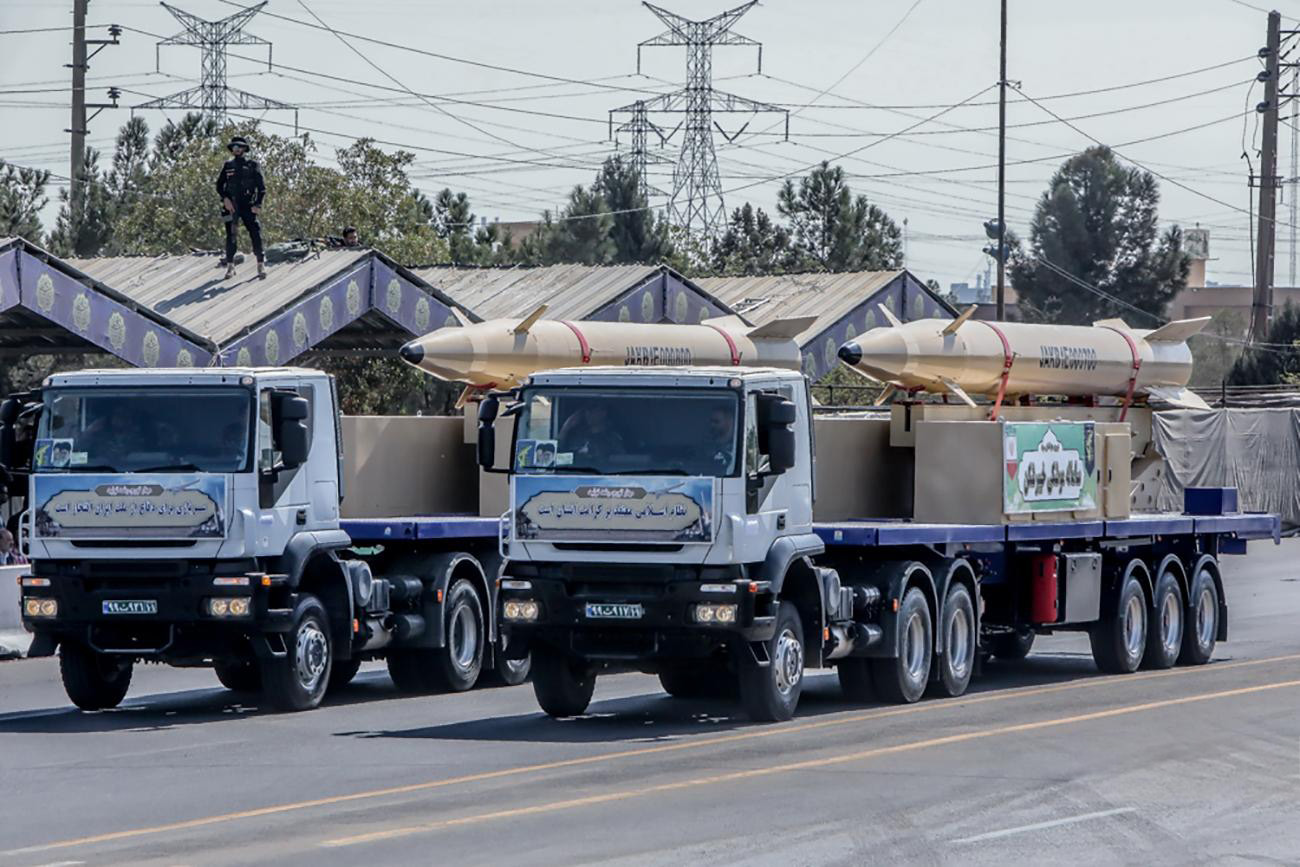

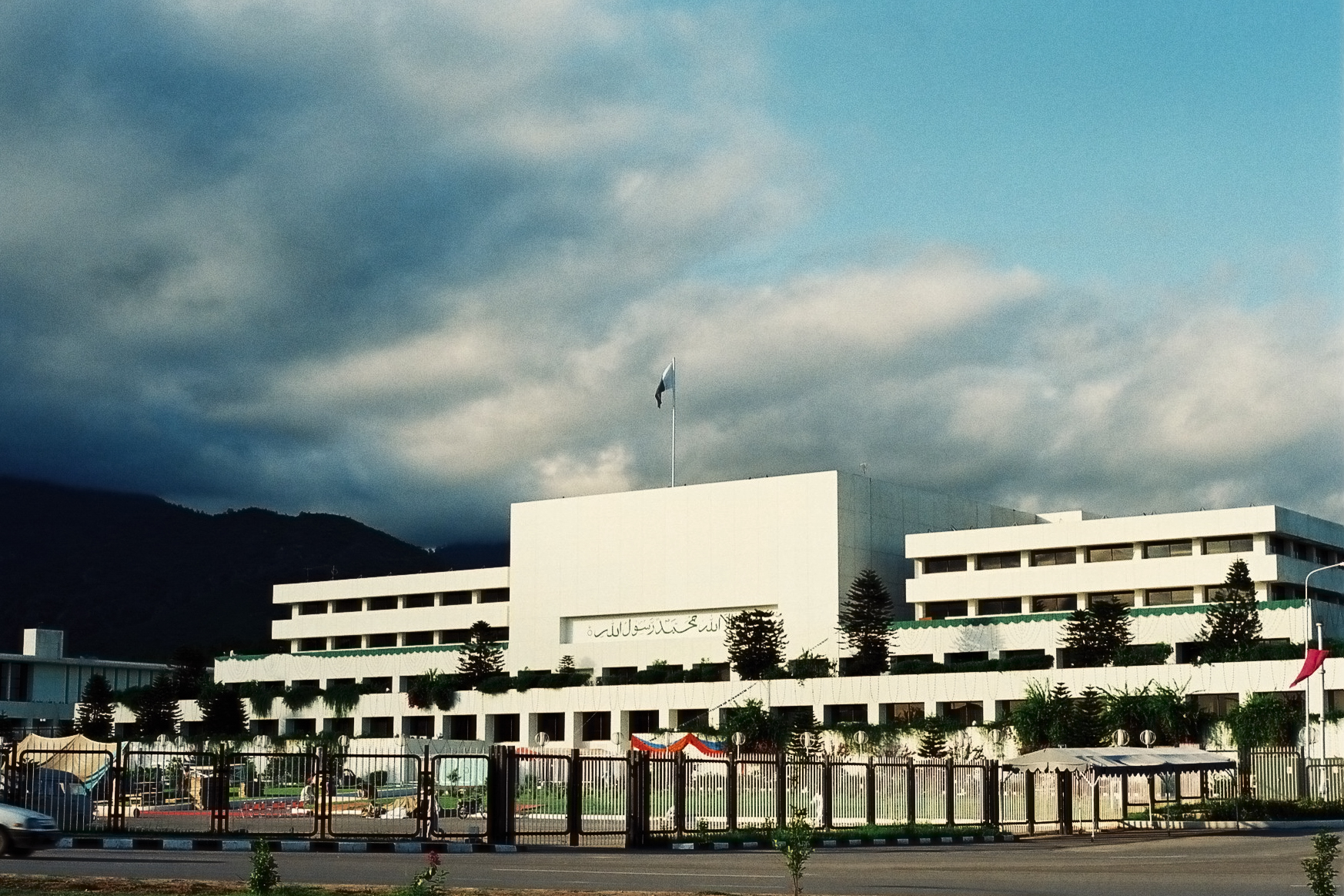
ISLAMABAD — Senior IRGC commanders publicly declared Iran’s ballistic missile program off-limits to negotiators on April 8 and 9, constraining the mandate of the Iranian delegation headed by Parliamentary Speaker Mohammad Bagher Ghalibaf before it reached the table in Islamabad. IRGC Aerospace Force Commander Brigadier General Seyed Majid Mousavi announced a “new phase” of missile operations — including twin-launcher systems for Fateh and Kheibar Shekan missiles — according to GlobalSecurity’s operational report. Ali Shamkhani, the Supreme Leader’s adviser and former SNSC secretary, called missile capabilities “a red line that will never be placed on the negotiating table,” according to PressTV and Al Jazeera.
The public constraints matter because the US 15-point proposal explicitly includes ballistic missiles as a negotiating item, while Iran’s 10-point counter-proposal does not. Without missiles on the table, the two frameworks share no common ground on the issue Washington has called a precondition. For Saudi Arabia, which has absorbed 894 intercepted Iranian projectiles since March 3, and for tanker operators watching Hormuz throughput at 15 ships per day versus the pre-war 138, the IRGC’s answer — delivered before talks opened — sets a ceiling on what Islamabad can reach.
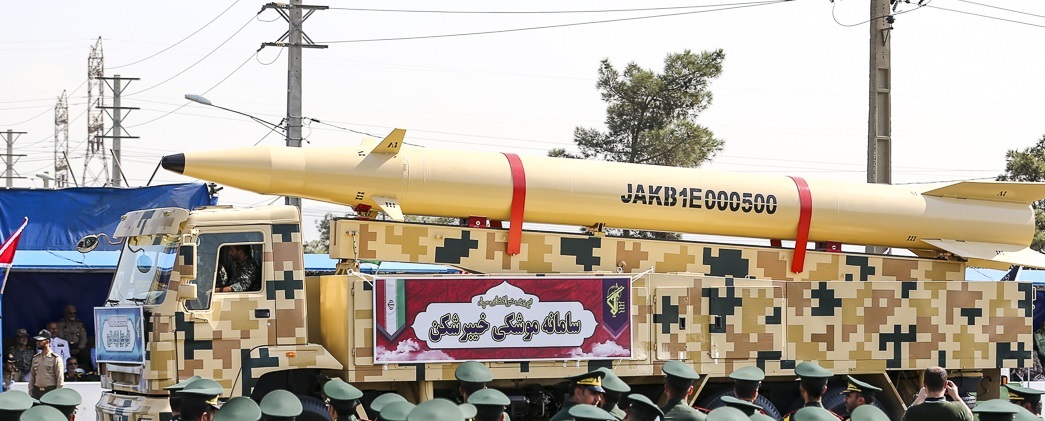
Table of Contents
The IRGC’s Public Red Lines
Mousavi’s statement on April 8 — the same day the ceasefire was announced — went beyond missiles. “An attack on proud Hezbollah is an attack on Iran. The field is preparing a heavy response to the regime’s savage crimes,” he told Al Mayadeen, linking any Israeli operation in Lebanon to an IRGC military response. The twin-launcher deployment for Fateh and Kheibar Shekan missiles, announced April 7, was described by GlobalSecurity as an active expansion of capability, not a bargaining chip awaiting negotiation. That linkage remains live: the US has since brokered direct Israel-Lebanon talks at the State Department for April 15, a track Iran has declared incompatible with its own ceasefire preconditions.
Foreign Minister Abbas Araghchi reinforced the position from the diplomatic side. Iran’s missile program has “never been, and never will be” part of any negotiation, he told Al Jazeera in February. On April 8, he framed the ceasefire terms as binary: “The US must choose — ceasefire or continued war via Israel. It cannot have both,” he wrote, according to Antiwar.com.
Mohammad Eslami, head of Iran’s Atomic Energy Organisation, extended the exclusion to enrichment on April 9. “The right to enrichment is non-negotiable. No law or individual can stand in our way,” he told ISNA, adding that US demands to restrict enrichment were “mere pipe dreams that will die with them.” The Arms Control Association noted in April that “delegating the missile issue to other states in the Persian Gulf region to negotiate with Iran seems to undermine US claims regarding the missile threat.”
Iran has launched 1,241 ballistic missiles since February 2026, according to GlobalSecurity’s Day-42 operational report. The IRGC deployed the twin-launcher systems one day before the ceasefire took effect. White House spokesperson Karoline Leavitt confirmed on April 8 that “the president’s red lines, namely the end of Iranian enrichment in Iran, have not changed,” per Al Jazeera. The structural consequence of both sides publicly committing to irreconcilable positions on enrichment is analyzed in detail in Phase 2 Was Dead Before the Ceasefire Started — the enrichment deadlock that predates the war and survives the ceasefire.
The Middle East briefing 3,000+ readers start their day with.
One email. Every weekday morning. Free.
Ghalibaf Arrived Holding the Exit Door Open
Before arriving in Islamabad, Ghalibaf posted on X on April 8 that negotiations were “illogical” and “unreasonable.” He cited three violations across Iran’s 10-point framework — a 30 percent failure rate before the first session opened. “The deep historical distrust we hold toward the United States stems from its repeated violations of all forms of commitments, a pattern that has regrettably been repeated once again,” he wrote, according to CNBC.
The three violations he named, reported by CNBC and IranWire: Israeli strikes continuing in Lebanon; an Israeli Hermes-900 drone intercepted in Iranian airspace over Lar, Fars Province, confirmed by Haaretz on April 10; and Trump’s public denial of Iran’s right to enrichment. “The very ‘workable basis on which to negotiate’ has been openly and clearly violated, even before the negotiations began,” Ghalibaf wrote, per Shabtabnews. “In such a situation, a bilateral ceasefire or negotiations is unreasonable.”
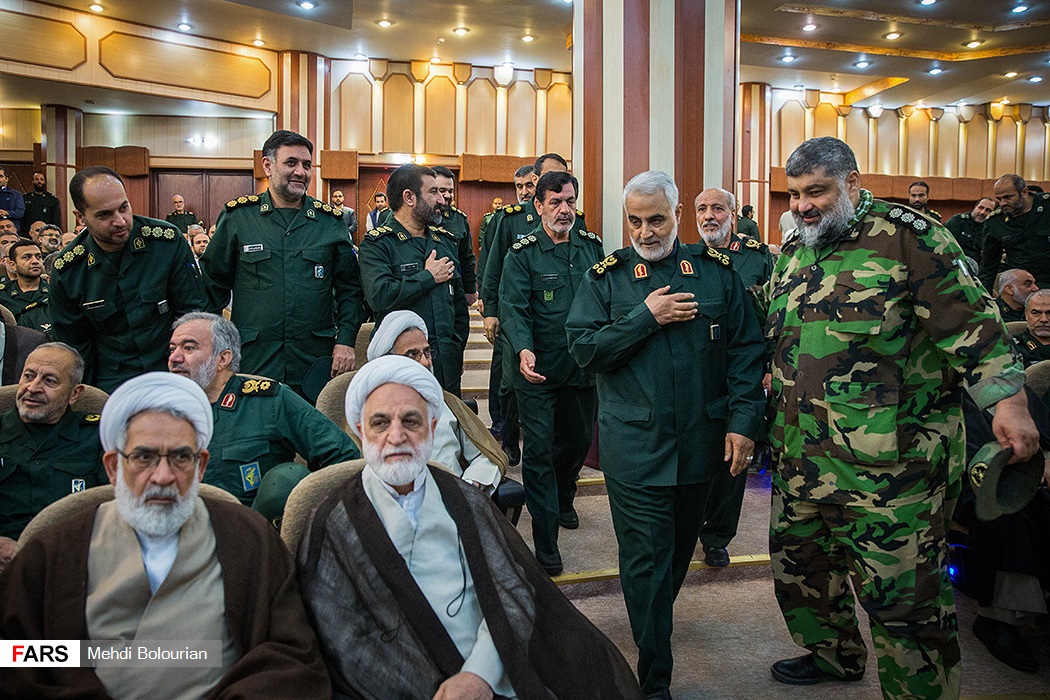
Ghalibaf’s background shapes how these statements land. He commanded the IRGC Aerospace Force from 1997 to 2000 — the same branch Mousavi now leads, the branch that announced new twin-launcher missile systems the day before the ceasefire. Masood Khalid, a former Pakistani ambassador, told Al Jazeera the atmosphere had been “poisoned before talks even began.” Sahar Khan of the Institute for Global Affairs assessed that “the biggest obstacle is lack of trust; both sides making maximalist demands.”
Tasnim News Agency, aligned with the IRGC, reported that Iran was threatening to “withdraw from the process if the Israeli war in Lebanon continues.” Mousavi’s April 8 statement — that any Hezbollah attack constitutes an attack on Iran — had already pre-authorized IRGC retaliation for any Israeli Lebanon operation regardless of what the delegation signs. Deputy Foreign Minister Saeed Khatibzadeh told ANI on April 9 that “Iran honours its words.”
What Can Islamabad Actually Produce Without Missiles on the Table?
The US 15-point proposal includes enrichment, ballistic missiles, sanctions relief, and Hormuz reopening, according to Al Jazeera and RTE. Iran’s 10-point counter includes IRGC “coordination” over Hormuz (Point 7), US base withdrawal from all regional bases (Point 8), and UNSC codification (Point 10). It does not include missiles. The gap between the two frameworks is not a matter of wording — it is structural. Washington has made missiles a precondition. Tehran has made their exclusion a precondition.
Al Jazeera reported on April 9 that “it remains unclear whether any IRGC representative will attend” the Islamabad talks. Without the IRGC at the table, any agreement on Hormuz — where the IRGC retains operational control of passage enforcement, per GlobalSecurity — lacks the signature of the entity that would need to implement it. Iran sent three different documents to Islamabad, none of which resolved this structural disconnect.
The 14-day ceasefire expires April 22. Hormuz throughput 48 hours after the ceasefire stood at nine vessels total — zero tankers — against a pre-war baseline of roughly 120 per day, according to S&P Global and MarineTraffic via NBC. The IRGC publicly stated a cap of 15 ships per day under ceasefire conditions, per Al Jazeera and NBC. Even at that ceiling, the strait operates at 11 percent of pre-war capacity.
The Authorization Ceiling Is Now Visible at Summit Level
President Masoud Pezeshkian accused Vahidi and Khatam al-Anbiya headquarters commander Ali Abdollahi on April 4 of “acting unilaterally and driving escalation through attacks on regional countries,” according to Iran International. Their actions, he said, had “destroyed any remaining chance of a ceasefire.” He warned of “a huge catastrophe” and that the economy could collapse “in three to four weeks.”
The elected president lost that confrontation. Vahidi rejected all of Pezeshkian’s candidates for intelligence minister, including Hossein Dehghan, and installed Mohammad Bagher Zolghadr — who is under US and EU sanctions — in the role. Iran International reported that Vahidi, appointed IRGC commander-in-chief on March 1, was described by analyst Mohammad Ali Shabani of Amwaj Media as “a known hardliner.”
The authorization ceiling — the structural limit on what Iran’s civilian government can commit to without IRGC consent — has been visible to analysts since the early weeks of the conflict. What changed in the 48 hours before Islamabad is that the ceiling became visible to the principals themselves, stated publicly and on the record. Mousavi did not brief these positions in a classified SNSC session. He announced them on Al Mayadeen.
General Kenneth McKenzie, former US CENTCOM commander, told the Jerusalem Post in April that “decisions are being made collectively, that there is a committee making decisions. A committee on the hard right — an IRGC-level committee.” He added that “the hard right has made decisions before which involved the modification of policy,” but noted Iran would “respond to existential pressure. They have done so in the past, drinking from the ‘poison chalice.’”
The poison chalice — Ayatollah Khomeini’s 1988 description of accepting the Iran-Iraq War ceasefire — required Khomeini himself to issue the order. Article 110 of Iran’s constitution assigns the Supreme Leader, not the president, command of the armed forces. Article 176 requires Supreme Leader confirmation for all SNSC decisions. Khamenei has been absent approximately 39 days as of April 10; the Times of London reported him “unconscious in Qom.” The confirmation mechanism does not currently exist.
Why 2015 Is the Wrong Precedent and the Right Warning
The 2015 JCPOA explicitly excluded ballistic missiles. UN Security Council Resolution 2231 only “called upon” Iran not to develop nuclear-capable ballistic missiles — language that carried no verification mechanism, no limits on stockpiles, and no enforcement pathway. The IRGC accelerated missile development throughout the JCPOA years, conducted ballistic missile tests, fired missiles near US carriers, and supplied regional proxies. The IRGC was not party to the JCPOA and never treated it as binding on its operations.
The same structural exclusion is being demanded again. Iran’s 10-point plan omits missiles entirely. Shamkhani, Araghchi, and Mousavi have each stated — through separate channels, in separate weeks — that the program is non-negotiable. Hassan Ahmadian, a professor at the University of Tehran, told Al Jazeera in February: “There are limits to what Iran can offer. So far, the Iranian decision-makers have been insisting that a talk on Iran’s defensive capabilities is unacceptable.”
What 2015 demonstrated was not that Iran would negotiate in bad faith on missiles. It demonstrated that Iran would negotiate successfully to keep missiles out of the deal — and then use the exclusion to continue expanding the program under the agreement’s protection. The IRGC’s 2026 position is consistent with its 2015 position. The twin-launcher deployment, announced the day before talks opened, is not a departure from that record. It is the record.
The Arms Control Association flagged a separate asymmetry on the US side. Steve Witkoff, Trump’s envoy, called Iran’s IR-6 centrifuge “probably the most advanced centrifuge in the world” — a statement ACA described as reflecting a knowledge gap. The association also noted that Witkoff “expressed surprise that Iran produces centrifuges” and misidentified nuclear facilities as “industrial reactors.” Ghalibaf commanded the IRGC Aerospace Force from 1997 to 2000. Mousavi commands it now.
The Hormuz Gap
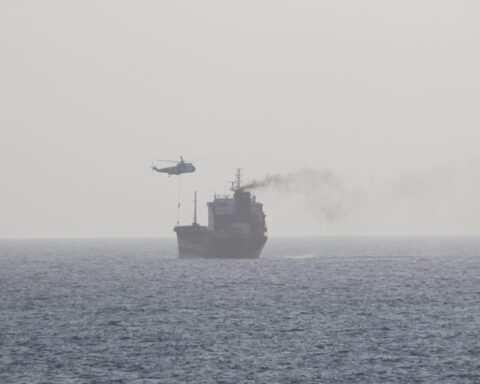
IRGC field commanders are operating with “significant individual initiative” following the deaths of multiple senior commanders, including intelligence chief Khademi, killed April 6, according to GlobalSecurity. The same report confirmed the IRGC retains “operational control of Hormuz passage enforcement” independent of whatever the civilian delegation agrees to in Islamabad.
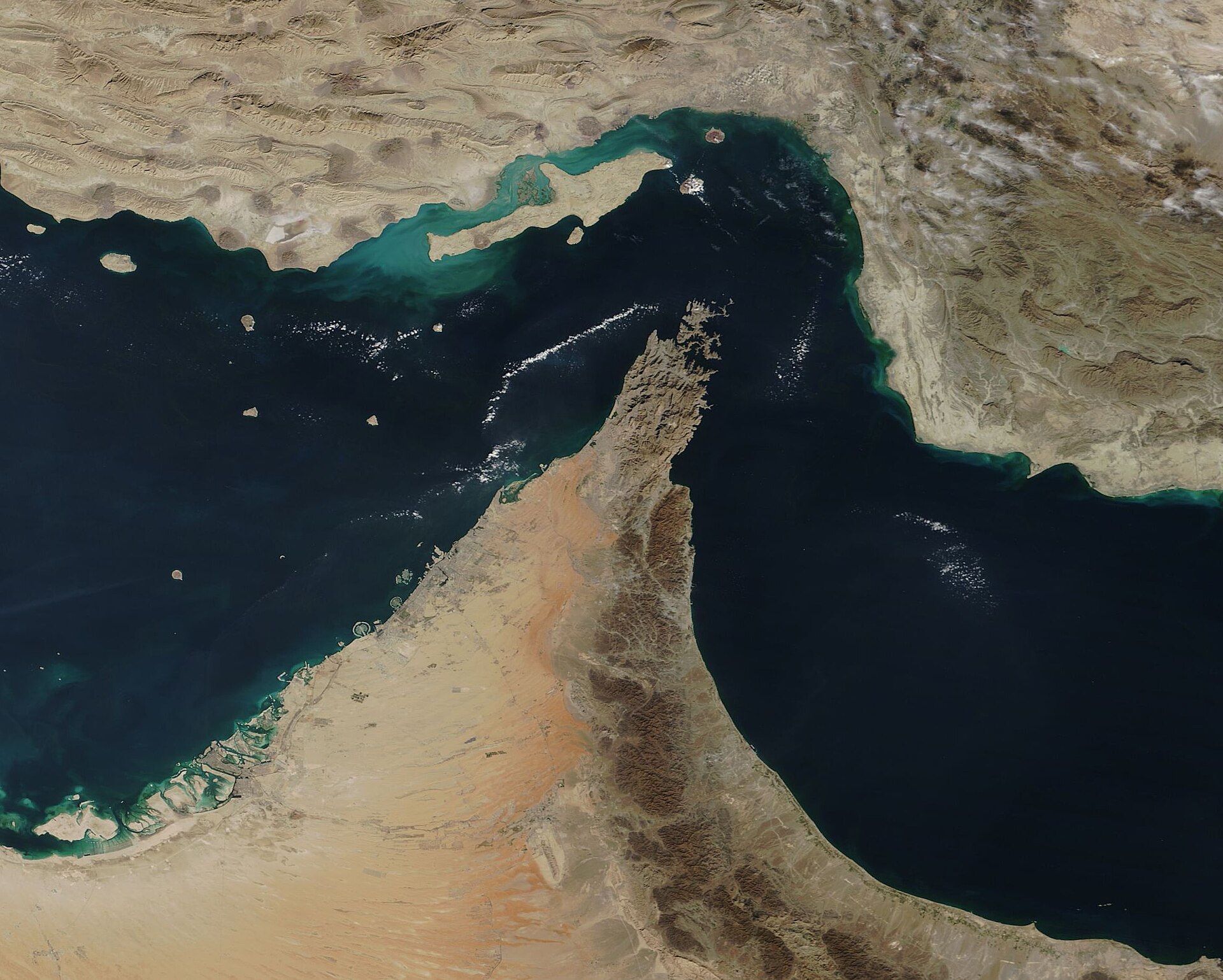
The IRGC published a chart between February 28 and April 9 marking the standard Hormuz shipping lanes as a danger zone, redirecting vessels through a five-nautical-mile channel between Qeshm and Larak islands — inside Iranian territorial waters. Iran’s parliament passed a Hormuz fee bill on March 31. The Gharibabadi-Oman transit protocol remains unfinalized. Throughput at the IRGC’s stated cap stands at 11 percent of pre-war levels.
The IRGC’s PressTV statement on April 9 — “The Armed Forces of the Islamic Republic of Iran have absolutely not launched any projectiles toward any country during the ceasefire hours up to this moment” — claims compliance while Mousavi simultaneously describes the missile program as expanding. Both statements were issued the same week. The SNSC’s own framing, carried by Iranian state media after the ceasefire, described the talks as a continuation of hostilities: “Negotiations are continuation of battlefield.”
Frequently Asked Questions
What is the difference between the US 15-point and Iran 10-point proposals?
The US proposal, reported by Al Jazeera and RTE, covers enrichment, ballistic missiles, sanctions relief, and Hormuz reopening across 15 points. Iran’s counter-proposal spans 10 points — including IRGC coordination over Hormuz (Point 7), US base withdrawal from all regional countries (Point 8), and UNSC codification of any deal (Point 10) — but omits ballistic missiles entirely. Point 6 asserts Iran’s right to enrichment, which Washington has called a red line. The two documents share no common ground on the two issues each side has designated as preconditions.
Has the IRGC ever accepted limits on its missile program?
No. During the JCPOA negotiations in 2014-2015, Iran successfully excluded ballistic missiles from the deal text. UNSC Resolution 2231’s non-binding “call upon” language produced no verification mechanism and no enforcement pathway. Between 2016 and 2018, while the JCPOA was in force, the IRGC conducted multiple ballistic missile tests, including launches that landed within 150 kilometers of US naval vessels. The Rouhani government, which negotiated the deal, had no mechanism to prevent these tests and did not attempt to create one.
Who actually commands Iran’s military during Khamenei’s absence?
In practice, an IRGC-level committee — with Vahidi and Zolghadr at its core. Neither holds constitutional authority to confirm SNSC decisions. Iran’s constitution has no formal incapacitation mechanism comparable to the US 25th Amendment: Article 111 provides for a Leadership Council to temporarily assume Supreme Leader functions, but it requires formal acknowledgment of incapacitation, which has not occurred. Iran has never publicly invoked Article 111. The result is a command vacuum that is constitutionally unresolvable without Khamenei’s own participation.
What would need to happen for Hormuz to fully reopen?
The IRGC’s published danger-zone chart covering the standard Hormuz shipping lanes would need to be rescinded. The Gharibabadi-Oman transit protocol would need to be finalized and ratified. The IRGC’s stated 15-ship-per-day cap would need to be lifted. The parliamentary Hormuz fee bill passed March 31 would need to be either repealed or set at rates acceptable to transit states — Oman’s Transport Minister Al Maawali has stated that “no tolls can be imposed for crossing Hormuz.” Mine clearance across approximately 200 square miles would take an estimated 51 days based on the 1991 Kuwait benchmark, and the US has only three littoral combat ships in the region since the four Avenger-class minesweepers were retired from Bahrain in September 2025.
Can Pakistan enforce any agreement reached in Islamabad?
Pakistan’s role evolved from venue host to de facto enforcement mechanism after foreign policy adviser Munir served as phone relay between delegations on April 8-9. But the Islamabad Accord framework contains no enforcement clause. Pakistan’s September 2025 Saudi Military Defense Agreement makes it simultaneously Iran’s interlocutor and Saudi Arabia’s treaty ally. A $5 billion Saudi loan to Pakistan matures in June 2026 — weeks after the ceasefire’s April 22 expiration — giving Riyadh financial leverage over the mediator. Pakistan’s 27th Constitutional Amendment placed foreign policy under the adviser’s authority rather than the elected government’s, meaning ceasefire diplomacy runs through an unelected official accountable to the military establishment rather than parliament.