ISLAMABAD — The United States is negotiating a deal to release $20 billion in frozen Iranian assets in exchange for Iran’s enriched uranium stockpile, according to four sources briefed on the three-page framework described by Axios on April 17, 2026. Saudi Arabia is not a party to this deal, not consulted on its terms, and not mentioned in the text — yet the enrichment moratorium under discussion directly constrains the nuclear programme Crown Prince Mohammed bin Salman has publicly committed to building.
This is the second time in eleven years that a US-Iran nuclear bargain has been written without Gulf representation. The first was the 2015 JCPOA, which released approximately $56 billion in accessible frozen assets, according to US Treasury Secretary Jack Lew’s testimony to Congress in July 2015, and gave Iran a 10-year enrichment sunset that Riyadh spent the next decade trying to undo. The 2026 version offers Iran one-third of the money, demands a moratorium Tehran has already rejected in its proposed form, and arrives while Saudi Arabia is running a 3.15-million-barrel-per-day production deficit, a PAC-3 interceptor stockpile at roughly 14% of pre-war levels, and an $8 billion financial commitment to the country hosting the talks it cannot attend. What follows examines the structural parallel between 2015 and 2026, the $20 billion figure and what it purchases, the enrichment moratorium gap that collapsed the first Islamabad round, and the legal and diplomatic recourse available to Riyadh — which is none.
Table of Contents
- The $20 Billion Figure and What It Buys
- What Did Saudi Arabia Lose When the JCPOA Was Signed Without It?
- Why Is Saudi Arabia’s Position Weaker in 2026 Than in 2015?
- What Does the 5-Year vs 20-Year Enrichment Gap Mean for Saudi Arabia?
- The Financial Stack: Who Is Paying for What
- Where Does Iran’s $20 Billion Go?
- Does Saudi Arabia Have Any Legal or Diplomatic Recourse?
- The NPT Trap: How a Bilateral Deal Constrains All Enrichment Rights
- 2015 JCPOA vs 2026: A Structural Comparison
- Frequently Asked Questions
The $20 Billion Figure and What It Buys
The three-page framework described by Axios on April 17 puts a specific number on what had been, until this week, an abstraction. The United States opened at $6 billion. Iran countered at $27 billion. The working figure, according to four people briefed on the document, is $20 billion in currently frozen Iranian assets — the first time a precise dollar amount has been attached to the 2026 nuclear bargain. In exchange, Iran would relinquish its enriched uranium stockpile, including an estimated 440–460 kg at 60% purity, nearly half of which is stored in an underground tunnel at Isfahan, according to Al Jazeera reporting on April 14.
The $20 billion figure sits in a specific historical frame. The 2015 JCPOA released approximately $56 billion in accessible frozen assets from a total frozen pool of $100–125 billion, of which $50–70 billion was illiquid or already committed to pre-existing obligations, per Lew’s Congressional testimony. The current offer is roughly 36 cents on the Obama-era dollar, after a war that has killed thousands, collapsed Saudi production by more than 3 million barrels per day, and demonstrated that Iran can sustain a multi-front conventional campaign for 46 days. For Tehran, the 2015 deal paid more for less — Iran’s 2015 stockpile stood at approximately 8,000 kg of low-enriched uranium at 3.67%, a fraction of the weapons-relevant material it holds today.
Trump, speaking on April 17, framed the proximity in characteristic terms: “We are very close to making a deal. If no deal, fire resumes.” The previous day, he told the Washington Post that Iran had “agreed to give us back the nuclear dust that’s way underground because of the attack we made with the B-2 bomber.” As of April 17, no Iranian official or state media outlet had confirmed any such agreement — a silence that extends through every layer of the Iranian state, from the Foreign Ministry to the Supreme National Security Council to PressTV.
What Did Saudi Arabia Lose When the JCPOA Was Signed Without It?
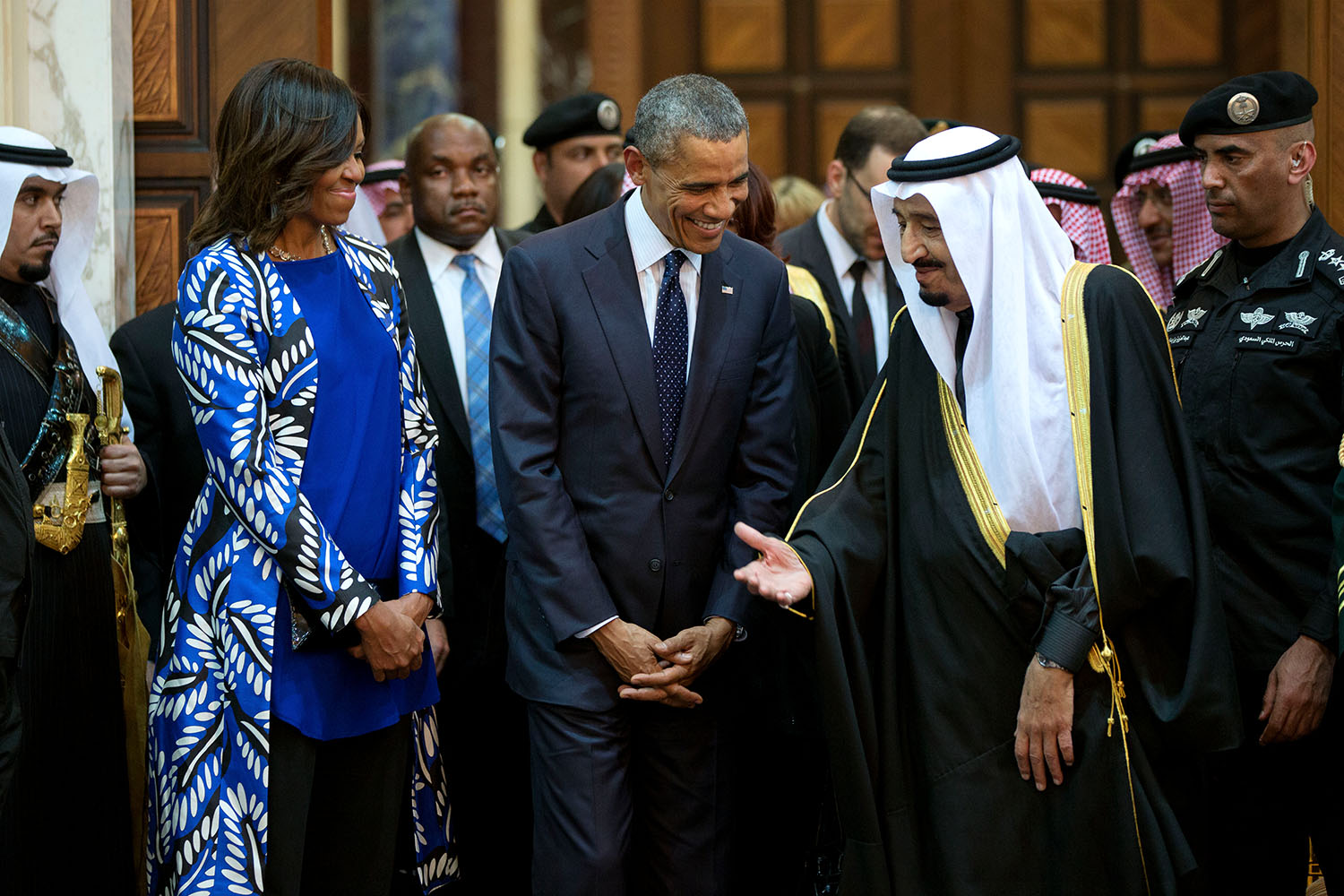
The P5+1 format that produced the 2015 Joint Comprehensive Plan of Action excluded every regional state. Saudi Arabia, the UAE, Israel, and the Gulf Cooperation Council as a whole were not parties to the negotiation, could not propose amendments, and were not consulted on the final text. The Obama administration’s May 2015 Camp David summit — a gesture intended to mollify Gulf allies — produced a joint statement and no treaty commitments. King Salman sent Crown Prince Mohammed bin Nayef in his place, a deliberate rebuke that Saudi state media did not attempt to soften.
The Middle East briefing 3,000+ readers start their day with.
One email. Every weekday morning. Free.
The Gulf demands that were excluded from the JCPOA’s text constitute a catalogue of everything that subsequently went wrong. Riyadh wanted constraints on Iran’s conventional military posture, limits on IRGC intelligence operations across the Gulf, restrictions on Iranian naval deployments in the Arabian Sea and the Strait of Hormuz, conditions on proxy network financing, and a binding cap on ballistic missile development. None appeared in the final agreement. The JCPOA addressed the nuclear file and nothing else, on the theory — articulated by Secretary of State John Kerry and shared by few in the Gulf — that resolving the nuclear question would create diplomatic space for addressing conventional threats later.
That space never opened. After the JCPOA took effect in January 2016, projections based on American Action Forum analysis showed Iran’s military budget positioned to absorb $4.8 billion in additional annual spending, with a projected $3.1 billion increase for the IRGC specifically. Iranian military spending fell only 22% when Trump reimposed sanctions between 2018 and 2020, a period during which the IRGC’s operational budget contracted sharply enough that Pezeshkian’s April 2026 accusation against Vahidi and Abdollahi traces directly to the institutional memory of that squeeze. Prince Turki al-Faisal, the former Saudi intelligence chief, stated the Gulf position with precision in 2015: “Whatever comes out of these talks, we will want the same. So if Iran has the ability to enrich uranium to whatever level, it’s not just Saudi Arabia that’s going to ask for that.”
Why Is Saudi Arabia’s Position Weaker in 2026 Than in 2015?
In May 2015, when the JCPOA was being finalised, Saudi Arabia was producing approximately 10.3 million barrels per day, held an estimated 2,800 PAC-3 MSE interceptor rounds, maintained an intact Eastern Province industrial base, and had not yet committed the financial resources to Pakistan that now define Riyadh’s diplomatic architecture. The Kingdom’s GDP was growing, Brent crude sat above $60 per barrel, and the security guarantee from Washington — while fraying — was still structurally intact through basing agreements, arms sales pipelines, and the implicit understanding that American force posture in the Gulf existed to protect Saudi energy infrastructure.
Every one of those conditions has deteriorated. Saudi production in March 2026 fell to 7.25 million barrels per day, according to IEA data — a 3.15 million bpd drop from February’s 10.4 million, the largest single-month decline in Saudi production history. PAC-3 MSE stocks sit at approximately 400 rounds, roughly 14% of the pre-war inventory, with the Camden, Arkansas production line turning out 620 rounds per year — meaning full replenishment, even if every round went to Saudi Arabia and nowhere else, would take nearly four years. Khurais is offline at 300,000 bpd with no restoration timeline announced. Ras Tanura has been struck. The King Fahd Causeway appeared on the IRGC’s published counter-target list.
The Stimson Center’s Kaitlyn Hashem, writing on March 23, 2026, placed Saudi Arabia’s nuclear calculus in the frame that matters: the Kingdom’s nuclear ambition now reflects “eroding U.S. security guarantees,” meaning the civilian programme is a self-reliance hedge rather than purely an energy play. A deal that constrains enrichment rights — even one that constrains only Iran’s — arrives at the moment Riyadh’s own security dependence on Washington has been most visibly exposed. Saudi Arabia’s fiscal break-even sits at $108–111 per barrel according to Bloomberg’s PIF-inclusive estimate, while Brent traded at approximately $91–94 in mid-April 2026, a gap that translates to a structural deficit Goldman Sachs projects at 6.6% of GDP on a war-adjusted basis versus the official 3.3% forecast.
What Does the 5-Year vs 20-Year Enrichment Gap Mean for Saudi Arabia?
The enrichment moratorium is where the Islamabad talks collapsed. According to Axios reporting on April 13, the United States demanded a 20-year freeze on Iranian enrichment; Iran countered with five years. The gap — 15 years of disagreement over how long Iran would be barred from producing enriched uranium — is not merely a technical dispute between Washington and Tehran. It is a direct constraint on Saudi Arabia’s own nuclear programme, regardless of which number prevails, and Riyadh has no voice in choosing it.
The arithmetic of the moratorium matters. The 2015 JCPOA imposed a 10-year enrichment sunset, meaning Iran’s programme would have been unconstrained from 2025 onward — a timeline Trump himself called “too short” when he withdrew from the deal in May 2018. In 2026, the same structural question recurs with different numbers: Iran offers half the original JCPOA period (5 years versus 10), while the United States demands double it (20 years versus 10). The median of the two positions — approximately 12.5 years — is marginally longer than the deal Trump withdrew from, a detail that exposes the thinness of the “better deal” framing the administration has used since 2018. MV Ramana of the University of British Columbia told Al Jazeera on April 14: “I cannot discern any technical reasons for either 20 or five years.” Ian Lesser of the German Marshall Fund noted the JCPOA’s 10-year cap was “criticized as too short by Trump and others, explaining why both sides now seek ‘better deals’ from their perspectives.”
The gap becomes sharper still when examining the pending US-Saudi civil nuclear agreement — Washington’s willingness to pay $20 billion to neutralize Iran’s HEU without a permanent enrichment ban creates a structural asymmetry that functions as a 123 Agreement killer.
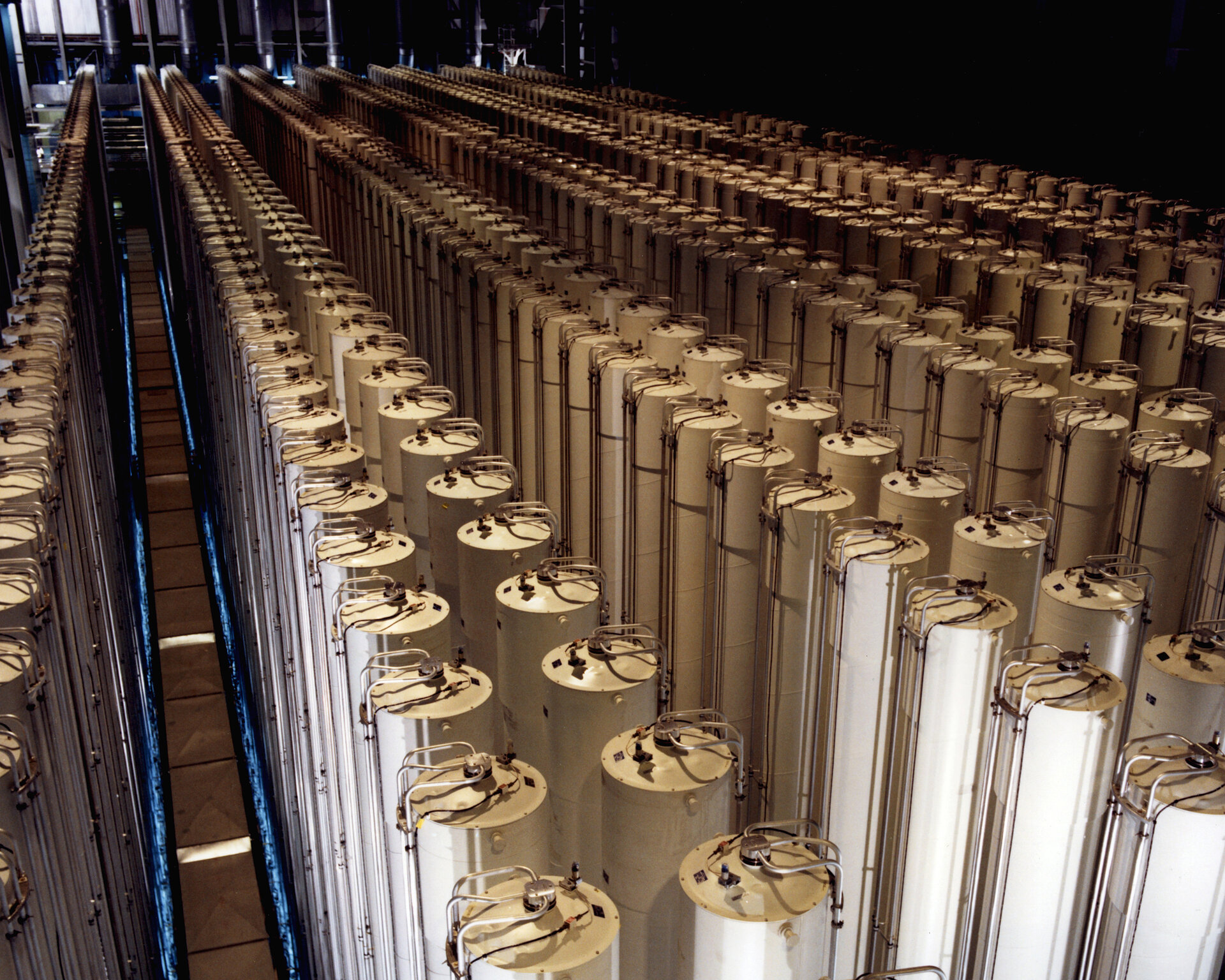
For Saudi Arabia, the moratorium period is operationally consequential because of what MBS has committed to building. KACARE, the King Abdullah City for Atomic and Renewable Energy, oversees a 16-reactor plan with the first site at Khor Duweihin on the Persian Gulf coast: two 1,400 MWe pressurised water reactors, first concrete expected in the late 2020s, commercial operation projected for the early 2030s, according to the World Nuclear Association. Saudi uranium reserves stand at approximately 90,000 tonnes in the Arabian Shield. Prince Abdulaziz bin Salman, the Energy Minister, stated Riyadh’s enrichment position without ambiguity at a Dhahran conference on January 13, 2025: “We will enrich it and we will sell it and we will do a ‘yellowcake.’” The November 2025 US-Saudi civil nuclear 123 agreement included “additional safeguards” language on enrichment but explicitly rejected the UAE’s 2009 “gold standard” no-enrichment pledge, as noted by the Arms Control Association.
Chris Featherstone of the University of York identified the technical ratchet embedded in any moratorium: “The longer that Iran goes without enriching uranium, the more difficult it is to restart the process.” That principle applies identically to Saudi Arabia. If a US-Iran moratorium establishes the normative precedent that bilateral deals can constrain enrichment timelines — even if the formal constraint falls only on Tehran — Washington gains a template it can and will deploy against Riyadh’s own programme. Kelsey Davenport of the Arms Control Association has already warned that the Trump administration “has not carefully considered the proliferation risks posed by its proposed nuclear cooperation agreement with Saudi Arabia.”
The Financial Stack: Who Is Paying for What
The financial architecture of the 2026 deal framework is legible as a ledger, and the ledger is unflattering to Riyadh. Saudi Arabia committed $8 billion to Pakistan — a $3 billion fresh deposit plus the extension to 2028 of an existing $5 billion facility — announced at the World Bank-IMF Spring Meetings on April 17, according to Geo.tv and Economy.pk. This money keeps Pakistan solvent enough to host the Islamabad talks, pay the institutional costs of mediation, and maintain the relay architecture through which every message between Washington and Tehran now passes. Through the same venue, the United States is negotiating the release of $20 billion to Iran — two and a half times what Riyadh is paying to run the table.
The ratio is the point. Saudi Arabia spends $8 billion to sustain a mediator whose primary output is a deal that gives Iran $20 billion. The MBS-Sharif bilateral in Jeddah on April 16 — a two-hour briefing with no joint statement — produced no mechanism for Saudi input into the deal text. The financial relationship between Riyadh and Islamabad, structured through the Strategic Mutual Defence Agreement signed on September 17, 2025, commits Pakistan to Saudi Arabia as a contracted military auxiliary while simultaneously positioning Islamabad as Tehran’s trusted interlocutor. Every dollar of the $8 billion buys credibility for Pakistan to serve both sides of a negotiation Saudi Arabia cannot enter.
In 2015, the financial dynamic was different because the mediating architecture — the P5+1 — was not funded by the Gulf. No Gulf state underwrote the talks that excluded it. The 2026 structure inverts this entirely: the mediating architecture is directly funded by the excluded party, creating a situation in which Saudi Arabia’s financial patronage is a necessary condition for talks whose output it cannot influence.
Where Does Iran’s $20 Billion Go?
The post-JCPOA spending pattern is the operating model for what $20 billion means inside the Islamic Republic. The American Action Forum’s post-JCPOA projections, detailed earlier, showed the trajectory: an enrichment deal releases budget constraints, and freed budget flows to the IRGC. The proxy network expansion across Yemen, Lebanon, Syria, and Iraq that followed the 2015 deal culminated in the operational posture Iran deployed on February 28, 2026 — the day the war began.
In 2026, the IRGC’s financial structure has become more explicit. The Revolutionary Guards receive one-third of Iran’s exported oil — approximately 600,000 barrels per day — and retain the proceeds, according to IranOpenData and IranIntl reporting in April 2026. The IRGC’s budget rose 24% year-on-year. Releasing $20 billion in frozen assets does not merely restore pre-sanctions fiscal capacity; it directly replenishes the operating budget of the force that has struck Ras Tanura, targeted the King Fahd Causeway, placed mines across the Strait of Hormuz, and launched over 800 drones and 95 ballistic missiles at Saudi territory since the war began on March 2. The sanctions architecture around Iranian oil revenue also shifted on April 19: OFAC General License U expired without renewal, removing the 30-day waiver that had permitted shadow-fleet Iranian crude to clear at scale — while Russia’s equivalent waiver (GL 134A) was simultaneously extended, a coercive asymmetry that makes the sanctions framework the deal must navigate considerably more hostile than in 2015.
Parliament Speaker Ali Bagheri Ghalibaf framed the Iranian position in terms designed for domestic consumption: “The US has understood Iran’s logic and principles, and it’s time for them to decide whether they can earn our trust or not.” Iran’s PressTV described the Islamabad talks as “stalled on the issue of control over the Strait of Hormuz and Tehran’s right to a peaceful nuclear energy program” — framing enrichment as a treaty right under NPT Article IV, not a concession to be purchased. The $27 billion opening demand, presented inside Iran as compensation and rights restoration, sits $7 billion above the working figure and signals that Tehran views the $20 billion not as generosity but as a discount on what it is owed. Saudi Arabia’s security interests do not appear in either side’s arithmetic.
Does Saudi Arabia Have Any Legal or Diplomatic Recourse?
The short answer is no. The 2026 US-Iran negotiation is a bilateral track mediated by Pakistan, and bilateral tracks do not require third-party consent or consultation. Saudi Arabia is not a signatory to any instrument that grants it standing in US-Iran nuclear diplomacy. The Nuclear Non-Proliferation Treaty, to which Saudi Arabia acceded in 1988, contains no provision requiring consultation among non-nuclear-weapon states when bilateral enrichment agreements are made. The IAEA safeguards framework is between Iran and the Agency. The UN Security Council’s Iran-related resolutions — several of which Saudi Arabia lobbied intensively for — created obligations on Iran, not rights for the Gulf.
The Antalya quadrilateral — Turkey, Pakistan, Saudi Arabia, and Egypt — is Riyadh’s only formal diplomatic lever, and it is a third-tier instrument. The quad met for the third time in mid-April, per Al-Monitor and Middle East Eye reporting on April 17, and its communiqués have been supportive of ceasefire without containing any mechanism for injecting Gulf demands into the US-Iran text. The quad operates in a “mediator support” capacity: it endorses the process, pledges regional buy-in, and has no drafting authority over the deal. Saudi Foreign Minister Prince Faisal bin Farhan has received three phone calls from Araghchi in five days — a channel Tehran uses to shape Riyadh’s perception of Washington’s intransigence, not to solicit Saudi input on the framework. Rubio called Faisal on April 18 to cover four simultaneous Saudi crises — Hormuz, Lebanon, GL U expiry, and the Hajj cordon — while the nuclear track remained a Washington-Tehran bilateral in which Riyadh had no voice.
The MBS CBS 60 Minutes statement from March 2018 — “Saudi Arabia does not want to acquire any nuclear bomb, but without a doubt if Iran developed a nuclear bomb, we will follow suit as soon as possible” — remains the most consequential Saudi position on record, and it has no legal force. It is a policy declaration, not a treaty commitment, and the $20 billion deal does not trigger it because the deal’s stated purpose is to prevent an Iranian bomb, not to enable one. The structural problem is that Saudi Arabia’s nuclear red line is defined by Iranian capability, and the moratorium under negotiation temporarily constrains that capability without permanently resolving it. A 5-year moratorium expires in 2031. A 20-year moratorium expires in 2046. Neither horizon eliminates the enrichment infrastructure that would allow Iran to reconstitute. Saudi Arabia has no mechanism to enforce either timeline and no seat at the table where the timeline is chosen.
The NPT Trap: How a Bilateral Deal Constrains All Enrichment Rights
NPT Article IV affirms that all non-nuclear-weapon states party to the treaty have the “inalienable right” to develop nuclear energy for peaceful purposes, including enrichment. This is the legal foundation for Saudi Arabia’s enrichment programme, the basis for Prince Abdulaziz bin Salman’s January 2025 declaration, and the reason the November 2025 US-Saudi 123 agreement did not include a no-enrichment pledge. A US-Iran bilateral moratorium does not formally affect Saudi Arabia’s Article IV rights — but it creates a normative precedent that Washington has already shown willingness to deploy.
The mechanism is straightforward. If the United States successfully negotiates an enrichment moratorium with Iran — whether 5 years, 20 years, or any figure between — it establishes the principle that bilateral deals can constrain enrichment timelines as a condition of broader diplomatic engagement. The NPT Review Conference scheduled for 2026 is the venue where this precedent will be tested, and non-nuclear states have historically resisted any framework that narrows Article IV rights beyond what the treaty text requires. Saudi Arabia’s 123 agreement, currently before Congress, becomes more vulnerable to enrichment conditions the moment a US-Iran moratorium creates a comparable template. The “additional safeguards” language Riyadh accepted in November 2025 is vague enough to be reinterpreted in light of whatever emerges from Islamabad.
The 2009 UAE “gold standard” — Abu Dhabi’s voluntary commitment to forgo all enrichment and reprocessing as part of its own 123 agreement — is the precedent Washington will invoke. Saudi Arabia has explicitly rejected this model, but rejection is a negotiating position, not a permanent shield. The Antalya mediators racing to extend the ceasefire are not discussing Saudi enrichment rights, but the deal they are supporting will shape the normative environment in which those rights are exercised. Every enrichment moratorium, regardless of who signs it, tightens the space within which Saudi Arabia can build its own fuel cycle without triggering the proliferation objections the Arms Control Association has already raised against the Saudi 123 framework.
2015 JCPOA vs 2026 Islamabad Framework: A Structural Comparison
| Dimension | 2015 JCPOA | 2026 Islamabad Framework | Saudi Exposure |
|---|---|---|---|
| Frozen assets released | ~$56B accessible (Lew testimony) | $20B (Axios, 4 sources) | Lower total, but arrives during active war when IRGC budget +24% YoY |
| Enrichment constraint | 10-year sunset | 5–20 years (gap unresolved) | Any moratorium creates normative precedent constraining Saudi’s own programme |
| Negotiating format | P5+1 (6 parties) | US-Iran bilateral via Pakistan mediator | More exclusive than 2015; fewer pressure points for Gulf input |
| Gulf representation | None (Camp David gesture only) | None (Antalya Quad = support tier) | Structurally identical exclusion, worse leverage |
| Conventional military constraints | Not addressed | Not addressed | IRGC posture, proxy networks, missile programme excluded from both |
| Saudi production at signing | ~10.3M bpd | ~7.25M bpd (IEA, March 2026) | 30% lower output; fiscal break-even gap of ~$17/bbl |
| Saudi air defence capacity | ~2,800 PAC-3 MSE rounds | ~400 rounds (~14% of pre-war stock) | Replenishment at 620/yr = ~4 years to restore; Camden sole source |
| Saudi financial commitment to mediator | None to P5+1 architecture | $8B to Pakistan ($3B deposit + $5B facility) | Funding the venue for a deal that gives Iran 2.5x what Riyadh pays |
Eleven years of strategic erosion, reduced to comparable data points, reveals a single pattern: in every measurable dimension — production, defence capacity, financial exposure, format exclusivity — Saudi Arabia’s position has degraded. The one dimension in which 2026 might appear more favourable — a smaller dollar release — is offset by the fact that $20 billion arrives into an IRGC budget already running 24% above the previous year, during a war in which that budget has been operationally validated against Saudi targets.
The second round of talks is expected Sunday, April 19, in Islamabad. The ceasefire expires April 22. Trump’s conditional, delivered the same day the $20 billion figure leaked, leaves no ambiguity: “If no deal, fire resumes.” Iran’s simultaneous demand for a regional ceasefire across all fronts — including Lebanon, where Saudi Arabia has its own separate exposure — widens the framework beyond what any bilateral track can resolve. Riyadh is watching a deal being written on a deadline it cannot extend, with money it helped make available, on terms it cannot amend, in a format it cannot join, for a nuclear programme whose trajectory will shape its own enrichment future for the next two decades. The April 19 session in Islamabad will proceed without a Saudi delegation, as did the first round, as did the JCPOA talks at the Beau-Rivage in Lausanne, as did every nuclear negotiation that has ever determined what the Gulf can and cannot build.
Frequently Asked Questions
How does the $20 billion compare to Iran’s total frozen assets worldwide?
Iran’s total frozen assets across all jurisdictions are estimated at $120–150 billion as of early 2026, according to Iranian Central Bank data cited by the Foundation for Defense of Democracies. The $20 billion under discussion represents roughly 13–17% of the total frozen pool. The remainder includes assets frozen under sanctions unrelated to the nuclear programme, including terrorism designations, human rights sanctions, and IRGC-specific designations that the current framework does not address. South Korea alone holds approximately $7 billion in frozen Iranian oil revenue, and Japan holds an estimated $3 billion — assets whose release would require separate bilateral agreements with those governments, not just a US executive order.
Could Saudi Arabia build a nuclear weapon without enrichment capability?
Theoretically, through a turnkey arrangement with Pakistan — a scenario discussed extensively in non-proliferation literature since the 1990s, when Saudi Arabia reportedly financed portions of Pakistan’s nuclear programme. The “bomb on the shelf” thesis, attributed to multiple Western intelligence assessments and most recently referenced by the Stimson Center in March 2026, holds that Islamabad could deliver warheads to Riyadh within weeks of a political decision. The practical constraint is not technical but political: any such transfer would trigger immediate US and European sanctions, likely including CAATSA (Countering America’s Adversaries Through Sanctions Act) secondary sanctions that would freeze Saudi sovereign wealth holdings in Western financial markets — estimated at $900 billion across PIF, SAMA reserves, and royal family assets.
What happened to Iran’s military spending after Trump reimposed sanctions in 2018?
Iranian military expenditure fell approximately 22% between 2018 and 2020, with the sharpest declines in conventional procurement and IRGC Quds Force external operations budgets. The contraction was uneven: personnel costs remained stable (the IRGC employs approximately 190,000 active personnel who cannot be furloughed without political risk), while capital expenditure on missile development continued through budget reallocation from civilian programmes. The 2018–2020 squeeze is precisely why Iranian hawks frame the $27 billion demand as compensation rather than concession — the sanctions period cost Iran an estimated $200 billion in cumulative GDP according to the Iranian Parliament’s Research Centre, a figure Tehran uses internally to justify demands that dwarf whatever Washington offers.
Has any previous nuclear deal included regional-state participation?
No nuclear agreement in history has included regional states as formal negotiating parties when the agreement concerned a bilateral dispute between a nuclear-threshold state and a major power. The Six-Party Talks on North Korea (2003–2009) included South Korea and Japan — the two most directly threatened states — but those talks produced no binding agreement. The US-India nuclear deal (2008) was purely bilateral. The US-Libya deal (2003) was bilateral and secret. The Brazilian-Argentine ABACC mutual inspection regime (1991) was regional but peer-to-peer, not imposed by an external power. Saudi Arabia’s exclusion from the Iran framework follows historical pattern, but no previous precedent involved a regional state that was simultaneously under active military attack from the country whose nuclear programme was being negotiated.
What is the “123 agreement” and why does Saudi Arabia’s version matter here?
Section 123 of the US Atomic Energy Act requires a bilateral agreement between the United States and any country receiving US nuclear technology, fuel, or components. The November 2025 US-Saudi 123 agreement — now before Congress following the standard review process — is significant because it does not include the “gold standard” no-enrichment, no-reprocessing clause that the UAE accepted in its 2009 123 agreement with Washington. Saudi Arabia explicitly negotiated the exclusion of that clause, preserving its right to develop indigenous enrichment capability. If the US-Iran deal establishes a moratorium as the new baseline for nuclear cooperation in the region, Congressional opponents of the Saudi 123 agreement — already vocal, including Senator Tim Kaine and Representative Brad Sherman — gain a precedent for demanding equivalent conditions before approving Saudi Arabia’s nuclear cooperation framework.
The Antalya Quadrilateral is the 2026 iteration of that same structural exclusion, now with Saudi Arabia present as a seat-holder rather than an absentee. The mechanics are analysed in The Quartet That Cannot Reach Iran.