DHAHRAN — The US Energy Information Administration’s April Short-Term Energy Outlook gives Saudi Arabia a $96 annual Brent average for 2026 — twelve to fifteen dollars below the kingdom’s PIF-inclusive fiscal break-even for the full year. The quarterly shape is worse than the headline. EIA projects Q2 at $115 per barrel, Q4 at $88, and 2027 at $76 — a price path that delivers approximately eight weeks of surplus revenue followed by six months of accelerating shortfall, timed precisely against Aramco’s dividend calendar, PIF capital calls, and a post-war reconstruction bill that has not yet been scoped.
Growth forecasters have already registered the demand destruction — the IMF cut Saudi Arabia’s 2026 growth forecast on data that was stale at publication. The EIA outlook measures something different: the oil price that was supposed to compensate Saudi Arabia for that shrinkage. It will not sustain. The $96 average is built on an assumption — conflict resolution by late April, Hormuz traffic resuming gradually — that was already wrong on the day the report was published.
Table of Contents
- The Quarterly Price Path EIA Actually Published
- Why Does Q2’s $115 Create a False Windfall?
- The Break-Even Arithmetic at $96 Annual
- How Does the June OSP Repricing Compound the Problem?
- What Assumption Underpins the Entire Forecast?
- The Q4 Cliff and the Dividend Calendar
- The 2014 Shape Without the 2014 Option
- How Long Can SAMA Reserves Cover the Gap?
- FAQ
The Quarterly Price Path EIA Actually Published
The $96 annual average obscures a distribution that matters more than the mean. EIA’s April STEO projects Brent crude at $81 per barrel in Q1 2026, $115 in Q2, $99.80 in Q3, and $88 in Q4. The equivalent WTI figures — after a Brent-WTI spread that peaked at $15 per barrel in April — run approximately $66, $100, $85, and $73. The 2027 annual average drops to $76.
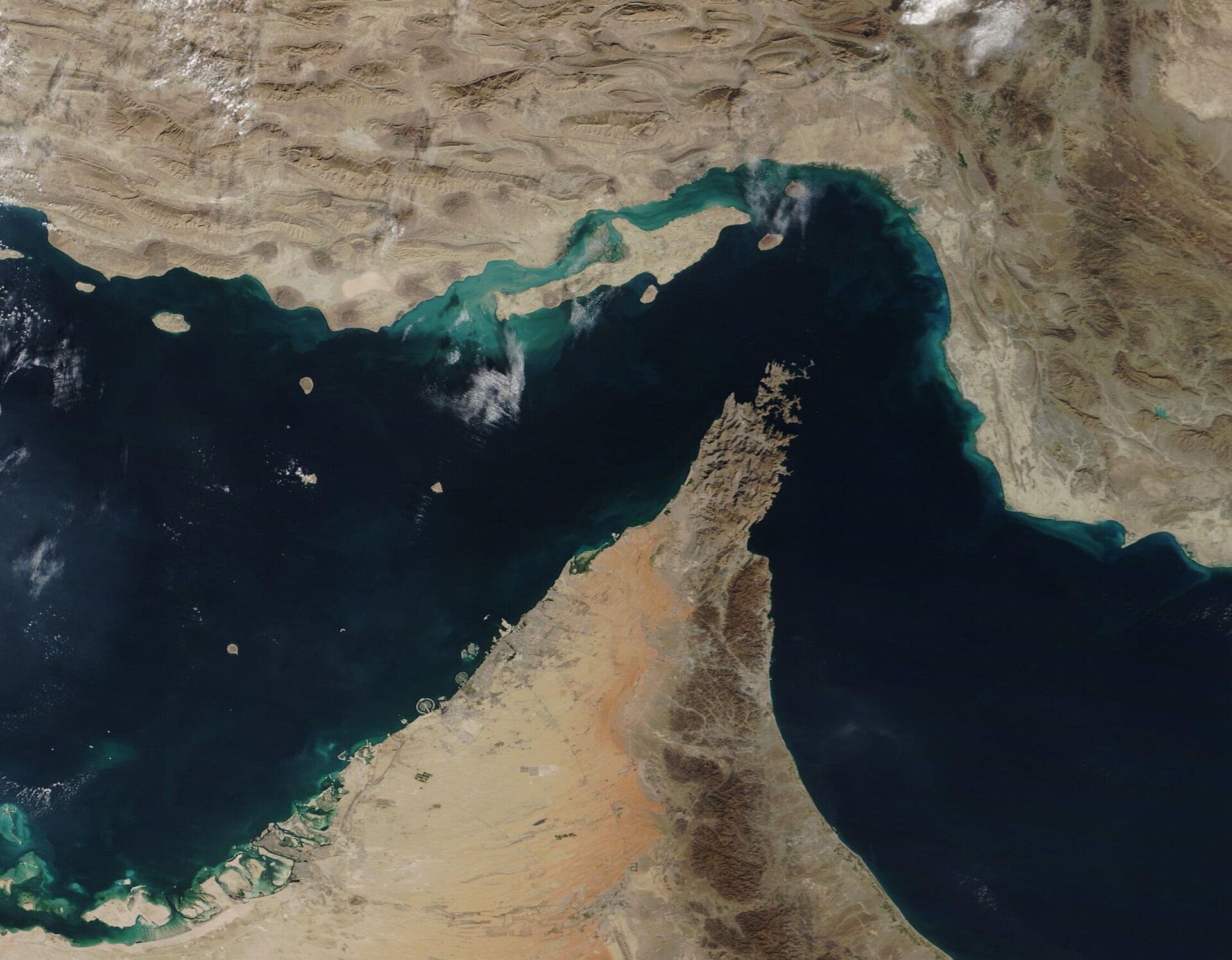
The Q2 spike reflects what has already happened: the largest supply disruption in the history of the global oil market, as the International Energy Agency described it in its April report. Global oil production fell by 10.1 million barrels per day in March to 97 million barrels per day. Gulf producers shut in 7.5 million barrels per day that month, rising to 9.1 million barrels per day in April. Saudi production alone dropped from 10.4 million barrels per day in February to 7.25 million barrels per day in March.
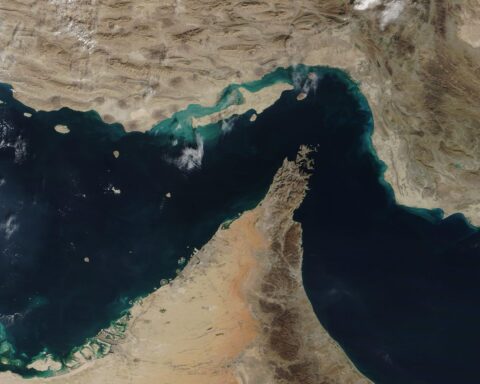
The Q4 descent to $88 reflects EIA’s projection that this disruption resolves. Hormuz throughput, which stood at 3.8 million barrels per day in early April versus more than 20 million barrels per day before the war, is assumed to normalize by late 2026. Goldman Sachs offered a conditional alternative: “Brent crude is set to average more than $100 a barrel through 2026 if the Strait of Hormuz remains closed for another month.” JPMorgan went further, warning oil could breach $150 — an all-time high — if Hormuz disruptions persist into mid-May.
The range between those projections — EIA’s $88 Q4 and JPMorgan’s $150 disruption scenario — is not analytical uncertainty. It is the distance between a world where the ceasefire holds and one where it does not. EIA chose the optimistic end. The agency’s forecasting record suggests caution: EIA systematically underestimated the duration and depth of the 2014 price collapse, revising downward for six consecutive months after the initial break. The April 2026 STEO carries a similar structural vulnerability — its most consequential assumption is its least defensible.
The Middle East briefing 3,000+ readers start their day with.
One email. Every weekday morning. Free.
Why Does Q2’s $115 Create a False Windfall?
At $115 per barrel, Saudi Arabia clears the PIF-inclusive fiscal break-even of $108 to $111 per barrel — the threshold calculated by Ziad Daoud at Bloomberg Economics — by four to seven dollars. At roughly 5 million barrels per day of exports, that surplus translates to $20 to $35 million per day in above-break-even revenue. Over the roughly sixty days Q2 prices hold above $108, the cumulative surplus is approximately $1.1 to $2.0 billion.
That number is small against the obligations it is supposed to fund. PIF’s construction budget, already slashed from $71 billion to $30 billion for 2026 with an $8 billion giga-project write-down, still requires quarterly disbursements. The FIFA 2034 infrastructure program — $50 billion total, spending peak between 2026 and 2030 — is entering its procurement phase. The Expo 2030 site alone carries a $7.8 billion price tag. The kingdom’s 2026 capital expenditure budget is SAR 162 billion, or $43 billion.
The windfall is real but it is temporary, and the fiscal calendar does not compress to match it. Aramco’s dividend obligations, military procurement commitments — including $9 billion for 730 PAC-3 MSE interceptors ordered in January — and post-war reconstruction costs all peak in the second half of the year. Q2 revenue arrives before the largest bills come due. By the time they arrive, Q4 prices have dropped to $88.
The Break-Even Arithmetic at $96 Annual
Saudi Arabia’s fiscal position in 2026 depends on which break-even you use. The IMF’s 2025 Article IV consultation set the central government break-even at $86.60 per barrel. At EIA’s $96 annual average, Saudi Arabia clears that threshold by $9.40 — a comfortable margin that the official budget, with its planned SAR 165 billion ($44 billion) deficit at 3.3 percent of GDP, was designed to accommodate.
The PIF-inclusive break-even tells a different story. Daoud’s $108 to $111 per barrel figure accounts for spending by the sovereign wealth fund that does not appear in the central government budget but draws on the same oil revenue stream. At $96 annual Brent, the shortfall is $12 to $15 per barrel. At 5 million barrels per day of exports, that gap translates to $60 to $75 million per day, or $21.9 to $27.4 billion over the course of the year.
| Quarter | EIA Brent Forecast ($/bbl) | vs IMF Break-Even ($86.60) | vs PIF-Inclusive Break-Even ($108–$111) | Daily Revenue Gap at 5M bpd exports |
|---|---|---|---|---|
| Q1 2026 | $81 | −$5.60 | −$27 to −$30 | −$135M to −$150M |
| Q2 2026 | $115 | +$28.40 | +$4 to +$7 | +$20M to +$35M |
| Q3 2026 | $99.80 | +$13.20 | −$8.20 to −$11.20 | −$41M to −$56M |
| Q4 2026 | $88 | +$1.40 | −$20 to −$23 | −$100M to −$115M |
| 2026 Annual | $96 | +$9.40 | −$12 to −$15 | −$60M to −$75M |
| 2027 Annual | $76 | −$10.60 | −$32 to −$35 | −$160M to −$175M |
Farouk Soussa, Goldman Sachs’ MENA economist, has estimated the war-adjusted deficit at 6.6 percent of GDP — double the official 3.3 percent forecast — translating to approximately $73 billion in annual drawdown. Goldman’s pre-war estimate, published in April 2025 when Brent sat at $62, projected a $70 to $75 billion deficit. The war lifted prices but also lifted costs, and the net fiscal position barely moved.
The Saudi 2026 budget set total expenditure at SAR 1.313 trillion ($346.58 billion) against revenues of SAR 1.147 trillion ($306 billion). That revenue line assumed pre-war oil prices. At $96 Brent and reduced export volumes — 5 million barrels per day versus 7 million-plus before Hormuz restrictions — the revenue line moves, but not by enough to cover PIF’s off-budget claims.
How Does the June OSP Repricing Compound the Problem?
Aramco sets its Official Selling Price for each month during the first week of the prior month. The May OSP — Arab Light to Asia at +$19.50 per barrel over Oman/Dubai, a record — was set against $109 Brent. Current spot trades between $91 and $94. Bloomberg surveyed refiners who anticipated a premium of approximately $40 per barrel; Aramco left $20.50 per barrel on the table, a restraint that this publication has examined in detail.
The June OSP will be set in the first week of May — precisely when EIA’s forecast shows Q2 prices at or near their $115 peak. If Aramco prices June cargoes against peak Brent, Asian refiners face a second consecutive historic premium. Those cargoes load in June and arrive in July or August, by which time EIA projects Brent at $99.80 and falling. Refiners who accepted May pricing against $109 Brent are already underwater. A June OSP set against $115 Brent would deepen the retroactive over-pricing as Q3 spot markets correct downward.
The alternative — Aramco pricing June conservatively, below what peak Brent would justify — preserves buyer relationships but sacrifices revenue during the only quarter where Saudi Arabia reliably clears break-even. Neither option is costless. The OSP mechanism works on a one-month lag, and EIA’s price path moves faster than the pricing calendar can follow. By the time Q4 arrives at $88, the pricing relationship between Aramco and its Asian term buyers will have absorbed two quarters of dislocation.
Indian refiners illustrate the buyer-side pressure. Indian Oil Corporation and Bharat Petroleum, which returned to Iranian crude under OFAC General License U after a seven-year absence, now hold an alternative supply source priced at a $6 to $8 per barrel premium above Brent — steep, but below what a second consecutive record Aramco OSP would cost. Nayara Energy, 49 percent owned by Rosneft, has already redirected procurement. Every dollar Aramco adds to the June OSP pushes marginal Asian barrels toward Iranian or Russian alternatives that did not exist at this scale before the war. The price trap Saudi Arabia faces is not new, but EIA’s quarterly path now assigns it specific dates.
What Assumption Underpins the Entire Forecast?
The EIA’s April STEO contains an embedded assumption that governs every number in the outlook: “The outlook assumes the Middle East conflict does not extend beyond April 2026, with gradual resumption of Strait traffic and return to pre-conflict production levels by late 2026.” The report was published on April 15. The conflict had not ended. Hormuz throughput remained at 3.8 million barrels per day, against a pre-war baseline above 20 million.
This is not an error in the usual sense. The EIA’s methodology requires a baseline assumption about geopolitical conditions, and the agency chose the most optimistic plausible scenario. But the optimistic scenario is doing extraordinary work in the forecast. The $88 Q4 figure, the $76 2027 average, and the implied normalization of Gulf export volumes all depend on Hormuz reopening on a timeline that, as of publication, no party to the conflict has agreed to. The IRGC Navy declared “full authority to manage the Strait” on April 5 and reiterated it on April 10 while Araghchi was in Islamabad negotiating.
If the assumption fails — if Hormuz traffic does not resume gradually, if Gulf production does not return to pre-conflict levels by late 2026 — EIA’s price path inverts. Goldman’s conditional forecast of Brent above $100 through 2026 becomes the operative baseline. Saudi Arabia would clear PIF-inclusive break-even for more of the year, but at reduced export volumes that cap total revenue. The kingdom cannot pump through a closed strait.
The Q4 Cliff and the Dividend Calendar
Aramco’s dividend structure, already cut by approximately 30 percent — from $124 billion in 2024 to roughly $85.4 billion in 2025 — operates on a quarterly payment schedule. PIF, which holds a 98.5 percent stake in Aramco, receives proportional distributions. A Q4 Brent price of $88 per barrel, combined with export volumes still recovering from wartime restrictions, compresses Aramco’s free cash flow in the quarter when PIF’s capital deployment calendar is most demanding.
The timing compounds the fiscal pressure in three directions simultaneously. Sadara Chemical’s $3.7 billion debt grace period expires on June 15, with zero production since April 7 — a liability that falls in the gap between Q2’s windfall and Q3’s decline. The kingdom’s $9 billion PAC-3 MSE order generates payment milestones through late 2026. And the post-war reconstruction bill — for petrochemical facilities, desalination plants, port infrastructure, and air defense installations damaged since February 28 — has not been publicly estimated but draws on the same fiscal capacity. Sadara’s Tadawul filing is the first time any of that damage has been given a legal number: the Sadara Chemical debt cliff and Saudi Arabia’s first war-damage capital markets disclosure are examined in detail.
Goldman Sachs’ $73 billion deficit estimate assumed oil revenue at war-era prices above $100 per barrel. EIA’s Q4 figure of $88 sits below that assumption. The gap between Saudi Arabia’s official $44 billion planned deficit and Goldman’s $73 billion estimate is $29 billion — roughly the size of PIF’s entire reduced annual construction budget.
The dividend calendar amplifies the quarterly mismatch. Aramco’s Q2 dividend — paid in Q3 — reflects the $115 price environment and generates adequate cash flow for PIF. But the Q3 dividend — paid in Q4 — will reflect $99.80 Brent and partially restored export volumes, a combination that compresses free cash flow. The Q4 dividend, paid in Q1 2027 against $88 Brent, arrives in a quarter where EIA projects $76 for the full year. Each successive dividend payment reflects a lower price than the one before it, while PIF’s capital deployment schedule — construction contracts, international investment commitments, FIFA 2034 procurement — does not adjust on the same lag.
The 2014 Shape Without the 2014 Option
EIA’s 2026 quarterly arc — a Q2 peak near $115 followed by a Q4 collapse to $88, with 2027 projected at $76 — echoes the shape of 2014. Brent reached $112 per barrel in June 2014 and fell to $59 by December. Oil revenue dropped from 32.3 percent of GDP in 2014 to 18.4 percent in 2015. The deficit swung to 19.5 percent of GDP, exceeding $118 billion by 2016.
The structural difference is that in 2014, Saudi Arabia chose the collapse. The kingdom refused to cut production, defending market share against US shale. It could afford the strategy because SAMA reserves stood at $746 billion and PIF’s off-budget obligations were a fraction of their current scale. The kingdom pumped at maximum capacity, absorbed the revenue loss, and waited for competitors to blink. Some did.
In 2026, the collapse — if it materializes on EIA’s timeline — arrives from outside. Saudi Arabia cannot pump its way through a Q4 trough because Hormuz constraints cap export volume regardless of production decisions. OPEC+ coordination, which in 2014 was the tool Saudi Arabia deliberately withheld, is irrelevant when the supply disruption is physical rather than strategic. The kingdom spent down $246 billion in reserves between 2014 and 2017 to defend a policy choice. The 2026 drawdown funds no strategic objective — it simply covers the bills.
SAMA reserves stood at approximately $475 billion as of February 2026, a six-year high but $271 billion below the 2014 peak. The reserve position is adequate for a short disruption. EIA’s price path, combined with PIF’s capital obligations, suggests the disruption to fiscal balance extends well into 2027 at $76 Brent — a price that puts Saudi Arabia $32 to $35 below PIF-inclusive break-even.
The 2014 drawdown also carried no concurrent military expenditure of this scale. Saudi Arabia’s January 2026 order of 730 PAC-3 MSE interceptors at $9 billion followed the depletion of existing stockpiles — down 86 percent from approximately 2,800 rounds to 400 after intercepting 799 drones and 95 ballistic missiles between March 3 and April 7. Raytheon’s Camden, Arkansas facility produces 620 interceptors per year. The replenishment timeline extends into 2028 at minimum, and the payment schedule runs concurrently with the fiscal stress EIA’s price path describes. In 2014, defense spending was discretionary; in 2026, it is existential.
How Long Can SAMA Reserves Cover the Gap?
At $475 billion, SAMA’s foreign reserves cover approximately six to seven years of the $73 billion annual deficit Goldman Sachs projects — longer if oil prices remain above $90, shorter if they follow EIA’s path to $76 in 2027. But reserve drawdown is not a fiscal strategy; it is a symptom of one that has failed. Saudi Arabia drew reserves from $746 billion to $500 billion between August 2014 and January 2017, a 33 percent decline in 29 months. The rate of drawdown accelerated as the oil price stayed low.
The 2026 reserve position also carries claims that did not exist in 2014. PIF’s international investment portfolio — stakes in Lucid, SoftBank Vision Fund, and dozens of venture positions — generates mark-to-market losses in a global downturn that correlates with the same demand destruction driving oil prices lower. The IEA projects global oil demand to contract by 80,000 barrels per day in 2026, a number that understates the recessionary risk embedded in a conflict-driven supply shock. PIF cannot liquidate illiquid venture positions at par during a risk-off cycle.
Saudi Arabia’s broader fiscal position reflects the compounding effect: higher prices that should generate surplus are offset by lower volumes, higher military costs, and a PIF capital structure built for $80 oil and peace. EIA’s $96 average delivers neither the sustained high prices that would close the PIF-inclusive gap nor the pre-war volumes that would maximize revenue at any price. The April STEO, in its clinical quarterly projections, describes a fiscal year that begins in deficit, passes through eight weeks of marginal surplus, and ends in deficit again — with 2027 offering no recovery.

FAQ
How does the EIA’s April 2026 STEO compare to its January forecast?
The January 2026 STEO projected Brent at $74 per barrel for the full year, issued before the Iran-Gulf conflict began on February 28. The April revision to $96 represents a $22 per barrel upward revision — one of the largest inter-STEO adjustments on record. The January forecast assumed OPEC+ would proceed with planned production increases in Q2; instead, Gulf producers shut in 9.1 million barrels per day. EIA has revised its STEO three times since the conflict began, each time raising the near-term price and lowering the out-year forecast.
What happens to Saudi Arabia’s credit rating if the deficit exceeds Goldman’s 6.6 percent estimate?
Fitch rates Saudi Arabia at A+ with a stable outlook, affirmed in November 2025. The rating incorporates a fiscal break-even of $82 per barrel — the central government figure, not the PIF-inclusive threshold. A sustained deficit above 6 percent of GDP would likely trigger a negative outlook revision, which in 2016 preceded a one-notch downgrade from AA- to A+ across all three major agencies. S&P downgraded Saudi Arabia twice in 2016, from AA- to A-, citing reserve depletion and fiscal rigidity. The PIF-inclusive deficit is not yet reflected in any rating agency’s baseline scenario, partly because PIF’s spending obligations are disclosed with a lag.
Could Saudi Arabia issue debt instead of drawing reserves?
Saudi Arabia’s debt-to-GDP ratio stands at approximately 26 percent as of late 2025, below the 30 percent ceiling the Ministry of Finance set in its Medium-Term Fiscal Framework. The kingdom issued $12 billion in international bonds in January 2026, one of its largest issuances, at yields of 5.2 to 5.9 percent across three tranches. Borrowing capacity exists, but war-era sovereign spreads have widened by 40 to 60 basis points since March. A $73 billion deficit funded entirely by debt would push the ratio above 35 percent within two years, breaching the fiscal framework’s own ceiling and raising the cost of future issuance.
How does the EIA forecast affect OPEC+ coordination for the rest of 2026?
EIA’s Q4 projection of $88 Brent falls within the range where OPEC+ historically considers production cuts — the group’s informal floor has hovered near $80 to $85 since 2022. If Hormuz reopens and Gulf production normalizes as EIA assumes, the returning barrels would enter a market where non-OPEC supply (US, Brazil, Guyana) has already grown by 1.8 million barrels per day during the disruption period. OPEC+ would face the choice of absorbing returning Gulf supply by cutting African and Central Asian quotas — politically fraught — or tolerating a price slide toward $76 in 2027. The December 2024 decision to pause planned output increases, ostensibly to defend prices, would need to be revisited under conditions far less favorable than those that prompted it.
What is the risk that EIA’s conflict-resolution assumption proves correct?
A rapid resolution would validate EIA’s Q3 and Q4 projections but introduce a different problem: returning Gulf supply meets reduced demand. The IEA’s 2026 demand contraction figure of 80,000 barrels per day understates the structural demand destruction already locked in by six weeks of triple-digit oil — refiners having secured alternative crude, Asian buyers having contracted LNG substitutes, and European gas-to-oil switching having reversed. If 9.1 million barrels per day of shut-in Gulf production returns by Q3 into that weakened demand environment, the price collapse could overshoot EIA’s $88 Q4 to the downside. Resolution is not inherently bullish for Saudi Arabia’s fiscal position. The physical-futures dislocation that will shape Saudi Arabia’s June OSP decision — physical crude at $148.87 against Brent futures at $99.36 on April 13 — is analyzed in The $50 Crude Gap Saudi Arabia Has to Fix Before May 5.
Ahead of any EIA-forecast resolution scenario, the volume damage is already registering: Saudi crude shipments to China halved in May, with approximately 20 million barrels loaded against 40 million in April — evidence that the OSP premium has already begun compressing Saudi market share in the single largest customer bloc before any price correction occurs.