DHAHRAN — Sadara Chemical Company, the $20 billion Aramco-Dow joint venture in Jubail Industrial City II, filed a regulatory disclosure to the Saudi Exchange last week stating it “cannot provide, at the present time, an estimate for the return to production.” All 26 of its manufacturing units are idle. It is generating zero revenue. And in 58 days, on June 15, a $3.7 billion debt grace period expires — with Aramco guaranteeing $2.405 billion and Dow guaranteeing $1.295 billion of the principal.
The filing is the first formal war-damage disclosure by an industrial company in Tadawul’s history. SABIC filed a similar statement days earlier, establishing the template. But Sadara’s case is structurally different: it is not merely reporting damage. It is reporting damage with a debt cliff attached, a cliff set five years ago in a restructuring that assumed the Kingdom’s industrial base would remain intact.
Table of Contents
- A Disclosure That Became a Precedent
- What Actually Shut Sadara Down?
- The June 15 Debt Cliff
- How Large Is Dow’s Guarantee Exposure?
- What Sadara’s Shutdown Means for Vision 2030
- Jubail and the Non-Oil GDP Arithmetic
- Can Sadara Restart Before June 15?
- PIF’s Reprioritization and the Industrial Thesis
- What Happens If Sadara Cannot Service Its Debt on June 15?
- The First Quantification
- Frequently Asked Questions
A Disclosure That Became a Precedent
Saudi securities regulation, like most capital markets frameworks, requires listed companies to disclose material events that could affect share price. War is not among the scenarios the rulebook was written for. When SABIC filed a disclosure in early April stating that its operations had sustained a material impact it “is unable to quantify,” it created a new category of corporate communication on the Saudi Exchange — one with no template, no comparable, and no established market expectation for what should follow.
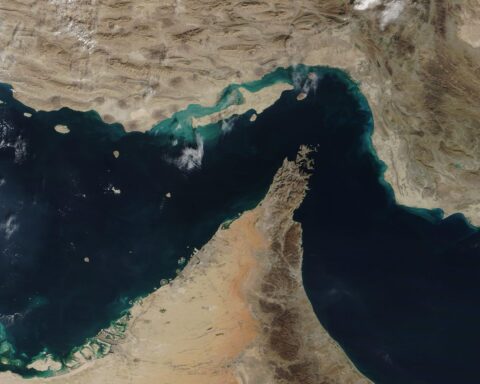
Sadara’s filing days later used near-identical language. The phrasing — “contingent on domestic and international factors” — is worth parsing. “Domestic factors” is a reference to physical damage and infrastructure restoration. “International factors” is a reference to the Strait of Hormuz. The company cannot say when it will produce again because the answer depends on geopolitics it does not control, a war it did not start, and a strait it cannot reopen.
This is not how Tadawul disclosures normally read. The standard material-event filing involves a contract loss, a regulatory change, a write-down with a number attached. Sadara’s filing is open-ended. It quantifies nothing. It promises nothing. It establishes a state of indefinite commercial suspension and leaves the market to price the implications.
The implications begin with $3.7 billion.
The Middle East briefing 3,000+ readers start their day with.
One email. Every weekday morning. Free.
What Actually Shut Sadara Down?
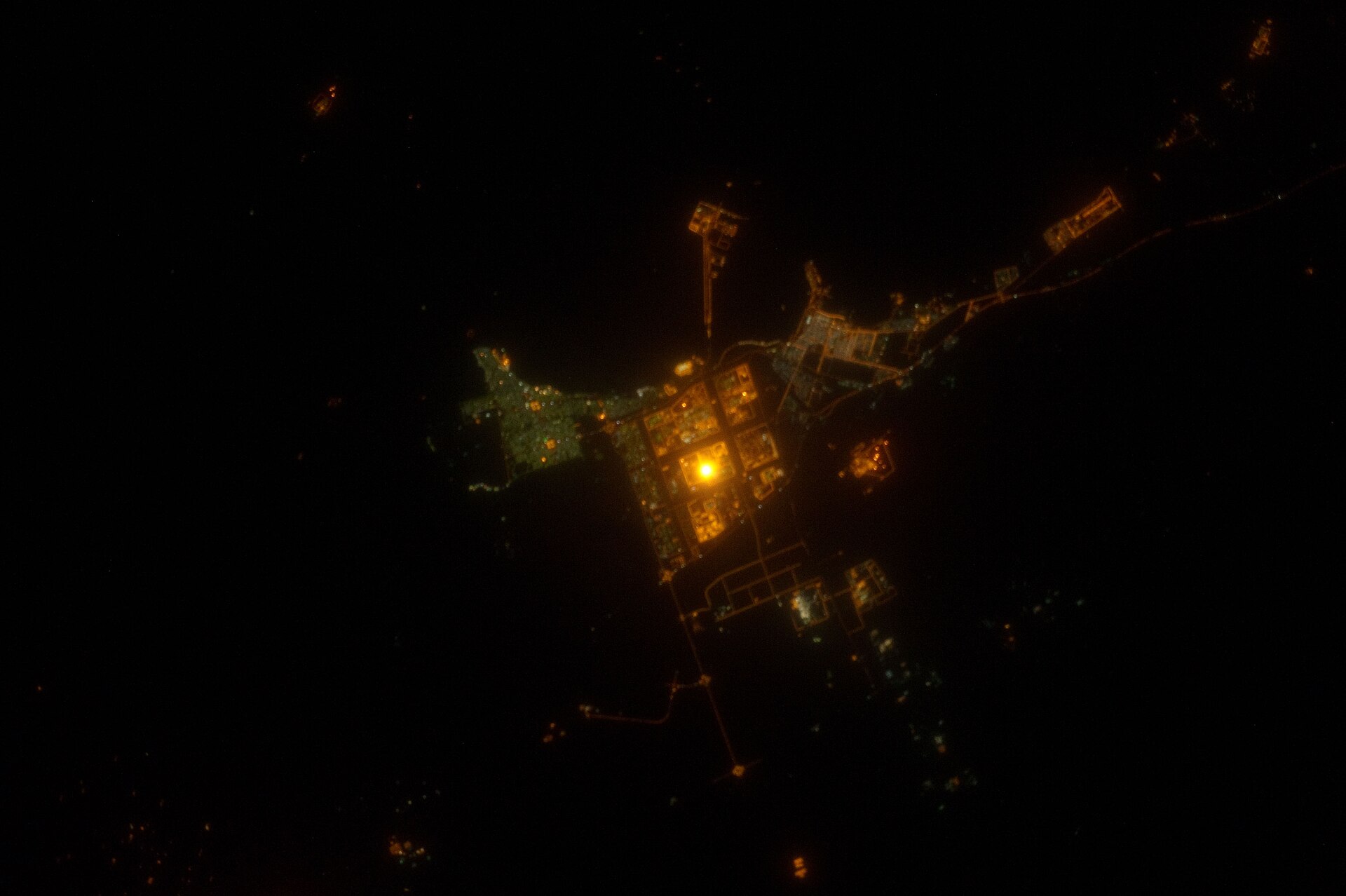
Sadara’s 26 manufacturing units did not shut down because missiles hit them. On April 7 — the same day Iran also struck Eastern Province infrastructure in a separate salvo — eleven Iranian ballistic missiles targeted the Jubail industrial complex specifically; Saudi air defenses intercepted all eleven, though falling debris ignited a fire at the adjacent SABIC facility. Sadara itself sustained no confirmed direct hits.
The complex shut down because it could not operate. Sadara is the only chemical facility in the Middle East that uses naphtha as its primary feedstock rather than ethane. That design choice — the reason it can produce 14 specialty chemical product lines never previously manufactured in Saudi Arabia — is also the reason it is more vulnerable than any other petrochemical plant in the Kingdom to a Hormuz closure. Naphtha arrives by tanker. When the strait closed, the feedstock stopped.
The export side collapsed simultaneously. Sadara’s 3 million-plus metric tonnes of annual production — 1.5 million tonnes of ethylene, 750,000 tonnes of polyethylene, 400,000 tonnes of MDI, 360,000 tonnes of ethylene oxide — moves by sea. With Hormuz closed and the Eastern Province’s port infrastructure under periodic missile attack, there was no way to ship product even if Sadara could produce it.
The IRGC had made the targeting calculus explicit. On March 18, it publicly named Jubail Petrochemical Complex among its “direct and legitimate targets” and issued evacuation orders. On April 7, after the intercepted missile barrage, it claimed to have “effectively targeted with medium-range missiles and several suicide drones” the Jubail complex, framing the strikes as retaliation “for enemy crimes in the attack against Iran’s Asaluyeh petrochemical factories.” The petrochemical-for-petrochemical escalation logic was stated, not implied.
The result is a $20 billion industrial complex that is simultaneously physically intact and commercially dead. The coercive logic — Hormuz closure plus credible targeting threat — achieved a full shutdown without destroying the plant. Yousef Husseini, an analyst at EFG Hermes, noted that restarting Sadara’s facilities is “typically” a “days-to-weeks process,” a comment that makes the bottleneck precise: it is not mechanical. It is geopolitical.
The June 15 Debt Cliff
On March 25, 2021, Sadara completed a restructuring of its project finance debt that had been years in negotiation. The original financing — $12.5 billion raised in a single tranche in June 2013, including a $4.975 billion direct loan from the US Export-Import Bank, the largest in Ex-Im’s history at the time — had been structured around assumptions that proved too optimistic. Sadara’s ramp-up was slower than projected. Petrochemical prices were weaker than forecast. The company needed relief.
The 2021 restructuring delivered it. The central concession was a grace period on $3.7 billion in senior debt principal, extending to June 15, 2026. Final maturity was pushed from 2029 to 2038. The original $10 billion in shareholder completion guarantees — released when Sadara achieved project financial completion in November 2020 — were replaced by narrower guarantees covering only the $3.7 billion senior tranche, split according to ownership: Aramco at 65% ($2.405 billion), Dow at 35% ($1.295 billion).
The restructuring assumed that by June 2026, Sadara would be generating sufficient cash flow to begin servicing its debt. Five years of operations, five years of revenue, five years of market position. Instead, Sadara arrives at June 15 with all 26 units idle, zero revenue, no timeline for restart, and a Tadawul filing that says it cannot estimate when production will resume.
| Element | Detail |
|---|---|
| Original project financing | $12.5 billion (June 2013) |
| Ex-Im Bank direct loan | $4.975 billion (largest in Ex-Im history at signing) |
| 2021 restructuring date | March 25, 2021 |
| Senior debt principal under grace period | $3.7 billion |
| Grace period expiry | June 15, 2026 |
| Aramco guarantee (65%) | $2.405 billion |
| Dow guarantee (35%) | $1.295 billion |
| Extended final maturity | 2038 (from 2029) |
| Project financial completion | November 2020 |
The lenders — a consortium assembled for one of the largest project finance packages in petrochemical history — now face a borrower that is operationally inert. The grace period was not designed for this contingency. Restructuring agreements contemplate market downturns, operational delays, commodity price collapses. They do not contemplate a war that closes the borrower’s only feedstock import route and simultaneously turns its industrial complex into a declared military target.
How Large Is Dow’s Guarantee Exposure?
Dow’s 35% share of the Sadara guarantee amounts to $1.295 billion. To understand what that number means for the company, set it against Dow’s current financial position: a GAAP net loss of $2.4 billion for full-year 2025, down from income of $1.2 billion in 2024, and a restructuring program called “Transform to Outperform” that targets $2 billion in near-term earnings improvement.
A guarantee call on the Sadara debt would consume approximately 65% of that entire restructuring target in a single event.
Dow has not publicly addressed the exposure. The company declared commercial force majeure on ethanolamines and glycol ethers to European customers on March 10, citing “disruption to Sadara’s supply chains.” CEO Jim Fitterling, in a Fortune interview on March 27, described the Hormuz disruption in systemic terms: “Nearly 20% of global petrochemical capacity is blocked due to the closure of the Strait of Hormuz.” He estimated supply chain recovery at “250 to 275 days” — a timeline that extends well past June 15. He compared it to COVID-era supply chain unwinds.
What Fitterling did not address was the guarantee. Dow’s Q1 2026 earnings call is scheduled for April 23 — five days from now, and the first opportunity for analysts to ask about the $1.295 billion directly. The silence to date is notable not because it is unusual — companies rarely volunteer commentary on contingent liabilities before they crystallize — but because the crystallization date is now visible on the calendar.
“The die is being cast for the rest of the year for what’s going to happen in the markets. It’s like the unwind we saw on supply chains during COVID.”— Jim Fitterling, CEO, Dow Inc., Fortune, March 27, 2026
The question for Dow’s board is whether force majeure — a legal doctrine that excuses contractual performance due to extraordinary circumstances beyond a party’s control — extends to the guarantee obligations under the 2021 restructuring. War in the Persian Gulf is the textbook case for force majeure on the operational side. Whether it applies to financial guarantees structured under project finance documentation is a different question, one that the restructuring’s legal architects at Milbank would have addressed in the covenants. Those covenants are not public.
Kurt Barrow, an IHS Markit analyst, described the broader petrochemical disruption: “Many Asian plants are declaring force majeure and drastically cutting production.” But Sadara’s force majeure is not merely operational. It is attached to a capital structure.
What Sadara’s Shutdown Means for Vision 2030
Sadara was built to prove a thesis. The thesis was that Saudi Arabia could move downstream — from exporting crude oil and raw ethane to manufacturing specialty chemicals that command higher margins, create more jobs, and diversify the economy away from hydrocarbon revenue. Dow would bring the technology and process expertise. Saudi Arabia would provide the feedstock, the capital, and the one thing the Kingdom had always offered industrial partners: stability.
The $20 billion complex — the largest integrated chemical facility ever built in a single phase — was the proof of concept. Its 14 specialty product lines, from isocyanates to amines to specialty elastomers, had never been manufactured in the Kingdom before. Each one represented a step up the value chain, a product that previously had to be imported, now made in Jubail from Saudi feedstock by Saudi workers under a Saudi-Dow partnership.
Every one of those 14 product lines is now idle.
The industrial diversification argument was always specific: Saudi Arabia needed to capture more value from each molecule of hydrocarbon before it left the country. Exporting ethane at commodity prices was the old model. Cracking naphtha into specialty chemicals was the new one. The distinction mattered because naphtha cracking, unlike ethane cracking, produces the range of intermediates needed for advanced manufacturing — the polyurethanes, the coatings, the performance plastics that downstream industries require.
But the same design choice that made Sadara a diversification flagship made it uniquely fragile. Ethane-fed crackers receive feedstock by pipeline from Saudi gas processing plants. Naphtha-fed crackers — Sadara is the only one in the region — receive feedstock by sea. When the sea route closed, the technological advantage became an operational vulnerability that no other Saudi petrochemical facility shared.
Jubail and the Non-Oil GDP Arithmetic
Jubail Industrial City accounts for more than 11% of Saudi non-oil GDP. The Kingdom’s petrochemical exports represent 35% of total non-oil exports, generating SAR 149 billion ($39.7 billion) in 2024. Jubail alone is responsible for 6-8% of total global petrochemical output.
These numbers frame a problem that extends well beyond Sadara’s balance sheet. The war has not merely idled one joint venture. It has disrupted the industrial base that underwrites Saudi Arabia’s non-oil economic identity — the same identity that Vision 2030 was designed to build.
SABIC, the Kingdom’s largest petrochemical company, reported a full-year loss of SAR 26 billion ($7 billion) for 2025. That loss preceded the war. The petrochemical sector was already, as industry analysts described it, in “its worst phase in many decades” before a single missile was fired. Hormuz closure and IRGC targeting did not create the petrochemical downturn. They compounded it with physical and logistical disruption at the worst possible moment.
Sadara sits adjacent to PlasChem Park, a 12-square-kilometre downstream industrial zone whose tenants depend on Sadara for feedstock. When Sadara shut down, PlasChem Park’s occupants lost their input supply — a second-order effect that the Tadawul filing does not capture but the Jubail employment figures eventually will.
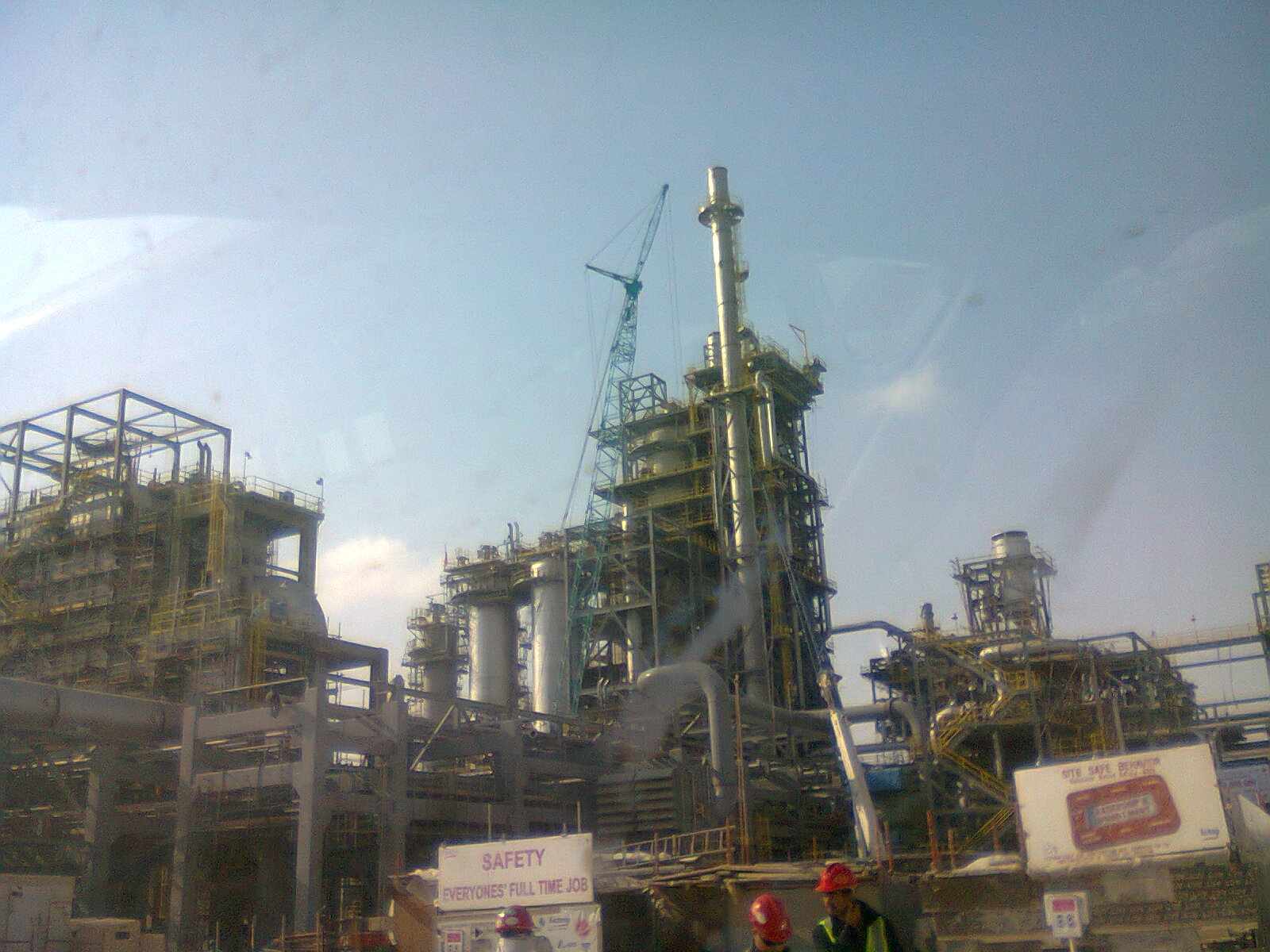
The production numbers carry their own weight. Sadara’s offline capacity — 1.5 million tonnes per year of ethylene alone, plus polyethylene, MDI, ethylene oxide, and ten other product lines — represents a measurable subtraction from Saudi industrial output. When Fitterling told Fortune that 20% of global petrochemical capacity was blocked by the Hormuz closure, Sadara was a component of that number. Not the largest, but the most symbolically loaded: the joint venture that was supposed to prove the model.
The production data tells the wider story. Saudi output fell from 10.4 million barrels per day in February to 7.25 million in March — a 3.15 million bpd drop. The IEA called it “the largest disruption on record.” Sadara’s shutdown is one data point within that disruption, but it is the data point with a debt clock attached.
Can Sadara Restart Before June 15?
Fitterling’s 250-to-275-day estimate for supply chain recovery, offered on March 27, places the earliest normalization in late December 2026 — more than six months after the June 15 debt cliff. The estimate was given in general terms about the broader petrochemical disruption, not Sadara specifically, but Sadara’s restart depends on the same preconditions: Hormuz reopening, shipping lane security, feedstock availability, and the absence of a credible targeting threat against Jubail.
Husseini at EFG Hermes noted that the physical restart process — purging lines, re-establishing feeds, bringing crackers back to operating temperature — is “typically” a matter of “days to weeks.” The mechanical timeline is not the constraint. The geopolitical timeline is.
As of April 18, the ceasefire framework negotiated in Islamabad expires on April 22. No extension mechanism exists. The IRGC has declared the Hormuz shipping lanes a “danger zone” and redirected vessels through a narrow corridor inside Iranian territorial waters. The US naval blockade of Iranian ports, effective since April 13, has not reopened the strait to commercial traffic. Naphtha tankers are not transiting.
Fifty-eight days is not enough. Not because the plant cannot restart mechanically, but because none of the conditions required for restart — open strait, secure shipping, available feedstock, credible assurance that Jubail will not be struck — are present or proximate.
| Precondition | Status (April 18, 2026) |
|---|---|
| Strait of Hormuz open to commercial traffic | Closed; IRGC “danger zone” declared |
| Naphtha feedstock supply available | No — import routes severed |
| Export corridors functional | No — Eastern Province ports under intermittent threat |
| IRGC targeting threat removed | No — Jubail remains named target |
| Ceasefire in effect | Expires April 22; no extension mechanism |
| Physical plant integrity | Intact — no confirmed direct damage to Sadara |
PIF’s Reprioritization and the Industrial Thesis
Three days ago, on April 15, PIF released its updated 2026-2030 strategy. The document targets 80% domestic investment and identifies “advanced manufacturing” as a core ecosystem. Governor Yasir al-Rumayyan told Al Arabiya that “no projects in NEOM have been cancelled” and described the adjustment as a “reprioritization” of spending, not a reversal. The PIF’s April 15 “independent ecosystem” reclassification of NEOM goes further: NEOM’s reclassification as an independent ecosystem is a governance maneuver that severs the megaproject from Vision 2030 KPI accountability entirely.
The language is careful. PIF’s strategic pivot arrives at a moment when the industrial thesis it was built to support is under physical duress. Sadara was not a PIF investment — it predates PIF’s expansion into the industrial sector — but it was the template. The model of foreign-partner joint ventures in downstream manufacturing, anchored in Jubail, leveraging Saudi feedstock advantage, producing for global markets through Gulf port infrastructure — that model is what PIF’s “advanced manufacturing” ecosystem is supposed to scale.
The model assumed the ports would function. It assumed the strait would be open. It assumed that Jubail, despite housing 6-8% of global petrochemical capacity and 11% of Saudi non-oil GDP, would not become a declared military target of a neighbouring state.
Each of those assumptions is now falsified. Not permanently — wars end, straits reopen, industrial complexes restart. But the risk has been priced. Every future foreign partner considering a downstream manufacturing joint venture in the Eastern Province will incorporate the 2026 precedent into its investment calculus. The premium for that risk — in equity returns, in insurance costs, in guarantee structures — will be measurable in the project finance terms of the next Sadara-scale deal, whenever it comes.
The AGBI noted a contrarian angle: higher petrochemical prices resulting from the supply disruption “could mean turnaround for Saudi companies” that survive the war intact. That is true for ethane-fed producers with pipeline feedstock and Red Sea export access. It is not true for Sadara, which requires an open Hormuz to both import naphtha and export product. The price upside is inaccessible to the one facility designed to capture the most value from it.
The price path Saudi Arabia faces is already constrained. Sadara’s idling removes one of the few mechanisms the Kingdom had for capturing petrochemical margin above raw commodity prices during a period of extreme price volatility.
What Happens If Sadara Cannot Service Its Debt on June 15?
The restructuring agreement’s terms are not fully public, but the architecture is standard for Gulf project finance of this scale. The grace period expiry triggers a requirement to begin principal repayment. If Sadara cannot pay — and with zero revenue, it cannot — the guarantees activate. Aramco is called for $2.405 billion. Dow is called for $1.295 billion.
For Aramco, $2.405 billion is material but absorbable. The company’s balance sheet, even under wartime production constraints, can sustain the hit. The question for Aramco is not financial capacity but precedent: a guarantee call on Sadara would be the first time the war has forced Aramco to cover a subsidiary’s debt failure, converting a balance-sheet contingency into a cash obligation.
For Dow, the arithmetic is sharper. The $1.295 billion arrives on top of a $2.4 billion net loss in 2025, in the middle of a restructuring designed to recover $2 billion in earnings. The earnings call that is five days away is followed, 53 days later, by the cliff itself.
A second restructuring is the most likely outcome. The lenders have limited appetite for forcing guarantee calls that would strain a major US industrial company and create a public dispute with Aramco. The precedent from 2021 suggests that the parties will negotiate an extension — a second grace period, perhaps to 2028 or 2029, contingent on operational restart. But a second restructuring conducted while the borrower is generating zero revenue and cannot estimate when production will resume is a different negotiation than the first one, which at least had a functioning plant behind it.
The First Quantification
The Tadawul filing did something the Saudi government has not done. It put the war’s industrial damage into a regulatory framework that requires ongoing disclosure, market pricing, and — eventually — numerical quantification. The government has published casualty figures, intercept counts, and infrastructure repair commitments. It has not published an aggregate accounting of industrial losses. The Tadawul filings from SABIC and Sadara are the closest the market has to that accounting, and they arrived not through government communication but through securities regulation.
That distinction matters. A government statement about war damage is a political document, calibrated to narrative. A Tadawul filing is a legal document, subject to securities law, auditor review, and the expectations of institutional investors who hold the paper. When Sadara writes that it “cannot provide an estimate for the return to production,” that is not rhetoric. It is a compliance statement with liability attached.
The war’s damage to Saudi industry has been visible from satellite imagery, production data, and shipping records for weeks. What the Tadawul filing adds is legal standing. The damage is now a matter of securities disclosure — auditable, actionable, and attached to a capital structure with a countdown running.
Fifty-eight days. Twenty-six idle plants. Three-point-seven billion dollars. And a filing that says, in the careful language of regulatory compliance, that nobody knows when it ends.
Frequently Asked Questions
What is PlasChem Park and how does Sadara’s shutdown affect it?
PlasChem Park is a 12-square-kilometre industrial zone adjacent to Sadara in Jubail Industrial City II, designed to house downstream manufacturers that use Sadara’s chemical output as feedstock. Companies in PlasChem Park produce finished and semi-finished goods — plastics, coatings, construction materials — from Sadara’s intermediate chemicals. With all 26 Sadara units idle, PlasChem Park tenants have lost their primary input supply, creating a cascading shutdown effect across dozens of smaller manufacturers that the Tadawul filing does not individually capture. Employment figures for PlasChem Park have not been publicly updated since the shutdown began.
What role did the US Export-Import Bank play in Sadara’s original financing?
Ex-Im Bank provided a $4.975 billion direct loan as part of the $12.5 billion project finance package signed in June 2013 — at the time, the single largest loan in Ex-Im Bank’s history. The loan was structured to support US equipment exports and engineering services for the complex. Ex-Im’s exposure under the 2021 restructuring has not been publicly detailed, but the original loan’s scale means US government credit is embedded in the capital structure that now faces a June 15 reckoning. The current Ex-Im Bank board, reconstituted in 2019 after a four-year quorum lapse, has not commented on the Sadara exposure.
How does Sadara’s naphtha dependency differ from other Saudi petrochemical plants?
Every other major petrochemical facility in Saudi Arabia — including SABIC’s Jubail operations, Petro Rabigh, and Yanbu-based plants — uses ethane or ethane-propane mixes delivered by pipeline from Saudi gas processing infrastructure. Sadara is the sole regional facility designed around naphtha cracking, which requires seaborne feedstock imports. Naphtha cracking produces a broader slate of chemical intermediates (C3, C4, aromatics, and heavier fractions) than ethane cracking, enabling the 14 specialty product lines. But it also means Sadara is the only Saudi petrochemical plant whose feedstock supply is directly contingent on open maritime routes through the Strait of Hormuz — a vulnerability no other facility in the Kingdom shares.
What is Dow’s “Transform to Outperform” program and why does the Sadara guarantee threaten it?
Announced in January 2026, “Transform to Outperform” is Dow’s company-wide restructuring targeting $2 billion in near-term earnings improvement through asset optimization, workforce reduction, and portfolio simplification. The program was designed to address Dow’s $2.4 billion GAAP net loss in 2025 — the company’s worst annual result since its 2019 separation from DowDuPont. A $1.295 billion guarantee call on Sadara would consume approximately 65% of the program’s entire earnings target in a single cash outflow, before the restructuring has delivered measurable results. Dow has not publicly addressed how the Sadara guarantee interacts with the program’s financial projections.