
Saudi Arabia Did Not Go to Paris
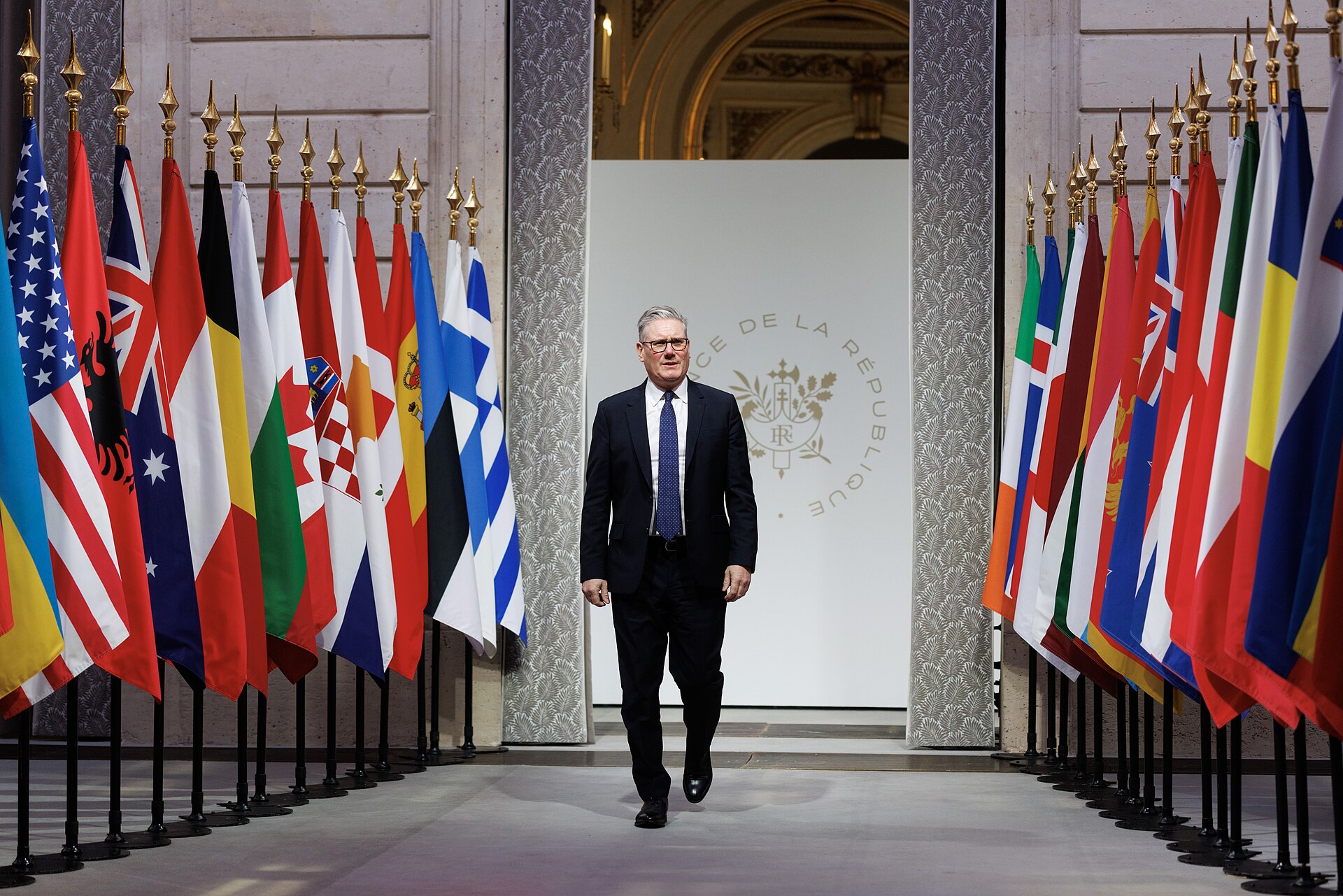
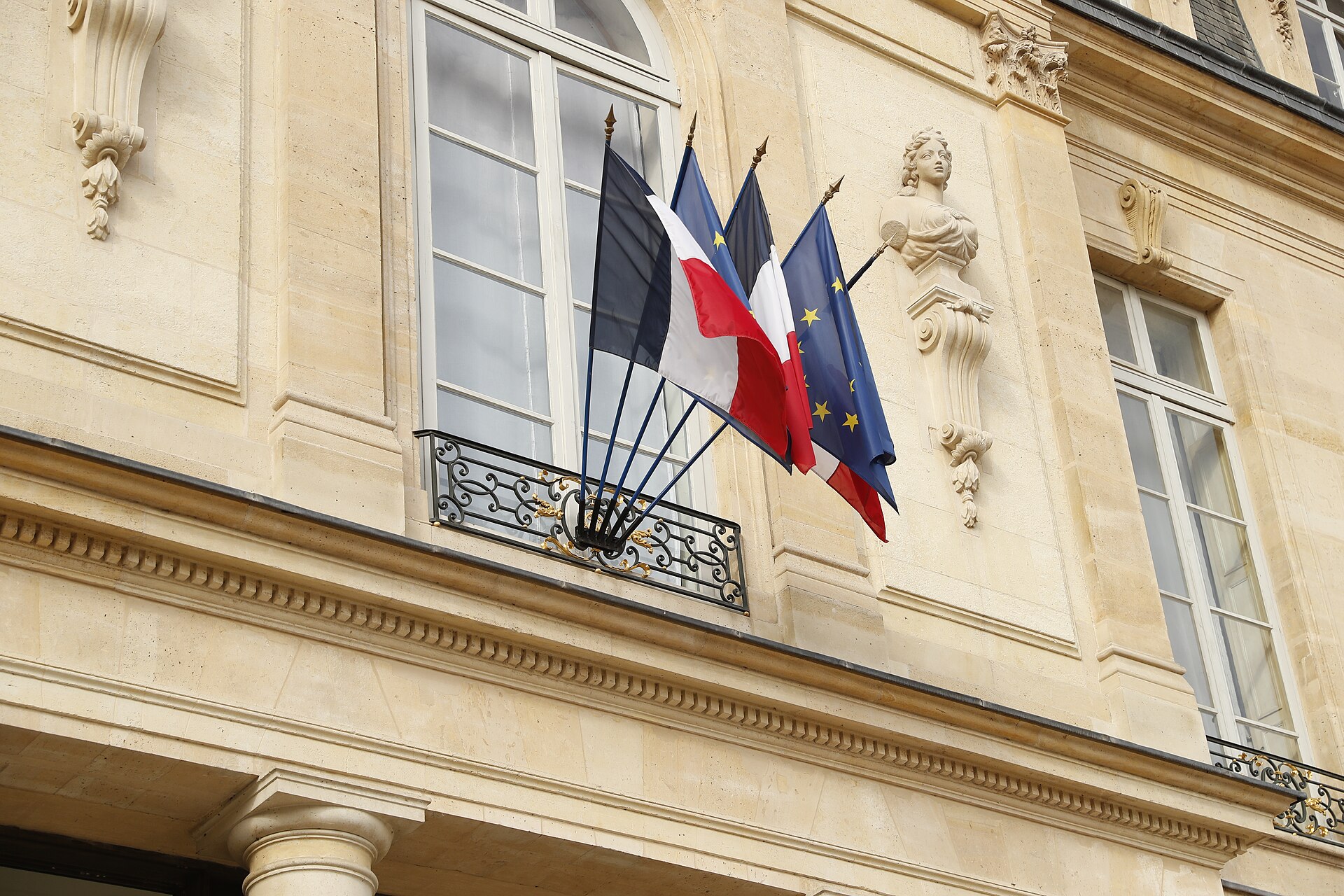
RIYADH — Approximately thirty nations convened at the Élysée Palace on Thursday for a summit aimed at reopening the Strait of Hormuz, co-chaired by French President Emmanuel Macron and British Prime Minister Keir Starmer, with the United States explicitly excluded. Saudi Arabia — the country that loses more revenue per day of Hormuz closure than any other — was not among them and issued no public statement explaining why.
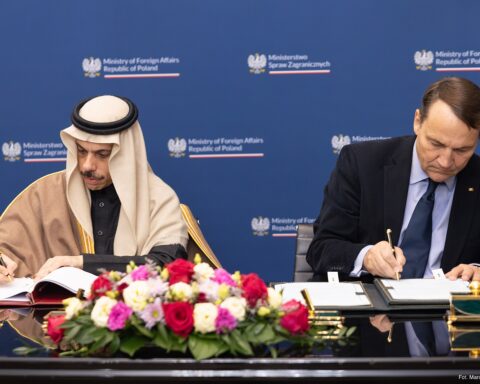
The absence was conspicuous but not accidental. Saudi Foreign Minister Prince Faisal bin Farhan was in Antalya at the same hour, attending a quadrilateral meeting with Turkey, Pakistan, and Egypt focused on ceasefire facilitation, not maritime frameworks. Riyadh sent its top diplomat to the table that talks to Iran, not the one that talks about Iran’s strait. The distinction is the message.
Table of Contents
What Paris Proposed
The summit, formally branded the “Strait of Hormuz Maritime Freedom of Navigation Initiative,” gathered German Chancellor Friedrich Merz and Italian Prime Minister Giorgia Meloni in person, with other leaders joining by video. No full attendee list was published. Macron described the proposed mission as “strictly defensive,” limited to non-belligerent countries, and deployable only “when security conditions allow,” according to a post on X and reporting by Al-Monitor.
A senior French official told Al-Monitor that potential mission elements include “intelligence sharing, mine-clearance capabilities, military escorts, information procedures with neighbouring countries.” France pledged its nuclear-powered carrier Charles de Gaulle — deployed to the Eastern Mediterranean since March 3 — along with a helicopter carrier and frigates, with two additional frigates earmarked for an extension of the EU’s Operation Aspides from the Red Sea into the strait, per USNI News reporting from March.
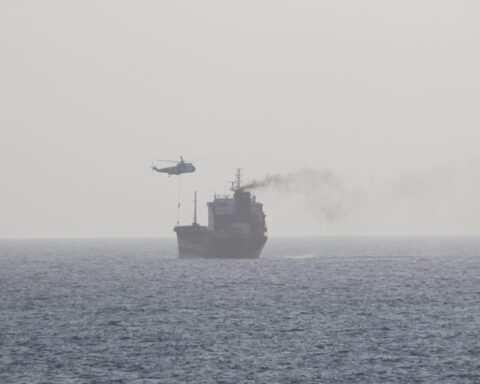
Britain’s contribution centres on RFA Lyme Bay, a 580-foot Bay-class amphibious landing ship converted into a mine-hunting mothership. The vessel deploys 13-metre unmanned surface vessels built by L3Harris that tow synthetic aperture sonar, with drone platforms operating up to 50 kilometres from the ship, according to Forces News and Gulf News. RFA Lyme Bay will be based in Duqm, Oman. The National reported on April 13 that any deployment to the strait itself is contingent on conflict stabilisation — the Royal Navy’s assessment is that the Iranian drone and missile threat remains too dangerous for mine-clearance operations.
No binding agreements were finalised. No specific country contributions were locked in. Starmer said the reopening of the strait is “a global responsibility,” and Macron framed the initiative as something that would happen after conditions change, not something that changes them. The summit produced a framework for a mission that does not yet exist to address a crisis that is still unfolding.
The Middle East briefing 3,000+ readers start their day with.
One email. Every weekday morning. Free.
Why Riyadh Needs What Paris Is Offering
Only two vessels transited the Strait of Hormuz on April 16, according to Windward Maritime Intelligence — down from a pre-war daily average of seventeen to twenty, based on Lloyd’s List Intelligence vessel-tracking data. The IRGC published a chart in early April marking standard shipping lanes as a danger zone, redirecting vessels to a five-nautical-mile channel between Qeshm and Larak islands inside Iranian territorial waters. Mine clearance of the approximately 200 square miles of affected waters is benchmarked at roughly 51 days, based on the 1991 Kuwait standard.
The problem is that the United States has severely limited capacity to do the clearing. Four Avenger-class mine countermeasure ships were decommissioned from Bahrain in September 2025. Saudi Arabia itself has no meaningful mine-warfare fleet. The European assets — RFA Lyme Bay’s autonomous sonar drones, French naval minesweeping capability, and the institutional experience of Operation Aspides — are not a diplomatic gesture. They are, as RUSI’s Sidharth Kaushal told the AP, the likeliest operational contribution: mine-clearing and warning systems are “more likely roles for the coalition than warships escorting commercial tankers through the strait.”
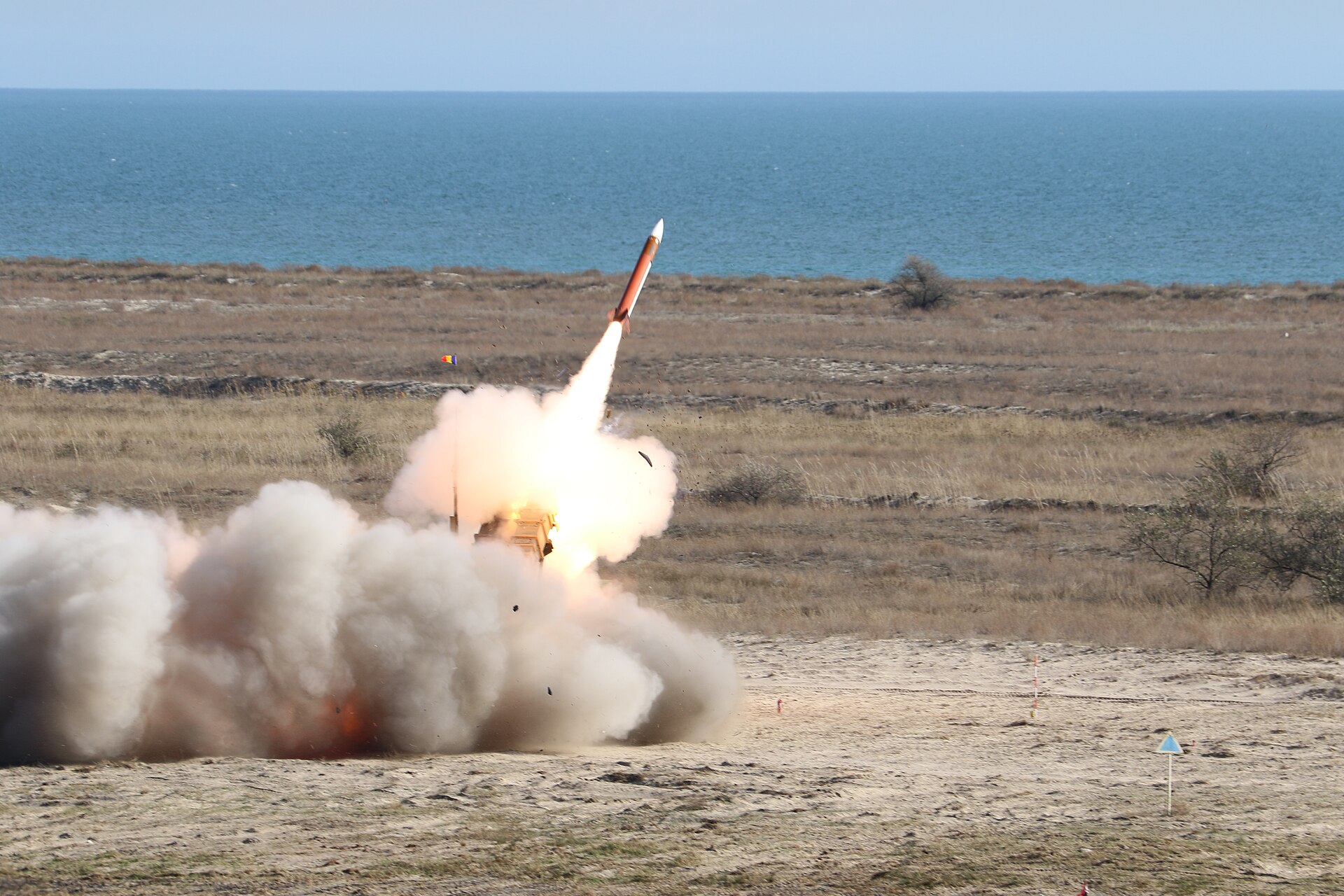
Saudi Arabia’s PAC-3 MSE interceptor stocks have depleted to approximately 400 rounds — roughly 14 percent of the pre-war inventory of 2,800 — at a replacement cost of $3.9 million per round. The Camden, Arkansas production line manufactures about 620 rounds per year. A $4.761 billion US Army/Lockheed Martin contract signed April 9, reported by Defense News, to ramp production to 2,000 rounds annually will deliver nothing before the 2026 Hajj season. Riyadh’s air defence depends on American manufacturing schedules. Its maritime access now depends on European mine-clearance technology. The country with the most at stake has the least independent capacity to fix either problem.
Why Saudi Arabia Cannot Join a US-Excluded Framework
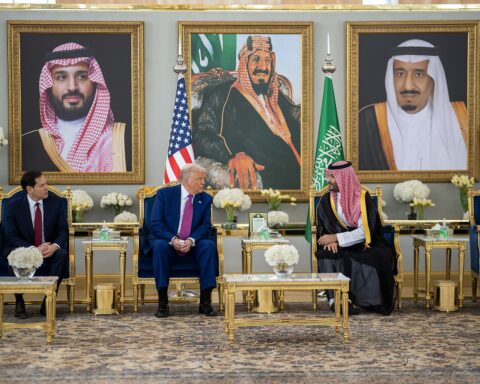
The summit’s defining structural feature — the deliberate exclusion of the United States — is precisely what makes it impossible for Saudi Arabia to attend. Riyadh’s entire air defence architecture runs on American systems: PAC-3, THAAD, F-15 sustainment contracts, and the intelligence feeds that make them effective. The CENTCOM blockade that began April 13 is the active American posture on Hormuz. Joining a European-organised alternative to that posture, in a room Washington was pointedly not invited to, would be read in the Pentagon as a defection.
Trump himself defined the terms on which Riyadh must operate. “The Hormuz Strait will have to be guarded and policed, as necessary, by others,” he told reporters — a statement that simultaneously disclaimed American responsibility and implied that whoever takes it up does so under American tolerance, not as an alternative to American power. Michael Froman, president of the Council on Foreign Relations, raised the question of whether the United States “still has the political capital and goodwill necessary to assemble a coalition in a moment of crisis.” The Paris summit is, in part, an answer to that question. Saudi Arabia cannot afford to be part of that answer.
Merz, in person at the Élysée, was himself ambivalent. “To this day, there is no convincing plan for how this operation” would work, he said, adding that Washington had not consulted Europe. If Germany — a NATO ally with no direct Hormuz exposure — was publicly uncertain, Saudi Arabia’s silence becomes less surprising. Riyadh faces a version of the problem that has defined its security posture since the 2019 Abqaiq-Khurais attack: the United States did not respond militarily then, triggering a strategic reassessment of unilateral dependence on Washington that has intensified without resolving.
The Ellie Geranmayeh assessment, delivered to the AP from the European Council on Foreign Relations, captures the logic the Europeans are selling: “They would be a better party to do this than the United States, because once you have U.S. military doing this and lingering on Iranian shores, it creates a potential arena for Iran and the U.S. to have miscalculations.” The argument is sound on escalation management. It is irrelevant to Saudi Arabia’s constraint, which is not about who is better positioned but about who signs the sustainment contracts for Saudi air defence.
The UAE Said Yes. Saudi Arabia Said Nothing.
The divergence between Abu Dhabi and Riyadh is now on the record. UAE Ambassador to the United Nations Lana Nusseibeh publicly stated readiness to join an international initiative to reopen the strait: “A simple cease-fire isn’t enough… we are ready to join an international initiative to reopen the [Strait of Hormuz] and keep it open.” Saudi Arabia made no comparable statement.
The split reflects structural economics, not diplomatic temperament. The UAE’s Fujairah port sits on the Gulf of Oman, outside the strait — it functions under full Hormuz closure. Abu Dhabi’s economic model is less dependent on crude oil exports than Riyadh’s. The UAE can afford to join a Hormuz coalition because it has infrastructure that works without one. Saudi Arabia’s East-West Pipeline to Yanbu — operating at its effective maximum — covers roughly 80 to 85 percent of pre-war export volume but cannot replace the full 7 to 7.5 million barrels per day that moved through Hormuz before the conflict, leaving a structural gap of 1.1 to 1.6 million barrels per day.
Brent crude settled at approximately $94.79 on April 16, down from $98.25, after Trump used the phrase “very close” regarding talks. Aramco’s May Official Selling Price was set at a record premium of $19.50 per barrel above benchmark — a premium calculated when Brent was near $109, now running $11 to $14 above current spot. Every day the strait stays closed costs Saudi Arabia revenue that the Yanbu bypass cannot fully replace and diplomatic capital that no summit can restore.
The Antalya Alternative
Prince Faisal bin Farhan’s presence at the Antalya Diplomacy Forum was not improvised scheduling. Pakistan’s Ministry of Foreign Affairs announced on April 14 that the quadrilateral meeting — Turkey, Pakistan, Saudi Arabia, and Egypt — would focus on the ceasefire and the broader US-Iran negotiating track. The four countries represent the mediating architecture that produced the Islamabad Accord, the ceasefire that expires on April 22 with no extension mechanism.
The choice between Paris and Antalya is a choice between two theories of how the strait reopens. Paris says: build a naval coalition, clear the mines, escort the tankers, restore freedom of navigation as an operational fact. Antalya says: extend the ceasefire, keep Iran at the table, make Hormuz part of a broader settlement rather than a standalone military problem. Saudi Arabia chose the second — or, more precisely, it chose not to be seen choosing the first.
The IRGC Navy’s declaration of “full authority to manage the Strait” on April 5 and April 10 — issued while Iran’s foreign minister was in Islamabad — means that any mine-clearance operation, however “strictly defensive” Macron frames it, will be treated by Tehran as hostile. Iran has granted selective transit exemptions to China, Russia, India, Iraq, and Pakistan. No European state is on that list. A European flotilla in the strait would test Iranian red lines that even the US blockade has so far avoided crossing directly.
The Hajj cordon seals tomorrow, April 18. Approximately 1.2 to 1.5 million pilgrims will be inside Saudi Arabia. Indonesia’s first departure group of 221,000 leaves April 22 — the same day the ceasefire expires. The kinetic threshold rises the moment the cordon closes. Any military escalation during Hajj — whether from an Iranian response to European mine-clearance or from a ceasefire collapse — occurs with a million-plus pilgrims inside the Kingdom’s air defence perimeter. Riyadh is managing a calendar, not just a coalition.
How Iran Reads the Room
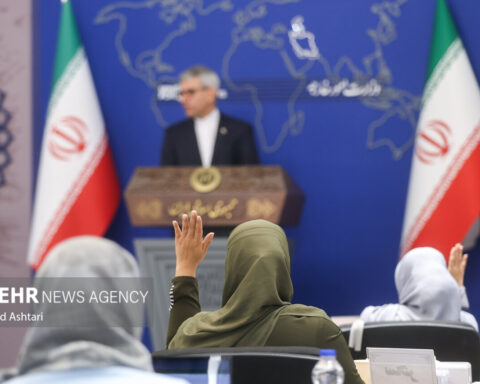
Iran’s Foreign Minister Abbas Araghchi wrote to the UN Secretary-General that “the situation in the Strait of Hormuz cannot be examined in isolation from the general regional circumstances,” which he said “stem from the war imposed [on Iran] by the U.S. and the Zionist regime.” The letter rejects the European framing — that Hormuz is a navigational problem solvable by a maritime coalition — and insists it is a war problem solvable only by ending the war.
Tehran threatened to block shipping from the Persian Gulf, Sea of Oman, and Red Sea if the United States “creates insecurity for Iranian commercial ships and oil tankers.” Whether a European mission without American warships falls inside that definition is deliberately ambiguous. Iran’s silence on the Paris summit itself — no condemnation, no direct response — may be a calculated refusal to elevate the initiative’s legitimacy. Denouncing it would acknowledge it as a threat. Ignoring it implies it is irrelevant.
Saudi Arabia’s silence operates on a similar logic, though from the opposite end. Riyadh gains nothing from endorsing a framework it cannot join and risks antagonising Washington by appearing to validate the premise that American power is insufficient. The Kingdom’s position on Hormuz has been consistent since the war began: it has not signed the March 19 38-nation statement on the strait, it declined to contribute warships to the CENTCOM mine-clearance operation that began April 11, and it has not joined any multilateral naval initiative. The pattern is not indecision. It is a posture — one that keeps Riyadh’s options open by refusing to close any of them.
Background
The last major Hormuz escort operation was Operation Earnest Will, conducted by the United States from 1987 to 1988 during the Iran-Iraq War. Kuwait requested American protection after Iran attacked tankers; at peak, more than 30 US warships operated in the Gulf simultaneously. Saudi Arabia benefitted from the protection without operationally co-leading the mission — a free-rider model that the Kingdom’s current posture echoes.
The EU’s Operation Aspides, launched in February 2024 to defend Red Sea shipping against Houthi attacks, was extended to February 2027. The EU began weighing an extension of Aspides into the Strait of Hormuz in March 2026, with France offering two frigates to operate under the existing institutional framework. Operation Atalanta, the EU’s 2008 anti-piracy mission off Somalia, established the precedent that Europe can run maritime security operations near the Arabian Peninsula without US command and without Saudi co-membership.
Britain is already providing bilateral air defence to Saudi Arabia. A Sky Sabre Royal Artillery battery was deployed to the Kingdom in late March 2026. UK-Saudi bilateral trade stands at £16.6 billion, with a target of £30 billion by 2030, and a PIF-UKEF memorandum of understanding worth $6.8 billion. The Starmer visit to Jeddah on April 8 — where the Prime Minister called Israeli strikes on Lebanon “wrong,” giving Saudi Arabia’s Lebanon-inclusion demand the cover of a Western voice — demonstrated that the bilateral relationship operates on a different track than the multilateral Hormuz initiative. London can offer Riyadh mine-clearance capability through quiet bilateral channels that never require Saudi Arabia to sit in a room Paris organised and Washington was excluded from.
FAQ
Has Saudi Arabia publicly explained its absence from the Paris summit?
No. As of April 17, 2026, no official Saudi statement — from the Foreign Ministry, the Royal Court, or the Saudi Mission to the UN — has addressed the Hormuz summit or Saudi Arabia’s non-participation. This is consistent with Riyadh’s handling of the March 19 38-nation statement on Hormuz, which Saudi Arabia also declined to sign without issuing a public explanation. The Kingdom’s diplomatic communications on the strait have been conducted exclusively through bilateral channels — principally with Washington, London, and Islamabad — rather than through multilateral frameworks.
Could Saudi Arabia join a European Hormuz mission later without having attended the summit?
Structurally, yes. Macron’s framework is designed as an open architecture — countries can contribute assets, intelligence, or logistical support without having been present at the founding meeting. Operation Aspides, which the EU is considering extending to cover Hormuz, already operates on a model where non-EU states can participate through bilateral agreements. Saudi Arabia could provide port access at Jubail or Ras Tanura, overflight rights, or intelligence sharing without formally joining the coalition. The 1987-88 Operation Earnest Will precedent saw Gulf states provide quiet logistical support — basing, fuel, communications — without appearing on the operation’s command structure.
What mine-clearance assets does Saudi Arabia possess independently?
Saudi Arabia’s mine countermeasure capability is minimal. The Royal Saudi Naval Forces operate three Al Jawf-class (Sandown-type) minehunters, acquired from the UK in the early 2000s, but these are coastal defence vessels with limited open-water endurance and aging sonar systems. They are not assessed as capable of clearing the scale of threat in the Hormuz traffic separation scheme — the approximately 200 square miles that the IRGC has declared a danger zone. By comparison, RFA Lyme Bay’s autonomous systems can operate 50 kilometres from the mothership, covering vastly more area per day with lower crew risk. Saudi Arabia’s dependence on external mine-clearance capability is not a diplomatic choice but a material fact.
How does the Hajj calendar constrain Saudi diplomatic options on Hormuz?
The Hajj arrival cordon seals on April 18, after which approximately 1.2 to 1.5 million pilgrims will be inside Saudi Arabia’s borders. The Day of Arafah — the ritual climax of Hajj — falls on May 26, thirty-four days after the ceasefire’s April 22 expiry. Any military escalation during this window occurs with pilgrims from over 180 countries inside the Kingdom, including nationals of states on both sides of the conflict. The 1987 Hajj massacre, in which 402 people died during Iranian pilgrim protests, led to an 87 percent cut in Iran’s Hajj quota and a three-year Iranian boycott. Iran has zero pilgrims in the Kingdom this year — removing one historical deterrent against escalation. Saudi Arabia’s “Custodian of the Two Holy Mosques” title, adopted by King Fahd in 1986, makes the physical safety of Hajj pilgrims a sovereignty obligation that supersedes any single diplomatic or military initiative.
Is the Paris summit connected to the broader European effort to build a post-American Gulf security architecture?
The summit exists in a sequence. Britain convened a preparatory 40-nation Hormuz meeting on April 15. France has been positioning the Charles de Gaulle carrier group in the Eastern Mediterranean since March 3. The EU extended Operation Aspides to February 2027 and began exploring a Hormuz mandate in March. Taken individually, each step is modest — a meeting, a deployment, an institutional extension. Taken together, they represent the most substantial European maritime security initiative in the Gulf since the Tanker War. Whether this becomes a durable architecture or dissipates after a ceasefire depends on a question the summit could not answer: whether European governments will sustain the defence spending and political will for a Gulf commitment that Washington has signalled it does not intend to lead. The bilateral US-Iran memorandum track runs in parallel and offers Saudi Arabia even less visibility: the interim deal’s frozen-assets precedent, once set, cannot be unwound regardless of whether Hormuz reopens on terms Saudi Arabia finds acceptable. Why the interim memorandum’s frozen-assets precedent locks Saudi Arabia out of the deal it needs most is analyzed in The Iran-US Memorandum Makes Saudi Arabia Pay Whether It Works or Not.