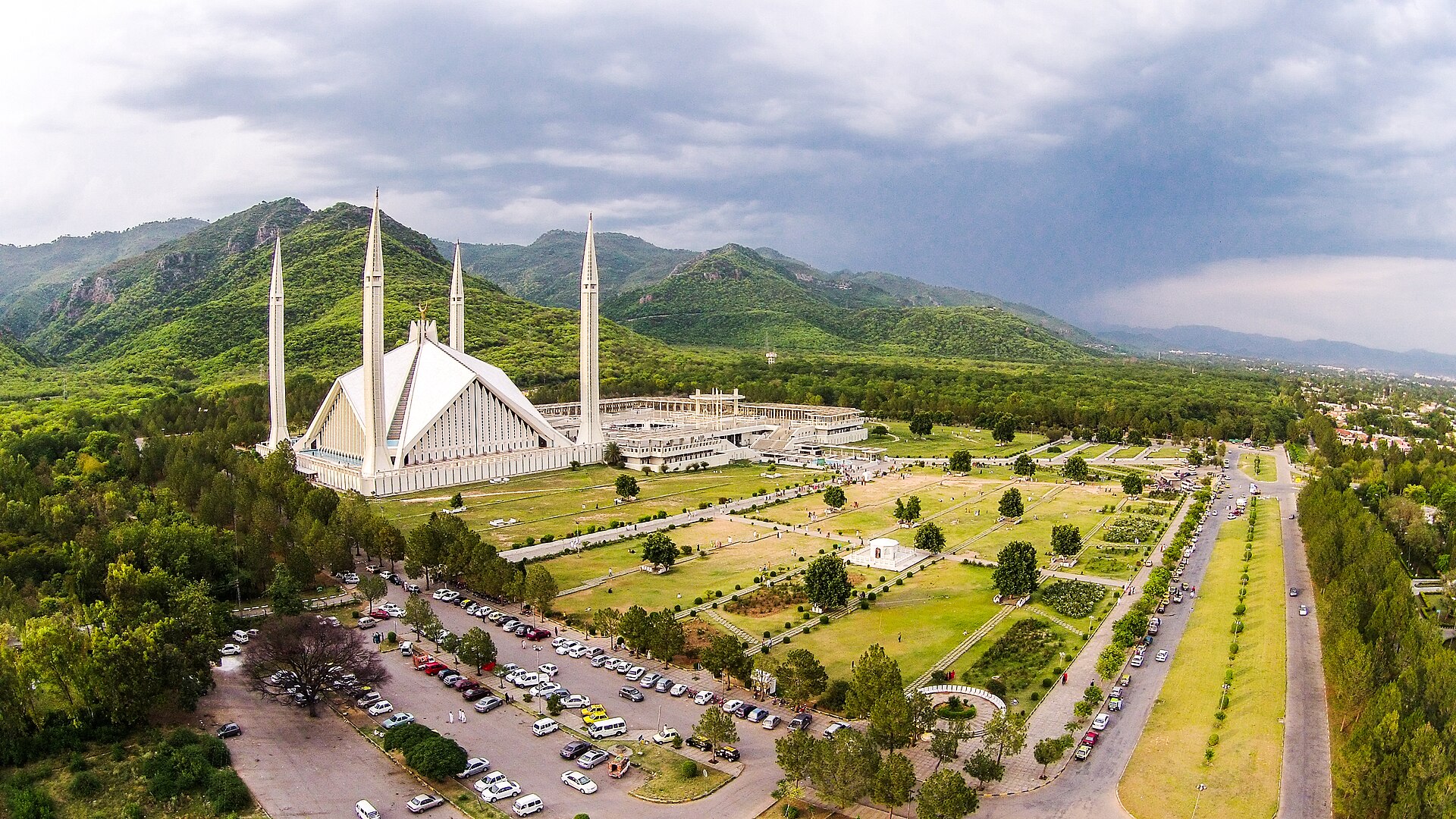

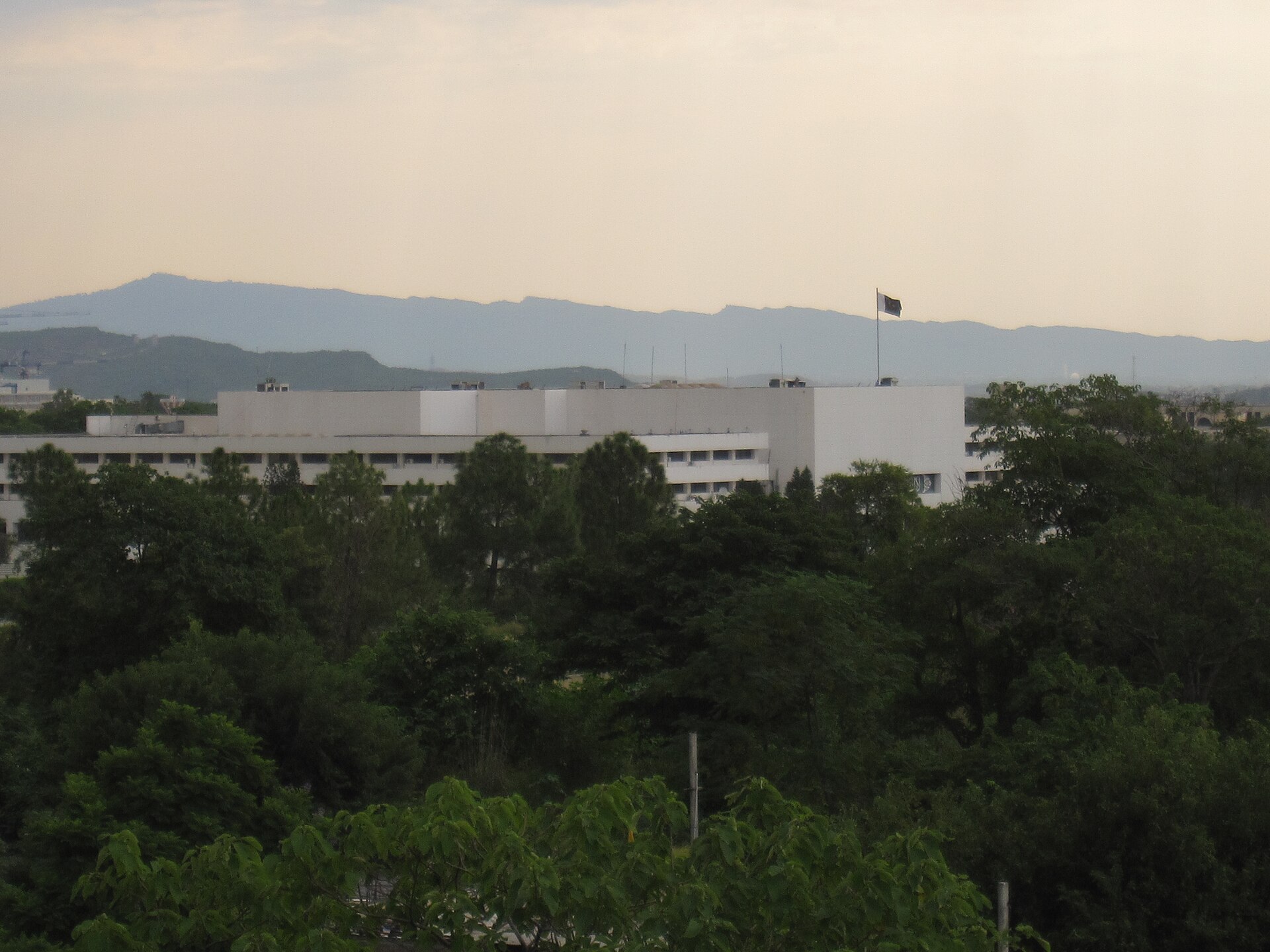
ISLAMABAD — The United States announced on April 19 that Vice President JD Vance, special envoy Steve Witkoff, and senior adviser Jared Kushner would fly to Islamabad for a second round of Iran talks — and within hours, Iran’s state news agency IRNA publicly refused to attend, calling the announcement “their media game and part of the ‘blame game’ to pressure Iran.” Both sides are now performing for cameras that used to point at a negotiating table, with 48 hours left before the April 22 ceasefire expires automatically and no extension mechanism written into the text.
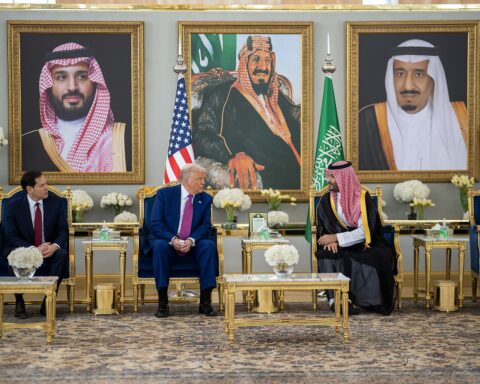
The contradiction is not accidental. Washington is flying a delegation reported at 300 members to a room it knows may be empty, while Tehran is rejecting a round of talks it simultaneously says it would conduct “in Pakistan and nowhere else, because we trust Pakistan.” The real audience for both performances is not the other side — it is Riyadh, Beijing, and the domestic constituencies that will assign blame when the ceasefire collapses.
Table of Contents
- IRNA’s “Media Game” Statement and What It Signals
- Why Is the US Sending a Delegation to an Empty Table?
- The Touska Seizure and the Escalation Running Underneath
- Why Can’t Iran Accept Even If It Wanted To?
- Saudi Arabia Watches Two Press Conferences Replace a Peace Process
- What Happens When the Ceasefire Expires on April 22?
- FAQ
IRNA’s “Media Game” Statement and What It Signals
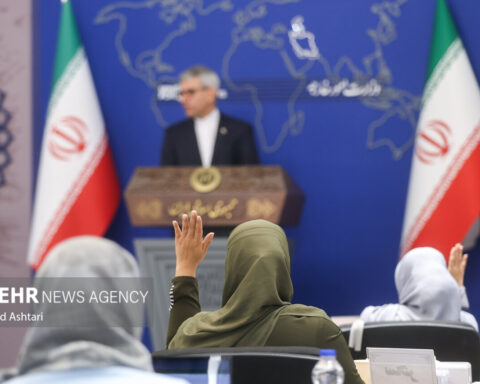
Iran’s rejection of Round 2 was not an offhand remark from a minor official — it was a coordinated dual-language broadcast across IRNA’s English and Farsi services, calibrated for both domestic and international consumption simultaneously. The statement cited five specific grievances: “excessive demands, unrealistic expectations, constant shifts in stance, repeated contradictions, and the ongoing naval blockade,” with the blockade singled out as a “breach of the ceasefire” (IRNA, April 19–20, 2026). The language was identical on Tasnim, the IRGC-aligned outlet, suggesting a talking-points memo that crossed the civilian-military divide before it crossed the wire.
The timing matters as much as the text. Iran’s IRNA statement dropped hours after Trump posted on Truth Social that “My Representatives are going to Islamabad, Pakistan — They will be there tomorrow evening, for Negotiations,” and minutes after Trump told reporters aboard Air Force One that Vance would not go because the Secret Service could not arrange security on 24-hour notice. The White House then reconfirmed Vance would lead the delegation — three contradictory positions from a single administration within a single news cycle (Times of Israel; Fortune; Townhall, April 19–20, 2026).
Deputy Foreign Minister Saeed Khatibzadeh reinforced the frame from a different angle, telling reporters the US blockade was “risking the whole ceasefire package” (Fortune, April 19, 2026). Khatibzadeh’s complaint was about substance — the blockade. IRNA’s complaint was about performance — the “media game.” Together, they constructed a layered rejection: one for diplomats who read cables, one for publics who read headlines.
Iran’s ambassador to Pakistan then contradicted the rejection without retracting it. “We will do talks in Pakistan and nowhere else, because we trust Pakistan,” the ambassador told Al Jazeera — maintaining the channel to Islamabad while refusing to use it. The split between diplomatic channel maintenance and political blame-assignment is not a mistake; it is the architecture of a government where the Foreign Ministry says one thing and the IRGC’s authorization ceiling permits another.
The Middle East briefing 3,000+ readers start their day with.
One email. Every weekday morning. Free.
Why Is the US Sending a Delegation to an Empty Table?
Trump’s public framing for the trip carried its own contradictions, stacked deliberately. He told Axios on April 19: “The concept of the deal is done. I think we have a very good chance to get it completed.” He told Iran, via the same Truth Social post announcing the delegation: “if they don’t [sign], the United States is going to knock out every single Power Plant, and every single Bridge, in Iran” (Fortune, April 19, 2026). The delegation travels as both olive branch and ultimatum — a diplomatic gesture whose companion statement is a threat of total infrastructure destruction.
Round 1, which ran 21 hours across three rounds in Islamabad on April 11–12, produced two incompatible accounts of failure. FM Abbas Araghchi told reporters the parties were “inches away from an MoU” before encountering “maximalism, shifting goalposts, and blockade.” Vance told NBC News: “We just could not get to a situation where the Iranians were willing to accept our terms. I think that we were quite flexible” (NBC News; Al Jazeera, April 12, 2026). Two officials who sat in the same room for 21 hours came out describing different rooms.
Round 2’s dynamic is the same template without the 21 hours of actual talking — the US announces travel, Iran announces refusal, and both sides produce pre-written narratives about whose fault it is that the table is empty. Pakistani anonymous security officials cited by Al-Majalla offered a telling detail from Round 1: Iranian officials “sensed [Vance’s] hands were tied in the presence of Kushner and Witkoff.” If that perception persists, Tehran’s reading is that attendance produces the same deadlock with additional humiliation, while refusal at least controls the narrative.
“Trust, once comprehensively destroyed, cannot be rebuilt in a hotel in Islamabad over 21 hours.”
— Farah N. Jan, Senior Lecturer in International Relations, University of Pennsylvania
Jan’s assessment, published in The Conversation, went further: “The structural obstacles…will not dissolve before April 22,” and the blockade “narrows, rather than expands, the diplomatic space.” The US delegation may well land in Islamabad on April 20 — but the $6 billion in Gulf incentive money Kushner carries cannot buy a counterpart who has been publicly ordered not to show up.
The Touska Seizure and the Escalation Running Underneath
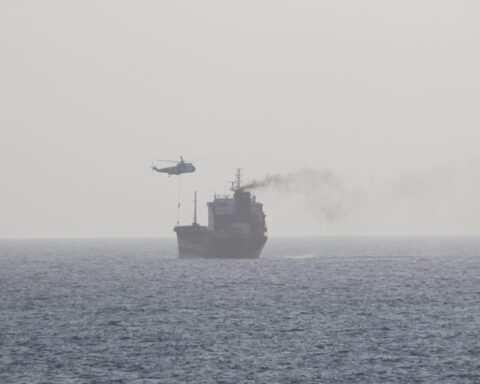
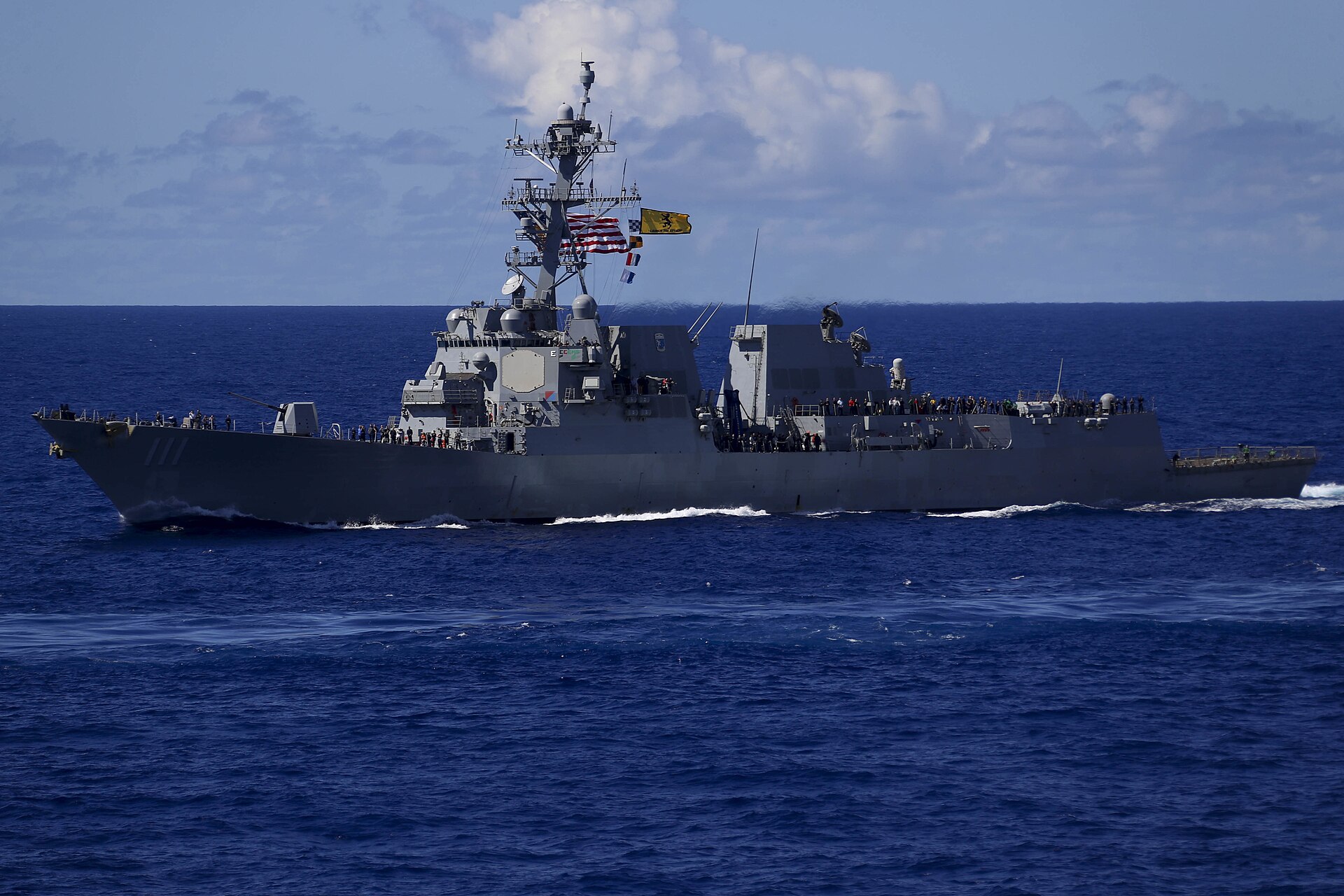
While both sides staged their competing press conferences, the kinetic situation moved in the opposite direction. USS Spruance (DDG-111) seized the Iranian-flagged MV Touska in the North Arabian Sea on April 19, with US Marines from the 31st Marine Expeditionary Unit boarding after a six-hour standoff that ended when Spruance fired its 5-inch MK 45 gun into Touska’s engine room (Al Jazeera; CNBC; The National, April 19, 2026). It was the first blockade boarding to involve live fire against a vessel.
Ebrahim Zolfaghari, spokesman for Iran’s Hazrat Khatam al-Anbiya military headquarters, responded on state television within hours: “We warn that the Armed Forces of the Islamic Republic of Iran will soon respond to and retaliate against this armed piracy by the US military” (CBC News; Shafaq News, April 19–20, 2026). The vow maintained threat without specifying timeline — a rhetorical pattern that preserves escalatory room while giving domestic audiences the performance of strength.
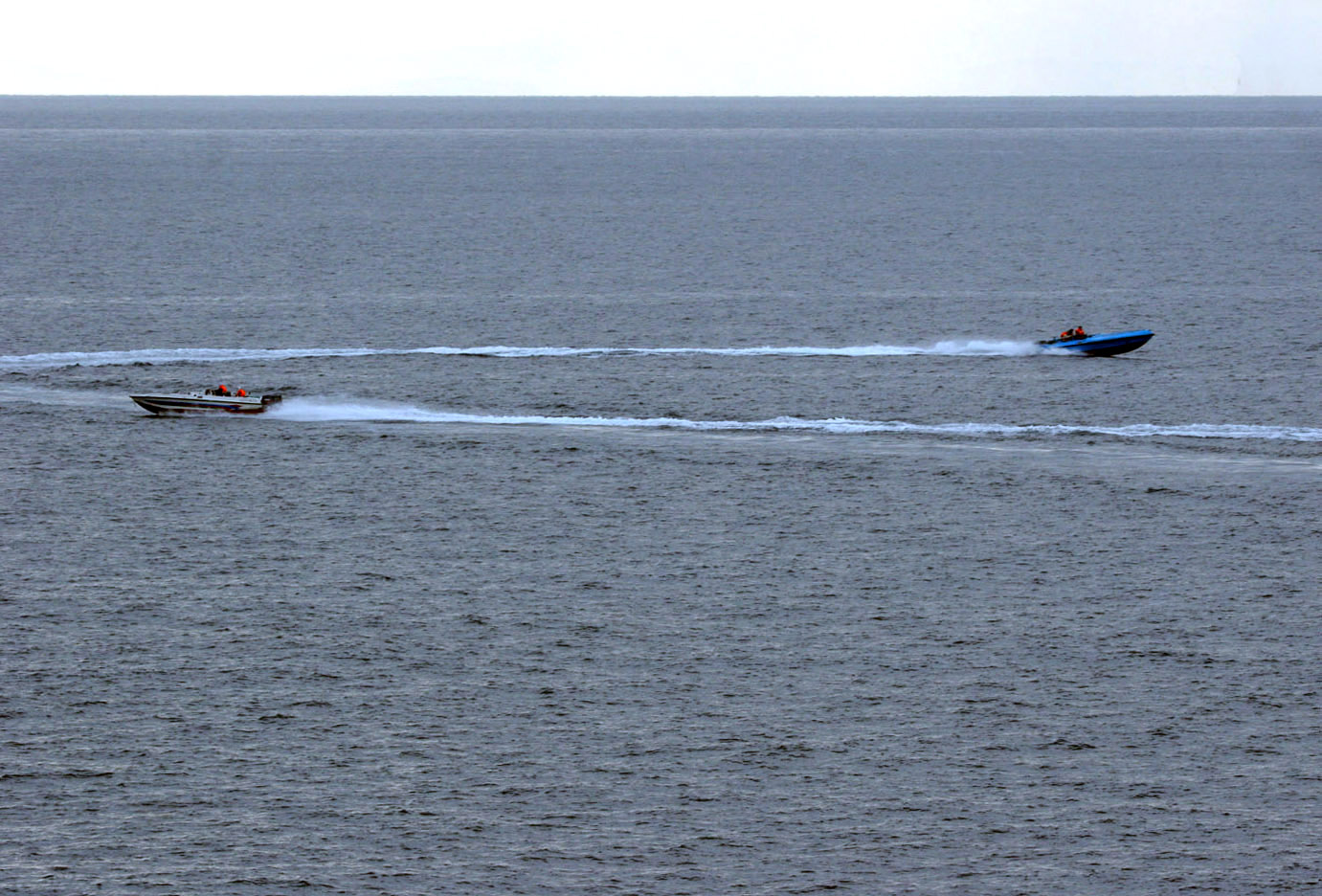
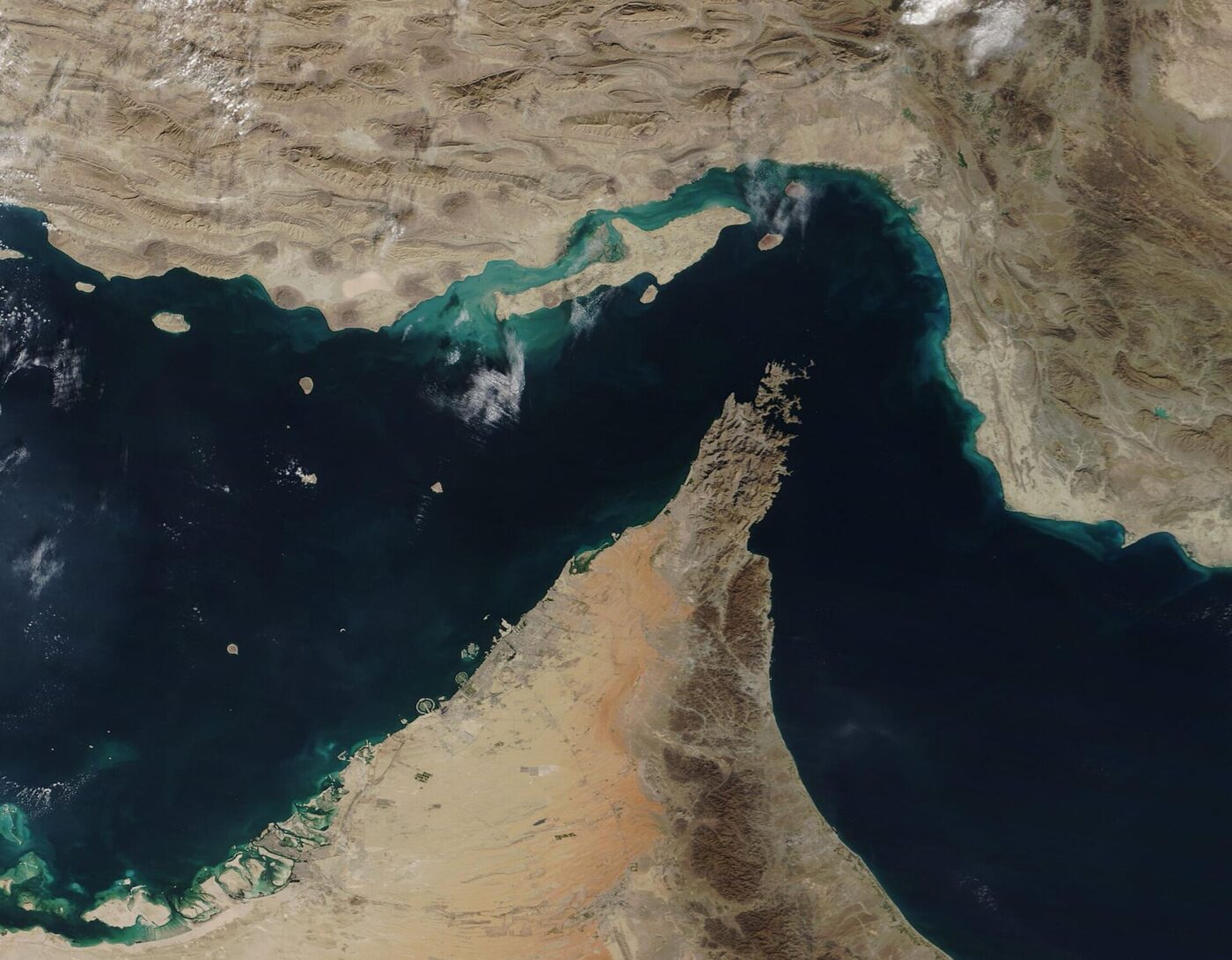
Iran re-closed Hormuz on April 18, the same day the Makkah Hajj cordon sealed, citing the US refusal to lift the naval blockade. Iranian military vessels turned back two tankers immediately after the closure was reimposed (Irish Times, April 19, 2026). The sequence — re-closure, Touska seizure, Zolfaghari retaliation vow — creates a parallel track of physical escalation that makes the diplomatic track’s theatrical quality more visible by contrast. Both tracks are performing, but only one involves a 5-inch naval gun.
Why Can’t Iran Accept Even If It Wanted To?
The structural problem that killed Round 1 has not changed in the eight days since Vance flew home without an MoU. Vahidi, the SNSC secretary, and Major General Abdollahi refused to authorize the delegation to move on enrichment or Hormuz — the two issues on which everything else depends. President Pezeshkian publicly accused both men on April 4 of sabotaging the ceasefire, naming them by name on national television, but under Article 110 of the Iranian constitution, the president has zero authority over the IRGC (HOS prior coverage; Iranian constitution). Pezeshkian’s accusation was a confession of powerlessness, not an assertion of control.
Pakistan’s Army Chief Asim Munir visited Tehran on April 15 with Interior Minister Mohsin Naqvi, carrying what Pakistani sources described as updated US proposals — reportedly a modified version of the 20-year enrichment moratorium offering phased sanctions relief in exchange for an enrichment freeze, a shift from Round 1’s all-upfront demand (PBS; Al Jazeera; Axios, April 13–15, 2026). Pakistan’s Foreign Ministry confirmed the two sides were “in discussions through Islamabad” but added the qualifier that “no date had been set.” After IRNA’s rejection, Pakistan remains technically the host of talks that neither party has committed to attending on any specific date.
Mojtaba Khamenei, who succeeded his father as Supreme Leader on March 9, has maintained limited public visibility throughout the crisis — audio-only communications, no public appearances at military briefings, no formal ratification of IRGC Navy operational orders that require Supreme Leader authority under Article 176. The authorization ceiling — the structural gap between what Iran’s diplomats can promise and what the IRGC will permit — is not a negotiating tactic. It is a constitutional fact that was broadcast on Channel 16, not leaked, when the IRGC Navy overrode Araghchi’s assurances in real time.
Ghalibaf, the Parliament Speaker who led Iran’s 70-member delegation at Round 1, offered the most measured assessment of any Iranian official: “We have had progress but there is still a big distance between us” (Irish Times; CNBC, April 12, 2026). The Irish Times reported on April 19 that Iran was “studying fresh US proposals” — suggesting a back-channel that survived IRNA’s public rejection. Whether Ghalibaf, an IRGC veteran whose Aerospace Force background gives him institutional credibility Araghchi lacks, could return to Islamabad with broader authorization remains the question that neither IRNA’s statement nor Trump’s Truth Social post answers.
Saudi Arabia Watches Two Press Conferences Replace a Peace Process
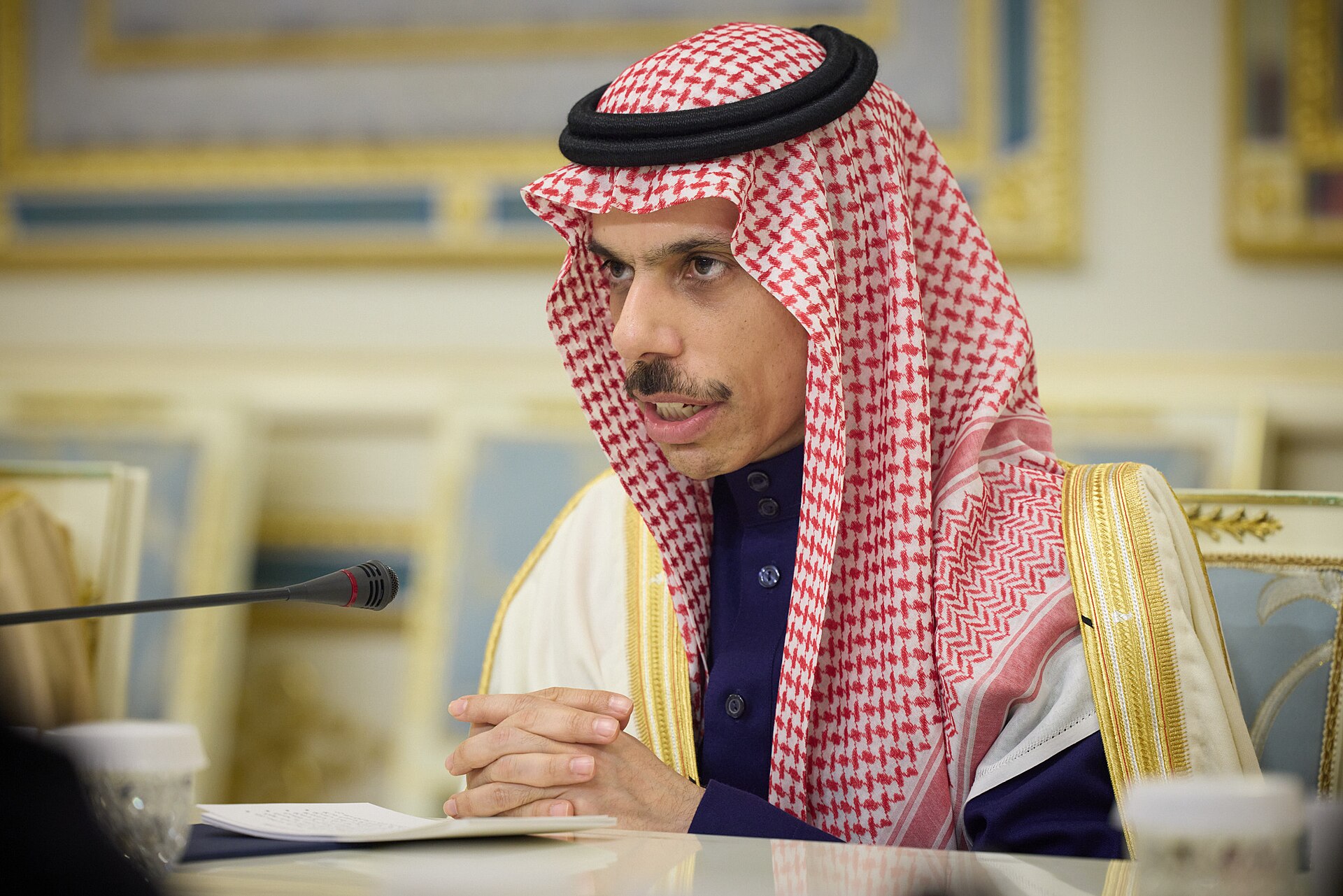
Saudi Arabia broke publicly with Washington’s maximum-pressure posture on April 14, calling for negotiations and an end to the naval blockade — a position that put Riyadh closer to Tehran’s stated demands than to Washington’s stated strategy. Saudi FM Faisal bin Farhan called Araghchi three times between April 9 and 14, and attended the Antalya Diplomacy Forum alongside Pakistani, Turkish, and Egyptian foreign ministers, forming a four-country diplomatic front urging ceasefire preservation (Al Arabiya, April 13–19, 2026). Fidan used that forum to signal optimism about extension — and Turkey and Pakistan are running a joint back-channel aimed at keeping the process alive past April 22.
The position is structurally uncomfortable. Saudi Arabia’s March oil production crashed to 7.25 million barrels per day from February’s 10.4 million — a 30% drop, the largest single-month decline in the Kingdom’s history (IEA, April 2026). The Yanbu bypass pipeline loads a ceiling of 4–5.9 million bpd against pre-war Hormuz throughput of 7–7.5 million, leaving a structural gap of 1.1–1.6 million bpd that no engineering can close while the Strait remains contested (HOS prior coverage). Every day the ceasefire holds without a deal is a day closer to its automatic expiry; every day the ceasefire collapses is a day when that production gap becomes a fiscal emergency at Brent prices already below Saudi Arabia’s $108–111 break-even.
MBS controls the table without sitting at it — the phrase from the previous HOS analysis — but the table itself is now a stage for competing monologues rather than a surface for negotiation. The Saudi FM’s three calls to Araghchi, the signing ceremony Riyadh cannot attend, the quiet shuttle through Nawaz Sharif carrying Iran’s answer to Jeddah — all of it assumes a process that has an outcome. What IRNA’s “media game” statement and Trump’s simultaneous threat-and-delegation performance reveal is that both principals have shifted from seeking an outcome to seeking an alibi.
What Happens When the Ceasefire Expires on April 22?
The ceasefire text signed on April 8 contains no formal extension mechanism, no renewal clause, and no notification requirement for lapse. An “in principle agreement” to extend was reported by AP citing unnamed regional officials, but the White House explicitly stated the US had not “formally requested an extension.” Trump told reporters: “If no deal is reached by Wednesday when the ceasefire expires, the fighting may resume” (Fortune; Fast Company; AP, April 15–20, 2026). The language — “may resume” — treated the return to war as a weather forecast, something that happens rather than something decided.
The enrichment question, Hormuz sovereignty, and the IRGC’s internal veto survived 21 hours of direct talks on April 11–12 unchanged. The Touska seizure and the April 18 Hormuz re-closure have added to the record since Round 1, but as information that narrows options rather than expanding them. No structural obstacle has moved.
China’s Wang Yi identified “the root cause of the conflict as the U.S.-Israeli launch of military attacks against Iran in violation of international law” (CNBC, April 10, 2026). Russia’s Lavrov condemned the strikes as “reckless” and “premeditated, unprovoked armed aggression” (Democracy Now, April 2026). Neither Beijing nor Moscow has the power to extend a ceasefire whose text they did not draft, but both have the platform to assign blame — and in the blame-assignment race that Round 2 has become, a platform matters more than a seat at the table.
The first Hajj 2026 pilgrims landed in Saudi Arabia on April 19, with Indonesia’s 221,000 departing April 22 — the day the ceasefire expires. Pakistan’s 119,000 pilgrims began arriving April 18. The convergence of Hajj logistics and ceasefire expiry creates a threshold that raises the kinetic cost of resumption for everyone except Iran, which has zero pilgrims in the Kingdom and therefore zero Hajj exposure (HOS prior coverage). The 1.2–1.5 million pilgrims gathering in the Hejaz are, in strategic terms, the audience that makes Saudi Arabia’s preference for extension non-negotiable and Iran’s indifference to extension cost-free.
FAQ
Has Iran formally withdrawn from the Islamabad process?
Not technically. IRNA’s statement rejected the US announcement of Round 2 as a “media game,” but Iran’s ambassador to Pakistan simultaneously affirmed that Iran “will do talks in Pakistan and nowhere else.” The diplomatic channel to Islamabad remains nominally open, even as the political messaging declares it closed — a split that reflects the gap between Iran’s Foreign Ministry, which wants to negotiate, and the IRGC-aligned establishment, which controls whether negotiation is authorised.
What were the “fresh US proposals” Munir brought to Tehran?
Pakistani sources described a modified enrichment framework — reportedly shifting from Round 1’s demand for an immediate 20-year freeze and full HEU surrender to a phased sanctions-relief model linked to incremental enrichment restrictions. Pakistani military sources signalled a “major breakthrough on the nuclear front” was expected, though no authoritative public detail on the specific terms has been released. The proposals were delivered by Pakistan Army Chief Asim Munir during his April 15 Tehran visit, accompanied by Interior Minister Mohsin Naqvi.
Can the ceasefire be extended without a formal agreement?
The April 8 ceasefire text has no renewal clause, but a de facto extension could occur if both sides simply refrain from resuming hostilities after April 22. The precedent from Round 1 — where the ceasefire held during post-talk recriminations — suggests that the lapse date is a political deadline rather than an automatic trigger for military operations. The complication is that IRGC units operating under decentralised command authority have already demonstrated the ability to act independently of any ceasefire framework, as the April 18 Hormuz re-closure and the firing on ships with valid transit permits both showed.
Why is Kushner on the delegation alongside Vance and Witkoff?
Kushner’s presence introduces a financial-incentive track running parallel to the security negotiations. He arrived in Islamabad carrying what HOS previously reported as $6 billion in Gulf-sourced economic incentives, positioning the delegation to offer a package that combines security guarantees with reconstruction and investment commitments. Pakistani security officials cited by Al-Majalla noted that Iranian officials at Round 1 perceived Kushner and Witkoff as constraining Vance’s flexibility — suggesting that the same delegation composition may itself be a factor in Iran’s refusal to attend.
What is China’s role in the Islamabad process?
China has no formal role in the Islamabad talks framework, which is brokered by Pakistan. Beijing’s intervention has operated through a separate Hormuz channel — Chinese intermediaries brokered the April 6 transit of Qatari LNG tanker Al Daayen through IRGC-controlled lanes, demonstrating operational influence over Strait access that the formal diplomatic process does not address. Wang Yi’s public framing of the US-Israeli strikes as the conflict’s “root cause” positions China as a potential alternative mediator if the Islamabad framework collapses, though Beijing has not formally offered to host talks.