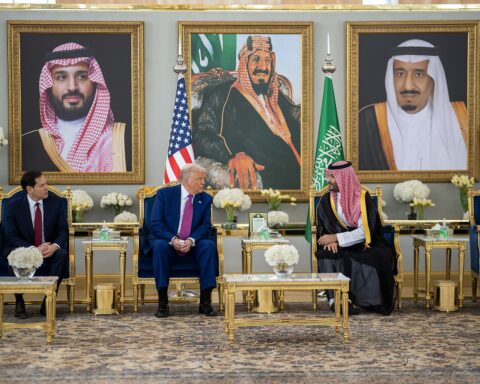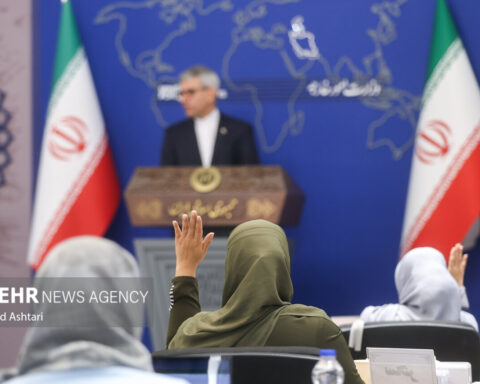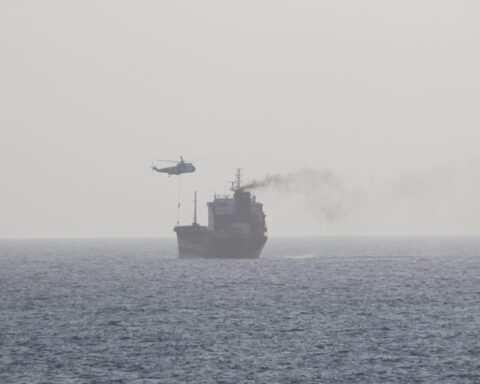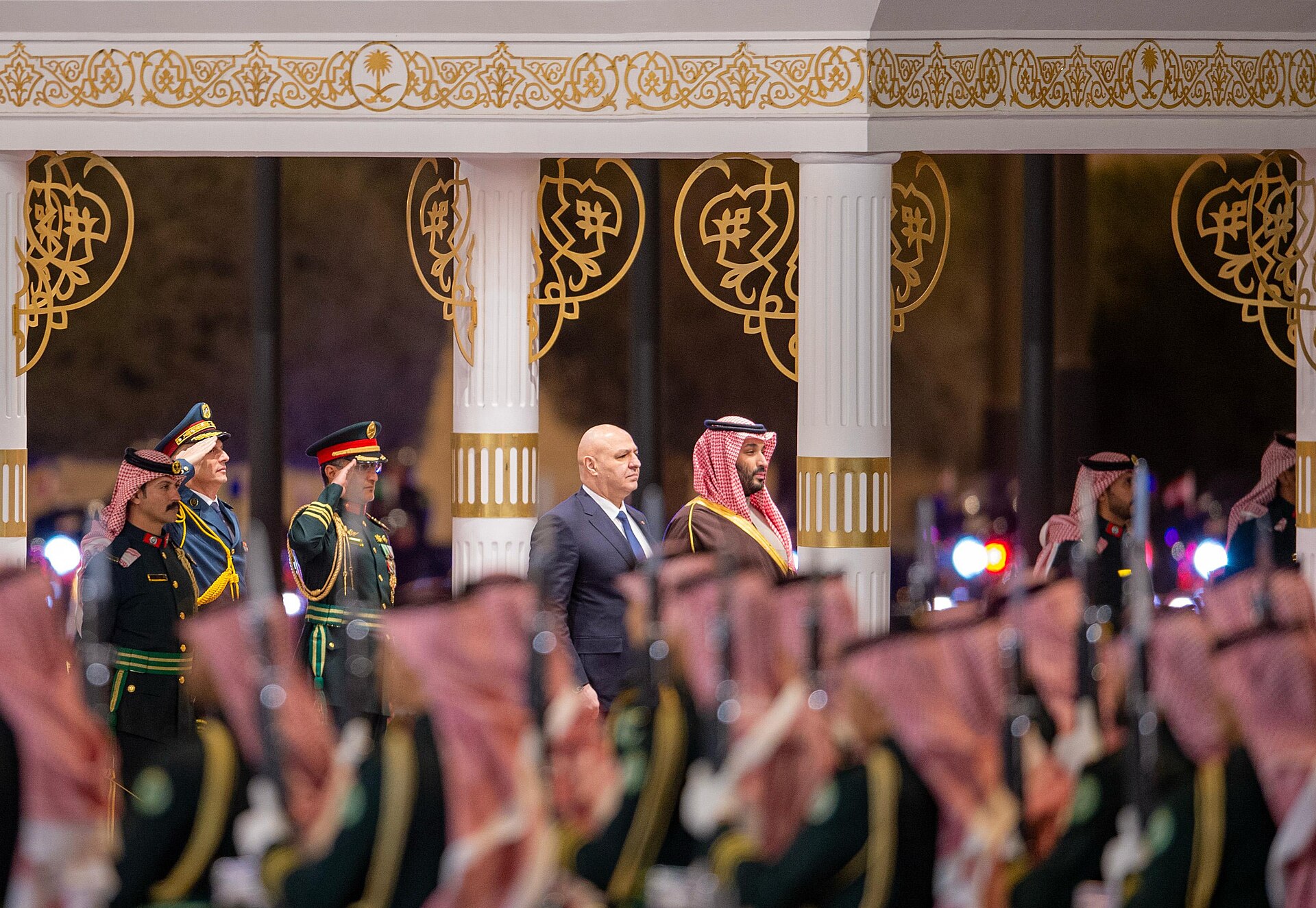

JEDDAH — Saudi Arabia engineered the three-week Lebanon ceasefire extension announced on April 23 without appearing in the room where it was negotiated, deploying Prince Yazid bin Farhan — an advisor to the Foreign Minister, not the Minister himself — to Beirut on the same morning the White House talks began. The sub-ministerial rank was the message: Riyadh wanted authorship without a signature, control without a chair at the table.
The extension buys time. It does not buy enough. The new ceasefire window expires around May 13-14, roughly twelve days before the Day of Arafah on May 26 — the spiritual pinnacle of Hajj and the single most dangerous day on Saudi Arabia’s security calendar this year. If the Lebanon front reopens before that date, Hezbollah rocket fire toward northern Israel restarts during the final fortnight of peak pilgrim arrivals, when approximately 750,000 of a projected 1.5 million pilgrims are already inside the Kingdom and the PAC-3 interceptor stock sits at roughly 14 percent of pre-war levels. The extension is not diplomacy. It is insurance.
Table of Contents
- Who Is Prince Yazid bin Farhan and Why Did Riyadh Send Him?
- The Sequencing That Reveals the Architecture
- Why Does Saudi Arabia Need Lebanon Quiet Before May 26?
- Durbar Diplomacy — The Doctrine Without a Name
- What Did Berri’s Precondition Actually Concede?
- The Taif Template and Saudi Arabia’s 37-Year Invoice
- Can the Extension Hold Until Day of Arafah?
- Frequently Asked Questions
Who Is Prince Yazid bin Farhan and Why Did Riyadh Send Him?
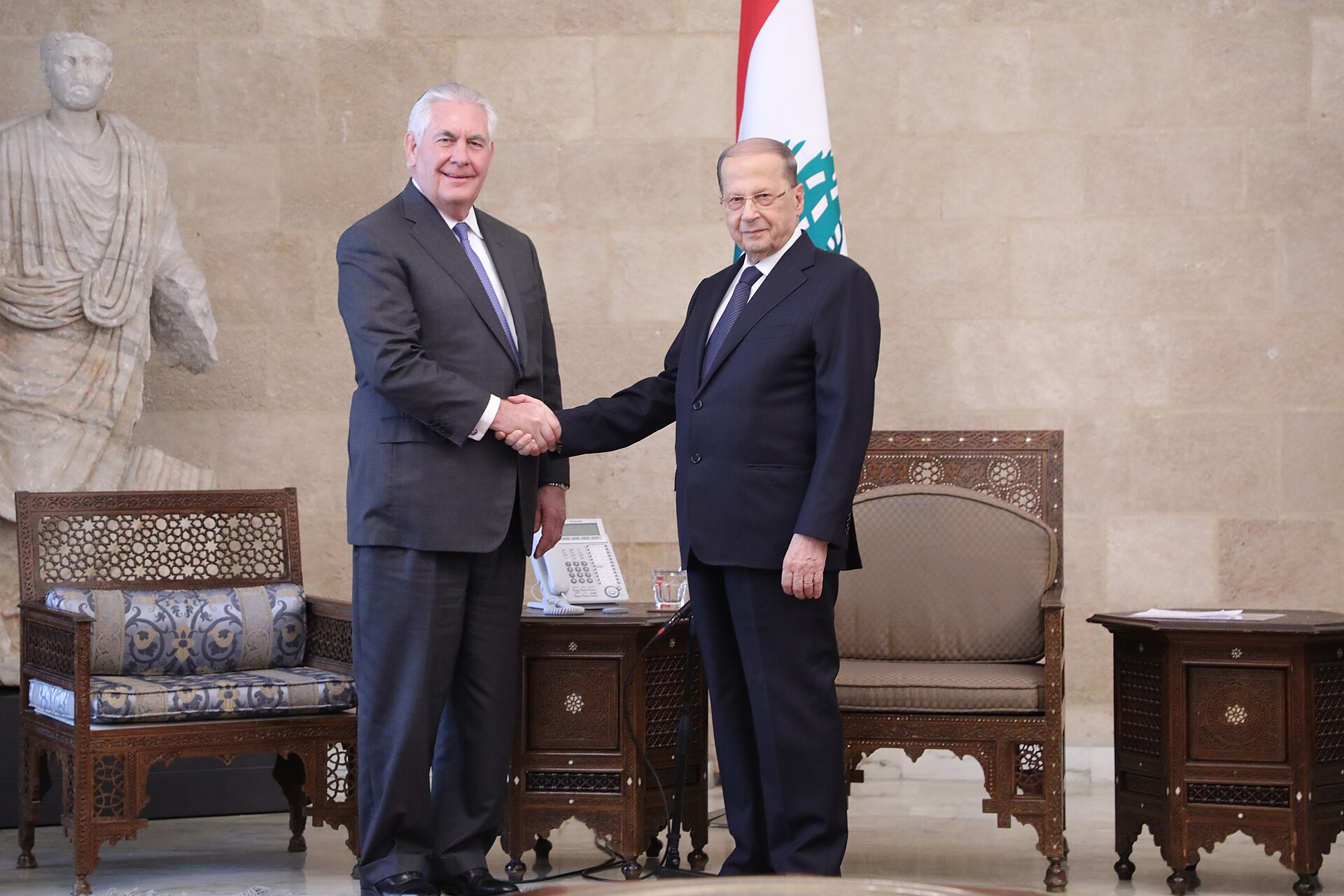
Prince Yazid bin Farhan holds the title of advisor to Saudi Foreign Minister Prince Faisal bin Farhan. He is not the Foreign Minister. He is not the deputy. He arrived at Rafic Hariri International Airport at 8:30 a.m. on Thursday, April 23 — the same morning the White House began hosting Lebanon-Israel ceasefire talks led by Secretary of State Rubio and State Department Counselor Needham — and went directly to Baabda Palace to meet President Joseph Aoun.
The Lebanese presidency’s readout described discussions covering “the current situation in light of recent developments and the role of the Kingdom of Saudi Arabia in helping Lebanon overcome the difficult circumstances it is going through.” Over two days, Yazid bin Farhan met Aoun, Prime Minister Nawaf Salam, Parliament Speaker Nabih Berri, and Sunni MPs including Beirut’s Fouad Makhzoumi — with Saudi Ambassador Walid Bukhari present throughout. The sequencing was not random. He worked the constitutional order: president, then prime minister, then speaker, then legislators.
The below-ministerial rank carried a specific signal. When Saudi Foreign Minister Prince Faisal visited Beirut after Aoun’s election, it was his first trip to Lebanon in fifteen years — a return that Chatham House called evidence that “Gulf Arab states gained greater influence in Beirut at Tehran’s expense” following Hezbollah’s weakening. Sending Faisal again would have elevated the visit to a state-level event, generating headlines that tied Riyadh directly to the extension. Sending his advisor — a man with the royal prefix but not the portfolio — kept the visit below the threshold of formal diplomatic engagement. Riyadh got delivery without attribution.
The Sequencing That Reveals the Architecture
Isolated, Yazid bin Farhan’s Beirut meetings could be read as routine Saudi reengagement with Lebanon. In sequence with the four days preceding them, they read as orchestration.
The Middle East briefing 3,000+ readers start their day with.
One email. Every weekday morning. Free.
On April 20, Xi Jinping called MBS and called for “normal passage through the Strait of Hormuz” and an “immediate and comprehensive ceasefire,” according to Bloomberg. Saudi Arabia responded that it was “ready to strengthen communication and coordination with China to maintain the ceasefire.” The call established Beijing’s position: the blockade is unacceptable, the ceasefire must hold. Riyadh pocketed the language.
On April 21, MBS called Lebanese President Aoun directly. Aoun “expressed sincere thanks and appreciation to the Crown Prince for Saudi Arabia’s consistent support,” per Al Arabiya. MBS “affirmed the Kingdom’s support for Lebanon’s sovereignty.” The same day, Syria’s President Ahmad al-Sharaa arrived in Jeddah to begin a Gulf tour — Saudi Arabia, then Qatar, then the UAE — that The National reported as coinciding precisely with the Yazid bin Farhan deployment. The Levantine diplomatic sweep originated from Riyadh.
On April 23, three events occurred within hours. Yazid bin Farhan landed in Beirut. The White House talks convened with Lebanese and Israeli ambassadors. By evening, Trump announced the three-week extension. The original ceasefire had begun on April 16 at 17:00 EST for ten days. The extension was not spontaneous. It was prefabricated.
The pattern repeats what happened on April 8-10, when British Prime Minister Starmer met MBS in Jeddah and within 48 hours Foreign Secretary Cooper delivered the Mansion House speech demanding Lebanon’s inclusion in peace terms and the full reopening of Hormuz. Saudi Arabia obtained its demands attributed to an allied government — twenty-plus Western leaders signed a joint statement including Lebanon language, and Saudi Arabia was not a signatory. The Yazid bin Farhan visit is the same architecture with a different actor in the attribution role.
Why Does Saudi Arabia Need Lebanon Quiet Before May 26?
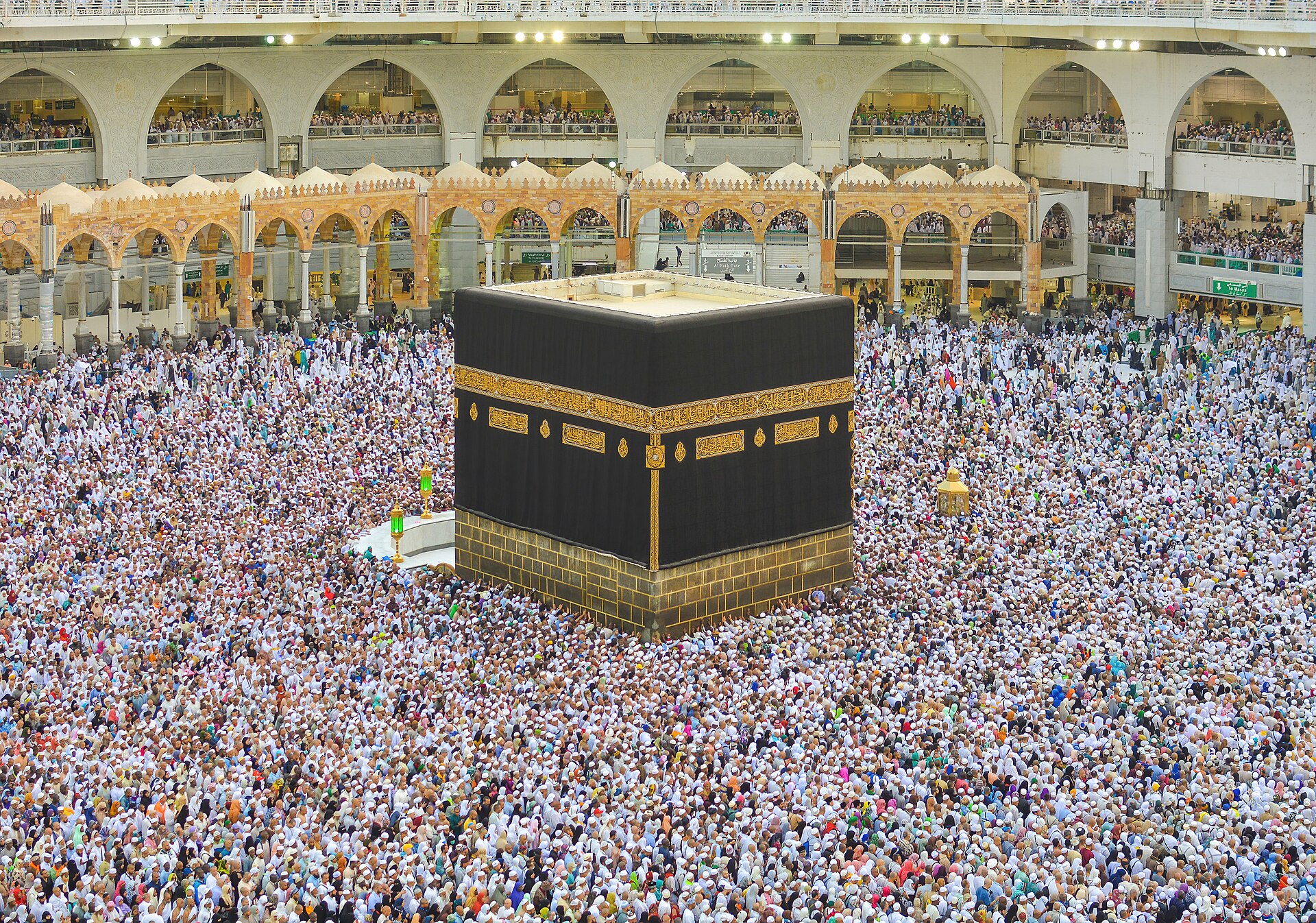
Saudi Arabia needs the Lebanon front frozen through the end of Hajj because its air defense architecture cannot absorb a second active front while protecting 1.5 million pilgrims concentrated in a 20-kilometer corridor between Makkah and Mina. The Day of Arafah — May 26 — is the most exposed moment: the entire pilgrim population gathers on the plain of Arafat in an open-air assembly with no hardened shelter.
The twelve-to-thirteen-day gap between the extension’s expiry and May 26 is the danger window. If the extension collapses on schedule and no further extension follows, the Lebanon front reopens during the most concentrated period of Hajj arrivals. That is enough time for Hezbollah to resume firing toward northern Israel, for Israel to escalate its Lebanon ground operations — which it has reserved the right to do even during the ceasefire, per Axios — and for the entire northern front to become a second active theater demanding air defense resources Saudi Arabia does not have to spare. The Custodian title that MBS holds becomes a liability if pilgrims die under Saudi protection during a war Riyadh did not start and cannot stop.
Saudia airline alone is transporting 1.2 million passengers over 74 days. MBS directed what Saudi state media called “full mobilisation of operational, security and preventive plans.” Over 2,000 people have been killed in Lebanon since the conflict began and more than one million displaced. The ceasefire is the only thing between that war and the Grand Mosque.
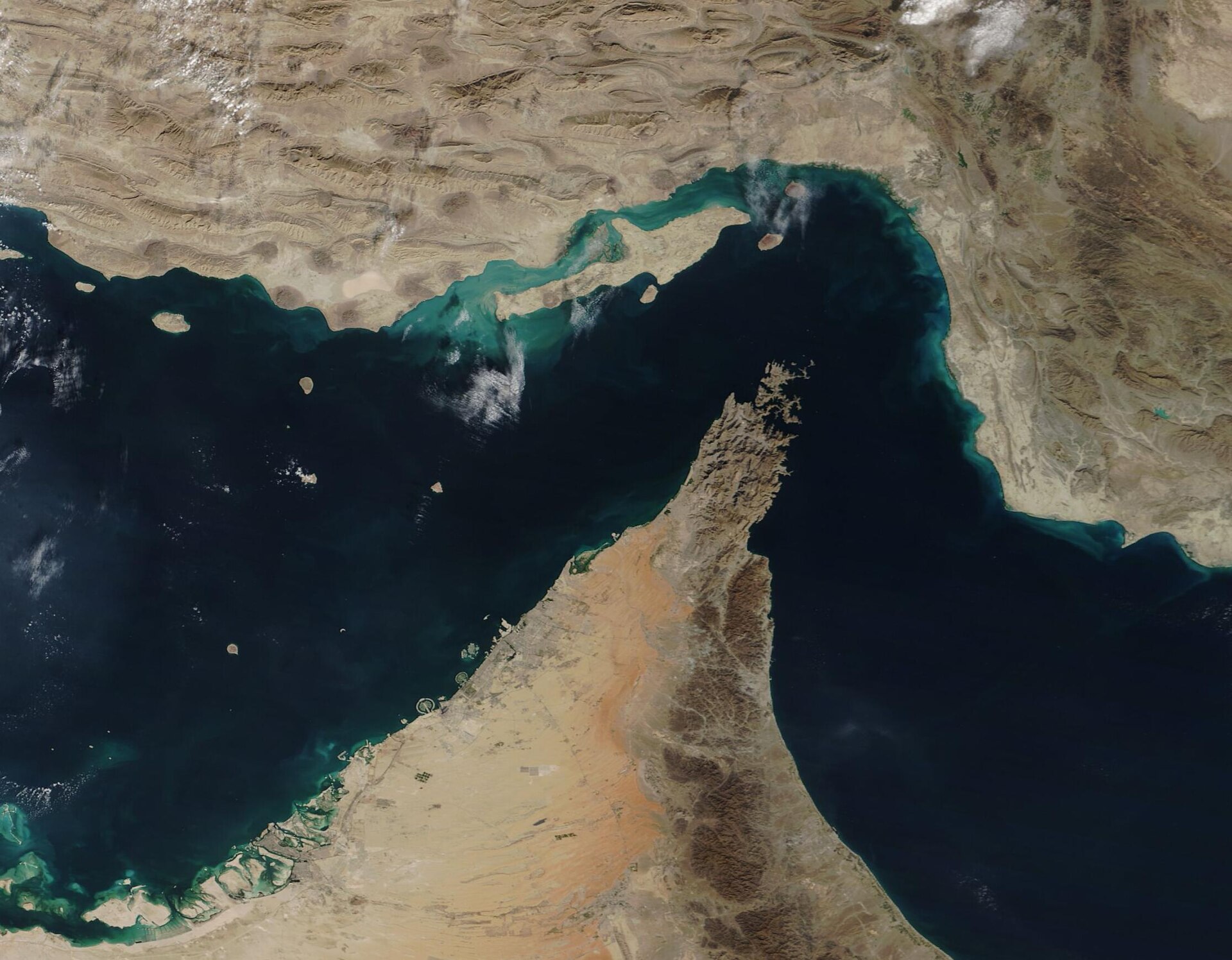
Saudi Arabia is simultaneously lobbying Washington to end the Hormuz blockade, according to Arab officials who spoke to the Wall Street Journal. Riyadh’s concern, per the same sources: Iran could use Houthis to threaten Bab el-Mandeb if the blockade continues. A southern Red Sea front opening while the Lebanon front reopens during peak Hajj would leave Saudi Arabia defending three axes — Hormuz, Bab el-Mandeb, and the Lebanese border zone — with an interceptor inventory built for peacetime.
Durbar Diplomacy — The Doctrine Without a Name
What Saudi Arabia is running in Lebanon has a historical antecedent but no established name in the diplomatic studies literature. Call it durbar diplomacy — the practice of a state that cannot appear at the negotiating table using allied governments, sub-ministerial envoys, and sequenced bilateral meetings to set the terms of an agreement it will then publicly “welcome” as though it were a bystander.
The durbar — the Mughal and British imperial court where petitioners came to the sovereign rather than the sovereign going to them — inverts the usual diplomatic hierarchy. Saudi Arabia does not travel to the negotiation. The negotiation’s terms travel to Saudi Arabia, pre-shaped by Saudi envoys who were never formally part of the process. Yazid bin Farhan carried three demands to Beirut, reported by Naharnet on April 24: full implementation of the Taif Agreement “without any procrastination,” restriction of arms to the Lebanese state only, and enactment of a new electoral law. He also stated that “this war should be the last” and designated the Sunni Prime Minister position as “a red line.”
None of these demands appeared in the White House’s extension announcement. All of them now sit inside Lebanon’s domestic political negotiations as preconditions that every Lebanese faction knows originated in Riyadh. Chatham House assessed that “to succeed in the negotiations with Israel, the Lebanese government needs the diplomatic backing of Saudi Arabia and other Arab countries as well as increased military assistance from the US.” Riyadh’s backing is not free. The price list arrived with Yazid bin Farhan.
The doctrine operates under three constraints that make it the only available tool. First, Saudi Arabia is excluded from the Islamabad process — the Iran ceasefire architecture runs through Pakistan, and Riyadh has no formal seat at any of the active negotiating tables despite being the most affected party. Second, it cannot openly oppose Trump’s Hormuz blockade while privately lobbying against it — the contradiction would be visible. Third, as Foreign Affairs noted in April 2026, Saudi Arabia “fears a too-strong Iran, though it also fears Israel’s ambitions and does not want either to become a regional hegemon.” Appearing to co-author a Lebanon deal would place Riyadh publicly on one side of a conflict where it needs to remain on no side.
The physical dimension of that exclusion becomes sharper with each passing day. More than 48,000 pilgrims had arrived in Saudi Arabia by April 24, with Witkoff and Kushner scheduled to fly to Islamabad on April 26 for a make-or-break weekend of talks — a convergence of pilgrim exposure and diplomatic urgency that Riyadh can influence only through proxies it helped position, not through any formal seat at the table.
Durbar diplomacy solves all three. Riyadh sets terms through a sub-ministerial envoy. An allied government — Britain in April, the United States this time — announces the outcome. Saudi Arabia’s Ministry of Foreign Affairs releases a statement that it “welcomes” the ceasefire, as it did on April 16 via the Saudi Press Agency. The statement is endorsement posing as reaction.
The doctrine requires a specific kind of diplomat. Yazid bin Farhan is a royal — the prefix carries weight in every room in Beirut — but his portfolio title, “advisor to the Foreign Minister,” gives him authority without accountability. If his demands are accepted, Riyadh shaped the outcome. If they are rejected, an advisor expressed a personal view. The ambiguity is structural. A Foreign Minister’s visit generates a joint communiqué; an advisor’s visit generates a readout from the host government’s press office. The Lebanese presidency described the visit in the passive voice: discussions “covered the current situation.” Riyadh did not describe it at all.
The fragility of the earlier Saudi-built ceasefire framework — a French UNIFIL soldier was killed on day one of the April 16 ceasefire — illustrates why Riyadh operates below the ministerial threshold. A ceasefire you publicly authored and that collapses on its first day damages your credibility. A ceasefire you quietly facilitated and that collapses is someone else’s failure. The deniability is not cowardice. It is load-bearing.
What Did Berri’s Precondition Actually Concede?
Parliament Speaker Nabih Berri told Prince Yazid bin Farhan directly that “Lebanon will not sign a peace agreement with Israel before Saudi Arabia does,” according to Naharnet’s April 24 report. The sentence reads as a statement of Lebanese sovereignty — we will not normalize before you do. In practice, it hands Riyadh a veto over Lebanon-Israel peace that Riyadh did not ask for publicly and could not have demanded without provoking a backlash.
Berri — the longest-serving speaker in Lebanon’s history, an Amal Movement leader whose political survival depends on positioning between Hezbollah and the Gulf — inserted a Saudi precondition into Lebanon’s own negotiating position. If Lebanon cannot sign a peace deal with Israel before Saudi Arabia does, then the timeline of any Lebanon-Israel settlement is determined in Riyadh, not Beirut. The effect is to subordinate Lebanon’s bilateral negotiations to the Saudi normalization calendar — a calendar that MBS controls and has shown no urgency to advance.
This is the inverse of what it appears. On the surface, Berri is imposing a condition on Saudi Arabia: you go first. In practice, he is giving Saudi Arabia the power to delay any Lebanon-Israel deal indefinitely without Saudi fingerprints on the delay. If Washington pressures Beirut to sign, Beirut points to Berri’s condition. If Washington pressures Riyadh to normalize, MBS can cite the war, Hormuz, Hajj, or a dozen other reasons to wait. The precondition is a lock that only Saudi Arabia holds the key to, installed by a Lebanese politician who presented it as Lebanese independence.
Lebanese FM Youssef Rajji, as cited by Chatham House, offered the structural explanation: “Hezbollah won’t hand over its weapons without an Iranian decision.” If Hezbollah’s disarmament requires Iran’s consent, and Lebanon’s peace deal requires Saudi Arabia’s prior normalization, then Lebanon’s entire diplomatic architecture runs through two external capitals. Yazid bin Farhan’s visit did not create this dependency. It formalized it.
The Taif Template and Saudi Arabia’s 37-Year Invoice
Every demand Yazid bin Farhan carried to Beirut in April 2026 is a verbatim demand from the Taif Agreement, negotiated in Ta’if, Saudi Arabia, on October 22, 1989. Full implementation of the accord, disarming of all militias except the state, a new electoral law — these are not new Saudi positions. They are the original Saudi positions, restated without amendment after thirty-seven years of non-implementation.
The Taif Agreement ended Lebanon’s fifteen-year civil war. Saudi Arabia was not merely a host; it was the active mediator. Rafik Hariri — a Saudi citizen who would become Lebanon’s prime minister — shuttled between capitals to organize the conference. King Fahd entrusted Prince Bandar bin Sultan to direct Saudi efforts. The accord restructured Lebanese power-sharing to a 50:50 Christian-Muslim balance, enhanced the Sunni prime minister’s constitutional role, and called for disarming all militias. The loophole — an exception for “resistance” groups until Israeli withdrawal from southern Lebanon — allowed Hezbollah to remain armed for the next thirty-six years.
Hezbollah exploited this loophole into a parallel state. When Yazid bin Farhan told Lebanese officials that “this war should be the last” and that the Sunni premiership is “a red line,” he was not delivering a new Saudi framework. He was presenting an invoice for a framework Saudi Arabia built in 1989 and has been waiting to collect on since. The Stimson Center’s assessment is precise: Saudi reengagement with Lebanon is explicitly conditional on “drug crackdowns, security restoration, Hezbollah disarmament, and banking reform.” The conditionality is the point. Saudi reconstruction money — the capital that Lebanon desperately needs — will not flow until the Taif Agreement is implemented as written, not as Hezbollah interpreted it.
Lebanon’s place in Saudi Arabia’s ceasefire strategy is also being pressed through Saudi Arabia’s parallel EU-GCC diplomatic track — a Nicosia-based format that gives Riyadh an institutional channel to shape Hormuz and Lebanon terms from outside the Islamabad US-Iran negotiations.
The Hariri assassination in 2005, the 2006 war, the 2017 Hariri-in-Riyadh crisis, the 2020 Beirut port explosion — at each inflection point, Saudi Arabia’s Taif demands went unmet. The Kingdom withdrew diplomatically from 2016 to 2021. It watched. It waited. Now Hezbollah’s weakening in the current war has created the first genuine window for Taif implementation since 1989. Lebanon’s government, as Lebanese PM Salam told the Washington Post, is negotiating from a position where it “cannot live with a so-called buffer zone” and demands “full withdrawal” of Israeli forces. But it needs external support to negotiate effectively. Saudi Arabia’s quiet diplomatic achievement in Lebanon is that it can now offer that support — at a price set in 1989.
Can the Extension Hold Until Day of Arafah?
The extension will hold only if both sides calculate that violating it costs more than maintaining it. Early evidence suggests the calculation is fragile. Hezbollah and Israel traded fire within hours of the extension announcement on April 23 — rockets fired from Lebanon toward northern Israel were intercepted, per NPR. Israel’s defense establishment instructed the IDF “to act with full force, both on the ground and from the air, including during the ceasefire, in order to protect soldiers in Lebanon from any threat,” according to Axios.
Hezbollah’s leadership called the extension “meaningless,” stating it “has no meaning in light of continued Israeli hostile actions.” Mohammad Raad, head of Hezbollah’s parliamentary bloc, accused mediators of constructing “a deceptive scheme” and “providing cover for Israeli aggression,” telling the Washington Post that “any supposed ceasefire that grants the occupying enemy in Lebanon a special exception to open fire… is not a ceasefire at all.” Hezbollah Secretary-General Naim Qassem called the Washington talks “a free concession” to Israel and the United States. Iran dismissed the extension as “meaningless” and cited the continued US naval blockade as a violation of the ceasefire framework.
A unnamed Lebanese government official told The National that “Saudi Arabia’s moves in Lebanon are a pre-emptive step ahead of regional understandings taking shape.” The pre-emption has a deadline, and the deadline is not May 14. It is May 26. Indonesia’s 221,000 pilgrims began departing on April 22; Pakistan’s 119,000 arrive through late April and May. Whether a second extension materializes depends on variables Riyadh cannot control: Israel’s ground operations in southern Lebanon, Hezbollah’s willingness to absorb losses without retaliating, and Washington’s appetite for another diplomatic cycle while managing the Hormuz blockade and the stalled Iran nuclear talks simultaneously.
MBS pressed Trump for the first Lebanon ceasefire to buy runway before the earlier April 22 expiry. He will need to press again. The durbar doctrine assumes that Riyadh can continue generating extensions through proxy diplomacy indefinitely. The twelve-day gap between the current extension’s expiry and the Day of Arafah will test whether that assumption holds, or whether Saudi Arabia’s insurance policy has a coverage limit that falls short of the event it was purchased to protect.
Vali Nasr of SAIS at Johns Hopkins framed the broader Saudi dilemma: Saudi Arabia is “voicing a broader international concern that US blockade is a dangerous escalation. It further closes all trade in the Persian Gulf, could lead to more violent conflict there but also lead to disruption of trade in the Red Sea.” The Lebanon extension does not resolve this. It borrows against it.
The Hormuz shoot-on-sight order and the Lebanon ceasefire are not separate crises from Riyadh’s perspective. They are the same crisis on two fronts, governed by the same calendar. MBS needs both fronts quiet by May 26, and he has formal influence over neither. The durbar doctrine — sending advisors, sequencing calls, coordinating allied visits, then welcoming the outcome — is what a state does when it has more at stake than anyone at the table and no chair of its own. The next extension, if it comes, will follow the same pattern. A Saudi royal without a ministerial title will arrive somewhere, carry a list of demands that trace back to 1989, and leave before the announcement. The Kingdom will welcome the result.
Frequently Asked Questions
Why does Hezbollah’s disarmament depend on Iran, not Lebanon?
Lebanese FM Youssef Rajji has stated publicly that “Hezbollah won’t hand over its weapons without an Iranian decision.” Hezbollah’s arms supply, financing, and strategic direction run through the IRGC’s Unit 400 and the Quds Force. The Lebanese state has no enforcement mechanism to compel disarmament against Tehran’s wishes — which is why the Taif Agreement’s militia disarmament clause went unimplemented for thirty-six years despite being Lebanese law.
Has Saudi Arabia formally resumed diplomatic relations with Lebanon?
Saudi Arabia never formally severed relations but conducted a de facto diplomatic freeze from 2016 to 2021, following the Saad Hariri crisis when the Lebanese prime minister was summoned to Riyadh in 2017 and resigned on live Saudi television before rescinding. The Saudi Foreign Minister’s post-Aoun-election visit to Beirut was the first ministerial-level trip in fifteen years. Yazid bin Farhan’s April 2026 visit signals active reengagement but at a deliberately sub-ministerial level — maintaining the option of escalation or withdrawal without a formal reset.
What role does Syria’s new government play in the Saudi Lebanon strategy?
Syria’s post-Assad government gives Saudi Arabia a channel of influence over Lebanon’s northern border that did not exist under Assad, who coordinated with Iran to arm Hezbollah through Syrian territory. President al-Sharaa’s April 21 Gulf tour — Riyadh, then Qatar, then the UAE — suggests Riyadh is building a coordinated Levantine framework that treats Syria and Lebanon as linked files. Any future Hezbollah disarmament would require cutting the Syrian supply corridor; Saudi Arabia now has a government in Damascus willing to discuss it.
What happens to Lebanese public opinion if the ceasefire holds?
Al Jazeera documented Lebanese citizens in April 2026 who believe “the only deterrence Lebanon has at the moment is Hezbollah” and that negotiations represent capitulation. Public opinion is divided along sectarian and geographic lines: residents of southern Lebanon who have experienced Israeli ground operations tend to support continued resistance, while Beirut’s commercial class and the Sunni political establishment see Saudi-backed reconstruction as the viable path forward. The longer the ceasefire holds, the stronger the reconstruction argument becomes — which is precisely why Saudi Arabia is investing in its extension. That calculation was tested when Israel struck Lebanon with force on April 25, 48 hours into the extension window, exposing the limits of Saudi insurance diplomacy in real time.