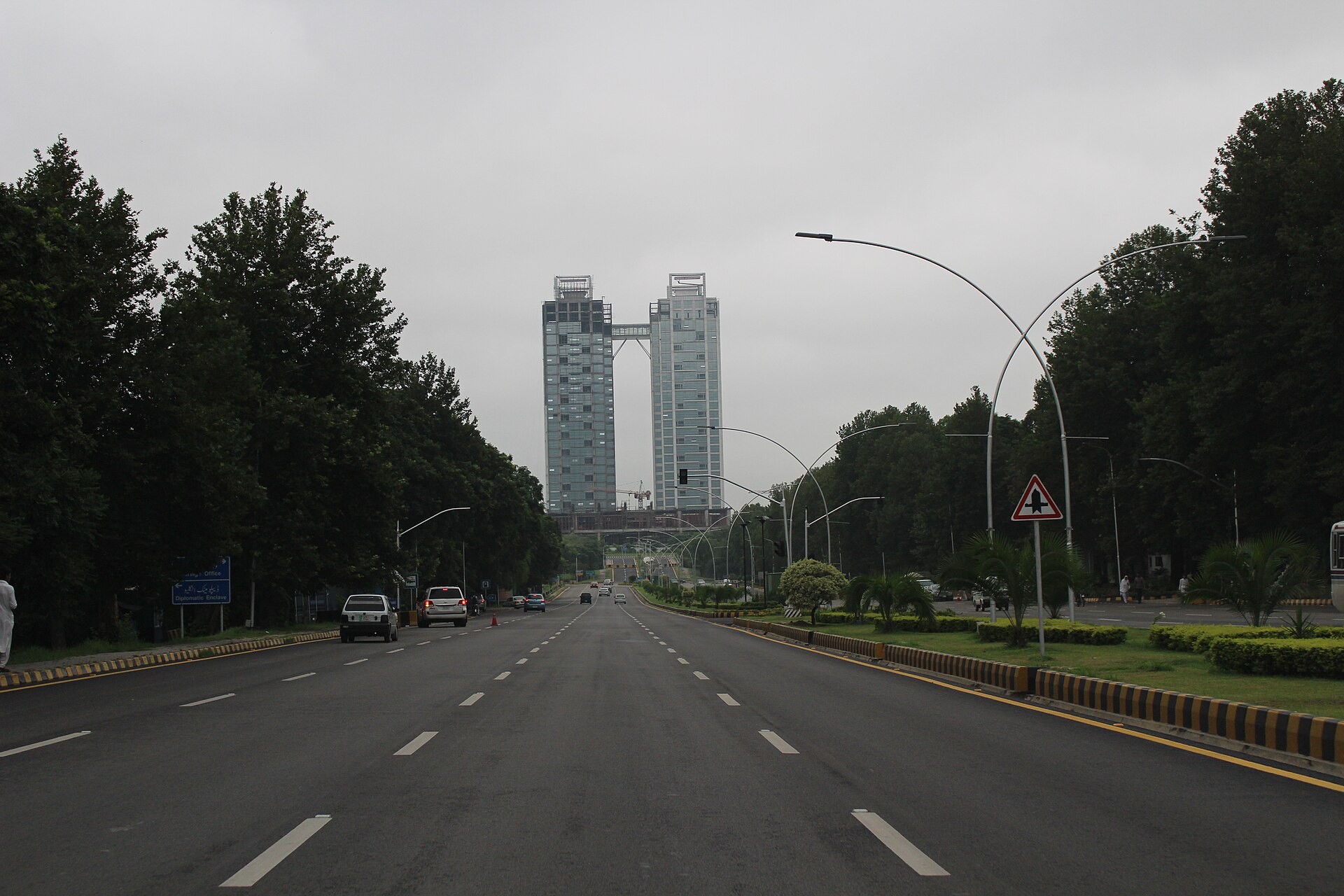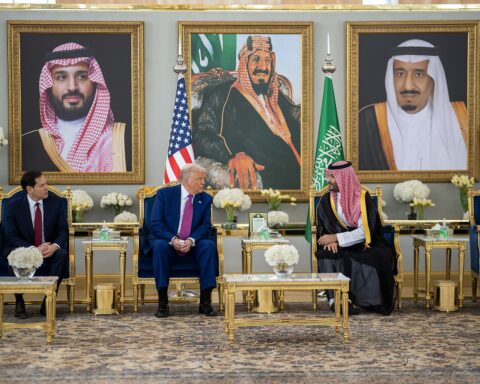

ISLAMABAD — Abbas Araghchi flew to Islamabad, met the Pakistani prime minister, handed over a written document, and left before the American delegation had packed a bag. Donald Trump then cancelled the American delegation entirely, told Fox News that “we have all the cards,” and declared that he would not send envoys on eighteen-hour flights “to sit around talking about nothing.” The second round of Islamabad talks did not collapse; it never started. Both sides have discovered that the appearance of negotiation, conducted through intermediaries who carry documents nobody reads in full, serves their domestic requirements better than sitting across a table ever could.
What happened on April 25 was not a breakdown — it was the consolidation of a format. Iran delivered its “roadmap for negotiations” to Pakistani officials with no expectation that Steve Witkoff or Jared Kushner would be in the building to receive it. Trump pulled Witkoff and Kushner before they boarded a plane, framing the cancellation as strength rather than retreat. Neither side walked out on the other because neither side walked in, and the structural incentives that produced this outcome are now self-reinforcing in ways that make a return to direct engagement — the kind that produced three sessions over twenty-one hours in the first Islamabad round on April 11-12 — progressively harder to arrange.
Table of Contents
- The Choreography of Not Meeting
- Why Did Islamabad Regress from Direct to Indirect Talks?
- The Algiers Precedent and the Relay Format
- What Does Trump Mean by “All the Cards”?
- Araghchi’s Roadmap and the Document That Nobody Negotiates
- Why Is Araghchi Going to Muscat?
- The May 1 Clock Congress Cannot Stop
- What Breaks the Equilibrium?
- FAQ
The Choreography of Not Meeting
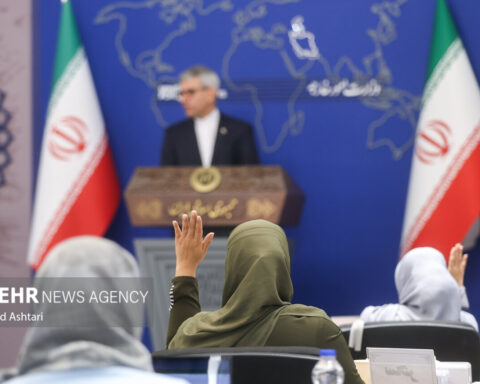
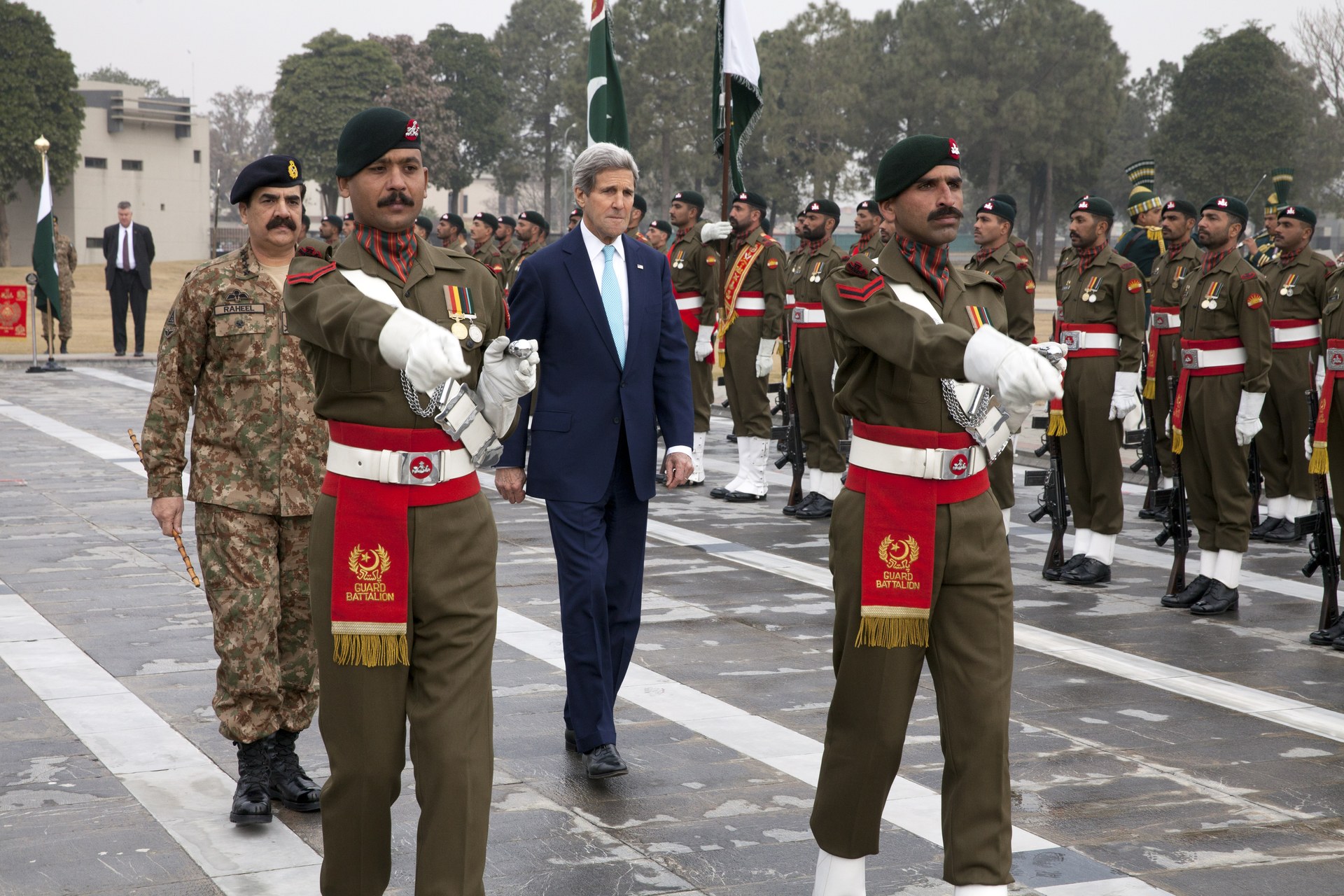
The sequence on April 25 deserves to be laid out precisely, because the timing reveals that both parties were performing their respective roles in a script that had been finalised before either plane departed. Araghchi arrived in Islamabad and met Field Marshal Asim Munir, Prime Minister Shehbaz Sharif, and Deputy Prime Minister Ishaq Dar — Pakistan’s full diplomatic and military leadership — and then left the city. Iran’s Foreign Ministry spokesperson Esmaeil Baqaei had already confirmed, the day before, that “no meeting is planned to take place between Iran and the U.S.” and that “Iran’s observations would be conveyed to Pakistan.” There was no ambiguity, no late cancellation, no diplomatic incident. Iran came to talk to Pakistan, not to the Americans, and said so publicly before arriving.
Trump’s cancellation came via Fox News on Saturday — the preferred venue for announcements he wants to frame as projections of power rather than retreats from engagement. “We have all the cards. They can call us anytime they want, but you’re not going to be making any more 18-hour flights to sit around talking about nothing.” Witkoff and Kushner had not yet departed Washington. Araghchi had not yet departed Islamabad. The two delegations were never closer to each other than about 11,000 kilometres, and the cancellation ensured they would stay that way.
The first Islamabad round, twelve days earlier, had involved three negotiating sessions over twenty-one hours — the first indirect, through Pakistani intermediaries, and the second and third direct, face-to-face between Vance and Ghalibaf, the first such contact between senior American and Iranian officials since 1979. The April 25 format represents a complete regression: from direct to entirely indirect, from marathon sessions to a document handoff, from a room with both parties to a city where only one showed up. Twelve days turned forty-seven years of precedent into a single data point that both sides now treat as an aberration rather than a foundation.
Why Did Islamabad Regress from Direct to Indirect Talks?
The regression from direct to indirect talks is the product of three failures that compounded simultaneously, each reinforcing the other two. The Vance-Ghalibaf sessions on April 11-12 ended with what Araghchi later described as being “inches away” from a memorandum of understanding — and then Vance walked out, triggered by what Iran’s president Masoud Pezeshkian publicly attributed to “deviation from the delegation’s mandate” by IRGC-linked officials Vahidi and Abdollahi. The proximity to a deal made the failure more poisonous, not less, because it demonstrated that even direct engagement at the highest level could be overridden by actors who were not in the room and who answer to an authority structure — Article 110, the Supreme Leader’s constitutional monopoly on military command — that the elected president cannot control.
The Middle East briefing 3,000+ readers start their day with.
One email. Every weekday morning. Free.
Trump’s domestic calculus shifted in the twelve days between rounds. The first round carried the novelty premium of a historic first — the headline justified the risk of failure. The second round carried only downside. If Witkoff and Kushner flew to Islamabad and came back empty-handed, Trump would own a second failure in the same venue inside a fortnight. If they flew and reached a preliminary agreement, the IRGC’s track record of torpedoing civilian diplomatic commitments — Pezeshkian named Vahidi and Abdollahi by name on April 4 as the officials who wrecked the first deal — meant that any announcement would be vulnerable to collapse before the press conference ended. The rational move, from Trump’s perspective, was to reframe non-engagement as leverage: we hold all the cards, let them come to us.
Iran’s incentive structure mirrors Trump’s, which is why the format is now stable. Araghchi cannot negotiate anything that the IRGC will honour, as his inability to reopen the Strait of Hormuz demonstrated in real time. Sitting across from American envoys and making commitments he lacks the institutional authority to enforce would expose the civilian government’s impotence in a setting where the exposure is internationally visible. Handing a document to Pakistani intermediaries, by contrast, allows Iran to claim it is negotiating without putting Araghchi in a room where he can be confronted with demands he cannot meet and promises he cannot keep.
The Algiers Precedent and the Relay Format
The format that emerged on April 25 — Iran talks to Pakistan, Pakistan relays to Washington, Washington responds through Pakistan, no bilateral contact — has a precise historical precedent, and it lasted 444 days. The Iran hostage crisis, from November 4, 1979, to January 20, 1981, was resolved entirely through Algerian intermediaries. Algeria’s Foreign Minister Mohammed Benyahia led a “flying committee” that shuttled between Washington and Tehran. US Deputy Secretary of State Warren Christopher, the chief American negotiator, never sat in the same room as an Iranian official across the entire fourteen-and-a-half-month negotiation. The final agreement was structured as two independent “Algerian Declarations” rather than a bilateral treaty, because Iran refused to sign any document that bore an American signature alongside its own.
The parallel is not exact. Islamabad in 2026 is not Algiers in 1980: Pakistan’s structural position as both Saudi Arabia’s debtor (the $5 billion Saudi loan matures in June 2026) and Iran’s protecting power in the United States since 1992 gives it conflicts of interest that Algeria did not carry. And the face-to-face sessions on April 11-12 already broke the zero-contact precedent before the regression set in. But the reversion from direct back to relay is structurally identical to periods during the hostage crisis when back-channel probes collapsed and the parties retreated to fully intermediated communication. The Algiers model demonstrates that relay diplomacy can produce binding agreements — but the conditions were specific: fourteen months, a change of American president, and an intermediary whose credibility with both sides Pakistan’s position is increasingly struggling to replicate.
“We have all the cards. They can call us anytime they want, but you’re not going to be making any more 18-hour flights to sit around talking about nothing.”
Donald Trump, Fox News, April 25, 2026
What Does Trump Mean by “All the Cards”?
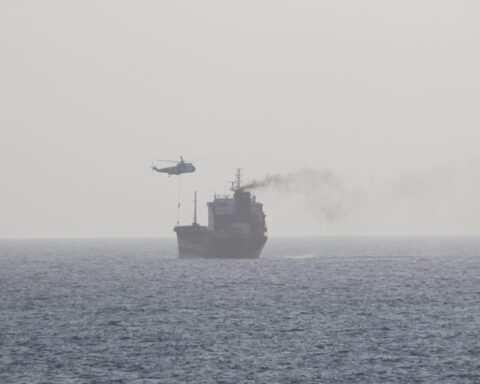
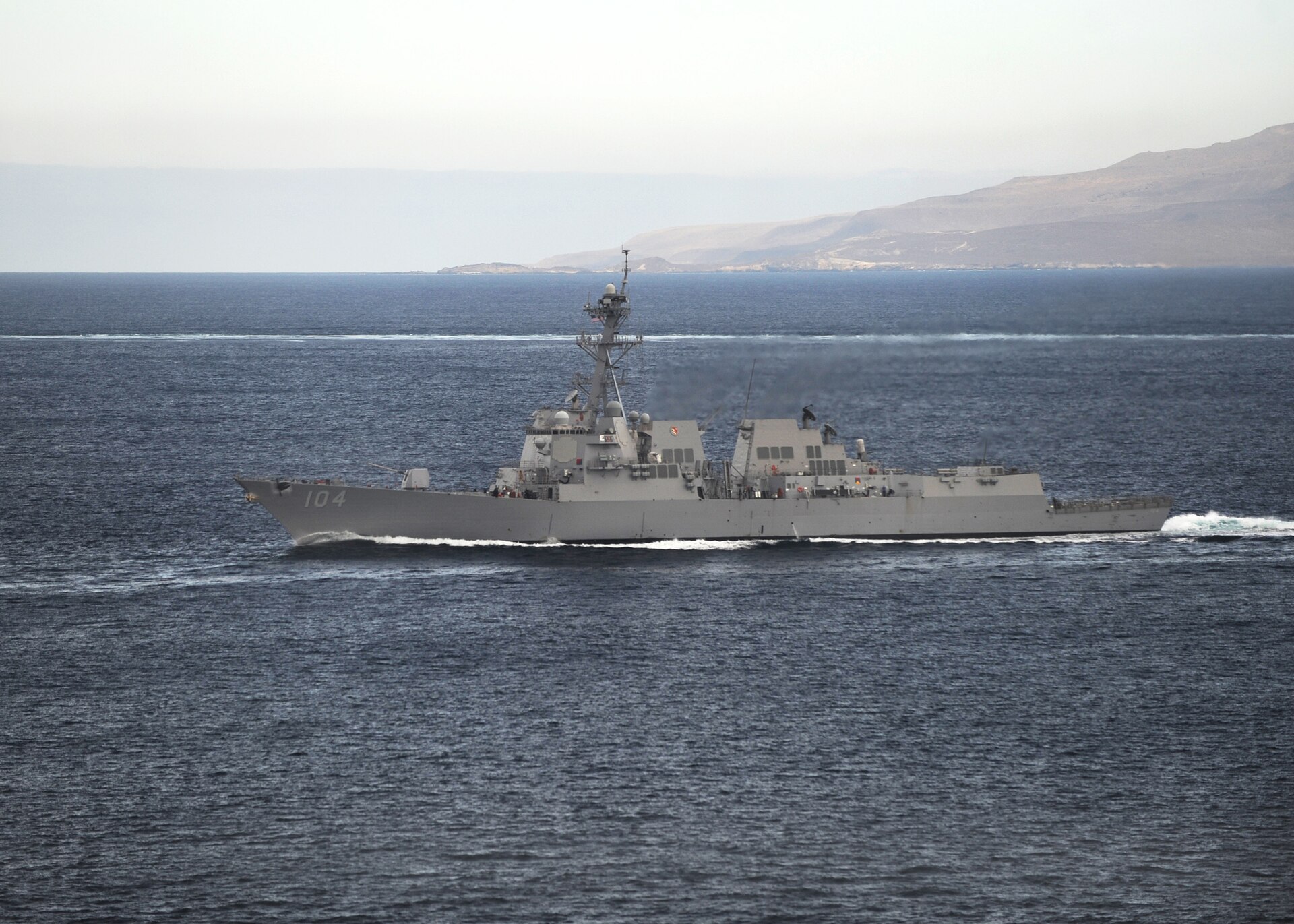
Trump’s “all the cards” framing rests on two instruments. The first is the naval blockade active since April 13, which applies to Iranian ports and toll-collecting vessels in the Strait of Hormuz. The second is the open-ended ceasefire extension he announced on April 21 — declaring the ceasefire would continue “until such time as their proposal is submitted, and discussions are concluded, one way or the other.” The removal of a fixed deadline was the most consequential element. It eliminated the ticking clock that had been Iran’s primary source of leverage: the threat that war would resume at a known date, forcing the Americans to negotiate against time.
The blockade’s economic damage is real but asymmetrically distributed. Iran’s Hormuz toll scheme has collected zero revenue in thirty-six days — sixty permits issued, eight payment requests sent, zero paid, according to data compiled from shipping industry sources and the International Maritime Organization. The blockade compounds this by cutting off what remained of Iran’s oil exports through the strait, against an economy whose own Central Bank projects 180 per cent inflation and a twelve-year recovery timeline. Trump’s “cards” are, in concrete terms, the ability to maintain economic pressure indefinitely without committing additional military resources or accepting the political cost of renewed kinetic operations.
The weakness in the “all the cards” framing is that the blockade’s costs are not exclusively Iranian. Saudi Arabia’s March production fell to 7.25 million barrels per day from 10.4 million in February — a 30 per cent drop that the IEA called “the largest disruption on record.” The East-West Pipeline bypass through Yanbu has a ceiling of 4 to 5.9 million barrels per day against pre-war Hormuz throughput of 7 to 7.5 million. That leaves a structural gap of 1.1 to 1.6 million barrels per day that no American naval power can fill. Goldman Sachs projects a war-adjusted Saudi fiscal deficit of 6.6 per cent of GDP against the official estimate of 3.3 per cent. Trump holds the cards, but some of them belong to other people’s games.
Araghchi’s Roadmap and the Document That Nobody Negotiates
Araghchi carried to Islamabad what Iranian media described variously as a “roadmap for negotiations” and Iran’s “considerations regarding ending the imposed war.” The document was delivered to Pakistani officials — Munir, Sharif, and Dar all received briefings — and Pakistan will relay its contents to Washington. No outlet has published the specific terms. The document’s function, in practice, is not to be negotiated but to exist: to demonstrate that Iran has a position, that it has committed that position to paper, and that it has entrusted that paper to an intermediary, all of which allows Tehran to claim that the absence of talks is Washington’s choice, not Iran’s.
This is the diplomatic equivalent of leaving a voicemail you know won’t be returned. The document provides Iran with a response to any accusation of intransigence — we submitted our roadmap, they refused to engage — while insulating Araghchi from the impossible position of defending terms in a room where the other side can ask follow-up questions. The written format is particularly useful for a foreign minister whose authority is structurally limited: a document can present the civilian government’s position without confronting the reality that the IRGC operates under a parallel authority structure that has already overridden two diplomatic commitments in the past month. Iran’s written roadmap is, in this reading, not a negotiating instrument but a domestic political artefact — evidence that the foreign ministry did its job, addressed to an audience in Tehran rather than in Washington.
Araghchi’s pre-tour statement reinforced this framing with studied blandness: “The purpose of my visits is to closely coordinate with our partners on bilateral matters and to consult on regional developments. Our neighbours are our priority.” The word “neighbours” does a specific kind of work here — it positions the Islamabad, Muscat, and Moscow stops as bilateral consultations with friendly states rather than as stages in a negotiation with the United States, which allows Iran to maintain the fiction that its diplomatic calendar is self-directed rather than reactive to American pressure.
Why Is Araghchi Going to Muscat?
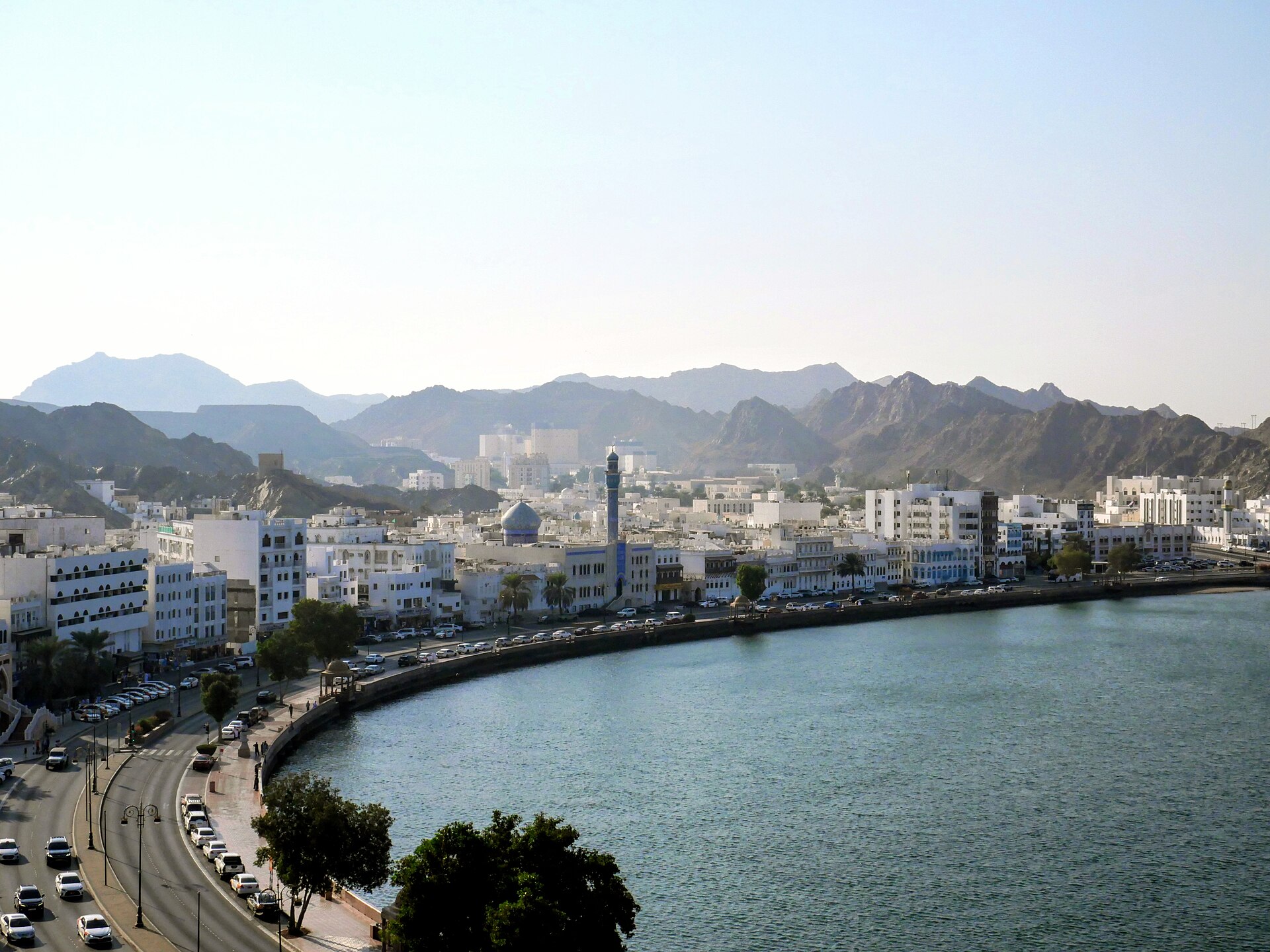
Araghchi’s three-stop tour — Islamabad, Muscat, Moscow — was announced on April 24, before the non-meeting in Islamabad occurred, which means the Muscat leg is pre-planned rather than a reactive pivot after a diplomatic failure. This matters because Muscat is not a neutral venue in US-Iran diplomacy; it is the specific venue that produced the only successful nuclear negotiation in the history of the relationship. In July 2012, Jake Sullivan and Puneet Talwar met Iranian officials secretly at Sultan Qaboos’s beach villa near Muscat, launching eight rounds of secret back-channel talks over approximately twelve months that eventually produced the JCPOA framework.
Iran is activating the channel that produced the last deal, and doing so publicly rather than covertly, which inverts the 2012-2013 model. The Oman back-channel worked because it was secret — deniable, invisible to domestic hardliners on both sides, insulated from the performative pressures of formal diplomacy. Araghchi’s announced Muscat stop cannot function as a secret channel, which means its purpose is either to lay groundwork for a future secret channel (meeting Omani officials to establish the architecture for later, quieter contact) or to signal to Washington that Iran prefers a different intermediary and a different venue — a message that Pakistan should be reading carefully.
The Moscow stop adds a third dimension. Russia’s uranium custody offer — Rosatom CEO Alexei Likhachev described Russia on April 18 as “the only country with positive experience cooperating with Iran” — is technically live but functionally dead, with Kremlin spokesman Dmitry Peskov acknowledging that Washington has “no interest” in the proposal. Iran’s Foreign Ministry said Tehran had not discussed uranium transfer in any prior talks with the US. Araghchi’s visit to Moscow is less about the uranium offer than about coordinating diplomatic posture with Russia before engaging the US-Pakistan track — ensuring that Iran’s public position has been pre-cleared with its most consequential geopolitical patron.
The May 1 Clock Congress Cannot Stop
Trump’s open-ended ceasefire extension removed the diplomatic deadline, but it did not remove the legal one. Trump notified Congress of military operations on March 2, which starts a sixty-day clock under the War Powers Resolution that expires on May 1. After that date, the president can extend operations for thirty additional days only by certifying in writing that continued force is necessary for the “orderly withdrawal” of American personnel — a certification that would reframe the operation as a winding-down rather than a continuing campaign, with obvious implications for leverage over Iran.
The Senate has defeated War Powers Resolution challenges on Iran five times, according to Al Jazeera’s April 24 tally, making congressional intervention functionally impossible in the current political configuration. But the May 1 deadline creates a different kind of pressure: it forces the administration to take a formal legal position on the operation’s continuation, which produces a document — the withdrawal certification or a new authorisation request — that becomes the subject of congressional debate, media scrutiny, and judicial challenge. The open-ended ceasefire is diplomatically elegant but legally unstable, and May 1 is six days away.
The WPR clock also converges with the Hajj calendar. Pilgrim arrivals crossed 48,000 this week; Indonesia’s 221,000-strong contingent began departures on April 22 and Pakistan’s 119,000 arrived around April 18. That concentration of civilian pilgrims raises the threshold for kinetic escalation on both sides. The Trump administration is simultaneously reviewing options that include targeting IRGC Commander-in-Chief Ahmad Vahidi, who assumed command on March 1 following Pakpour’s death and whom administration sources describe as “the central obstacle to reviving negotiations.” A targeted strike on Vahidi during Hajj would carry costs that no War Powers certification can absorb — which means the six days between now and May 1 represent the narrowest window for action that avoids both the legal and the religious calendar constraints simultaneously.
What Breaks the Equilibrium?
The current format — Iran performs negotiation through intermediaries, America performs strength through absence, Pakistan carries documents between two parties that have discovered non-engagement is less costly than engagement — is stable precisely because it serves everyone’s short-term interests. Trump avoids a second failure. Araghchi avoids exposure. Munir maintains relevance. The IRGC avoids any commitment that would constrain its operational freedom in the strait. The equilibrium is comfortable, which is why it will persist until something makes it uncomfortable.
Three developments could break it, and none of them originate inside the negotiating format itself. The first is the WPR clock: if Trump certifies for withdrawal on or after May 1, the legal reframing signals to Iran that American military presence has an expiry date, which removes the blockade’s coercive effect and forces Washington back to the table or into escalation. The second is a Vahidi strike: the administration’s public discussion of targeting the IRGC commander-in-chief is either preparation for action or a pressure tactic designed to force Iran into direct talks to protect its military leadership — and which of those it is depends on internal administration dynamics that are, by definition, unknowable from the outside. The third is economic collapse: the Central Bank’s 180 per cent inflation projection has a human face in Pezeshkian’s public warning that the economy will “collapse in three to four weeks” — a timeline that, if accurate, started around April 4 and reaches its terminal point in early May, coinciding exactly with the WPR deadline.
The current format borrows from both historical templates — Pakistan as Algeria, Muscat as the back-channel venue. But the Algiers model required fourteen months and a change of president; the Oman model required a year of covert meetings before the parties were ready for a framework. Neither timeline fits a war that is destroying Saudi production capacity at a rate the bypass pipeline cannot replace, a blockade whose economic damage accumulates daily, and a Hajj season that places 1.2 to 1.5 million pilgrims inside the range of Iranian ballistic missiles with PAC-3 interceptor stocks at roughly 14 per cent of their pre-war levels.
Araghchi left Islamabad carrying the same institutional constraints he arrived with — a foreign minister who cannot open the Strait of Hormuz even if he wants to, representing a government whose president publicly accused its own military command of sabotaging the last deal. Trump cancelled a trip that was never going to produce results different from the first round, because the first round’s failure was structural rather than tactical, and structural problems do not resolve themselves over a long weekend. The Stimson Center published a paper this month titled “The Motives and Constraints Behind Pakistan’s Mediation Between the US and Iran” — and the word “constraints” is doing all of the analytical work in that title, because Pakistan’s role as a relay station rather than a power broker means it can carry messages but cannot compel either party to read them carefully.
The last time the United States and Iran resolved a crisis through intermediaries without any direct contact, it took four hundred and forty-four days, the Algerian foreign minister logged enough air miles to circumnavigate the globe, and the deal was signed on the same day a new American president took office — twenty minutes after Ronald Reagan’s inauguration, a final act of spite dressed as diplomacy. Islamabad in April 2026 is not Algiers in January 1981, but the format is the same, and the format’s logic is patient: it waits for the cost of non-engagement to exceed the cost of sitting across a table, and until that threshold is crossed, both sides will continue performing negotiation without performing it, sending documents through intermediaries, and declaring, with varying degrees of conviction, that the other side knows where to find them.
FAQ
Has Pakistan’s mediation role been formally accepted by both sides?
Pakistan’s position is functional rather than formally mandated — neither the US nor Iran signed a mediation agreement appointing Pakistan as intermediary. Pakistan’s role emerged from geography, Munir’s personal relationships with both Iranian military commanders and Saudi leadership, and the 27th Constitutional Amendment structure that concentrated foreign policy authority in the military rather than the elected government. The Stimson Center’s April 2026 paper identifies this informal mandate as both Pakistan’s source of access and its primary vulnerability, because either party can bypass Islamabad without violating any commitment.
Could Oman replace Pakistan as the primary mediation venue?
Oman hosted the secret back-channel in 2012-2013 that produced the JCPOA, but Sultan Haitham bin Tariq has been more cautious than his predecessor Qaboos about inserting Oman into US-Iran disputes. Iran International reported on April 17 that Tehran prefers Muscat precisely because it offers less structured mediation — more venue than broker — which gives Iran greater control over the format. The shift would signal that Iran views Pakistan’s dual relationships with Saudi Arabia and the United States as compromising rather than connecting.
What happens to the blockade if the War Powers Resolution clock expires without congressional action?
The WPR requires the president to withdraw forces within sixty days absent congressional authorisation, but enforcement has never been judicially tested — no court has ruled on whether the WPR’s withdrawal mandate is enforceable against a sitting commander-in-chief. The thirty-day withdrawal extension requires a written certification that continued deployment is necessary for “orderly withdrawal,” which functionally gives the president ninety days (until late May) before the legal question becomes acute. Five Senate votes have already blocked WPR resolutions on Iran, making legislative intervention unlikely.
Is the Vahidi strike option a genuine military plan or a negotiating tactic?
The public discussion of targeting Vahidi — who assumed IRGC command on March 1 after Pakpour’s death and carries an INTERPOL Red Notice for the 1994 AMIA bombing in Buenos Aires — serves dual purposes regardless of operational intent. As a tactic, it pressures Iran to engage directly to protect its military leadership. As preparation, it signals that the administration views the IRGC’s authorization ceiling, not Iranian diplomacy, as the obstacle to a deal. The Quwa Defence Analysis assessment from April 23, “Why the Real Power in Tehran Refuses to Come to the Table,” identifies Vahidi’s command as the structural barrier — which means removing it could either break the logjam or eliminate the only person capable of delivering IRGC compliance with any agreement.
What is Iran’s 440.9 kg HEU stockpile’s relevance to the current talks?
The stockpile is both the central bargaining chip and the reason the document format matters: any written roadmap Iran delivers through Pakistani intermediaries avoids the specific demand — verified dismantlement or transfer — that the US cannot drop and that the IRGC will not accept. Arms Control Association analysis from March 2026 identifies monitored down-blending as the least intrusive option Iran could accept without IRGC sign-off, but notes that down-blending is reversible in weeks, which is precisely why the US has insisted on the moratorium framing rather than the transfer framing.
The Islamabad track’s full collapse — Trump cancelling Witkoff and Kushner’s flight after Araghchi had already left — and what that leaves in its wake is documented in Trump Cancels Islamabad Trip, Collapsing the Only US-Iran Diplomatic Channel With Six Days Until the War Powers Deadline, which examines the Oman back-channel, the May 1 constitutional clock, and why the absence of a formal negotiating venue may now suit both parties.
From Islamabad, Araghchi flew directly to Muscat, where Sultan Haitham received him in a head-of-state audience on April 26 — transforming Oman’s role from message relay to sovereign guarantor, as documented in Sultan Haitham Receives Araghchi in Muscat as Oman Reclaims the Iran Back-Channel.