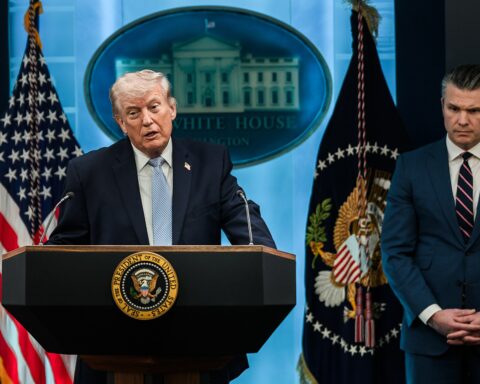
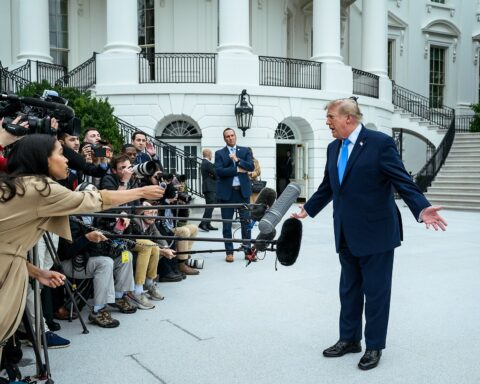
ISLAMABAD — Iranian Foreign Minister Abbas Araghchi flew into Pakistan’s capital on Saturday, April 24, spent roughly two hours with Prime Minister Shehbaz Sharif, Army Chief Field Marshal Asim Munir, and Foreign Minister Ishaq Dar, handed them a document titled “Iran’s position concerning workable framework to permanently end the war on Iran,” and left without agreeing to meet the American envoys who were supposed to be the entire point of the visit. Within an hour of Araghchi’s departure, President Trump canceled the trip Steve Witkoff and Jared Kushner had been preparing to make to Islamabad, telling Fox News: “I said, ‘Nope, you’re not making an 18-hour flight to go there. We have all the cards. They can call us anytime they want.’” Within minutes, Trump told reporters, something odd happened: “Within 10 minutes, we got a new paper that was much better.”
That 10-minute window is the detail that unlocks the structural story beneath the spectacle. If the revised Iranian proposal arrived at the White House within minutes of Trump’s cancellation announcement, it did not travel through the Pakistani mediation architecture that has hosted every round of talks since April 11. It almost certainly moved through Oman’s standing back-channel to Washington — a channel that has been the primary document conduit between the US and Iran throughout 2025-2026, and one from which Saudi Arabia is excluded by design. Araghchi’s next stop after Islamabad was not home. It was Muscat — a destination his own ministry had announced before he even boarded the plane to Pakistan.
Table of Contents
The Ten-Minute Paper
Trump’s account of what happened after his cancellation is worth parsing carefully. “The Iranians gave us a paper that should have been better,” he told reporters on April 25, according to CNN and the Times of Israel. “And interestingly the minute I cancelled it, within 10 minutes, we got a new paper that was much better… They offered a lot but not enough.” On Truth Social, he added: “If they want to talk, all they have to do is call!!!”
Trump’s framing presents this as a real-time capitulation — Iran blinking in response to American pressure. The timeline tells a different story. Araghchi departed Islamabad Saturday evening local time (Pakistan is UTC+5). Any document submitted to Washington within 10 minutes of Trump’s cancellation announcement would have had to be pre-drafted, pre-approved through Iran’s internal approval chain, and held in readiness for transmission through an open channel. That is not how a government responds to surprise. That is how a government executes a prepared fallback. The revised paper was not a concession wrung from Tehran by the threat of a cancelled meeting. It was the document Iran had intended to deliver all along — through a channel that does not run through Islamabad.
Iran has made no public acknowledgment that a “revised” document was submitted at all. No Iranian official has confirmed Trump’s characterization. The “second paper” exists entirely in Trump’s telling, which means either Tehran is declining to publicly admit movement, or the document Trump received was something already in transit through a parallel track that he retroactively claimed as a response to his leverage. Either reading undercuts the administration’s framing.
Why the Oman Channel, Not Pakistan?
The question is not whether a revised Iranian proposal exists — Trump would have limited reason to fabricate the existence of a document — but which channel carried it. Pakistan’s mediation architecture is meeting-dependent: Pakistani officials relay positions between delegations that are physically present or recently departed. It is a shuttle mechanism, not a standing transmission line. For Pakistan to have relayed a revised paper within 10 minutes of a cancellation that surprised even Witkoff and Kushner, Pakistani officials would have needed to simultaneously wrap up the Araghchi farewell and relay a new document to Washington in real time.
The Middle East briefing 3,000+ readers start their day with.
One email. Every weekday morning. Free.
Oman’s channel operates differently. Since at least February 2026, when Witkoff, Kushner, and Araghchi conducted indirect talks through Omani intermediaries in Muscat, the Oman back-channel has functioned as a continuous document conduit between Washington and Tehran, according to CNN and Al Jazeera reporting from that period. It does not require physical meetings to transmit proposals. It was built for exactly this purpose: passing papers when direct contact is politically impossible. If a pre-prepared Iranian fallback document needed to reach Washington within minutes, Muscat is the infrastructure that could deliver it. Islamabad is not.
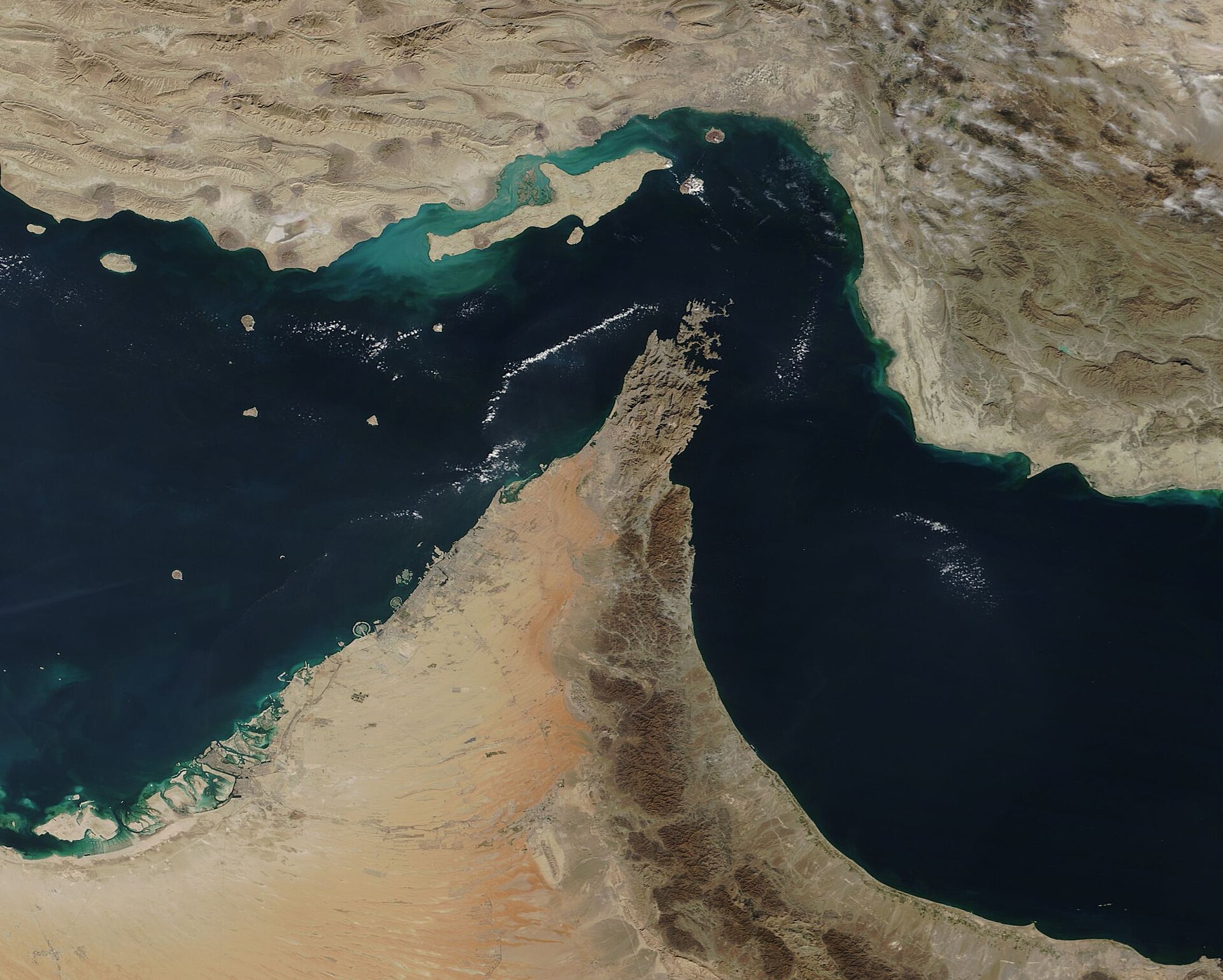
The evidence is circumstantial but directional. Araghchi’s post-Islamabad destination was Muscat. His ministry announced the Pakistan-Oman-Russia itinerary on April 24, according to Press TV, Xinhua, and Anadolu Agency — before the Islamabad visit had even occurred. The Oman stop was not reactive. It was the next scheduled meeting in a pre-planned diplomatic sequence. And Oman was already deep in active bilateral work with Iran: on April 4, undersecretaries from both foreign ministries met to draft a Strait of Hormuz monitoring protocol, with Iran’s deputy FM Kazem Gharibabadi telling IRNA that tanker traffic “should be supervised and coordinated” with Iran and Oman — a framework that effectively embeds Iranian sovereignty into Hormuz governance.
Was the Islamabad Visit Performative From the Start?
Iranian officials answered this question before Araghchi’s plane landed. On April 24, Iran’s foreign ministry spokesperson told Press TV that there would be “no talks with US during FM’s Islamabad visit” and that “observations to be conveyed to Pakistan.” Press TV framed the entire tour as a “continuation of diplomatic efforts to put a lasting end to the US-Israeli aggression” — presenting the three-stop sequence as coordinated outreach to partners, not as a negotiating session that might produce a deal. The Islamabad stop, in this framing, was a briefing. The Oman stop was the continuation of the real channel. The Moscow stop was something else entirely.
Araghchi’s own post-departure messaging reinforced this reading. “Have yet to see if the U.S. is truly serious about diplomacy,” he posted on X after leaving Islamabad, according to Al Jazeera. He shared what he described as “Iran’s position concerning workable framework to permanently end the war on Iran” with Pakistani officials — a document title that positions Iran as the victim proposing solutions, not a party negotiating concessions. The framing was deliberate, the audience domestic, and the function of the Islamabad visit was to demonstrate that Iran had made a good-faith effort through Pakistan’s channel before moving to Oman’s.
This pattern — using one venue for optics while conducting substance through another — is consistent with how Iran’s diplomatic apparatus has operated throughout the crisis. Araghchi cannot open the Strait of Hormuz even if he wants to, because the IRGC controls operational decisions regardless of what the foreign ministry agrees to. Similarly, what Araghchi says in Islamabad may bear little relationship to what Iran’s actual negotiating position is in Muscat. Pakistan’s mediation architecture gives Iran a stage; Oman’s back-channel gives Iran a telephone.
Saudi Arabia’s Structural Exclusion
If the Oman channel is now the primary conduit for US-Iran document exchange — a status it has effectively held since the February 2026 Muscat indirect talks — then Saudi Arabia’s position in the diplomatic architecture is more marginal than Riyadh’s public posture suggests. Oman was the only Gulf state that did not attend a foreign ministers’ meeting in Riyadh convened to discuss Iran’s attacks, according to Responsible Statecraft. That absence was not an oversight. It was a statement of the neutrality that makes Muscat credible to Tehran and useful to Washington — and it is precisely that neutrality that excludes Saudi Arabia from the room.
Riyadh has been managing its Iran exposure through two separate tracks. The first is bilateral: Saudi FM Prince Faisal bin Farhan called Araghchi directly on April 13, the day the US naval blockade was announced, to “discuss latest developments post Islamabad talks,” according to Al Arabiya. The second is informational: Pakistan PM Shehbaz Sharif visited MBS in Jeddah on April 15-16 to brief Saudi Arabia on what had happened in the Islamabad round, according to Arab News and Pakistan Today. Saudi Arabia’s financial leverage over that channel has a concrete illustration: MBS withdrew financing for Pakistan’s $1.5 billion Sudan arms deal within days of Army Chief Munir’s April 16 Tehran visit — a direct exercise of the veto Riyadh holds over Pakistan’s Arab-world export program.
In both tracks, Saudi Arabia is receiving information, not originating it. Riyadh is negotiating a separate peace, but it is not shaping the terms of the US-Iran channel that will determine whether the war ends. The Foundation for Defense of Democracies published an analysis in March 2026 titled “Oman’s Flipflopping on Iran Will Leave It Isolated in the Gulf” — a pressure signal aimed at Muscat that reveals how seriously US hawks take Oman’s mediation role. The FDD does not write about irrelevant actors. Saudi Arabia has been building its own parallel diplomatic track through venues like the Nicosia summit — but that track addresses Saudi interests specifically, not the US-Iran nuclear file that will determine the war’s end state. The UAE’s independent military operations have compounded Riyadh’s exclusion: UAE strikes on Iranian oil infrastructure on ceasefire day — documented in Iran’s own UN Security Council filing — fractured GCC cohesion into three camps at the exact moment Saudi Arabia needed Gulf unity to sustain its mediator credibility.
The Moscow Leg and Russia’s Intelligence Leverage
Araghchi’s third stop is Moscow, and it is not a courtesy call. Russia has been providing Iran with real-time satellite intelligence on US warship and aircraft movements since at least March 2026, according to the Washington Post. Moscow signed a 20-year strategic partnership treaty with Tehran in January 2025, and the intelligence-sharing arrangement that flows from it gives Iran operational visibility it could not achieve independently.
But Russia’s role is more complicated than straightforward alliance. In March, Moscow offered to end its intelligence sharing with Iran as a bargaining chip in US-Ukraine negotiations, according to Politico and the Moscow Times. Russia views Iran’s war as leverage in its own bilateral with Washington — meaning Moscow has an incentive to keep the conflict at a temperature that maximizes Russian diplomatic utility without escalating to a point where Russia would face consequences for its support. Araghchi’s visit signals to Washington that Iran retains access to that intelligence pipeline, while simultaneously giving Moscow an opportunity to calibrate what it shares based on the current state of its own negotiations with the US.
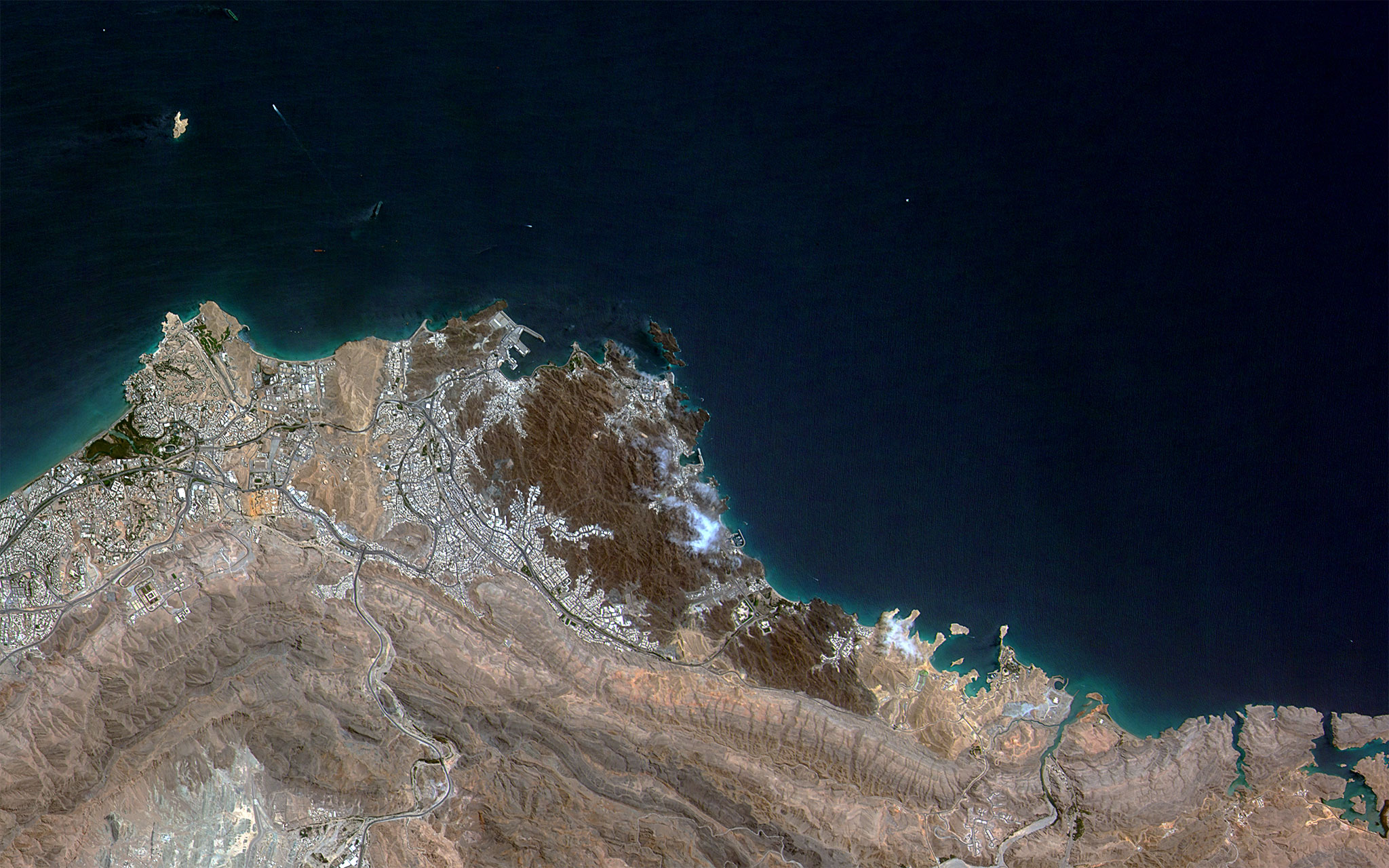
Each stop in the three-country sequence serves a distinct function: Islamabad for optics and good-faith demonstration through Pakistan’s channel, Muscat for substantive document exchange through Oman’s, Moscow for maintaining the military-intelligence relationship that underpins Iran’s warfighting position. Only the Muscat stop is actually about the ceasefire.
The Witkoff Problem
Trump’s cancellation of the Witkoff-Kushner trip was framed as a power move — the president refusing to let his envoys fly 18 hours for a meeting that wasn’t going to produce results. But the Arms Control Association, in a detailed institutional analysis published in March and April 2026, identified a more fundamental problem with the American negotiating posture. Witkoff, the ACA reported, “expressed surprise that Iran produces centrifuges — it has for decades — and referred to Iran’s IR-6 centrifuge as ‘probably the most advanced centrifuge in the world’ (it is not).” He also called Natanz, Fordow, and Esfahan “industrial reactors” — which they are not.
“His lack of knowledge and mischaracterization of Iran’s positions and nuclear program throughout the process likely informed Trump’s assessment that talks were not progressing,” the ACA concluded. This is a polite way of saying that the US chief negotiator did not understand what he was negotiating about, and that this ignorance may have contributed to the collapse of the talks — a possibility that Trump’s “we have all the cards” framing does not acknowledge. Iran’s 10-point plan includes a demand that IRGC “coordination” over Hormuz be embedded as a treaty requirement; the US 15-point counterproposal demands Hormuz be declared a “free maritime zone,” according to The National’s reporting from April 11. These positions are not close. And the gap is not something that a more dramatic flight cancellation can bridge.
Background: Oman’s Back-Channel Since 2011
Oman’s role as the US-Iran intermediary is not new or improvised. Between 2011 and 2013, mid-level American and Iranian officials held eight rounds of secret dialogue at Sultan Qaboos’s personal beach villa near Muscat. Those talks produced the framework that became the 2015 Joint Comprehensive Plan of Action. The channel was trusted precisely because Oman — uniquely among Gulf states — lacks the adversarial history with Iran that defines Saudi, Emirati, and Bahraini relations with Tehran. Oman FM Badr al-Busaidi served as the intermediary in the February 2026 Muscat indirect talks attended by Witkoff, Kushner, and Araghchi, reprising a role that Muscat has played, under different sultans, for fifteen years.
Saudi Arabia’s relationship to this channel has been consistent: exclusion, followed by resentment, followed by adaptation. Riyadh demanded direct involvement in the 2014-2015 nuclear negotiations. Iran and the P5+1 refused. King Salman sent Crown Prince Mohammed bin Nayef rather than attending himself at the May 2015 Camp David summit — a deliberate diplomatic rebuke that communicated Saudi displeasure at being sidelined from a deal that would reshape the region’s security architecture. In January 2026, Saudi Arabia, Qatar, and Oman jointly lobbied Trump to delay military action against Iran, according to Responsible Statecraft and the National Interest — making Riyadh a stakeholder in de-escalation even as it remains outside the room where de-escalation is being negotiated.
The Iran-Oman joint Hormuz monitoring protocol now under active drafting — with Gharibabadi describing it as “intended to facilitate and ensure safe passage and provide better services to ships” — represents a potential evolution of Oman’s role from intermediary to co-administrator of the strait. If that framework is formalized before a US-Iran deal, it will establish facts on the water that any subsequent agreement would need to accommodate. The stakes for Riyadh are direct: Saudi Arabia’s pre-war Hormuz throughput of roughly 7 million barrels per day would be governed, in part, by a bilateral arrangement that Riyadh had no hand in designing.
FAQ
Did Araghchi and Witkoff/Kushner ever have a scheduled meeting in Islamabad?
No formal meeting was publicly confirmed by either side. Iranian officials stated before Araghchi’s arrival that no US talks would take place during the visit, according to Press TV. The expectation of a meeting appears to have been primarily an American and Pakistani assumption, not an agreed arrangement. CNBC reported that Iran’s precondition for any direct engagement was the lifting of the US naval blockade — a condition the US has not met.
What is the content difference between the first and second Iranian papers?
Neither document has been publicly released. Trump described the first as a paper that “should have been better” and the second as “much better” but still “not enough.” Iran has not publicly acknowledged submitting a revised document. Outside analysts watching the nuclear file suggest the most tractable revision would likely involve enrichment timelines or stockpile disposition rather than Hormuz governance — since the Hormuz question implicates IRGC command authority that the foreign ministry cannot concede unilaterally. No source has confirmed which issues the revised paper addressed.
Why does Saudi Arabia accept exclusion from the Oman channel?
Riyadh protested openly in 2015 — King Salman’s Camp David rebuke was a public expression of dissatisfaction that produced no change in the channel’s composition. Saudi Arabia has since adapted by building parallel bilateral access: direct calls between FM Prince Faisal and Araghchi, and briefings via Pakistan PM Sharif, give Riyadh informational awareness without decision-making authority. The Nicosia summit track represents Riyadh’s effort to shape post-war terms through a venue it controls, rather than fighting for inclusion in a channel where its presence would undermine Oman’s credibility with Tehran.
Is Oman at risk of losing its mediation role if it formalizes the Hormuz monitoring protocol with Iran?
The FDD’s March 2026 analysis warning that Oman would be “isolated in the Gulf” reflects hawkish US pressure on Muscat not to legitimize Iranian maritime claims. Oman’s calculated bet is that its utility to Washington depends on keeping the channel open — and that Washington ultimately values a working transmission line more than ideological purity on Hormuz governance. Whether the Trump administration agrees is the open question. Oman has navigated similar pressure before: it hosted the 2011-2013 back-channel while maintaining full Gulf Cooperation Council membership.
What happens if the Iran-Oman Hormuz monitoring protocol is formalized before a US-Iran deal?
It would create a bilateral governance framework over the strait that any US-Iran agreement would need to incorporate or override. Iran’s deputy FM Gharibabadi has described the protocol as requiring vessels to obtain permits “coordinated with both coastal states” — language that embeds Iranian regulatory authority into Hormuz transit. If Oman co-signs this framework, opposing it would mean challenging a neutral Gulf state’s sovereign arrangement, not just Iranian overreach. Saudi Arabia, which depends on Hormuz for the portion of its exports that cannot be rerouted through the East-West Pipeline to Yanbu, would face a governance structure over its primary export corridor designed without its input. The parallel Lebanon file moved in an equally unfavorable direction: Israeli strikes on April 25 collapsed the Lebanon ceasefire condition Saudi Arabia had secured just 48 hours earlier, demonstrating how quickly the diplomatic architecture built around Riyadh’s interests can be overridden by actors it does not control.
That relay function was elevated further when Sultan Haitham personally received Araghchi in Muscat on April 26, cementing Oman’s transition from back-channel intermediary to sovereign guarantor — a structural upgrade documented in Sultan Haitham Receives Araghchi in Muscat as Oman Reclaims the Iran Back-Channel.