
JEDDAH — The same day an Iranian-made Shahed drone destroyed a $500 million E-3G AWACS at Prince Sultan Air Base — March 27, 2026 — Volodymyr Zelensky sat across from Mohammed bin Salman in Jeddah and signed a defense cooperation agreement that had nothing to do with the United States. Four weeks later, on April 24, Zelensky was back in the same city, advancing a 10-year framework that gives Saudi Arabia access to Ukrainian drone interceptors, electronic warfare systems, and joint production lines — all of it outside the US Foreign Military Sales process, outside ITAR restrictions, outside congressional notification requirements, and outside the end-use monitoring regime that has made every major Saudi arms purchase a hostage to Washington’s domestic politics since the Obama administration.
The deal’s value hasn’t been disclosed. But its structure tells the story MBS wants told: Saudi Arabia is building military supply chains that function whether or not the next American president answers the phone. Ukrainian systems carry no strings because Ukraine has no leverage to attach them — it needs Saudi money and Gulf diplomatic weight more than Riyadh needs any individual weapons platform. That asymmetry is the product, not the drone.
Table of Contents
- Trump Said No First
- What Is Saudi Arabia Actually Buying?
- Why Does ITAR-Free Matter More Than the Hardware?
- The Prince Sultan Embarrassment
- Is China Already Doing What Ukraine Is Offering?
- Can Saudi Arabia Afford a Second Arms Supplier During a War?
- Why Hasn’t Moscow Said a Word?
- 200 Ukrainian Specialists Are Already on the Ground
- The Energy and Food Leverage That Makes This Stick
- What Does This Change About the US-Saudi Relationship?
Trump Said No First
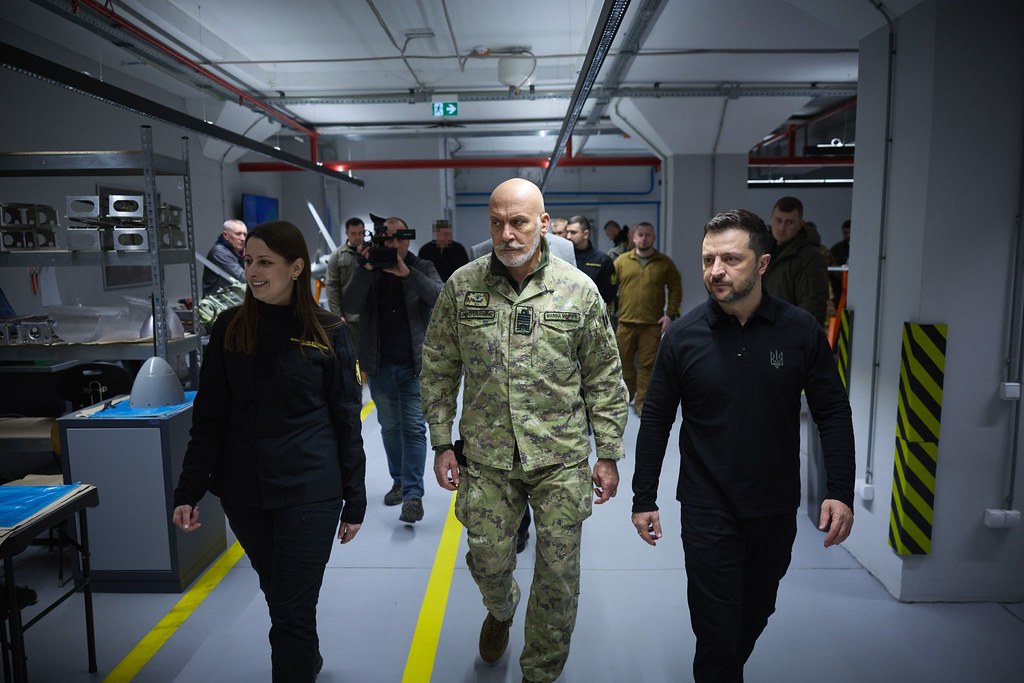
The detail that reframes the entire deal is this: Ukraine designed its “Drone Deal” — a package of at least 10 separate export contracts covering interceptor drones, air defense integration, electronic warfare, and joint production — for the United States. Trump declined. Ukrainska Pravda reported in April 2026 that the package was originally prepared for Washington and offered to Gulf states only after the White House passed.
That sequence matters because it inverts the usual arms-trade narrative. Saudi Arabia did not go shopping for an alternative to American weapons. Ukraine went shopping for a customer after America said no, and MBS recognized the opportunity before anyone in Washington understood what had just walked out the door. The 10-year framework Zelensky signed on March 27 simultaneously covered Saudi Arabia, the UAE, and Qatar, with 11 additional countries submitting requests by April 21 — meaning the Gulf anchors locked in first-mover terms on technology the US government had been offered and rejected.
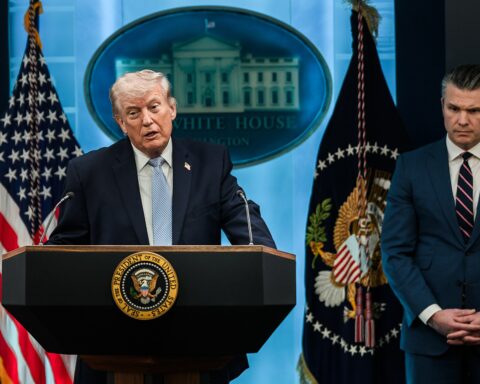
Trump’s own words compound the irony. On Fox News on March 6, 2026, he told viewers: “We don’t need their help in drone defense.” Six weeks later, Ukrainian officers were at Prince Sultan Air Base training American forces on the Sky Map command-and-control platform — a system built by a Ukrainian civilian startup founded in 2022 that the US military had deployed to protect its own personnel at the very base where the AWACS had been destroyed. Reuters confirmed the deployment by April 22. Trump said America didn’t need Ukraine. Then America needed Ukraine.
MBS watched that sequence and drew the rational conclusion: if the US won’t buy this technology for itself, it certainly won’t share it through the Foreign Military Sales pipeline. The only way to get it is to go direct. So he did. The operational details of that deployment — how Sky Map works, what the six-country air defense stack looks like, and why Trump’s silence on the Pentagon’s April 14 deployment is the clearest signal of where authority now sits — are analyzed in The Six-Country Sky Over Saudi Arabia: Ukraine’s Sky Map Lands at PSAB Six Weeks After Trump Said No.
The Middle East briefing 3,000+ readers start their day with.
One email. Every weekday morning. Free.
What Is Saudi Arabia Actually Buying?
The platforms on offer are specific, priced, and in several cases already in serial production. At the World Defense Show in Riyadh in February 2026, Ukroboronprom — Ukraine’s state defense conglomerate — signed a cooperation agreement with Saudi Arabia’s National Company for Mechanical Systems covering joint production of combat modules and optical devices. That was the industrial foundation. The March 27 Ministry-to-Ministry Arrangement built the procurement architecture on top of it.
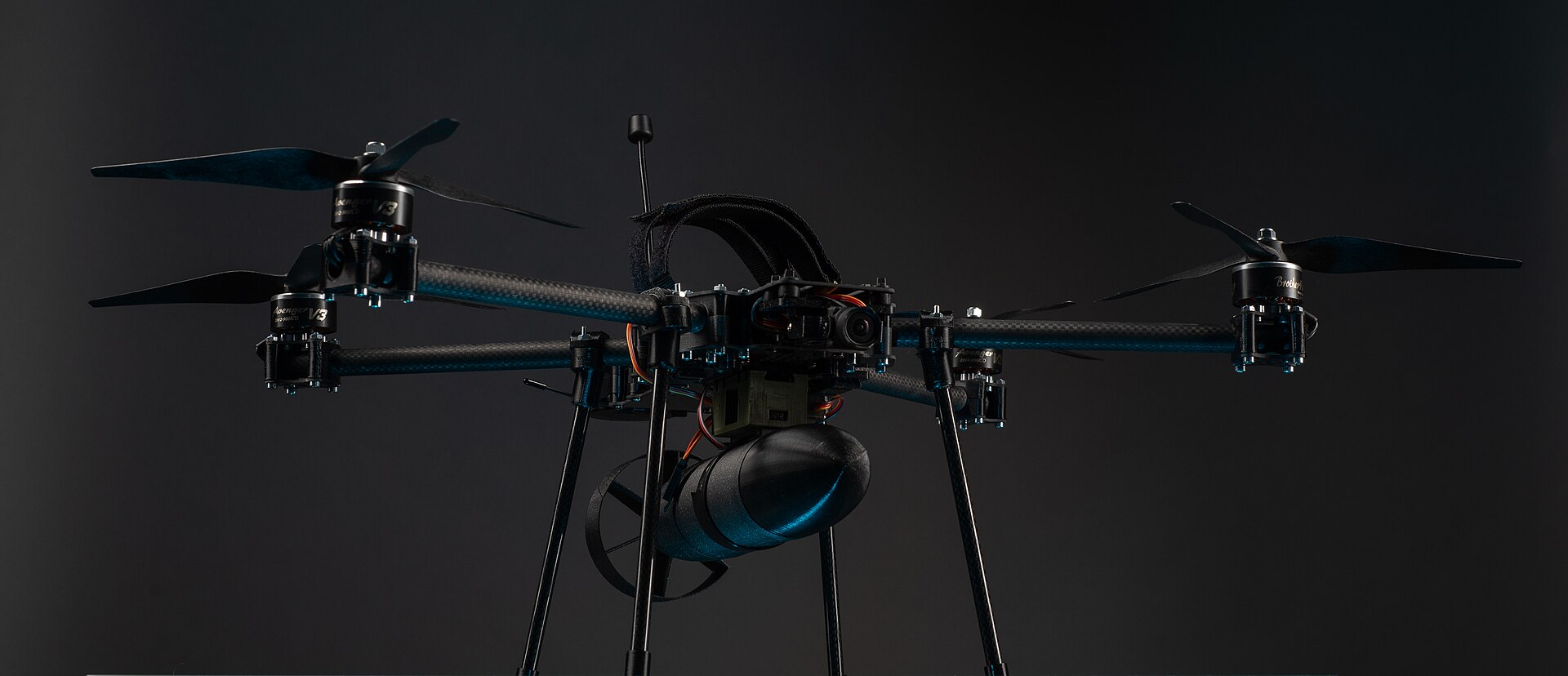
The interceptor drones dominate the conversation. The Zerov-8 is a VTOL platform capable of 326 km/h with a 20-kilometer operational radius, carrying a 0.5 kg warhead with AI-guided terminal phase targeting. The Octopus runs at 300 km/h with a 30-kilometer combat radius and a 4.5-kilometer altitude ceiling, carrying a 1.2 kg payload. The UK and Ukraine began joint production of the Octopus at a rate of 1,000 units per month from February 2026. The Sting — at $1,000 to $2,500 per unit — offers thermal imaging terminal guidance at speeds up to 343 km/h. The SEEDIS counter-drone system adds machine-vision AI at 320 km/h with an 18-kilometer engagement range.
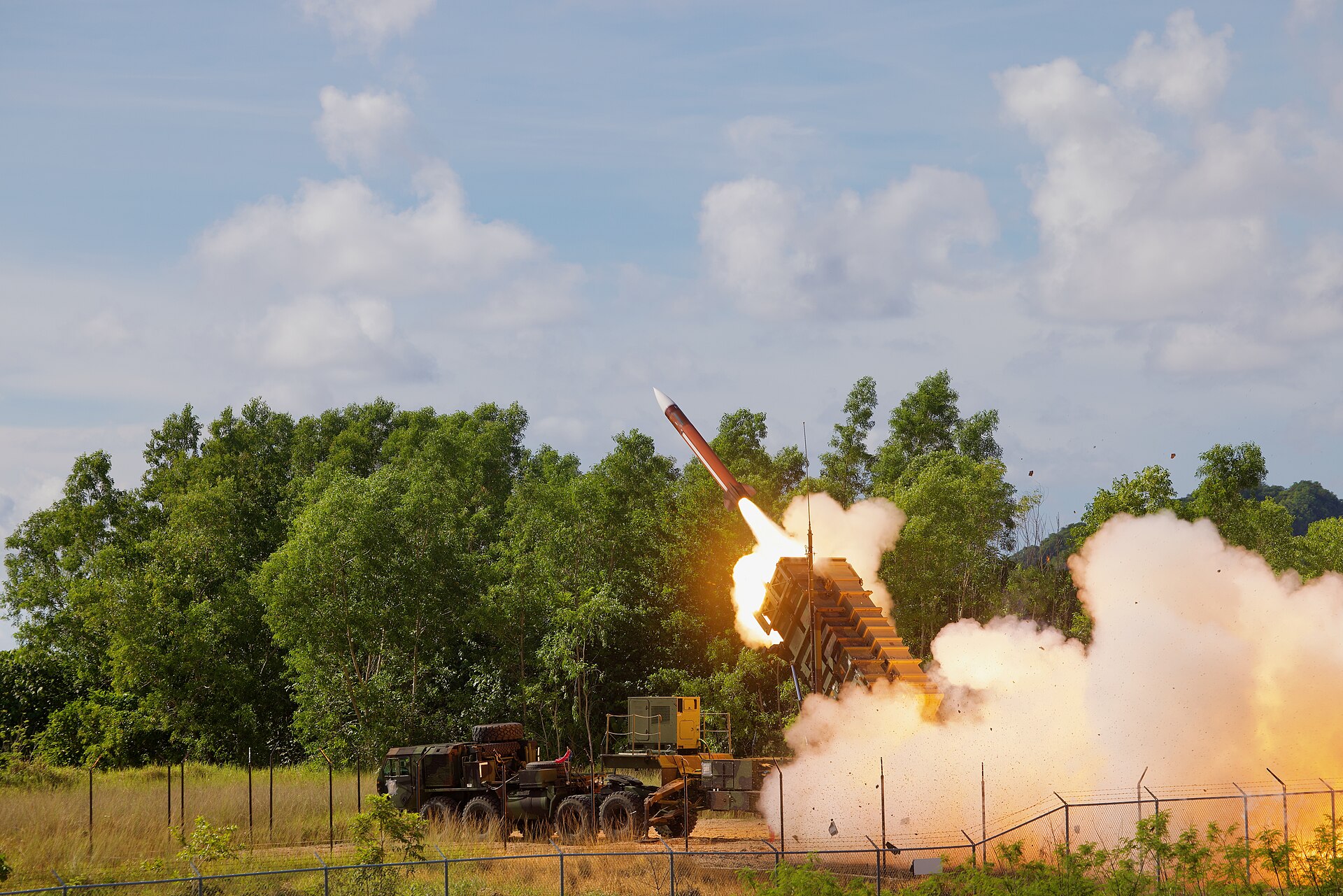
These are not prestige purchases. A single Patriot PAC-3 MSE interceptor costs north of $3 million. A Sting interceptor drone costs roughly what a Saudi government employee spends on a business-class flight to London. The cost asymmetry is the entire point — Iran can produce Shaheds for an estimated $20,000–$50,000 each, and the old calculus of firing a $3 million missile at a $30,000 drone was bankrupting the defense architecture from the inside. Ukrainian interceptors collapse that ratio to something sustainable.
A separate contract — signed before the Ministry-level agreement — saw an unnamed Saudi arms company purchase Ukrainian-made interceptor missiles, reported by the Kyiv Independent on March 10 as part of a “huge deal” in negotiation. Bohdan Popov, chief analyst at Triada Trade Partners, noted that “Kyiv maintains a tightly restricted arms export policy and keeps its interceptor technology highly secret” — meaning every sale requires bilateral government approval, not manufacturer-to-buyer transactions. MBS isn’t buying from a company. He’s buying from a state that needs him.
Why Does ITAR-Free Matter More Than the Hardware?
The International Traffic in Arms Regulations govern every component of US-origin military technology. ITAR controls don’t just restrict what Saudi Arabia can buy — they restrict what Saudi Arabia can do with what it has already bought, who can service it, and whether Riyadh can re-export, modify, or integrate systems without Washington’s written approval. Every major Saudi weapons purchase of the past four decades has carried these constraints, and every one has created a pressure point that American lawmakers have used — or threatened to use — to extract political concessions.
The $9 billion sale of 730 Patriot PAC-3 MSE interceptors that the Defense Security Cooperation Agency notified to Congress on January 30, 2026, is a case study. It required a 30-day congressional review period. Six major Foreign Military Sales approvals in Q1 2026 required emergency waivers of congressional notification under Section 36(b) of the Arms Export Control Act — meaning the normal process was too slow for wartime demand, and the executive branch had to invoke emergency provisions to bypass the legislature. Total US FMS in Q1 2026 hit $45 billion globally, with 81% going to the Middle East. The system is straining under load at the precise moment Saudi Arabia needs it most.
Ukrainian systems carry none of this architecture. No ITAR. No FMS process. No congressional notification. No end-use monitoring agreements. No 30-day review clocks. No emergency waivers required. When MBS wants to deploy a Ukrainian interceptor drone at a facility the US hasn’t been told about, there is no legal mechanism in Washington to stop him. When Saudi Arabia wants to integrate Ukrainian electronic warfare capabilities with Chinese-made Wing Loong drones, there is no ITAR compliance officer to flag the combination as a prohibited technology transfer.
Samuel Bendett, a senior fellow at the Center for a New American Security, told Breaking Defense in March 2026 that Ukraine’s multi-year experience countering Iranian drones means “all features of this defense are of interest to the Gulf.” But interest and access are different things. The Gulf has been interested in advanced air defense for decades. What Ukraine offers is access without conditions — and that is the feature MBS is buying, not the drone itself.
The Prince Sultan Embarrassment
The timeline of March 27 deserves its own section because coincidence this precise has a name in diplomacy: it’s called a signal. On that date, an Iranian-origin drone attack destroyed an E-3G Sentry AWACS at Prince Sultan Air Base — one of 16 in the entire US fleet, valued at approximately $500 million. The aircraft was parked under American protection, on a base that hosts the US Air Force’s 378th Air Expeditionary Wing, in a kingdom that has spent hundreds of billions of dollars on American air defense systems. The Shahed got through anyway.
On the same day, in the same country, Zelensky signed the defense cooperation agreement with MBS. We reported previously on the Pentagon’s subsequent deployment of Ukrainian Sky Map technology to that base — a tacit admission that American systems alone could not protect American assets on Saudi soil. Ukrainian officers traveled to Prince Sultan to train US forces on a command-and-control platform built by a startup founded four years ago in a country fighting for survival.
MBS did not need the March 27 AWACS destruction to justify the deal — the industrial groundwork had been laid at the World Defense Show six weeks earlier. But the symbolism was available, and MBS is not a leader who wastes available symbolism. The American air defense umbrella failed publicly, on camera, on the same day Riyadh signed an alternative. Fabian Hoffmann, a missile specialist at the University of Oslo, told Breaking Defense that “getting export deals may be one way to ramp up production” for Ukraine while providing battlefield-tested technology abroad. For MBS, the production ramp-up matters less than the principle: battle-tested technology, delivered without permission slips.
Russia launched over 54,000 drones against Ukraine in 2025 alone. That volume created something no amount of R&D funding can replicate — operational muscle memory at scale. Jean Marc Rickli of the Geneva Center for Security Policy noted that Ukraine can share “lessons learnt,” dispatch trainers, and teach the “rapid innovation cycle” required to adapt to threats that evolve weekly. Yurii Cherevashenko, deputy commander of Ukraine’s Air Defence Cover Forces, added a caveat: effective interception “ultimately boils down to the pilot’s skills,” and the Gulf’s operational environment — sandstorms, extreme humidity, thermal distortion — is nothing like the Ukrainian theater. The technology transfers. The instinct takes time.
Is China Already Doing What Ukraine Is Offering?
Yes, in a parallel domain. Saudi Arabia signed a deal worth approximately $5 billion with China for the Wing Loong-3 drone, including local manufacturing at a rate of 48 aircraft per year, with Saudi Arabia as the first global customer. The Wing Loong II has already logged over 5,000 flight hours with the Royal Saudi Air Force. No ITAR. No congressional notification. No FMS process. The structure is identical to the Ukrainian approach — state-to-state, no American intermediary, no American veto.
The difference is capability type. The Wing Loong-3 is an armed reconnaissance and strike platform — an offensive tool. The Ukrainian package is weighted toward defense: interceptor drones, counter-drone systems, electronic warfare, air defense integration, and the command-and-control software that ties them together. MBS is not replacing the American relationship with a single alternative supplier. He is building a diversified military supply chain where no single country — including the United States — can threaten to cut off a capability domain that Saudi Arabia cannot replace from another source.
Marko Kushnir, of the Ukrainian drone firm General Cherry, told Breaking Defense that “at the moment almost every nation of the Middle East that Iran is attacking…is trying to reach out” to Ukrainian manufacturers. That demand is real, but it also means Ukraine’s production capacity is being pulled in multiple directions simultaneously. The 1,000-per-month Octopus joint production line with the UK helps, but 11 countries beyond the three Gulf anchors have submitted requests. Capacity constraints will force prioritization, and Saudi Arabia’s financial weight — combined with the food and energy leverage Zelensky discussed on April 24 — positions Riyadh at the front of that queue.
The strategic picture is a kingdom assembling a defense industrial base with three tiers: American systems for the prestige platforms and the deep interoperability that comes from decades of integration; Chinese systems for the strike and surveillance domains where Washington’s approval process creates unacceptable delays; and Ukrainian systems for the counter-drone and electronic warfare domains where battlefield experience matters more than unit cost, and where the absence of ITAR restrictions allows integration with both American and Chinese hardware. No single supplier can be withheld to coerce Saudi behavior, because no single supplier covers enough of the portfolio to create a critical gap.
That portfolio logic is sharpened by the current carrier reality: with three US carrier strike groups anchored outside a strait they cannot enter, the US Navy’s coercive reach in the Gulf is structurally dependent on Saudi basing — precisely the dependency MBS is hedging against by building supply chains Washington cannot veto.
Can Saudi Arabia Afford a Second Arms Supplier During a War?
The fiscal backdrop makes the Ukrainian deal look less like a luxury and more like a survival calculation. Saudi Arabia’s fiscal break-even oil price sits at $108–111 per barrel when PIF commitments are included, according to Bloomberg estimates. Brent crude at the time of Zelensky’s April 24 visit was trading around $105–106 — below break-even. Goldman Sachs estimates Saudi Arabia’s war-adjusted fiscal deficit at 6.6% of GDP, nearly double the official projection of 3.3%.
March production told the deeper story. IEA data showed Saudi output at 7.25 million barrels per day, down from 10.4 million in February — a 30% collapse driven by IRGC strikes on Eastern Province infrastructure, Hormuz mine closures, and the forced rerouting of exports through the Yanbu pipeline on the Red Sea coast. The kingdom is running a wartime economy on peacetime assumptions, and every month the Hormuz chokepoint remains effectively closed widens the gap between revenue and expenditure.
In this context, Ukrainian interceptor drones at $1,000–$2,500 per unit are not an additional expense — they are a cost reduction. The old model of defending against Iranian Shaheds with Patriot interceptors at $3 million per missile was economically irrational even before the war. Now, with PAC-3 stocks depleted to an estimated 400 rounds (14% of pre-war inventory, as we reported), the arithmetic isn’t about preference — it’s about the interceptors physically existing in sufficient quantity to absorb the next salvo.
The 10-year framework with annual funding levels — recurring payments, not a one-time sale — also tells Zelensky’s side of the story. Ukraine needs predictable revenue to sustain its defense industrial base while fighting a war of national survival. Saudi Arabia needs predictable supply to sustain an air defense posture while absorbing Iranian strikes. The arrangement is mutualistic in a way that the US-Saudi arms relationship has not been for years, because Washington has turned every arms sale into a negotiation about unrelated political objectives — Yemen, OPEC+ production decisions, the Abraham Accords, normalization with Israel — conditions that have also locked Saudi Arabia out of the Israeli defense technology pipeline that the UAE now accesses directly, as confirmed by Israel’s secret Iron Dome deployment to the UAE during the war. The scale of PIF’s wartime capital shift is visible beyond the defense budget: as we’ve reported, the fund is liquidating its $5 billion sportswashing portfolio — Al-Hilal sold, LIV Golf defunded — to redirect resources toward the wartime economy that the Ukrainian drone contracts represent.
Why Hasn’t Moscow Said a Word?
No public statement from the Kremlin or from Foreign Minister Lavrov specifically addressing the Ukraine-Saudi defense cooperation agreement has surfaced in available reporting. That silence is not passive. It is the sound of a country that cannot afford to pick a fight on this particular battlefield.
Russia and Saudi Arabia have coordinated oil production through OPEC+ since 2016. That coordination has delivered hundreds of billions of dollars in revenue to Moscow across a decade — revenue that funded the military buildup that enabled the invasion of Ukraine and that continues to fund the war effort even under Western sanctions. Russia cannot protest Saudi Arabia’s purchase of Ukrainian military systems without jeopardizing the OPEC+ relationship that keeps Russian oil revenue above the floor Moscow needs to sustain combat operations.
The structural irony cuts deeper. The drones Saudi Arabia is buying Ukrainian interceptors to defeat are Iranian-made Shaheds — the same platform Russia purchases from Iran in volume and deploys against Ukrainian cities. Russia’s military partnership with Iran, which includes drone procurement, technology transfer, and operational coordination, is the reason Ukrainian counter-drone technology exists at the level of sophistication it has reached. Every Shahed Russia fires at Kyiv generates data that makes the next Ukrainian interceptor more effective — and that improved interceptor is now being sold to Saudi Arabia to shoot down Shaheds that Iran fires at Saudi infrastructure. Moscow is, in effect, funding the R&D for the systems being deployed against its own ally’s weapons.
If Russia objects publicly, it acknowledges the Iran-drone relationship it has spent years minimizing. If it pressures Saudi Arabia bilaterally, it risks an OPEC+ rupture at a moment when Russian fiscal stability depends on coordinated production cuts. If it pressures Iran to stop selling Shaheds to the Houthis and IRGC-aligned militias targeting Saudi Arabia, it loses its own supply of the same drones. Every door leads to a room Moscow doesn’t want to enter, so it says nothing.
200 Ukrainian Specialists Are Already on the Ground
The deal is not theoretical. Over 200 Ukrainian counter-drone specialists have been deployed across the Gulf — Saudi Arabia, Qatar, UAE, Kuwait, and Jordan — to operate systems, train local forces, and transfer the operational expertise that comes from intercepting drones under fire for three years. Heorhii Tykhyi, spokesperson for Ukraine’s Ministry of Foreign Affairs, confirmed in April 2026 that “Ukrainian teams have already achieved their first successes in protecting lives in the Middle East.”
That phrasing — “protecting lives” — was deliberately chosen. It frames Ukrainian military personnel in the Gulf not as arms merchants but as defenders, creating a narrative that aligns Kyiv with the Gulf states against Iran and, by extension, against Iran’s military patron in Moscow. The 200 specialists are simultaneously a deployed capability, a training cadre, and a diplomatic presence that makes it harder for any Gulf state to distance itself from Ukraine under Russian or Chinese pressure.
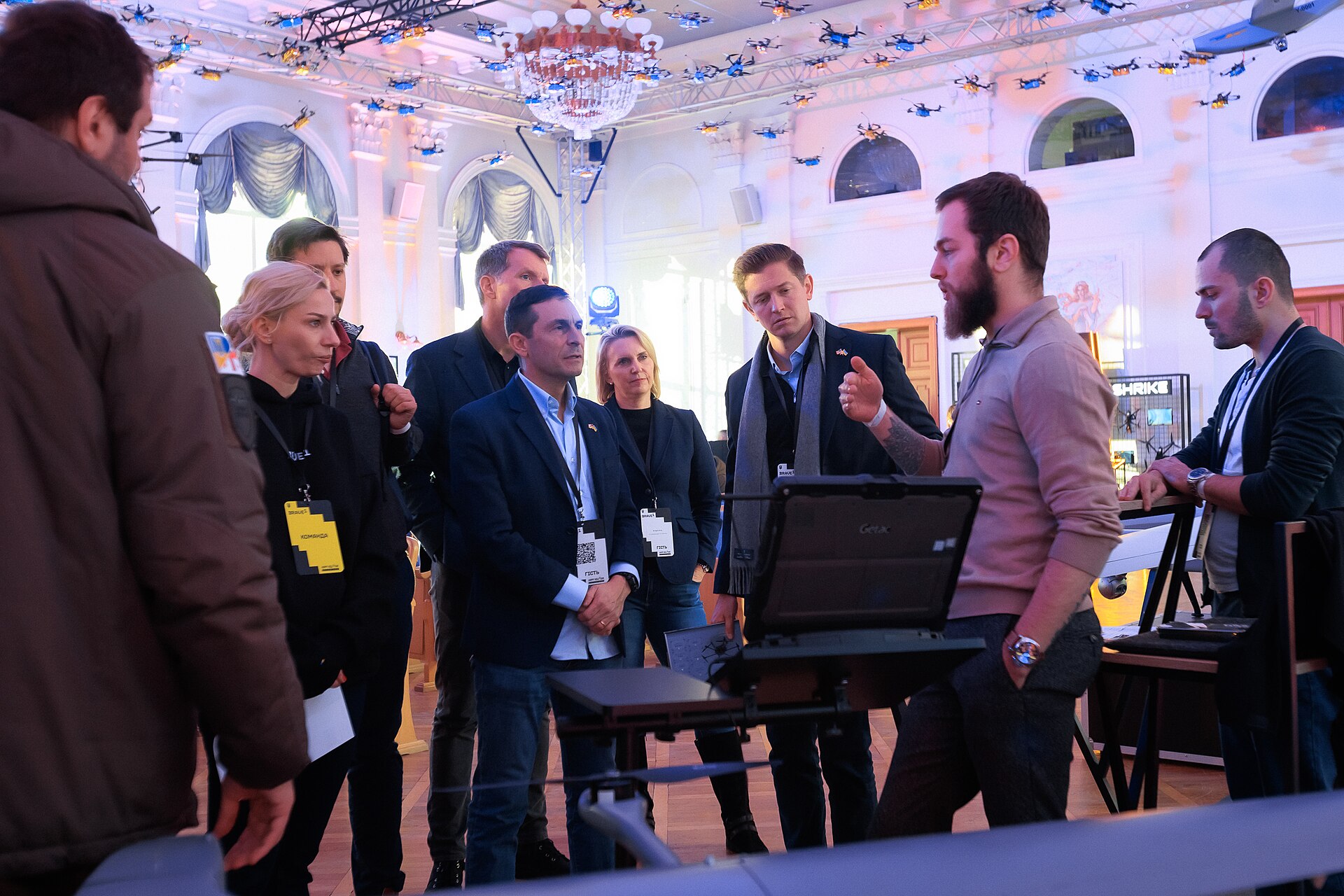
The Sky Map deployment at Prince Sultan is the highest-profile example. The command-and-control platform, built by Sky Fortress — a Ukrainian startup founded in 2022 — was operational at the base by April 22, 2026. Ukrainian officers trained American forces on the system. The image of Ukrainian trainers teaching American troops to use Ukrainian software on a Saudi base, six weeks after the US president said “we don’t need their help,” is the kind of scene that rewrites procurement assumptions across an entire region.
The specialist deployment also creates a dependency that serves Ukraine’s interests beyond the immediate revenue. Saudi Arabia, Qatar, and the UAE now have Ukrainian military personnel integrated into their air defense operations at a tactical level. Withdrawing that expertise would create a capability gap during an active conflict. Ukraine has made itself operationally necessary in a way that financial aid alone never could — and operationally necessary partners do not get abandoned at peace negotiations.
The April 24-25 agreements extended that operational foothold into a formal trilateral architecture: as our analysis of the Drone Agreement documents, Kyiv is now a structural participant in Gulf air defense — with Ukrainian counter-drone doctrine and intelligence embedded in the infrastructure Iran must negotiate around in any eventual Hormuz settlement.
The Energy and Food Leverage That Makes This Stick
Zelensky’s April 24 statement from Jeddah named three tracks: security and defense, energy, and food security. The defense component gets the headlines, but the energy and food dimensions are the structural glue that makes the military relationship durable rather than transactional.
Saudi Arabia imports approximately 80% of its food requirements. Ukraine was a major grain supplier to Saudi Arabia before the Russian invasion disrupted Black Sea shipping, and food security was an explicit component of the April 24 discussions. In a kingdom running a wartime fiscal deficit with oil exports down 30% from February levels, food import costs are a vulnerability that MBS cannot afford to leave unhedged. Ukrainian grain at favorable terms, bundled with a defense cooperation framework, creates a package deal that no single-domain competitor can match.
On energy, Zelensky stated on April 21 that “key agreements with leaders of the Middle East and the Gulf concern missiles for Patriots and support for Ukraine’s energy resilience.” The phrase “missiles for Patriots” suggests that Gulf states are providing Patriot interceptor missiles — from their own stocks or through procurement influence — to Ukraine in exchange for counter-drone technology flowing the other direction. If accurate, this is a direct barter arrangement that bypasses the FMS process entirely: Saudi Arabia sends Ukraine Patriot rounds it has already purchased and received, and Ukraine sends Saudi Arabia interceptor drones and specialists. Washington has no approval mechanism for the secondary transfer because the Patriot rounds were already delivered under completed FMS contracts.
The broader Saudi diplomatic strategy of building parallel relationships that reduce dependence on any single partner applies here too. Riyadh is simultaneously negotiating a ceasefire framework through Pakistan, maintaining back-channel communications with Iran, purchasing Chinese strike drones, acquiring Ukrainian counter-drone systems, and lobbying Washington to modify the Hormuz blockade. Each relationship provides leverage in the others, and none of them requires MBS to accept terms he finds unacceptable from any single counterpart.
What Does This Change About the US-Saudi Relationship?
The honest answer is: less than the headline suggests in the short term, and more than Washington wants to admit in the medium term. Saudi Arabia is not replacing the American defense relationship. The kingdom’s air force flies F-15s. Its integrated air defense is built on Patriot batteries. Its naval platforms, its training doctrine, its officer exchange programs, its intelligence-sharing arrangements — all of it runs on American infrastructure. You don’t replace that in a decade, let alone with a 10-year drone deal.
But MBS is doing something more subtle than replacement. He is building redundancy into capability domains where American political will has proven unreliable. Counter-drone defense is the first domain because it is the most urgent — Iranian Shaheds are hitting Saudi infrastructure now, and the Patriot interceptor math does not work at $3 million per shot against $30,000 drones. Electronic warfare is the second because the US has been reluctant to share its most advanced EW capabilities with any partner, including Saudi Arabia, for fear of technology compromise. Command and control is the third because the Sky Map deployment demonstrated that Ukrainian software can integrate with American hardware — meaning Saudi Arabia can layer non-US C2 systems on top of its US-origin platforms without a full architectural replacement.
The 730 PAC-3 MSE interceptors in the $9 billion DSCA notification are still coming. The FMS pipeline is still flowing, at $45 billion in Q1 alone. But the emergency waivers required for six major approvals in that quarter revealed the system’s structural weakness: it cannot operate at wartime speed without the executive branch overriding the legislature. Every emergency waiver is a reminder to MBS that the normal process would have left Saudi Arabia waiting for congressional approval while Iranian missiles were in the air.
The Ukrainian deal solves a problem that is simultaneously military, political, and psychological. Militarily, it provides cost-effective interceptors in volume. Politically, it creates a procurement channel that no American senator can threaten to block during the next human rights debate or oil production disagreement. Psychologically, it tells every other arms supplier in the world — South Korea, Turkey, France, India — that Saudi Arabia is open for business outside the FMS framework, and that the price of entry is not competing with Lockheed Martin on capability but competing with Lockheed Martin on conditionality.
Zelensky understood this when he arrived in Jeddah on April 24, less than four weeks after the March 27 signing. The speed of the return visit — while a ceasefire was being extended, while the IRGC was seizing vessels in the strait, while Saudi production sat at 30% below pre-war levels — tells you where MBS ranks this relationship in his priority stack. He described the meeting as “very productive.” In MBS’s vocabulary, that means the next contracts are already being drafted.
Frequently Asked Questions
What specific Ukrainian drone systems is Saudi Arabia acquiring?
The confirmed platforms under the framework include the Zerov-8 VTOL interceptor (326 km/h, AI-guided terminal phase), the Octopus interceptor drone (being jointly produced with the UK at 1,000 units/month since February 2026), the Sting low-cost interceptor ($1,000–$2,500/unit with thermal imaging guidance), and the SEEDIS counter-drone system with machine-vision AI. Additionally, Ukroboronprom signed a joint production agreement with Saudi Arabia’s National Company for Mechanical Systems at the World Defense Show in February 2026 covering combat modules and optical devices — indicating the arrangement goes beyond finished drones to include components and subsystems manufactured inside Saudi Arabia.
How does the Ukraine-Saudi defense deal affect the ongoing Iran ceasefire negotiations?
The timing creates a complication that neither side has publicly acknowledged. Saudi Arabia is simultaneously acquiring weapons designed to counter Iranian drone attacks while participating in a ceasefire framework where Iran is a principal party. The ceasefire was extended on April 21, three days before Zelensky’s second Jeddah visit, and the IRGC seized two commercial vessels on April 22 — suggesting Tehran views Saudi military diversification as escalatory regardless of its defensive framing. Pakistan, the ceasefire’s sole enforcement mechanism, has no mandate to address Saudi arms procurement from third parties, meaning the deal exists in a diplomatic blind spot that neither the Islamabad framework nor the bilateral Saudi-Iran back channel is equipped to manage.
Does the Ukraine defense deal threaten the existing US-Saudi military relationship?
Not directly — the $9 billion PAC-3 MSE sale notified to Congress in January 2026 is proceeding, and $45 billion in total US FMS flowed in Q1 2026 alone, with 81% to the Middle East. The threat is structural rather than immediate: Saudi Arabia is establishing the principle that capability domains can be sourced outside the FMS framework, which over time reduces the coercive value of any individual US arms sale. South Korean K9 howitzers, Turkish Bayraktar drones, and French naval systems are all being evaluated or acquired by Gulf states in parallel, suggesting a regional trend toward supplier diversification that the Ukrainian deal accelerates but did not initiate.
Why did Trump reject the “Drone Deal” that Ukraine then offered to Saudi Arabia?
Trump’s public rationale, stated on Fox News on March 6, 2026, was that “we don’t need their help in drone defense.” The deeper calculation likely involved domestic politics: accepting a Ukrainian defense package would have required acknowledging that Ukrainian military technology had surpassed American capabilities in a specific domain, which conflicted with the administration’s messaging on both the Ukraine-Russia conflict and US defense industrial primacy. The irony materialized six weeks later when the Pentagon deployed Ukraine’s Sky Map platform at Prince Sultan Air Base and sent Ukrainian trainers to instruct American forces — a procurement decision made by CENTCOM operational commanders rather than political appointees.
What role does Ukraine’s food exports play in the defense relationship with Saudi Arabia?
Saudi Arabia imports approximately 80% of its food, and Ukraine was a significant pre-war grain supplier. The April 24 Jeddah discussions explicitly included food security alongside defense and energy, creating a bundled economic relationship where defense cooperation is embedded within broader trade dependencies. This bundling makes the defense arrangement harder to isolate and sanction — any attempt to pressure either party on military cooperation would also disrupt food and energy flows. Ukraine’s Black Sea grain corridor, partially restored with Turkish mediation, gives Kyiv agricultural export capacity that Middle Eastern food-import-dependent states cannot easily replace from alternative suppliers at equivalent cost and volume.