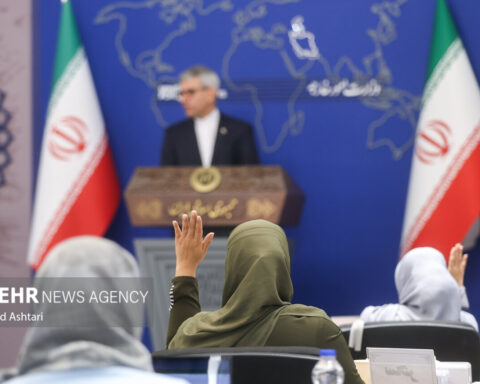
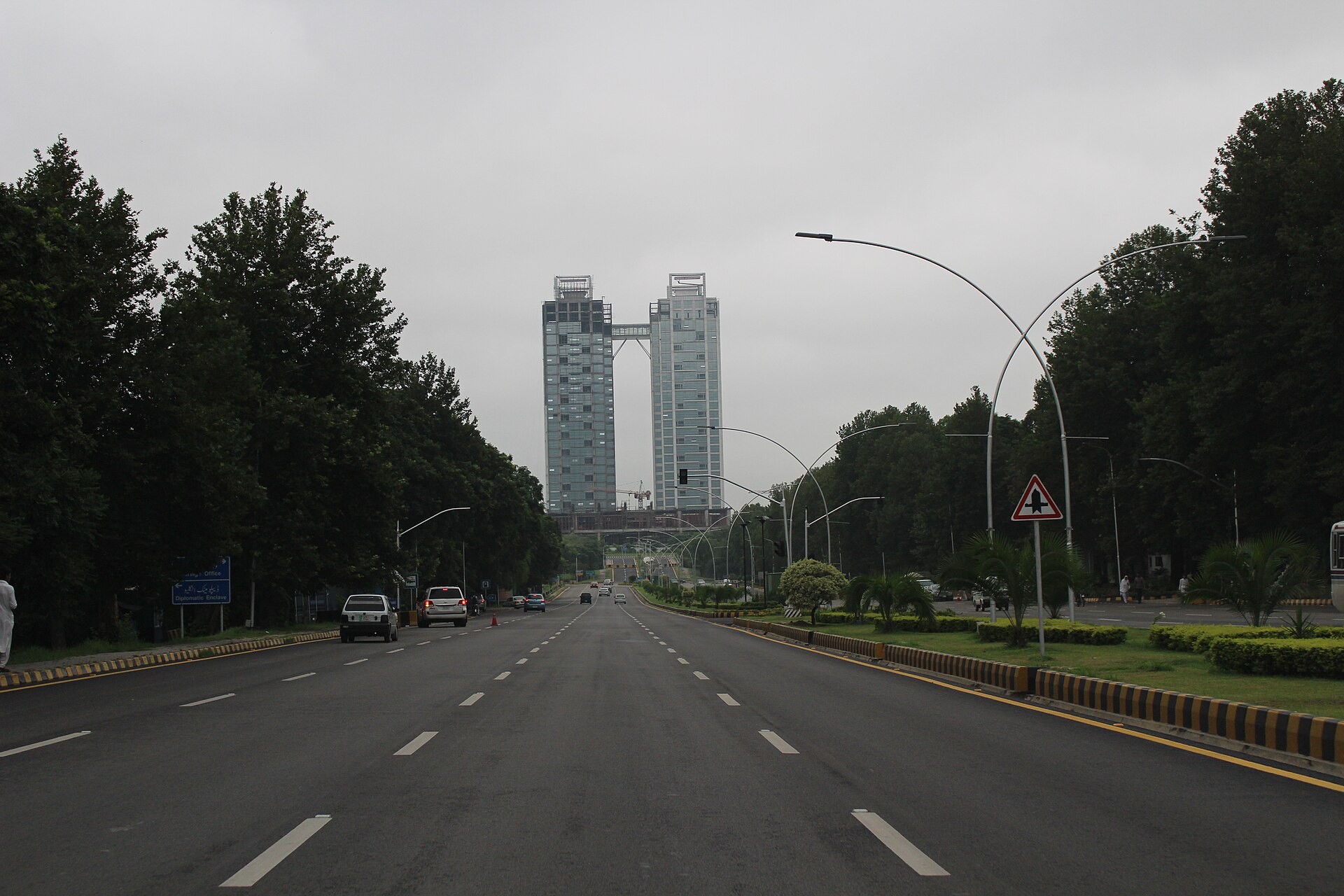
ISLAMABAD — Donald Trump cancelled the planned Witkoff-Kushner trip to Pakistan on Friday, killing the second round of Iran negotiations roughly one hour after Abbas Araghchi’s plane had already left Islamabad — a sequence that means both sides abandoned the talks before either showed up to hold them. The cancellation, announced via Truth Social with the line “we have all the cards, they have none,” collapses the Pakistan-mediated diplomatic architecture that produced the only direct US-Iran contact since 1979 and leaves six days before the May 1 War Powers Resolution deadline with no visible replacement channel, no authorized framework for continued military operations, and an Iranian foreign minister who landed in Muscat rather than wait for Americans who were never coming.
The collapse matters less for what it ends — the Islamabad track had been structurally dead since Araghchi’s precondition that the US naval blockade be lifted before any second round, a demand Trump explicitly rejected on CNBC with “we’re not going to open the strait until we have a final deal” — than for what it exposes: Washington has no fallback diplomatic mechanism with fewer than 150 hours until Congress’s only constitutional lever on the war activates, and the two Republican senators most likely to break with the White House, Susan Collins of Maine and Thom Tillis of North Carolina, have both told reporters they would not vote to authorize continued hostilities past the deadline.
What Trump Actually Said — and What the Timing Reveals
Trump’s Truth Social post read in full: “I just cancelled the trip of my representatives going to Islamabad, Pakistan, to meet with the Iranians. Too much time wasted on traveling, too much work! Besides which, there is tremendous infighting and confusion within their ‘leadership.’ Nobody knows who is in charge, including them. Also, we have all the cards, they have none! If they want to talk, all they have to do is call!!” The statement was posted approximately one hour after Araghchi departed Islamabad, meaning Trump framed the cancellation as his decision after the Iranian side had already made it moot — a face-saving chronology that Axios’s reporting undercuts, since the outlet had confirmed the Witkoff-Kushner trip as recently as the night of April 24, making this a twelve-hour reversal rather than a considered strategic withdrawal.
The “nobody knows who is in charge” line is doing real analytical work despite its casual delivery. Trump is publicly identifying the authorization ceiling problem that has defined every failed negotiation since the first Islamabad round: Araghchi negotiates without the authority to commit the IRGC, Vahidi blocks from the Supreme National Security Council, and Khamenei — absent from public view for over 50 days — neither ratifies nor overrules. When Trump says “nobody knows who is in charge, including them,” he is restating in tabloid language what the Soufan Center and multiple Iran analysts have documented since March: the Iranian negotiating team cannot deliver what it promises because the command structure that controls the military operates on a separate authorization track from the diplomatic apparatus.
Asked whether the cancellation meant a resumption of war, Trump told reporters: “No. It doesn’t mean that. We haven’t thought about it yet.” That answer — “we haven’t thought about it yet” — is either a negotiating posture designed to project indifference or an admission that the White House has no post-Islamabad plan with the War Powers clock at T-minus six days, and the two readings are not mutually exclusive.
The Middle East briefing 3,000+ readers start their day with.
One email. Every weekday morning. Free.
The Araghchi Ghost Round: Why Iran Left Before the US Arrived
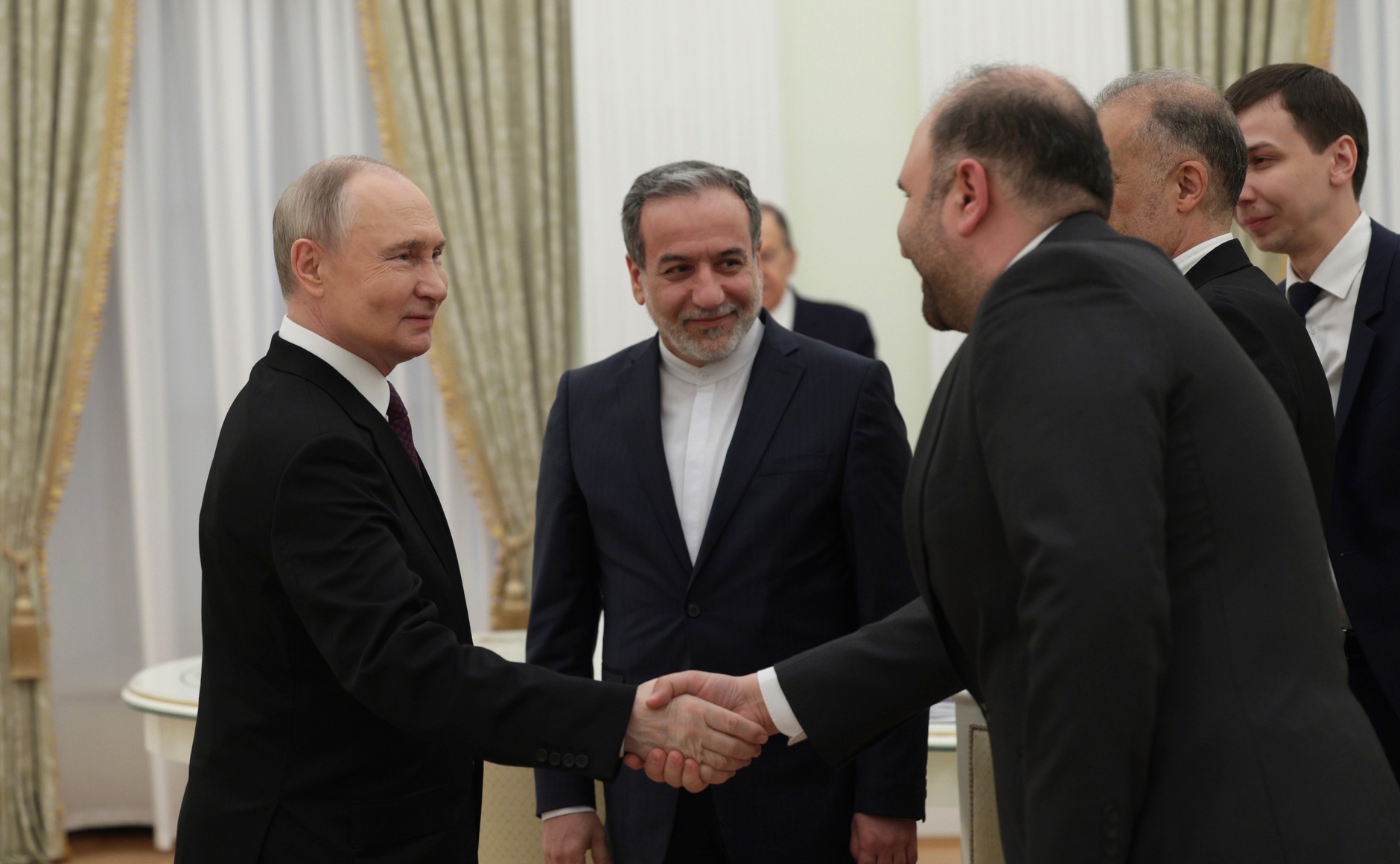
Iran’s Foreign Ministry spokesperson Esmaeil Baghaei posted on X as early as April 24 that “no meeting is planned to take place between Iran and the US” in Pakistan, a statement that read as diplomatic positioning at the time but turned out to be operationally literal. Araghchi departed Islamabad before the American delegation had left Washington, converting what was supposed to be a second round of negotiations into a one-sided briefing to Pakistan’s foreign ministry followed by an immediate exit. The choreography was deliberate: Araghchi posted on X after departing that his visit had been “very fruitful” and that he had “shared Iran’s position concerning workable framework to permanently end the war on Iran,” language that frames the trip as message delivery to a mediator rather than engagement with an adversary.
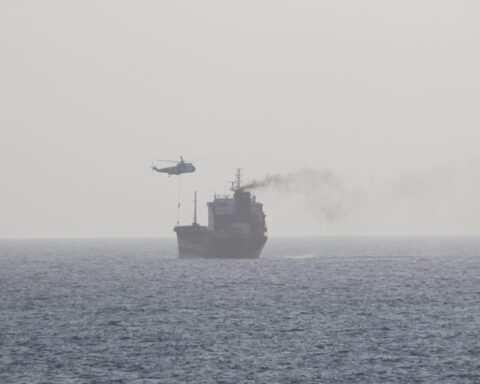
The structural reason Araghchi could not stay is the same one that collapsed the first round: Iran’s precondition that the US lift the naval blockade before direct talks resume is non-negotiable because Araghchi does not have the internal authority to waive it. The blockade-lift demand originates not from the foreign ministry but from the IRGC’s operational command, which treats the blockade as an act of war that cannot be negotiated around — only ended as a prerequisite. Araghchi told NPR and CNN that no second round of direct negotiations would occur while the blockade remained in place, creating the deadlock Trump’s CNBC statement made explicit and public: Iran will not talk until the blockade lifts, the US will not lift the blockade until talks produce a final deal.
Araghchi’s post-Islamabad itinerary tells the rest of the story. He flew directly to Muscat, Oman — confirmed arrived by Iran International and PressTV — with Moscow as the next stop. The Pakistan-Oman-Russia sequence is not a negotiating tour; it is a coalition-maintenance exercise. Open The Magazine, the Indian outlet, captured it precisely: “Iran uses Pakistan as a mailbox, flies to Oman instead.” Tehran is building a record of diplomatic engagement for the international audience while routing its actual strategic coordination through Muscat and Moscow, capitals where it does not face the authorization ceiling problem because neither is asking Iran to make concessions.
Can the Oman Back-Channel Replace Islamabad?
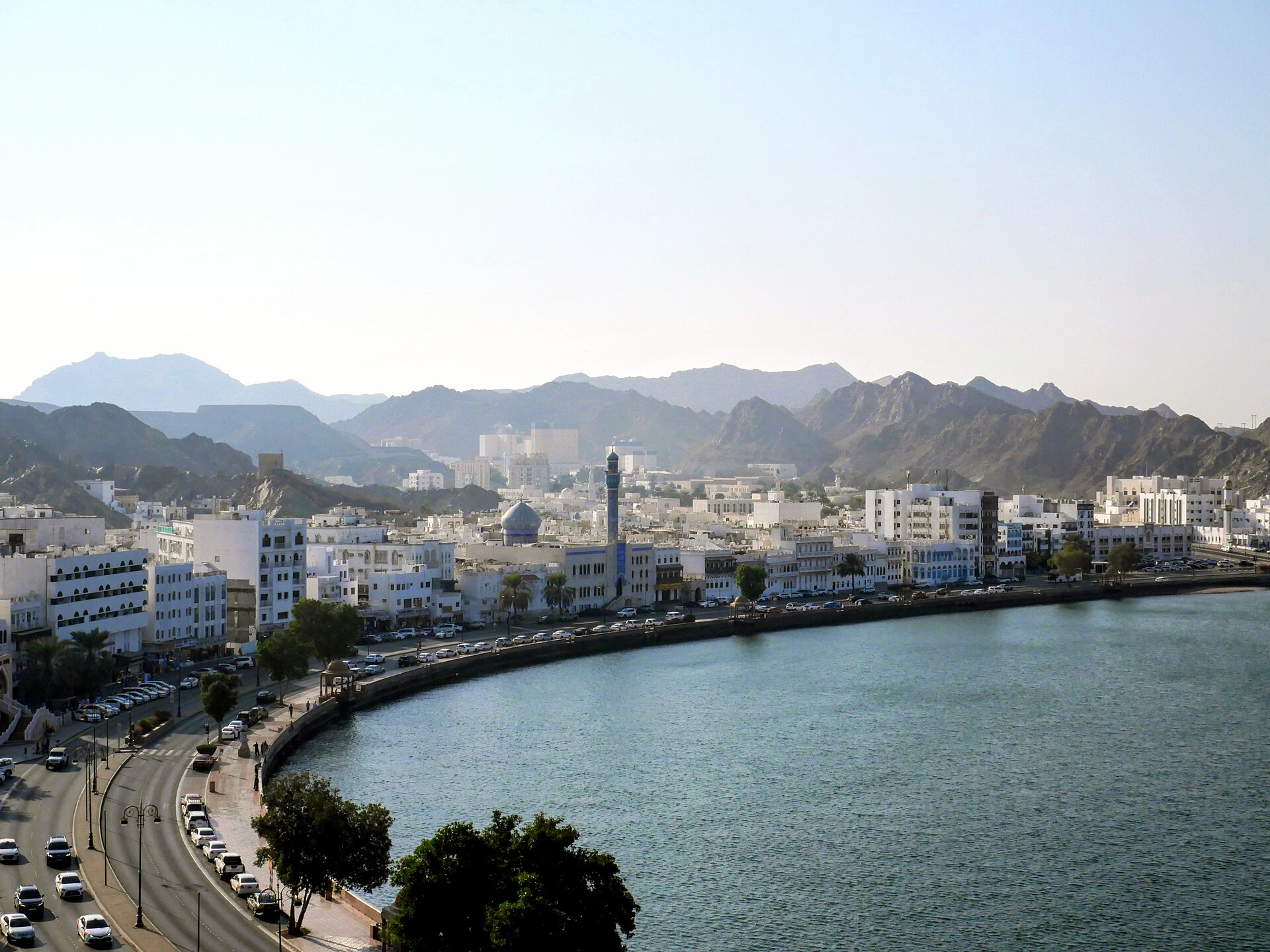
Araghchi’s arrival in Muscat is not coincidental. The Oman back-channel was operative as recently as February 2026, when Omani government ministers ferried messages between US and Iranian officials for indirect nuclear talks in the weeks before the US-Israeli strikes that started the war. Oman has maintained diplomatic relations with both Washington and Tehran continuously since 1979, and Sultan Haitham bin Tariq — who succeeded Sultan Qaboos in January 2020 — inherited the channel that Qaboos used to host the secret bilateral contacts that produced the 2013 interim nuclear framework, giving Muscat institutional credibility with Khamenei’s office that the landlocked Islamabad track lacked.
But the Oman channel has a ceiling that Pakistan’s did not. Islamabad hosted the first and only direct US-Iran meeting — Vance sat across from Ghalibaf — because Pakistan offered a venue large enough for a multilateral framework: delegations of 71 people, mediating governments, structured rounds with communiqué language. Oman’s back-channel model is the opposite — small, deniable, bilateral, and explicitly indirect. It can carry messages and float proposals, but it cannot host the kind of structured negotiation that produces a ceasefire framework with enforcement mechanisms, which is what both the 45-day phased proposal and the Islamabad Accord attempted and failed to deliver. The question is whether either side actually wants structured negotiations at this point, or whether the Oman channel’s very limitations — its smallness, its deniability — are now features rather than bugs for governments that need to appear open to diplomacy without committing to outcomes.
The complication is Russia. Araghchi’s next stop after Muscat is Moscow, and any Oman-mediated framework that emerges will need to account for Russian equities in the conflict — arms supply relationships, UN Security Council positioning, energy market coordination — that Pakistan’s track deliberately sidelined. Russia’s failed attempt to extend the JCPOA through a counter-resolution in September 2025, and China’s parallel failure on the same mechanism, means both powers have institutional grievances with the current sanctions architecture that they will want addressed in any replacement channel. An Oman back-channel that tries to be bilateral while three other capitals are running parallel tracks is a recipe for the same fragmentation that killed Islamabad.
What Happens When the May 1 Clock Expires?
The War Powers Resolution requires the president to withdraw forces from hostilities within 60 days of formal notification to Congress unless Congress authorizes the action. Trump formally notified Congress on February 28, 2026, the day strikes began, which places the deadline at May 1 — six days from the Islamabad cancellation. The president can invoke a single 30-day extension by certifying in writing that “unavoidable military necessity” requires additional time for the safe withdrawal of forces, but that certification is a formal legal act, not a tweet, and it implicitly concedes that withdrawal is the objective rather than continued operations.
The Senate has defeated Democratic war powers resolutions five times since February, most recently on April 23 by a vote of 46-51, with Rand Paul as the only Republican yes and John Fetterman as the only Democratic no. But the post-May 1 calculus is different from the pre-May 1 calculus in ways that the vote count obscures. Collins told a Semafor summit that “it is very likely that I would vote not to authorize further hostilities” if military operations continue past the 60-day mark, and Tillis told NBC News it would be “difficult” to get his support for continuation. With Lisa Murkowski of Alaska and John Curtis of Utah also signaling reservations, the White House faces a potential four-Republican defection on any affirmative authorization vote — which, combined with existing Democratic opposition, could approach the votes needed for a majority and would carry enormous political cost even if Vance broke a tie.
The practical constraint, however, is that the War Powers Resolution has never successfully ended a military action. Courts have consistently declined to adjudicate War Powers disputes, treating them as political questions between the legislative and executive branches, and enforcement depends entirely on Congress’s willingness to use its power of the purse — cutting funding for operations — rather than relying on the statute’s self-executing withdrawal requirement. CNN’s legal analysis published April 25 described the May 1 deadline as a “moment of reckoning” while acknowledging that the reckoning is political rather than legal: Trump can continue operations past May 1 if he is willing to absorb the political damage of operating without authorization, and Congress can stop him only if it is willing to cut military funding during an active conflict with American forces deployed.
Where Does Saudi Arabia Sit Now?
Saudi Arabia’s position after the Islamabad collapse is the most exposed of any regional actor because Riyadh has been running a dual-track strategy — privately lobbying Trump to intensify the blockade while maintaining a functional ambassador-level channel with Tehran — that depends on the existence of a diplomatic process to provide cover for the private hawkishness. With the diplomatic process now collapsed, the cover is gone. Foreign Policy reported on April 24 that MBS privately lobbied Trump to attack Iran initially and later to “finish the job” — a report the palace denied publicly, though a single anonymously sourced outlet — and the pattern, if accurate, reveals a Saudi leadership that wants maximum American pressure on Iran but cannot afford to be seen as the architect of that pressure in a region where its Hajj obligations, its OPEC+ relationships, and its normalization-era diplomatic investments all require a posture of mediation rather than belligerence.
The economic exposure is immediate and worsening. Saudi March production fell to 7.25 million barrels per day, down roughly 30 percent from February’s 10.4 million bpd, according to IEA figures, and the kingdom’s fiscal break-even price of $108-111 per barrel sits uncomfortably close to Brent’s current trading range. The Nicosia summit, the Saudi-Pakistan-Turkey-Egypt quartet framework, and other parallel Saudi diplomatic initiatives suggest Riyadh is building its own channels precisely because it cannot rely on an Islamabad process it was excluded from and an Oman channel it does not control, but the fundamental problem remains: Saudi Arabia expelled Iran’s military attaché and four embassy staff in March 2026 while its ambassador confirmed ongoing communication with the Iranian foreign ministry “on shared issues,” a contradiction that works only as long as someone else is running the primary diplomatic track.
The kingdom’s exposure to the May 1 deadline is also direct. If Congress forces a withdrawal or funding cut that reduces the US naval presence enforcing the blockade, Saudi Arabia loses the coercive mechanism it has been lobbying to maintain while simultaneously lacking the independent military capacity to enforce a Hormuz closure on its own — the same structural dependency on American power that has defined Saudi security policy since 1990 but that the Iran war has made existentially visible rather than theoretically interesting.
Background: From Vance’s Handshake to Witkoff’s No-Show
The Islamabad diplomatic track began roughly two weeks before its collapse, when Vice President Vance led a US delegation to Pakistan for the first direct US-Iran talks since the 1979 revolution. Vance sat across from Ghalibaf — the Iranian parliament speaker and former IRGC Aerospace Force commander — in a meeting that produced no agreement but established the precedent of direct contact. The second round was supposed to elevate the engagement: Witkoff, Trump’s special envoy, and Kushner, who carries the Gulf portfolio by virtue of his Abrahamic Accords legacy and personal relationships with MBS and MBZ, would have brought both negotiating authority and regional credibility that Vance’s constitutional role made awkward.
The intervening two weeks destroyed every assumption the second round was built on. Iran hardened its blockade-lift precondition from a negotiating position to an institutional commitment after the IRGC’s operational command issued formal guidance that the blockade constituted an act of war requiring cessation before any diplomatic engagement. The US hardened its counter-position — no blockade relief without a comprehensive deal — after Trump’s CNBC interview made the linkage explicit and public. Pakistan’s role as mediator was already compromised by the structural dependencies that Saudi Arabia’s $5 billion loan maturity in June 2026 and the 27th Constitutional Amendment’s concentration of foreign policy authority in the military establishment revealed about Islamabad’s room to maneuver. By the time Araghchi arrived in Islamabad on April 24 and Baghaei posted that no US-Iran meeting was planned, the second round was a diplomatic corpse that both sides were performing autopsies on rather than attempting to revive.
What replaces Islamabad is now the only question that matters, and the answer may be nothing — at least nothing formal. The Oman back-channel can carry messages but not host negotiations, Pakistan’s mediating credibility is damaged by a round that collapsed before it began, and the May 1 deadline creates a domestic political constraint that may force the White House to seek a quick framework — any framework — that provides legal cover for continued operations rather than a genuine resolution to the conflict. Trump’s “they can call us” posture assumes Iran needs a deal more than the United States does, but with the War Powers clock running and four Republican senators publicly wobbling, the question of who holds “all the cards” may look different on May 2 than it does on April 25.
FAQ
Why was the second round Witkoff and Kushner instead of Vance?
Vance led the first round in his capacity as vice president, but the constitutional awkwardness of the VP conducting direct negotiations with an adversary government — combined with Vance’s potential conflict as the person who would break a tied Senate vote on war authorization — made a shift to appointed envoys logical. Witkoff carries Trump’s personal negotiating authority without constitutional baggage, and Kushner’s Gulf relationships were meant to reassure Saudi Arabia and the UAE that the talks would not produce outcomes that disadvantaged their security interests. The switch also signaled escalation of seriousness: Vance’s round was exploratory, Witkoff-Kushner’s was supposed to be transactional.
Has the War Powers Resolution ever actually forced a president to withdraw forces?
No. Despite its passage in 1973 over Nixon’s veto, the War Powers Resolution has never been successfully enforced through the courts or through its self-executing withdrawal mechanism. Presidents from both parties have either complied voluntarily, obtained congressional authorization before the deadline, or simply continued operations while daring Congress to use its appropriations power to cut funding — which Congress has never done during active hostilities with American forces deployed. The closest precedent is the 2011 Libya intervention, where Obama argued the 60-day clock did not apply because US forces were not engaged in “hostilities” as defined by the statute, a legal theory that was widely criticized but never judicially tested. The May 1 deadline’s power is political, not legal: it forces Republicans to choose between supporting Trump and defending congressional war-making authority.
What is Iran’s position on the Oman channel versus the Pakistan channel?
Iran has historically preferred Oman for sensitive US contacts because the Omani channel is bilateral, deniable, and does not require the kind of large-delegation formal engagement that creates domestic political exposure in Tehran. The Pakistan channel was useful precisely because it was multilateral — Iran could frame its participation as engagement with a Muslim-majority mediator rather than direct talks with Washington — but the IRGC’s institutional opposition to any channel that might produce concessions means Araghchi’s flexibility is equally constrained regardless of venue. The Oman channel’s advantage for Iran is that it operates below the threshold of IRGC institutional attention; its disadvantage is that anything agreed through it will face the same ratification problem when it surfaces.
Could Turkey or Egypt replace Pakistan as mediator?
Both were named as potential mediators in the 45-day ceasefire framework reported by Axios in early April, but neither has Pakistan’s specific combination of attributes: a land border with Iran, a military establishment with direct IRGC communication channels, and a constitutional structure that allows the army chief to conduct foreign policy independently of elected government. Turkey’s NATO membership and Erdogan’s recent reconciliation with Assad make Ankara simultaneously too Western-aligned for Iranian comfort and too unpredictable for American confidence. Egypt’s channel to Iran runs through Hezbollah contacts that are currently inoperative due to the Lebanon war’s disruption of Hezbollah’s command structure. The more likely near-term scenario is no single mediator but a fragmented set of bilateral channels — Oman for US-Iran, Qatar for hostage-adjacent issues, Saudi Arabia for energy-market coordination — none of which has the authority to produce a comprehensive framework.
What happens to the US naval blockade if Congress does not authorize continued operations after May 1?
The blockade — which CENTCOM describes as enforcement of sanctions rather than a blockade under international law — currently operates under the president’s Article II commander-in-chief authority as supplemented by the February 28 War Powers notification. If Congress neither authorizes the action nor funds its continuation, the legal basis becomes contested but not automatically void; the president retains Article II authority to protect American forces and interests even without specific congressional authorization, and the 30-day withdrawal extension provides additional runway. The practical question is whether the Navy can sustain the operational tempo — carrier strike groups, destroyer patrols, logistics chains — without supplemental appropriations, which have not been requested and which a hostile congressional vote would make politically and legally precarious to obtain. The blockade’s effectiveness depends on credible enforcement, and credible enforcement depends on funding that becomes contested after May 1. The Lebanon front added a further complication: Israel struck Hezbollah with force on April 25, two days into a ceasefire extension the US had just brokered, fragmenting the diplomatic picture Washington needed to hold together while the War Powers clock ran out.