Table of Contents
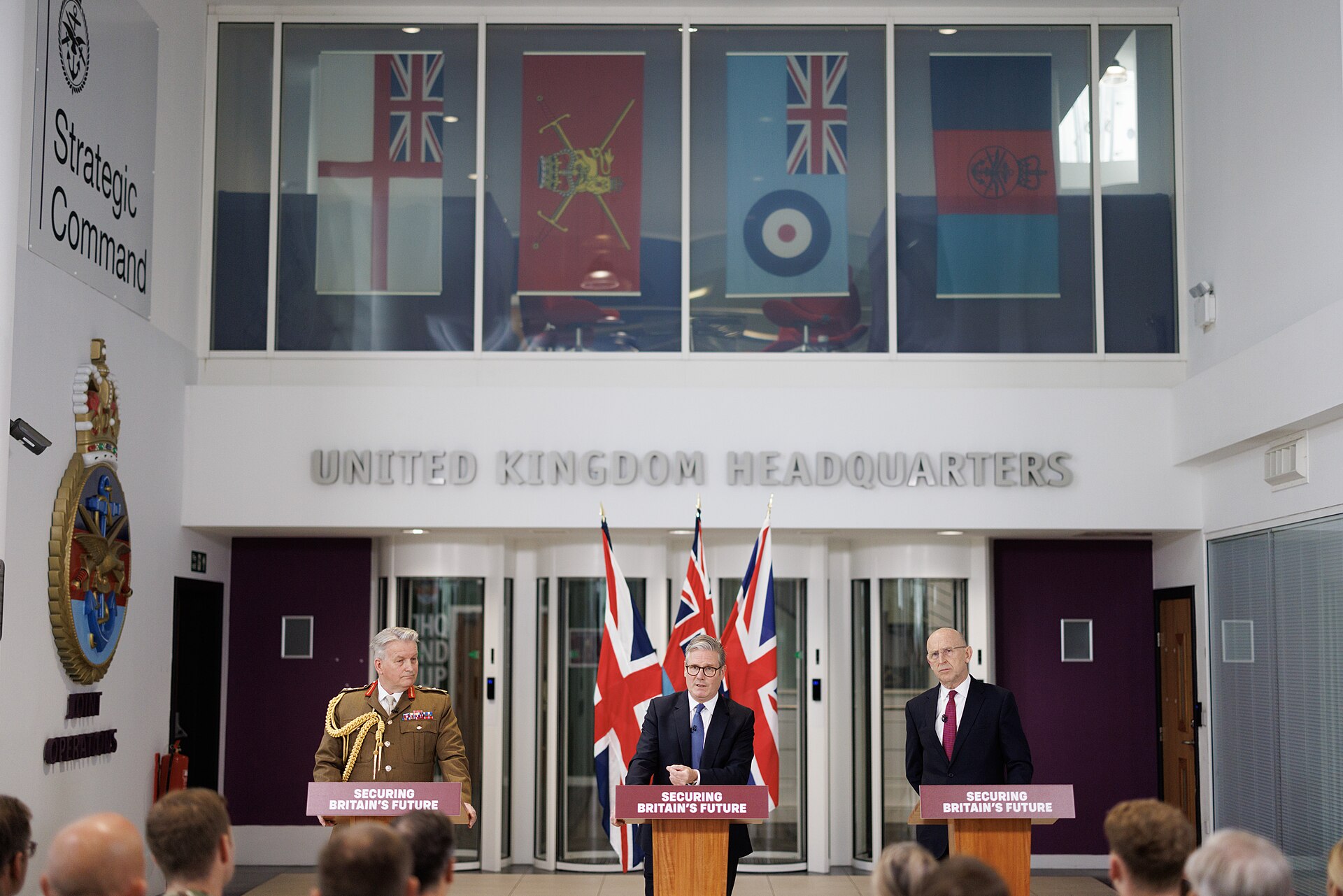
LONDON — UK Prime Minister Keir Starmer called US President Donald Trump on April 26 to report that more than 12 countries had volunteered to join a “peaceful and defensive” freedom-of-navigation mission in the Strait of Hormuz, following a military planning conference at the UK’s Permanent Joint Headquarters in Northwood that ran April 22–23. Over 30 nations sent military planners to the two-day conference, which used a non-NATO command structure to translate the diplomatic consensus from a 51-nation Paris summit into an operational naval plan.
The call marked the first time a concrete multinational force structure has moved beyond communiqués and into joint military planning for Hormuz since the double blockade reduced strait transits to 3.6% of pre-war baseline. For Saudi Arabia — still exporting through Yanbu at roughly 80% of its target volume — the timeline for any coalition deployment will determine whether the kingdom’s 1.5 million barrel-per-day structural gap persists through the summer or longer.
From Paris Communiqué to Northwood War Room
The Northwood conference followed a 51-country summit in Paris on April 16–17 that called for the “unconditional, unrestricted, and immediate re-opening of the Strait of Hormuz.” That summit, chaired jointly by French President Emmanuel Macron and Starmer, drew German Chancellor Friedrich Merz and Italian Prime Minister Giorgia Meloni in person. The United States did not attend.
UK Defence Secretary John Healey opened the Northwood conference on April 22 with a direct statement of intent. “Today’s multinational planning conference matters,” Healey said. “The task, today and tomorrow, is to translate the diplomatic consensus into a joint plan to safeguard freedom of navigation in the Strait.”
The conference operated under the UK’s Permanent Joint Headquarters rather than NATO’s Allied Maritime Command — despite both being housed at the same Northwood facility. The choice of a non-NATO framework was deliberate: it allowed participation from Gulf states and other non-NATO partners without triggering Article 5 debates or requiring alliance-wide consensus.
Starmer’s GOV.UK readout of the April 26 call with Trump stated he “shared the latest progress on his joint initiative with President Macron to restore freedom of navigation,” and framed the Hormuz closure as causing “severe consequences for the global economy and cost of living for people in the UK and globally.”
The Middle East briefing 3,000+ readers start their day with.
One email. Every weekday morning. Free.
How Did Western Allies Go from Refusal to Planning?
Six weeks ago, the notion of a European-led Hormuz coalition was dead on arrival. When Trump called on China, France, Japan, South Korea, and the UK to send warships in mid-March, every named country declined. German Defence Minister Boris Pistorius captured the European consensus on March 16: “This is not our war.”
One day later, on March 17, Trump posted on Truth Social: “WE DO NOT NEED THE HELP OF ANYONE!” He added: “we have decimated Iran’s Military — Their Navy is gone, their Air Force is gone.”
By April 12, Trump had declared total US control over the strait. “No ship can enter or leave without the approval of the United States Navy. It is ‘Sealed up Tight,'” he posted on Truth Social. The US naval blockade took formal effect on April 13, targeting Iranian ports and toll-collecting vessels.
What changed between March’s refusals and April’s 30-nation planning conference was not a military development but an economic one. With Hormuz transits at 45 since the April 8 ceasefire — Bloomberg’s “double blockade” framing — the cost of inaction became quantifiable. One-fifth of the world’s oil supply remained effectively locked behind two overlapping blockades: the IRGC controlling the Gulf of Oman exit since March 4, and the US Navy controlling the Arabian Sea entry since April 13.
Starmer himself had said in March that “the United Kingdom will not be drawn into the wider war.” The shift from that position to hosting a military planning conference required an intermediate step: the Paris summit reframed the mission not as joining the US war effort but as a separate, multilateral initiative to reopen a global shipping lane. The “peaceful and defensive” language attached to the Northwood volunteers reflected this distinction.
The Two French Preconditions
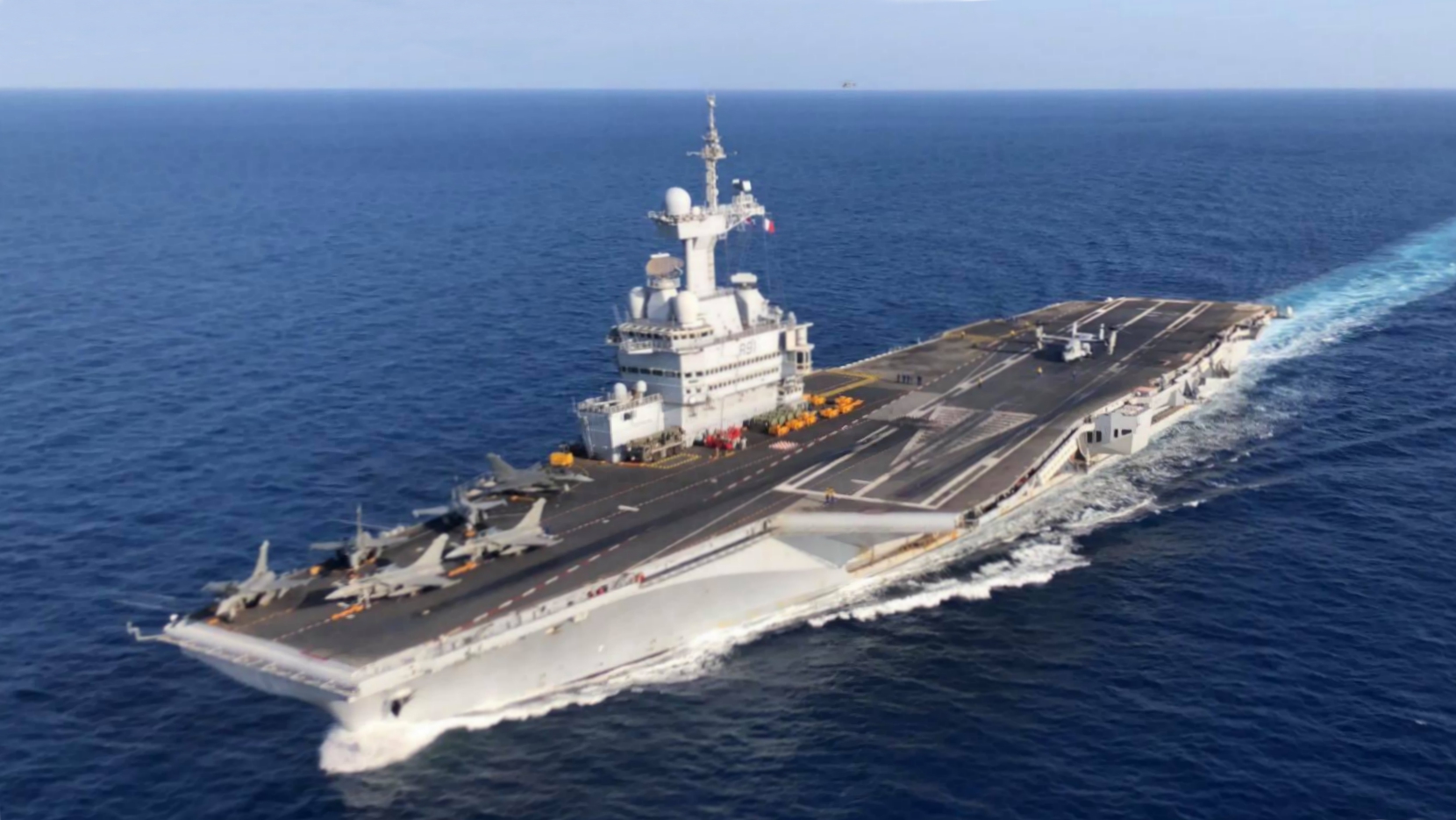
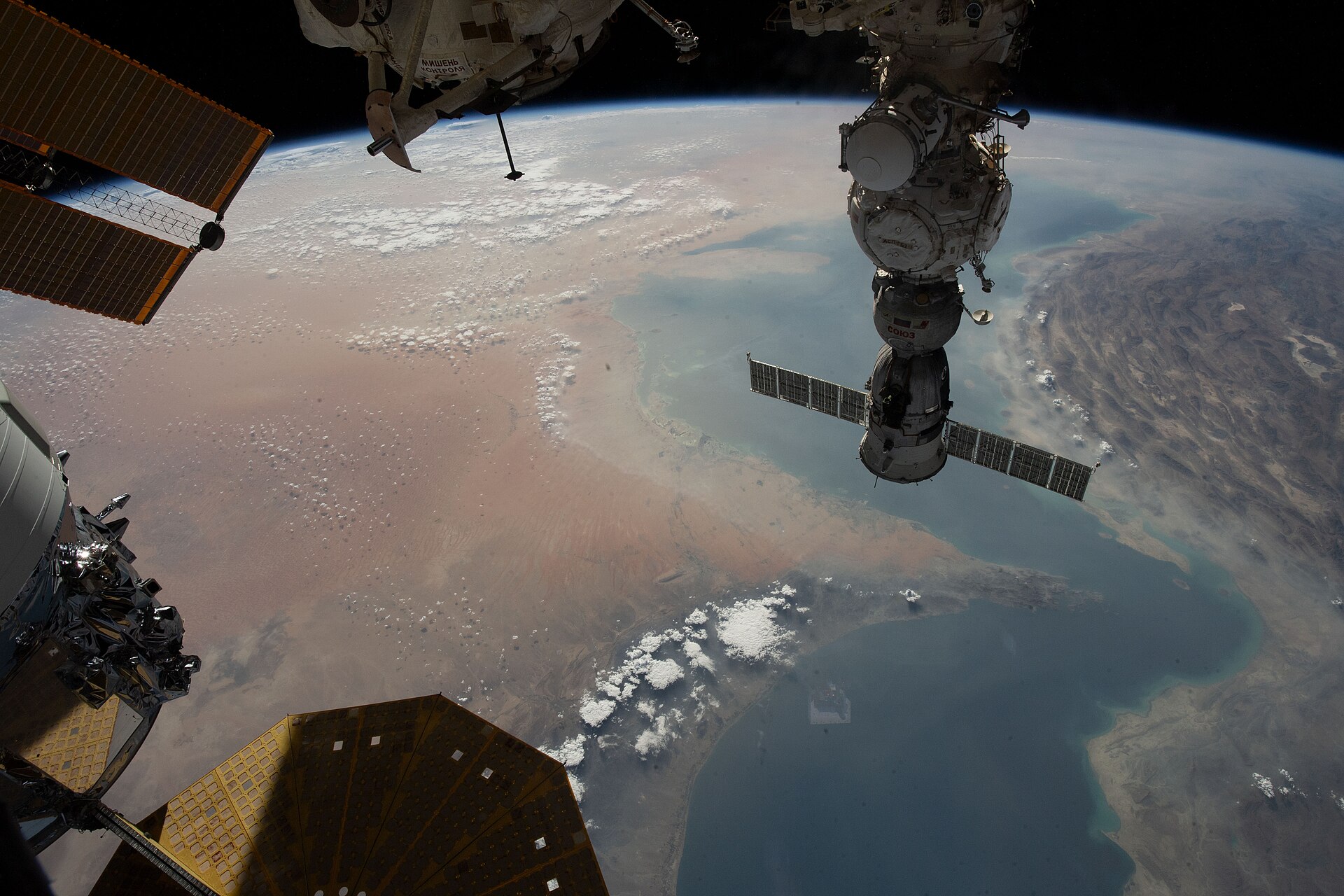
France has emerged as the swing state in the coalition. The Charles de Gaulle carrier strike group has operated in the Mediterranean and Middle East region since early March. The French Navy pledged 10 additional warships on March 9. But Paris has attached two explicit conditions before committing forces to a Hormuz transit mission.
An unnamed Élysée official told Al Jazeera that allied participation required “an Iranian commitment not to fire on passing ships and a US commitment not to block any ships leaving or entering the Strait of Hormuz.” The conditions are structurally opposed: the first requires Iran to surrender the coercive leverage the IRGC has held since February 28; the second requires the United States to lift the very blockade Trump called “Sealed up Tight” two weeks ago.
French Foreign Minister Jean-Noël Barrot called the blockade consequences “major” for French citizens and businesses at the Paris summit. But Paris has not publicly moved from its preconditions in the days since.
The gap between having 12 countries volunteer at Northwood and having those countries deploy warships into an active double blockade is precisely where the French conditions sit. Without an Iranian de-escalation guarantee, coalition escorts risk drawing fire from IRGC fast-attack craft and shore-based anti-ship missiles. Without a US commitment to open passage, coalition-escorted tankers could transit Hormuz only to face American interdiction on the other side.
The International Institute for Strategic Studies assessed in March that “given the operational challenges and the politics, putting together an international operation is unlikely to be quick or easy.” Nothing at Northwood appears to have invalidated that assessment.
Can a Coalition Break the Double Blockade?
The operational reality facing any Hormuz coalition is that the strait is not blocked by one actor but by two. Bloomberg reported on April 26 that vessels now require approval from both the US Navy and the IRGC to transit — a condition met by fewer than two ships per day since the ceasefire.
Iran’s blockade is enforced through a combination of declared danger zones, mine-laying, and direct interdiction. PressTV reported on April 22 that the IRGC Navy “intercepted two hostile vessels linked to the Israeli regime and transferred them into Iranian territorial waters.” Iran’s parliament speaker, Mohammad Bagher Ghalibaf, formally linked Hormuz reopening to US blockade removal on X the same day — establishing a reciprocity demand that makes unilateral coalition action insufficient.
On the mine threat specifically, US Navy mine-clearance operations began on April 25 with the deployment of USS Frank E. Peterson and USS Michael Murphy, according to the Washington Post. But US military testimony to Congress on April 22 estimated mine clearing could take six months — and the decommissioning of four Avenger-class MCM ships from Bahrain in September 2025 leaves only two vessels currently in theater. Pentagon officials have previously challenged that timeline as unworkable given those constraints.
The UK has positioned RFA Lyme Bay as a mothership for autonomous mine countermeasures, equipped with Harrier surface drones and Iver4 underwater systems, announced March 29. Ukraine offered four minehunters based in Portsmouth — the Cherkasy, Chernihiv, Mariupol, and Melitopol — at the Northwood conference on April 22. Whether these assets alter the six-month clearance estimate remains untested.
Iran’s economic losses from the US blockade run to approximately $400 million per day, according to Bloomberg’s April 26 estimate. But Iran has framed the standoff as a matter of sovereignty, not cost. PressTV on April 25 called the US naval blockade “banditry” and “piracy” and warned of a “decisive response if illegal US naval blockade continues.”
The Yanbu Ceiling and Saudi Arabia’s 1.5 Million Barrel Problem
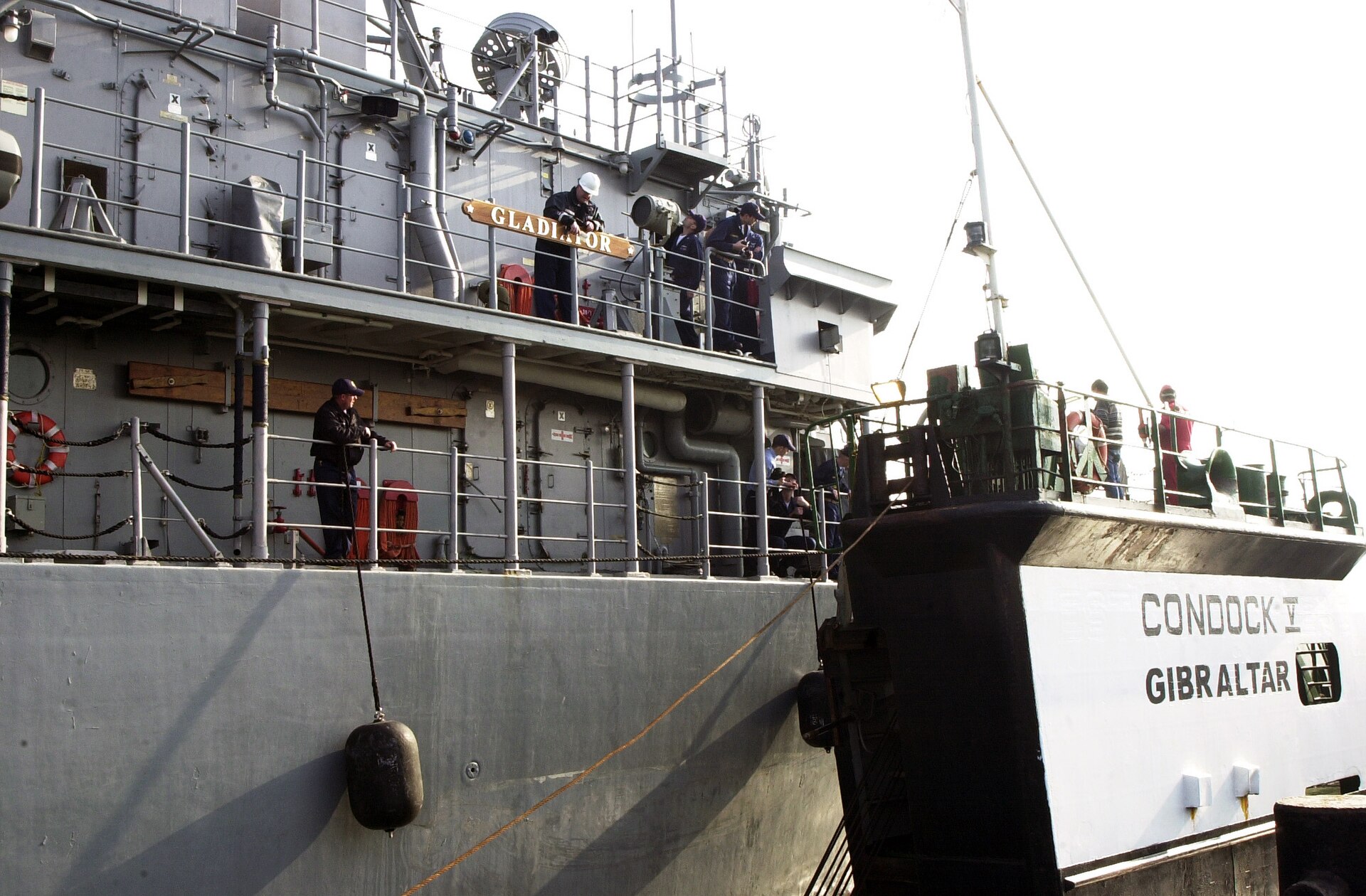
For Saudi Arabia, the Northwood conference is not an abstract diplomatic exercise. The kingdom has rerouted its crude exports through the East-West Pipeline to Yanbu on the Red Sea, bypassing Hormuz entirely. But the bypass has a ceiling.
Bloomberg reported on April 24 that Saudi exports through Yanbu averaged 4 million barrels per day for the first three weeks of April — roughly 80% of Riyadh’s target. The effective Yanbu ceiling stands at 5.9 million bpd. Pre-war Saudi throughput via Hormuz was 7–7.5 million bpd. The structural gap of 1.1–1.6 million bpd cannot be closed without reopening the strait.
Saudi Arabia’s fiscal position makes the gap acute. Brent crude closed at $105.33 per barrel on April 25. The kingdom’s fiscal break-even — including Public Investment Fund commitments — sits at $108–111 per barrel, according to Bloomberg estimates. Saudi Arabia is producing less oil, at a price below its break-even, with no mechanism to restore full export capacity short of Hormuz reopening.
GCC Secretary General Jasem Al Budaiwi, speaking at an EU-Gulf summit in Cyprus on April 22 — the same day the Northwood conference opened — said: “EU-Gulf cooperation is no longer a political option, but a strategic necessity driven by the nature of our shared challenges.”
When Starmer met Crown Prince Mohammed bin Salman in Jeddah on April 8, UK-Saudi bilateral trade stood at £17.2 billion against a target of £30 billion by 2030. The UK deployed a Sky Sabre air defence battery to Saudi Arabia on March 31. The economic and security relationship provides context for why London — not Washington — is hosting the coalition-building effort.
Tehran’s Response
Iran’s government has framed the entire crisis as a consequence of American aggression. IRNA reported that Tehran cited “Washington’s excessive demands, unrealistic expectations, constant shifts in stance, repeated contradictions, and the ongoing naval blockade” as a ceasefire breach.
The IRGC’s operational posture has not softened in response to coalition planning. On April 22, the same day the Northwood conference opened, PressTV reported the IRGC Navy seized MSC Francesca (11,660 TEU) and Epaminodas (6,690 TEU) — actions that contradicted Iranian Foreign Minister Araghchi’s April 24 declaration that Hormuz was “completely open.”
Ghalibaf’s linkage of Hormuz to US blockade removal creates a negotiating structure in which the coalition’s “peaceful and defensive” framing is irrelevant to Tehran. From Iran’s perspective, the blockade is American; the remedy must be American. A European escort mission does not address the IRGC’s stated conditions.
The Trump administration has shown no inclination to accommodate the French precondition requiring a US commitment not to block ships. Defense Secretary Pete Hegseth’s position remains “as long as it takes.” Trump’s order to the Navy to target Iranian mine-laying crews signals escalation, not accommodation.
Background
Iran’s parliament is advancing a 12-article Hormuz sovereignty law, with lawmakers Ahmadi and Rezayi Kouchi leading the legislation. The law would formalize IRGC control over strait transit as a matter of domestic statute.
Separately, Iran has been developing a Red Sea toll mechanism through Houthi proxies, creating a second chokepoint that a Hormuz-focused coalition would not address. The Bab el-Mandeb vulnerability remains outside the Northwood planning scope.
Trump first sought allied warships for Hormuz in mid-March 2026, naming China, France, Japan, South Korea, and the United Kingdom. All declined. The reversal from universal refusal to a 30-nation planning conference took 37 days.
FAQ
What is the Permanent Joint Headquarters at Northwood?
Northwood, in northwest London, houses the UK’s Permanent Joint Headquarters — the command center for all British overseas military operations. It also hosts NATO’s Allied Maritime Command (MARCOM). The April 22–23 conference deliberately used the UK national command structure rather than NATO’s, allowing non-NATO Gulf and Asian partners to participate without triggering alliance-level decision-making processes. The facility previously commanded UK contributions to Operation Atalanta (counter-piracy, Horn of Africa) and Operation Kipion (Gulf maritime security).
Which countries volunteered at Northwood?
The UK Ministry of Defence confirmed that more than 12 countries volunteered for the “peaceful and defensive” mission but has not published a full list. Publicly confirmed participants or supporters include the UK, France, Germany, Italy, and Ukraine (which offered four minehunters). Gulf states attended the conference but their individual commitments have not been disclosed. Japan, South Korea, and Australia — all named by Trump in March and all of whom initially declined — have not confirmed participation.
How does the Northwood initiative differ from the US blockade?
The US blockade, effective April 13, targets Iranian ports and vessels collecting IRGC transit tolls. It is an enforcement action under US military authority. The Northwood initiative is framed as a multilateral freedom-of-navigation mission — escorting commercial vessels through Hormuz rather than interdicting specific traffic. The French preconditions explicitly require the US to commit not to block ships, suggesting Paris views the two operations as potentially contradictory rather than complementary.
What mine-clearance assets are available?
The US decommissioned its four Avenger-class mine countermeasure ships from Bahrain in September 2025. USS Frank E. Peterson and USS Michael Murphy began mine-clearance operations on April 25. The UK’s RFA Lyme Bay carries autonomous systems including Harrier surface drones and Iver4 underwater vehicles. Ukraine’s four ex-Sandown-class minehunters (Cherkasy, Chernihiv, Mariupol, Melitopol) are based in Portsmouth and were offered at Northwood. Congressional testimony estimated six months for full clearance — a timeline that extends well into the autumn regardless of coalition size.
What happens if the French preconditions are not met?
Without both an Iranian non-fire pledge and a US open-passage commitment, France is unlikely to deploy the Charles de Gaulle strike group or its pledged 10 additional warships into a Hormuz escort role. Given France’s naval weight in the coalition, this would reduce the mission to a significantly smaller force. The UK could proceed with willing partners, but a coalition without France — and without the US as a formal participant — would face questions about whether it has sufficient capability to guarantee safe passage through a strait where mines, fast-attack craft, and shore-based missiles remain active threats.