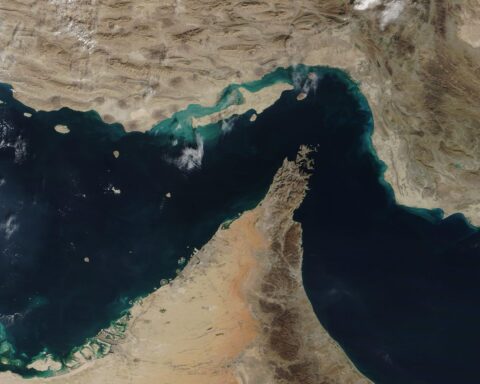

DHAHRAN — Goldman Sachs has given Saudi Arabia’s nightmare a name, and it sounds almost reassuring. Jared Cohen, co-head of the bank’s Global Institute and its president of global affairs, told Fortune on April 25 that the most likely outcome at Hormuz is a “sloppy peace” — oil tankers transiting again, but with Iran retaining “partial or unilateral control” and the ability to “close it again at any time for any reason.” What Cohen did not say, because Goldman’s own research note carefully avoids modelling it, is what that scenario does to the kingdom’s export arithmetic: the East-West Pipeline delivers 7 million barrels per day to the Red Sea coast, but Yanbu’s terminals can load a hard maximum of 4 to 4.5 million barrels onto tankers — leaving 2.5 to 3 million barrels per day arriving at port with nowhere to go, every single day, for as long as the strait stays half-open.
That gap is not a rounding error. It is larger than the entire pre-war output of Kuwait. And Goldman’s own war-adjusted fiscal deficit model — 6.6 per cent of GDP, implying a $73 billion annual drawdown on reserves — was built on the assumption that Hormuz disruption is temporary. If “sloppy peace” becomes the base case, the deficit does not shrink. It calcifies.
Table of Contents
- Cohen’s Two Scenarios — and the One He Didn’t Model
- The Yanbu Bottleneck: 7 Million Barrels In, 4.5 Million Out
- Why Is “Sloppy Peace” Worse Than Open War for Saudi Fiscal Planning?
- Does Goldman’s Recovery Model Work Under Partial Reopening?
- Iran’s Parliament Is Building a Permanent Toll Booth
- Trump Is “In No Rush” — and That Is the Problem
- What Does the Suez Canal Closure Tell Us About Sloppy Peace?
- The UAE Escapes. Saudi Arabia Cannot.
- War Risk Insurance Never Comes Back Down
- How Long Can Saudi Reserves Absorb a Permanent Gap?
- FAQ
Cohen’s Two Scenarios — and the One He Didn’t Model
Cohen’s framework, laid out across CNBC and Fortune interviews this week, offers two futures for the strait. The first is “sloppy peace”: traffic resumes, but Iran keeps the architecture of control — fast-attack boats, the legal scaffolding of a new sovereignty law, the demonstrated ability to seize vessels at will. “You may have traffic flowing through,” Cohen told Fortune, “but the Iranians will likely maintain partial or unilateral control.” The second is “maritime trench warfare”: both Washington and Tehran employing economic coercion, each betting the other surrenders first, with IRGC fast-attack boats still firing on commercial vessels even under nominal ceasefire conditions.
The framing is useful. Cohen is one of the sharper strategic thinkers at a major bank, and his bluntness about Iran’s staying power — “The Strait of Hormuz will never reopen the way it was at the beginning” unless the regime itself collapses, he told CNBC on April 24 — is a corrective to the market’s persistent hope that a deal is weeks away. His prediction is precise: “You go from a sloppy ceasefire to a strong, enduring ceasefire and a sloppy peace.” A bunch of half-solutions on all the big issues.
What neither Cohen nor Goldman’s research desk has done is model what “sloppy peace” means for Saudi Arabia’s specific export infrastructure. The bank’s April 23–24 recovery note forecasts 70 per cent of lost Gulf output restored within three months of full reopening, and 88 per cent within six months — but those numbers are explicitly conditional on full reopening. Under sloppy peace, partial is the permanent state. Goldman noted that available empty tanker capacity in the Gulf has already fallen by roughly 130 million barrels, about a 50 per cent reduction, constraining physical export capability even under the best conditions. Under the worst? The constraint is not tankers. It is concrete and steel at the end of a pipeline.
The Yanbu Bottleneck: 7 Million Barrels In, 4.5 Million Out
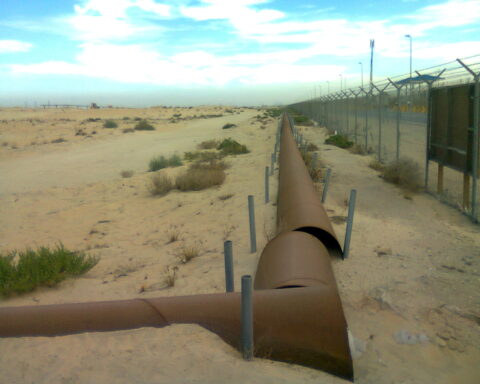
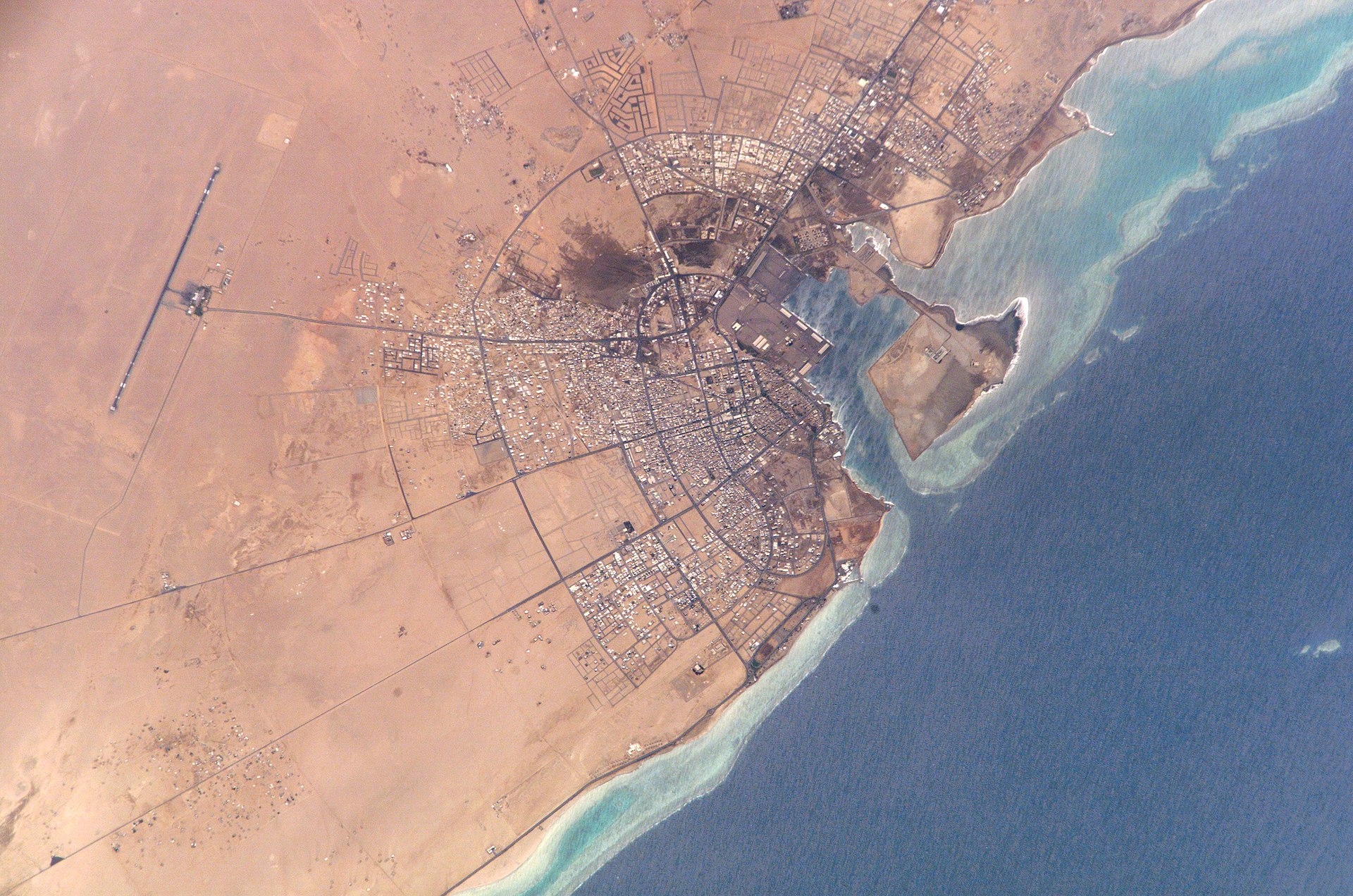
The East-West Pipeline is one of the genuine engineering achievements of this war. Aramco CEO Amin Nasser confirmed on March 10 that the system had been reconfigured — NGL pipelines converted to crude service — to push 7 million barrels per day to the Red Sea coast by March 28. That is the pipeline doing everything it physically can. The problem is at the other end.
The Middle East briefing 3,000+ readers start their day with.
One email. Every weekday morning. Free.
Yanbu’s North and South terminals have seven dedicated VLCC berths. Their combined nominal loading capacity is approximately 4.5 million barrels per day, with effective wartime throughput closer to 4 million. The arithmetic is inescapable: 2.5 to 3 million barrels per day arrive at Yanbu with nowhere to go.
They back up into tank farms. When tank farms fill, production shuts in. This is not a pipeline problem or a pumping problem. It is a port problem, and ports do not scale on wartime timelines.
A new VLCC berth at an established port takes 18 to 24 months to build under peacetime procurement and permitting conditions. Multiple berths take longer, because they compete for the same dredging equipment, the same marine contractors, the same environmental approvals. PIF cash reserves fell to approximately $15 billion by late 2024, their lowest since 2020. The capital for a crash Yanbu expansion would have to come from somewhere, and the somewhere is already running a deficit.
Saudi March 2026 production was 7.25 million barrels per day according to the IEA, down from 10.4 million in February — a 30 per cent collapse in a single month. Under sloppy peace, the kingdom’s maximum sustainable export volume is not 7.25 million. It is whatever Yanbu can load, plus whatever trickles through a Hormuz strait that remains, by any measure, under occupation with occasional supervised movement.
Why Is “Sloppy Peace” Worse Than Open War for Saudi Fiscal Planning?
Open war has one advantage for fiscal planners: it ends. Governments can borrow against a post-war recovery, draw down reserves on the understanding that reserves will be rebuilt, and price bonds on the assumption that disruption is temporary. Goldman’s war-adjusted deficit model was explicitly built on this logic: the disruption is extraordinary, but it will resolve.
Sloppy peace breaks that logic. If partial Hormuz throughput is the permanent condition — Cohen’s “any time for any reason” Iranian control — then the deficit does not recover on Goldman’s timeline. It becomes structural. The $73 billion annual drawdown is not a temporary wartime cost to be absorbed and replenished. It is the new baseline, or something close to it, modified only by whatever marginal Hormuz traffic Iran permits and whatever marginal Yanbu capacity Aramco can squeeze from existing infrastructure.
The IMF’s April 2026 World Economic Outlook projected Saudi public debt on a trajectory that was already deteriorating before accounting for permanent partial strait closure. The Fund’s Article IV consultation pegged the fiscal break-even at $86.60 per barrel for central government alone, $94 when consolidated with PIF operations, and $111 when full PIF capital expenditure is included. Brent at $90 to $95, which is roughly where it sits under current conditions, covers the narrow government break-even but misses the consolidated figure by a wide margin — and under sloppy peace, production volumes are the constraint, not price.
| Metric | Pre-War Baseline | Current (War) | Sloppy Peace (est.) |
|---|---|---|---|
| Production (M bpd) | 10.4 | 7.25 | 7.0–7.5* |
| Hormuz exports (M bpd) | ~5.5 | ~0.2 | 1.0–2.0 (est.) |
| Yanbu exports (M bpd) | ~2.0 | ~4.0 | ~4.0–4.5 |
| Total export capacity (M bpd) | ~7.5 | ~4.2 | ~5.0–6.5 |
| Export gap vs pre-war | — | ~3.3M bpd | 1.0–2.5M bpd |
| Fiscal deficit (% GDP) | 3.3% (official) | 6.6% (Goldman) | 4.5–5.5% (est.) |
| Annual reserve drawdown | ~$36B | ~$73B | $50–60B (est.) |
*Production constrained by export capacity, not wellhead. Sloppy peace columns are houseofsaud.com estimates assuming partial Hormuz resumption at 15–30% of pre-war throughput under Iranian supervision. Sources: IEA, Goldman Sachs, IMF.
Does Goldman’s Recovery Model Work Under Partial Reopening?
Goldman’s April 23–24 research note is careful about its conditions, but markets are not careful about reading conditions. The headline numbers — 70 per cent recovery in three months, 88 per cent in six — have been repeated across financial media as though they describe the base case. They do not. They describe a scenario Goldman itself considers less likely than Cohen’s sloppy peace: full reopening, with commercial shipping resuming at pre-war volumes under effective international maritime security guarantees.
The bank flagged five prior major supply shocks “where full recovery either took quarters longer than expected or never fully materialised.” That caveat is doing enormous work, and most coverage has ignored it. The Suez Canal closed in 1967 and did not reopen until 1975 — eight years. Iranian oil production after the 1979 revolution never returned to Shah-era volumes. Iraqi output after the 2003 invasion took a decade to recover. Goldman’s own historical data argues against its own recovery timeline, and the analysts know it, which is why the conditions are stated so precisely.
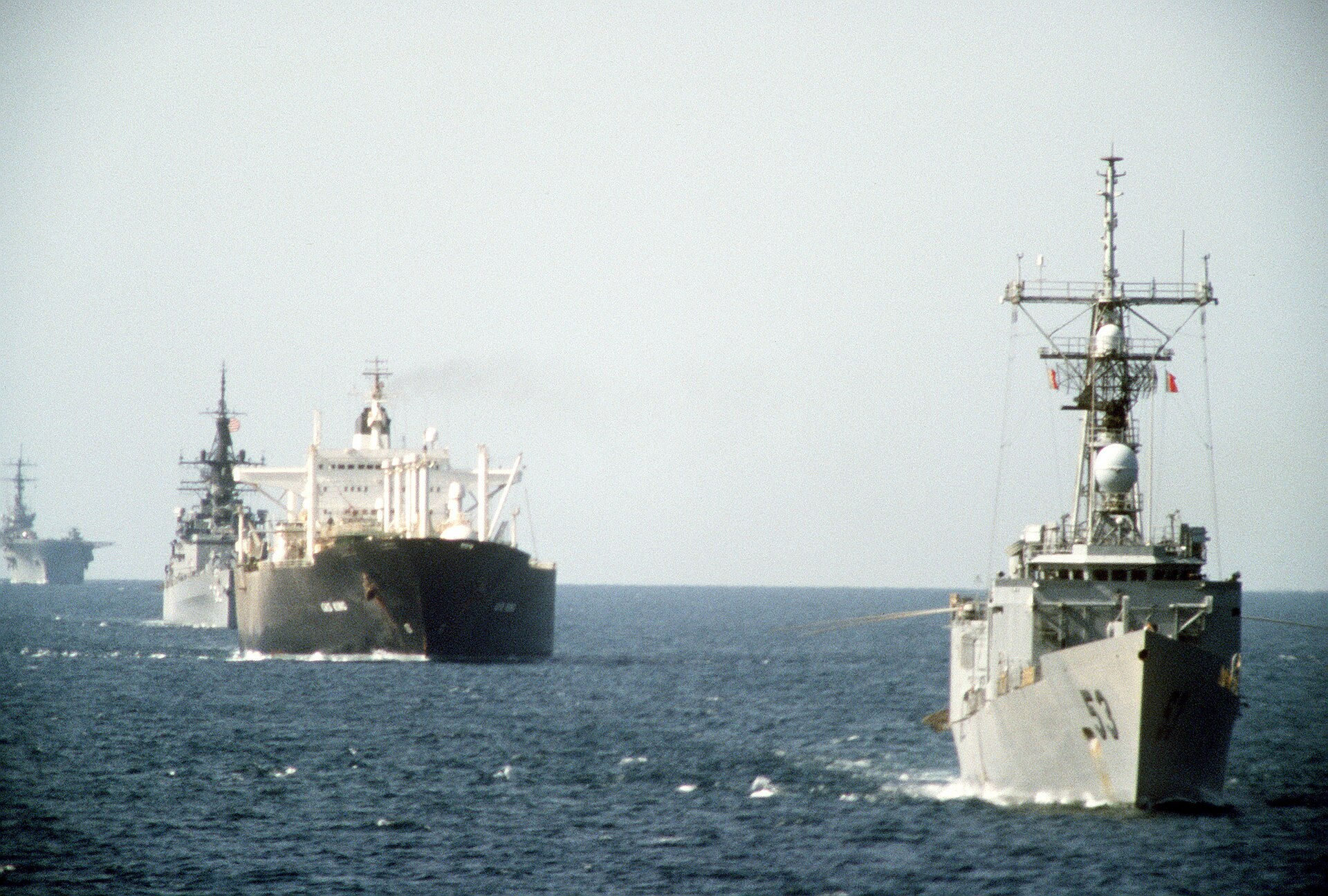
Under sloppy peace, the recovery model collapses entirely. The 70 per cent figure assumes tanker traffic normalises, war-risk insurance premiums fall, and loading infrastructure on both sides of the Gulf operates at or near capacity. None of those conditions hold when Iran retains the demonstrated ability to seize an 11,660-TEU container ship — the MSC Francesca, grabbed on April 22, two weeks into the ceasefire — and when 33 or more IRGC fast-attack vessels remain visible on satellite imagery near the Kargan coast. Paul Sankey of Sankey Research was blunt at Fortune’s energy summit on April 24: “The next two months is going to be an ongoing, absolute disaster even if you open the straits tomorrow. Over the coming months, this is going to unfortunately deteriorate badly. We’re locked into that.”
“The next two months is going to be an ongoing, absolute disaster even if you open the straits tomorrow… Over the coming months, this is going to unfortunately deteriorate badly. We’re locked into that.”
— Paul Sankey, president, Sankey Research, Fortune Global Energy Summit, April 24, 2026
Saad Rahim, Trafigura’s chief economist, put numbers on the hole: one billion barrels have already disappeared from global markets, with the figure rising toward 1.5 billion if the war continues. Frederic Lasserre at Gunvor warned that another month of disruption means stockpiles hit “tank bottoms.” JPMorgan analysts calculated that commercial OECD inventories will reach “operational minimums” between May 9 and May 30 — after which, they wrote, “price increases become exponential rather than linear.”
Goldman noted 14.5 million barrels per day of Gulf crude output, roughly 57 per cent of pre-war supply, remains offline. Kpler recorded 45 transits through Hormuz since April 8 — 3.6 per cent of pre-war baseline traffic. None of these assessments assume sloppy peace. They assume either resolution or continued war. The middle ground — permanent partial disruption — is analytically uncharted. The clearest evidence that the market has already priced this verdict is the physical-futures spread: on April 13, physical crude reached $148.87 while Brent futures sat at $97, a $47 gap that Physical Crude at $150 While Futures Say $97 identifies as the market’s judgment that futures traders are pricing diplomatic optionality while physical buyers are pricing actual barrel scarcity.
Iran’s Parliament Is Building a Permanent Toll Booth
While Goldman models scenarios, Iran’s parliament is building the legal architecture to make one of them permanent. The “Law on Establishing Iranian Sovereignty over the Strait of Hormuz,” a 12-article bill, cleared the national security and foreign policy committee and is advancing toward the plenary floor. Mohammad Reza Rezaei Kouchi, head of the parliamentary commission handling the bill, told Hurriyet Daily News that “the draft legislation is nearing approval and will significantly strengthen Tehran’s authority over the strait.”
The bill’s four core conditions are designed to make Hormuz control self-sustaining. Vessels or cargo linked to Israel are barred entirely. Ships from “hostile” states require Supreme National Security Council approval — which is to say, IRGC approval, since the SNSC is where the Islamic Revolutionary Guard Corps exercises its formal veto. States that “caused damage to Iran” are denied passage until compensation is paid, a condition so elastic it could encompass any Gulf state that hosted American forces. And transit fees are payable in Iranian rials, creating a captive demand for a currency that would otherwise face terminal devaluation pressure.
The revenue split tells you who wrote the bill: 30 per cent goes directly to military infrastructure, 70 per cent to public welfare. The IRGC’s financial interest in maintaining Hormuz control is being codified into statute. This is not an emergency measure. It is an institution. Ray Takeyh, the Hasib J. Sabbagh Senior Fellow at the Council on Foreign Relations, identified the logic precisely: the Strait of Hormuz offers Iran “repeatable leverage, unlike a one-time nuclear deterrent.” Toll collection, Takeyh noted, has “entered Iranian strategic calculations” — and now it is entering Iranian law.
The first Hormuz toll deposit was confirmed by Iran’s Central Bank and reported by Seoul Economic Daily on April 23. The parliamentary committee chair, Ahmadi, framed the legal basis in language that international maritime lawyers will recognise as a direct challenge to UNCLOS: external aggression, he argued, “allows Tehran to suspend normal legal regimes, including UNCLOS provisions and domestic maritime laws.” The framing is defensive, but the mechanism is extractive. Cohen’s “sloppy peace” is the environment in which this toll regime operates permanently — not as a wartime emergency, but as Iranian sovereign policy.
Trump Is “In No Rush” — and That Is the Problem
The single most dangerous variable in Cohen’s sloppy-peace scenario is not Iranian behaviour, which is at least predictable in its pattern of FM-says-one-thing-IRGC-does-another. It is American political incentive. On April 23, Trump told CNBC that Americans should expect higher gas prices “for a little while” and that he was “in no rush” to make a peace deal with Tehran, claiming the war has had “less of an impact on both stocks and oil prices than he had expected.” Steven Cook at the Council on Foreign Relations was less diplomatic: “He blinked” on the ceasefire extension, Cook said, dismissing the administration’s public framing.
For Saudi Arabia, the “in no rush” posture converts a crisis into a condition. Full Hormuz reopening requires, as Takeyh wrote, “concentration of American naval assets for an indefinite period” — a commitment this White House has shown no appetite for. The CFR’s editorial analysis identified the structural trap with clarity: “Both countries are now complicit in keeping the strait closed. Neither one will lose face by opening it — as long as the other one does the same.” That mutual-hostage equilibrium is stable, comfortable for Washington and Tehran, and catastrophic for Riyadh.
The domestic politics reinforce the inertia. American gasoline prices are elevated but not yet at the threshold that produces political consequences — the kind of consequences that force a president to spend political capital on a military operation to clear a waterway. Sloppy peace keeps prices high enough to punish Iran economically but low enough to avoid a domestic backlash that would force the administration’s hand. It is, from a narrow American perspective, manageable. Saudi Arabia’s fiscal haemorrhage is someone else’s problem. The kingdom’s 3.15 million barrel per day production crash barely registered in the White House briefing room.
What Does the Suez Canal Closure Tell Us About Sloppy Peace?
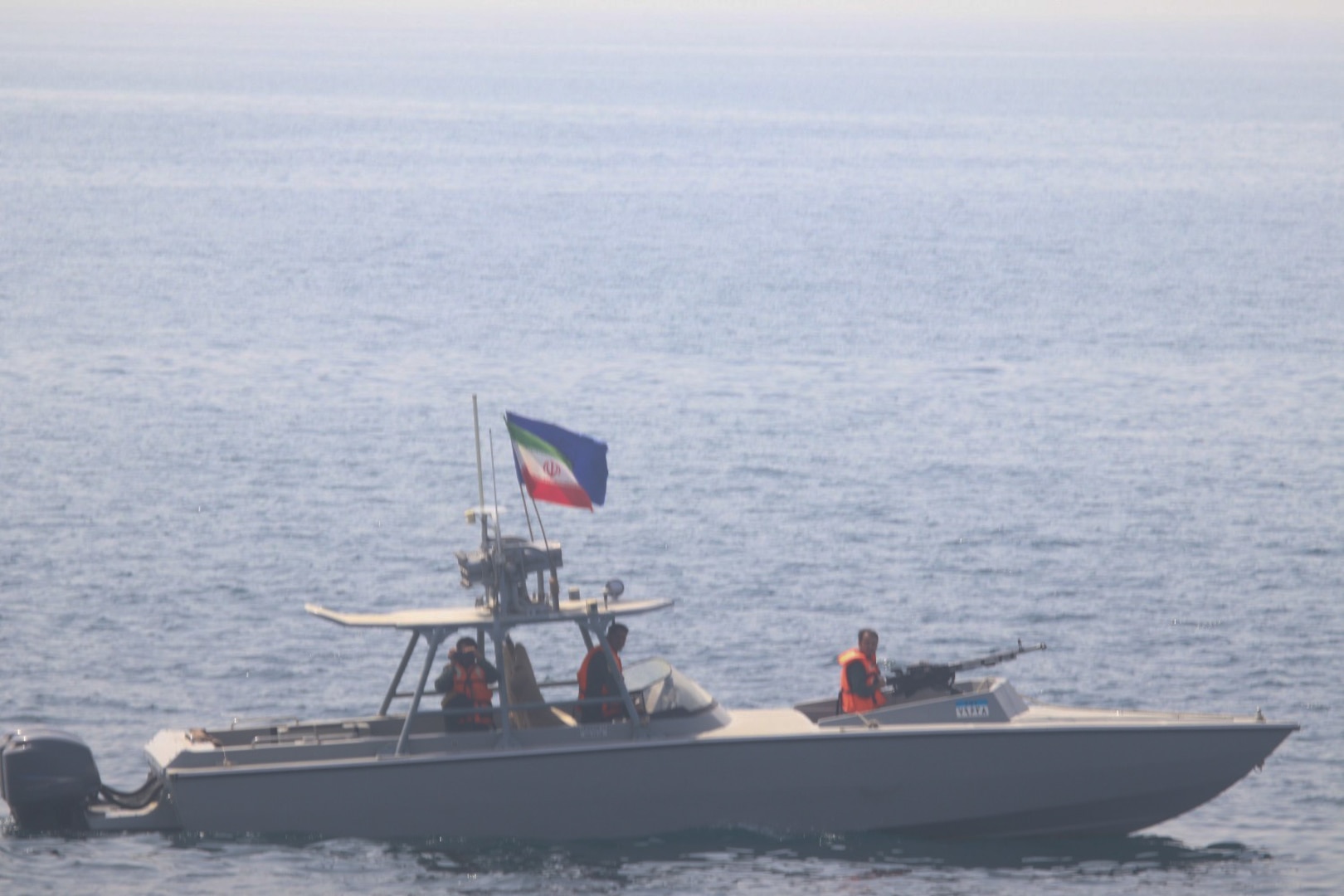
The closest historical analogue is not encouraging. Egypt closed the Suez Canal after the Six-Day War in June 1967 and it did not reopen until March 1975 — eight years, bookended by a demining operation that took months after the political decision was made.
The structural consequences outlasted the closure itself, and this is the part that should concern Riyadh. The Suez shutdown forced the global shipping industry to invest in VLCCs — supertankers large enough to make the Cape of Good Hope route economically viable. That investment was permanent. When the canal reopened in 1975, it reopened into a structurally diminished role, because the capital had already been deployed elsewhere. Shipping patterns that were forced by crisis became the default by habit and infrastructure.
The Hormuz parallel is direct. Cohen himself predicted that the UAE will reduce its Hormuz exposure from 50 per cent of oil exports to zero within two and a half to three years, using the Abu Dhabi Crude Oil Pipeline to Fujairah as its bypass. If sloppy peace persists for that timeframe, shipping capital reroutes away from Hormuz permanently. Insurers build permanent risk premiums into Gulf-transit policies. Refiners in Asia lock in long-term contracts with Atlantic Basin suppliers. Iran eventually loses leverage — but Saudi Arabia also loses the political pressure that might have forced full reopening. The canal reopened. The world had moved on. Cohen was explicit about where this trajectory leads: Hormuz becomes “a commercial afterthought.”
The UAE Escapes. Saudi Arabia Cannot.
Cohen’s prediction about the UAE deserves isolation, because it reveals the asymmetry that makes sloppy peace uniquely punishing for the kingdom. Abu Dhabi’s crude oil pipeline to Fujairah on the Gulf of Oman already handles approximately 1.5 million barrels per day, bypassing Hormuz entirely. Cohen estimated the UAE will eliminate its Hormuz dependence within two and a half to three years — a timeline that is aggressive but plausible given Fujairah’s existing deep-water terminal infrastructure and ADNOC’s balance sheet.
Saudi Arabia has no equivalent. The East-West Pipeline is a bypass for the pipeline segment — crude reaches the Red Sea coast — but the terminal bottleneck at Yanbu means the bypass is incomplete. The kingdom moved 7 million barrels per day away from the Gulf, an extraordinary logistical achievement, and then discovered that the Red Sea port built in the 1980s to handle a fraction of that volume cannot physically load it onto ships. Yanbu was built as insurance against the Iran-Iraq tanker war, not as a permanent replacement for the entire eastern export infrastructure. The expansion that would have matched it to full production capacity was never completed.
Under sloppy peace, the UAE’s timeline to zero Hormuz exposure is a countdown to Saudi Arabia’s strategic isolation. Once Abu Dhabi no longer needs the strait open, the coalition of interests pressing for full reopening loses its second-largest member. Kuwait and Iraq remain dependent, but neither has Saudi Arabia’s fiscal weight or diplomatic leverage. The kingdom finds itself carrying the political cost of demanding full reopening largely alone, against an American administration that has already signalled it considers the current situation manageable and an Iranian regime that is legislating permanent control.
War Risk Insurance Never Comes Back Down
One of the least-discussed structural costs of sloppy peace is embedded in every cargo that transits the Gulf, regardless of whether Hormuz itself is nominally open. Pre-war additional war risk premiums ran at 0.1 to 0.15 per cent of hull value — a rounding error on a VLCC worth $120 million. At peak wartime pricing, premiums spiked to as high as 10 per cent of hull value, a roughly 4,000 per cent increase that priced some cargoes out of viability entirely.
Under sloppy peace, premiums do not return to pre-war levels. They settle into a “threat premium” band, likely 0.8 to 1 per cent of hull value based on analogues from the Houthi Red Sea campaign and the tanker war-era Lloyd’s market. That is five to eight times pre-war rates, permanently. On a VLCC carrying two million barrels of Saudi crude, the insurance cost alone adds 40 to 60 cents per barrel — a cost borne by the seller in a buyer’s market, which is what the Gulf becomes when every producer is scrambling for the same limited number of willing tanker operators.
The insurance market’s memory is institutional and actuarial. Lloyd’s syndicates that paid claims on vessels seized by the IRGC will price that risk into every Gulf policy for years, possibly decades. The Tanker War of the 1980s — a smaller conflict with fewer seizures — produced elevated Gulf premiums that persisted well into the 1990s. Sloppy peace, with its explicit preservation of Iran’s ability to close the strait “at any time for any reason,” is precisely the scenario that keeps underwriters awake and premiums elevated. Every barrel Saudi Arabia exports through or near the Gulf carries a permanent tax levied not by Iran’s parliament but by London’s reinsurance market.
How Long Can Saudi Reserves Absorb a Permanent Gap?
SAMA’s foreign reserves stood at approximately $475 billion in February 2026, a six-year high that reflected disciplined pre-war fiscal management and elevated oil prices through 2025. The informal floor — the level below which reserves trigger concern about currency peg sustainability and sovereign credit downgrades — is generally treated as $350 billion, the threshold where the riyal’s dollar peg begins to face speculative pressure.
At Goldman’s war-adjusted drawdown rate of $73 billion per year, the cushion between current reserves and the informal floor is approximately $125 billion — roughly 1.7 years from the February baseline. Under sloppy peace, the drawdown rate is lower but non-zero: if the export gap narrows from 3.3 million barrels per day to 1 to 2.5 million, the annual deficit might compress to $50 to $60 billion, extending the runway to perhaps 2 to 2.5 years. That is better than wartime, but it is not recovery. It is a slower bleed toward the same destination.
“The scale seems to be something where the market can’t actually get its head around it.”
— Saad Rahim, chief economist, Trafigura Group, on 1 billion barrels already disappeared from global markets, Fortune, April 24, 2026
The IMF’s debt trajectory compounds the picture. Public debt rising from 31.7 per cent of GDP to above 42 per cent by 2031 was modelled under conditions that did not contemplate permanent partial strait closure. Under sloppy peace, the kingdom faces a choice between accelerating debt issuance — possible, given its investment-grade rating, but progressively more expensive — and cutting Vision 2030 capital expenditure, which is the one programme that is supposed to diversify the economy away from the oil dependence that sloppy peace is now punishing. PIF’s construction pipeline has already contracted 60 per cent. Sloppy peace makes the contraction permanent. The capital reallocation is already visible in PIF’s soft-power portfolio: as our analysis documents, the fund sold Al-Hilal and is exiting LIV Golf — the $5 billion international brand-building programme that was supposed to survive any oil-price shock is instead the first budget line cut when the fiscal pressure becomes acute.
The kingdom has options — OPEC+ quota discipline, accelerated Yanbu expansion, bilateral deals to route limited Hormuz traffic through Saudi-flagged vessels — but none of them close the structural gap within Cohen’s timeline. Goldman’s sloppy peace is not a relief scenario. It is the scenario where the fiscal damage compounds quietly enough that the world stops paying attention, and Saudi Arabia bleeds reserves behind a headline that reads “peace.”
FAQ
What exactly did Goldman Sachs model for Hormuz recovery?
Goldman’s April 23–24 research note modelled recovery exclusively under a full-reopening scenario: 70 per cent of lost Gulf output restored within three months and 88 per cent within six months. The bank did not publish a recovery model for partial reopening or sloppy peace. Goldman did note that available empty tanker capacity in the Gulf has fallen by approximately 130 million barrels — a 50 per cent reduction — which would constrain physical recovery even under the best conditions. The bank also flagged five prior major supply shocks where recovery “took quarters longer than expected or never fully materialised,” suggesting its own headline numbers may be optimistic even under full reopening.
Could Saudi Arabia build more terminal capacity at Yanbu quickly?
Not on any timeline that matters for the current crisis. A single new VLCC berth at an established port requires 18 to 24 months under peacetime procurement and construction conditions, and Yanbu would need multiple additional berths to close the 2.5 to 3 million barrel per day gap between pipeline throughput and loading capacity. Wartime conditions — disrupted supply chains, elevated contractor costs, competing demands for military construction — would likely push that timeline further. The capital requirement is multi-billion dollar, and it competes directly with Vision 2030 spending at a moment when PIF cash reserves are at a four-year low of approximately $15 billion.
Does sloppy peace threaten the Saudi riyal’s dollar peg?
Directly, if reserves fall below the $350 billion threshold that analysts treat as the informal floor for peg credibility. SAMA held approximately $475 billion in February 2026. At the war-adjusted drawdown rate of $73 billion per year, that cushion erodes in roughly 1.7 years. Under sloppy peace — a slower bleed at $50 to $60 billion annually — the runway extends to 2 to 2.5 years, but the peg comes under speculative pressure well before reserves actually hit the floor. Saudi Arabia has defended the peg through multiple oil-price crashes; the threat here is not price but sustained volume loss with no recovery timeline.
What is the Iranian Hormuz sovereignty bill?
A 12-article bill titled “Law on Establishing Iranian Sovereignty over the Strait of Hormuz” that has cleared the parliamentary national security committee and is advancing to the plenary. It bars Israeli-linked vessels, requires SNSC approval for ships from “hostile” states, denies passage to nations that “caused damage to Iran” until compensation is paid, and mandates transit fees payable in rials. The bill allocates 30 per cent of toll revenue to military infrastructure and 70 per cent to public welfare, effectively giving the IRGC a direct financial stake in maintaining the toll regime. Iran’s Central Bank confirmed the first toll deposit on April 23.
What would full Hormuz reopening actually require, physically?
Mine clearance alone is estimated at approximately 51 days, based on the 1991 Kuwait benchmark — and the US retired its four Avenger-class mine countermeasure ships from Bahrain in September 2025. Only two Avenger-class vessels remain in the entire theater. IRGC fast-attack boat patrols would need to be verifiably stood down, insurance markets would need 60 to 90 days of incident-free traffic before premiums began declining, and tanker operators would need confidence that SNSC-approved “hostile vessel” classifications would not be applied retroactively. Full reopening is not an event. It is a six-to-twelve-month process — one that sloppy peace, by preserving Iran’s ability to restart at any time, prevents from beginning.
The phased Iranian proposal transmitted via Pakistan on April 25–27 sharpens the Saudi fiscal trap: Phase 1 acceptance validates the toll architecture and permanently reduces Hormuz throughput economics, while rejection sustains Brent above $107 at Saudi output of 7.25 million barrels per day — below the Bloomberg PIF-inclusive break-even of $108–111. The full intersection with Saudi fiscal arithmetic is in Iran’s Hormuz-First Proposal Is Not a Concession. It Is a Sovereignty Claim Dressed as a Peace Plan.
Goldman’s April 27 upward revision — from $83 to $90 for Q4 2026 Brent — does not resolve the Saudi fiscal bind. At $90, the kingdom clears the IMF’s central-government break-even of $86.60 by $3.40 but remains $18 to $21 short of the Bloomberg PIF-inclusive threshold of $108–111. Goldman’s $90 Q4 Brent forecast is $18 below Saudi Arabia’s fiscal break-even — and the revision confirms, rather than resolves, the structural trap this article describes.
Sloppy peace leaves open a structural injury that predates any ceasefire resolution: the 30% production crash has already transferred swing-producer leverage to US shale, altering the competitive architecture of the global oil market regardless of when Hormuz reopens. The case that this transfer is permanent rather than cyclical is made in Saudi Arabia Lost Its Swing-Producer Crown to a War It Wanted.