RIYADH — Saudi Foreign Minister Prince Faisal bin Farhan called four capitals in a single day on Sunday — Baghdad, Amman, Ankara, and Madrid — building a parallel diplomatic architecture around a crisis that every existing negotiation framework has shut him out of. The calls came hours after Iranian FM Abbas Araghchi completed his Oman leg and phoned Faisal himself, not to consult but to brief — the diplomatic equivalent of cc’ing someone on an email about their own house. That briefing-not-negotiating pattern is central to how Iran is constructing a regional security framework designed to structurally trap Saudi Arabia between endorsing Iranian co-authorship and becoming the obstacle to peace.
The timing was not incidental. While Araghchi was working the Oman back-channel that positions Muscat as the permanent US-Iran intermediary, and while Pakistan prepared to host the next round of Islamabad talks where Saudi Arabia has no seat, Faisal was assembling something the Kingdom has lacked since the war began on February 28: pressure points from outside the room. Each of the four calls targeted a specific node — Iraq’s conduit to Tehran, Jordan’s corridor to Washington, Turkey’s post-war Hormuz role, and Spain’s position on the EU sanctions vote that could reshape the legal battlefield by May.
Table of Contents
The Room Saudi Arabia Is Not In
The pattern is eleven years old. In 2015, the P5+1 negotiated the JCPOA with Iran while Arab Gulf states — the countries whose security the agreement would directly determine — sat outside. A RUSI commentary at the time captured the absurdity: “In Geneva, everybody concerned was present except for the Gulf states, which would be directly impacted by any kind of agreement in their backyard.” The 2026 version is worse, because the economic damage is not hypothetical. It is arriving monthly in IEA data.
The Islamabad talks on April 11-12 had three parties: the US delegation led by Vice President Vance and envoy Witkoff (with Kushner), Iran’s 70-person team led by Parliament Speaker Ghalibaf, and Pakistan as host and mediator. Saudi Arabia was not in the room. The Oman channel — where Araghchi met Sultan Haitham on April 25 before returning to Islamabad — is a bilateral US-Iran conduit with Muscat as facilitator. Saudi Arabia is not in that room either.
The STEP quartet — Saudi Arabia, Turkey, Egypt, and Pakistan — gave the Kingdom a framework, and its only operational output to date was creating the political space for the April 8 ceasefire. But as Natasha Lindstaedt of the University of Essex wrote in Asia Times, while the quartet “established the primary negotiating channel between Tehran and Washington,” Pakistan is the actual operative venue. Saudi Arabia is a political sponsor of the process, not a participant in the negotiation. The distinction matters when the terms being negotiated include who controls Hormuz transit and at what price.
The following day, Faisal carried that multilateral posture to Antalya, where he sat with the foreign ministers of Pakistan, Turkey, and Egypt in the third meeting of the quad since the war began on February 28. What that session revealed about Riyadh’s reception of Iran’s two-stage Hormuz-first proposal — including the mid-flight Araghchi call that preceded it — is documented in House of Saud’s April 27 dispatch from the forum.
The Middle East briefing 3,000+ readers start their day with.
One email. Every weekday morning. Free.
Four Calls, Four Levers
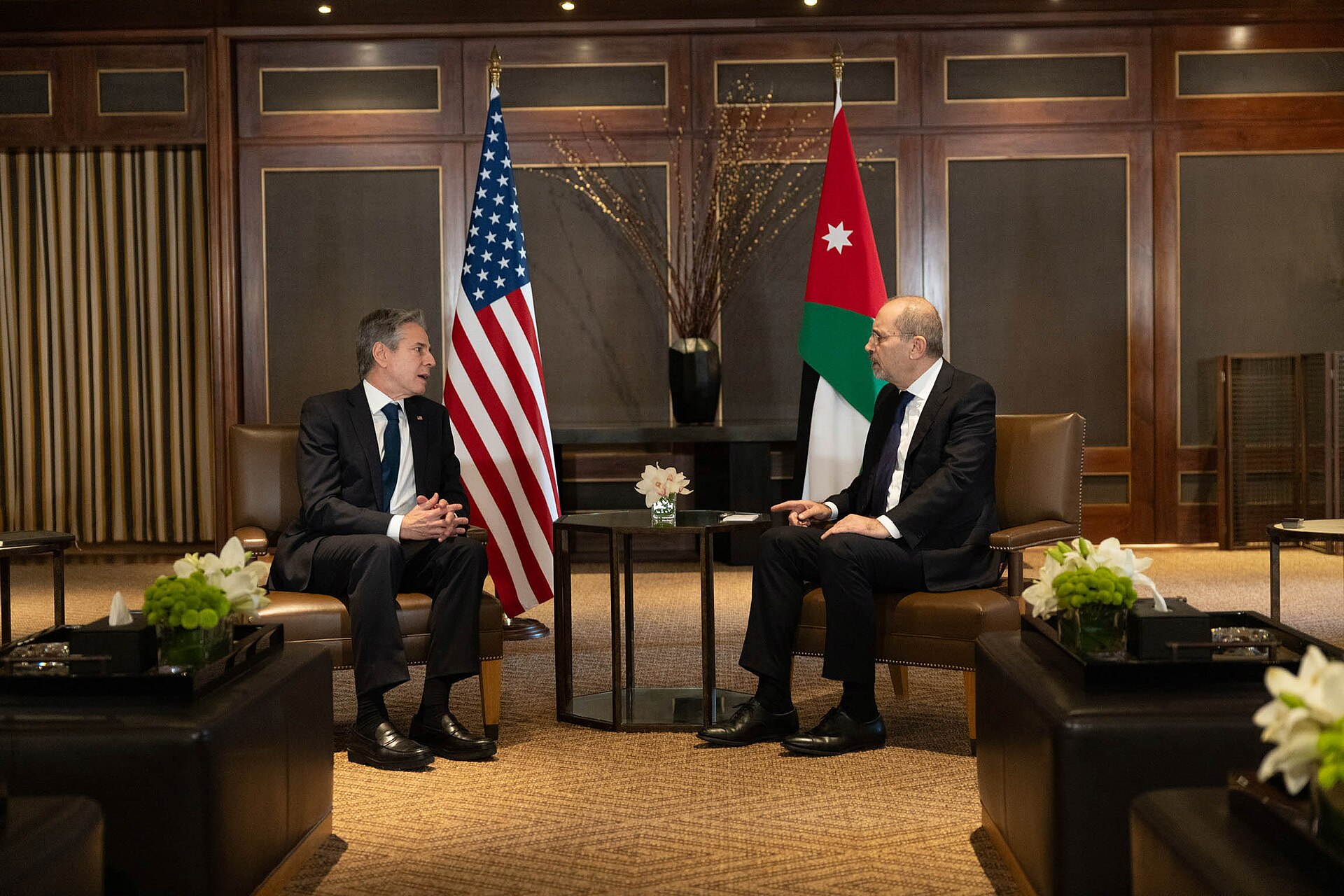
The Saudi Foreign Ministry confirmed that Prince Faisal spoke separately on April 26 with Iraqi Deputy Prime Minister and Foreign Minister Fuad Hussein, Jordanian Deputy Prime Minister and Foreign Minister Ayman Safadi, Turkish Foreign Minister Hakan Fidan, and Spanish Foreign Minister José Manuel Albares. The official topic was “the latest regional developments” — the standard diplomatic placeholder that means the opposite of routine. The Safadi call, per Arab News, specifically “reviewed coordinated efforts aimed to promote security and stability in the region,” language that implies joint planning rather than information-sharing.
Each capital offers something the others cannot. Iraq is the only Arab state with a functioning bilateral channel to Tehran that runs through both government and IRGC-adjacent networks — Fuad Hussein held a separate call with Araghchi around the April 8 ceasefire to discuss terms and Lebanon. Iraq also sits on a project Saudi Arabia has direct economic interest in: the Basra-Haditha pipeline, for which Baghdad has already approved tenders, offering a non-Hormuz export route for Iraqi crude that currently has nowhere to go. Iraqi exports collapsed from roughly 4 million bpd to 900,000 bpd when Hormuz closed. A pipeline running northwest bypasses the Strait entirely.
Jordan offers a different geometry. The historic Trans-Arabian Pipeline — Tapline — ran from Saudi Arabia’s Eastern Province to the Mediterranean coast through Jordan before it ceased operations in 1983. If rehabilitated, it could carry 500,000 bpd. Saudi Arabia has already begun work on a freight and rail corridor running northwest from its Eastern Province toward the Jordanian border, a physical bypass of Hormuz that doubles as infrastructure diplomacy. But Jordan’s value to Faisal is not only geographical. King Abdullah receives $845 million in US direct budget support and $425 million in Foreign Military Financing under FY2026 appropriations — numbers that make him one of the most credible interlocutors with the US Congress at a moment when the War Powers Act May 1 deadline is five days away and no AUMF has passed.
Why Is Spain on This List?
Of the four calls, Madrid is the one that requires explanation — and it may be the most consequential. EU foreign policy chief Kaja Kallas announced on April 21 that EU member states had agreed to widen Iran sanctions to include those responsible for blocking the Strait of Hormuz, with formal adoption targeted for the May foreign ministers meeting. Spain’s vote matters, but Spain’s position matters more, because Iran has been working to peel Madrid away from the European consensus since March.
On March 26, the Iranian embassy in Madrid made an extraordinary offer: Iran was “receptive to any request from Madrid” related to Hormuz transit “because Spain respects international law.” It was the first such concession Tehran extended to any EU state. The context was Spain’s refusal to allow the US to use its bases at Rota and Morón for offensive operations against Iran, and Prime Minister Sánchez’s decision on March 30 to close Spanish airspace to US strike aircraft — accompanied by his public declaration: “No to the breakdown of international law.” Iran saw a wedge and drove at it.
Faisal’s call to Albares is the counter-move. If Spain accepts preferential Hormuz access from Iran, it undermines the legal foundation Saudi Arabia has been building since the Bahrain-led UNSC resolution on April 7 — a resolution Saudi Arabia co-sponsored alongside Jordan, Kuwait, Qatar, and the UAE, which passed 11-2 before Russia and China vetoed it. Russia’s UN Ambassador Nebenzia argued the resolution placed “all the blame on Iran” while ignoring “illegal attacks by the United States and Israel.” China’s Fu Cong said it “failed to capture the root causes and the full picture.” The multilateral legal-force avenue closed that day. The EU sanctions track is what remains, and Spain is the hinge.
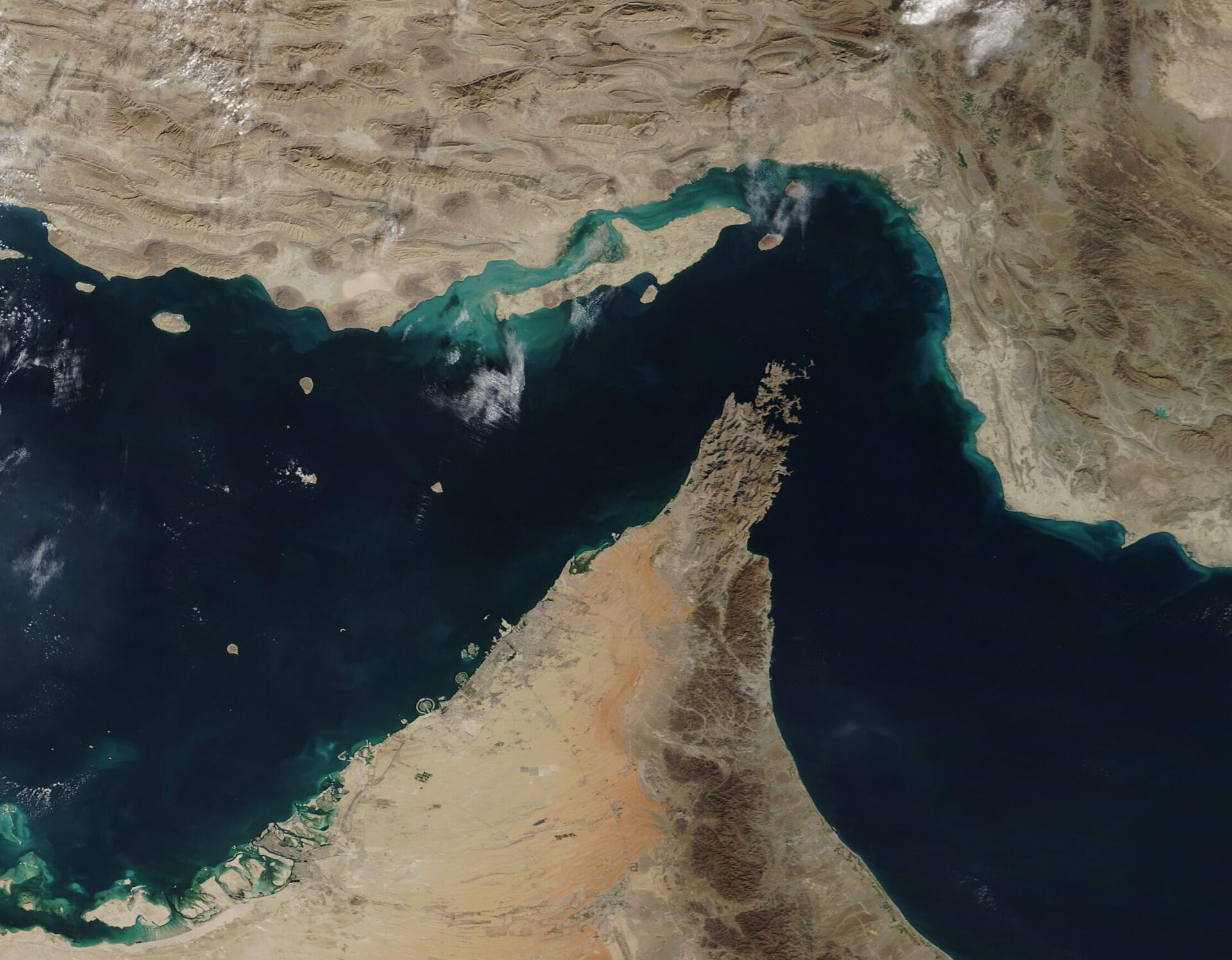
The Iranian toll on Hormuz has collected zero revenue in 36 days — 60 permits issued, eight payment requests sent, nothing paid. But the legal precedent it seeks to establish is what Saudi Arabia is fighting. Iran’s 10-point plan demands IRGC “coordination” over Hormuz as a treaty requirement, modeled on Turkey’s authority under the 1936 Montreux Convention over the Turkish Straits, or Egypt’s toll system on the Suez Canal. Naval War College professor James Kraska has been direct: there is “no legal basis under international law” for such a mechanism, because UNCLOS Article 35 preserves only pre-existing conventions and does not create a template for new ones. UNCLOS Article 26 flatly prohibits transit charges. If the EU sanctions track holds and includes Hormuz obstruction, it reinforces that legal wall. If Spain breaks ranks, it cracks.
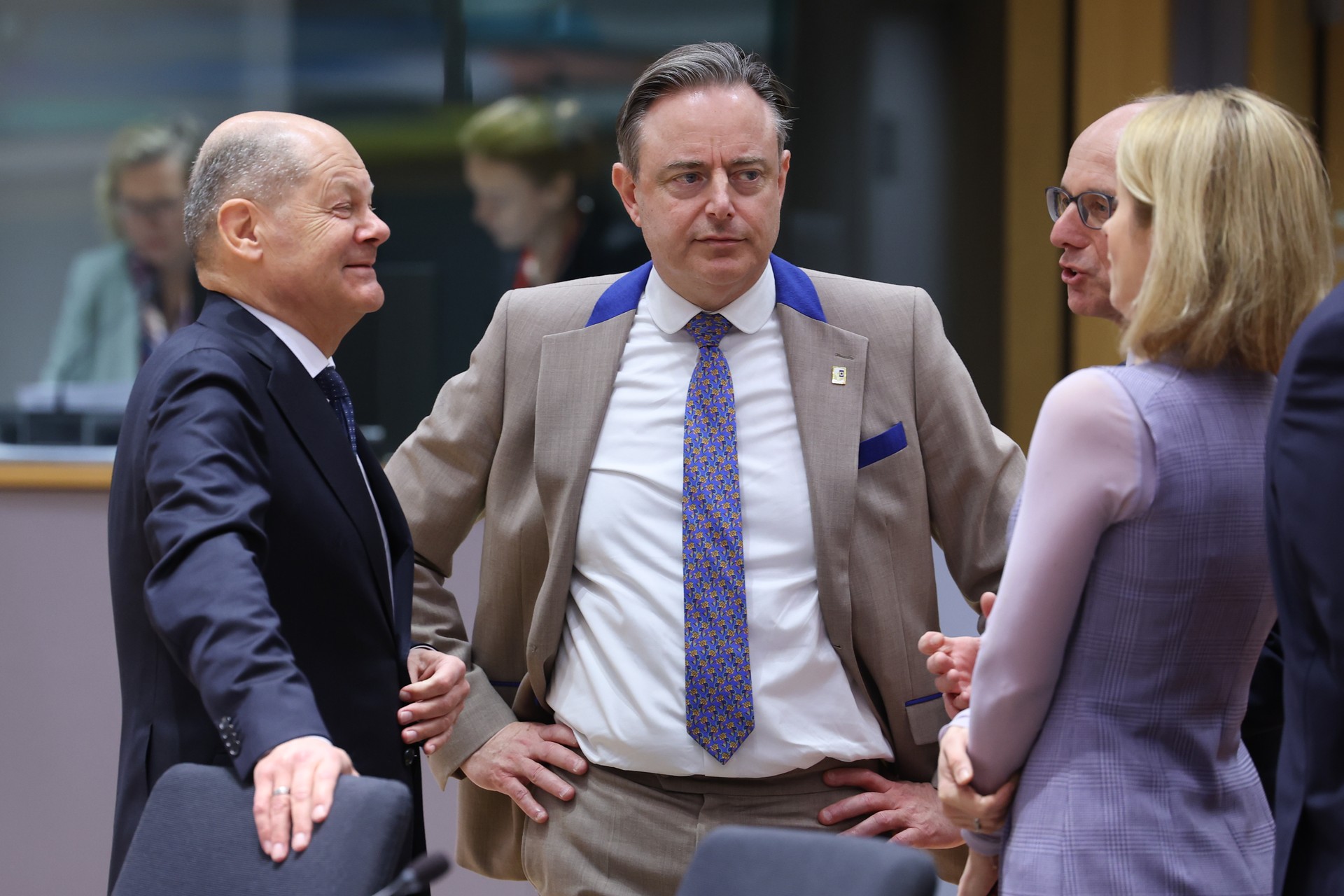
Faisal’s Spain call did not stand alone: on the same day, GCC Secretary-General Al-Budaiwi was in Cyprus locking missile and proxy conditions into the EU’s institutional record — a complementary diplomatic track that converted the kingdom’s bilateral lobbying effort into a transatlantic position Washington could not quietly walk back.
Fidan’s Demining Offer and What It Really Buys
On the same Sunday as Faisal’s calls, Turkish Foreign Minister Hakan Fidan made a public offer that sounded humanitarian and was anything but. Turkey, Fidan said, “is ready to participate in demining the Strait of Hormuz, provided a comprehensive peace agreement is reached.” He framed it as a matter of “humanitarian nature” and “international responsibility towards global trade.” The conditional — “provided a comprehensive peace agreement” — is the operative clause.
The demining problem is real. Only 45 vessels have transited Hormuz since the April 8 ceasefire — 3.6 percent of the pre-war baseline, according to Bloomberg. The US decommissioned its four Avenger-class mine countermeasures ships from Bahrain in September 2025, leaving only two operational in theater. The 1991 Kuwait benchmark suggests clearing roughly 200 square miles of mined waters would take 51 days even with a full fleet. Turkey’s navy operates a mine countermeasures capability that could accelerate that timeline — but Fidan’s offer to Faisal, and to the world, conditions Turkish participation on a deal, which gives Ankara a seat in the post-war maritime security architecture.
For Saudi Arabia, Turkey’s offer serves a specific function inside the STEP quartet framework: it shifts the post-deal conversation from who controls Hormuz (Iran’s demand) to who clears Hormuz (a multinational question). If demining becomes an internationally administered operation with Turkish, and potentially other NATO-member, participation, it becomes harder for Iran to assert sovereign control over the Strait as a precondition. Faisal and Fidan discussed this on a day when both men knew the clock was running.
What Does Iran Gain by Briefing Rather Than Negotiating?
Araghchi’s call to Faisal on April 26 — reported by Fortune and Reuters — was not a negotiation. He briefed the Saudi foreign minister on ceasefire developments and Tehran’s diplomatic initiatives after completing his Oman meetings. The structure of the communication tells you the hierarchy Iran is constructing: Oman is the channel, Pakistan is the venue, Qatar is the Gulf interlocutor, and Saudi Arabia is the audience.
Iran’s calculus is straightforward. Keeping Saudi Arabia out of the negotiating room means the Kingdom cannot directly block terms that would formalize Iranian control mechanisms over Hormuz. Iran’s toll system, its proposed Oman co-administration model, and the 12-article Hormuz sovereignty law advancing through Iran’s parliament — introduced by lawmakers Ahmadi and Rezayi Kouchi — all require Saudi Arabia to be a price-taker, not a price-maker. Every barrel Saudi Arabia ships through Hormuz after a deal would be subject to whatever mechanism Iran and its negotiating partners agree to. The US blockade, which CENTCOM imposed on April 13 against Iranian ports and toll-collecting vessels, has cost Iran roughly $400 million per day according to Bloomberg’s April 26 estimate — giving Tehran urgency to reach a framework, but not one that includes Saudi veto power.
A senior Saudi Foreign Ministry official told the Christian Science Monitor: “It is our right to defend ourselves, our territory, people, and residents against this daily aggression, separate from the war.” The word “separate” is doing heavy work. Saudi Arabia is asserting that its security interests exist independently of the US-Iran negotiation — that whatever Vance and Araghchi agree to in Islamabad or through Muscat does not bind the Kingdom’s own defensive posture. Abdulaziz Sager, chairman of the Gulf Research Center, reinforced the point: “Dialogue on its own is not enough if it is not backed by credible deterrence, stronger air and missile defense.”
The Economic Clock
The numbers explain the urgency behind four calls on a Sunday. Saudi production in March fell to 7.25 million bpd, down from 10.4 million in February — a 30 percent collapse in a single month, the steepest production drop since the 1990 Iraqi invasion of Kuwait. The Kingdom’s fiscal break-even price is $108-111 per barrel when PIF obligations are included, according to Bloomberg. Brent closed April 25 at $105.33. That gap — narrow enough to look manageable, wide enough to blow a hole in the budget at scale — means Saudi Arabia is running a deficit on every barrel produced while having no seat at the table where the terms of Hormuz reopening will be set.
The Yanbu bypass through the East-West Pipeline covers some of the shortfall, but its loading ceiling is 4 to 5.9 million bpd against pre-war Hormuz throughput of 7 to 7.5 million — a structural gap of at least 1.1 million bpd that no amount of pipeline optimization can close. Six days before Faisal’s calls, on April 20, Xi Jinping told MBS directly that “the Strait of Hormuz should maintain normal passage, as this serves the common interests of regional countries and the international community.” MBS committed in return to “ensure the safety and freedom of navigation in the Strait of Hormuz.” The language alignment with Beijing is not accidental — it gives Saudi Arabia a P5 voice echoing its position even after Russia and China vetoed the UNSC resolution.
Meanwhile, Prince Yazid bin Farhan — Faisal’s brother — flew to Beirut on April 24 and met Prime Minister Nawaf Salam and President Aoun to deliver Saudi opposition to any direct Netanyahu-Aoun contact, pushing back on a White House initiative. A Lebanese government official told The National that “Saudi Arabia’s moves in Lebanon are a pre-emptive step ahead of regional understandings taking shape.” The Lebanon track and the four-capital round are parts of the same operation: Saudi Arabia is not waiting for the Islamabad or Oman frameworks to produce terms. It is building the coalition that will determine whether those terms hold.
The War Powers Act clock expires May 1 — five days from now. Congress has defeated five Iran War Powers resolutions. No authorization for the use of military force has passed. If the constitutional question forces a US recalibration, the diplomatic architecture Faisal is assembling — the Iraq conduit, the Jordan corridor, the Turkish demining commitment, the Spanish EU sanctions vote, the Xi language alignment, the Lebanon blocking move — becomes the scaffold around which Saudi Arabia’s position either survives or collapses. Faisal made four calls on a Sunday because the Kingdom cannot afford to make them on Monday. The calls continued into Monday: on April 27, Faisal placed simultaneous calls to Iran, Bahrain, and Qatar, extending Riyadh’s parallel mediation architecture into a second consecutive day.
FAQ
Why did Saudi Arabia co-sponsor the April 7 UNSC resolution on Hormuz if it knew Russia and China would veto?
The resolution — led by Bahrain and co-sponsored by Saudi Arabia, Jordan, Kuwait, Qatar, and the UAE — passed 11-2 before the vetoes. The diplomatic value was not passage but the recorded vote: eleven states on record supporting freedom of navigation through Hormuz, with only Russia and China opposed. That vote tally gives the EU sanctions track legal and political legitimacy, and it gives Saudi Arabia a multilateral baseline to cite in every subsequent negotiation. The UNSC failure was the precondition for the EU track becoming the primary legal avenue — which is why Faisal called Albares on the same day he called Baghdad, Amman, and Ankara.
Could the Trans-Arabian Pipeline (Tapline) actually be revived as a Hormuz bypass?
Tapline ran from Qaisumah in Saudi Arabia’s Eastern Province to Sidon, Lebanon, through Jordan and Syria, carrying 500,000 bpd at peak capacity before ceasing operations in 1983. The Saudi and Jordanian segments are physically intact but would require extensive rehabilitation — pump stations, corrosion repair, and new terminal infrastructure at Aqaba or a Mediterranean endpoint. The Syrian segment is nonviable under current conditions. A Saudi-Jordan-only route to the Red Sea port of Aqaba is the realistic option, and the freight and rail corridor Saudi Arabia is building toward the Jordanian border suggests the planning is already underway. At 500,000 bpd, a rehabilitated line would not replace Hormuz, but it would reduce dependence on Yanbu as the sole alternative export route.
What is the significance of the War Powers Act deadline on May 1?
President Trump notified Congress on March 2 under the War Powers Resolution, starting a 60-day clock. If Congress does not authorize military force by May 1, the president is legally required to withdraw US forces from hostilities within 30 days. Congress has defeated five separate Iran War Powers resolutions, and no Authorization for Use of Military Force has passed. The practical effect is uncertain — presidents have historically contested the resolution’s binding force — but the deadline creates a political inflection point. If the US military posture shifts, the diplomatic frameworks Faisal is building become the primary architecture for protecting Saudi interests, rather than a supplement to American military pressure.
Has Iran’s Hormuz toll actually generated any revenue?
No. Iran’s 12-article Hormuz sovereignty law, currently advancing through parliament, would convert the toll from an administrative measure into a statutory right — changing the legal terrain for any future UNCLOS challenge. The bill’s sponsors, lawmakers Ahmadi and Rezayi Kouchi, have framed it explicitly as a response to what they call the “illegal transit” framework imposed by the US. Oman has publicly rejected a co-administrator role, with Transport Minister Al Maawali stating that “no tolls can be imposed for crossing Hormuz” — but Iran continues to present the Oman model in diplomatic channels as a fait accompli. The revenue has not materialized; the legal architecture is being built regardless.
Why is Iraq not part of the STEP quartet?
The STEP quartet — Saudi Arabia, Turkey, Egypt, and Pakistan — was designed as a Sunni-majority diplomatic coalition with enough collective weight to mediate between Washington and Tehran. Iraq’s sectarian composition, its deep institutional ties to Iranian networks including Khatam al-Anbiya contracts, and its dependence on Iranian energy imports made it unsuitable as a neutral mediator. But Iraq’s value to Saudi Arabia is precisely its non-neutrality: Baghdad has a bilateral channel to Tehran that runs through both government and IRGC-adjacent networks, and it can relay messages and signals that the quartet framework cannot. Faisal calling Fuad Hussein on the same day he called the quartet’s Turkish member suggests Saudi Arabia is running the formal and informal channels simultaneously.
Russia’s role in the nuclear file deepened further on April 27 when Putin received Araghchi at the Kremlin for the first Kremlin-level Iran meeting of the ceasefire period, with Lavrov and Deputy General Staff chief Kostyukov in the room. The strategic implications of Russia’s emerging co-guarantor role in any Iran deal — and why it mirrors the Astana Process that shut Arab Gulf states out of the Syria settlement — are examined in a companion analysis.