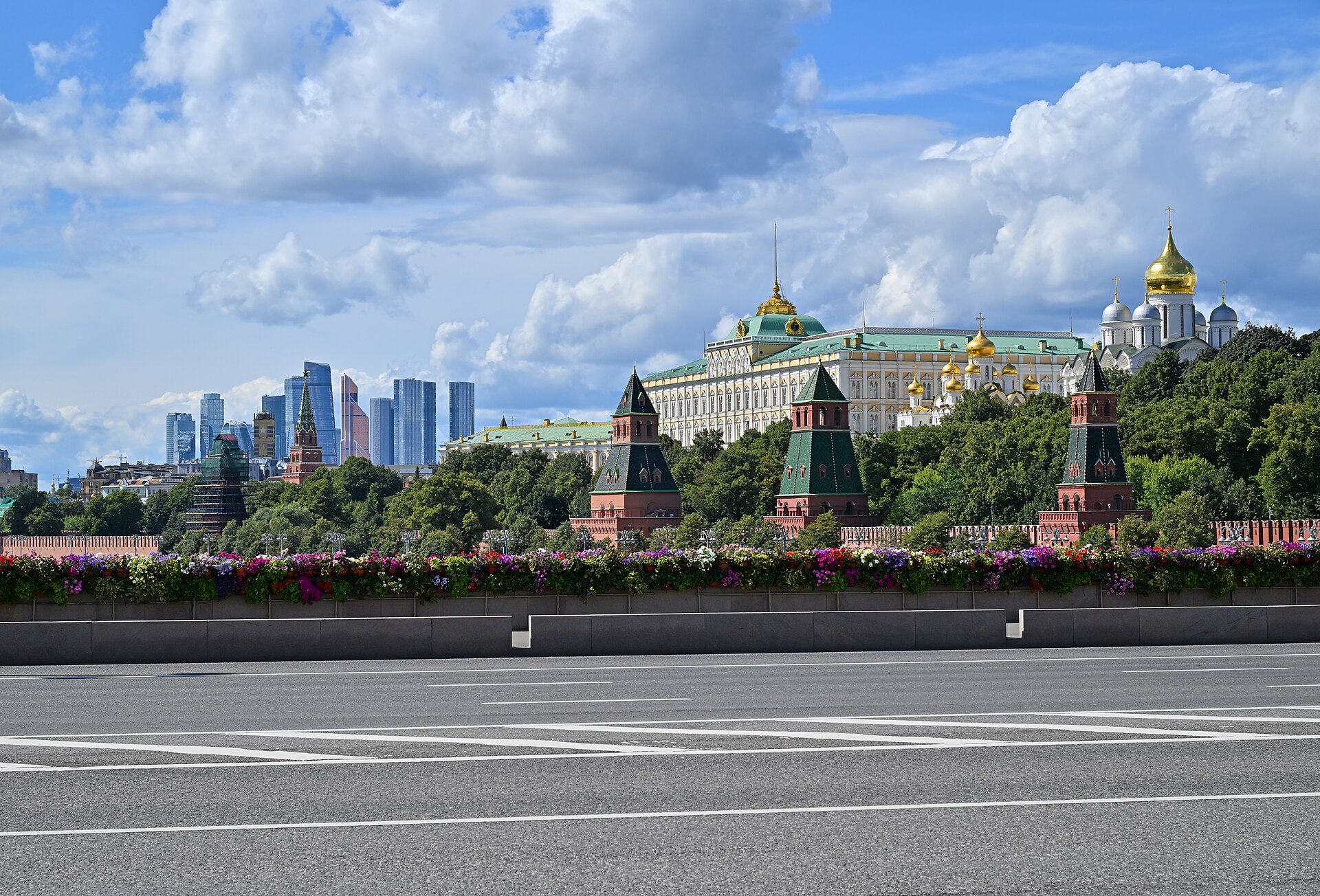

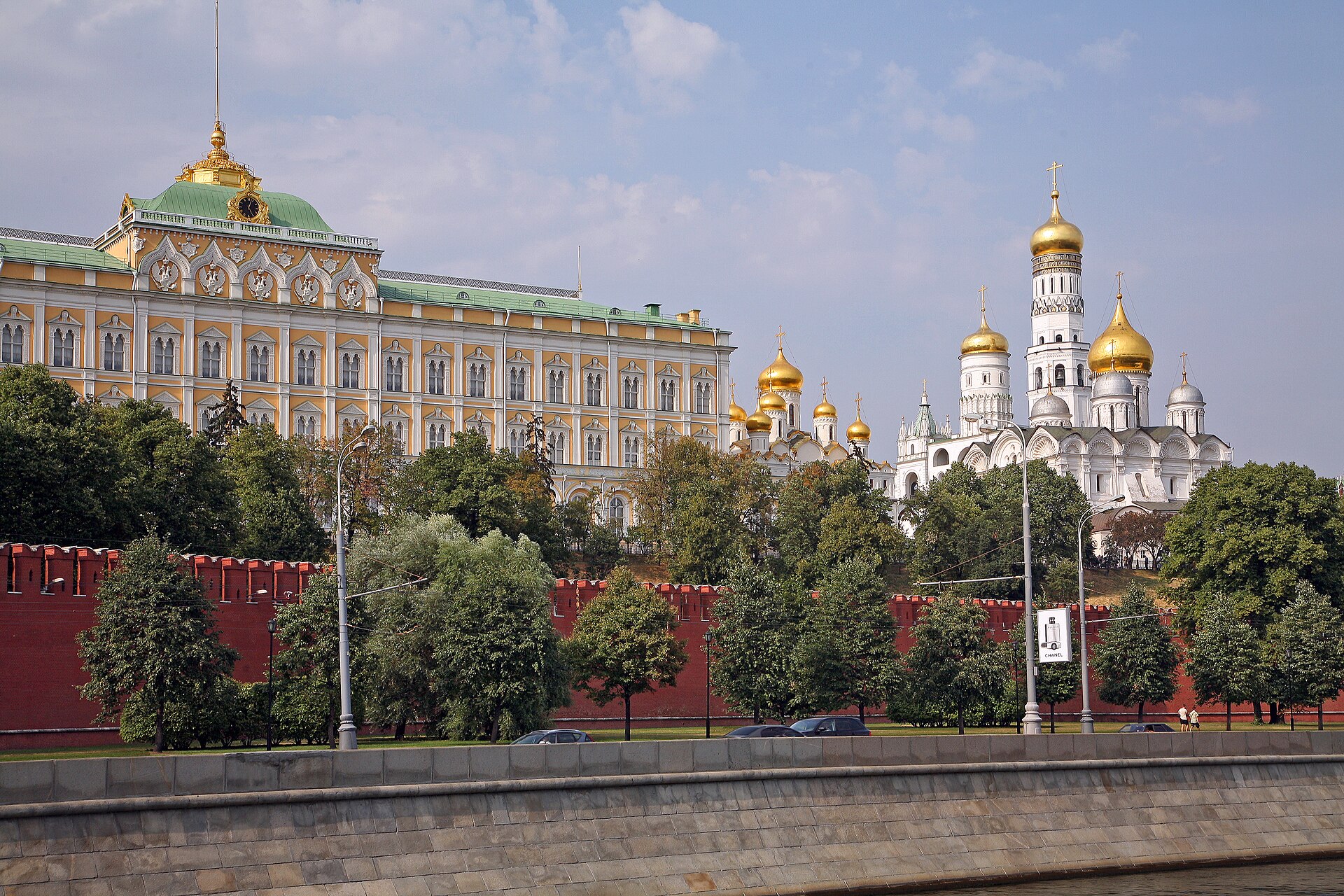
MOSCOW — Russian President Vladimir Putin received Iranian Foreign Minister Abbas Araghchi at the Kremlin on April 27 for the highest-level Russia-Iran diplomatic contact since the war began on February 28, as the United States refuses to send envoys to Islamabad and the May 1 War Powers Act deadline narrows Washington’s room for maneuver.
Kremlin spokesman Dmitry Peskov confirmed the meeting on April 26. The official readout listed five agenda items: bilateral strategic relations, Iran’s nuclear programme, ceasefire conditions, the status of US-Iran negotiations, and what Moscow described as “possible joint initiatives between Iran and Russia regarding the US talks.” The Russian delegation included Foreign Minister Sergei Lavrov, Presidential Aide Yury Ushakov, and Deputy Chief of the General Staff Igor Kostyukov — whose presence moved the conversation from diplomacy into military-intelligence territory.
For Saudi Arabia, which dispatched Foreign Minister Prince Faisal bin Farhan to call four capitals on April 26 in a last-ditch effort to hold great-power neutrality, the Moscow meeting represents the structural failure of that project. Prince Faisal spoke with Araghchi by phone on April 26, according to Arab News, discussing “regional developments and efforts to de-escalate tensions.” No readout indicated Riyadh was briefed on what Araghchi planned to discuss with Putin the following morning. The Western diplomatic context around Hormuz was set the previous day: on April 26, Trump and Starmer agreed in a phone call that Hormuz must reopen unconditionally, a consensus that became the rhetorical baseline against which Araghchi’s Moscow agenda operates.
Table of Contents
- Araghchi’s Route to Moscow: What He Withheld From Pakistan
- The Uranium Custody Gambit
- Who Sat in the Room — and Why It Matters
- Can Riyadh’s UNCLOS Coalition Survive a Second Veto Shield?
- The Ukraine Pause and Russia’s $150 Million Daily Incentive
- What Does This Cost Saudi Arabia?
- Background
- Frequently Asked Questions
Araghchi’s Route to Moscow: What He Withheld From Pakistan
Araghchi’s itinerary in the days before the Putin meeting traced a deliberate hierarchy. He visited Islamabad first, then flew to Muscat to meet Sultan Haitham of Oman, returned to Islamabad for a second round with Pakistani mediators, and departed Sunday night for Moscow. Tasnim News Agency — aligned with the IRGC — reported that Araghchi’s second Pakistan visit focused on conveying Iran’s conditions for ending the war, and confirmed that the nuclear dossier was not discussed with the Pakistani side. That file was reserved for Moscow.
The sequencing matters. Pakistan has served as the primary ceasefire venue since the Islamabad Accord in early April, and Pakistani Prime Minister’s Office Special Envoy Asif Munir has operated as the sole functioning relay between Tehran and Washington. But Araghchi’s decision to withhold the nuclear track from Islamabad — the dimension most likely to determine whether a deal is reachable — confirms that Iran treats Russia as the senior partner on the question that will define any settlement’s architecture.
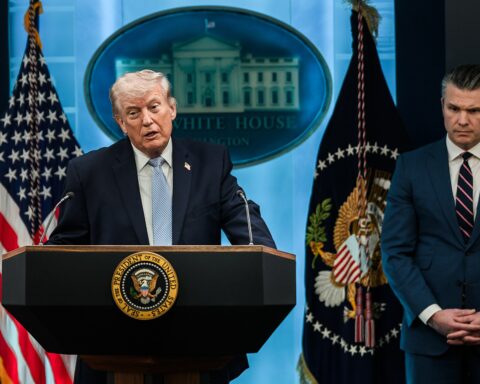
Trump cancelled the planned Witkoff-Kushner trip to Islamabad on April 25, telling reporters Iran had “offered a lot, but not enough.” CNN reported on April 26 that Washington had declined to send envoys to Islamabad while Araghchi circled through Pakistan, Oman, and Russia. The vacuum is not accidental. As one regional diplomat track was closing, the Moscow track was opening.
The Middle East briefing 3,000+ readers start their day with.
One email. Every weekday morning. Free.
The Uranium Custody Gambit
The nuclear dimension of the Araghchi-Putin meeting sits atop a specific and contradictory set of proposals. Russia has offered repeatedly to take custody of Iran’s enriched uranium stockpile. Rosatom’s CEO confirmed on April 18 that the offer remained active, describing Russia as “the only country with positive experience cooperating with Iran” on nuclear matters. The United States turned down the proposal. The Kremlin then reframed: Peskov told reporters the offer was “not currently on the negotiating table” after Washington showed “no interest.”
Separately, Iran proposed transferring a portion of its 60%-enriched stockpile to Russia and suspending domestic enrichment for up to three years, according to reporting by the Moscow Times on April 13 and April 20. Iran’s Foreign Ministry spokesman Esmaeil Baghaei publicly denied this, telling a Tehran press briefing that transferring enriched uranium abroad “has never been raised as an option for us in negotiations.” The contradiction between the delegation’s proposal and the spokesman’s denial has not been resolved publicly.
The stockpile in question — 440.9 kilograms of uranium enriched to 60%, per the last IAEA data from June 2025 before inspectors were expelled on February 28 — sits roughly 25 days from weapons-grade purity via Iran’s IR-6 cascade centrifuges. Russia’s custody offer simultaneously reduces Washington’s justification for continued strikes, addresses the nonproliferation risk that keeps European powers aligned with the US, and positions Moscow as the indispensable broker in any eventual agreement. It is a favour to Iran, a service to Washington, and a structural gain for Russia — all in the same transaction.
That Araghchi flew to Moscow with the nuclear file and withheld it from Islamabad suggests the real negotiation over this arrangement is happening in the Kremlin, not at the ceasefire table.
Who Sat in the Room — and Why It Matters
The Kremlin readout identified four Russian officials present: Putin, Lavrov, Ushakov, and Kostyukov. The first three are standard for a foreign minister’s visit. The fourth is not. Igor Kostyukov serves as Deputy Chief of the Russian General Staff, a position that places him at the intersection of military operations and intelligence coordination.
Kostyukov’s inclusion aligns with what US officials have confirmed separately: that Russia supplied Iran with real-time satellite intelligence on US warship and aircraft positions during the war, according to CFR analysis and multiple US government confirmations cited in open-source reporting. The Council on Foreign Relations noted in its 2026 assessment that “the Iran war is a boon for Russia,” while warning that Putin still faced risks from the arrangement.
The intelligence-sharing dimension transforms the Putin-Araghchi meeting from a diplomatic consultation into something closer to an operational coordination session between co-belligerents. The Comprehensive Strategic Partnership treaty signed on January 17, 2025 — a 20-year framework covering defence, counter-terrorism, energy, finance, and sanctions circumvention via non-dollar trade — provides the legal architecture. Kostyukov’s chair at the table provides the operational signal.
“If Tehran emerges either significantly enfeebled or forced into a coercive settlement with Washington, Moscow will lose leverage in a region where its room for maneuver has already significantly narrowed after the fall of Assad in Syria.” — Carnegie Endowment for International Peace, March 2026
Can Riyadh’s UNCLOS Coalition Survive a Second Veto Shield?
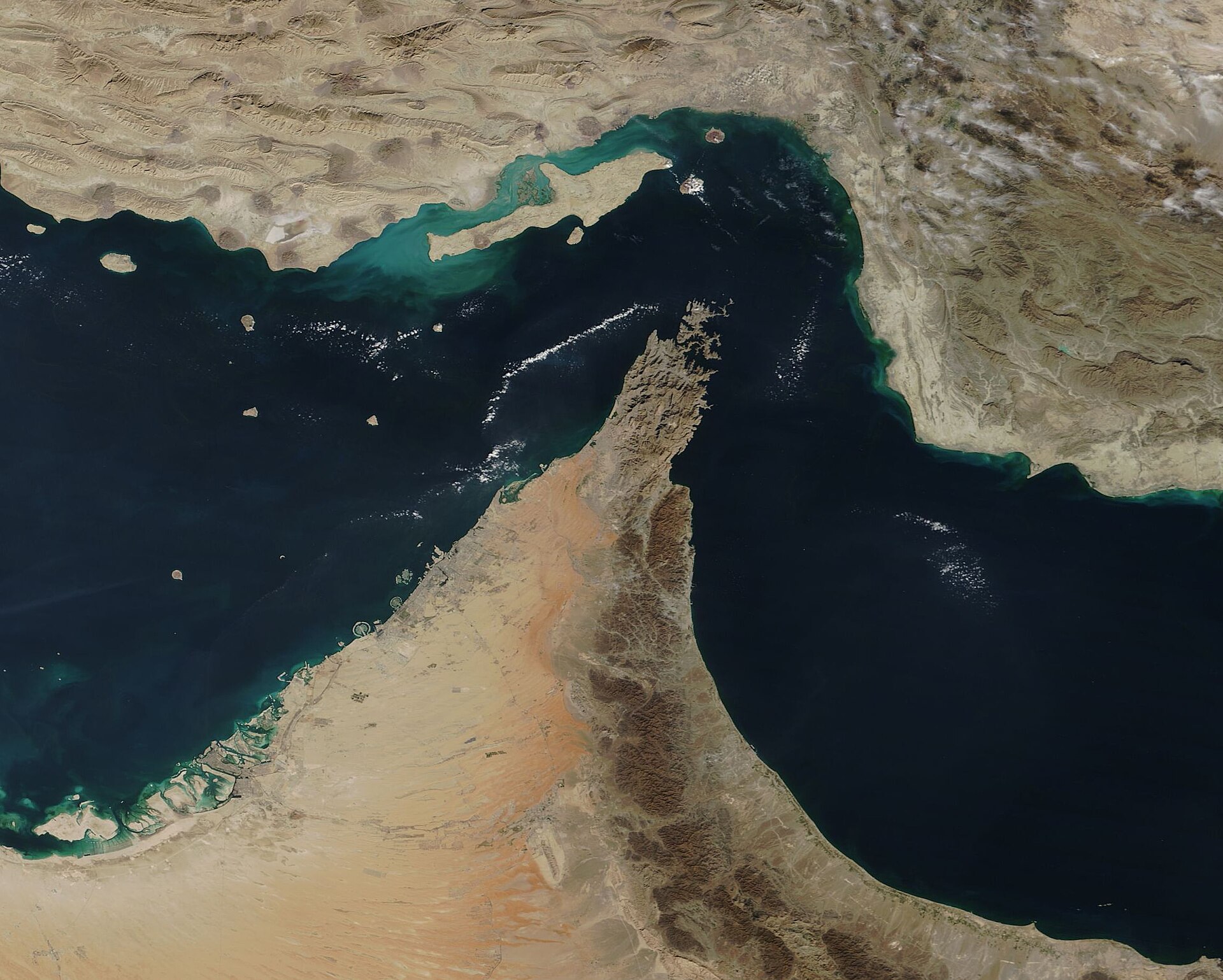
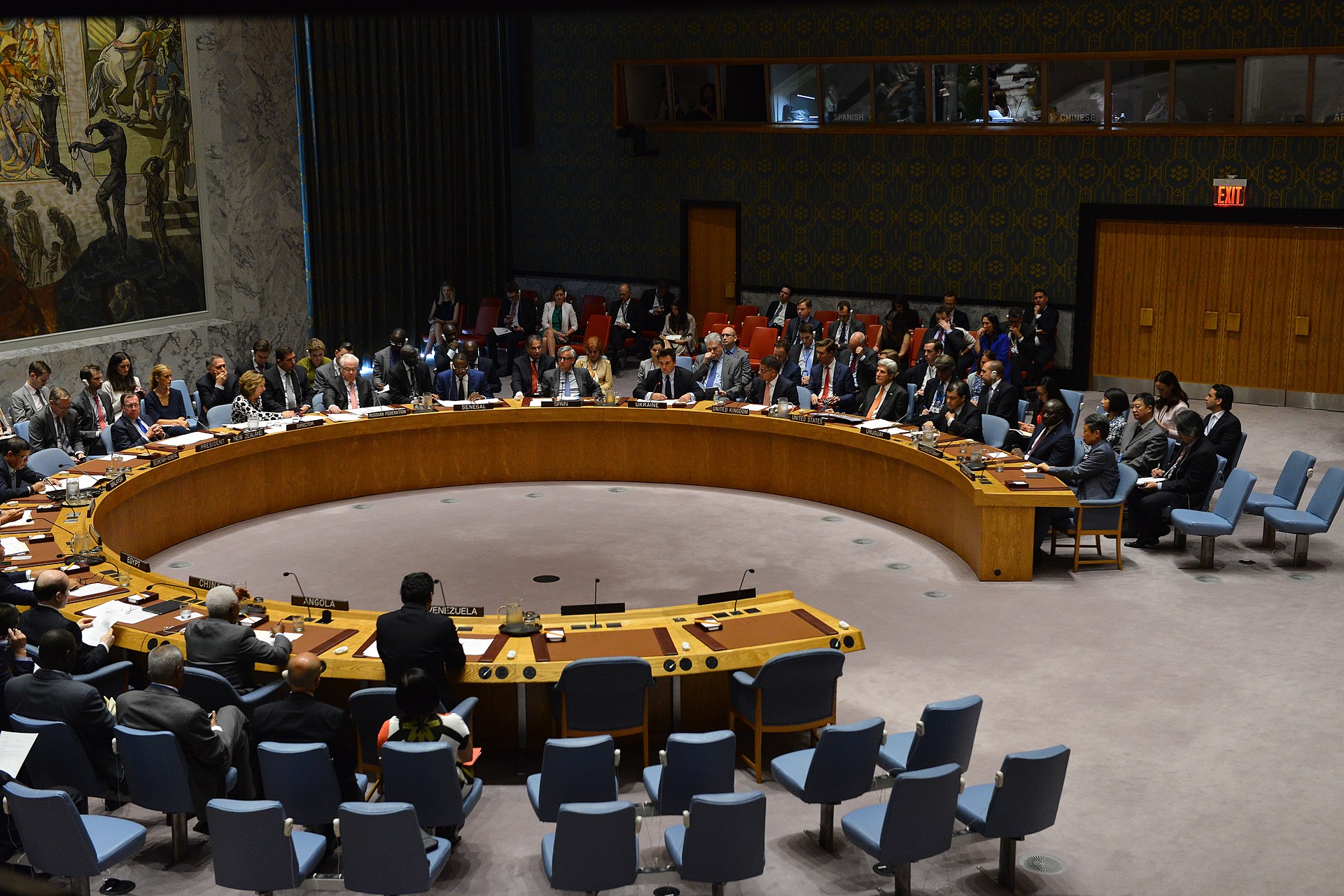
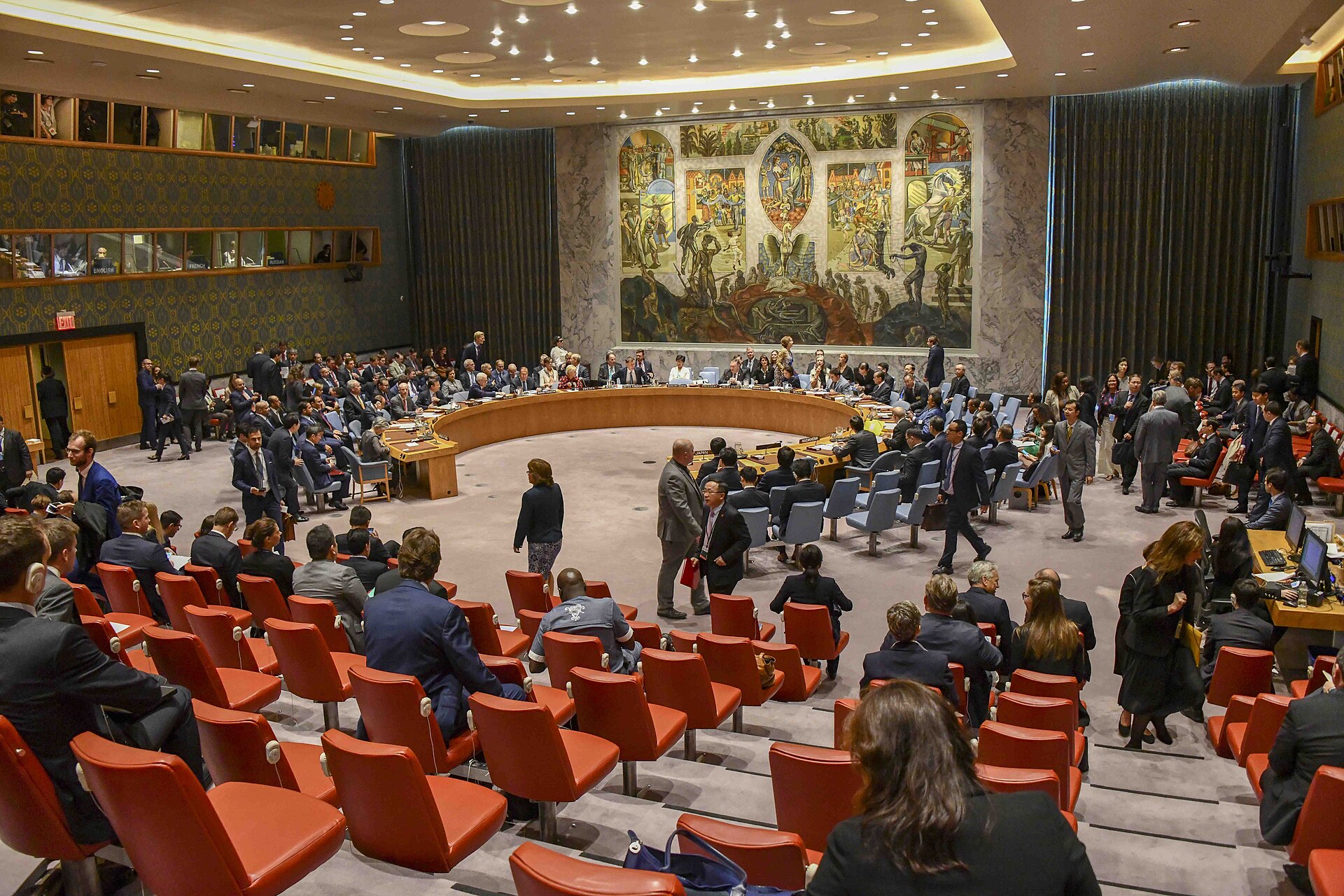
Russia and China jointly vetoed the Bahrain-sponsored UNSC resolution aimed at protecting commercial shipping through the Strait of Hormuz on April 7, with 11 of 15 Security Council members voting in favour. Moscow and Beijing called the measure “biased against Iran,” according to Al Jazeera. It was the third time in six years that Russia and China blocked Iran-related UNSC action: the Iran arms embargo extension in 2020, the snapback counter-resolution in September 2025, and now Hormuz.
Saudi Arabia has spent the weeks since the veto building an alternative diplomatic coalition — what this publication has described as quartet diplomacy — anchored in UNCLOS provisions on transit passage and freedom of navigation. The coalition’s viability depends on a specific assumption: that Russia and China vetoed the resolution as a procedural matter (opposing what they characterised as a US-aligned instrument) rather than endorsing Iran’s substantive position on Hormuz sovereignty.
The Putin-Araghchi meeting tests that assumption. The Kremlin readout did not mention Hormuz tolls or sovereignty as an agenda item. Russian state media — Sputnik, RT, TASS — headlined the meeting as confirmation of the “strategic character” of bilateral ties without referencing the strait. The deliberate reticence is itself informative. Russia does not need to publicly endorse Iran’s Hormuz sovereignty claim to undermine the UNCLOS coalition. It simply needs to continue blocking any enforcement mechanism at the Security Council while providing Iran the diplomatic cover to maintain its double blockade position.
Iran’s Hormuz toll revenue — the economic infrastructure underpinning IRGC control of the strait — now operates alongside the US blockade in what Bloomberg described on April 26 as a “double blockade” where vessels need approval from both sides to transit. Only 45 ships have passed through since the April 8 ceasefire, 3.6% of the pre-war baseline. IEA Director Fatih Birol called the disruption — 13 million barrels per day offline — “the biggest energy security threat in history.”
China vetoed the resolution thirteen days before Xi Jinping called MBS about Hormuz. If Russia aligns — even implicitly, even through continued obstruction rather than affirmative endorsement — the UNCLOS-based framework Riyadh is building with Western partners loses its remaining UNSC-veto buffer on both permanent-member seats simultaneously.
The Ukraine Pause and Russia’s $150 Million Daily Incentive
Peskov declared Ukraine peace talks on “situational pause” on April 6, explicitly citing competing US priorities in the Iran war as the reason. The trilateral US-Ukraine-Russia sessions in Geneva — three rounds in January and February 2026 that produced no breakthrough — have not resumed. Russia Matters and GlobalSecurity.org documented the stall as a direct consequence of Washington’s bandwidth being consumed by the Middle East.
The financial incentive behind that pause is not abstract. Bloomberg estimated that the Hormuz disruption has generated approximately $150 million per day in additional Russian budget revenue from elevated global oil prices. The war’s continuation, from Moscow’s perspective, simultaneously enriches the Russian treasury, exhausts US military resources and diplomatic attention, stalls Ukraine aid pipelines, and creates conditions under which Washington may offer Ukraine concessions to free capacity for the Iran theatre.
The Washington Post reported on March 11 that Russian officials were saying the Iran attack showed “the US can’t be trusted in Ukraine talks.” The Carnegie Endowment framed Moscow’s dilemma more precisely: Russia benefits from the war continuing long enough to drain American resources, but not so long that Iran collapses — because a collapsed Iran deprives Russia of its last major Middle Eastern partner after losing Syria. Araghchi’s visit to the Kremlin allows Putin to calibrate that calculation with direct access to Tehran’s assessment of its own endurance.
The War Powers Act deadline on May 1 — sixty days after Trump notified Congress of US strikes on March 2 — adds urgency. Senate Republicans blocked a fourth bipartisan attempt to invoke the War Powers Resolution on April 15, voting 52-47. Congress has not passed an Authorization for Use of Military Force. If Putin can assess from Araghchi that Iran will hold through May 1 without accepting US terms, Russia’s optimal strategy is to encourage continued Iranian resistance through the deadline, maximising pressure on Trump to either escalate without congressional authorisation or accept terms more favourable to Tehran.
What Does This Cost Saudi Arabia?
Riyadh’s exposure is layered. Saudi Arabia has absorbed 575 drone attacks, 42 ballistic missiles, and 7 cruise missiles from Iran since February 28, according to MEMRI. The kingdom formally abandoned its “positive neutrality” doctrine, with the Wilson Center documenting the shift toward defining Iran as an existential threat. In late March, Saudi Arabia signed a defence pact with Ukraine specifically targeting counter-drone capabilities — directly confronting the Shahed technology that Russia co-produces with Iran at the Alabuga facility in Tatarstan, which reached capacity of 6,000 drones annually by mid-2025, according to the Stimson Center.
MBS called Moscow, Beijing, and Tokyo on the same day in early April, attempting to maintain great-power neutrality in the conflict. That effort has now failed on the Russian axis. Putin receiving Araghchi while Washington refuses to send envoys anywhere creates a diplomatic reality in which Russia is the most active great-power interlocutor on the Iran file — and one whose financial interests are served by the war’s continuation.
The arms supply chain compounds the exposure. FDD documented a €495 million deal for Russian “Verba” shoulder-mounted air defence systems to Iran, announced on February 26, 2026 — two days before the war began. Russia has delivered Mi-28NE attack helicopters to Iran from January 2026 and Yak-130 trainers from 2023. Iran supplied Russia with Shahed drones, artillery shells, and close-range ballistic missiles from 2022 through 2024. The partnership is not theoretical. The weapons flowing to Iran and the drones flowing to Russia share logistics chains and design bureaus.
Prince Faisal’s April 26 call to Araghchi — on the eve of the Moscow meeting — and his simultaneous outreach to four capitals the same day suggest Riyadh understands the implications. But understanding a structural shift and being able to prevent it are different problems. Goldman Sachs’ fiscal modelling already projects a 6.6% GDP war-adjusted deficit for Saudi Arabia, against the official 3.3% forecast. Every week that Russia helps extend the war raises that number.
Background
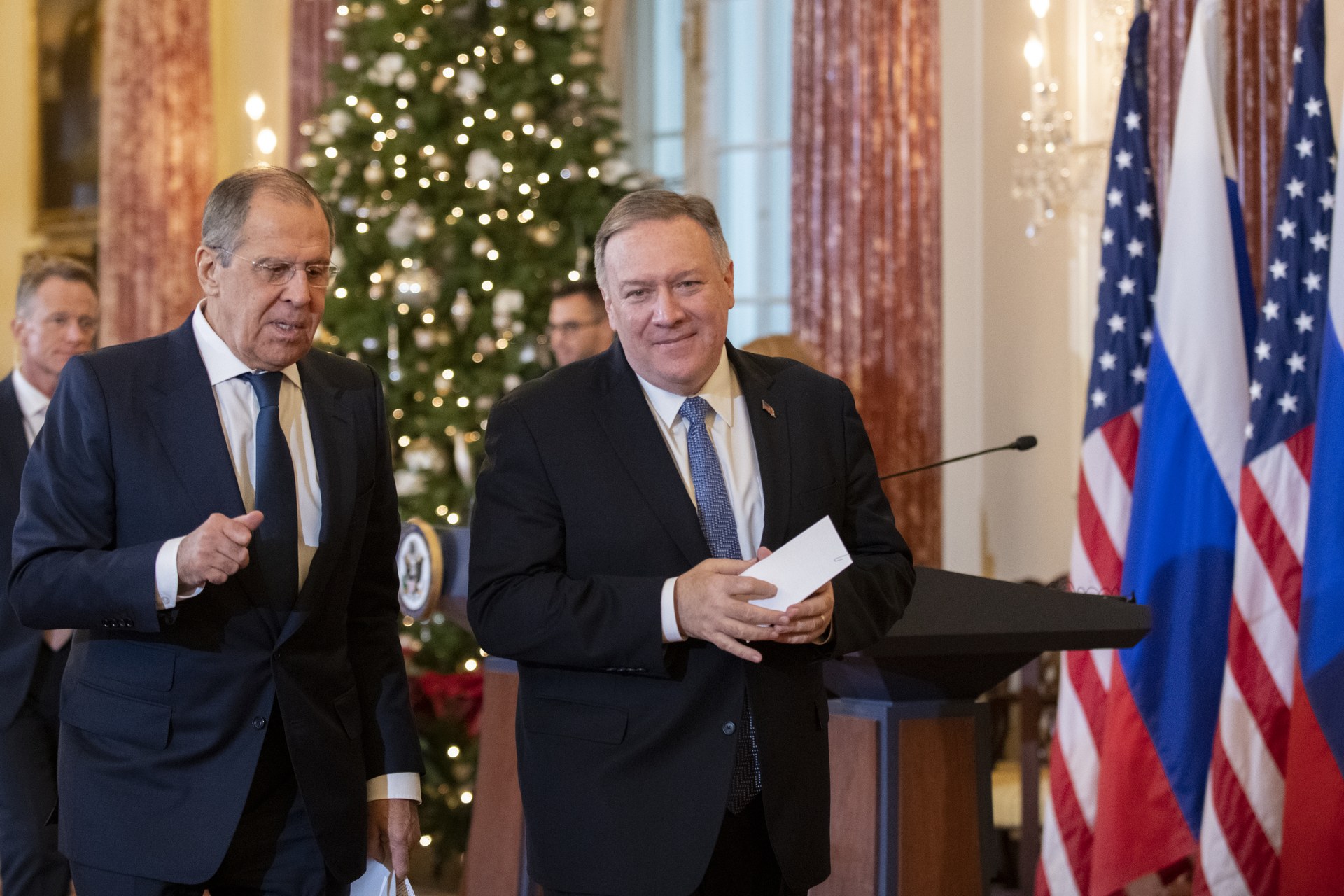
On February 28, 2026 — the first day of the war — Lavrov called Araghchi and condemned the US-Israeli strikes as an “absolutely unprovoked armed attack,” calling for a “prompt political and diplomatic settlement,” per the Russian Foreign Ministry readout. It was the earliest public signal that Moscow would frame the conflict in terms that aligned with Tehran’s.
Frequently Asked Questions
Has Russia formally offered to mediate between the US and Iran?
Not formally. Moscow has positioned itself as a “facilitator” rather than a mediator, primarily through the Rosatom uranium custody proposal. The distinction matters: a mediator implies neutrality, while a facilitator can advance its own interests. The Kremlin readout’s reference to “possible joint initiatives between Iran and Russia regarding the US talks” suggests Moscow is offering to act alongside Tehran, not between Tehran and Washington.
What is the Rosatom uranium custody proposal’s current status?
Active but in diplomatic limbo. The US rejected it; Peskov then told reporters the offer was “not currently on the negotiating table.” Iran’s delegation separately proposed transferring 60%-enriched material to Russia with a three-year enrichment suspension, but FM spokesman Baghaei publicly denied any such proposal existed. The Araghchi-Putin meeting is the most likely venue where that internal Iranian contradiction gets resolved — or buried.
Does the Russia-Iran strategic partnership oblige Moscow to defend Iran militarily?
The January 2025 treaty does not contain a mutual defence clause equivalent to NATO’s Article 5. It covers defence cooperation, intelligence sharing, and counter-sanctions coordination, but stops short of a formal military alliance. In practice, however, Russia’s confirmed provision of real-time satellite intelligence on US positions during the war blurs the line between partnership and co-belligerency under international humanitarian law.
How does the Moscow meeting affect the May 1 War Powers Act deadline?
Indirectly but substantively. If Putin assesses from Araghchi that Iran can sustain its position through May 1, Russia’s incentive is to encourage continued resistance — forcing Trump to either seek congressional authorisation (which four failed Senate votes suggest he cannot easily obtain), escalate unilaterally, or offer more favourable terms. Russia’s intelligence on Iran’s internal durability, gathered partly through meetings like this one, informs whether Moscow counsels patience or settlement.
Why did Russian state media avoid mentioning Hormuz in coverage of the meeting?
Moscow benefits from the Hormuz disruption financially — the $150 million per day in additional budget revenue documented above — without wanting to be publicly associated with Iran’s sovereignty claims over the strait. Endorsing those claims would antagonise Gulf states that Russia still trades with, particularly on OPEC+ coordination. Staying silent on Hormuz while vetoing UNSC enforcement lets Russia collect the disruption’s gains without bearing the diplomatic cost of explicitly backing Iran’s legal position. That calculus was tested on April 26, when Houthi missiles struck the Russian-flagged Andromeda Star hours before Araghchi’s plane landed in Moscow — a reminder that Iran’s proxy cannot reliably distinguish between Russian and Western tonnage. Russia’s emerging role as co-guarantor of any Iran deal — mirroring the Astana Process that displaced Western-led frameworks in Syria and excluded Arab Gulf states — is examined in Russia Is Running the Astana Playbook on Saudi Arabia’s Existential Crisis.