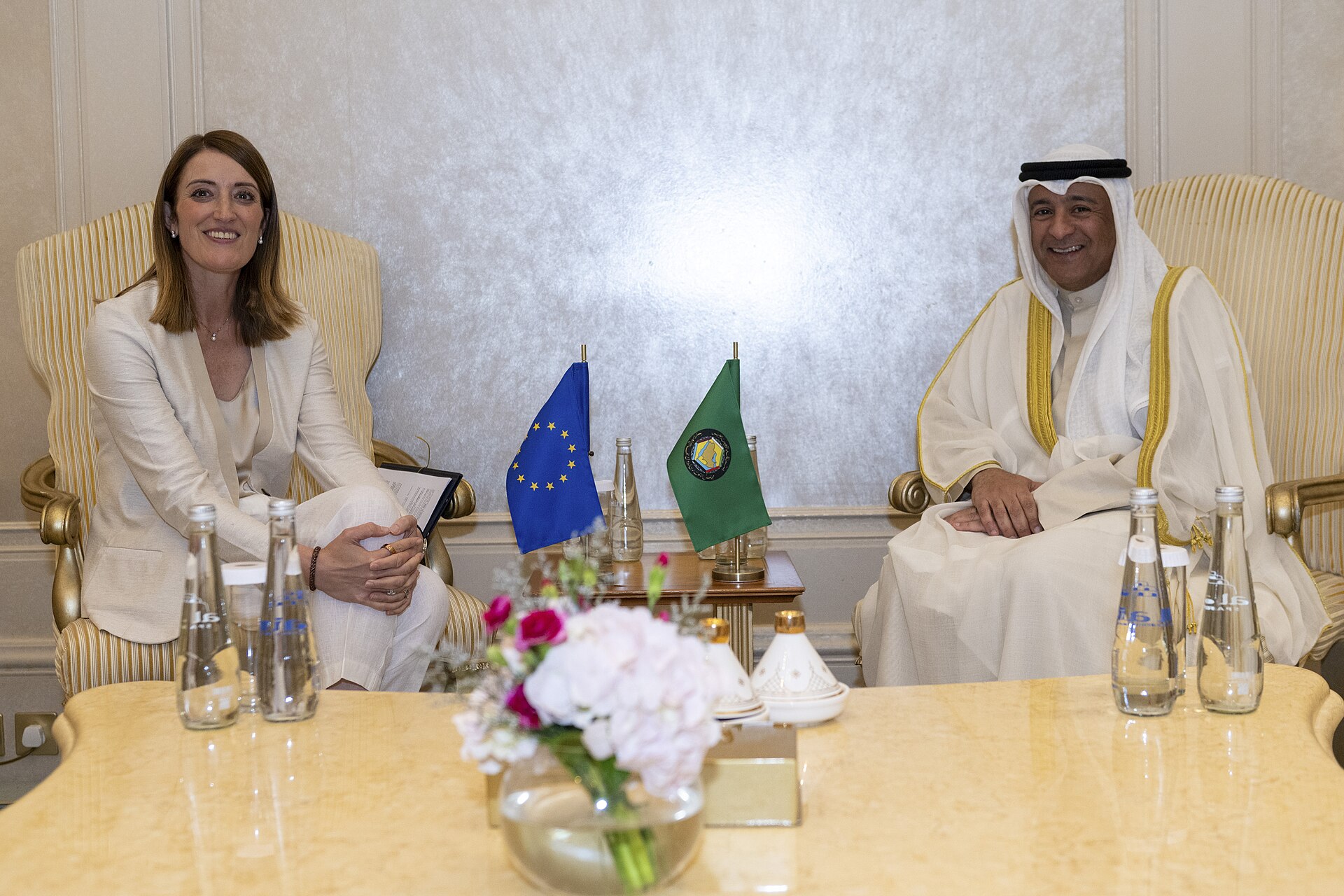

NICOSIA — The GCC Secretary-General flew to Cyprus last week and, over an informal working lunch with Ursula von der Leyen and Antonio Costa, publicly demanded that any peace deal with Iran must address ballistic missiles and proxy networks — conditions the Trump administration had explicitly deferred to a later phase of negotiations, and conditions Iran has already declared non-negotiable. Jasem Al-Budaiwi chose his stage carefully: not a bilateral channel to Washington, not a phone call to Steve Witkoff, but a multilateral European forum with cameras rolling and the presidents of Egypt, Lebanon, Syria, and Jordan in the room, making it structurally harder for anyone to quietly walk those conditions back when the pressure to close a deal intensifies.
The move amounts to a credibility-locking mechanism — the Gulf states using Brussels as a witness to commitments they cannot enforce at a negotiating table where they have no seat. Whether this is shrewd diplomacy or a trap the GCC has built for itself depends entirely on what happens next in Moscow, where Iran’s foreign minister landed on April 27 with Hormuz sovereignty and the US blockade on his agenda, and not a single GCC condition in his briefcase. The heads-of-state response came on April 28, when all six GCC leaders convened in Jeddah for the first wartime summit — translating Al-Budaiwi’s Cyprus conditions into a formal institutional statement that will be harder for Washington to quietly shelve.
Table of Contents
- What Did Al-Budaiwi Actually Say in Cyprus?
- Why a Working Lunch in Cyprus and Not a Call to Washington
- The “Sloppy Peace” the GCC Is Trying to Kill
- Iran’s Answer Was Given Before the Question Was Asked
- Can the GCC Enforce Conditions It Has No Power to Impose?
- What Does Europe Get From Hosting This?
- The Moscow Variable
- The Trap the GCC Built for Itself
What Did Al-Budaiwi Actually Say in Cyprus?
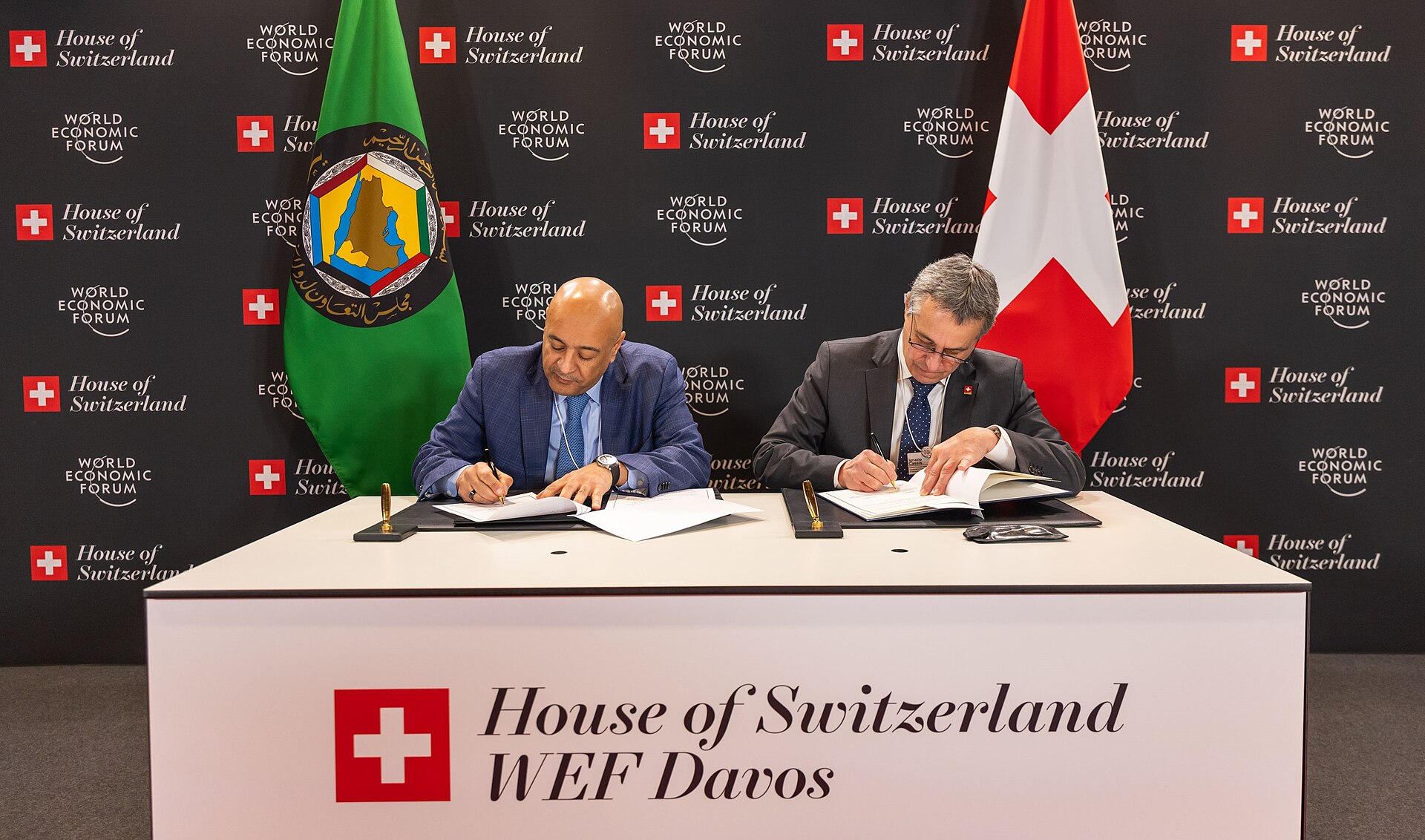
The core formulation, delivered at the EU informal summit in Agia Napa on April 24, was blunt by the standards of Gulf diplomatic language: “Any comprehensive agreement with Iran should address its nuclear and ballistic missile programs, as well as regional activities,” Al-Budaiwi told the assembled European and Arab leaders, according to Gulf Times. The phrase “regional activities” is diplomatic shorthand for Iran’s proxy networks — Hezbollah, the Houthis, the Iraqi militias — and Al-Budaiwi’s decision to say it in a room full of European officials rather than in a private communiqué to Washington was not accidental.
Von der Leyen echoed the language almost verbatim: “Any peace agreement will have to address Iran’s nuclear and ballistic missile programme,” she said at her press point that same day. Costa, the EU Council President, went further, declaring that “it’s too early to talk about relief of any kind of sanctions” and citing the end of Iran’s missile programme and proxy support as preconditions — a position significantly harder than anything the US negotiating team has put on the table in Islamabad.
This was not Al-Budaiwi freelancing. The formulation built on language he had already deployed at the Emergency GCC-EU Ministerial on March 5, six weeks earlier, when he declared that Gulf states “will not accept being a target for aggression, an arena for proxy conflicts, or a victim of deception and bad faith.” But the March statement was a general principle delivered at a working-level meeting. Cyprus was the crystallisation — the same language, hardened into specific preconditions, delivered at head-of-state level with the European Commission president repeating it back as her own position.
Why a Working Lunch in Cyprus and Not a Call to Washington
The venue was the strategy. An informal working lunch — not a formal summit — means Al-Budaiwi could make binding public commitments without producing a joint communiqué that Washington could pressure individual signatories to soften or retract. There is no document to negotiate down, no annexe to water down, no qualifying footnote to insert later. There is a series of on-the-record statements, on camera, in front of six heads of state and two European institutional presidents, reported by every wire service in the region. Walking those back would require the GCC to publicly contradict its own secretary-general in a forum it chose.
The Middle East briefing 3,000+ readers start their day with.
One email. Every weekday morning. Free.
The Trump administration had made a deliberate decision, confirmed by US officials and documented in Arms Control Association analysis, to “allow the region to talk about proxies and also to talk about ballistic missiles, because it’s a regional issue.” The framing was clear: Washington would handle the nuclear file; missiles and proxies would be deferred to Phase 2 or punted to “regional negotiations.” Al-Budaiwi called that bluff. By staking the GCC’s position in a European forum — not a regional one — he made it a transatlantic issue, not a Gulf issue, and gave Brussels an institutional reason to adopt the same conditions as its own.
The timing was equally deliberate. Trump had cancelled the Witkoff-Kushner trip to the region on April 25, telling the Washington Post that Iran “offered a lot, but not enough” and that “there is tremendous infighting and confusion within their ‘leadership.’ Nobody knows who is in charge, including them.” The GCC went to Cyprus the day before that cancellation, when the US negotiating track was visibly stalling, and used the vacuum to establish conditions that any eventual deal would now have to be measured against — conditions set by the states most affected by Hormuz closure, publicly endorsed by the European Union.
The “Sloppy Peace” the GCC Is Trying to Kill
Jared Cohen, co-head of the Goldman Sachs Global Institute and the firm’s president of global affairs, gave the GCC’s fear a name on April 25: the “sloppy peace.” Writing in Fortune the same day as Al-Budaiwi’s Cyprus statement, Cohen described the scenario the Gulf states are trying to prevent — “basically a bunch of half solutions on all the big issues.” His specific formulation is worth quoting in full because it maps precisely onto what the GCC conditions are designed to block.
“Oil tankers could transit through the Strait of Hormuz freely, but Iranians could close it again at any time for any reason, and Iran could agree not to fire missiles while still retaining 1,000-2,000 of them.”Jared Cohen, Goldman Sachs Global Institute, Fortune, April 25, 2026
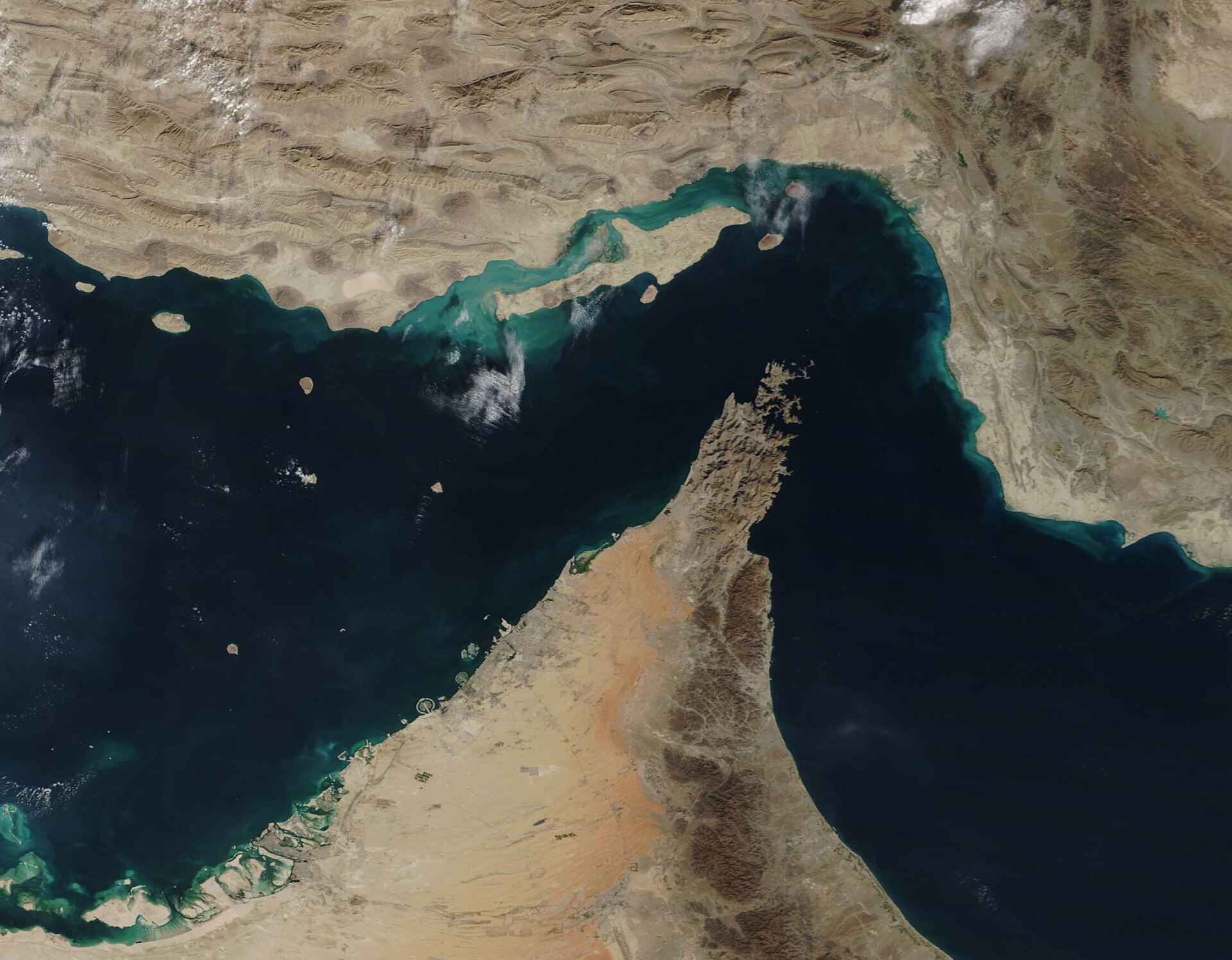
The data supports Cohen’s concern. US intelligence assessments, reported by CNN in early April, estimated that approximately 50 percent of Iran’s missile launchers remain intact after more than five weeks of strikes, and roughly 60 percent of IRGC Navy assets remain operational, according to Defense News. A deal that reopens Hormuz without addressing the missile inventory leaves the same arsenal that closed it in the first place — pointed at the same refineries, pipelines, and desalination plants — with Iran having demonstrated both the willingness and the capability to use it. The double blockade currently strangling Hormuz has reduced transit to 45 vessels since the April 8 ceasefire, just 3.6 percent of the pre-war baseline. The GCC’s position, stripped of diplomatic language, is that reopening the strait without dismantling the capacity to re-close it is not peace — it is a pause with an expiry date.
Cohen also framed the broader negotiating dynamic as “a game of geopolitical chicken between the United States and the Iranians over who’s going to swerve first, and they both have the same theory of change.” The GCC’s Cyprus move inserts a third party into that game — not as a driver, but as a bollard, a fixed obstacle that makes certain swerves structurally impossible without a public reversal that would cost the Gulf states credibility they have spent six weeks building.
Iran’s Answer Was Given Before the Question Was Asked
Iran’s position on missile negotiations was established months before Al-Budaiwi arrived in Cyprus. The Wall Street Journal reported in March 2026 that Iran had stated its missiles “were not up for negotiation” — a position that has only hardened since. The IRGC’s own Telegram channels have been explicit, declaring in April that “controlling the Strait of Hormuz and maintaining the shadow of its deterrent effects over America and the White House’s supporters in the region is the definitive strategy of Islamic Iran.” This is not ambiguity. This is doctrinal clarity.
Ghalibaf, the parliament speaker and former IRGC Aerospace Force commander, formally linked Hormuz reopening to the removal of the US naval blockade — not to any GCC conditions about missiles or proxies. His framing, reported by Al Jazeera on April 22-23, was that reopening was impossible while the American blockade represented “a flagrant breach of the ceasefire.” Iran’s counter-conditions run on an entirely different axis from the GCC’s, addressing the US bilateral relationship rather than the regional security architecture the Gulf states want reformed.
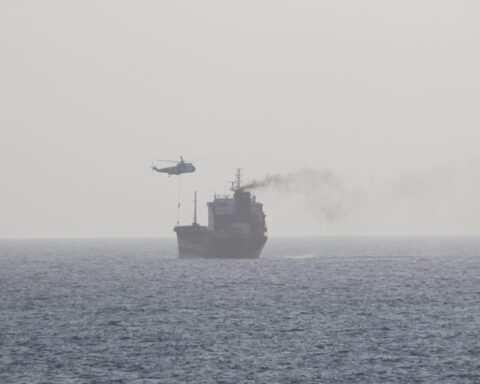
The Iranian parliament is advancing a 12-article Hormuz sovereignty law that would legally codify IRGC authority over the strait — turning operational control into statutory mandate. The IRGC seized the MSC Francesca, an 11,660 TEU container vessel, and the Epaminodas on April 22, citing vessels entering “without its coordination,” according to Al Jazeera. Iran’s First Vice President Mohammad Reza Aref stated the position in its most transactional form: “One cannot restrict Iran’s oil exports while expecting free security for others.” The GCC conditions demand that Iran surrender instruments of leverage — missiles, proxies, Hormuz control — that Tehran’s civilian and military leadership alike consider existential to the regime’s regional posture, and that the IRGC has overridden even its own president to preserve.
Can the GCC Enforce Conditions It Has No Power to Impose?
The Carnegie Endowment captured the central paradox in an April 2026 analysis: the GCC has “no seat at the table, despite its entreaties, for negotiations that will shape the bloc’s economic and security environment for years to come.” Saudi Arabia, the bloc’s dominant member, went from co-guarantor at the March 29-30 Islamabad round to total exclusion by the time Vance sat across from Ghalibaf on April 10. The kingdom that bears the highest cost of the conflict has the least direct influence over its resolution, and the Cyprus conditions are, at one level, an attempt to compensate for that absence with public position-setting that constrains the parties who are at the table.
But public positions without enforcement mechanisms are wishes, not conditions. The GCC has no military presence in the strait that could compel compliance, no sanctions architecture of its own that could punish Iranian non-compliance with missile or proxy conditions, and no vote in the US-Iran bilateral channel where the actual deal terms are being negotiated. What it has is a European partner that shares its Hormuz exposure — the EU’s fossil fuel import bill increased by more than €25 billion over the first 43 days of the crisis, according to von der Leyen — and a public record of conditions that any future deal can be measured against.
The GCC is also not monolithic. ISPI analysis from April 2026 identified three distinct positions within the bloc: UAE and Bahrain favouring a “rupture” approach that would permanently degrade Iran’s military capacity; Qatar and Oman pursuing “reassembly” through diplomatic engagement; and Saudi Arabia and Kuwait “oscillating” between the two. Al-Budaiwi’s Cyprus statement papered over these fractures by setting conditions broad enough for all six members to endorse — missiles, proxies, nuclear — but specific enough to constrain any deal that leaves those issues unresolved. The question is whether the fractures hold when a real deal is on the table and the pressure to accept it, however imperfect, becomes acute. Saudi Foreign Minister Faisal bin Farhan’s flurry of calls to four capitals in a single day on April 26 suggests Riyadh is not waiting for the GCC to speak with one voice — it is building bilateral hedges alongside the multilateral position.
The deeper problem is structural. Iran’s counter-conditions — Ghalibaf’s demand that the US blockade be lifted, Tehran’s insistence on “legal jurisdiction” over Hormuz, the parliament’s 12-article sovereignty law — operate on a completely different negotiating axis from the GCC’s demands. Al-Budaiwi is demanding missile drawdowns and proxy dismantlement; Iran is demanding US naval withdrawal and recognition of its strait authority. These are not two sides of the same negotiation — they are two separate negotiations happening in parallel, with no forum that joins them and no mediator empowered to bridge the gap. Pakistan, which has served as the primary interlocutor since the Islamabad Accord, has neither the leverage nor the mandate to impose GCC conditions on an Iran that has already overridden its own president to preserve IRGC operational authority.
What Does Europe Get From Hosting This?
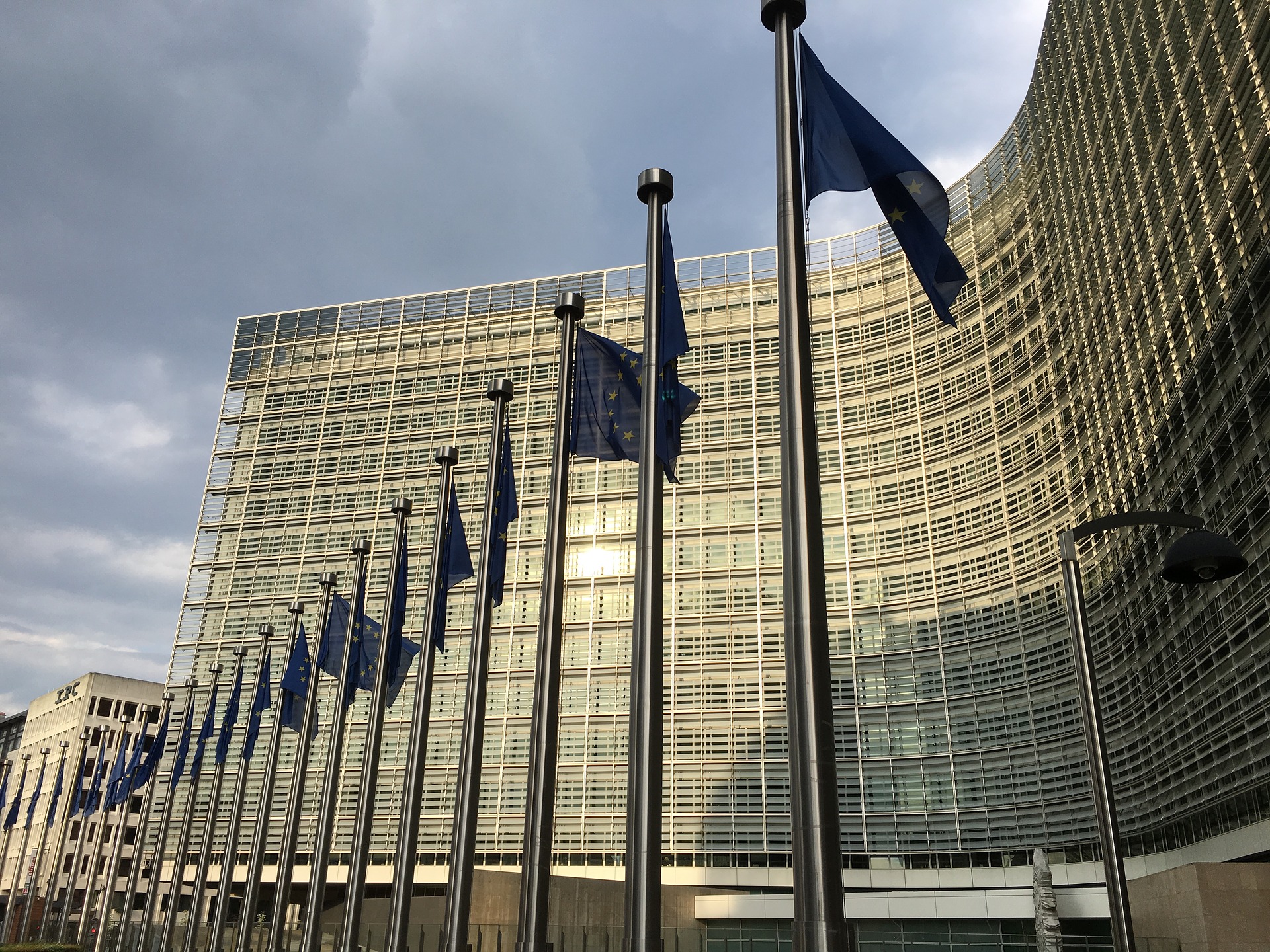
Brussels did not lend the GCC its stage out of charity. The EU has concrete Hormuz exposure that makes the GCC’s conditions operationally useful to European energy security. Von der Leyen’s €25 billion figure — the increased cost of fossil fuel imports over 43 days — translates to roughly €580 million per day in additional energy costs for an economy already strained by the post-2022 energy transition. German Chancellor Friedrich Merz added a second layer of European pressure on April 28, becoming the first G7 leader to declare publicly that Iran is humiliating the United States — a framing calculated to reach the one audience most likely to respond to it. Costa’s insistence that Hormuz must “immediately reopen without restrictions and without tolls” was not diplomatic solidarity — it was a statement of European economic interest.
Von der Leyen used the same summit to advance two initiatives that reveal Europe’s longer-term calculation. The first was an expansion of Operation ASPIDES, the Red Sea defensive escort mission, proposing to move it “from mere protection to sophisticated joint maritime coordination” in the Gulf — effectively offering the GCC an operational security architecture for any post-deal Hormuz regime, as reported by Euronews and AP. The second was the revival of the India-Middle East-Europe Economic Corridor, or IMEC, which was announced at the September 2023 G20 and effectively suspended after October 7. Von der Leyen told reporters the EU was “ready to team up with the Gulf countries to diversify export infrastructure away from solely the bottleneck of the Hormuz Strait,” according to AP — making Cyprus the first high-level EU-GCC move to revive IMEC with an explicit Hormuz-bypass rationale.
The European calculation is layered: endorse the GCC’s conditions to maintain leverage over any deal, offer ASPIDES expansion and IMEC revival as tangible deliverables that give the Gulf states reasons to stay aligned with European positions, and use the Hormuz crisis to accelerate infrastructure projects that reduce European dependence on the strait regardless of what deal Iran eventually accepts. For Brussels, the GCC’s conditions are not just a diplomatic position to support — they are the predicate for an entire pipeline and maritime security programme that the EU wants to build whether or not those conditions are ever met.
The Moscow Variable
Abbas Araghchi departed Pakistan on April 26 and arrived in Moscow on April 27 for meetings with Putin and Lavrov, according to Euronews, Al Jazeera, and PressTV. His agenda, per ISNA via Al Jazeera, included “written messages” transmitted to the US via Pakistan covering “some of the red lines of the Islamic Republic of Iran, including nuclear issues and the Strait of Hormuz.” Missile rollback and proxy dismantlement — the GCC’s Cyprus conditions — were not on the Moscow agenda, because they are not on Iran’s agenda, and Russia has no incentive to put them there.
Putin aide Yuri Ushakov declared bluntly that the “Strait of Hormuz is open to Russia,” according to TASS and the Tribune India — a statement that simultaneously acknowledges IRGC control of the strait and confirms that Moscow has cut its own bilateral deal for transit, rendering any multilateral conditions on Hormuz reopening irrelevant to Russian commercial interests. The Iran-Russia 20-year partnership treaty, signed in January 2025, provides the strategic backstop: Moscow supplies diplomatic cover at the UN Security Council, and Iran provides Russia with a pressure point on global energy markets that serves Moscow’s interests as long as prices remain elevated. Iranian envoy to Russia Kazem Jalali made Tehran’s position explicit, stating that Iran’s demands include “respect for Iran’s legal jurisdiction in the Strait of Hormuz for the purpose of ensuring international maritime security” — framing IRGC control as a legal right, not a bargaining chip.
Araghchi himself, speaking to Al Jazeera on April 26, offered a sentence that carried more weight than its diplomatic phrasing suggested: “I have yet to see if the US is truly serious about diplomacy.” He said this while en route to Moscow, not Washington, and not the Gulf — a routing decision that tells the GCC everything it needs to know about where Iran sees its real interlocutors. The Russia-Iran asymmetry on sanctions and energy cooperation has only deepened since the war began, with Moscow quietly securing its own exemptions while Tehran absorbs the full weight of the US blockade. That same April 26, Trump and Starmer agreed on a call that Hormuz must reopen unconditionally — a Western demand that landed on the same day Araghchi departed for Moscow with no intention of delivering it.
The Trap the GCC Built for Itself
The strategic logic of the Cyprus conditions contains a structural dilemma that Al-Budaiwi’s careful diplomacy cannot resolve. If the conditions succeed — if any deal must address missiles, proxies, and nuclear capacity simultaneously — then Iran refuses, because Tehran has declared all three non-negotiable on the timelines the US is working with. Hormuz stays shuttered. The IEA’s Fatih Birol has already called 13 million barrels per day offline “the biggest energy security threat in history.” Saudi production, which crashed from 10.4 million barrels per day in February to 7.25 million in March according to IEA data, remains constrained by Yanbu pipeline capacity, and Brent crude at $105.33 per barrel sits below the $108-111 Saudi fiscal break-even that Bloomberg calculates when PIF obligations are included.
If the conditions fail — if the US and Iran cut a deal that defers missiles and proxies to a Phase 2 that never materialises, Cohen’s “sloppy peace” — then the GCC has publicly staked its credibility on conditions that were overridden. The Trump administration’s own timeline is compressing, with the War Powers Clock ticking toward a May 1 deadline that creates its own domestic pressure to show progress, and the appetite in Washington for adding missile and proxy conditions to an already fragile negotiation is minimal when the primary US objective remains the nuclear file.
The GCC is betting that European endorsement converts these conditions from a regional wish list into a transatlantic position that Washington cannot simply ignore. The bet has historical logic — the E3 triggered the Iran nuclear snap-back mechanism in August 2025, demonstrating that European positions on Iran can acquire their own institutional momentum regardless of US preferences. But the snap-back expired in October 2025, and the reimposed sanctions lack enforcement architecture. European rhetorical support, as the Gulf states learned during the JCPOA negotiations, does not always survive contact with the pressure to close a deal.
Von der Leyen’s IMEC revival and ASPIDES expansion proposals suggest that Brussels, at least, is hedging — building infrastructure and security architecture that provides value to the GCC regardless of whether the missile and proxy conditions are met. The corridor and the escort mission are tangible deliverables that survive a sloppy peace. The conditions Al-Budaiwi set in Cyprus may not.
Araghchi landed in Moscow on April 27 with written messages about nuclear issues and Hormuz — the two files Iran considers negotiable. The GCC’s conditions on missiles and proxies were not in his briefcase, were not on Putin’s table, and have no mechanism to get there. Al-Budaiwi said the right things in the right room to the right audience, and the audience applauded, and the room was a thousand miles from any table where the deal will actually be written.
Frequently Asked Questions
What is the GCC’s relationship with EU defence cooperation beyond ASPIDES?
The EU-GCC security relationship has historically been limited to counterterrorism dialogue and arms sales by individual member states, with no institutional defence framework comparable to NATO partnerships. The ASPIDES expansion proposal represents the first concrete EU offer of operational military coordination with Gulf states in a maritime theatre, which, if implemented, would create the EU’s first standing naval coordination mechanism east of the Suez Canal — a significant institutional step that predates any Hormuz deal outcome.
Has the GCC Secretary-General previously set preconditions for negotiations the bloc was excluded from?
Al-Budaiwi’s predecessor, Nayef al-Hajraf, avoided public precondition-setting during the JCPOA renegotiation period of 2021-2023, preferring private bilateral channels with Washington. Al-Budaiwi, a Kuwaiti diplomat appointed in 2023, has adopted a distinctly more public posture — the March 5 Emergency Ministerial and the Cyprus statement represent the most explicit GCC preconditions on Iran negotiations since the original JCPOA talks in 2014-2015, when Saudi Arabia lobbied privately for missile inclusion and was rebuffed by the Obama administration.
What would a deal that meets the GCC’s conditions actually require from Iran?
Meeting the full Cyprus conditions would require Iran to accept caps or reductions on its ballistic missile inventory (estimated at 1,000-2,000 operational missiles by Goldman Sachs), dismantle or formally constrain proxy networks across at least four countries (Lebanon, Iraq, Yemen, Syria), and resolve the nuclear file including the 440.9 kilograms of uranium enriched to 60 percent that the IAEA last verified before access was terminated on February 28, 2026 — a package that no Iranian government, civilian or military, has ever agreed to negotiate as a single framework.
Could the IMEC corridor actually bypass Hormuz for Gulf oil exports?
IMEC as originally designed at the 2023 G20 was a rail-and-port corridor for goods and data, not a crude oil pipeline. Adapting it for energy transit would require purpose-built pipeline infrastructure from the Gulf to the Eastern Mediterranean via Saudi Arabia, Jordan, and Israel — a multi-year, multi-billion-dollar project that faces both the technical challenge of crossing multiple sovereign territories and the political obstacle of requiring Israeli-Saudi normalisation infrastructure during an active regional conflict. Von der Leyen’s framing references “diversifying export infrastructure,” not replacing Hormuz petroleum transit.
Why did the GCC choose an informal summit format rather than pushing for a formal EU-GCC joint statement?
A formal joint communiqué requires consensus drafting among all 27 EU member states, a process that would expose the text to amendment pressure and potential dilution — Hungary, for instance, has consistently opposed hardline Iran positions. The informal working lunch format allows public statements without a negotiated text, meaning Al-Budaiwi’s conditions and von der Leyen’s echoing of them carry the weight of public commitment without the vulnerability of a document that any party could later claim was qualified by unpublished annexes or interpretive statements.