
WASHINGTON — The Pentagon told the House Armed Services Committee on April 22 that clearing Iranian mines from the Strait of Hormuz could take up to six months after hostilities end, a timeline that would keep Saudi Arabia’s largest export artery functionally closed well into autumn even if a ceasefire were signed tomorrow. Three days later, Defense Secretary Pete Hegseth told PBS NewsHour the Navy would accomplish mine clearance “within the correct period of time” — a phrase so deliberately empty it confirmed what the classified briefing had already made plain.
The gap between those two statements is the gap Saudi Arabia’s economy lives inside. The Kingdom’s March crude production fell to 7.25 million barrels per day from a pre-war 10.4 million — a 30 percent collapse that no bypass pipeline can fully reverse, and the double blockade now choking Hormuz — the US controlling the Arabian Sea entry, the IRGC controlling the Gulf of Oman exit — means recovery depends not on diplomatic language but on how many mines Iran laid, what types they used, and how many ships the US Navy can put in the water to find them. The answer to that last question, according to the Navy’s own testing office, is not encouraging.
Table of Contents
The Six-Month Timeline the Pentagon Tried to Keep Classified
The Washington Post reported on April 22 that Pentagon officials briefed lawmakers in a classified session on a worst-case mine-clearance timeline of up to six months — a figure that assumes hostilities have ended and the Navy has uncontested access to the entire strait. Pentagon spokesman Sean Parnell pushed back the following day, calling the reporting “cherry-picking leaked information, much of which is false” and insisting that “a six-month closure of the Strait of Hormuz is an impossibility and completely unacceptable.” The distinction between “impossible” and “unacceptable” is one Parnell did not clarify, because the first is a statement about physics and the second is a statement about politics.
President Trump responded on April 23 with a Truth Social post announcing that “our mine ‘sweepers’ are clearing [the Strait] right now” and ordering the effort to continue “at a tripled-up level.” In the same post, he directed the Navy to “shoot and kill” any Iranian small boats caught laying mines, “with no hesitation” — an order that addressed the political optics of mine-laying but did nothing about the mines already on the seabed. Killing the crews who plant mines is a military problem with a military solution; finding the mines they already planted is an engineering problem with an engineering timeline, and engineering timelines do not bend to Truth Social.
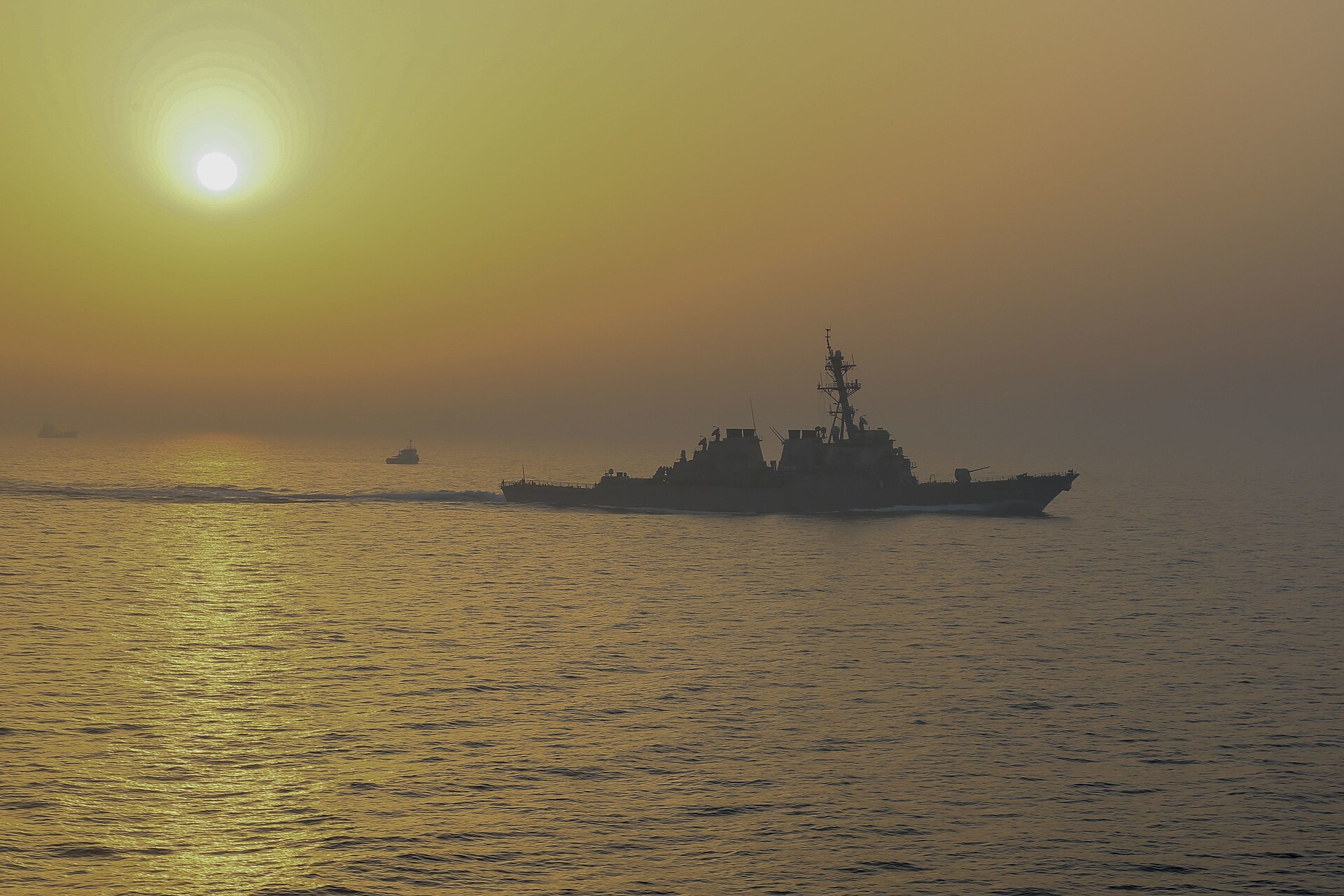
CENTCOM had formally announced the start of mine-clearing operations on April 11, following the transit of USS Frank E. Petersen (DDG-121) and USS Michael Murphy (DDG-112) through the strait to “set conditions.” Admiral Brad Cooper, the CENTCOM commander, framed the mission in language designed for shipping executives: “Today, we began the process of establishing a new passage and we will share this safe pathway with the maritime industry soon to encourage the free flow of commerce.” Two weeks later, no safe pathway has been published, and only 45 commercial transits have been completed since the April 8 ceasefire — 3.6 percent of the pre-war baseline.
The Mine-Clearance Fleet That Barely Exists
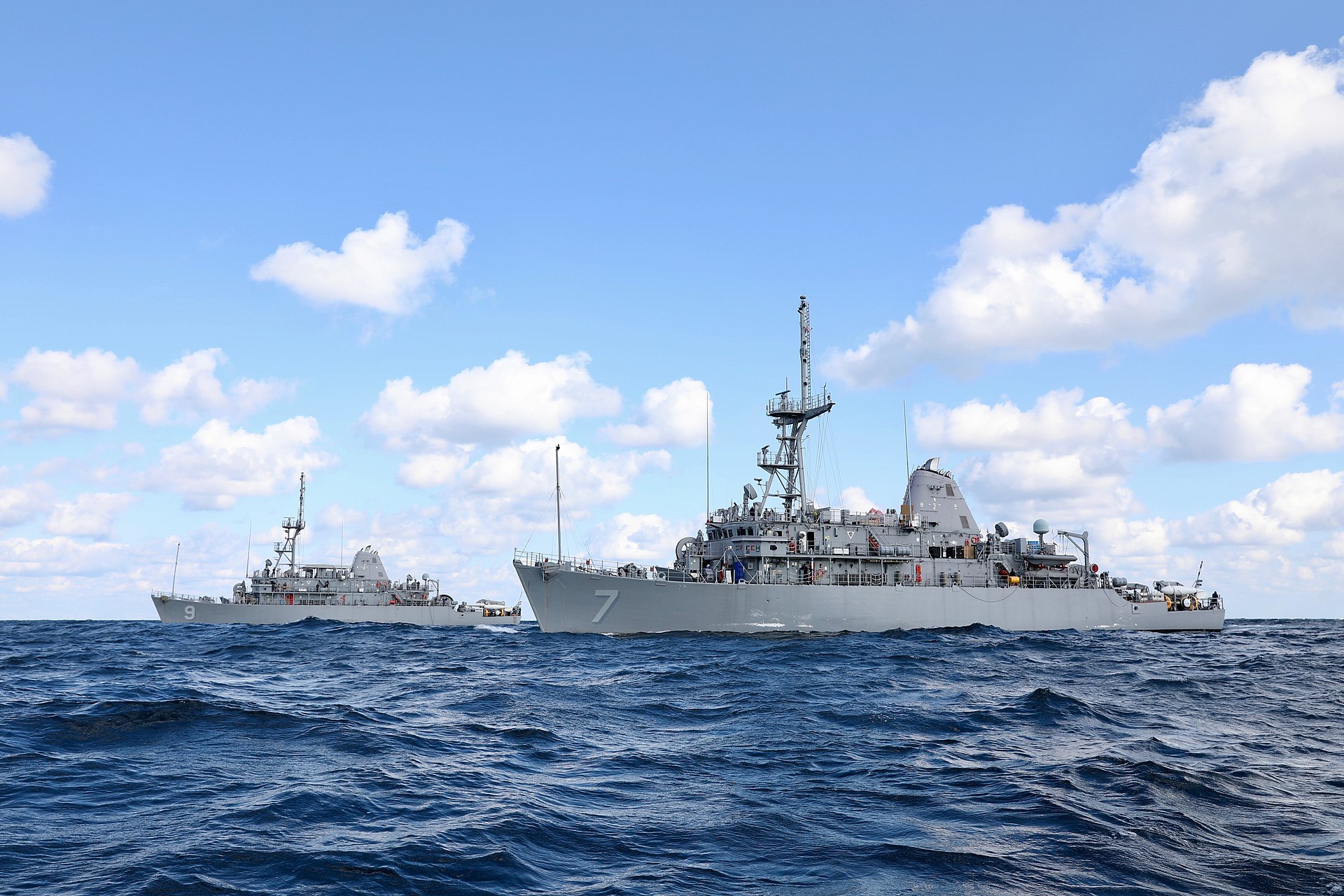
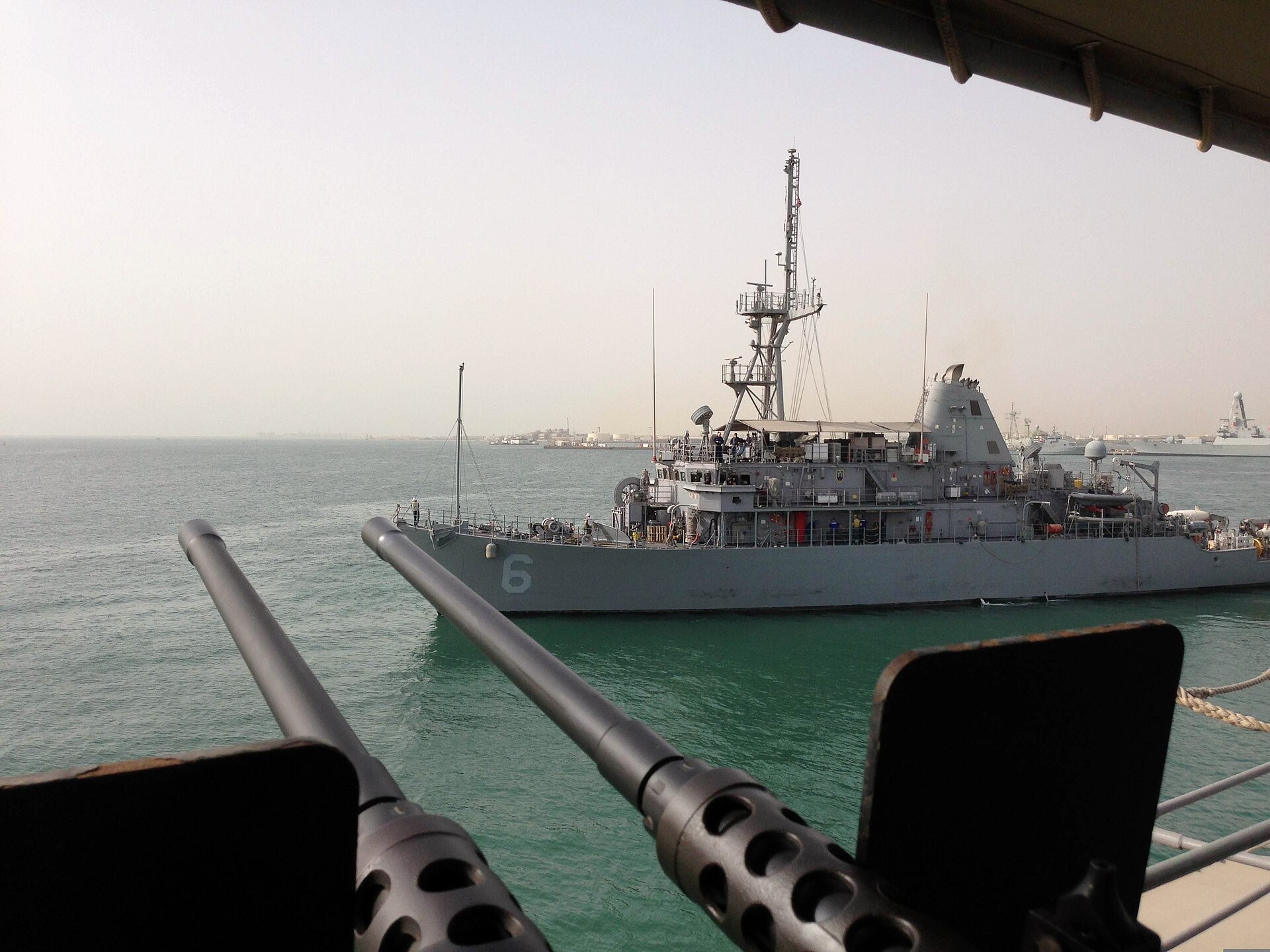
The force the Navy has assembled to clear Hormuz consists, as of PBS and Washington Post reporting on April 25, of two Littoral Combat Ships equipped with mine countermeasures mission packages and two Avenger-class minesweepers — wooden-hulled vessels designed in the 1980s and already showing their age. Two additional Avengers, USS Pioneer (MCM-9) and USS Chief (MCM-14), were spotted leaving Singapore on April 10 after departing their home port of Sasebo, Japan; the roughly 4,000-nautical-mile transit puts them in theater by late April or early May, adding capacity that should have been in the Gulf months ago but wasn’t, because the Navy decommissioned the four Avenger-class ships previously based in Bahrain in September 2025.
The Middle East briefing 3,000+ readers start their day with.
One email. Every weekday morning. Free.
The LCS mine countermeasures package — the system the Navy spent two decades and billions of dollars developing as the Avengers’ replacement — has fielded only four operational mission packages out of a planned twenty-four, according to Captain Kevin Eyer, a retired surface warfare officer writing in USNI Proceedings this month. The Department of Defense testing office concluded in March 2026 that it “could not determine the operational effectiveness” of the LCS MCM package due to insufficient data, a verdict that reads less like a preliminary assessment and more like an institutional confession. The equipment is available roughly 30 percent of the time, according to the Christian Science Monitor, and no operational testing of the Independence-variant LCS MCM package was conducted in all of FY2025.
Each LCS MCM mission requires approximately six hours of setup before hunting can begin, and each mine detection-to-destruction sequence runs a minimum of four hours — meaning a single LCS operating at peak efficiency might clear two to three mines per day in calm conditions with functioning equipment, neither of which can be assumed in a contested strait where Iranian fast boats are still operating and the IRGC has declared “full authority to manage” the waterway. The Independence-class LCS has an aluminum hull, which means it cannot operate inside the mine threat zone itself and must deploy its systems at standoff distance, adding time and reducing the precision of every sweep.
“Minehunting is walking through your yard pulling individual weeds. Minesweeping is more like mowing the grass.”
Steven Wills, retired Lt. Cdr. and researcher at the Center for Maritime Strategy, PBS NewsHour, April 25, 2026
The distinction matters because the Navy is doing the former, not the latter — hunting individual mines with remotely operated vehicles and the Knifefish unmanned undersea vehicle, a system that Captain Eyer describes as experiencing “significant growing pains.” The Knifefish entered low-rate initial production in September 2019, and the Navy plans to acquire thirty total, but the gap between planned and fielded has defined every element of the mine countermeasures programme for a generation.
How Many Mines Did Iran Actually Lay?
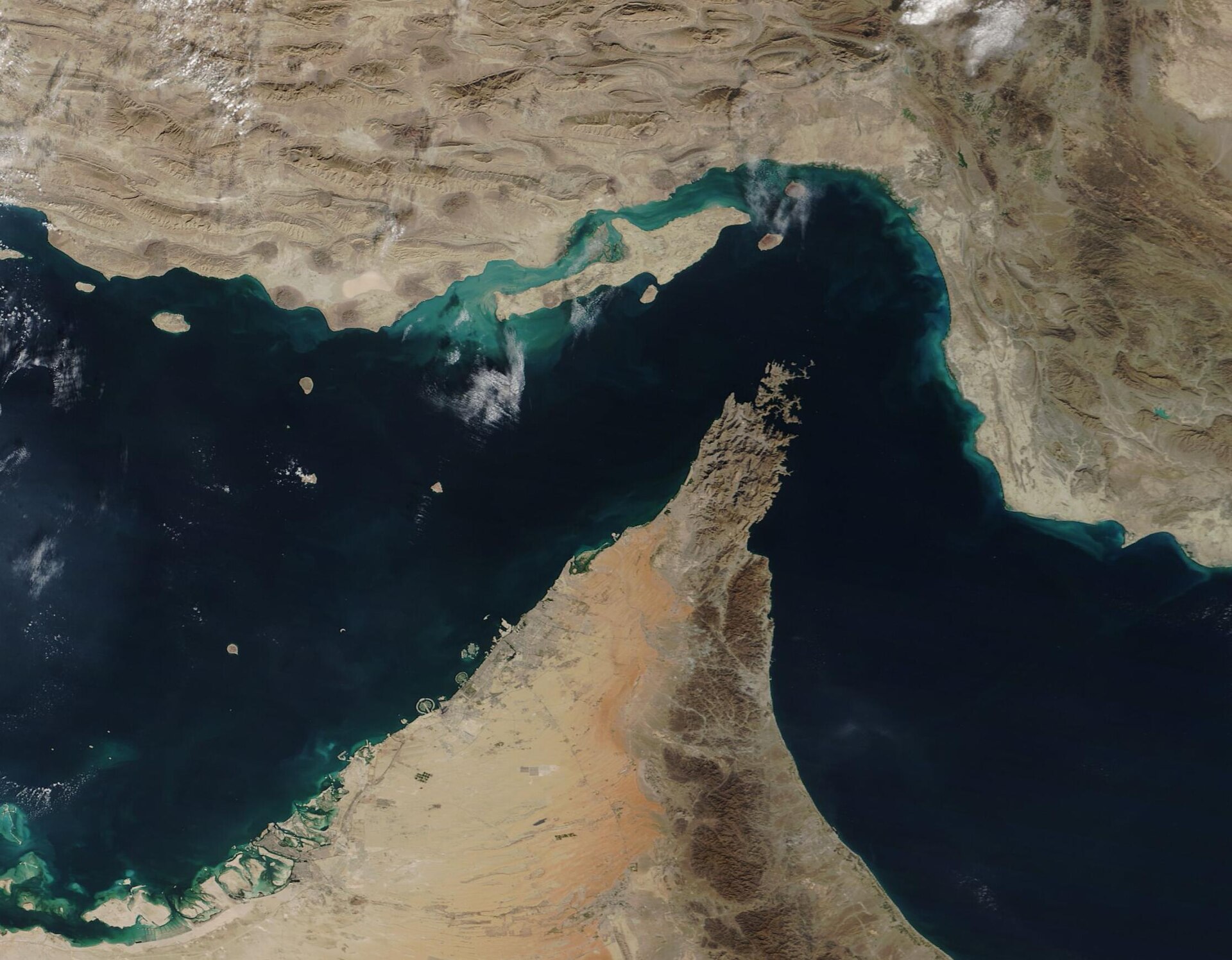
Lawmakers briefed on the operation were told Iran deployed more than twenty mines in the strait, according to Axios reporting on April 23. Iran’s total stockpile is estimated at between 2,000 and 6,000 mines — a range so wide it reflects genuine uncertainty about Iranian production capacity rather than a classified precision the intelligence community is declining to share. The mines in the water represent a fraction of what Iran could have deployed, but even twenty mines across the shipping lanes of a strait twelve nautical miles wide at its narrowest point is enough to shut global commerce down, because the threat of a mine is operationally identical to the presence of one.
“You don’t even have to have lain mines — you just have to make people believe that you’ve laid mines,” Emma Salisbury, a researcher at the Foreign Policy Research Institute and the Royal Navy Strategic Studies Centre, told PBS NewsHour. Alexandru Cristian Hudisteanu, a retired Romanian naval officer, put it more precisely in Al Jazeera: “The mined area does not have to be everywhere to be everywhere in the minds of those who must transit it.” Insurance markets have already internalised this logic — Dylan Mortimer, the UK Marine War Leader at Marsh Insurance, confirmed to PBS that war-risk clauses now require ship owners to contact Iranian authorities for safe passage verification before transiting, a requirement that hands Iran a functional veto over Hormuz traffic regardless of how many mines remain in the water.
Iran’s mine inventory includes contact moored mines based on century-old M-08 designs, influence mines like the Maham-2 and Maham-3 that trigger on magnetic, acoustic, or pressure signatures — requiring multiple ROV passes to locate and producing lower clearance rates — and rocket mines modelled on the EM-52 that can engage targets at depths up to 200 metres. The Maham-7, a seabed limpet-style weapon specifically designed to evade sonar detection, represents the outer edge of what Iran has fielded, and no public reporting has confirmed whether any were deployed in the current campaign.
The Lost-Mine Problem
The most dangerous mines in Hormuz may be the ones Iran cannot find itself. The New York Times reported on April 11, via Euronews, that Iranian forces laid mines haphazardly using small fast boats operating in darkness, with no systematic position recording; some units used commercial GPS devices, others relied on manual compass bearings, and many mine locations were never logged at all. US officials confirmed that Iran cannot account for all the mines it planted and that sea currents may have displaced some from their original positions — turning the seabed into a probabilistic threat environment where even a comprehensive clearance operation cannot guarantee every mine has been found.
Iranian Foreign Minister Araghchi came closest to acknowledging this reality on April 11 when he referenced “taking into account technical constraints” on reopening the strait — a phrase the authorization ceiling Pezeshkian later confessed to makes more legible — language that fell well short of admitting Iran had lost track of its own ordnance but conceded that reopening was not a matter of political will alone. By April 24, Araghchi had declared Hormuz “completely open,” even as the IRGC seized the container ships MSC Francesca and Epaminondas two days earlier, and even as the IRGC’s own published charts continued to mark the standard shipping lanes as a danger zone, routing vessels through a narrow five-nautical-mile channel between Qeshm and Larak islands inside Iranian territorial waters.
Scott Savitz of the RAND Corporation offered PBS a pragmatic counterpoint: the Navy need not remove every mine, because “shipping companies will eventually accept risks given the strait’s profitability.” That calculation — the point at which the economic incentive to transit outweighs the actuarial risk of a mine strike — is the real clearance threshold, and it is measured not in mines destroyed but in insurance premiums, hull war-risk surcharges, and the willingness of a tanker captain to take his vessel through a strait where the last mine clearance operation he trusts was completed by a fleet that no longer exists.
How Long Is Saudi Oil Hostage to the Clearance Clock?
Saudi Arabia’s East-West Pipeline — the bypass that runs 1,200 kilometres from Abqaiq to the Red Sea port of Yanbu — has a nameplate capacity of 7 million barrels per day, but the effective export ceiling through Yanbu is closer to 5.9 million bpd once domestic refining and power generation are accounted for. The record loading rate achieved in April 2026 was 4.3 million bpd, against pre-war Hormuz throughput of 7 to 7.5 million bpd — a structural gap of 1.1 to 1.6 million bpd that no bypass infrastructure can close, only a reopened strait.
The Kingdom’s March production collapse — from 10.4 million bpd pre-war to 7.25 million bpd, a 30 percent drop the IEA called “the largest disruption on record” — has compounded the pipeline ceiling problem. Asia-bound exports fell 38.6 percent according to Kpler tracking data. Brent crude trades well below the $108-to-$111 fiscal break-even that Bloomberg calculates when including PIF commitments, and Goldman Sachs has estimated a war-adjusted budget deficit of 6.6 percent of GDP against the official projection of 3.3 percent.
Every week the strait remains functionally closed costs the Kingdom revenue it cannot replace through Yanbu alone, and Iran knows it — which is why Parliament Speaker Ghalibaf formally linked Hormuz reopening to the removal of the US naval blockade on April 22, turning the clearance timeline into a bargaining chip. The IRGC’s parallel moves compound the pressure: Iran’s parliament is advancing a 12-article Hormuz sovereignty law that would institutionalise IRGC authority over the strait even after mines are cleared, and Iran’s own oil infrastructure is under enough strain that Tehran has limited incentive to accelerate reopening for anyone else’s benefit.
Admiral Daryl Caudle, the Chief of Naval Operations, described the clearance operation as “slow, deliberate work,” according to Army Recognition. For a Kingdom whose fiscal position deteriorates with every tanker that stays anchored, the CNO’s candour is as unwelcome as it is accurate.
A Navy That Forgot How to Sweep
The US Navy disbanded its Mine Warfare Command in 2006, a decision the Christian Science Monitor described as a “critical institutional blow” that erased decades of expertise in a discipline that rewards institutional memory above almost everything else. The MH-53E Sea Dragon helicopters that provided the Navy’s airborne mine countermeasures capability were phased out in August 2025, with no direct replacement — meaning the service entered the Hormuz crisis without the aviation component that had anchored every mine-clearance operation since the 1980s. The Avenger-class ships that had been forward-deployed to Bahrain for exactly this contingency were decommissioned in September 2025 and shipped to the Philadelphia Inactive Ship Maintenance Facility in January 2026, three months before Iran started laying mines.
The historical record is not reassuring for anyone banking on a quick clearance. In 1988, the frigate USS Samuel B. Roberts struck a single Iranian mine in the Gulf — a weapon that cost approximately $1,000 — and the blast tore a fifteen-foot hole in the hull, broke the keel, and required repairs that cost roughly $250 million in 2026 dollars. During Operation Earnest Will in 1987-88, the US deployed eight MH-53 Sea Stallion helicopters, eight ocean-going minesweepers, and six coastal minesweepers to escort reflagged Kuwaiti tankers; the lead ship of the first convoy, the supertanker Bridgeton, struck a mine immediately.
After Desert Storm, when thirty-plus mine countermeasures ships cleared the approaches to Kuwait, the first port did not reopen until April 24, 1991 — fifty-five days after the February 28 ceasefire. The current force in theater is a fraction of that size, the mines are more sophisticated, and the strait is wider than Kuwait’s coastal approaches. Vice Admiral Stan Arthur, who commanded naval forces in the Gulf during Desert Storm, said afterward: “We definitely need to put more emphasis on MCM and end the neglect that has plagued this area for years.” That was 1991, and the neglect got worse.
FAQ
What types of mines has Iran deployed in the Strait of Hormuz?
Iran’s mine inventory spans four generations of technology. The simplest are contact moored mines based on pre-World War I M-08 designs, which detonate on physical contact with a hull and are the easiest to detect with sonar. More advanced are the Maham-2 and Maham-3 influence mines, which sit on the seabed and trigger on magnetic, acoustic, or pressure signatures from passing vessels — these require multiple slow-speed ROV passes to locate, sharply reducing clearance rates. The EM-52-style rocket mine launches from the seabed and can engage targets at depths up to 200 metres, and the Maham-7 is a limpet-style seabed weapon designed specifically to defeat sonar detection. Each type requires different countermeasures protocols, which is why mixed-type minefields take exponentially longer to clear than single-type deployments.
Could allied navies accelerate the mine-clearance timeline?
The UK Royal Navy operates the Hunt-class mine countermeasures vessels HMS Middleton and HMS Bangor in the Gulf as part of Combined Maritime Forces, and both carry the Seafox mine disposal system, which is more mature than the US Knifefish. France maintains mine warfare capability through its Tripartite-class hunters, and Japan’s Maritime Self-Defense Force operates some of the most experienced MCM crews in the world — a legacy of clearing US mines from Japanese waters after World War II. Coalition MCM operations require standardised communications protocols, shared mine-threat databases, and compatible disposal systems, all of which take weeks to integrate. The UK ships are already operating in theater; whether Paris or Tokyo would commit vessels to a US-led operation in a contested Iranian strait is a political question that has not been publicly answered.
What happens to shipping insurance if the Navy declares a lane “cleared”?
War-risk premiums for Hormuz transit currently run between 1 and 3 percent of hull value per voyage — for a VLCC worth $120-150 million, that is $1.2 to $4.5 million per transit on top of normal insurance. Even after the Navy publishes a declared safe corridor, insurers will require independent verification from classification societies like Lloyd’s Register or DNV before adjusting premiums, a process that typically involves side-scan sonar surveys by commercial operators and can take weeks after the military declares an area clear. The Joint War Committee in London, which designates listed areas for war-risk surcharges, has historically maintained elevated risk designations for months after military operations end — the Gulf of Aden piracy surcharges remained in effect for over two years after the last successful hijacking.
Has the US Navy ever failed to clear a minefield?
The Navy has never formally abandoned a mine-clearance operation, but it has repeatedly underestimated the time required. During the Korean War, mines laid by North Korea delayed the Wonsan amphibious landing by eight days and sank two minesweepers, leading Admiral Forrest Sherman to say the Navy had “lost control of the seas to a nation without a navy.” In the 1991 Gulf War, two mine strikes on a single day — USS Tripoli at 0430 and USS Princeton three hours later — cancelled the planned amphibious assault on Kuwait’s coast entirely. The operational record suggests the Navy eventually clears what it sets out to clear, but the gap between initial timeline estimates and actual completion has historically ranged from two to six times the original projection.
Could Iran re-mine the strait after it is cleared?
Trump’s “shoot and kill” order against mine-laying boats addresses this directly, but Iran’s mine-delivery methods extend beyond the small fast boats the order targets. During the Iran-Iraq War, Iran used the commercial vessel Iran Ajr — a converted landing craft disguised as a cargo ship — to lay mines covertly until US special forces boarded and seized it in September 1987. Modern variants could include mines deployed from fishing vessels, dhows, or even pre-positioned on the seabed by divers operating from semi-submersible platforms. The IRGC also possesses shore-launched mine-delivery systems that can seed mines from coastal positions on Qeshm, Larak, and Hormuz islands without putting a vessel in the water at all, making the “shoot and kill” order a partial solution to a problem with multiple delivery vectors.