
JEDDAH — Six weeks before a Ukrainian military team arrived at a Saudi air base to train American soldiers on how to shoot down Iranian drones, Donald Trump told a Fox News Radio host that Ukraine’s help with drone defense was the last thing Washington needed. On April 24, Volodymyr Zelenskyy walked into Mohammed bin Salman’s office in Jeddah for the second time in under a month, and the agreement they confirmed turns Kyiv into a paid third-party contributor to the layered air defense now sitting between Iranian missiles and Saudi crude.
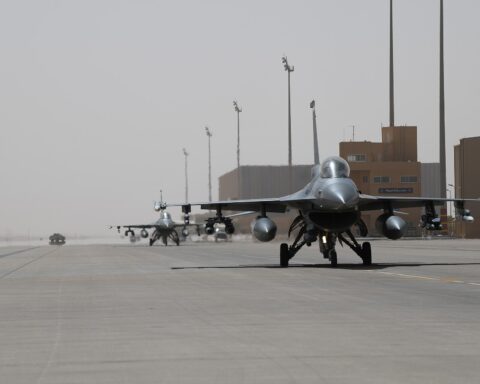
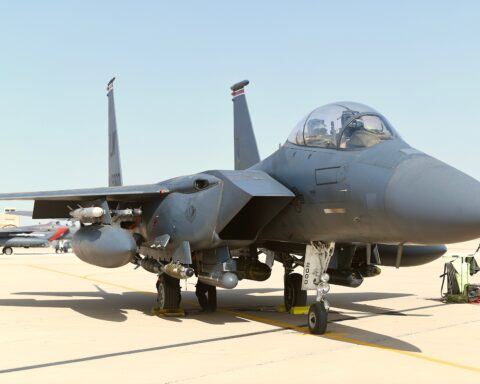
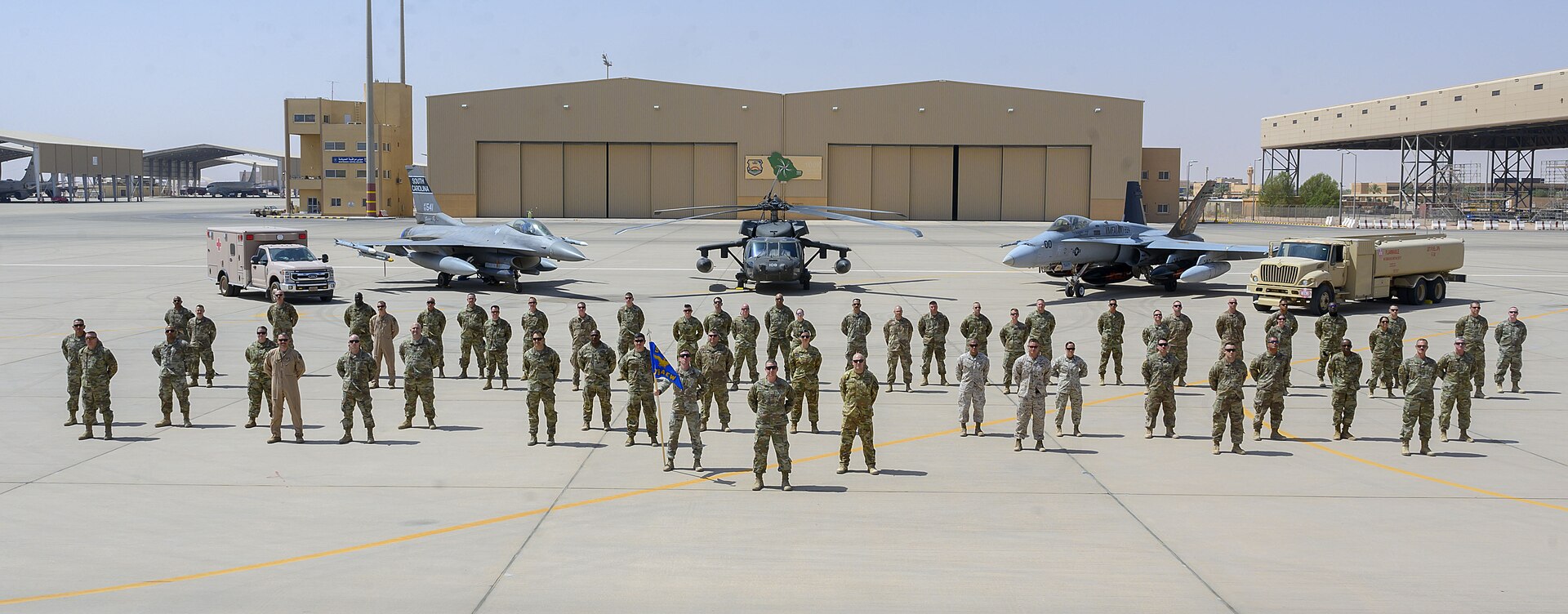
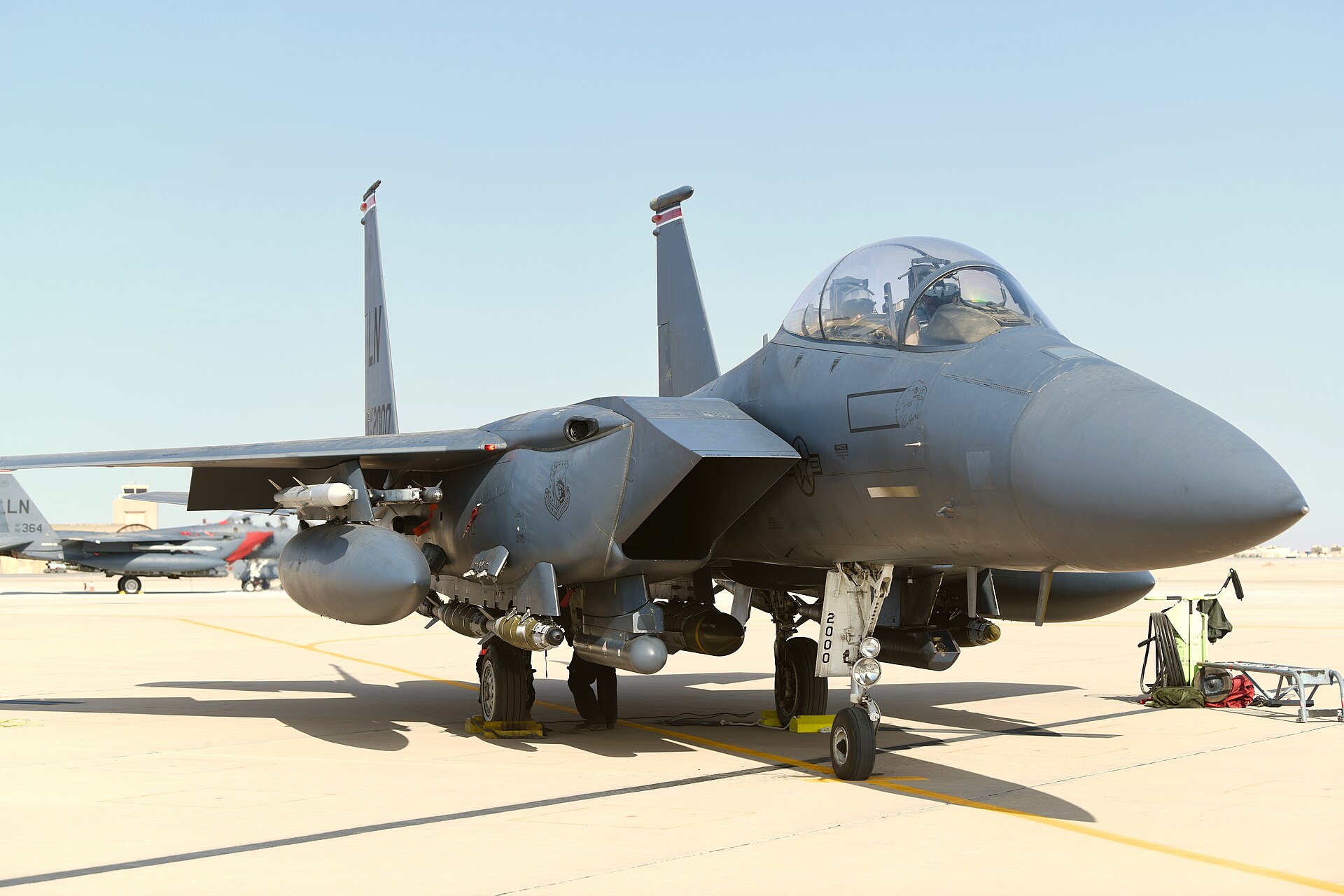
The Pentagon deployed Ukraine’s Sky Map counter-drone command-and-control platform at Prince Sultan Air Base the week before Zelenskyy’s visit, with Ukrainian operators on the ground showing US service members how to fuse radar, acoustic, and video data into a single picture of incoming swarms — first reported by Reuters on April 22. PSAB sits 640 km from Iran, and on March 27 an IRGC strike there destroyed a USAF E-3 Sentry AWACS worth roughly $500 million, one of just sixteen in the entire US inventory. Six different countries now own systems active in Saudi airspace, Russia is the upstream supplier of the Shahed drones Ukraine is being paid to defeat, and the procurement geometry MBS has been building since 2018 has finally produced its intended outcome: no single capital with a veto over Saudi survival.
Table of Contents
- What Did Trump Say About Ukraine’s Drone Help Six Weeks Before Sky Map Arrived?
- How Did Ukraine’s Sky Map End Up Inside a US Air Base in Saudi Arabia?
- The Three-Area Framework: Air Defense, Energy, Food
- Why Are There Now Six Different Countries’ Air Defense Systems Over Saudi Arabia?
- The Russia Irony: Kyiv Counters the Drones Moscow Sold Iran
- What Does Ukraine Add to Saudi Arabia’s 50% Localization Target?
- What Iran and Russia Are Saying — and Not Saying
- Frequently Asked Questions
What Did Trump Say About Ukraine’s Drone Help Six Weeks Before Sky Map Arrived?
The president was asked directly on the Brian Kilmeade Show in March whether the United States could use Ukrainian counter-drone expertise in the Gulf, and his answer was four words: “No, we don’t need their help.” Days later, on March 14, he told NBC News that “the last person we need help from is Zelensky,” a line repeated by State Department officials when Saudi journalists asked about Ukrainian trainers seen at PSAB. The official position from Washington was that this transaction was not happening.
The transaction was already happening. Fortune reported on March 20 that Ukraine had been “quietly helping five Middle East nations shoot down Iranian drones” — Saudi Arabia, the UAE, Qatar, Kuwait, and Jordan — with at least 200 specialists embedded across the region before any framework agreement was inked. Zelenskyy’s first offer to MBS, made privately on March 7 according to Al Jazeera reporting, came twenty days before the formal initial defense arrangement that Euronews and Breaking Defense both confirmed on March 27.
What landed at PSAB the week of April 14 wasn’t a quiet expert exchange, it was a fielded American military requirement, signed off by US Central Command, with Ukrainian software running on US Air Force consoles. Reuters’ April 22 exclusive named the platform — Sky Map, built by Kyiv-based Sky Fortress under Ukraine’s Brave1 defense innovation programme — and confirmed that Ukrainian personnel were instructing American operators in real time. The president’s public position and the Pentagon’s deployment ran in opposite directions, and the deployment won.
For Riyadh, the contradiction is the asset. Saudi Arabia has spent two decades watching Congressional holds, executive vetoes, and human-rights waivers slow or kill US weapons transfers, and the Sky Map deployment confirms that procurement decisions for the systems defending Aramco can now bypass the public position of the American president. The lesson the Royal Court draws from a presidential “no” overruled by an operational “yes” is the same lesson it has drawn from the progressive de-coupling of Saudi defense planning from Washington’s day-to-day politics: rely on systems, not statements.
The Middle East briefing 3,000+ readers start their day with.
One email. Every weekday morning. Free.
How Did Ukraine’s Sky Map End Up Inside a US Air Base in Saudi Arabia?
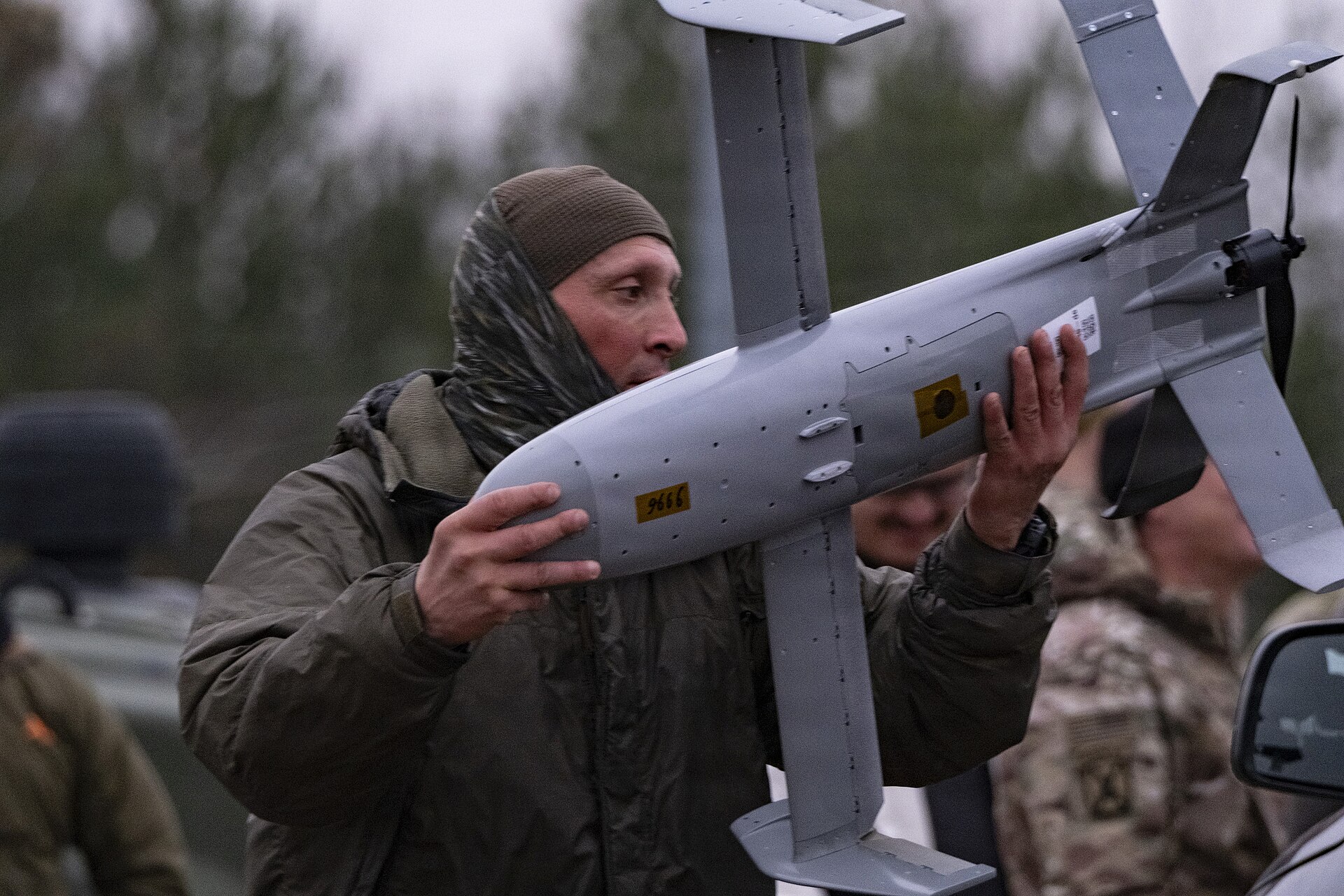
Sky Map is the C2 layer Ukraine built to survive the Shahed-136, the Iranian-designed loitering munition Russia rebadges as the Geran-2 and fires at Ukrainian cities in salvos of 80 to 200 a night. Technology.org’s April 23 write-up, drawing on the same Reuters dossier, described it as a sensor-fusion engine that ingests radar tracks, acoustic detections from microphones strung across approach corridors, and electro-optical video, then resolves the contradictions and pushes a single threat picture to interceptor crews. The Saudi requirement that drove deployment is the same one Ukraine solved in Kharkiv: too many incoming low-altitude objects, too few high-end interceptors, no margin for misidentification.
The math behind the deployment is brutal. A Patriot PAC-3 interceptor costs $3 to $4 million per round, a Shahed costs $80,000 to $130,000 to build, and a Ukrainian-style mobile interceptor solution comes in around $10,000 — figures the Think Tank Journal compiled in March from Ukrainian defense procurement filings. Saudi Arabia entered the war with roughly 400 PAC-3 interceptors in inventory and burned through an estimated 14 percent of that stockpile in the first weeks, with the next major US production block — the $7 billion mobilization reaching delivery in 2028 — sitting on the wrong side of the war’s likely duration. The structural response to that gap is now documented: Saudi Arabia’s growing reliance on Ukrainian air-defense expertise has placed 228 specialists inside the kingdom’s networks, deploying the Ukrainian Sting and Octopus interceptors now filling Saudi Arabia’s PAC-3 gap at roughly one-three-hundredth the cost per intercept.
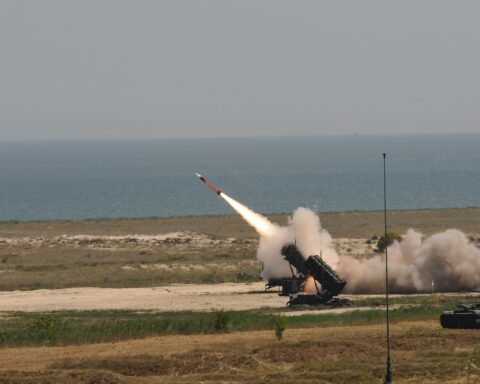
Sky Map doesn’t shoot anything down on its own. It tells the Patriot battery and the Korean KM-SAM and the British Sky Sabre and the Chinese 30 kW laser which threats to engage in which order, and it tells the operators on duty when a swarm is decoy-heavy and when it isn’t. Samuel Bendett of the Center for a New American Security spelled out the proposition in his April 1 FDD analysis: Ukraine has been countering Shahed and Geran drones for years, and “all features of this defense are of interest to the Gulf — identifying incoming drones, sharing data on the incoming threats, interdicting such UAVs.”
Ukraine has been countering Shahed/Geran drones for years, [and] all features of this defense are of interest to the Gulf: identifying incoming drones (SIGINT/ELINT); sharing data on the incoming threats; interdicting such UAVs.— Samuel Bendett, Senior Adjunct Fellow, Center for a New American Security, FDD Analysis, April 1, 2026
Sky Map arrived at PSAB alongside Merops, an interceptor-drone programme run inside Project Eagle and backed by former Google chief executive Eric Schmidt, according to Reuters and Technology.org reporting in April. Both platforms target the same kill chain — detect cheap, interdict cheap — and the speed of the deployment, weeks rather than the years US Foreign Military Sales typically demand, tells you which procurement track Riyadh now considers fast enough for a wartime tempo.
The Three-Area Framework: Air Defense, Energy, Food
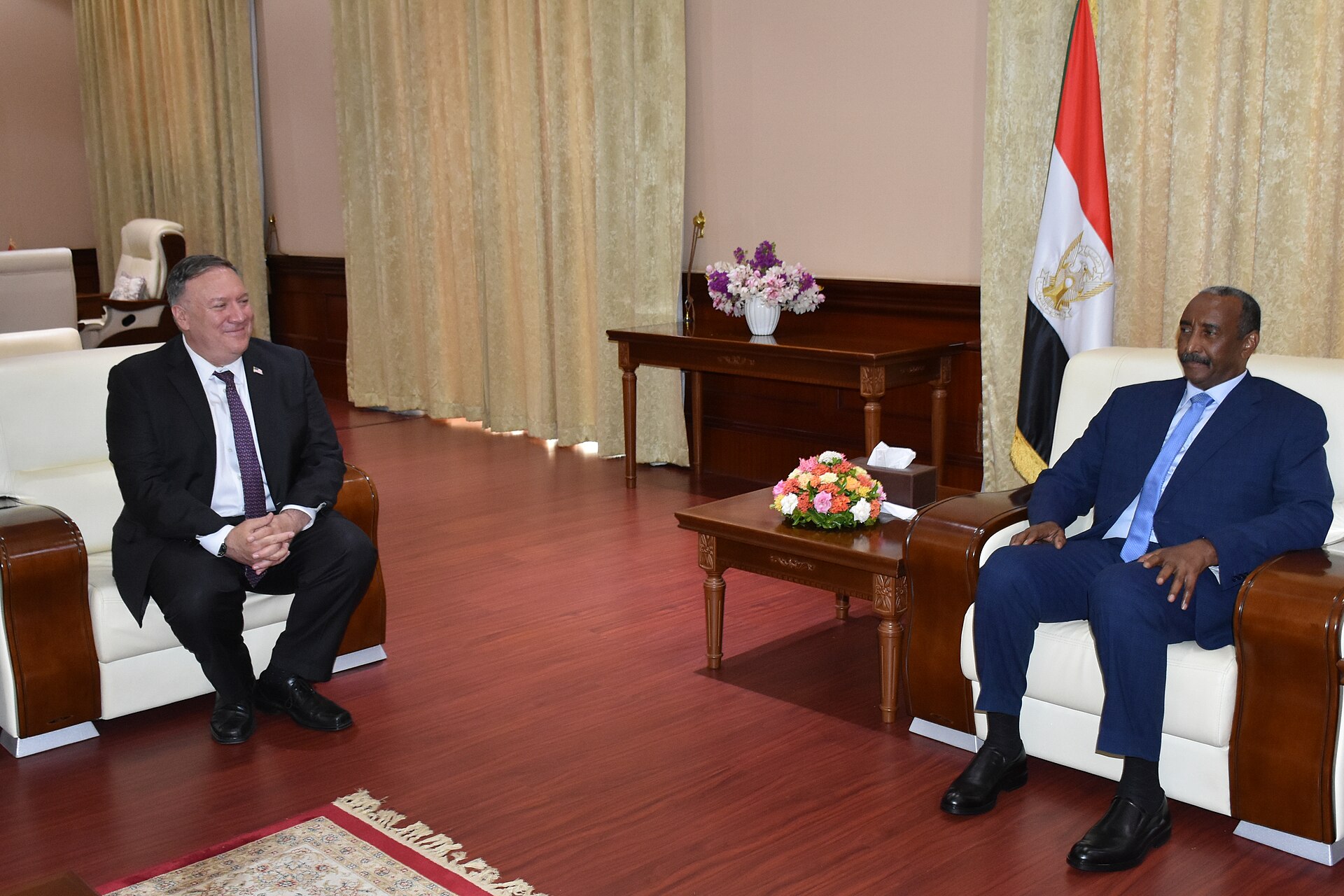
The April 24 communiqué from the Saudi side and the read-out posted by Zelenskyy’s office to Telegram both organize the bilateral around the same three pillars, and the order matters: air defense first, energy cooperation second, food security third. The National’s coverage on the day of the meeting confirmed both governments described the trajectory as “building a comprehensive strategic agreement,” language that in Gulf statecraft means a framework treaty is being drafted rather than a one-off contract being signed.
Air defense is the live piece. The 10-year drone agreement — announced by Ukraine’s presidential office on April 21 and reported across Saudi, Ukrainian, and Russian outlets, including TASS the same day — bundles drone production technology transfer, air defense systems, and electronic warfare cooperation into ten separate contracts that militarnyi.com has tracked individually. Saudi Arabia’s General Authority for Military Industries (GAMI) and Saudi Arabian Military Industries (SAMI) are in active discussions with Ukraine’s Ministry of Defence on transferring and localizing a Ukrainian electronic warfare system, per Tactical Report’s reporting in late March.
Energy is the leverage. Saudi Arabia has continued buying Russian discounted crude through 2026 to refill its own bunkers while exporting at war premium, and Ukraine wants either reduced Saudi tolerance for that arbitrage or direct Saudi participation in post-war reconstruction tenders that European budgets cannot underwrite alone. Food security is the third leg because Ukraine is one of the few wartime states still able to commit grain, sunflower oil, and corn at volume to Gulf strategic reserves, and the Saudi Grain Authority has spent the past two budget cycles diversifying away from Russian and Black Sea routes that Houthi and IRGC interdiction has rendered uninsurable.
Zelenskyy framed the package on the record on March 30, describing the prior trip as “a very fruitful visit to the Middle East and the Gulf region — we have agreed on opportunities to strengthen air defense, on the joint development of defense production, and on energy cooperation.” The April 24 meeting in Jeddah was the second pass, narrowing implementation timelines on the contracts already drafted. The next round, by both governments’ accounting, is expected before the end of May.
Why Are There Now Six Different Countries’ Air Defense Systems Over Saudi Arabia?
The single-supplier model is dead. The architecture defending Saudi crude, refineries, royal compounds, and the Two Holy Mosques now combines hardware and software written in six capitals, deployed under five separate procurement contracts, and integrated through a layered fire-control logic that GAMI-supervised Saudi engineers have been building since the Abqaiq strike in September 2019. The Sky Map arrival completes the lineup the Royal Court has been assembling deliberately.
| System | Origin | Layer | Source |
|---|---|---|---|
| THAAD | United States | High-altitude exo-atmospheric | USAF deployments at PSAB and Eastern Province |
| PAC-3 MSE | United States (Greek-assisted reload) | Mid-altitude terminal | Greek ELDYSA mission, ~400 round inventory |
| KM-SAM Block II | South Korea | Medium-range area | $3.2B contract, WION reporting |
| Sky Sabre (CAMM) | United Kingdom | 8 km point defense, mobile | Royal Artillery battery deployed late March 2026 |
| 30 kW Silent Hunter laser | China | Counter-UAV directed energy | Saudi MoD inventory disclosures, 2025 |
| Sky Map C2 + Merops | Ukraine (with US Project Eagle) | Counter-drone fusion and interception | Reuters exclusive, April 22, 2026 |
What the table doesn’t show is the political insurance built into the geometry. If Washington tries to throttle Patriot resupply, Riyadh has KM-SAM Block II inbound under a $3.2 billion South Korean contract WION reported last quarter. If Ankara escalates its proxy quarrels with Riyadh, Sky Sabre’s CAMM interceptors keep flowing from a UK supply chain that runs on Saudi co-financing. If Beijing balks at the Iran question, the Ukrainian C2 layer is already running on Brave1 source code that Saudi engineers have studied. The architecture was designed precisely so that no single capital can hold it hostage, and that is why it reads as overlapping rather than redundant.
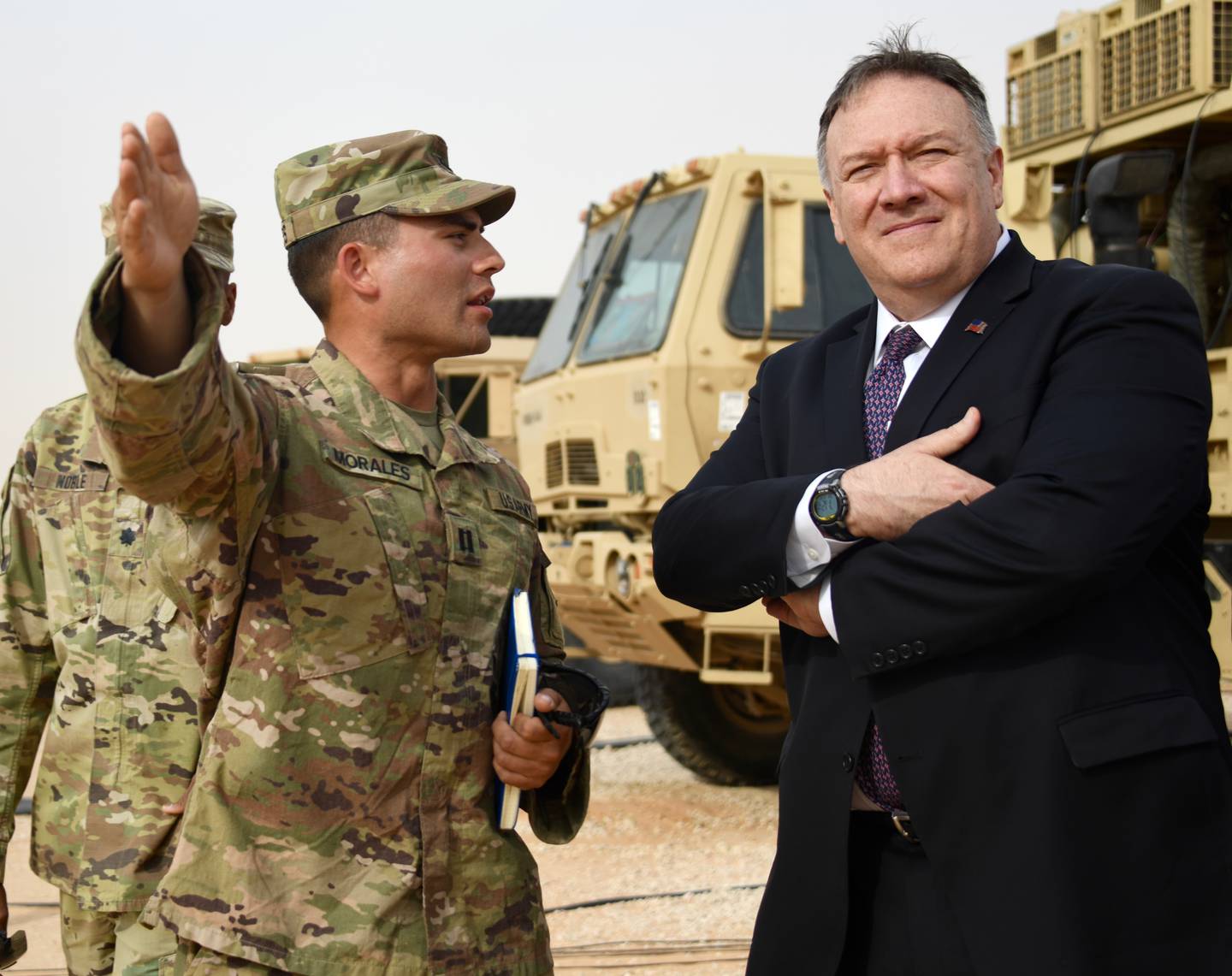
The six-system stack also redistributes leverage inside Riyadh’s own decision-making. The Saudi defense ministry, GAMI, SAMI, the National Guard, and the Royal Saudi Air Defense Forces all sponsor different procurement lanes, and a multi-vector portfolio gives each principal a mandate rather than concentrating dependence in any one ministry. The April 24 bilateral with Zelenskyy was attended on the Saudi side by GAMI representatives, per Saudi state media, signaling that the Ukrainian relationship has been formally institutionalized rather than parked inside a single advisor’s office.
The cost is interoperability complexity. Six radars speaking six waveforms, six command consoles in three languages, and crews who have to be cross-trained across at least three doctrinal traditions — Anglo-American, Korean, and now Ukrainian. The benefit, in MBS’s calculation, exceeds the friction: a defense industrial base built around redundancy survives political shocks that would break a single-supplier client state. That logic, repeatedly tested under fire since 2019, is now the operating principle behind the Ukraine deal as a hedge against Washington.
The Russia Irony: Kyiv Counters the Drones Moscow Sold Iran
The Shahed drones now striking Saudi infrastructure are designed in Iran, but the supply lines, targeting telemetry, and electronic warfare guidance for Gulf strikes have been provided by Russia, according to Western intelligence assessments cited by CNBC and reported by the MEF Observer in March. Russia ships Shaheds to Iran, Iran fires them at Aramco, and Saudi Arabia is now paying Ukraine — Russia’s adversary in a separate war — to build the C2 platform that defeats them. Every capital in this triangle has a counterpart it would prefer not to acknowledge.
Anatoly Motkin, the Strategeast analyst writing for the Atlantic Council’s UkraineAlert blog in March, captured what the Gulf is actually buying: Ukraine possesses what Gulf states “most covet — battle-proven engineering expertise; a deep talent pool in software, electronics, and materials science; and a development culture forged under conditions of extreme pressure.” Jean-Marc Rickli of the Geneva Centre for Security Policy framed the same trade in supply terms, telling the Atlantic Council that Ukraine has had “no choice than to innovate” under Russian pressure, and Gulf nations could rapidly benefit from the resulting catalogue.
Ukraine possesses what Gulf states most covet: battle-proven engineering expertise; a deep talent pool in software, electronics, and materials science; and a development culture forged under conditions of extreme pressure.— Anatoly Motkin, Atlantic Council UkraineAlert, March 2026
Russia’s response to all of this has been calibrated silence. TASS reported the March 27 initial defense arrangement factually, without the editorial condemnation Moscow reserves for European or American transfers, and the Kremlin has not publicly threatened Saudi Arabia over the deal. The reason is that Riyadh still has assets Moscow needs — Saudi-Russian coordination inside OPEC+ on production discipline, Russian access to Saudi banking corridors that Western sanctions have closed elsewhere, and the diplomatic latitude to host both Russian and Ukrainian officials in the same week. The Russian arms market in the Gulf, by contrast, has effectively collapsed: no major Saudi, Emirati, or Qatari procurement of a Russian platform has cleared the Royal Court since 2022.
Saudi Arabia’s pre-war neutrality on Ukraine — continued Russian crude purchases, Russian officials at Riyadh summits, no participation in Western sanctions — was not a strategic preference, it was a hedge held until a better arbitrage appeared. The arbitrage appeared on March 27, 2026, the same day an Iranian-designed, Russian-supplied drone destroyed a USAF E-3 Sentry at PSAB. Within hours, the Ukrainian initial defense arrangement was signed.
What Does Ukraine Add to Saudi Arabia’s 50% Localization Target?
Vision 2030 set a target of 50 percent local defense industrial spend by 2030. The end-2024 figure, per Arab News citing GAMI, was 24.89 percent — up from 4 percent in 2018, but still half of where the Crown Prince needs it to be in less than four years. Ukrainian content is one of the few remaining vectors that can move the needle without Riyadh having to build a new domestic supplier base from scratch, because the technology transfer terms Kyiv is offering are unusually permissive.
Ukraine formally opened arms exports on February 8, 2026, by Zelenskyy decree — a structural shift the Kyiv Independent reported at length, and one that meant for the first time since 2022, Ukrainian state-owned defense firms could conclude commercial contracts with foreign buyers without going through US, UK, or EU re-export licenses. Defense production capacity inside Ukraine will reach $50 to $60 billion this year on Kyiv Independent and United24 Media tallies, with a drone output target of 7 million units in 2026 alone, and projected export revenue of around $2 billion. Saudi Arabia is positioned to become one of the largest single customers.
The localization arithmetic looks like this. Saudi Arabia’s 2026 military budget is $78 billion, per WION’s reporting; if even 10 percent of new air defense and counter-UAS spend flows into joint Ukraine-Saudi production lines inside SAMI’s industrial complex, that is roughly $7.8 billion booked against the localization metric in a single fiscal year. The technology categories Kyiv has offered — drone airframes, electronic warfare suites, autonomous targeting software, and acoustic sensor networks — are precisely the ones GAMI has identified as critical gaps in domestic Saudi production.
The 10-year framework Zelenskyy’s office described on April 21 covers all three GCC partners — Saudi Arabia, the UAE, and Qatar — folding them into a single multilateral architecture that complements rather than competes with the bilateral US Foreign Military Sales pipeline. That architecture is part of what makes the broader Gulf shift toward a quartet diplomatic posture structurally durable.
What Iran and Russia Are Saying — and Not Saying
Iran’s response has been performative dismissal, the diplomatic register Tehran reaches for when it cannot afford an escalation. The Iranian envoy to Kyiv, in a remark first carried by the MEF Observer and recycled across CNBC’s wire summaries, called Ukraine’s Gulf drone assistance “nothing more than a joke and a showy gesture.” That sentence is doing two jobs at once: it minimizes the threat for domestic Iranian audiences, and it avoids the harder question of whether Iran has the operational bandwidth to retaliate against another front while still trying to pin down a ceasefire with the United States.
The unspoken Iranian concern is signature attribution. Sky Map’s central function is fusing radar, acoustic, and video data to identify the launch profile and flight signature of incoming drones, and the database Ukraine is bringing into PSAB has been populated by three years of Shahed engagements over Ukrainian airspace. That means every distinguishing feature of every Iranian-built variant — engine harmonics, control surface response, GPS spoofing patterns — is now resident on a server inside a US air base 640 km from Iran’s coast, available to American, Saudi, and Ukrainian operators alike. The intelligence implications run well beyond air defense.
Russia has chosen calibrated silence. The Moscow calculation is that an open break with Riyadh would forfeit OPEC+ coordination, Saudi neutrality on the Black Sea trade, and any future role in post-war Ukrainian reconstruction tenders that Riyadh might co-finance. Better, from the Kremlin’s perspective, to absorb the loss of Gulf arms market share quietly and preserve the strategic relationships that still matter. The result is that Saudi Arabia gets to add a Ukrainian layer to its air defense without paying any visible Russian price, which is itself a measure of how much leverage Riyadh now holds over Moscow’s Middle East options.
Trump’s silence since the Sky Map deployment is the most telling of the three. The president who said in March that the United States needed nothing from Zelenskyy on drone defense has not commented publicly on the Pentagon’s April 14 deployment of a Ukrainian C2 platform inside an American air base in Saudi Arabia. Senior Defense Department officials, asked by Reuters whether the deployment had been cleared at White House level, declined to characterize the chain of approval. The agreement is operational, the contradiction is unresolved, and the Royal Court is content with both — a posture consistent with the broader logic of a kingdom that has concluded it must continue rewriting the US-Gulf bargain on its own terms.
Frequently Asked Questions
How many Ukrainian counter-drone specialists are currently deployed across the Gulf?
More than 200, distributed across Saudi Arabia, the UAE, Qatar, Kuwait, and Jordan, per Fortune’s March 20, 2026 reporting. The deployments predate the formal March 27 initial defense arrangement, indicating that Ukrainian specialist support began as informal expert exchanges in late 2024 before being institutionalized through the 10-year drone framework Zelenskyy’s office announced on April 21. The largest single-country contingent is at PSAB, with secondary clusters in Abu Dhabi and Doha.
Has any other US ally hosted a Ukrainian counter-drone C2 platform inside an American military installation?
No publicly disclosed precedent exists. The Reuters April 22 exclusive on Sky Map at PSAB describes the deployment as the first known instance of a Ukrainian-built command and control platform running inside a US Air Force base abroad. The Merops interceptor programme deployed alongside Sky Map is run inside Project Eagle, a Pentagon-funded effort backed by former Google CEO Eric Schmidt that combines US software engineering with Ukrainian battlefield datasets.
What is Saudi Arabia’s military budget for 2026 and how does it compare to the Ukrainian deal?
Riyadh budgeted $78 billion for defense in fiscal 2026, per WION’s compilation of Saudi Ministry of Finance disclosures. The 10-year Ukraine framework is expected to comprise ten separate contracts, per militarnyi.com, with individual contract values not yet published; analysts at Strategeast and the Atlantic Council estimate aggregate Saudi-Ukraine defense flows could reach low single-digit billions of dollars annually once production lines are localized inside SAMI facilities, a scale that would still leave the Ukrainian relationship smaller than the South Korean KM-SAM Block II deal but larger than the British Sky Sabre transfer.
Does Ukraine have a separate defense relationship with the UAE and Qatar comparable to the Saudi one?
Yes. The 10-year drone agreement framework Zelenskyy’s office announced on April 21 covers Saudi Arabia, the UAE, and Qatar simultaneously, and Ukrainian specialists are already deployed in each country per Fortune’s March reporting. The UAE separately facilitated 3,771 Russia-Ukraine prisoner-of-war exchanges through 2024 and 2025, per Gulf International Forum data, while Qatar negotiated the return of Ukrainian children — meaning both states held conflict-bridging roles before pivoting to defense procurement.
What happens if the United States objects formally to the Ukrainian Sky Map presence at PSAB?
The deployment was Pentagon-approved at CENTCOM level, per Reuters’ April 22 reporting, meaning a White House reversal would create a public conflict between the executive and the operational chain of command in the middle of an active war with Iran. The political cost of that conflict, weighed against the operational cost of removing the most advanced counter-Shahed C2 platform in the theater, is the calculation that has produced the current presidential silence on the deployment, and it is the same calculation that has shaped Saudi modeling of Trump’s near-term decision space. That same logic now applies at sea level: the three US carrier strike groups now operating in CENTCOM from Saudi bases, analysed in Three Carriers, Zero Consultation, extend the six-country air architecture into the maritime dimension while preserving the same pattern of Saudi exposure without Saudi representation.