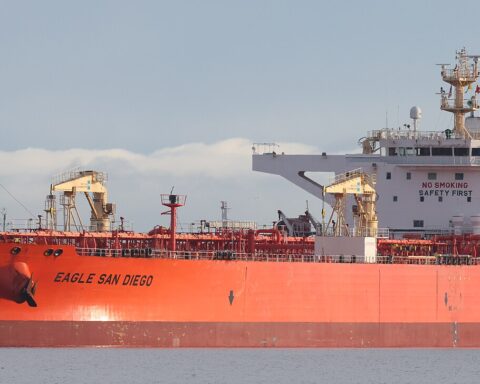
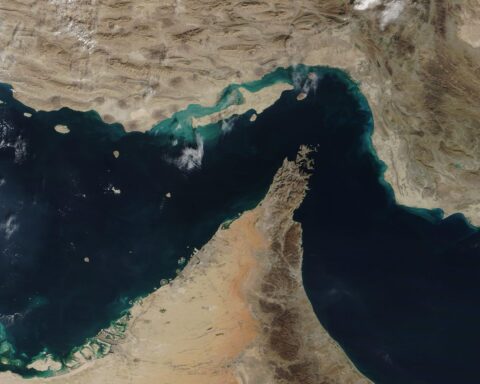
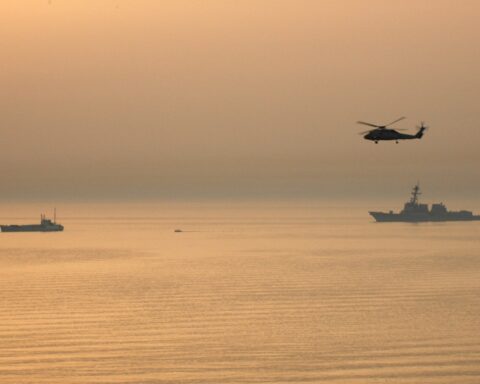
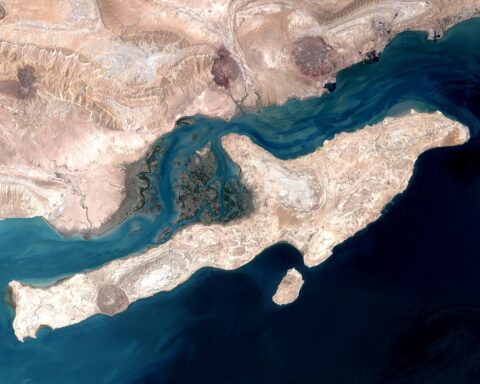
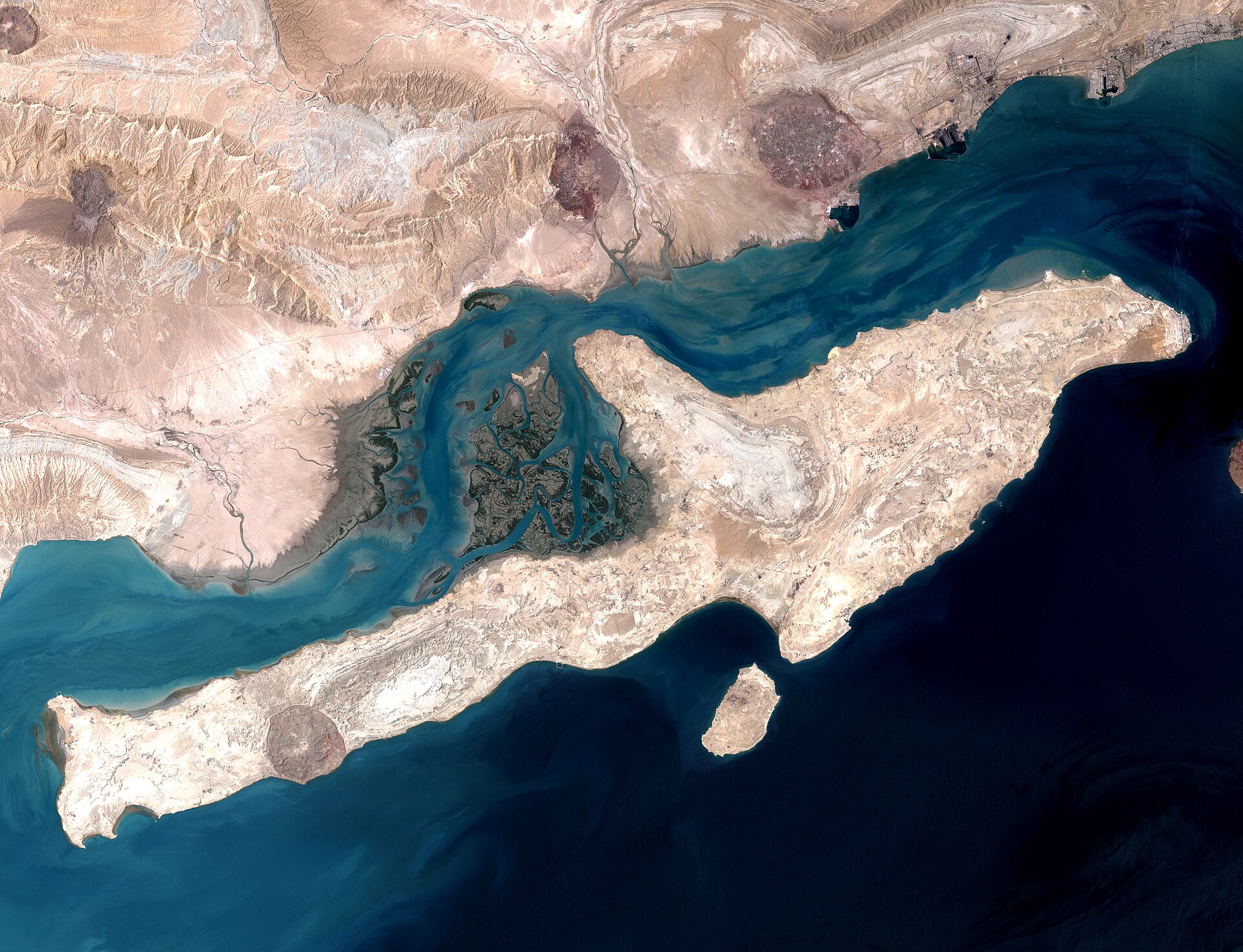
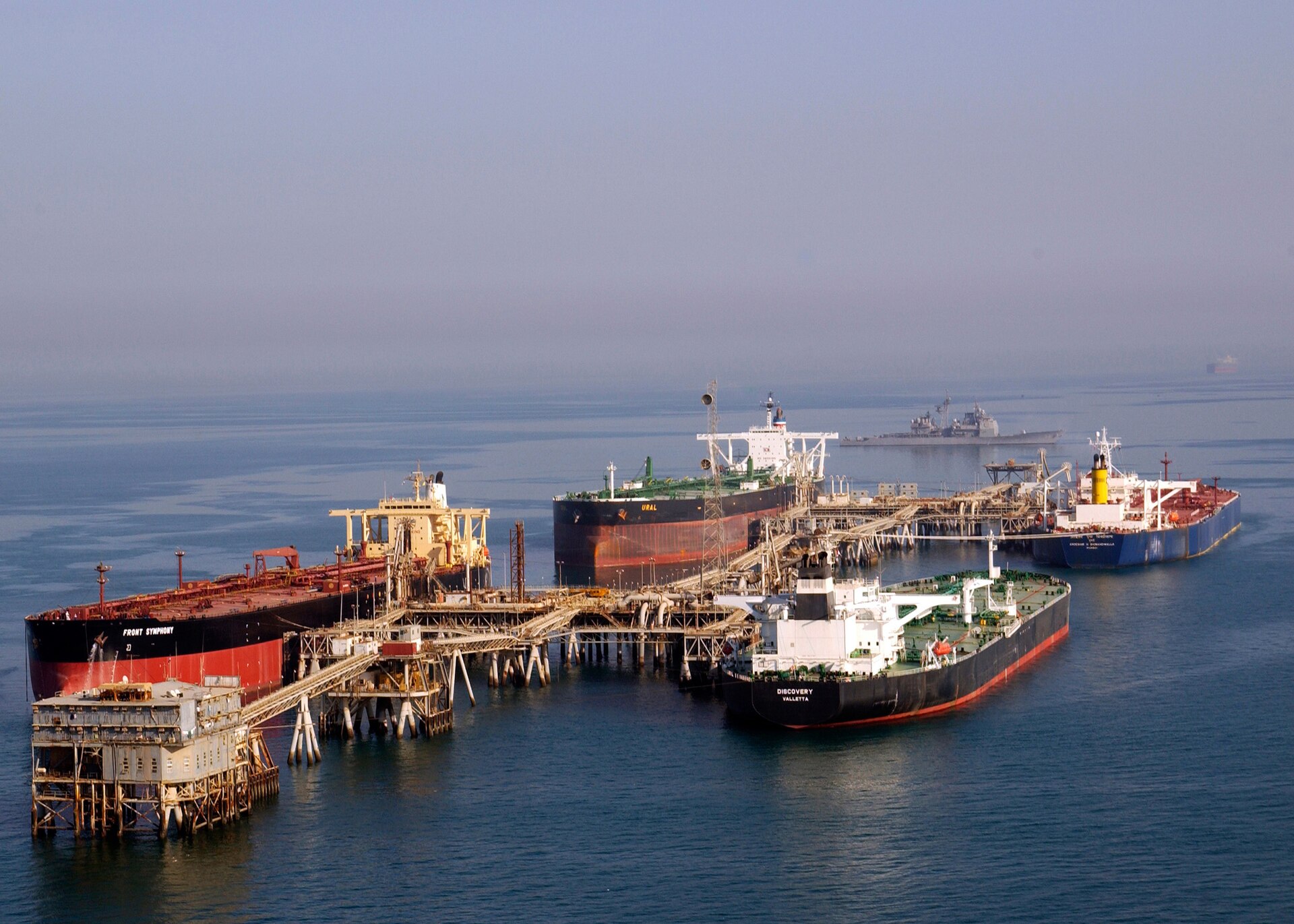
DUBAI — On April 28, 2026, the Panama-flagged VLCC Idemitsu Maru — loaded with roughly two million barrels of Saudi crude from the Juaymah terminal — threaded through the Qeshm-Larak corridor under explicit Iranian authorization, becoming the first Japan-linked crude tanker to transit the Strait of Hormuz since war began on February 28. The vessel had sat stationary off Abu Dhabi for weeks after loading in early March, and its passage through a 5-nautical-mile channel inside Iranian territorial waters was tracked 30 kilometers east of Larak Island, along Tehran’s approved northern route. A senior Japanese government official told Nikkei Asia the transit “resulted from talks with Tokyo, with no fees paid” to Iran, while Idemitsu Kosan, the vessel’s parent company, declined all comment citing “safety reasons.”
This was not a resumption of commercial shipping. Seven vessels transited Hormuz in the 24 hours before the Idemitsu Maru’s passage, against a pre-war baseline of 125 to 140 per day — a throughput rate of roughly 5%, consistent with the managed-passage architecture that has defined the strait since the IRGC declared full authority in early April. What happened on April 28 was something more precise: Tehran demonstrated it can grant commercial normalcy to a formal US treaty ally, carrying Saudi cargo, without a nuclear deal, without a ceasefire, and without Washington in the room.
Table of Contents
- What the Idemitsu Maru Transit Reveals About Iran’s Hormuz Strategy
- Why Did Iran Choose Japan as the Permittee?
- The 38-Day Diplomatic Channel: From Public Denial to Private Authorization
- What Does “No Fees Paid” Actually Mean?
- The AIS Credential System: How Hormuz Actually Works Now
- Talaei Nik’s Post-War Architecture: The Licensing Regime as Permanent Sovereignty Claim
- Why Were MSC Francesca and Epaminondas Seized Six Days Before Idemitsu Maru Sailed Free?
- Saudi Arabia’s Structural Exposure
- How the Japan Transit Differs From the Al Daayen Precedent
- FAQ
What the Idemitsu Maru Transit Reveals About Iran’s Hormuz Strategy
The timing was deliberate enough to read as a press release. On the same day the Idemitsu Maru cleared the Qeshm-Larak corridor, Iran’s Deputy Defense Minister Talaei Nik told PressTV that “allowing the smooth transit of commercial ships will be on the agenda after the end of the war, provided that protocols that do not jeopardize Iran’s security are observed.” He outlined a new framework: prohibition on Israeli-linked vessels, restrictions on hostile nations’ ships, and a toll payment system. This was not a wartime improvisation — it was a policy announcement delivered simultaneously with proof of concept.
Iran’s state media amplified the framing with characteristic directness. PressTV’s headline read: “Japanese tanker transits Strait of Hormuz after obtaining Iran’s permission.” Not “Japanese tanker resumes trade.” Not “commercial shipping returns to Hormuz.” The word was permission, and the editorial apparatus around it — “How Iran’s Strait of Hormuz card trumped sanctions-addicted US and brought it to heel” — made the interpretive stakes explicit. Tehran is not claiming to have reopened a waterway; it is claiming to have licensed a passage through sovereign territory while its army publicly declared the war ongoing.
The Idemitsu Maru’s transit also lands on the same day Abbas Araghchi filed his third draft at the Islamabad talks, and hours after Iran’s regular army reminded the world that “it is still a war situation.” These are not contradictions in Tehran’s messaging — they are the message itself. War status preserves the legal basis for Hormuz restrictions under Iranian domestic law, while selective authorization demonstrates the commercial value of cooperation: the licensing regime is the sovereignty claim in operational form.
Why Did Iran Choose Japan as the Permittee?
Japan is a signatory to the 1960 Treaty of Mutual Cooperation and Security with the United States, buys 39 to 43 percent of its crude oil from Saudi Arabia, and had no bilateral agreement with Iran governing Hormuz transit fees or authorization protocols. In February 2026, Saudi imports alone accounted for 37.80 million barrels — 51 percent of Japan’s 74.13 million barrel monthly crude intake. Some 93 percent of Japan’s oil imports transit through or near the Strait of Hormuz, and by mid-March 2026, 28 Japanese-owned vessels were stranded near the Persian Gulf, with 440 Japanese companies operating across the Middle East according to CSIS.
The Middle East briefing 3,000+ readers start their day with.
One email. Every weekday morning. Free.
Authorizing a vessel flagged to an economy this dependent on Saudi crude, operated by a subsidiary of a major Japanese refiner, and carrying cargo loaded from a Saudi terminal is not a goodwill gesture toward Tokyo. It is a demonstration aimed at Riyadh, Washington, and every Asian buyer currently paying war premiums on redirected cargoes. The message: Iran can deliver what the US-led international order at Hormuz currently cannot — a functioning transit for your specific vessel, authorized in days rather than negotiated over months at the UN Security Council.
Japan’s strategic petroleum reserve of 470 million barrels — enough for 254 days of consumption — gave Tokyo the cushion to negotiate patiently rather than desperately. The government had already released 80 million barrels to stabilize domestic markets. This was not a country acting from panic; it was a country with enough runway to extract terms, and Iran chose it for exactly that reason — a desperate buyer would have agreed to fees, but a solvent US treaty ally accepting free passage on Tehran’s terms is a far more potent political signal.
The 38-Day Diplomatic Channel: From Public Denial to Private Authorization
The timeline between Iran’s offer and Japan’s acceptance contains a 38-day gap that no major outlet has adequately explained. On March 21, 2026, the Japan Times reported that Iran’s foreign minister had offered Japan transit access through Hormuz. The following day, March 22, Bloomberg quoted Japanese officials saying Tokyo was “not considering unilateral talks with Iran.” Then, on April 8, Prime Minister Sanae Takaichi held a 25-minute phone call with Iranian President Pezeshkian, during which she called Hormuz “a strategic chokepoint for global logistics and an international public good.” Twenty days after that call, the Idemitsu Maru transited with explicit authorization.
The public denial on March 22 was not a rejection — it was diplomatic cover. Japan needed to maintain alignment with the US position while simultaneously extracting a commercial outcome through what the senior government official’s phrasing (“talks with Tokyo”) suggests was a government-to-government channel. Chief Cabinet Secretary Minoru Kihara’s carefully calibrated statement on April 13 — “We are closely monitoring developments, including (U.S.-Iran) talks and other diplomatic efforts, as well as movements concerning the Strait of Hormuz” — embedded Japan’s own bilateral work inside the broader multilateral framing, making its parallel diplomacy invisible from Washington’s vantage point.
That Idemitsu Kosan declined all comment citing “safety reasons” reinforces the interpretation. Japanese corporate culture does not produce no-comment responses to positive commercial developments unless the government has directed silence. The transit was a state operation conducted through a corporate vessel — the same architecture China used with the Al Daayen LNG transit on April 6, but executed without any reported financial intermediary or alternative payment rail.
What Does “No Fees Paid” Actually Mean?
The senior Japanese official’s insistence that “no fees paid” accompanied the transit raises a question that Bloomberg and Nikkei treated as a data point but not as a puzzle: if Iran’s entire Hormuz architecture is built on licensing and tolls — Talaei Nik announced a “toll payment system” the same day — then what consideration did Tokyo provide in exchange for free passage? Iran did not waive its claimed authority; it exercised it, selectively, without extracting the revenue it simultaneously told the world it intended to collect from all commercial traffic.
The consideration was political, not financial. Japan’s transit validates the licensing regime’s legitimacy more effectively than any toll receipt could. A $1-per-barrel charge on the Idemitsu Maru’s two million barrels would have generated $2 million — roughly what Iran generates from a single VLCC under the toll architecture it has applied to other vessels. Forgoing that fee in exchange for a US treaty ally publicly accepting Iranian authorization over Hormuz transit is a trade that pays dividends across every future negotiation, because it establishes the precedent that even Washington’s closest Asian energy partners will route through Tehran’s permission structure when the alternative is stranded cargoes and $109-per-barrel Brent.
The Al Daayen precedent on April 6 involved yuan settlement via Kunlun Bank, outside the SWIFT system, with China serving as the financial and diplomatic intermediary. That transit established that Iran could extract payment. The Idemitsu Maru transit established something different: Iran can also waive payment, and the waiver itself becomes a bargaining instrument, because it creates a tier system where cooperation earns preferential access. The regime is more dangerous without universal fees than with them, because selective generosity is harder to sanction than uniform extraction.
The AIS Credential System: How Hormuz Actually Works Now
Arsenio Longo of maritime intelligence firm HUAX and Saleem Khan of Pole Star Global published analysis on April 28 showing that across approximately 900 observed transits, 33.9 percent of vessels broadcast identity credentials through repurposed AIS destination fields — nationality declarations, cargo purpose signals, and composite credentials that function as applications for passage. “The credential system appears to be real, and for a time it functioned with enough consistency that operators adapted to it,” Longo and Khan wrote. “Iranian vessels did not need to explain who they were. Others did.”
The data reveals a sorting mechanism operating in real time. The Norwegian-flagged Alraya, broadcasting “IRQ OWNR RUSSIA CREW,” sat anchored for more than 35 days without receiving authorization — suggesting that credential complexity or conflicting signals create processing delays in the IRGC’s vetting system. Meanwhile, vessels offering cleaner signals advanced more readily: Galaxy Gas broadcasting “KAZIQ” and Agios Fanourios I broadcasting “BASRAH IRAQTOVIETNAM” both moved successfully through the corridor. Ships offering what Longo and Khan termed “transparent routing” — clear nationality, clear cargo, clear destination — received faster clearance.
Chinese-linked vessels accounted for 79 credential cases across the dataset, Indian-linked vessels for 23, and French-linked vessels for 10. Japanese-linked credentials were minimal prior to the Idemitsu Maru, which is consistent with the senior official’s framing that authorization came through “talks with Tokyo” rather than through the AIS credential pipeline. The vessel’s passage appears to have bypassed the standard vetting queue entirely — a government-to-government fast lane that sits above the commercial credential system, which itself sits above the unauthorized traffic that gets seized or turned back.
| Tier | Authorization Channel | Example | Fees | Processing Time |
|---|---|---|---|---|
| 1 — State-to-state | Government bilateral negotiation | Idemitsu Maru (Japan), Al Daayen (Qatar/China) | Waived (Japan) / Yuan settlement (China) | Days to weeks via diplomatic channel |
| 2 — AIS credential (clean signal) | Vessel broadcasts nationality + cargo via AIS | Galaxy Gas (“KAZIQ”), Agios Fanourios I (“BASRAH IRAQTOVIETNAM”) | Toll system (variable) | Hours to days |
| 3 — AIS credential (complex/conflicting) | Vessel broadcasts mixed signals | Alraya (“IRQ OWNR RUSSIA CREW”) — 35+ days anchored | Unclear | Weeks to indefinite |
| 4 — Unauthorized | No credential, no bilateral | MSC Francesca, Epaminondas — seized April 22 | N/A — seizure | N/A |
Sources: Insurance Edge/HUAX/Pole Star Global (AIS data, April 28, 2026); Nikkei Asia (Japan channel); Lloyd’s List (seizures); Bloomberg (Al Daayen).
Talaei Nik’s Post-War Architecture: The Licensing Regime as Permanent Sovereignty Claim
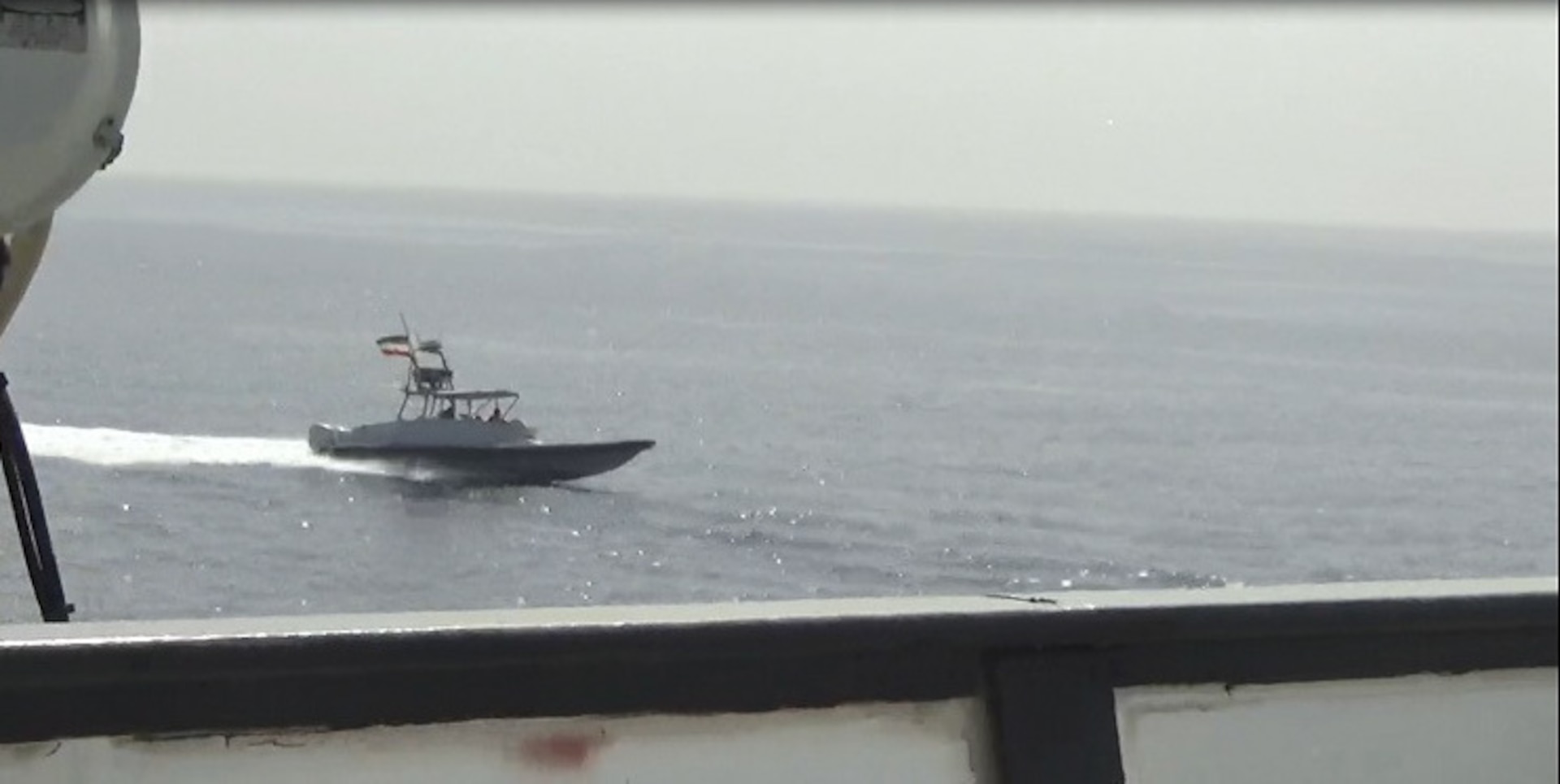
Deputy Defense Minister Talaei Nik’s April 28 statement was not a description of wartime expedience — it was an announcement of post-war institutional design. His three-pillar framework — prohibition on Israeli-linked vessels, restrictions on hostile nations’ ships, and a toll payment system — maps directly onto the IRGC’s 10-point plan, which lists IRGC “coordination” over Hormuz as a treaty requirement for any ceasefire deal. Point 7 of that framework demands that Iran’s right to manage strait traffic be recognized in any agreement, converting the current military operation into a permanent administrative function.
This is structurally distinct from anything Iran attempted during the 1980s Tanker War. Between 1980 and 1988, Iran conducted 168 kinetic attacks on commercial vessels — mining, missile strikes, and small-boat engagements — but never operated a selective passage regime based on diplomatic authorization. Iraq conducted 283 attacks over the same period; both sides treated commercial shipping as a target set, not a licensing opportunity. The 2026 system, with its credential architecture, tiered authorization, and government-to-government fast lanes, has no direct precedent in modern maritime conflict.
UNCLOS Article 26 explicitly prohibits charges on foreign ships “by reason only of their passage through the territorial sea.” Iran’s response to this has been operational rather than legal — it does not claim to charge for passage through territorial waters, but rather to provide “security coordination” services that happen to require authorization and, in most cases, payment. The distinction is legally specious but practically effective, because enforcement depends on naval capacity that no external power has deployed to challenge the system. The four Avenger-class mine countermeasure ships that were stationed in Bahrain were decommissioned in September 2025, five months before the war began.
Why Were MSC Francesca and Epaminondas Seized Six Days Before Idemitsu Maru Sailed Free?
On April 22, six days before the Idemitsu Maru’s authorized transit, the IRGC seized the MSC Francesca — an 11,660-TEU container ship — and the bulk carrier Epaminondas in the Hormuz corridor. The stated reason: “operating without required authorization.” Two days later, on April 24, Foreign Minister Araghchi declared Hormuz “completely open” — a statement the Lloyd’s List and Iran International reporting on the prior seizures had already rendered false before he issued it.
The juxtaposition is not hypocrisy — it is the system functioning as designed. Araghchi’s declaration of openness and the IRGC’s simultaneous seizure of unauthorized vessels are complementary signals, not contradictory ones: the strait is open to those who apply through Iran’s authorization framework and closed to those who do not. The MSC Francesca and Epaminondas attempted to transit without credentials or bilateral arrangements; the Idemitsu Maru transited with a government-negotiated authorization. Both outcomes validate the same underlying claim: Iran decides who passes.
The IRGC’s April 17 announcement of a “new order” requiring authorization for all vessels positioned the Idemitsu Maru’s passage as proof that the system works, not as an exception to it. When PressTV headlines emphasize “after obtaining Iran’s permission,” the target audience is not the Japanese government — which already knows what it negotiated — but the 120-odd vessel operators currently anchored in the Gulf of Oman, weighing whether to apply for credentials, negotiate bilaterally, or wait for a multilateral resolution that Russia and China’s UNSC veto has now foreclosed.
Saudi Arabia’s Structural Exposure
The crude aboard the Idemitsu Maru was loaded at Juaymah, Saudi Aramco’s primary export terminal on the Persian Gulf coast, and the vessel’s operator — Idemitsu Tanker Co., a subsidiary of Idemitsu Kosan — serves Japan’s third-largest refining group. Saudi Arabia’s crude reaching a Japanese refinery through an Iranian-authorized transit represents a specific kind of humiliation for Riyadh: the kingdom’s most important export commodity now requires a competitor’s permission to reach its second-largest Asian customer.
Saudi production has already cratered from 10.4 million barrels per day in February to 7.25 million in March, according to IEA data — a 30 percent drop that the Yanbu bypass pipeline can only partially offset. The East-West Pipeline’s effective loading capacity at Yanbu ranges between 4 and 5.9 million barrels per day, against a pre-war Hormuz throughput of 7 to 7.5 million barrels per day — a structural gap of 1.1 to 1.6 million barrels daily that no pipeline expansion can close in the near term. Prime Minister Takaichi directly asked MBS for increased oil supply in an earlier diplomatic exchange, and Saudi Arabia’s physical ceiling made that answer functionally empty.
For Japan, the calculation has become brutally simple. The kingdom cannot guarantee delivery through its own export infrastructure. Iran can, vessel by vessel, through a bilateral channel that took 38 days to establish. Brent crude at $109 to $112 per barrel on April 28 sits above Saudi Arabia’s Bloomberg-estimated fiscal breakeven of $108 to $111 — meaning the kingdom is operating at the margin of solvency precisely when its primary customer base is discovering that Tehran offers a more reliable delivery mechanism than Riyadh’s diplomatic ambiguity.
| Metric | Pre-War Baseline | April 27-28, 2026 | Change |
|---|---|---|---|
| Daily vessel transits | 125-140 | ~7 (2 in preceding 24 hrs) | -95% |
| Saudi crude production (M bpd) | 10.4 (Feb 2026) | 7.25 (March 2026, IEA) | -30% |
| Cumulative transits since April 8 ceasefire | N/A | ~45 | 3.6% of pre-war rate |
| Japan crude from Saudi (Feb 2026) | 37.80M bbl (51% of total) | Disrupted — first transit April 28 | 59-day gap |
| Brent crude price | ~$75-80 (pre-war) | $109-112 | +38-48% |
Sources: Insurance Journal, gCaptain (April 28, 2026); IEA (March production); Arab News Japan (February import data); Bloomberg (Brent).
How the Japan Transit Differs From the Al Daayen Precedent
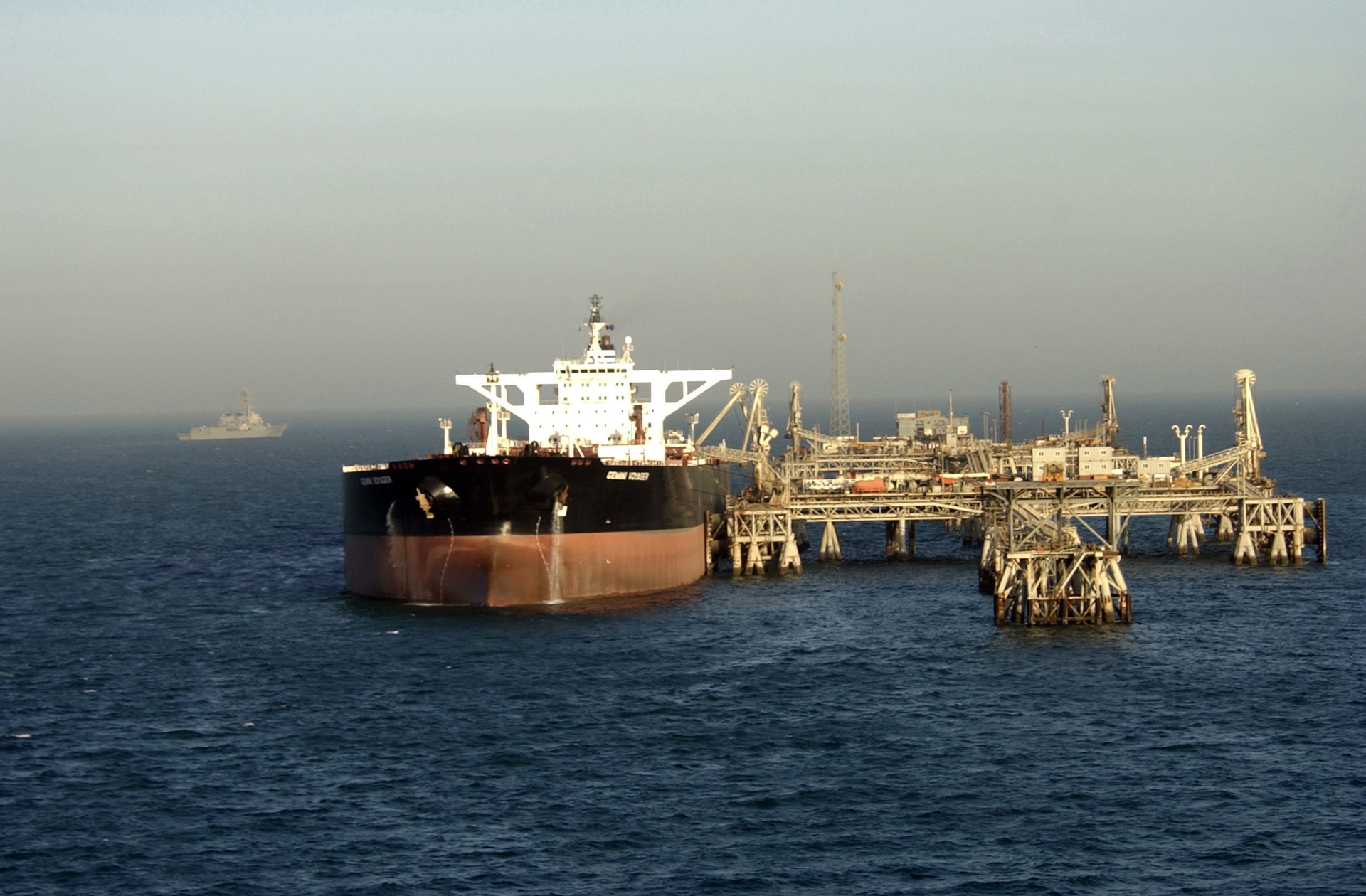
The Al Daayen — a Qatar LNG tanker that transited Hormuz on April 6 carrying cargo destined for China — established Iran’s willingness to authorize selective passage. But the structural differences between that transit and the Idemitsu Maru’s passage reveal how rapidly Tehran’s licensing regime is evolving. The Al Daayen transit was intermediated by Beijing, settled in yuan through Kunlun Bank outside the SWIFT system, and involved a commodity (LNG) drawn from the shared North Field/South Pars reservoir that gives Iran a direct commercial interest in Qatar’s export capacity. China’s 8 MTPA contracted offtake and 5 percent equity stake in North Field East provided structural motivation to broker the arrangement.
The Idemitsu Maru transit had none of those features: Japan is not a Hormuz littoral state, has no shared energy infrastructure with Iran, and the cargo was Saudi crude — not a commodity in which Iran holds reservoir equity. The settlement involved no reported alternative payment system — the senior official explicitly stated “no fees paid,” and no yuan or rupee channel has been reported. The intermediary was not a great power with independent pull with Tehran, but Tokyo itself, a mid-sized diplomatic actor whose primary asset was the political value of its compliance.
This progression — from Chinese-intermediated, yuan-settled, commercially motivated authorization to Japanese-bilateral, fee-free, politically motivated authorization — demonstrates that Iran’s licensing regime is not a single mechanism but an expanding menu of authorization channels. Each new permittee proves the system’s flexibility while narrowing the set of holdouts. Ship broker BRS captured the supply-chain implications in an April 28 assessment: “If Hormuz were to reopen by tomorrow, we suggest that it will take until at least September for tanker and oil markets to return to something resembling ‘normal.’” The licensing regime does not need to last forever to restructure commercial relationships permanently.
FAQ
Did the Idemitsu Maru pay Iran’s Hormuz toll?
No. A senior Japanese government official told Nikkei Asia that the transit “resulted from talks with Tokyo, with no fees paid.” This makes it the first confirmed toll-free authorized transit of a non-Iranian vessel since the war began — distinct from the Al Daayen’s yuan-settled passage on April 6. The two transits establish different points on the authorization spectrum: the Al Daayen showed Iran can collect payment; the Idemitsu Maru showed it can also strategically forgo payment when the political return exceeds the revenue value. Talaei Nik announced a toll framework on the same day as the fee-free transit — suggesting the licensing regime is designed for selective application, not uniform enforcement.
How many vessels are currently waiting for Hormuz authorization?
Vessel tracking data shows a multi-month backlog. Of the vessels broadcasting AIS credentials as authorization applications, Chinese-linked ships account for the largest cohort (79 cases), followed by Indian-linked (23) and French-linked (10). Japanese-linked credentials were near-zero before April 28 — consistent with Japan pursuing a state-to-state channel rather than the commercial credential queue. At 7 transits per day against a pre-war baseline of 125-140, clearing the current backlog through the existing AIS system alone would take months even if Iran authorized every credentialed vessel simultaneously.
Could Japan’s transit undermine the US position at the Islamabad talks?
Senator Marco Rubio stated on April 27-28 that “we have to ensure that any deal that is made…is one that definitively prevents them from sprinting towards a nuclear weapon at any point.” Japan’s bilateral arrangement with Iran does not directly contradict this position, but it creates a structural problem: if a treaty ally can extract commercial outcomes from Tehran without US involvement, the coercive value of the US blockade — imposed April 13 on Iranian ports and toll-collecting vessels — diminishes with each additional bilateral deal that bypasses Washington. The Islamabad framework’s pressure depends on Iran having no alternative to multilateral negotiation; Japan just demonstrated one exists.
What happened during the 38-day gap between Iran’s offer and the actual transit?
Iran’s FM offered Japan transit access on March 21, and Japan publicly stated on March 22 it was “not considering unilateral talks with Iran.” PM Takaichi’s 25-minute call with Pezeshkian on April 8 — where she called Hormuz “an international public good” — appears to have been the formal diplomatic engagement, but the transit did not occur for another 20 days. The gap suggests that operational details — route, timing, IRGC coordination, and the specific terms under which no fee would be charged — required a second track of negotiation that ran below the level of public statements, likely involving Idemitsu Kosan’s operational planning and Iranian naval coordination for the Qeshm-Larak corridor.
Is Iran’s Hormuz licensing regime legal under international law?
UNCLOS Article 26 prohibits charges on foreign ships “by reason only of their passage through the territorial sea,” and the broader transit passage regime under UNCLOS Part III guarantees unimpeded passage through straits used for international navigation. Iran’s position — that it provides “security coordination” rather than charging for passage — is legally specious but operationally effective, and the decommissioning of the four Avenger-class mine countermeasure ships from Bahrain in September 2025 removed the primary naval asset that could have enforced freedom of navigation in the corridor. No state has mounted a legal challenge at the International Tribunal for the Law of the Sea, and Russia and China’s UNSC veto on April 28 closed the multilateral enforcement track.
Within 48 hours of the Idemitsu Maru transit, a second vessel â the Emirati LNG carrier Mubaraz â also cleared the Strait outside the Larak corridor, but without any documented authorization from Tehran. Whether the Mubaraz ghost transit represents enforcement breakdown or a parallel licensing channel is examined in full.