
Table of Contents
- The Cabinet’s Register Shift
- What Did Saudi Arabia Signal in a Single Week?
- Thirty Thousand Pilgrims as Statecraft
- The Antalya Quadrilateral and the Table Saudi Arabia Built
- Why Did the Saudi FM Call Four Capitals on a Single Sunday?
- How Iran Reads Saudi Ambiguity
- The Spare-Capacity Weapon Saudi Arabia Cannot Use
- Can a State Excluded from Negotiations Still Shape Them?
- The GCC Fracture Line
- FAQ
JEDDAH — On April 21, 2026, the Saudi Cabinet met in Jeddah under Crown Prince Mohammed bin Salman’s chairmanship and issued a communiqué stating the Kingdom “backs diplomacy” and “dialogue and diplomatic solutions to strengthen regional and international security and stability.” Six weeks earlier, on March 4, the same body had used entirely different language: “the Kingdom will take all necessary measures to defend its security and safeguard its territory, citizens and residents.” The distance between those two sentences — from kinetic readiness to diplomatic advocacy — is the space in which Saudi foreign policy now operates.
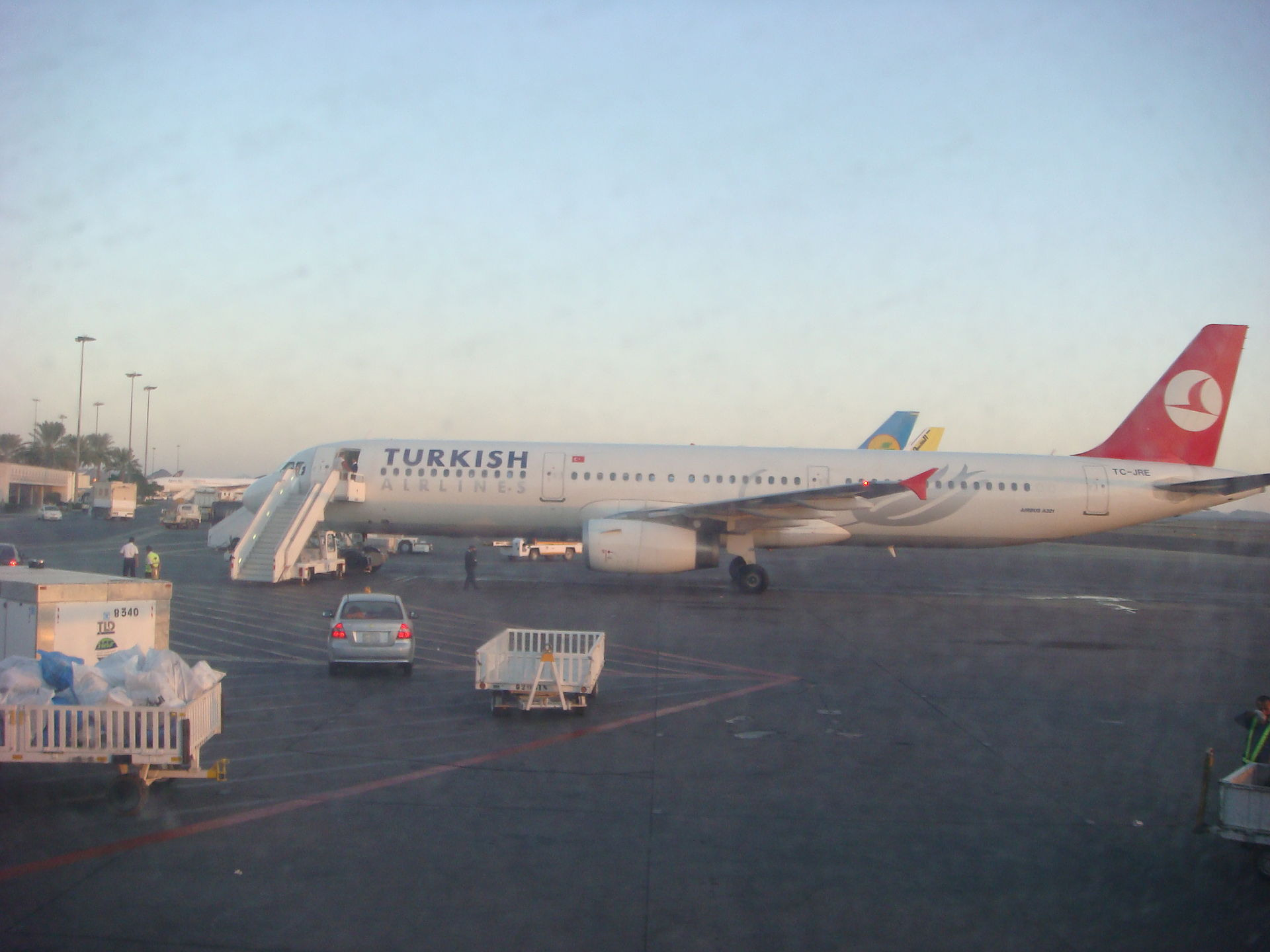
Five days after the Cabinet communiqué, on April 26, Foreign Minister Prince Faisal bin Farhan placed calls to four capitals in a single Sunday: Tehran (Araghchi), Kabul (Muttaqi), Manama (Al-Zayani), and Doha (Sheikh Mohammed bin Abdulrahman, who initiated the call). The day before, the first group of 30,000 Iranian Hajj pilgrims — dispatched with Supreme National Security Council approval — landed at Prince Mohammad bin Abdulaziz International Airport in Madinah. A 121-person advance team of medical and service staff preceded them. Iranian Ambassador Alireza Enayati told the Saudi Gazette: “Our pilgrims are fully adhering to Saudi regulations.”
On April 27 — the following day — Prince Faisal extended the sequence with calls to Iran, Bahrain, and Qatar on the same working day, building a parallel diplomatic architecture around the Islamabad talks that exclude Riyadh.
Between April 17 and 19, Prince Faisal had attended the Antalya Diplomacy Forum, where he joined a Turkey-Pakistan-Saudi Arabia-Egypt quadrilateral focused on the US-Israel-Iran war and participated in two Gaza ministerial sessions. Saudi Arabia has no seat at the US-Iran negotiating table. It was absent from the Islamabad talks on April 11–12. It has been excluded from every formal round since the war began on February 28. And yet in the span of ten days — April 17 through April 27 — Riyadh executed what amounts to a multi-channel signaling operation directed at three audiences simultaneously: Tehran, Washington, and the international mediating states.
This was not fence-sitting. It was structured ambiguity — the only coercive diplomacy available to a state that bears the war’s highest economic cost and has no formal mechanism to influence the terms on which it ends.
The Cabinet’s Register Shift
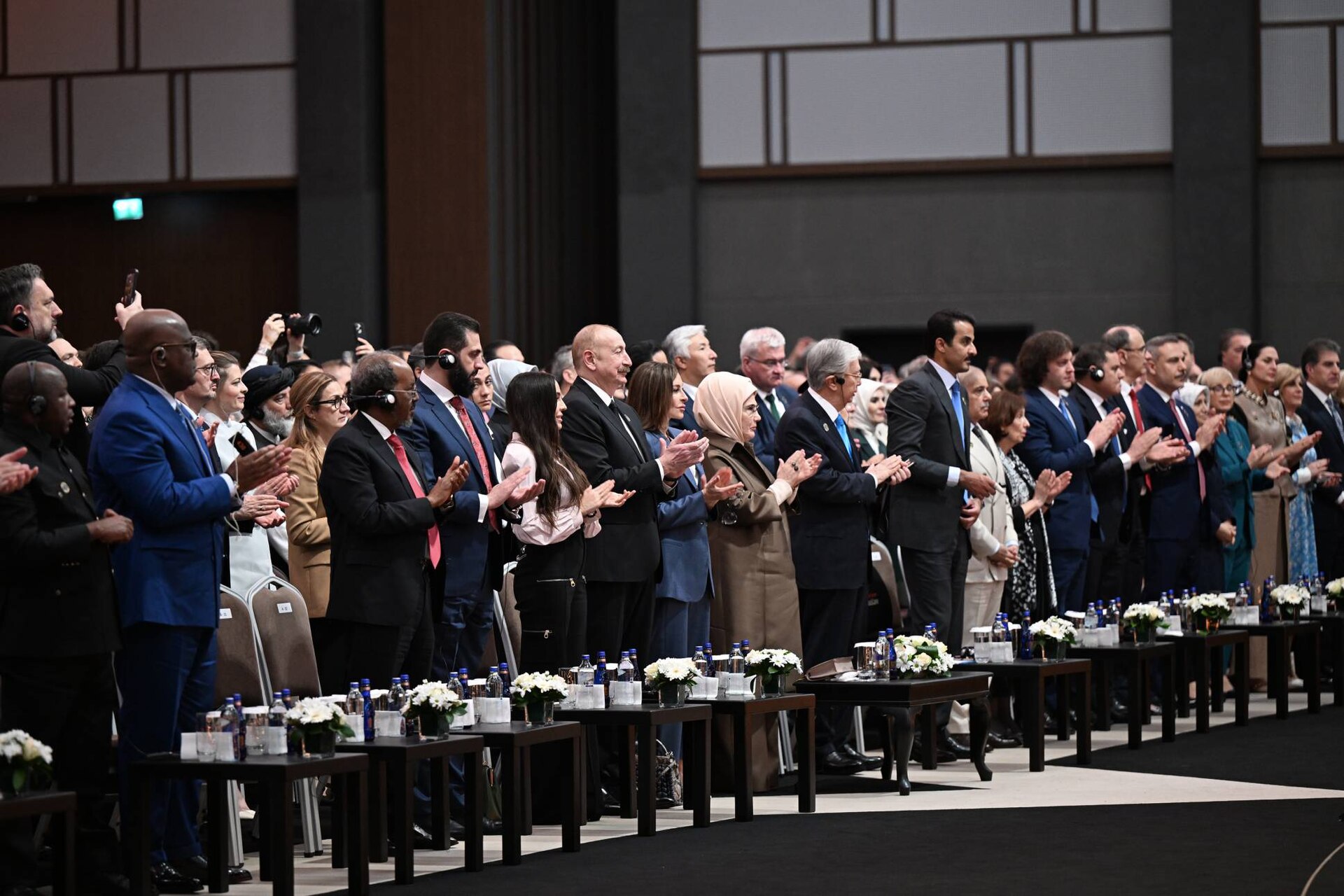
The March 4 Cabinet communiqué landed two days after Iran’s first wave of aerial strikes on Saudi oil infrastructure. Ras Tanura had been hit. Saudi airspace was under active threat. The language was martial and defensive: “all necessary measures.” MBS was chairing a wartime cabinet addressing a population that had just heard air-raid sirens in the Eastern Province for the first time since 1991.
The Middle East briefing 3,000+ readers start their day with.
One email. Every weekday morning. Free.
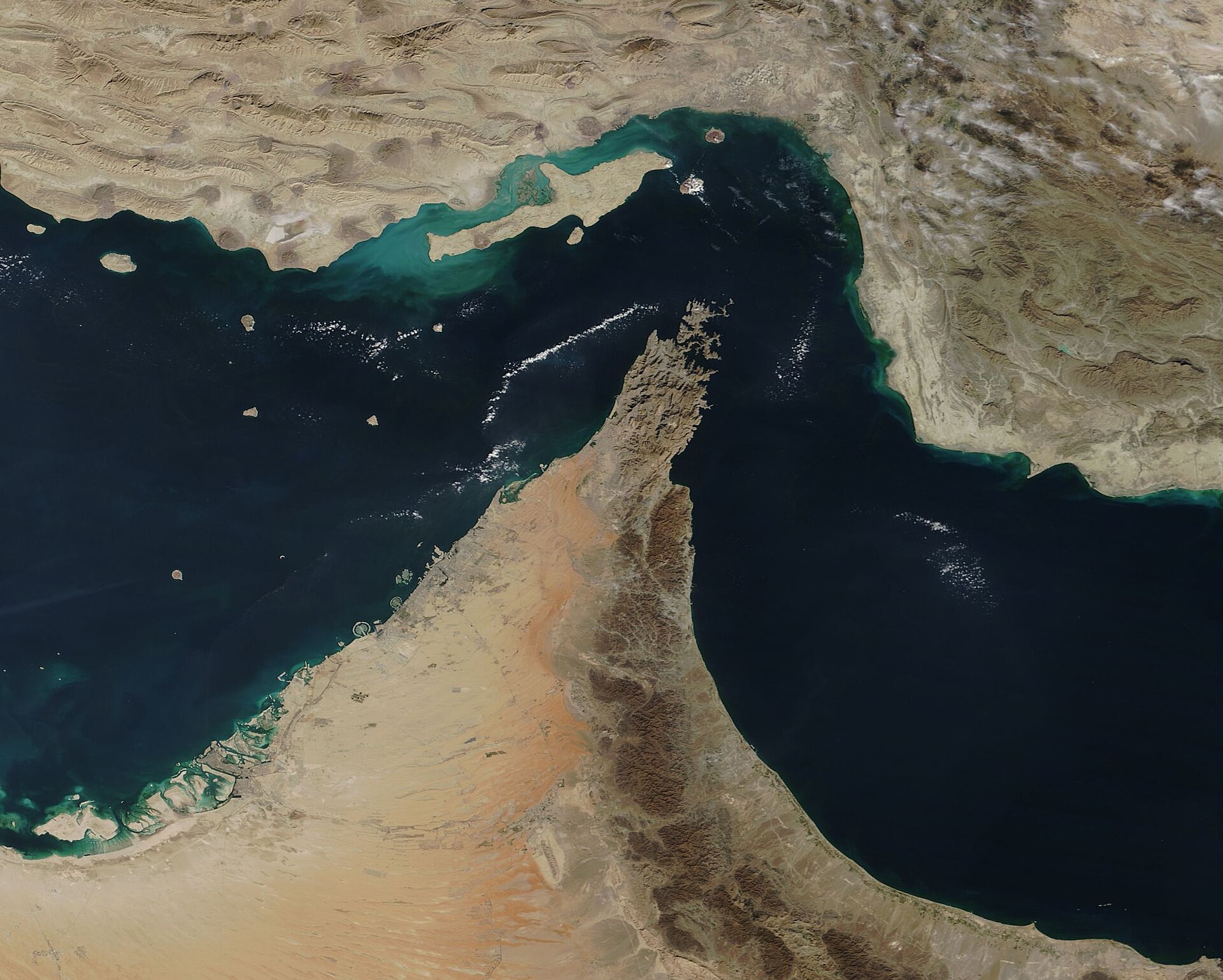
The April 21 communiqué inhabited a different register entirely. The Cabinet discussed “maritime developments in the Strait of Hormuz” and — in language reported by Asharq Al-Awsat — affirmed that “decades-long investments in energy security and alternative export routes have bolstered its ability to supply the world with energy during the most challenging circumstances.” This is the closest any official Saudi statement has come to acknowledging that the East-West Pipeline and Yanbu bypass corridor are now the Kingdom’s primary export infrastructure, not a contingency plan.
The same session approved PIF’s 2026–2030 strategy and noted non-oil exports had risen 15 percent year-over-year. MBS briefed ministers on his recent call with Xi Jinping — a detail buried in wire copy that takes on different weight when placed alongside the double-blockade reporting: Bloomberg had framed the Hormuz situation that same week as a US-IRGC mutual trap requiring both parties’ approval for any vessel to transit. Beijing, which had brokered the 2023 Saudi-Iran rapprochement, was being briefed at head-of-state level on the week Saudi Arabia’s diplomatic signaling reached its highest tempo of the war.
The register shift from March 4 to April 21 was not accidental. It was calibrated to the changed military reality: Saudi territory had not been struck since early April; the East-West Pipeline bypass was operational; and the Islamabad talks, though collapsed, had established a negotiating frame that Saudi Arabia wanted to influence without appearing to obstruct.
What Did Saudi Arabia Signal in a Single Week?
Between April 17 and April 27, Saudi Arabia transmitted at least four distinct signals through four distinct channels, each aimed at a different audience. The Antalya Forum appearance told mediating states — Turkey, Pakistan, Egypt — that Riyadh expected to be consulted even if it lacked formal standing. The Cabinet communiqué told domestic audiences and energy markets that the Kingdom’s export infrastructure was intact and its diplomatic posture had shifted from defense to engagement. The Iranian pilgrim reception told Tehran that bilateral channels remained open and that Riyadh held something Iran needed: safe passage for Iranian citizens during the holiest period of the Islamic calendar. The four-capital calling round on April 26 told everyone that Saudi Arabia was maintaining parallel diplomatic lines to every relevant actor in the crisis.
No single gesture was dramatic. The Cabinet communiqué was routine in form. The Antalya attendance was one of dozens of foreign ministerial delegations. The pilgrim reception followed standard Hajj protocols. The phone calls were, formally, bilateral consultations. What made the week unusual was the density and synchronization.
The Carnegie Endowment for International Peace published an assessment on April 22 — the day after the Cabinet session — that captured the structural problem Saudi diplomacy was trying to solve: “The GCC has no seat at the table, despite its entreaties, for negotiations that will shape the bloc’s economic and security environment for years to come.” Carnegie’s three-scenario framework for the Gulf states treated Saudi Arabia as a reactive actor, absorbing outcomes determined by others. The week of April 17–27 was Riyadh’s most concentrated attempt to contest that framing through accumulated action rather than formal standing.
Thirty Thousand Pilgrims as Statecraft
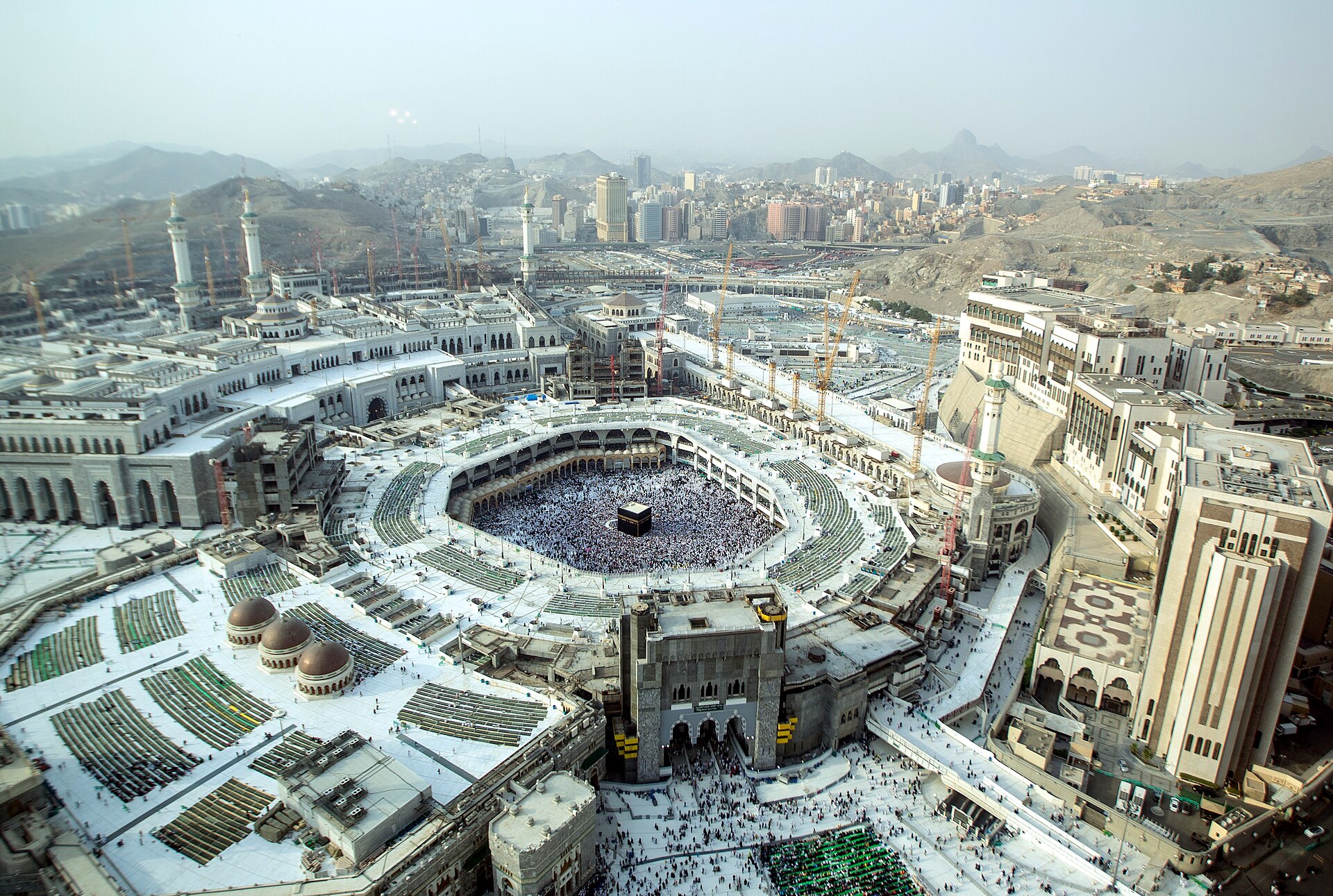
The arrival of Iranian Hajj pilgrims in Madinah on April 25 cannot be understood outside the 1987 precedent. On July 31 of that year, Iranian pilgrims conducting unauthorized political demonstrations in Mecca clashed with Saudi security forces. Approximately 402 people died — 275 Iranian pilgrims, 85 Saudi police. Saudi Arabia cut Iran’s pilgrim quota from 150,000 to 45,000, severed diplomatic relations in April 1988, and Iran boycotted Hajj for three consecutive years.
In 2026, the geometry is inverted. Iran has zero leverage through its pilgrims — they are guests on Saudi territory, dependent on Saudi logistics, Saudi security, and Saudi goodwill. The SNSC’s institutional approval of the dispatch (not merely the Hajj and Pilgrimage Organization’s operational sign-off) signals that Tehran’s security establishment understood this asymmetry and accepted it. Ambassador Enayati’s public statement — stressing adherence to Saudi regulations and expressing “gratitude and appreciation to the Saudi authorities” — was the diplomatic equivalent of a compliance certificate, issued preemptively.
For Riyadh, hosting 30,000 Iranian citizens during an active war with Iran is a controlled demonstration of capacity. MBS chaired a separate Cabinet session around April 23 directing “full mobilization of operational, security and preventive plans” for Hajj — language that encompassed both the standard logistical challenge of managing 1.2–1.5 million pilgrims and the specific wartime security threat. PAC-3 batteries — estimated at roughly 400 remaining rounds, about 14 percent of pre-war stocks — protect the Makkah-Madinah corridor alongside THAAD and the newer KM-SAM systems.
The signal to Tehran is layered. On one level: we can protect your citizens better than you can. On another: we choose to extend this protection, and the choice is ours. The Custodian of the Two Holy Mosques — a title King Fahd adopted in October 1986, one year before the Mecca incident, precisely to anchor Saudi legitimacy in Islamic stewardship — carries obligations that transcend bilateral hostility. Ambassador Enayati’s preemptive compliance statement was the public record of Tehran accepting precisely that asymmetry.
The Antalya Quadrilateral and the Table Saudi Arabia Built
The Antalya Diplomacy Forum — 6,400 participants, 150 countries, 23 heads of state, 50 foreign ministers — provided Prince Faisal with something Riyadh has lacked since the Islamabad talks collapsed: a multilateral setting in which Saudi Arabia could sit at a table discussing the war alongside the states that do have formal roles.
The quadrilateral with Turkey’s Hakan Fidan, Pakistan’s Ishaq Dar, and Egypt’s Badr Abdelatty was organized around the US-Israel-Iran war. Turkey hosts the Antalya Forum and maintains relations with both Tehran and Washington. Pakistan hosted the Islamabad round and positions itself as the procedural venue for US-Iran dialogue. Egypt brings weight as the Arab world’s most populous state and a US security partner. Saudi Arabia — the state with no seat — contributed the largest economic exposure in the room: 1.1–2.5 million bpd of suppressed export capacity and a fiscal break-even that depends on Hormuz reopening.
Prince Faisal also participated in two Gaza ministerial sessions, including a G8 format with Egypt, Jordan, Qatar, and the UAE. The Gaza track and the Iran-war track are formally separate but substantively entangled: Netanyahu had worked to exclude Lebanon from ceasefire frameworks, and the Antalya multilaterals provided a venue to resist that separation. The Saudi presence at every Antalya sideline meeting was an exercise in institutional persistence — showing up to tables that were not built for you until the hosts stop questioning why you’re there.
CSIS noted that Saudi Arabia’s posture reflects “a long-standing hedging strategy” in which “it does not want either Iran or Israel to become a regional hegemon.” The Antalya quadrilateral is the physical manifestation of that hedge: four states with overlapping but non-identical interests in the war’s outcome, none of which is a combatant, all of which have been damaged by the conflict.
Why Did the Saudi FM Call Four Capitals on a Single Sunday?
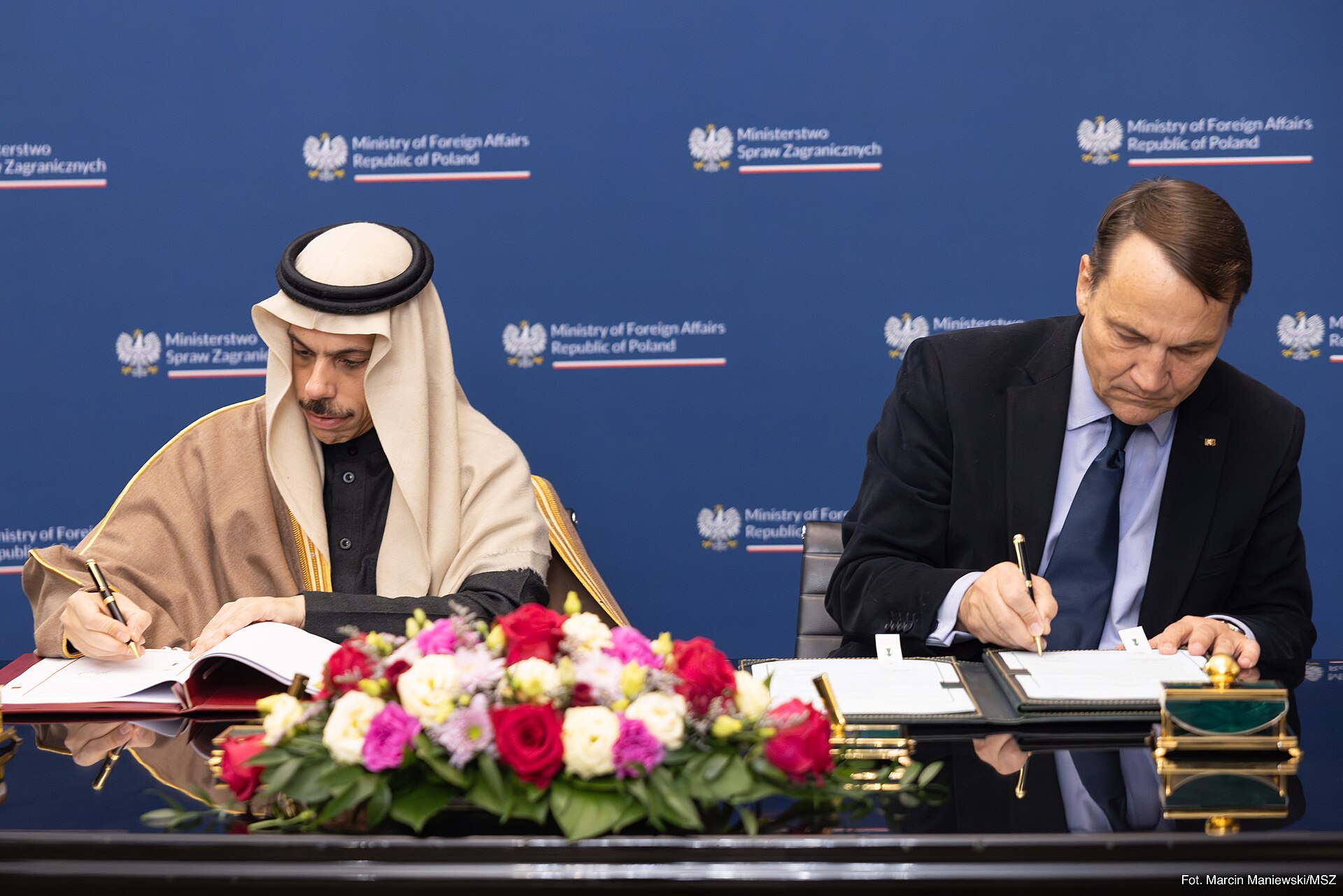
Prince Faisal’s April 26 calling round — Iran, Afghanistan, Bahrain, and Qatar — covered a specific diplomatic geography. Each call served a distinct function, and the combination constituted a signal more coherent than any individual conversation.
The Araghchi call carried the most weight. From Tehran’s side, PressTV reported that Araghchi “briefed” Prince Faisal on “the latest diplomatic efforts and initiatives of the Islamic Republic of Iran aimed at ending the war and reducing tensions.” The passive construction — Araghchi briefing, Saudi Arabia receiving — is consistent with Iranian state media’s framing of Riyadh as an audience for Iranian diplomacy rather than a co-equal actor. But the fact that the call happened at all, during a week when 30,000 Iranian pilgrims were arriving on Saudi soil, suggests the information flow was not as unidirectional as PressTV’s syntax implied.
The Muttaqi call addressed Afghanistan — a state that shares a 921-kilometer border with Iran and whose Taliban government maintains independent relations with both Tehran and Islamabad. Afghanistan is a potential sanctions-evasion corridor, a route for Iranian energy exports eastward, and a variable that any post-war settlement will need to account for. Riyadh’s engagement with Kabul signals awareness that the war’s resolution will have geography beyond the Gulf.
The Al-Zayani call covered Bahrain — the GCC state most directly affected by the war after Saudi Arabia itself. Bahrain’s airspace has been closed since February 28. The King Fahd Causeway, its sole land connection to the outside world, was shut briefly on April 7 during an Iranian missile barrage. NSA Bahrain, housing the US Fifth Fleet headquarters, had SATCOM terminals destroyed in the February 28 strikes. Bahrain’s security is operationally dependent on Saudi decisions, and any Saudi diplomatic shift requires Bahraini coordination.
Qatar’s Sheikh Mohammed bin Abdulrahman initiated his call to Prince Faisal — a protocol detail that matters. Qatar’s PM calling the Saudi FM, rather than the reverse, positions Doha as seeking Saudi input on ceasefire developments. The two discussed, per the Qatar Tribune, “the importance of all parties responding to ongoing mediation efforts, in a way that would help address the root causes of the crisis through peaceful means.” This is joint-position language, workshopped in advance.
How Iran Reads Saudi Ambiguity
Iranian state media’s treatment of Saudi Arabia during the war follows a consistent pattern: Riyadh is positioned as a passive node in an Iranian-managed communication architecture. Araghchi “briefs” Prince Faisal. PressTV lists Saudi Arabia second after Qatar in its headline framing of the April 26 calls. Oman and Pakistan receive higher billing as genuine intermediaries. The construction is deliberate: it denies Saudi Arabia the status of an independent diplomatic actor while maintaining the channel.
This framing collides with observable behavior. On April 14, Saudi Arabia publicly broke with Washington’s maximum-pressure approach, calling for the United States to end its naval blockade of Iranian ports and return to negotiations. The Wall Street Journal reported that Saudi concerns included possible Houthi retaliation against Saudi infrastructure — a real operational fear, but one that flattens the move into pure self-interest and misses the diplomatic dimension. The statement was issued publicly rather than through private diplomatic channels, ensuring that Tehran could see it and that Riyadh could not later deny it.
Tehran’s media apparatus has not acknowledged this break. Doing so would require admitting that Saudi Arabia possesses independent agency — a concession that undermines the Islamic Republic’s framing of the Gulf monarchies as American dependencies. The result is a perceptual gap between what Iran says about Saudi Arabia (passive audience) and what Saudi Arabia does (active diplomatic signaling across multiple channels, including direct engagement with Iran’s adversary on terms favorable to Tehran).
Helima Croft, RBC Capital Markets’ head of global commodity strategy and a former CIA senior economic analyst, identified the structural shift in Iranian leverage at a Carnegie Endowment event: “It’s not geography as destiny in the same way — a putative search for a nuclear weapon is no longer what provides the Iranians with leverage. It’s now geography as destiny.” If Iranian leverage is geographic — Hormuz — then Saudi Arabia’s counter-leverage is also geographic: alternative export routes, Hajj infrastructure, and physical proximity to every Gulf state whose security depends on Saudi decisions.
The Spare-Capacity Weapon Saudi Arabia Cannot Use
Saudi Arabia’s April production stood at approximately 9.1 million barrels per day, with spare capacity of roughly 3.0 million bpd — nearly all of it concentrated in Saudi Arabia and the UAE. Croft noted: “Spare capacity is really only sitting in Saudi Arabia at this stage, with the rest of the producers effectively maxed out.” OPEC+ had approved a modest output increase of 206,000 bpd from voluntary adjustments in April, a pace Saudi Arabia controls.
But spare capacity without export infrastructure is an abstraction. The East-West Pipeline delivers approximately 7 million bpd to Yanbu, of which roughly 2 million bpd is consumed by domestic Red Sea refineries — SAMREF and Yasref — leaving approximately 5 million bpd available for crude export. Argus Media has placed the effective Yanbu export ceiling at 5.0–5.9 million bpd. Pre-war, Saudi Arabia moved 7–7.5 million bpd through Hormuz-route terminals. The structural gap is 1.1–2.5 million bpd.
The Cabinet’s April 21 language about “alternative export routes” having “bolstered” the Kingdom’s ability to supply the world was carefully accurate and carefully incomplete. Yanbu works. The bypass saved Saudi Arabia from the kind of total export shutdown that would have triggered a genuine global energy crisis. But “bolstered” is not “replaced,” and the 1.1–2.5 million bpd gap represents lost revenue of roughly $100–225 million per day at current Brent prices. Carnegie noted the structural limitation directly: “These pipelines are only a partial solution, neither benefiting all Gulf states nor helping with imports of essential non-oil goods.”
Saudi Arabia’s spare capacity gives it theoretical pricing power. It cannot exercise that power without Hormuz. The double blockade — US controlling Arabian Sea entry, IRGC controlling Gulf of Oman exit — means that even Saudi vessels not targeted by either party face insurance, routing, and scheduling uncertainty that suppresses effective throughput below nameplate capacity. The Bloomberg reporting on the double blockade noted only 45 transits since the April 8 ceasefire — 3.6 percent of the pre-war baseline.
This is why the Cabinet communiqué’s diplomatic language matters more than its energy-security language. Saudi Arabia cannot pump its way out of the war’s economic damage. It can only negotiate its way out — and the Islamabad framework offers no mechanism for it to do so directly.
Can a State Excluded from Negotiations Still Shape Them?
The Islamabad talks on April 11–12 involved the United States (Vance, Witkoff, Kushner), Iran (Ghalibaf, Araghchi), and Pakistan (Sharif, Munir, Dar). Saudi Arabia was not in the room. Pakistan’s PM Shehbaz Sharif traveled to Riyadh on April 14 to brief Saudi leadership after the talks collapsed — positioning Saudi Arabia as a political endorser of continued dialogue rather than a participant in it.
The US-Iran negotiating frame is structurally bilateral: nuclear program, Hormuz, sanctions relief. Pakistan provides the venue and honest-broker function. Saudi interests — Hormuz reopening, energy-market stability, Gulf security architecture, Hajj safety — do not appear on any Islamabad agenda. They are outputs of whatever Washington and Tehran agree, shaping the residual space after the two principal parties have defined the terms.
Foreign Affairs posed the question directly in a 2026 headline: “Can Saudi Arabia Keep Hedging?” The Atlantic Council framed the Gulf states’ predicament more bluntly: “They have been exposed.” CSIS observed that “although Saudi Arabia allowed U.S. forces to use its bases, it refrained from directly responding to Iran’s strikes. It issued terse diplomatic warnings, but unlike the United Arab Emirates, it did not call for the continuation of the war or promise to join the U.S.-Israeli campaign.”
This restraint is the foundation of Saudi Arabia’s current diplomatic position. Having refused to become a combatant, Riyadh retains credibility with Tehran that Abu Dhabi does not. Having hosted US forces, it retains leverage with Washington that Muscat does not. The structured ambiguity of the April 17–27 period is an attempt to convert that dual credibility into influence over a process from which Saudi Arabia is formally excluded.
The mechanism is not mysterious. It is the oldest tool in diplomacy: making yourself indispensable to both sides without committing to either. MBS invested heavily in the 2023 Beijing-brokered rapprochement with Iran precisely to build the bilateral channel now carrying pilgrim arrivals and FM-to-FM calls. He authorized US basing precisely to maintain the security relationship now under strain from the April 14 public break over the blockade. Both investments are paying simultaneous returns in late April 2026.
The GCC Fracture Line
Saudi Arabia’s signaling operates against a background of intra-GCC divergence that Carnegie documented in unusually direct language: “Gulf states’ differing answers on where to direct frustration are generating friction among them. The UAE has emphasized redoubled ties with the United States and Israel, while Oman has been sharply critical of Israeli influence and U.S. policy, while Saudi Arabia has taken potshots at the UAE’s economic ties with Iran.”
The fracture runs along a specific axis. The UAE, which called for the continuation of military operations and positioned itself as Washington’s most willing Gulf partner, has staked its post-war position on deepened US-Israeli alignment. Oman, which maintains its traditional role as an interlocutor with Tehran, has publicly criticized US policy. Bahrain is operationally dependent on Saudi Arabia for its physical security. Qatar, whose PM called Prince Faisal on April 26, is positioning itself as a mediating channel — a role it has practiced extensively in Gaza and Afghanistan.
Saudi Arabia occupies the GCC’s center of gravity. It is the largest economy, the largest oil producer, the largest military spender, and the Custodian of the Two Holy Mosques. Its diplomatic posture during the war — restrained, ambiguous, engaged with all parties — is an attempt to anchor the GCC’s collective position at a point that preserves the bloc’s coherence. If Riyadh tilts too far toward Washington, it loses Oman and its Iran channel. If it tilts too far toward accommodation with Tehran, it loses the UAE and the US security umbrella. In late April 2026, Saudi Arabia had not publicly crossed either threshold.
The April 14 public call to end the US blockade was the sharpest edge of this positioning. It told Washington that Saudi Arabia would not absorb unlimited economic damage to support a coercive strategy it had no role in designing. It told Tehran that Riyadh was willing to take domestic political risk — publicly opposing the United States — on Iran’s behalf. And it told the GCC that Saudi Arabia’s position was neither Abu Dhabi’s hawkishness nor Muscat’s criticism but something more granular: opposition to a specific policy instrument (the blockade) rather than opposition to US partnership as such.
The quartet diplomacy at Antalya — Turkey, Pakistan, Egypt, Saudi Arabia — may represent Riyadh’s answer to GCC fragmentation: a parallel consultative frame with non-Gulf states whose mediating credibility survives regardless of whether the UAE, Oman, and Bahrain can sustain a common position through the war’s endgame. Four countries, none a combatant. Three of them with formal roles in the negotiating process that the fourth does not have and cannot demand.
Frequently Asked Questions
What was the specific language change between the March 4 and April 21 Saudi Cabinet communiqués?
The March 4 communiqué, issued two days after Iran’s first strikes on Saudi oil infrastructure, stated the Kingdom would “take all necessary measures to defend its security and safeguard its territory, citizens and residents.” The April 21 communiqué replaced this with language backing “diplomacy” and “dialogue and diplomatic solutions to strengthen regional and international security and stability,” while also discussing Hormuz maritime developments and affirming the Kingdom’s alternative export route investments. The shift from defensive-kinetic to diplomatic-constructive language occurred over a six-week period during which Saudi territory was not struck and the Islamabad talks established a negotiating frame. The same April 21 session also saw MBS brief ministers on his call with Xi Jinping and approve PIF’s 2026–2030 strategy — signals of institutional normalcy calibrated alongside the diplomatic language shift.
How many Iranian pilgrims are participating in Hajj 2026, and what is the diplomatic significance?
Approximately 30,000 Iranian pilgrims are participating in Hajj 2026, with a 121-person advance team of medical and service staff arriving in Madinah on April 25, followed by the main group. The dispatch was approved by Iran’s Supreme National Security Council rather than by the Hajj and Pilgrimage Organization alone — a distinction indicating that Tehran’s security establishment, not just its religious bureaucracy, signed off on sending Iranian citizens to Saudi territory during an active war. The pilgrims are scheduled for seven days in Madinah before proceeding to Makkah, with the total stay exceeding one month — meaning Iranian citizens will be on Saudi soil through late May, well past the April 22 ceasefire expiry. The 1987 comparison is relevant for what it reversed: Saudi Arabia cut the Iranian quota to 45,000 after the Mecca deaths and severed diplomatic relations; the 2026 figure of 30,000 is still below the pre-1987 ceiling of 150,000, meaning the wartime hospitality is calibrated, not unconditional.
What is the Turkey-Pakistan-Saudi Arabia-Egypt quadrilateral formed at Antalya?
At the margins of the Antalya Diplomacy Forum (April 17–19), the foreign ministers of Turkey (Fidan), Pakistan (Dar), Egypt (Abdelatty), and Saudi Arabia (Prince Faisal) held a quadrilateral meeting focused specifically on the US-Israel-Iran war. This format is distinct from both the Islamabad bilateral (US-Iran with Pakistani hosting) and the GCC framework. It groups four non-combatant states with overlapping but distinct roles: Turkey as NATO member and Iran interlocutor; Pakistan as the Islamabad venue host and Iran’s protecting power for US interests since 1992; Egypt as the Arab world’s most populous state with Camp David-era US ties; and Saudi Arabia as the state bearing the war’s highest economic cost. The quad may represent Riyadh’s attempt to build a consultative mechanism that compensates for Saudi Arabia’s absence from the formal US-Iran negotiations and hedges against GCC internal fragmentation.
Why did Saudi Arabia publicly oppose the US Hormuz blockade on April 14?
The public call to end the blockade — reported by Life News Agency and confirmed by the Wall Street Journal — broke with Saudi Arabia’s general pattern of managing US disagreements privately. The WSJ attributed the move partly to Saudi fears of Houthi retaliation against Saudi infrastructure, which is accurate but incomplete. The blockade, imposed by CENTCOM on April 13 on Iranian ports and toll-collecting vessels, suppressed Hormuz transit to near-zero (45 vessels in the prior 18 days) while doing nothing to reopen the structural 1.1–2.5 million bpd gap between Saudi Arabia’s Yanbu export ceiling and pre-war Hormuz throughput. That gap costs Riyadh $100–225 million per day regardless of whether Saudi-flagged vessels are the blockade’s target. Critically, the public break diverged from GCC practice: the UAE had not publicly criticised the blockade, leaving Saudi Arabia’s statement as the Gulf’s first official opposition — a positioning that required Washington’s acquiescence not to escalate into a security-partnership rupture. The three functions of the public statement were to credentialise Riyadh with Tehran, signal Washington that Saudi cooperation had limits, and establish a diplomatic record for post-war Gulf security negotiations.
What does Carnegie mean by the GCC having “no seat at the table”?
Carnegie’s April 22 assessment — “The GCC has no seat at the table, despite its entreaties, for negotiations that will shape the bloc’s economic and security environment for years to come” — refers to the structural exclusion of all six Gulf Cooperation Council states from the US-Iran negotiating format. The Islamabad talks (April 11–12) included the US, Iran, and Pakistan. No Gulf state was invited. Carnegie identified three post-war scenarios for the GCC: a comprehensive deal that constrains Iran (best case), a narrow deal limited to nuclear and Hormuz issues that leaves Gulf security unaddressed (likely case), and no deal (worst case). In all three scenarios, the GCC’s role is to absorb outcomes rather than shape them. Carnegie also documented intra-GCC friction: the UAE doubling down on US-Israel ties, Oman criticizing US policy, Saudi Arabia criticizing UAE economic ties with Iran. The “no seat” framing captures a specific irony — the states with the most at stake in the war’s outcome have the least formal influence over its resolution. The negotiations that excluded Riyadh continued on April 28, with Iran filing a third Islamabad counter-proposal in under 48 hours — the structure of Iran’s offer and what it means for Gulf states is the subject of Araghchi Files Third Islamabad Draft in 48 Hours.