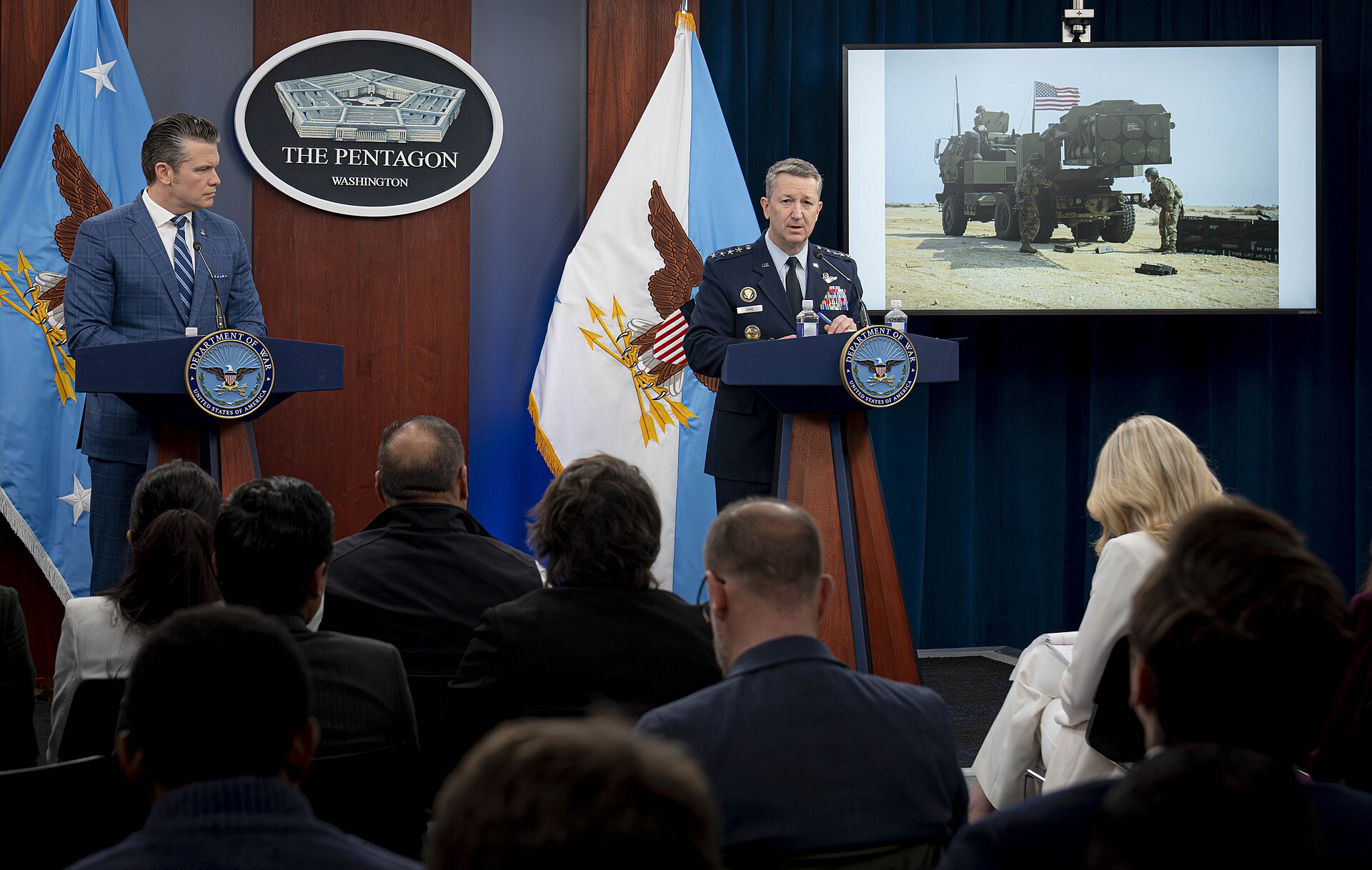
WASHINGTON — Defense Secretary Pete Hegseth and Gen. Dan Caine, Chairman of the Joint Chiefs of Staff, confirmed on May 5 that Iran has attacked U.S. forces more than ten times and seized two commercial vessels since the April 8 ceasefire — and classified every incident as “below the threshold of restarting major combat operations.” The Pentagon briefing, formally titled as an update on Operation Epic Fury, amounted to the first public disclosure of how many Iranian provocations the United States has absorbed without responding with escalation beyond defensive measures.
The disclosure carries a specific operational consequence. By publicly quantifying the ceiling — ten-plus attacks, two seizures, nine firings on commercial ships, six Iranian boats sunk in a single engagement — Hegseth and Caine handed Tehran a calibration document. Iran’s Islamic Revolutionary Guard Corps now possesses what it has sought since the ceasefire began: a publicly stated American tolerance line. Every future Iranian action in the Strait of Hormuz will be measured against it, by both sides.
Table of Contents
- What Hegseth and Caine Actually Said
- Why Does a Public Threshold Function as a Calibration Document?
- Project Freedom and the May 4 Engagement
- The IRGC’s New Maritime Control Zone
- How Does This Expose Saudi Arabia?
- The Presidential Decision and the Ceasefire’s Structural Problem
- Frequently Asked Questions
What Hegseth and Caine Actually Said
Gen. Caine’s statement was delivered as a factual summary, not an accusation. “Since the ceasefire was announced, Iran has fired at commercial vessels nine times and seized two container ships, and they’ve attacked U.S. forces more than 10 times, all below the threshold of restarting major combat operations at this point,” he told reporters at the Pentagon, according to ABC News, CBS News, and NBC News.
Hegseth reinforced the framing. “The ceasefire is not over,” he said, per the Washington Post and CBS News. “We said we would defend and defend aggressively, and we absolutely have. Iran knows that, and ultimately, the president can make a decision whether anything were to escalate into a violation of a ceasefire.”
He then described Iran as “the clear aggressor — harassing civilian vessels, threatening mariners from every nation indiscriminately, and weaponizing a critical chokepoint for its own financial benefits,” according to the Washington Times and CBS News.
Caine’s qualifier — “at this point” — implies the threshold is not fixed but subject to reassessment. Hegseth’s attribution of decision-making authority to “the president” removed it from the military chain; the threshold is political, not operational. Hegseth described the escort mission, Project Freedom, as “defensive in nature, focused in scope, and temporary in duration” — language that constrains U.S. military options as precisely as it describes Iran’s.
The Middle East briefing 3,000+ readers start their day with.
One email. Every weekday morning. Free.
Why Does a Public Threshold Function as a Calibration Document?
The IRGC has a documented history of probing adversary tolerance lines through graduated provocation. In May and June 2019, four tankers were damaged near Fujairah, followed by two more in the Gulf of Oman — each attack escalating slightly, each deniable. A Congressional Research Service report (R45795) and the Washington Institute described this as deliberate calibration: the IRGC tested responses at each level before proceeding to the next.
The July 2019 seizure of the British-flagged Stena Impero followed the same logic. IRGC commanders analyzed the United Kingdom’s threshold before acting, seizing the tanker on July 19 as a calibrated tit-for-tat response to Gibraltar’s detention of the Grace I on July 4. Iran International reported that the IRGC explicitly assessed how far it could push before London would respond militarily. London did not.
What changed on May 5, 2026, is that the calibration data is no longer inferred from adversary behavior. It was read aloud at a podium. Ten-plus attacks on U.S. forces: below threshold. Two ship seizures: below threshold. Nine firings on commercial vessels: below threshold. The Council on Foreign Relations, in its analysis “Clashes in the Strait of Hormuz Test Ceasefire,” concluded that “using the strait to impose costs on the international community and extract revenues in terms of tolls on ships has entered Iran’s strategic calculation, and given the difficulty of revamping the nuclear program, it has even gained priority.”
The IRGC’s institutional doctrine — what analysts have called “salami tactics” — depends on knowing the distance between the current provocation and the next escalation trigger. The Pentagon briefing compressed that distance to a single public statement.
Project Freedom and the May 4 Engagement
The briefing distinguished between Operation Epic Fury, the original air campaign against Iran, and Project Freedom, the Hormuz escort operation. Hegseth described them as “separate and distinct,” according to DVIDS and the Pentagon’s YouTube channel. The distinction matters because it frames the escort mission as something the United States can terminate independently of the broader military posture.
On May 4, one day before the briefing, U.S. forces sank six small Iranian boats that were harassing commercial vessels in the Strait. CENTCOM commander Adm. Bradley Cooper confirmed the engagement on May 5, per CBS News and CNBC. The first two ships to transit under Project Freedom — both American-flagged — passed through on May 4 without incident, according to the Times of Israel and Time Magazine.
The sinking of six boats fits within the threshold Caine described. The IRGC Navy, designed from its 1983 founding for “harassing enemy vessels, conducting surprise attacks, and carrying out pinpoint strikes,” according to a 2024 note by France’s Foundation for Strategic Research, operates a fleet of hundreds of small fast-attack craft. Six boats represent an expendable probe, not a fleet engagement.
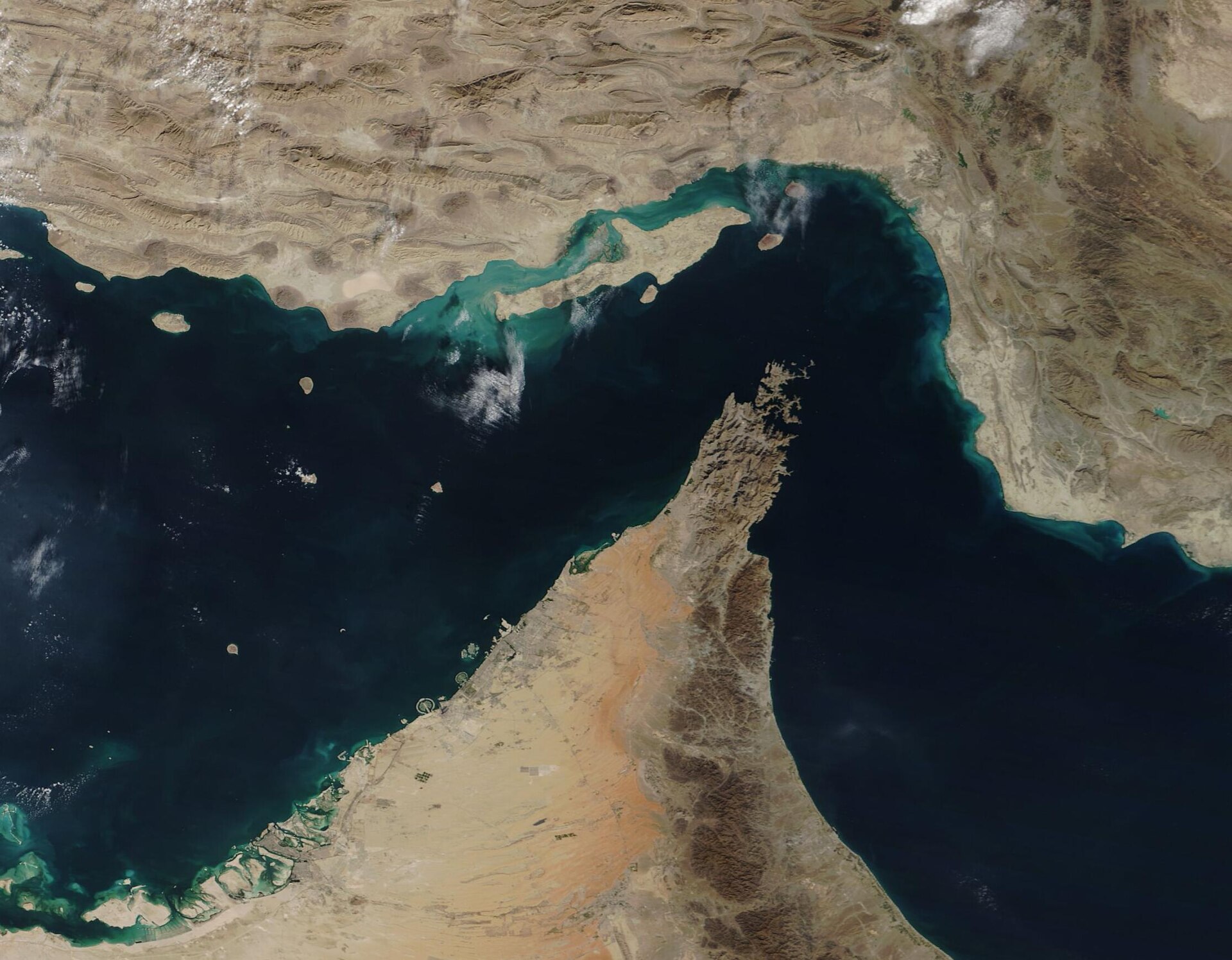
Hegseth said the United States would eventually hand off the escort mission to other nations. He did not name any. The Washington Post and Al Jazeera both noted that no U.S. allies have joined Project Freedom. Saudi Arabia has not endorsed the operation, and the absence of coalition partners means the “temporary” mission has no succession plan.
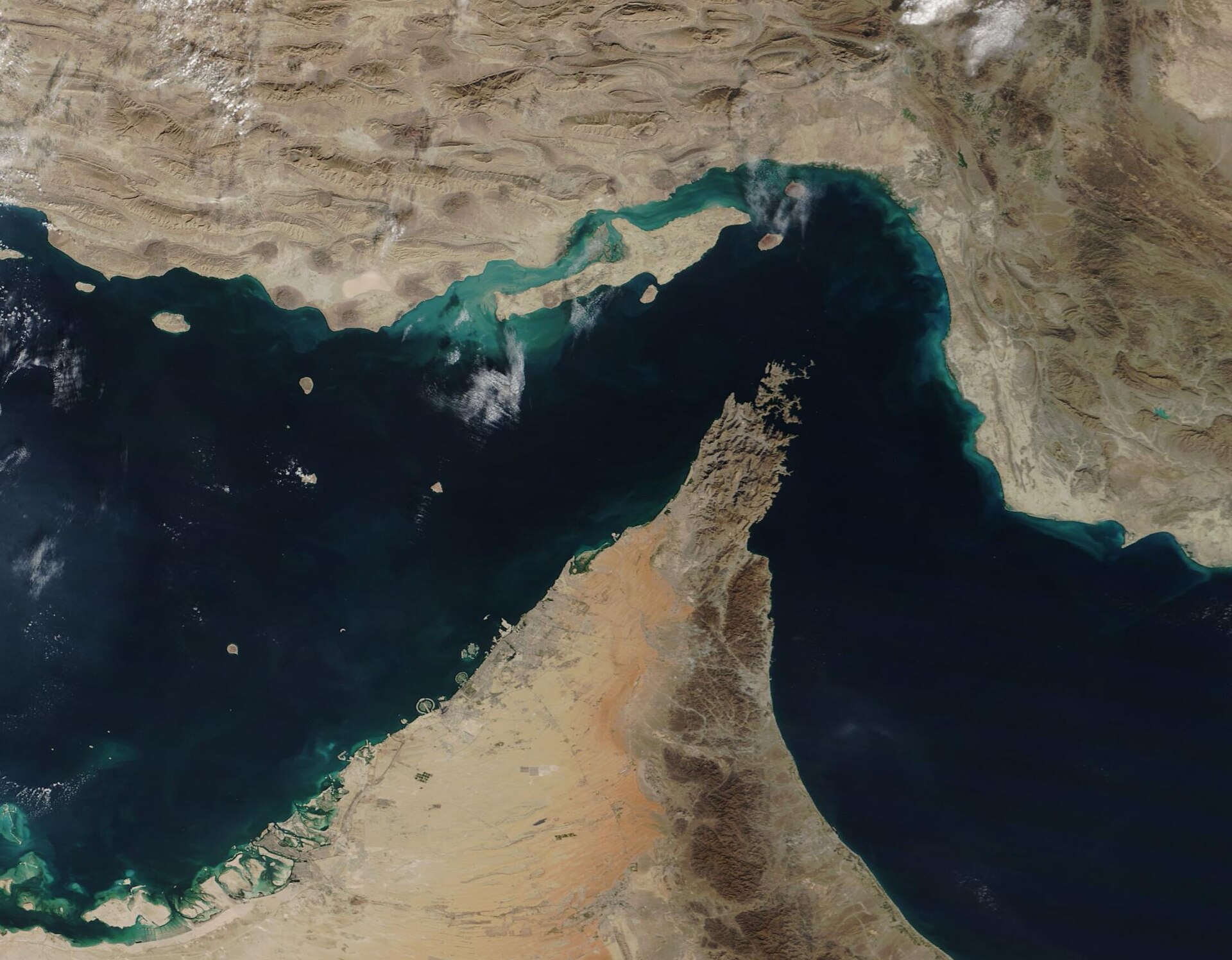
Approximately 1,550 commercial vessels carrying more than 22,000 mariners remained trapped in the Gulf as of May 5, unable to transit since the Strait closed on February 28, according to Pentagon briefing data. Project Freedom has moved two ships through.
The IRGC’s New Maritime Control Zone
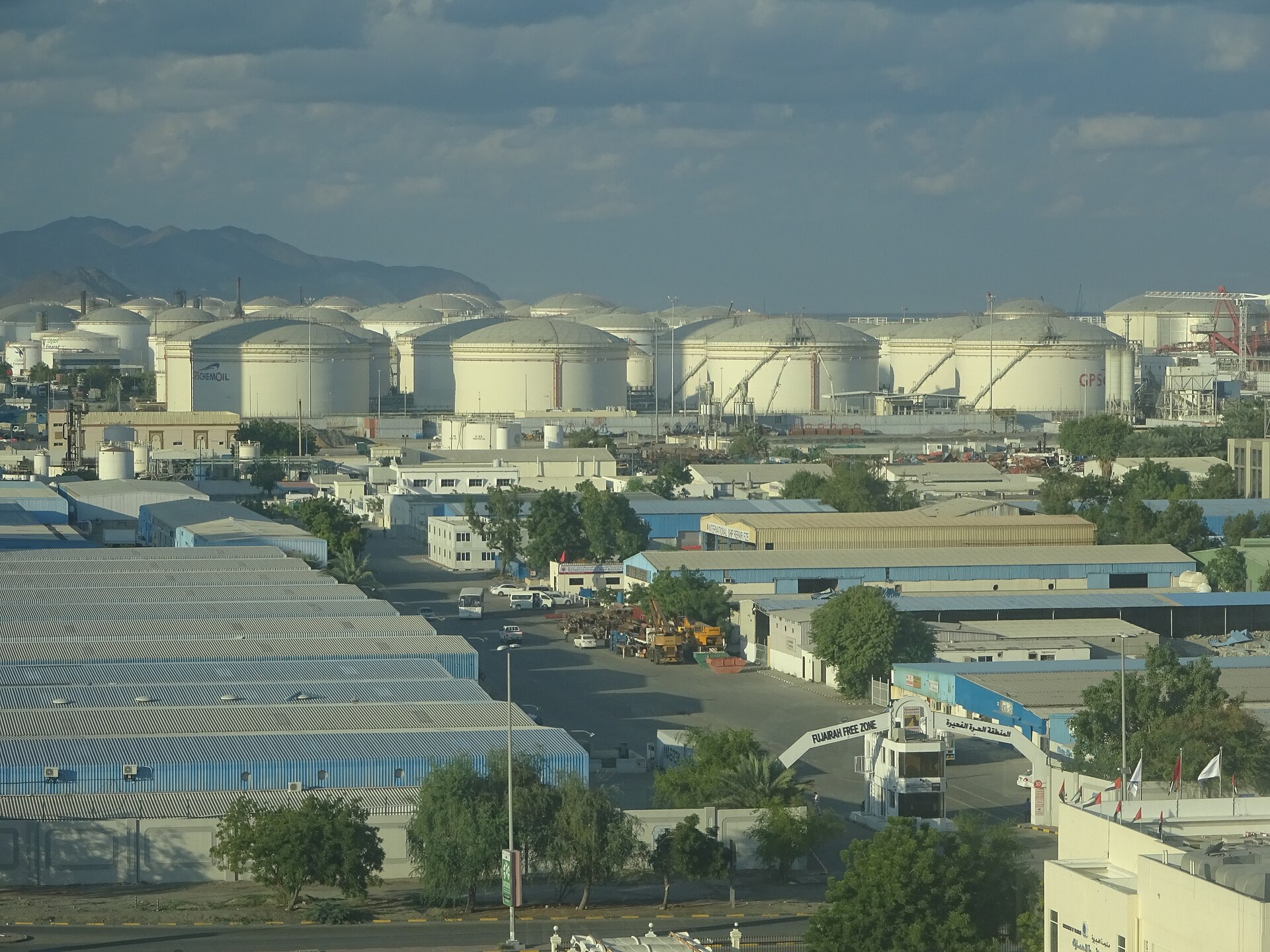
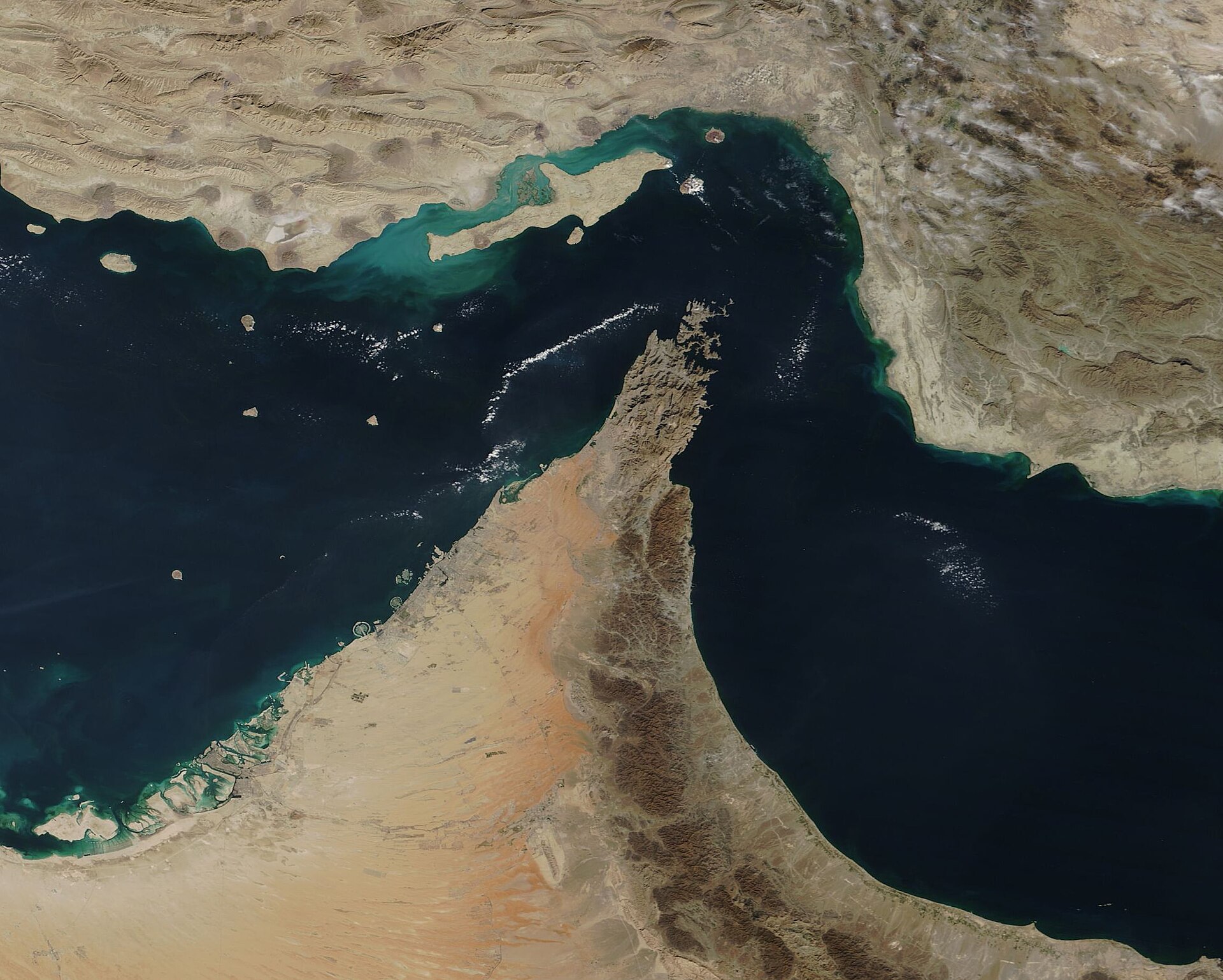
One day before the Pentagon briefing, on May 4, the IRGC announced a new “maritime control zone” extending from Mount Mobarak on Iran’s coast south to Fujairah in the UAE, and from Qeshm Island west to Umm Al Quwain, UAE, according to Tasnim News. The zone overlaps directly with the corridor Project Freedom escorts are using.
The timing was not incidental. The zone declaration followed the sinking of six IRGC boats the same day and preceded the Hegseth-Caine briefing by hours. It represented Iran’s counter-move: if the United States was going to define a threshold publicly, the IRGC would define a geography publicly.
Iranian Parliament Speaker Mohammed Ghalibaf wrote that U.S. actions had violated the ceasefire and that a “new equation” was emerging in the waterway, according to CFR. Iran’s parliament is separately advancing a 12-article Hormuz sovereignty law, sponsored by lawmakers Ahmadi and Rezayi Kouchi, that would provide legislative cover for systematic control of commercial transit — a legal architecture for the below-threshold operations Caine described.
The zone declaration coincided with Iran’s second consecutive day of strikes against UAE territory on May 5 — 15 missiles and 4 drones that UAE defences engaged over the eastern seaboard. Iran’s decision to repeat the attacks the following day confirmed it had read the threshold disclosure as permission to continue below it.
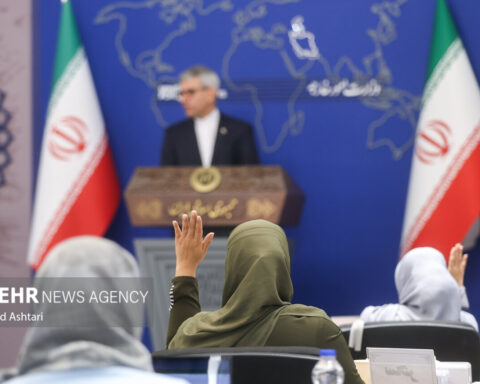
Iran’s state media offered a parallel narrative. IRNA called Project Freedom part of Trump’s “delirium.” Fars News and the Iranian Labour News Agency claimed Iran struck a U.S. vessel near Iranian waters on May 4. CENTCOM denied this categorically. The competing claims function as information operations on both sides — the Pentagon publicizing its tolerance to demonstrate restraint, Tehran publicizing aggression to demonstrate resolve.
How Does This Expose Saudi Arabia?
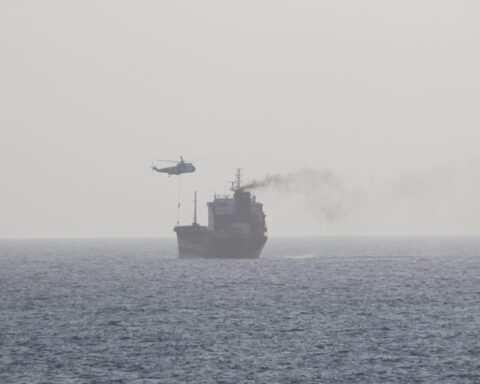
The two ships Iran seized on April 22 illustrate the pattern Saudi Arabia faces. The MSC Francesca — Panama-flagged, 11,312 TEU, operated by MSC — and the Epaminondas — Liberia-flagged, bound for Mundra, Gujarat, India — were escorted to Bandar Abbas with transponders switched off, according to Lloyd’s List and Al Jazeera. No crew injuries were reported. The IRGC alleged both ships were “operating without required authorization and manipulating navigation systems,” per a statement reported by the Jerusalem Post and Lloyd’s List.
Neither ship was American. Neither seizure triggered a U.S. military response. Both fell below Caine’s threshold. Iranian probes of the American ceiling occur in waters adjacent to the Kingdom’s Eastern Province, Ras Tanura — the world’s largest oil-export terminal — and the King Fahd Causeway corridor linking Saudi Arabia to Bahrain.
Saudi crude production has already fallen from 10.4 million barrels per day before the war to 7.25 million bpd as of March 2026, according to the International Energy Agency. The Kingdom’s fiscal break-even sits at $108–111 per barrel, per Bloomberg estimates. Brent crude closed at $114.44 on May 4 and traded near $104 in early May 5 sessions, according to ICE exchange data.
CFR assessed, in “Coercing Iran: Why Trump’s Hormuz Blockade Has a Short Fuse,” that “with their competing blockades, Iran and the United States are engaged in a high-stakes standoff to see which side blinks first, and Iran may have the advantage in this dynamic.” Saudi Arabia is not a party to either blockade but absorbs the consequences of both.
The Presidential Decision and the Ceasefire’s Structural Problem
Hegseth’s statement that “the president can make a decision whether anything were to escalate into a violation of a ceasefire” relocated the threshold from the Pentagon to the White House. Gen. Caine’s military assessment — “below the threshold at this point” — is advisory. The decision to reclassify any Iranian action as above-threshold is presidential.
This creates a structural asymmetry. The IRGC operates through a military chain of command that can authorize and execute provocations at the tactical level — the small-boat swarms, the ship seizures, the firings on commercial vessels. Each action is a field decision. The American response to any of those actions requires a presidential determination that the ceasefire has been violated.
CSIS documented this pattern in its analysis “Visualizing Iran’s Escalation Strategy,” noting that “Iran opted to escalate both horizontally — expanding the war’s geography by drawing in an increasing number of countries — and vertically — hitting an expanding array of targets, escalating from military targets to civilian targets and critical infrastructure.”
The ceasefire itself has no enforcement mechanism for sub-threshold violations. It was designed to prevent the resumption of major combat operations — air campaigns, missile exchanges, infrastructure strikes. It was not designed for the condition that now exists: a persistent, low-intensity maritime confrontation in which one side uses the ceasefire as operational cover and the other uses it as a reason not to escalate. Iran’s 14-point ceasefire proposal already contained provisions that treated Hormuz control as a negotiating asset rather than a violation.
The Pentagon has now publicly defined the ceasefire not as a binary state but as a band — and marked its width. Araghchi’s diplomatic track and the IRGC’s maritime operations are running in parallel inside that band, each calibrated to the ceiling Hegseth and Caine described on May 5. Mojtaba Khamenei’s dual-track approach — diplomacy proceeding while IRGC operations accumulate facts below threshold — fits precisely into the enforcement gap the ceasefire was never designed to close.
Frequently Asked Questions
What is Operation Epic Fury and how does it differ from Project Freedom?
Operation Epic Fury is the name for the original U.S. air campaign against Iran that began in late February 2026. Project Freedom is the separate Hormuz escort operation launched to shepherd commercial vessels through the Strait. Hegseth described them as “separate and distinct” at the May 5 briefing, per DVIDS and Pentagon records. The distinction allows the U.S. to scale down or terminate escort operations independently of the broader military campaign — and vice versa. No allied nation has contributed ships or aircraft to Project Freedom, making the “handoff” Hegseth described contingent on partners that have not yet materialized.
Has Iran responded to the Pentagon’s disclosure of the threshold?
Iran’s state media and military establishment responded to the broader U.S. posture but not to the threshold disclosure specifically. IRNA dismissed Project Freedom as part of Trump’s “delirium.” Fars News claimed an Iranian strike on a U.S. vessel on May 4, which CENTCOM denied. The IRGC’s more consequential response was structural: the announcement of a new maritime control zone on May 4 — before the briefing — that overlaps the Project Freedom escort corridor, creating competing jurisdictional claims over the same water. Ghalibaf’s statement about a “new equation” suggests Tehran views the current dynamic as favorable rather than provocative.
What legal framework governs Iran’s Hormuz sovereignty claims?
The UN Convention on the Law of the Sea (UNCLOS) guarantees transit passage through international straits, including Hormuz, without coastal-state interference. Iran ratified UNCLOS but has historically asserted that its territorial waters extend across portions of the Strait. Iran’s parliament is advancing a Hormuz sovereignty law that would codify domestic legal authority over commercial transit — effectively legislating a framework for the tolls and “authorization” requirements the IRGC has already been imposing operationally since March 2026.
How many ships has Project Freedom actually escorted through the Strait?
As of May 5, 2026, two American-flagged vessels have transited Hormuz under Project Freedom escort, both on May 4. Against the 1,550 commercial ships and 22,000 mariners the Pentagon confirmed are trapped in the Gulf, the escort operation’s throughput remains negligible. The limiting factor is not U.S. naval capacity but the IRGC’s overlapping maritime control zone declaration and the absence of any allied participation in escort duties. Hegseth acknowledged the mission is “temporary” but offered no timeline or criteria for its conclusion.
What precedent exists for the IRGC operating below a stated adversary threshold?
The most direct precedent is the May–June 2019 tanker crisis. Four tankers were damaged near Fujairah on May 12, 2019, followed by two more attacked in the Gulf of Oman on June 13. Each incident was calibrated to fall below the threshold of a U.S. military response, and each was initially deniable. The Congressional Research Service (Report R45795) and the Washington Institute documented this as deliberate graduated escalation. The 2026 difference is scale and transparency: in 2019, the threshold was inferred from U.S. inaction; in 2026, it was stated from a Pentagon podium by the Chairman of the Joint Chiefs.